
For families in our service areas
For families in our service areas, this guide explains caregiving and how non-medical in-home caregiving can support care planning in East Idaho, Treasure Valley & Magic Valley, Northern Wasatch, North Central West Virginia, and Northeast Ohio.
Why Choosing the Best Walking Aids Matters
Mobility challenges can significantly alter the daily lives of seniors, often leading to a loss of independence and an increased risk of falls. This situation not only affects their physical well-being but also impacts their emotional health, as many seniors may feel isolated or helpless.
Walking aids serve as vital tools to enhance safety and promote autonomy. However, with a variety of options available, choosing the right one can be overwhelming for caregivers. How can they navigate this complexity?
To ensure that their loved ones maintain mobility and regain confidence, caregivers should consider the following actionable tips:
- Assess individual needs: Evaluate the senior's specific mobility challenges and preferences.
- Consult professionals: Seek advice from healthcare providers or physical therapists to identify suitable options.
- Test aids: Encourage seniors to try different walking aids to find the most comfortable fit.
By taking these steps, caregivers can help their loved ones choose the right walking aid, fostering independence and enhancing their quality of life.
Understanding Walking Aids: Definition and Purpose
Mobility challenges can significantly impact the lives of the elderly, leading to decreased independence and increased risk of falls. These issues not only affect their physical health but also their emotional well-being, as they may feel confined or reliant on others for assistance.
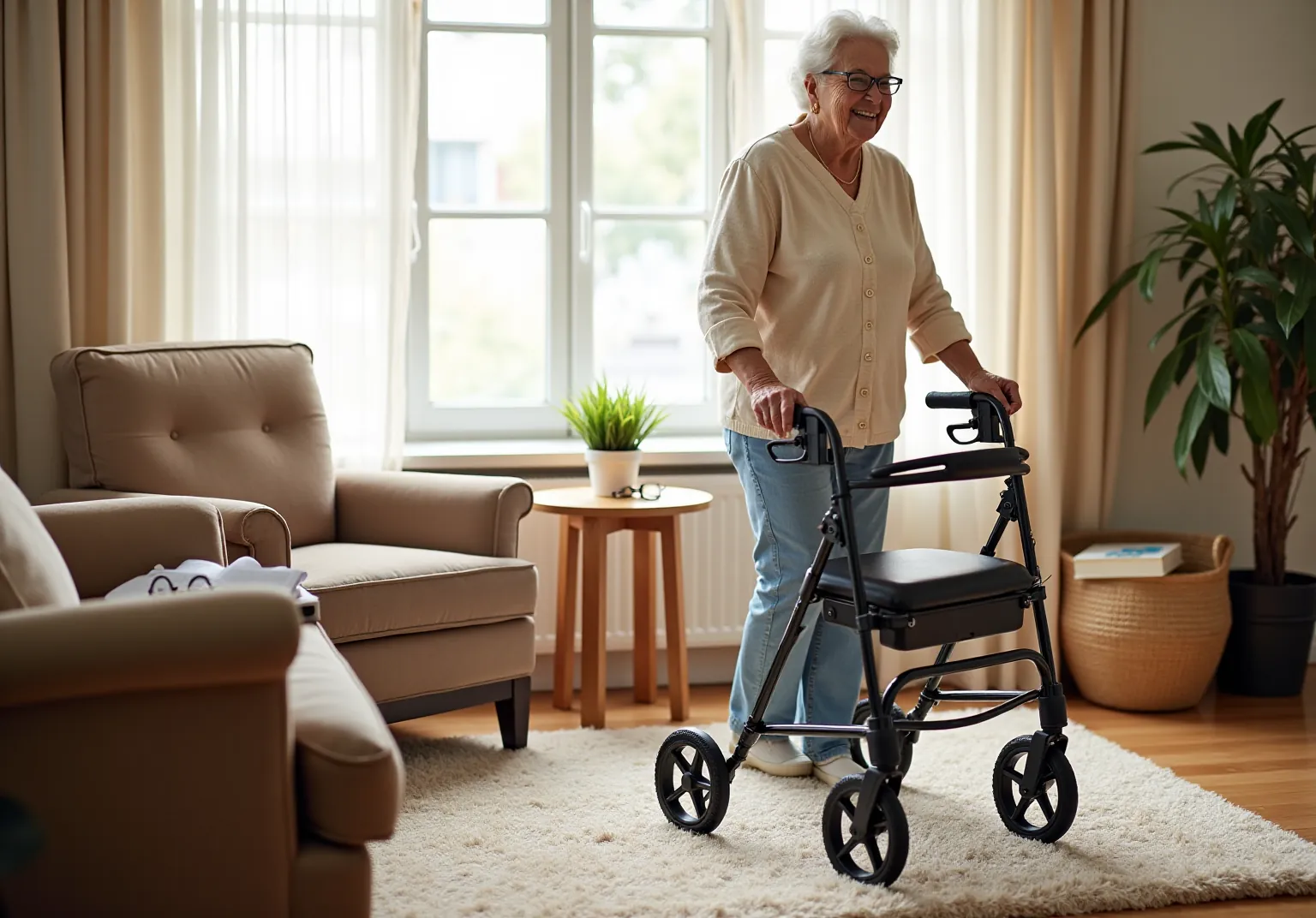
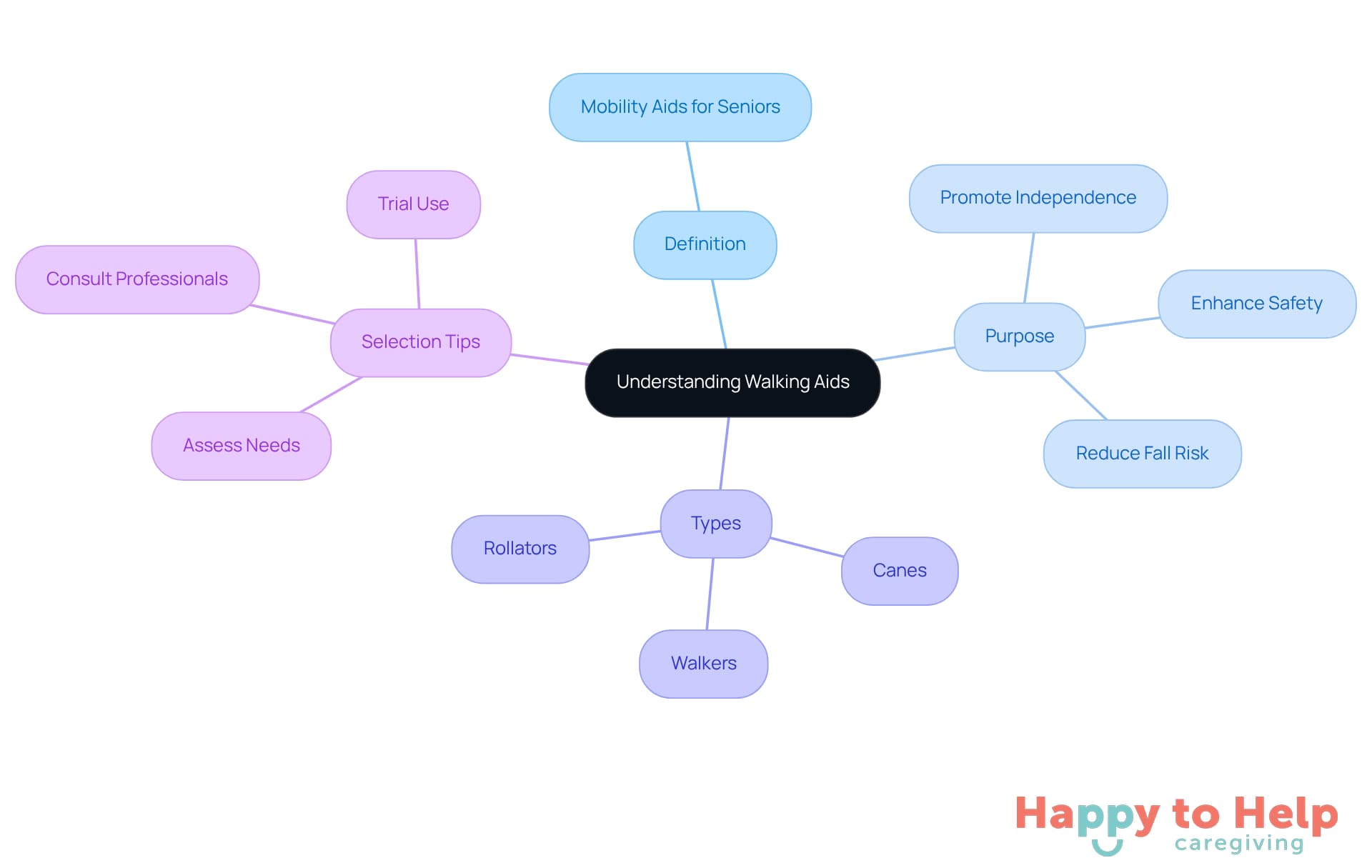
Walking aids for seniors are essential tools designed to address these challenges. They enhance safety, reduce the risk of falls, and promote independence among users. Common types of mobility devices include canes, walkers, and rollators, each offering different levels of support tailored to individual needs.
Understanding the function of these aids is crucial for caregivers. Choosing the right walking aids for seniors can greatly influence their quality of life and assist individuals with movement difficulties. Here are some actionable tips for selecting the appropriate walking support:
- Assess the individual’s needs: Consider their mobility level and any specific challenges they face.
- Consult with a healthcare professional: They can provide valuable insights into the most suitable options.
- Encourage trial use: Allow the individual to test different devices to find the most comfortable fit.
By taking these steps, caregivers can help ensure that their loved ones maintain their mobility and independence.
Comparing Types of Walking Aids: Canes, Walkers, and Rollators
Canes: Canes are lightweight and portable, providing minimal assistance. They are best suited for individuals who need slight help with balance. However, it's crucial to recognize that those who rely solely on canes often experience heightened anxiety about falling, which can significantly impact their confidence in mobility. For caregivers, encouraging the use of canes while addressing these concerns can help improve the user's confidence.
Walkers: Walkers offer more stability than canes, featuring four legs for support. They are ideal for individuals who require significant assistance while walking, especially indoors. While walkers can be cumbersome, they provide a sturdy foundation for those facing serious movement challenges. Many walkers are height-adjustable, enhancing user comfort and accommodating various needs. Caregivers should consider recommending walkers for their reliability and the support they offer.
Rollators: Rollators are walkers equipped with wheels, making them easier to maneuver. They often include a comfortable seat for resting, which is a significant convenience for seniors seeking independence. Suitable for both indoor and outdoor use, rollators strike a balance between movement and support. However, they may be heavier and less portable than canes. Innovations in rollator design continue to enhance user experience, focusing on comfort and functionality, such as improved braking systems and lightweight materials. Caregivers can help users select the right rollator to match their lifestyle needs.

Choosing the Right Walking Aid: Key Considerations and Tips
Choosing the right walking aids for seniors can pose a challenge for caregivers. With various options available, it’s crucial to understand the specific needs of the individual requiring walking aids for seniors.
- Level of Mobility: Assess the individual's mobility level. Those with slight balance difficulties may benefit from a cane, while individuals needing more support might require walking aids for seniors like a walker or rollator.
- Environment: Consider where the mobility aid will be used. While a walker may suffice for indoor use, walking aids for seniors, like a rollator, are often better suited for outdoor activities.
- Weight Capacity: Ensure the walking aid can support the user's weight. Most aids have specific weight limits that should not be exceeded.
- Adjustability: Look for aids that can be adjusted for height to promote proper posture and comfort.
- User Comfort: The user should feel comfortable using the aid. Testing different types can help find the best fit, taking into account handle height and grip comfort.
Consultation: Always consult with a healthcare provider or physical therapist to determine the most suitable walking aids for seniors based on individual health conditions and mobility needs.

Your Path Forward
Selecting the right walking aids for seniors is crucial for enhancing their mobility and independence. Caregivers often face the challenge of navigating various options - cane, walker, or rollator - each catering to specific needs. Understanding these aids is essential, as informed choices can significantly improve the quality of life for seniors.
Many caregivers may not realize that the type of walking aid can profoundly impact a senior's daily life. Canes are suitable for those needing minimal support, while walkers and rollators provide increased stability for those facing more significant mobility challenges. This distinction is vital, as it directly affects safety and emotional well-being.
To address these challenges, caregivers should assess individual mobility levels, environmental factors, and user comfort. Consulting healthcare professionals can lead to better outcomes, as they can provide tailored advice. Additionally, allowing seniors to test different aids fosters confidence in their mobility.
Ultimately, prioritizing the unique needs of each individual is key. By selecting the appropriate walking aid, caregivers can empower seniors to maintain their independence and enjoy a more active lifestyle. Taking these considerations into account not only promotes safety but also enhances overall quality of life.
https://iframe.tely.ai/cta/eyJhcnRpY2xlX2lkIjogIjY5MjEwYWEwODgxMzBmMWQ0ZDY5YmExZiIsICJjb21wYW55X2lkIjogIjY4ZWU1ZGNhNzMxNzYyNTU3ZjNjOTVjMSIsICJpbmRleCI6IG51bGwsICJ0eXBlIjogImFydGljbGUifQ==Frequently Asked Questions
What are walking aids and why are they important for seniors?
Walking aids are tools designed to assist seniors with mobility challenges. They enhance safety, reduce the risk of falls, and promote independence, significantly improving the quality of life for elderly individuals.
What are the common types of walking aids for seniors?
Common types of walking aids include canes, walkers, and rollators, each providing different levels of support tailored to individual needs.
How do mobility challenges affect seniors?
Mobility challenges can lead to decreased independence, an increased risk of falls, and negatively impact emotional well-being, as seniors may feel confined or reliant on others for assistance.
What should caregivers consider when selecting walking aids for seniors?
Caregivers should assess the individual’s needs, consult with a healthcare professional for insights, and encourage trial use of different devices to find the most comfortable fit.
Why is it important to choose the right walking aid?
Choosing the right walking aid is crucial as it can greatly influence a senior's quality of life and assist individuals with movement difficulties, helping them maintain mobility and independence.
List of Sources
- Understanding Walking Aids: Definition and Purpose
- Mobility Device Use Among Older Adults and Incidence of Falls and Worry About Falling: Findings From the 2011–2012 National Health and Aging Trends Study - PMC (https://pmc.ncbi.nlm.nih.gov/articles/PMC4439269)
- Friend or Foe? Study Examines Seniors' Increasing Use of Walking Aids | UVM News | The University of Vermont (https://uvm.edu/uvmnews/news/friend-or-foe-study-examines-seniors-increasing-use-walking-aids)
- Breaking News: Fall 2025 Brings a New Era of Lightweight Walkers and Rollators for Seniors (https://cbs42.com/business/press-releases/ein-presswire/850373373/breaking-news-fall-2025-brings-a-new-era-of-lightweight-walkers-and-rollators-for-seniors)
- 27 Inspirational Quotes for Caregivers (https://ultimatecareny.com/resources/27-quotes-for-caregivers)
- Comparing Types of Walking Aids: Canes, Walkers, and Rollators
- Read "The Future of Disability in America" at NAP.edu (https://nap.nationalacademies.org/read/11898/chapter/13)
- Best Mobility Aids for Seniors: Walker vs Rollator vs Cane (https://libertymed.ca/blogs/news/best-mobility-aids-for-seniors-walker-vs-rollator-vs-cane?srsltid=AfmBOorbXSlGsB\_BWPKw3LjmNPkNAASo-k5j5LnwuVw8yzmHjcMKQ6jG)
- References - The Future of Disability in America - NCBI Bookshelf (https://ncbi.nlm.nih.gov/books/NBK11419)
- Mobility Device Use Among Older Adults and Incidence of Falls and Worry About Falling: Findings From the 2011–2012 National Health and Aging Trends Study - PMC (https://pmc.ncbi.nlm.nih.gov/articles/PMC4439269)
- Choosing the Right Walking Aid: Key Considerations and Tips
- Mobility Device Use Among Older Adults and Incidence of Falls and Worry About Falling: Findings From the 2011–2012 National Health and Aging Trends Study - PMC (https://pmc.ncbi.nlm.nih.gov/articles/PMC4439269)
- Expert Advice: How to Choose a Mobility Aid for a Senior (https://agingcare.com/articles/expert-advice-how-to-choose-a-mobility-aid-190138.htm)
- Mobility Assistive Device Use in Older Adults (https://aafp.org/pubs/afp/issues/2021/0615/p737.html)
- How to Choose the Best Mobility Aid for Seniors (https://floridaseniorconsulting.com/how-to-choose-the-best-mobility-aids-for-seniors)