Companion for Seniors: Compare Care Options for Your Loved Ones

For families in our service areas
For families in our service areas, this guide explains companion care and how non-medical in-home caregiving can support care planning in East Idaho, Treasure Valley & Magic Valley, Northern Wasatch, North Central West Virginia, and Northeast Ohio.
What You Need to Know About Companion
Navigating care options for elderly loved ones can be a daunting task, especially as the aging population continues to grow. Families often face the challenge of choosing between companion care and home health aide services, each offering unique benefits tailored to different needs. This complexity can lead to confusion and stress for caregivers, who want to ensure their loved ones receive the best possible support.
The implications of this challenge are significant. Seniors may experience emotional and physical difficulties that require different types of assistance. Companion care focuses on providing companionship and emotional support, while home health aides offer critical medical assistance. Understanding these distinctions is essential for families seeking the right care for their loved ones.
So, how can caregivers effectively navigate these options? By exploring the distinct features and advantages of both companion care and home health aides, families can make informed decisions. This not only highlights the importance of companionship but also addresses the medical needs that some seniors may have. With the right information, caregivers can ensure their loved ones receive the support they truly need.
Define Companion Care: Key Features and Services
A companion for seniors addresses a significant problem faced by seniors and individuals with disabilities: loneliness and the need for support in daily activities. This lack of companionship can lead to feelings of isolation and negatively impact mental well-being.
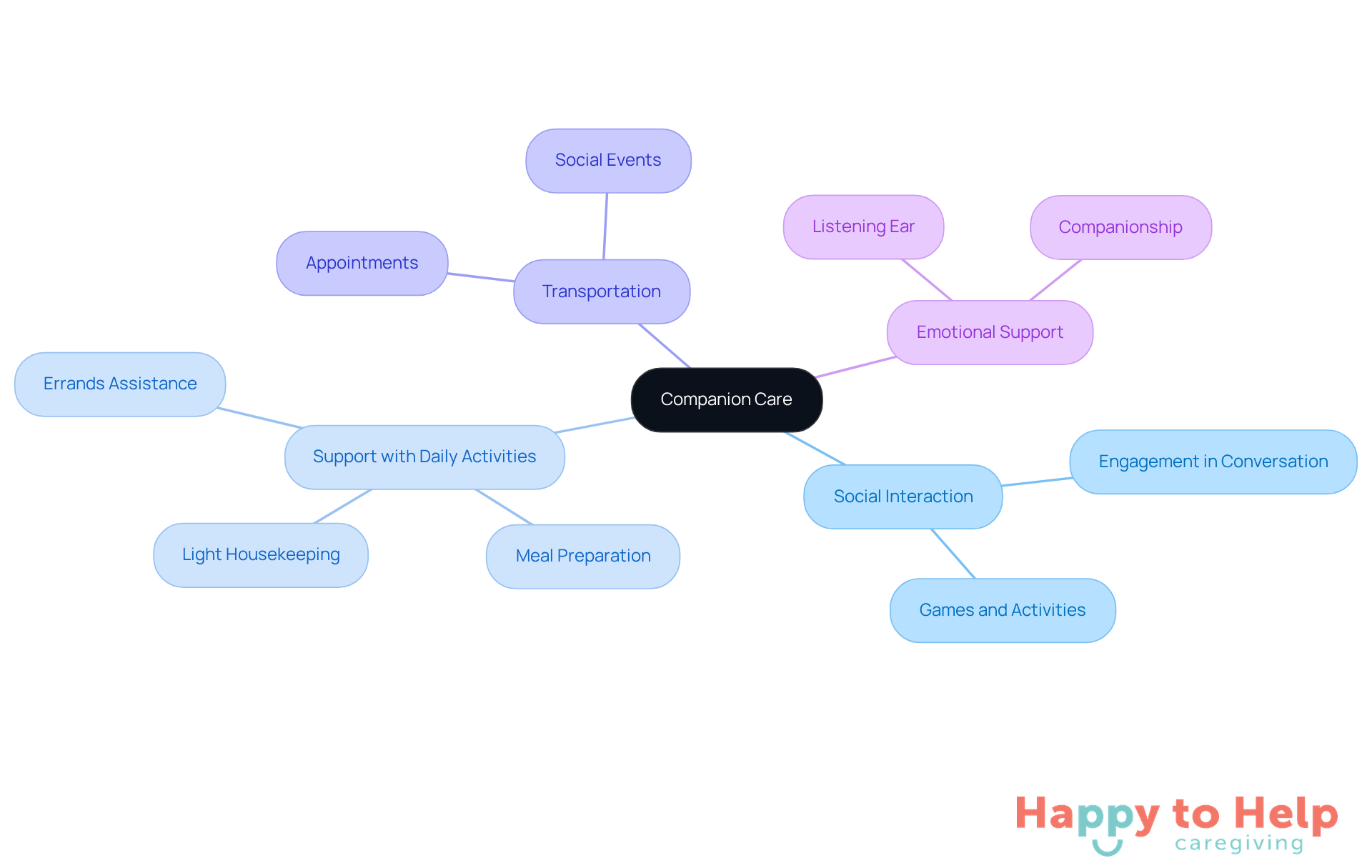
To combat these challenges, companion care offers a range of non-medical services designed to enhance the quality of life. Here are some key features:
- Social Interaction: Companions engage clients in conversation, games, and activities, helping to alleviate loneliness and promote mental health.
- Support with Daily Activities: While not providing medical care, companions assist with light housekeeping, meal preparation, and errands, making daily life easier.
- Transportation: Companions often help clients get to appointments or social events, which can significantly improve their quality of life.
- Emotional Support: By offering a listening ear and companionship, companions greatly enhance the emotional well-being of seniors.
Overall, companionship services serve as a companion for seniors, focusing on fostering social engagement and support, making them a vital resource for many families.
Outline Home Health Aide Responsibilities and Services
Home care aides (HHAs) face significant challenges in providing essential clinical and personal assistance to individuals in their residences. These skilled experts are responsible for a range of tasks that can be overwhelming without proper support and resources.
Problem: HHAs often struggle with the demands of personal care, medication management, condition monitoring, mobility assistance, and household tasks. This can lead to burnout and decreased quality of care for clients.
Agitate: The implications of these challenges are serious. When caregivers are overburdened, clients may not receive the attention they need, which can affect their health and well-being. Moreover, the emotional toll on caregivers can lead to feelings of isolation and stress, further complicating their ability to provide care.
Solution: To address these issues, caregivers can implement several practical strategies. For instance, they can prioritize tasks by creating a daily schedule that allocates time for each responsibility. Utilizing technology, such as medication management apps, can streamline medication reminders and monitoring. Additionally, caregivers should not hesitate to seek support from healthcare professionals when observing changes in clients' conditions.
Home caregivers play an essential role as a companion for seniors by assisting clients with healthcare requirements while also offering companionship and emotional support. By recognizing the challenges they face and adopting effective solutions, HHAs can enhance their caregiving experience and improve the quality of care they provide.

Compare Companion Care and Home Health Aide: Key Differences
When caregivers face the challenge of selecting the right support for their loved ones, understanding the differences between companion care and home health aide services is crucial.
-
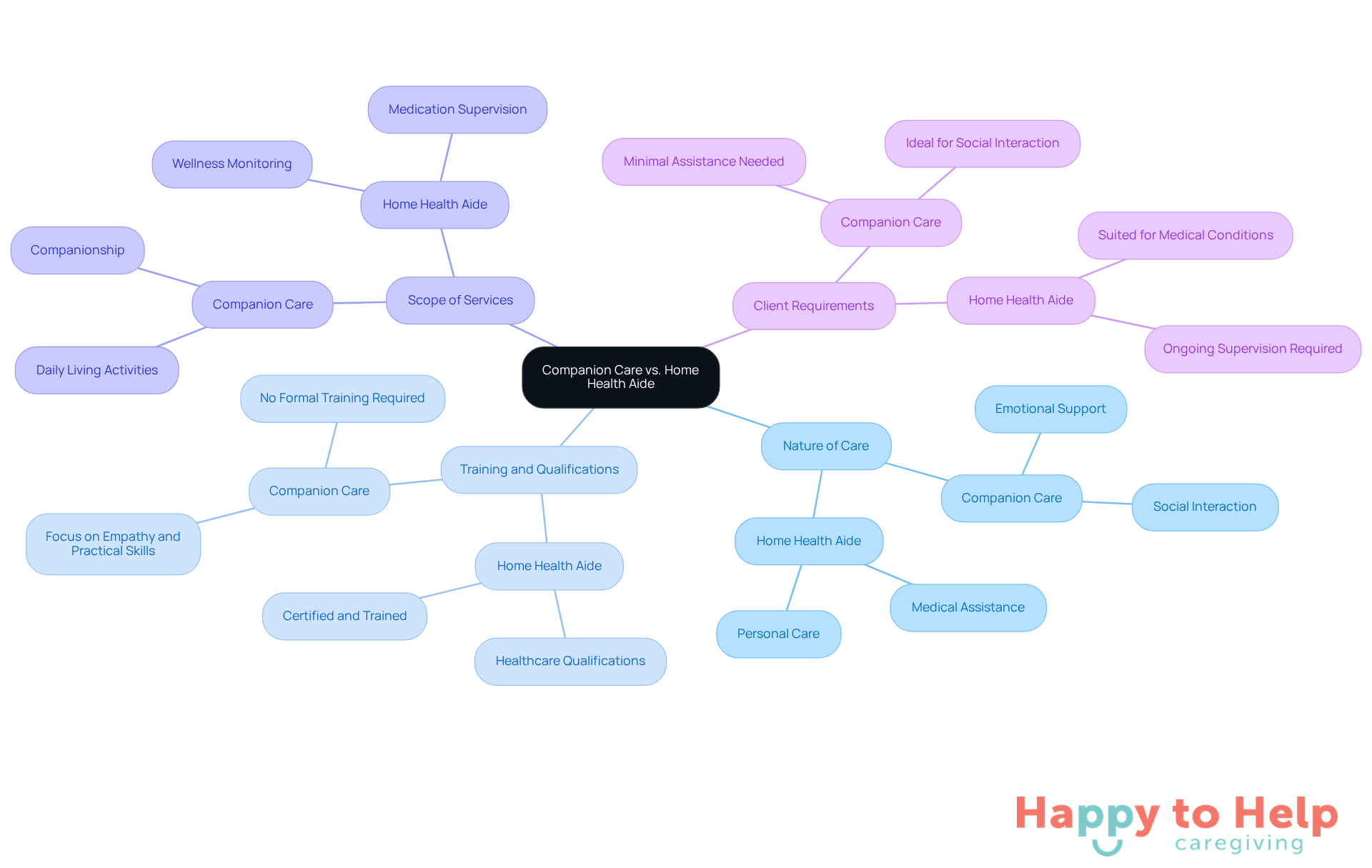
Nature of Care: Companion care primarily focuses on emotional support and social interaction. In contrast, home health aides provide essential medical assistance and personal care.
-
Training and Qualifications: Companions typically do not require formal training, while personal support workers often hold certifications and training in healthcare.
-
Scope of Services: Companions assist with daily living activities and offer companionship. On the other hand, personal care aides handle more complex clinical tasks, such as medication supervision and wellness monitoring.
-
Client Requirements: A companion for seniors is ideal for those who seek social interaction and minimal assistance. Conversely, personal aides are suited for individuals with medical conditions that require ongoing supervision and support.
Recognizing these distinctions helps families make informed decisions about the type of care that best meets their loved ones' needs.
Evaluate Benefits and Suitability: When to Choose Each Care Type
Selecting between companion care and home health aide services presents a significant challenge for caregivers, as it hinges on the specific needs of the individual requiring assistance.
Problem: Many seniors face feelings of loneliness or isolation, with one in three reporting such experiences. Chronic loneliness can shorten life expectancy even more than being overweight or sedentary, underscoring the critical importance of addressing these emotional needs. Additionally, individuals with chronic illnesses or disabilities require regular medical attention, which can complicate their care.
Agitate: The implications of these issues are profound. Seniors who are generally healthy may still struggle with emotional well-being, while those needing medical support risk complications without proper care. In fact, 44% of domestic support recipients require assistance with at least one daily activity, highlighting the growing demand for effective caregiving solutions.
Solution:
-
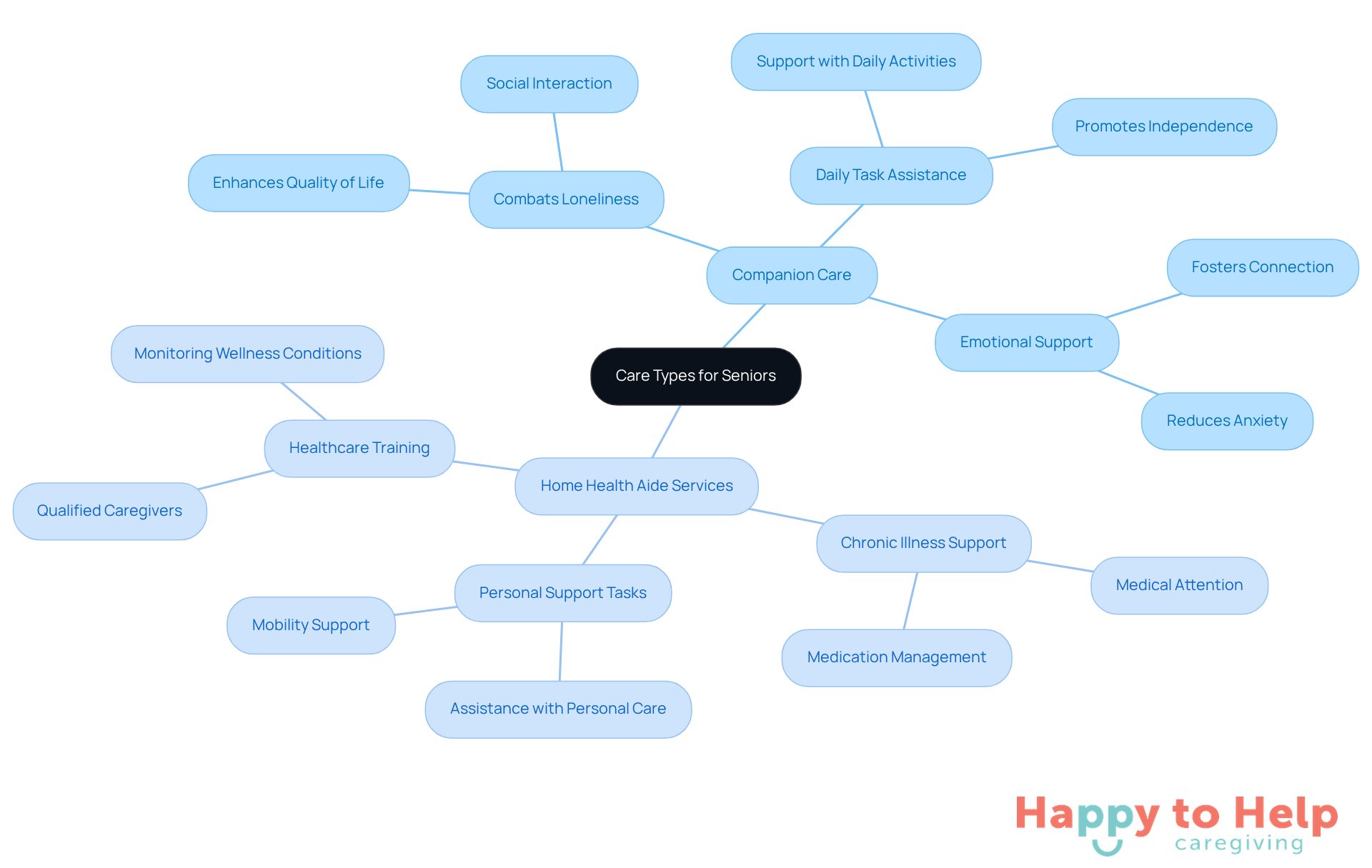
Companion Care is particularly beneficial for:
- Seniors who may feel lonely, providing companionship that significantly enhances their quality of life. The Veterans Health Administration serves over 14,000 veterans each year, illustrating the varied support needs among seniors.
- Individuals needing assistance with daily tasks without necessitating healthcare intervention, allowing them to maintain independence and dignity.
- Families seeking caregivers who offer emotional support, which is crucial for fostering a sense of connection and well-being.
-
Home Health Aide Services are best suited for:
- Individuals with chronic illnesses or disabilities that require consistent medical attention, ensuring health needs are met. Currently, around 12 million individuals in the U.S. receive in-home assistance, reflecting the increasing need for these services.
- Seniors needing help with personal support tasks and medication management, vital for preventing complications and hospital readmissions.
- Families looking for caregivers with healthcare training to provide thorough assistance, including monitoring wellness conditions and managing complex medication schedules.
Ultimately, the choice between companion assistance and home health aide services should be guided by the person's medical condition, emotional requirements, and the degree of support needed. Companion care, which acts as a companion for seniors, not only addresses social isolation but also fosters emotional well-being, while home health aide services ensure that medical needs are adequately managed. As one family caregiver noted, "Having someone to talk to and share moments with has made a world of difference for my loved one.
Moving Forward with Companion
Choosing the right care for seniors is a critical decision that can greatly impact their quality of life. Families often face the challenge of selecting between companion care and home health aide services, each offering unique benefits tailored to specific needs. Understanding these distinctions is vital to ensure that loved ones receive the appropriate support.
Companion care focuses on alleviating loneliness and providing emotional support, serving as a lifeline for seniors experiencing isolation. This type of care promotes social engagement and enhances overall well-being. On the other hand, home health aides deliver essential medical assistance and personal care, making them indispensable for individuals with chronic conditions requiring ongoing medical attention. Recognizing the emotional and physical needs of seniors is crucial for families to make informed choices that align with their loved ones' unique circumstances.
Ultimately, the decision between companion care and home health aide services should be guided by individual needs and preferences. Prioritizing emotional well-being alongside medical requirements fosters a supportive environment for seniors. Families are encouraged to explore these options thoroughly, ensuring that their loved ones receive the compassionate care they deserve.
https://iframe.tely.ai/cta/eyJhcnRpY2xlX2lkIjogIjY5MjUxM2VjY2Q1NjY3YWUxYjQzNTc4ZCIsICJjb21wYW55X2lkIjogIjY4ZWU1ZGNhNzMxNzYyNTU3ZjNjOTVjMSIsICJpbmRleCI6IG51bGwsICJ0eXBlIjogImFydGljbGUifQ==Frequently Asked Questions
What is companion care?
Companion care is a service designed to address loneliness and provide support for seniors and individuals with disabilities in their daily activities. It focuses on enhancing the quality of life through non-medical assistance.
What are the key features of companion care?
Key features of companion care include social interaction, support with daily activities, transportation assistance, and emotional support.
How does companion care help alleviate loneliness?
Companions engage clients in conversation, games, and activities, which helps reduce feelings of isolation and promotes mental health.
Do companions provide medical care?
No, companions do not provide medical care. They assist with light housekeeping, meal preparation, and errands to make daily life easier.
In what ways do companions assist with transportation?
Companions help clients get to appointments or social events, improving their overall quality of life by facilitating mobility.
How does companion care enhance emotional well-being?
Companions offer a listening ear and companionship, which greatly enhances the emotional well-being of seniors by providing support and reducing feelings of loneliness.
Why are companionship services considered vital for families?
Companionship services are vital for families as they foster social engagement and support for seniors, helping to improve their overall quality of life.
List of Sources
- Define Companion Care: Key Features and Services
- Caring Senior Service Banks Growth Goals On New House-Made Technology (https://homehealthcarenews.com/2025/10/caring-senior-service-banks-growth-goals-on-new-house-made-technology)
- Why Is Social Support Just as Important as Physical Care for Seniors? (https://homeinstead.com/home-care/usa/ut/bountiful/109/news-and-media/Why-is-Social-Support-Just-as-Important-as-Physical-Care-for-Seniors)
- 6+ Best Companion Care for Seniors (https://2ndfamily.com/companion-care-for-seniors)
- Why Is Social Connection So Important for Seniors? (https://inspirecaresupport.com/why-is-social-connection-so-important-for-seniors)
- The Emotional Benefits of Companion Care for Seniors (https://comfortkeepers.com/offices/texas/round-rock/resources/news/the-emotional-benefits-of-companion-care-for-seniors)
- Outline Home Health Aide Responsibilities and Services
- What’s Next For Home Health As The Industry Faces Its Biggest Test Yet (https://homehealthcarenews.com/2025/10/whats-next-for-home-health-as-the-industry-faces-its-biggest-test-yet)
- Home Health Care Trends for 2025 (https://carevoyant.com/home-health-blog/home-health-care-trends-2025)
- Wage protections for home care workers remain in Pa. despite federal rollback (https://wesa.fm/economy-business/2025-08-18/wage-protections-home-care-workers)
- Pay, Job Protections for Home Care Aides at Risk Under Proposed Federal Rule (https://aarp.org/advocacy/job-protections-home-care-workers)
- Home Care Workers Won the Right to Minimum Wage and Overtime Pay—the Trump Administration Wants to Take it Away - National Employment Law Project (https://nelp.org/home-care-workers-won-rights-trump-wants-to-take-it-away)
- Compare Companion Care and Home Health Aide: Key Differences
- Companion Caregiver vs Home Health Aide: Key Differences You Need to Know - Bunny's Home Care Baltimore (https://bunnyshomecare.com/companion-caregiver-vs-home-health-aide-key-differences-you-need-to-know)
- Home Companion Care Vs Home Health Care | (https://companioncareofwa.com/2024/07/25/home-companion-care-vs-home-health-care)
- Types of Home Care Services in 2025 (https://websterhc.com/breaking-down-the-different-types-of-home-care-services-in-2025)
- Companion Care vs. Home Health Care: What's the Difference? (https://promedcareinc.com/companion-care-vs-home-health-care-whats-the-difference)
- Companion Care at Home Pittsburgh PA - Companion Care VS Licensed Home Health Care (https://extendedfamilycare.com/pittsburgh/blog/2025/03/10/companion-care-vs-licensed-home-health-care)
- Evaluate Benefits and Suitability: When to Choose Each Care Type
- Why Home Care Providers Are Increasingly Offering Companion Care Services for Seniors | Aaniie, formerly Smartcare Software (https://aaniie.com/news/why-home-care-providers-are-increasingly-offering-companion-care-services-for-seniors)
- 2025 Home Care Statistics: Trends & Insights To Know (https://premierhcinc.com/blog/home-care-statistics)
- Home Health Aides’ Increased Role in Supporting Older Veterans and Primary Healthcare Teams During COVID-19: a Qualitative Analysis - PMC (https://pmc.ncbi.nlm.nih.gov/articles/PMC8939490)
- The Benefits of In-Home Care for Seniors with Chronic Conditions - Trust USA Home Health (https://trustusahomehealth.com/news/the-benefits-of-in-home-care-for-seniors-with-chronic-conditions)
- How Home Health Care Supports Seniors with Chronic Illnesses (https://alwayscarehomecare.com/how-home-health-care-supports-seniors-with-chronic-illnesses)