

For families in our service areas
For families in our service areas, this guide explains caregiving and how non-medical in-home caregiving can support care planning in East Idaho, Treasure Valley & Magic Valley, Northern Wasatch, North Central West Virginia, and Northeast Ohio.
Why Compare Care Giving Companies: Find the Matters
As families increasingly seek reliable support for their loved ones, they encounter a significant challenge: the caregiving landscape is vast and varied. With numerous companies offering diverse services, how can families effectively navigate these complexities to find the best fit for their unique situations? This dilemma not only complicates decision-making but also impacts the well-being of both clients and caregivers.
Understanding the various types of caregiving options available is essential for making informed choices. Families must consider the benefits and challenges associated with each service provider. This article delves into the key differentiators among leading caregiving companies, providing insights that can help families enhance the quality of care for their loved ones.
Understanding Caregiving Services: Types and Benefits
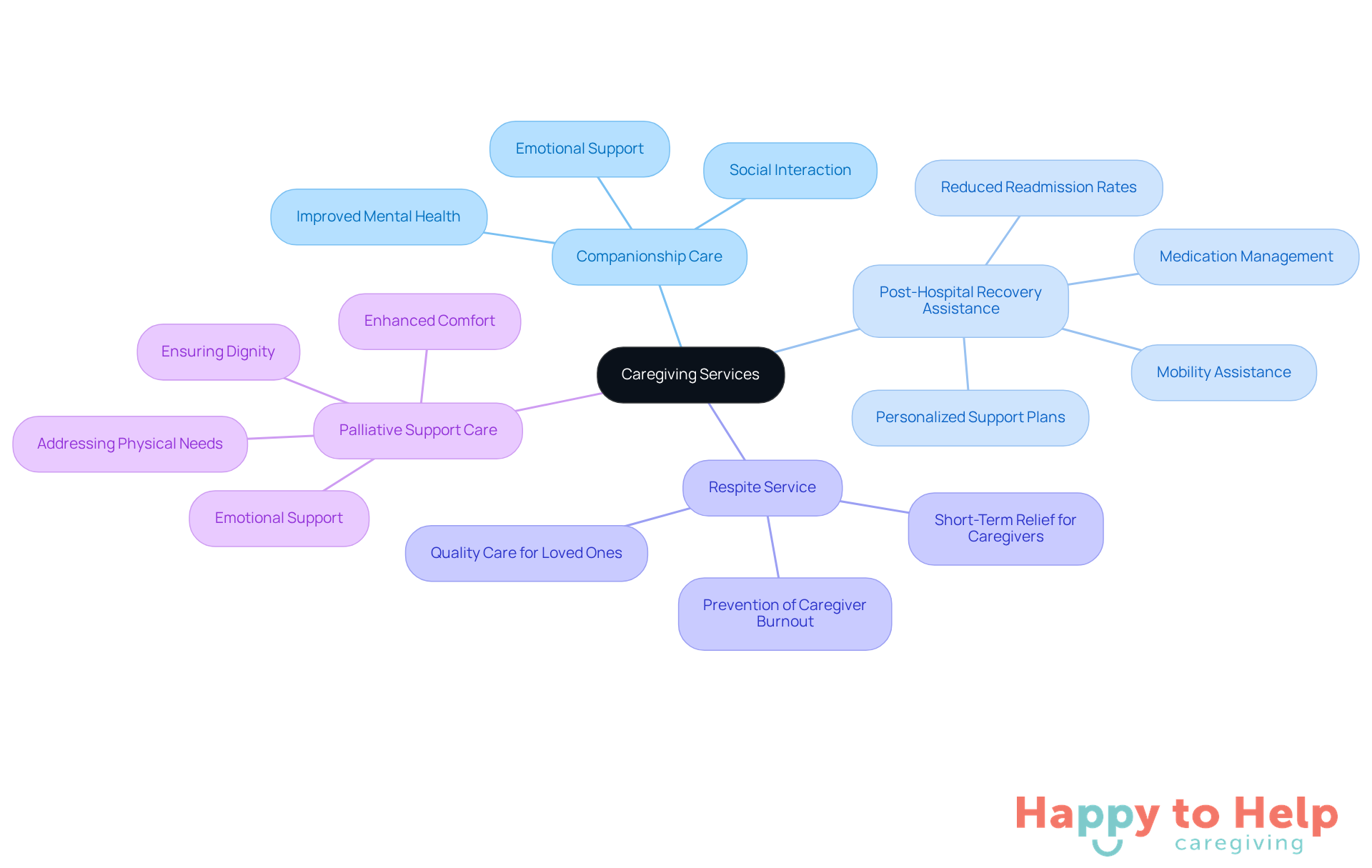
Care giving companies address significant challenges faced by clients and their families through their caregiving services. The need for support is growing, and understanding the types of services available from care giving companies can make a difference in the quality of care provided. Here are some essential caregiving services:
-
Companionship Care: Loneliness and isolation are common issues among seniors. Companionship care offers emotional support and fosters social interaction, which can significantly improve mental health and overall quality of life. With nearly one in four adults acting as family caregivers, the demand for care giving companies is clearly evident.
-
Post-Hospital Recovery Assistance: After surgery or illness, individuals often require comprehensive support to recover effectively. This service includes medication management, mobility assistance, and personalized support plans. Research shows that effective post-hospital recovery assistance can reduce readmission rates and promote faster healing, underscoring its importance.
-
Respite Service: Caregiving can be overwhelming, leading to burnout among those providing support. Respite services offer short-term relief, allowing caregivers to recharge while ensuring their loved ones receive quality care. With the average caregiving hours rising from nine to 26 weekly in just three years, this service is crucial for maintaining caregiver well-being.
-
Palliative Support Care: For individuals with serious illnesses, palliative care focuses on enhancing comfort and quality of life. This service addresses both physical and emotional needs, ensuring dignity and peace during challenging times.
These services not only meet urgent needs but also enhance the overall well-being and independence of clients. As families navigate complex employment regulations and increasing demands for home assistance, the importance of care giving companies continues to grow. Agencies like Happy to Help Caregiving play a vital role in delivering personalized and compassionate support.
Key Differentiators Among Leading Caregiving Companies
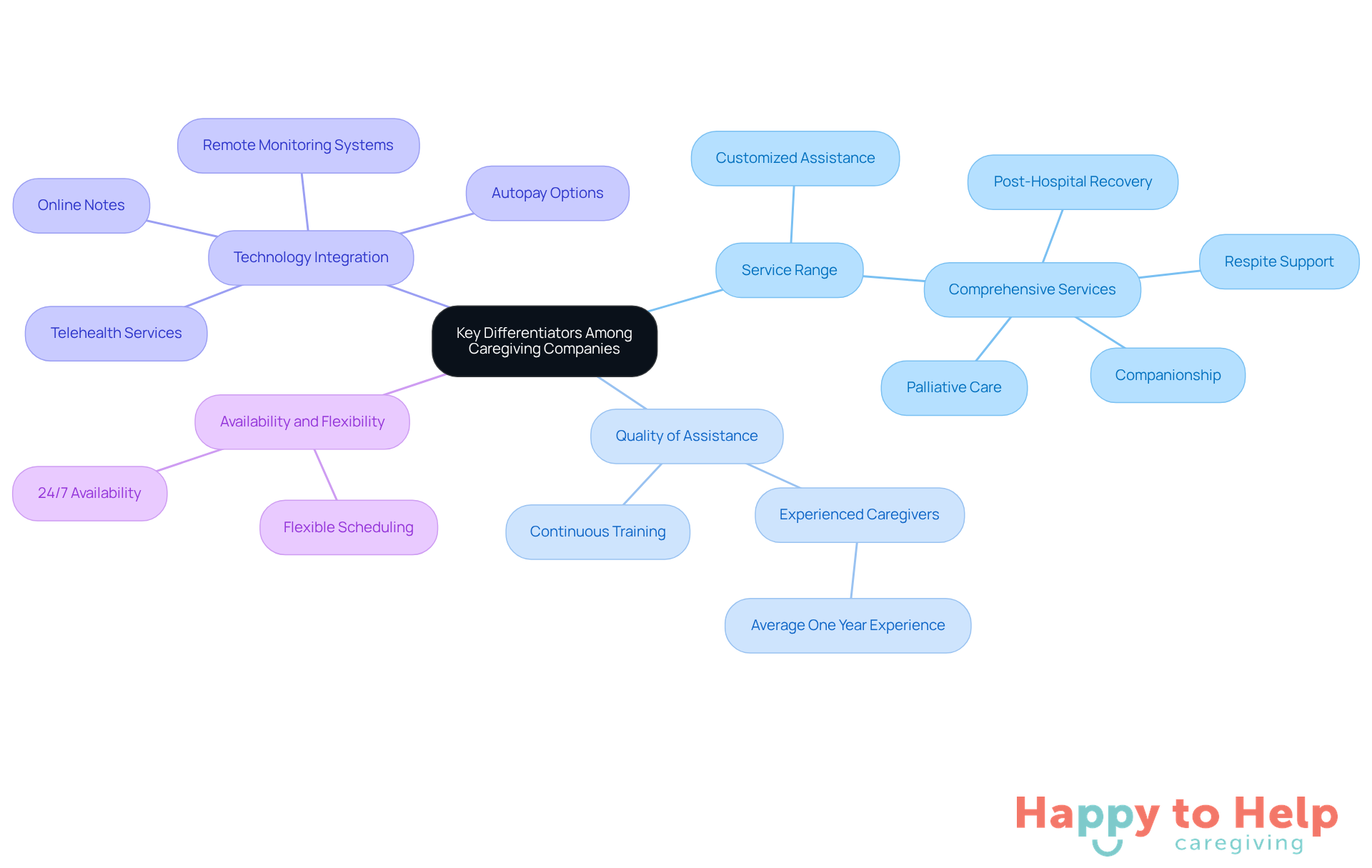
When evaluating caregiving companies, families often face challenges in finding the right support. The quality of assistance can vary significantly, impacting both caregivers and those receiving care. Here are some key differentiators to consider:
-
Service Range: Happy to Help Caregiving offers a comprehensive range of services, including companionship, post-hospital recovery assistance, respite support, and palliative care. This wide spectrum allows families to obtain customized assistance that addresses various needs, unlike firms that may focus on a specific service area. Individualized support plans are essential for reducing stress among caregivers and enhancing overall satisfaction.
-
Quality of Assistance: The training and experience of support providers play a crucial role in the quality of care. Happy to Help emphasizes continuous training, ensuring that caregivers are well-prepared to meet the needs of those they assist. With caregivers averaging one year of experience, this commitment to professional growth guarantees clients receive high-quality, compassionate support.
-
Technology Integration: Many companies are now leveraging technology to improve service delivery. Happy to Help includes features like online notes and autopay options, enhancing communication and convenience for families. Additionally, the integration of broader technological innovations, such as remote monitoring systems and telehealth services, further enriches the caregiving experience.
-
Availability and Flexibility: The ability to provide round-the-clock assistance and flexible scheduling is vital for families needing prompt support. Happy to Help's commitment to 24/7 availability, combined with adaptable scheduling options, ensures individuals receive assistance whenever required, fostering a sense of safety and ease.
These differentiators significantly impact the quality of assistance provided by caregiving companies and enhance the overall experience for both clients and their families. Therefore, it's crucial for families to consider these factors when selecting a caregiving provider.
Addressing Family Caregiver Challenges: Support and Solutions
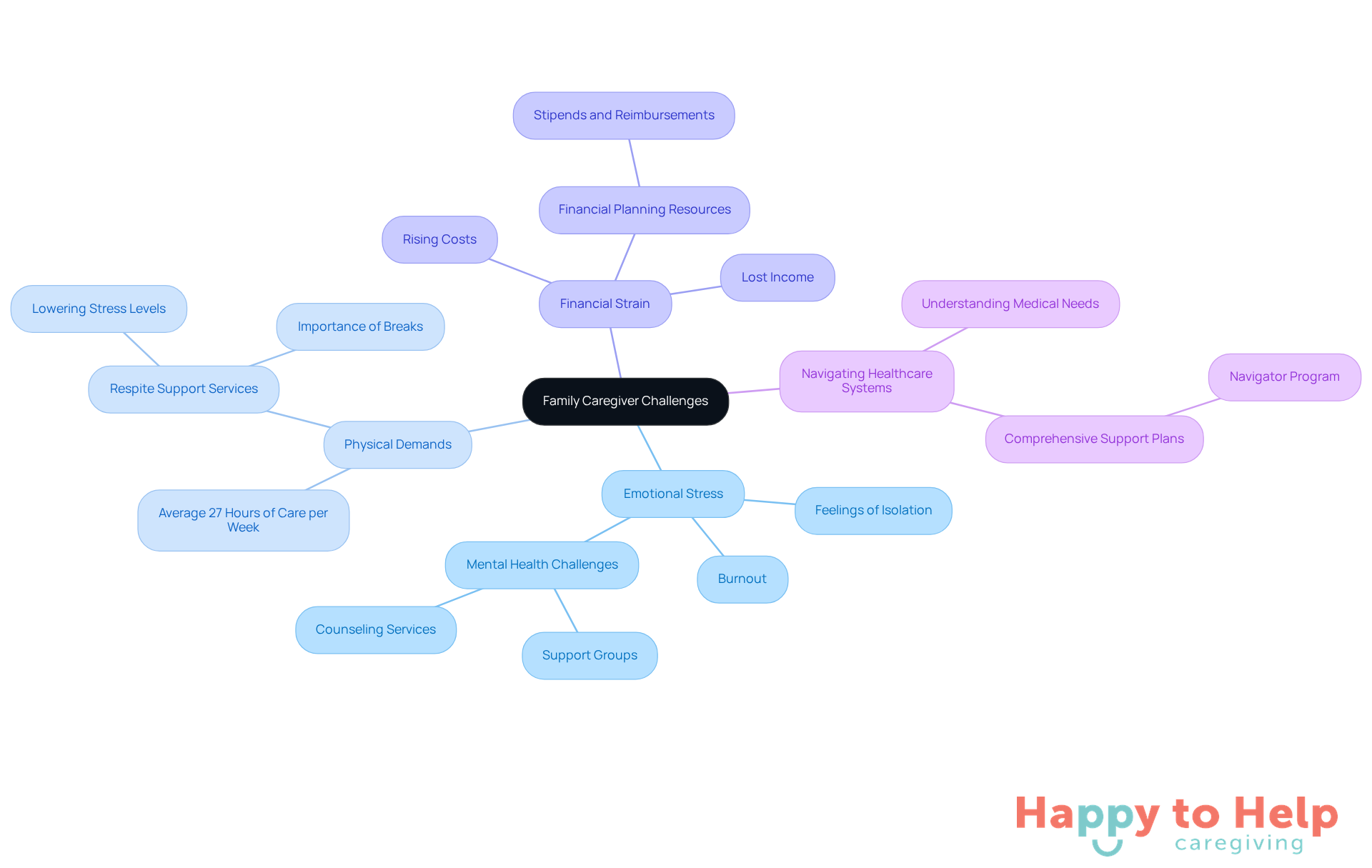
Family supporters face numerous challenges that significantly impact their well-being and the quality of assistance they provide. These challenges include emotional pressure, physical fatigue, and financial burden. Addressing these issues is essential for fostering a healthier caregiving environment. Here are some prevalent challenges and effective solutions:
-
Emotional Stress: Caregiving often leads to feelings of isolation and burnout. Nearly 47% of caregivers report mental health challenges in the past year. As Nancy LeaMond from AARP states, "Support providers are the unseen backbone of our flawed long-term support system and economy, and too many are bearing the cost out of their own funds." Support groups and counseling services can offer emotional comfort and create a sense of community, helping individuals feel less isolated in their journey.
-
Physical Demands: The physical aspect of caregiving can be taxing, with individuals averaging 27 hours of support per week. Respite support services are crucial, allowing caregivers to take necessary breaks and reduce exhaustion. Research shows that respite care can significantly lower stress levels for caregivers, making it an essential resource for maintaining their health.
-
Financial Strain: Many caregivers face financial pressures from lost income or rising costs, contributing to the estimated $873.5 billion value of unpaid work provided by family members each year. Financial planning resources, along with programs offering stipends or reimbursements, can help alleviate this pressure and assist caregivers in managing their finances. The staggering statistic that over 44 million household supporters provide this level of unpaid labor highlights the urgent need for financial assistance solutions.
-
Navigating Healthcare Systems: Understanding medical needs and navigating healthcare options can be overwhelming, especially for new caregivers. Organizations that provide comprehensive support plans, like the Navigator program, can ease this burden, ensuring caregivers feel supported in their roles.
By recognizing these challenges and utilizing available resources, families can create a more sustainable and supportive caregiving environment, ultimately enhancing the quality of life for both caregivers and their loved ones.
Evaluating Caregiver Qualifications and Training
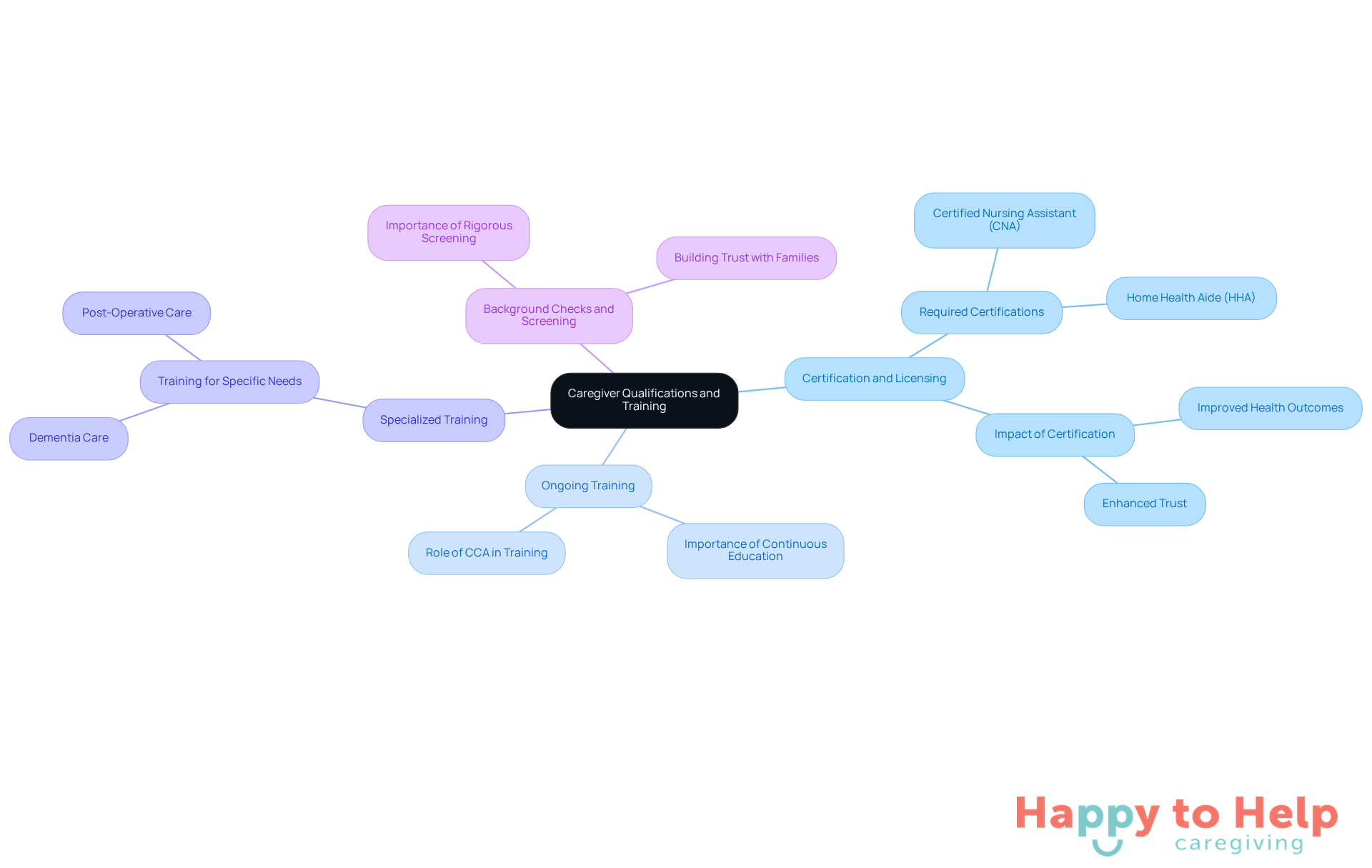
The qualifications and training of those providing care are essential for delivering high-quality assistance. Families face a significant challenge when selecting caregivers, as inadequate qualifications can lead to subpar care for their loved ones.
-
Certification and Licensing: Many states require specific certifications for providers, such as Certified Nursing Assistant (CNA) or Home Health Aide (HHA) credentials. Understanding these requirements is crucial for families to assess the legitimacy and professionalism of caregiving companies. Studies show that individuals receiving support from certified providers frequently achieve improved health results compared to those with non-certified providers. In fact, clients are more likely to experience enhancements in their physical and mental well-being with certified providers, emphasizing the significance of selecting qualified experts.
-
Ongoing Training: Continuous education is vital in the caregiving field. Organizations that prioritize ongoing training for their staff ensure they stay updated on the latest best practices and strategies in patient support. With the demand for home assistance expected to rise significantly in 2025 due to an aging population, ongoing training becomes even more essential to meet evolving support needs. The Center for Caregiver Advancement (CCA) plays an important role in offering free, accessible training for caregiving companies and those who provide support, which can be a valuable resource for families seeking quality assistance.
-
Specialized Training: For individuals with specific needs, such as dementia or post-operative care, specialized training is essential. Families should inquire about the availability of professionals trained in these areas, as certified individuals often receive training in specialized fields, enhancing their ability to provide appropriate and compassionate support.
-
Background Checks and Screening: Rigorous background checks are crucial for ensuring the safety and security of clients. Families should confirm that the caregiving agency conducts thorough screenings of their staff, fostering trust and confidence in the caregiver-client relationship.
By assessing these qualifications, families can feel more confident in their selection of a provider, knowing that their loved ones are in capable and well-trained hands.
The Role of Technology in Modern Caregiving
Caregiving can be a daunting task, especially as the demands on caregivers continue to grow. Many families struggle to provide the necessary support for their loved ones while managing their own responsibilities. This situation can lead to stress and burnout, ultimately affecting the quality of care provided.
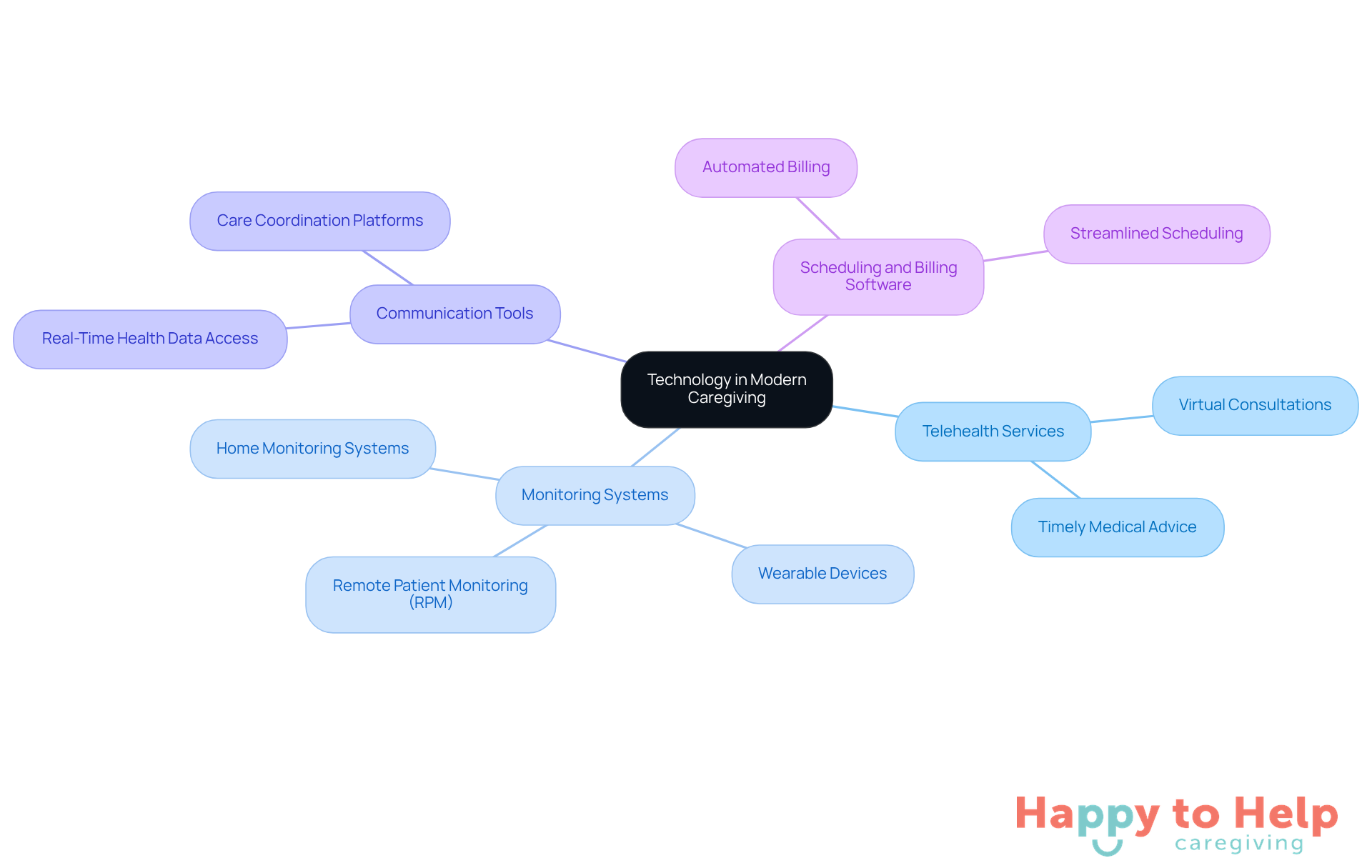
Fortunately, technology is stepping in to address these challenges faced by caregiving companies, offering innovative solutions that enhance the caregiving experience. Here are some key advancements that can make a significant difference:
-
Telehealth Services: Virtual consultations allow caregivers to connect with healthcare professionals without the hassle of travel. This convenience ensures timely medical advice and support, which is especially beneficial for those juggling multiple responsibilities.
-
Monitoring Systems: Wearable devices and home monitoring systems play a crucial role in tracking vital signs and alerting guardians to potential health issues. These technologies not only provide peace of mind but also enable proactive interventions, leading to better health outcomes. For example, remote patient monitoring (RPM) technologies can reduce avoidable hospitalizations by facilitating early detection of health changes. With around 16 million seniors potentially needing extra support to maintain their independence, these tools are essential.
-
Communication Tools: Platforms designed to enhance interaction among caregivers, clients, and family members ensure everyone stays informed about care plans and health status changes. This coordinated approach fosters teamwork and minimizes misunderstandings, ultimately improving service quality.
-
Scheduling and Billing Software: Technology that streamlines scheduling and billing reduces administrative burdens, allowing caregivers to focus more on providing care. By automating these tasks, providers can dedicate more time to their clients, enhancing the overall caregiving experience.
By embracing these technological advancements, caregiving companies can enhance their effectiveness and ensure families provide the best possible support for their loved ones. This not only fosters a safer environment but also contributes to a more comfortable home life.
Moving Forward with Compare Care Giving Companies: Find the
Choosing the right caregiving company poses a significant challenge for families seeking support for their loved ones. With the increasing demand for caregiving services, families often find themselves overwhelmed by the variety of options available. This decision is crucial, as it directly impacts the quality of care provided to clients.
Families may struggle with understanding the unique features of leading caregiving companies, which can lead to suboptimal care outcomes. The implications of this challenge are profound, affecting not only the well-being of clients but also the peace of mind of their families. Without proper guidance, families risk selecting a provider that does not meet their specific needs.
To address these challenges, families should actively evaluate caregiving options by comparing services such as:
- Companionship care
- Post-hospital recovery assistance
- Palliative support care
Understanding the benefits of these services can significantly enhance well-being and independence for clients. Additionally, families should consider key differentiators among caregiving companies, including:
- Service range
- Quality of assistance
- Technology integration
Moreover, it’s essential to recognize the challenges faced by family caregivers themselves. By prioritizing training, flexibility, and comprehensive support, families can ensure that both caregivers and clients receive the necessary assistance. This proactive approach not only promotes the well-being of caregivers but also fosters a supportive environment for clients.
In conclusion, families can make informed decisions that lead to better care outcomes by leveraging the information available and considering the unique needs of their loved ones. Embracing advancements in technology and understanding the importance of qualified caregivers will enhance the caregiving experience, ultimately benefiting both clients and their families.
https://iframe.tely.ai/cta/eyJhcnRpY2xlX2lkIjogIjY5MjI2NTEzM2Y0ZjQ1OWY0OGYyNTFmZSIsICJjb21wYW55X2lkIjogIjY4ZWU1ZGNhNzMxNzYyNTU3ZjNjOTVjMSIsICJpbmRleCI6IG51bGwsICJ0eXBlIjogImFydGljbGUifQ==Frequently Asked Questions
What types of caregiving services are offered by caregiving companies?
Caregiving companies offer various services, including companionship care, post-hospital recovery assistance, respite services, and palliative support care.
How does companionship care benefit seniors?
Companionship care provides emotional support and fosters social interaction, helping to alleviate loneliness and isolation, which can improve mental health and overall quality of life for seniors.
What is included in post-hospital recovery assistance?
Post-hospital recovery assistance includes medication management, mobility assistance, and personalized support plans to help individuals recover effectively after surgery or illness.
Why are respite services important for caregivers?
Respite services offer short-term relief for caregivers, allowing them to recharge while ensuring their loved ones receive quality care, which is essential for preventing caregiver burnout.
What does palliative support care focus on?
Palliative support care focuses on enhancing comfort and quality of life for individuals with serious illnesses, addressing both their physical and emotional needs.
What are key differentiators to consider when evaluating caregiving companies?
Key differentiators include the range of services offered, the quality of assistance provided, technology integration, and the availability and flexibility of support.
How does Happy to Help Caregiving stand out among caregiving companies?
Happy to Help Caregiving stands out by offering a comprehensive range of services, emphasizing continuous training for caregivers, integrating technology for better communication, and providing 24/7 availability with flexible scheduling.
Why is the quality of assistance important in caregiving?
The quality of assistance is crucial because it directly impacts the well-being of both caregivers and those receiving care, affecting overall satisfaction and the effectiveness of the support provided.
List of Sources
- Understanding Caregiving Services: Types and Benefits
- Home Care Industry Trends to Watch in 2025 (https://firstlighthomecare.com/blog/home-care-industry-trends)
- Caregiving Industry Trends in 2025: Key Insights - Family Resource Home Care (https://jobs.familyresourcehomecare.com/caregiving-industry-trends-2025)
- 2023 Study — Caregiving in America, Statistics on Family Caregivers and Beyond | Guardian (https://guardianlife.com/reports/caregiving-in-america)
- Explore New Caregiving Research for National Family Caregiver Month (https://aarp.org/brain-health-action/action-of-the-week/caregiving-in-the-us-2025)
- Top key trends shaping the future of caregiving (https://learn2care.us/blog/caregiving-future-trends)
- Key Differentiators Among Leading Caregiving Companies
- Caregiving Industry Trends in 2025: Key Insights - Family Resource Home Care (https://jobs.familyresourcehomecare.com/caregiving-industry-trends-2025)
- White Paper: The Future of Home Care: A 2025 Survey of the Home Care Industry & Future Trends (https://axiscare.com/white-papers/access-home-care-industry-survey-and-trends-report)
- Comparing Caregiving Companies: Services and Support for Families - Happy To Help (https://happytohelpcaregiving.com/comparing-caregiving-companies-services-and-support-for-families)
- Caregiving in the US 2025: Caring Across States (https://aarp.org/pri/topics/ltss/family-caregiving/caregiving-in-the-us-2025-caring-across-states)
- The Top 4 Trends Affecting the Home Health Care Industry in 2025 | JM Search (https://jmsearch.com/blog/the-top-4-trends-affecting-the-home-health-care-industry-in-2025)
- Addressing Family Caregiver Challenges: Support and Solutions
- National Alliance for Caregiving: Caregiving in the US 2025 Report (https://johnahartford.org/resources/view/national-alliance-for-caregiving-caregiving-in-the-us-2025-report)
- As Family Caregiving Grows, So Does the Need for Reform - Medicare Rights Center (https://medicarerights.org/medicare-watch/2025/08/14/as-family-caregiving-grows-so-does-the-need-for-reform)
- Family Caregivers Struggling In Some States More Than Others (https://disabilityscoop.com/2025/10/31/family-caregivers-struggling-in-some-states-more-than-others/31710)
- Caregiving’s Mental Health Crisis (https://forbes.com/sites/otsuka/2025/10/02/caregivings-mental-health-crisis)
- Caregiving in the US 2025: Caring Across States (https://aarp.org/pri/topics/ltss/family-caregiving/caregiving-in-the-us-2025-caring-across-states)
- Evaluating Caregiver Qualifications and Training
- Home-Based Care Companies Improve Outcomes By Training Family Caregivers (https://homehealthcarenews.com/2025/10/home-based-care-companies-improve-outcomes-by-training-family-caregivers)
- Trusted Senior Care in Richmond - Assisting Hands (https://assistinghandsrichmond.com/the-importance-of-caregiver-certification-in-home-care-2024)
- Research: Caregiver Training Improves Skills & Knowledge of Alzheimer's, Study Shows (https://advancecaregivers.org/caregiver-training-improves-skills-knowledge-of-alzheimers-study-shows)
- Medicare 2025 Initiatives Driving Change in Caregiver Training (https://learn2care.us/blog/how-medicare-2025-initiatives-will-shape-caregiver-training)
- US News & World Report Highlights CCA's Caregiver Training (https://advancecaregivers.org/report-us-news-world-report-highlights-ccas-caregiver-training)
- The Role of Technology in Modern Caregiving
- Disruption Redefines Home-Based Care: Providers Confront Challenges, Seize New Opportunities (https://homehealthcarenews.com/2025/10/disruption-redefines-home-based-care-providers-confront-challenges-seize-new-opportunities)
- Caregiving Tech Opportunities in 2025 - Electronic Caregiver (https://electroniccaregiver.com/2025-tech-opportunities-in-caregiving)
- How Technology Can Ease the Caregiver Burden (https://connectamerica.com/insights/how-technology-can-ease-the-caregiver-burden)
- Health care technology trends 2025: AI benefits, wearable use cases and telehealth expansion (https://ama-assn.org/practice-management/digital-health/health-care-technology-trends-2025-ai-benefits-wearable-use-0)
- How enabling technology is transforming home-based care | UnitedHealthcare Community & State (https://uhccommunityandstate.com/content/blog-post/blogs/how-enabling-technology-is-transforming-home-based-care)