

For families in our service areas
For families in our service areas, this guide explains home care and how non-medical in-home caregiving can support care planning in East Idaho, Treasure Valley & Magic Valley, Northern Wasatch, North Central West Virginia, and Northeast Ohio.
Understanding Your Options
This article compassionately compares home care agencies for seniors, focusing on their services, costs, and quality. It acknowledges the emotional challenges families face when seeking care for their loved ones. Tailored services, such as:
- Companionship
- Skilled nursing
- Specialized care
are highlighted as vital support options. The variability in costs is discussed, alongside the importance of quality indicators like:
- Accreditation
- Caregiver qualifications
These factors are crucial for families in making informed decisions about appropriate care, ensuring their loved ones receive the nurturing support they deserve.
The Importance of Compare Home Care Agencies
Navigating the landscape of home care agencies for seniors can feel overwhelming. Families often face emotional challenges as they consider the diverse services available, their associated costs, and the varying levels of quality. It’s not just assistance they seek; they are looking for a compassionate partner to enhance the well-being of their loved ones during this critical phase of life.
With so many options, how can one ensure they are making the best choice? This article delves into the essential elements of home care, comparing services, costs, and quality. It ultimately guides families toward informed decisions that prioritize both care and connection.
Understanding Home Care Agencies: Services and Specializations
Home care agencies for seniors offer a diverse range of assistance tailored to meet the specific needs of elderly individuals and those with disabilities. These services are not just about care; they are about connection, understanding, and emotional support.
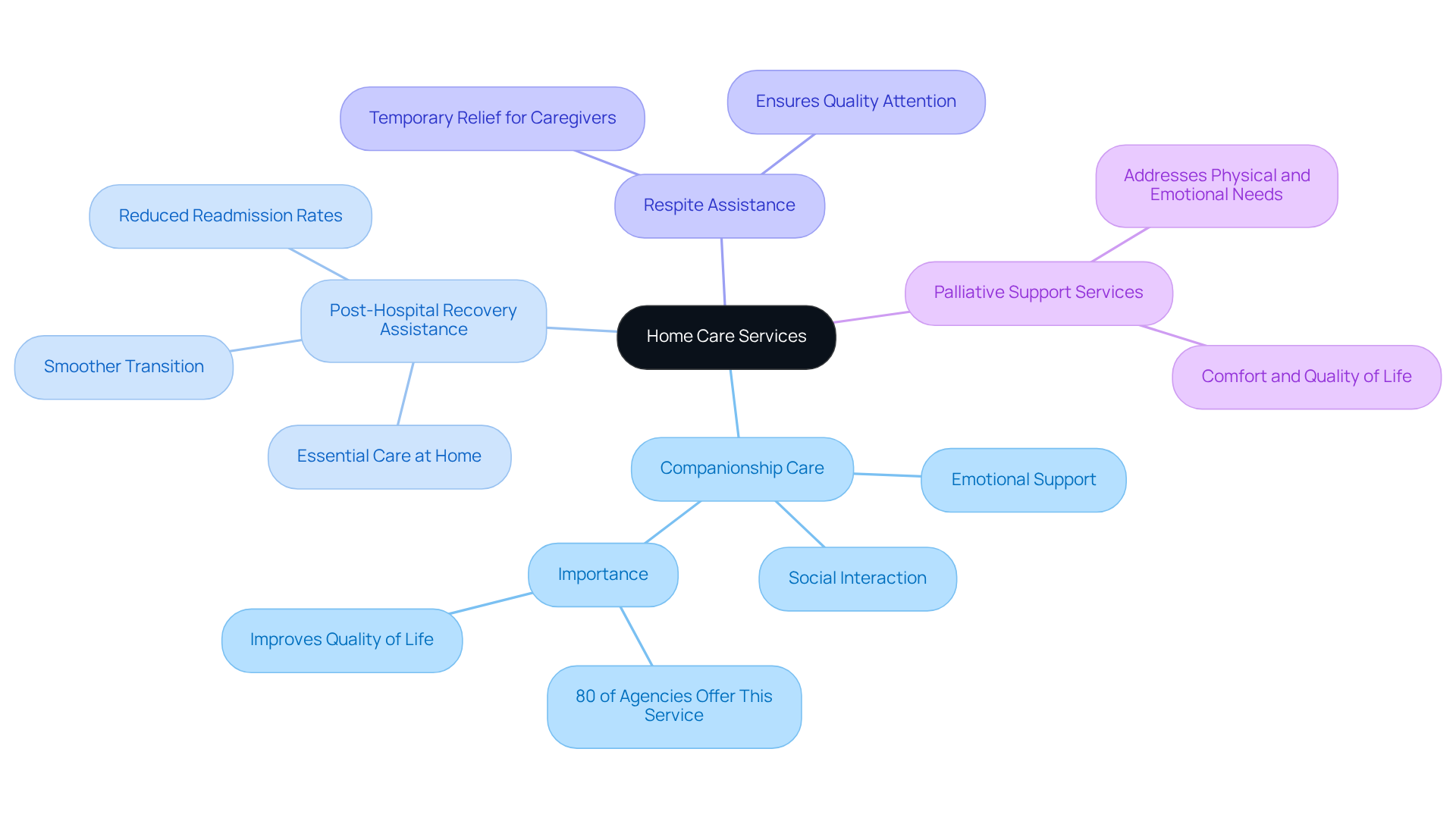
- Companionship Care: This service focuses on providing emotional support and social interaction, which is crucial for alleviating feelings of loneliness. In reality, around 80% of home support agencies now provide companionship services, acknowledging its essential role in improving the quality of life for individuals. Eulodia Ortiz, the 2023 Caregiver of the Year, beautifully emphasized that caregiving is not just a personal achievement but a reminder of the importance of caregiving and its impact on individuals and communities.
- Post-Hospital Recovery Assistance: Intended to aid individuals during their recuperation following hospital stays, this program guarantees that recipients obtain the essential care and support at home. Successful case studies demonstrate that clients receiving this assistance experience a , reducing the likelihood of readmission. For example, organizations that execute organized recovery strategies have noted a considerable reduction in readmission rates, showcasing the efficacy of this support.
- Respite Assistance: This support offers temporary relief for primary caregivers, enabling them to take necessary breaks while ensuring their loved ones continue to receive quality attention. It’s a reminder that caregivers also need care.
- Palliative Support Services: Specialized assistance for individuals with serious illnesses, this service emphasizes comfort and quality of life, addressing both physical and emotional needs.
Agencies may also specialize in areas such as dementia support or physical therapy, which can significantly influence a family's choice based on their loved one's specific health conditions and needs. Families frequently take these specializations into account when choosing home care agencies for seniors, as they look for customized support that matches their loved one's requirements.
Industry leaders stress that companionship support is not merely an add-on but a fundamental element of home assistance. It promotes a sense of belonging and emotional well-being for clients, reinforcing the idea that everyone deserves care and connection.
Types of Home Care Services: A Comparative Overview
When evaluating home care agencies for seniors, it's important to consider various categories that can significantly impact the well-being of your loved ones.
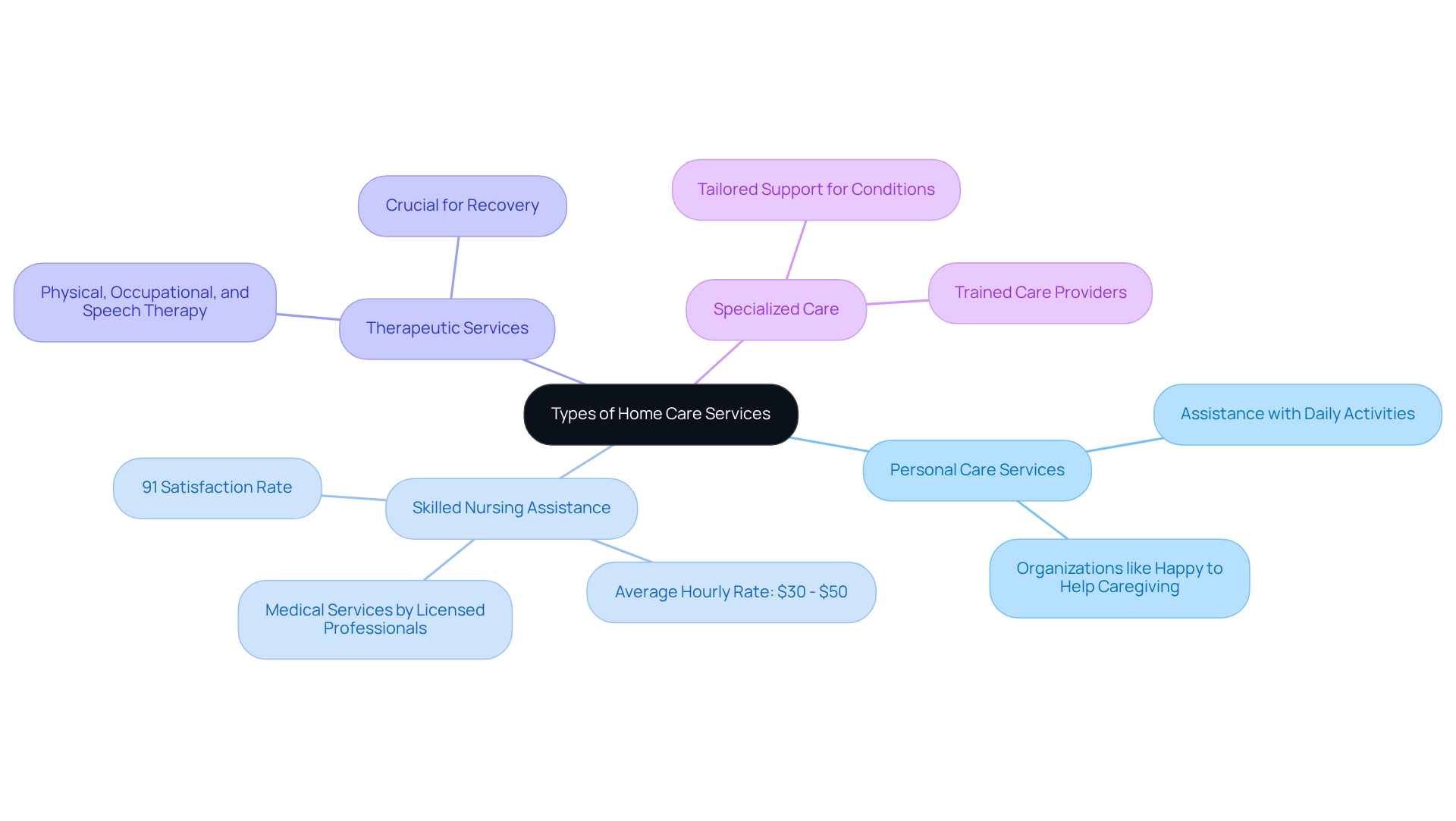
- Personal Care Services: These include assistance with daily activities such as bathing, dressing, and meal preparation. Organizations like Happy to Help Caregiving are dedicated to providing customized support that fosters independence and enhances quality of life.
- Skilled Nursing Assistance: This encompasses medical services delivered by licensed professionals, including medication management and wound treatment. Skilled nursing is vital for individuals with complex health conditions, ensuring they receive necessary medical attention in a familiar environment. The average hourly rate for skilled nursing services in home settings typically ranges from $30 to $50, reflecting the specialized training and expertise required. Importantly, 91% of home care recipients express satisfaction with their caregivers, underscoring the quality of care provided.
- Therapeutic Services: These services include physical, occupational, and speech therapy, which are often crucial for recovery after surgery or injury. Access to these resources can profoundly influence a person's recovery journey and overall health outcomes.
- Specialized Care: Some organizations offer tailored support for specific conditions, such as Alzheimer’s or Parkinson’s disease. Care providers in these settings are trained to address unique challenges, ensuring that clients receive appropriate assistance and support.
Each of the home care agencies for seniors may differ in the extent and quality of these services, making it essential for families to evaluate their loved one's specific needs against the options available. With the and projected to grow at a compound annual growth rate of 7.96% from 2024 to 2030, the demand for skilled nursing and personalized support is expected to rise. Furthermore, there is a forecasted need for 924,000 personal support aides and home health assistants between 2021 and 2031, highlighting the importance of making informed decisions when selecting a home assistance provider.
Comparing Costs: What to Expect from Home Care Agencies
The cost of services offered by home care agencies for seniors can vary widely based on location, the type of assistance needed, and the reputation of the agency. It's important to consider a few key points:
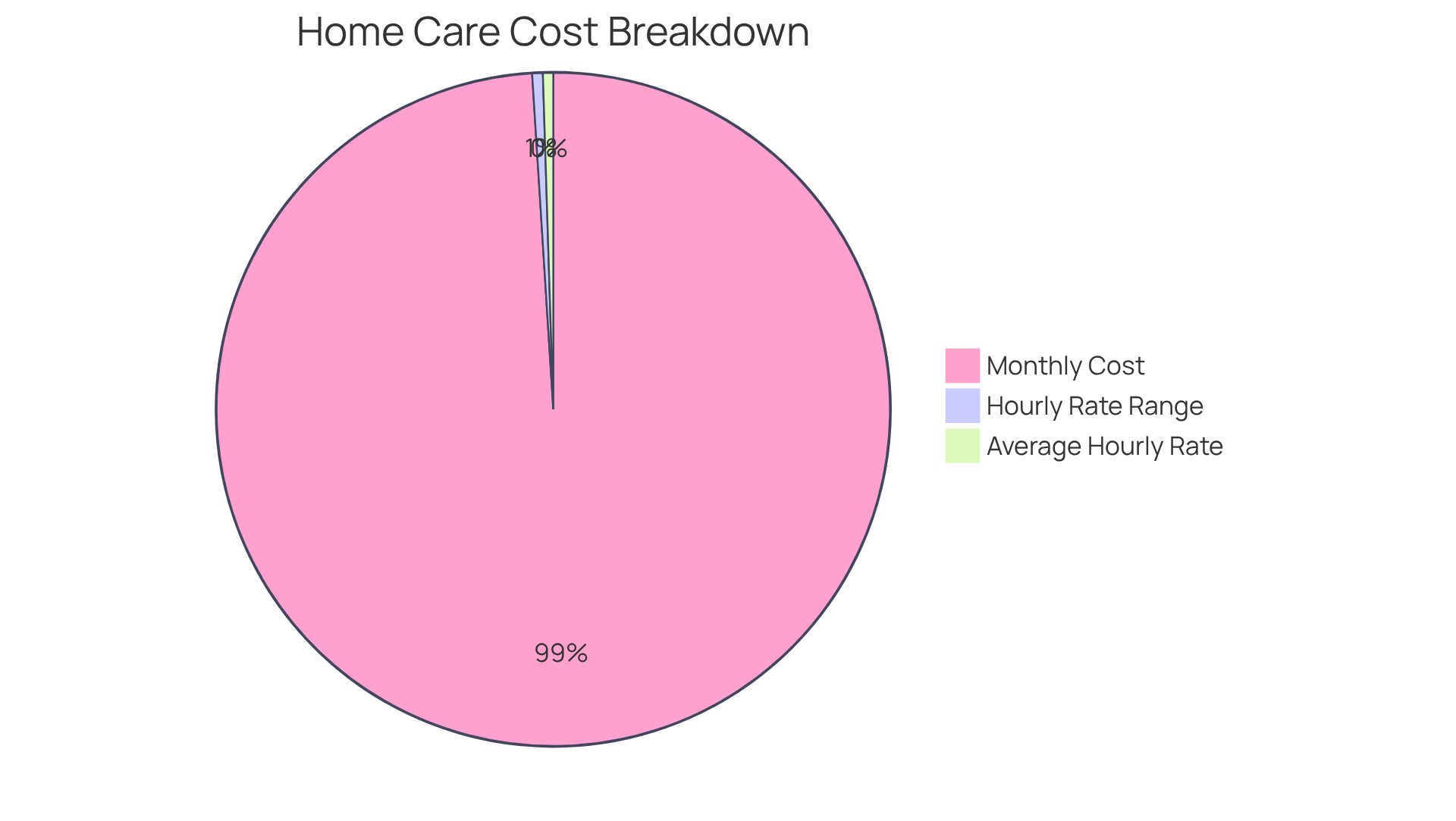
- Hourly rates for non-medical home care average around $33, yet they can fluctuate between $24 and $43, depending on the state and specific services required. For families in need of full-time support, monthly expenses can surpass $6,620 for 40 hours of assistance each week.
- Many organizations accept various payment methods, including private payment, long-term support insurance, and Medicaid. Understanding these options can significantly impact , helping families manage their expenses more effectively.
By evaluating the costs among different home care agencies for seniors, families can find a balance that meets their financial needs while ensuring they receive quality care. Remember, you are not alone in this journey; support is available to help you navigate these challenges with compassion and understanding.
Evaluating Quality: Standards and Client Satisfaction in Home Care
Quality in home care is not just about metrics; it’s about ensuring that families feel supported and understood during challenging times. Here are several key aspects to consider that reflect the standards of care provided:
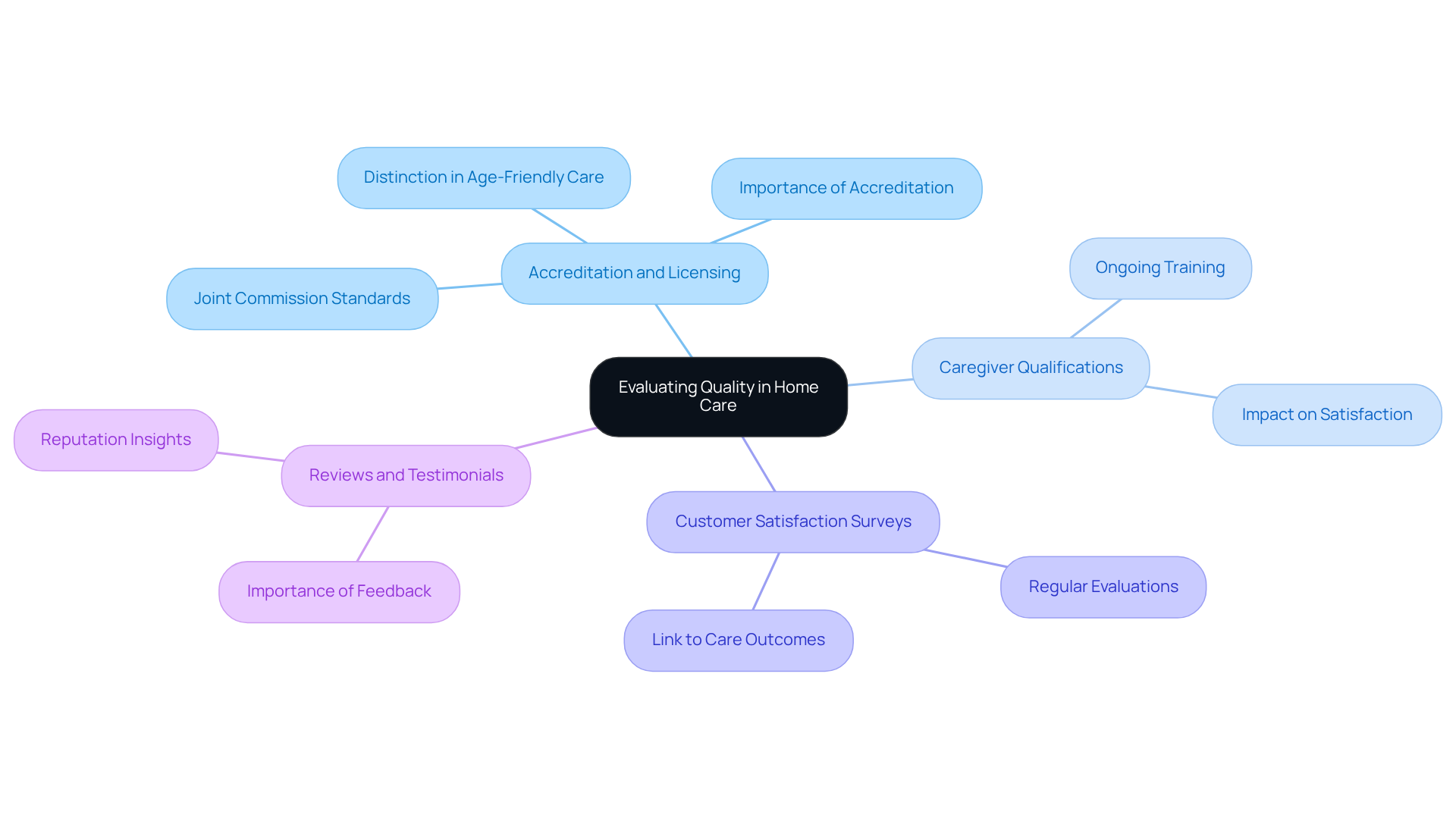
- Accreditation and Licensing: It’s vital for agencies to be licensed and accredited by recognized bodies, such as the Joint Commission, which evaluates over 23,000 healthcare organizations in the U.S. Accreditation signifies that an organization meets strict industry standards, ensuring safety and quality in service provision. Notably, distinctions like the Distinction in Age-Friendly Assistance and the Home Health Distinction in Outcomes highlight organizations that excel in patient-focused support and results. Choosing accredited providers can provide peace of mind for families.
- Caregiver Qualifications: The training and experience of caregivers are essential components of quality care. Agencies like Happy to Help Caregiving prioritize ongoing training and support for their staff, fostering a skilled workforce. Research shows that organizations with well-trained caregivers often report higher satisfaction among those they serve and improved health outcomes. It’s heartening to know that focusing on caregiver training can lead to a significant increase in positive feedback and overall satisfaction.
- Customer Satisfaction Surveys: Regular surveys conducted by organizations to evaluate customer satisfaction can offer valuable insights. High satisfaction rates are often linked to better care outcomes, underscoring the importance of responsive and personalized care. For instance, recent research indicates that organizations with elevated satisfaction ratings frequently observe significant improvements in health results for their patients.
- Reviews and Testimonials: Families should take the time to read evaluations and testimonials from other customers. Positive feedback can shed light on the organization’s reputation and the , helping families make informed decisions. Many client reviews resonate with the organization’s reputation, illustrating how high-quality service profoundly impacts client experiences.
By focusing on these quality indicators, families can feel more confident in selecting home care agencies for seniors that meet their loved ones' needs, ensuring a supportive and effective caregiving experience. It’s about finding the right fit, one that nurtures both the caregiver and the cared for.
Your Path Forward
Exploring home care agencies for seniors highlights the vital importance of choosing the right provider. These services go beyond mere assistance; they encompass emotional support and connection. It’s crucial for families to understand the range of services available, from companionship to skilled nursing, to ensure their loved ones receive care tailored to their specific needs.
Throughout this discussion, we’ve touched on key aspects such as:
- The types of services offered
- The varying costs associated with different care options
- The importance of quality indicators
The value of companionship care, assistance during post-hospital recovery, and specialized support for conditions like dementia or Parkinson’s disease underscores the diverse offerings that can significantly enhance seniors' quality of life. Moreover, the financial implications of home care services, including average costs and payment options, remind families of the importance of making informed decisions that align with their budget while ensuring high-quality care.
Ultimately, choosing a home care agency is not merely a logistical decision; it represents a profound commitment to the well-being of loved ones. Families are encouraged to:
- Conduct thorough research
- Carefully evaluate their options based on services, costs, and quality
- Seek agencies that prioritize compassion and understanding
By making informed choices, families can ensure that their seniors receive not only the necessary care but also the emotional support that fosters a sense of belonging and well-being.
https://iframe.tely.ai/cta/eyJhcnRpY2xlX2lkIjogIjY4ZjE4ZGM4ODk2ZTdkNGJmN2MxZWIzZSIsICJjb21wYW55X2lkIjogIjY4ZWU1ZGNhNzMxNzYyNTU3ZjNjOTVjMSIsICJpbmRleCI6IG51bGwsICJ0eXBlIjogImFydGljbGUifQ==Frequently Asked Questions
What services do home care agencies for seniors offer?
Home care agencies for seniors provide a range of services including companionship care, post-hospital recovery assistance, respite assistance, and palliative support services, all tailored to meet the specific needs of elderly individuals and those with disabilities.
What is companionship care and why is it important?
Companionship care focuses on providing emotional support and social interaction to alleviate feelings of loneliness. Approximately 80% of home support agencies offer this service, recognizing its essential role in improving the quality of life for individuals.
How does post-hospital recovery assistance benefit clients?
Post-hospital recovery assistance helps individuals recuperate at home after hospital stays, ensuring they receive the necessary care and support. Successful case studies show that this service leads to smoother transitions back to daily life and reduces the likelihood of readmission to the hospital.
What is respite assistance and who is it for?
Respite assistance offers temporary relief for primary caregivers, allowing them to take necessary breaks while ensuring their loved ones continue to receive quality care. It emphasizes the importance of caring for caregivers as well.
What are palliative support services?
Palliative support services provide specialized assistance for individuals with serious illnesses, focusing on comfort and quality of life while addressing both physical and emotional needs.
Do home care agencies specialize in certain areas?
Yes, many agencies specialize in areas such as dementia support or physical therapy, which can significantly influence families' choices based on their loved one's specific health conditions and needs.
Why is companionship support considered fundamental in home care?
Industry leaders emphasize that companionship support is a fundamental element of home assistance as it promotes a sense of belonging and emotional well-being for clients, reinforcing the idea that everyone deserves care and connection.