

For families in our service areas
For families in our service areas, this guide explains home care and how non-medical in-home caregiving can support care planning in East Idaho, Treasure Valley & Magic Valley, Northern Wasatch, North Central West Virginia, and Northeast Ohio.
What to Expect
This article highlights essential insights for families who are comparing home care providers for the elderly. It emphasizes the critical role of personalized, in-home support, which can significantly enhance the quality of life for seniors. As many older adults express a desire to remain in their homes, it is vital for families to explore various types of services available.
Understanding the benefits and financial implications of these services is key to making informed decisions that truly cater to the unique needs of their loved ones. The emotional journey of caregivers can often be overwhelming, filled with stress and burnout. However, there are compassionate solutions available that can alleviate some of this burden.
By focusing on the specific needs of seniors, families can find the right support that not only addresses practical concerns but also nurtures emotional well-being. This journey may feel daunting, but it is important to remember that help is available. Families can take comfort in knowing that there are dedicated professionals ready to provide the care and support their loved ones deserve.
What You Need to Know About Comparing Home Care Providers for
Navigating the landscape of home care services for the elderly can feel overwhelming for families seeking the best support for their loved ones. Many seniors have a strong desire to remain in the comfort of their own homes, making it essential to understand the various types of assistance available. This article aims to provide families with the crucial insights they need to make informed decisions about home care providers.
It highlights the benefits, challenges, and financial considerations that accompany these services. As families explore their options, it’s important to consider what factors to prioritize to ensure their loved ones receive the most suitable care.
Understanding Home Care Services for the Elderly
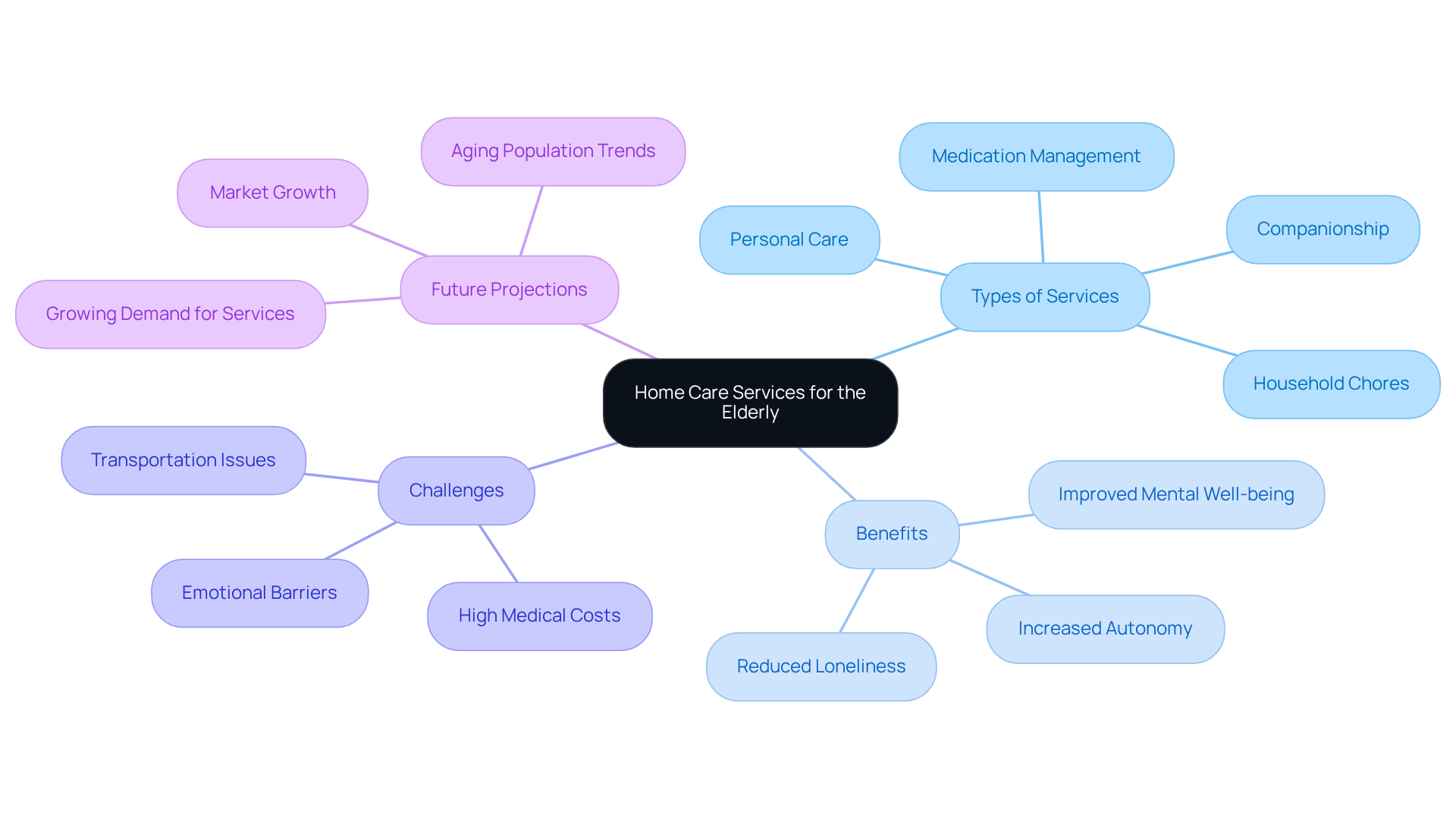
In-home assistance provided by home care providers for elderly individuals encompasses a variety of support options designed to help older adults with their daily tasks while allowing them to remain in the comfort of their own homes. These services can include:
- Personal care
- Companionship
- Medication management
- Help with household chores
The primary goal is to enhance the quality of life for older adults by promoting independence and ensuring safety. Understanding these offerings is essential for families as they navigate the complexities of caregiving and seek the best options for their loved ones' needs.
With approximately 75% of seniors expressing a preference to stay in their homes rather than move to assisted living facilities, the demand for support services is on the rise. By 2029, it is projected that around 71.4 million Americans aged 65 and older will require some form of assistance, highlighting the crucial role of residential support in meeting these needs.
Case studies illustrate the positive impact of in-home support on older adults. For instance, seniors receiving personalized assistance at home have reported improved mental well-being and a greater sense of autonomy, as caregivers help them with daily activities while respecting their independence. Additionally, home assistance services can significantly reduce feelings of loneliness and isolation, which are common among elderly individuals.
The benefits of home assistance go beyond physical support; they encompass emotional support and companionship, both vital for maintaining a high quality of life. However, older adults often face challenges in accessing adequate support, including:
- Transportation issues
- High medical costs
- Emotional barriers
Families seeking in-home assistance for their loved ones can find comfort in knowing that home care providers for elderly are designed to foster a supportive environment that enhances overall well-being. As noted by Home Instead, home care providers for elderly collaborate closely with seniors and their families to create tailored assistance plans that address their unique needs and preferences.
Moreover, understanding the financial implications of residential assistance is important, as costs can vary widely based on the level of support required. Regular physical assessments are also crucial in home health plans, ensuring that any changes in health status are promptly addressed.
Types of Home Care Services: A Comparative Overview
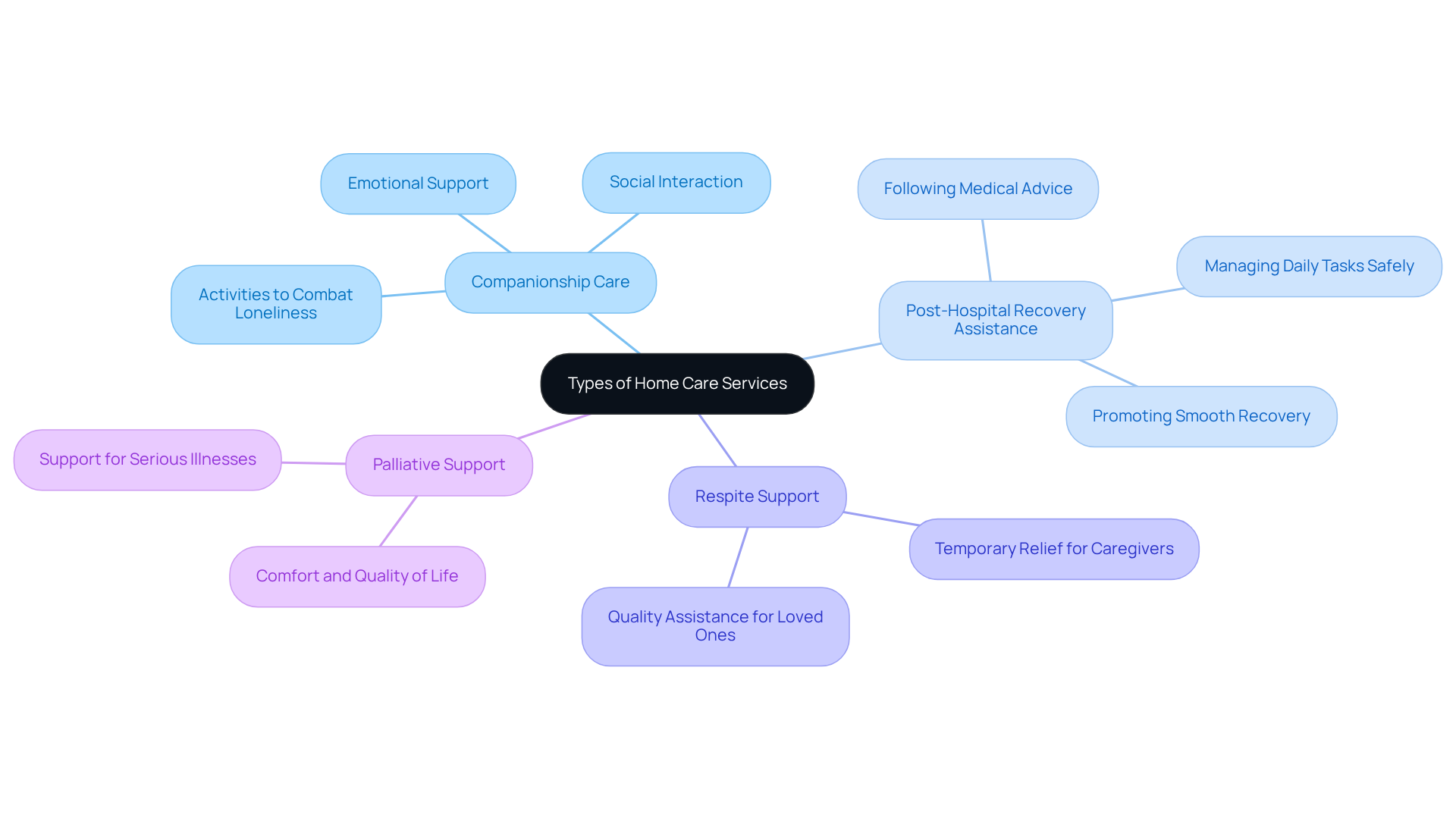
Home care services can be categorized into several types, each thoughtfully designed to meet specific needs:
- Companionship Care: This service focuses on providing emotional support and social interaction, helping to alleviate feelings of loneliness that many may experience.
- Post-Hospital Recovery Assistance: For those recovering from surgery or illness, this service aids individuals in following medical advice and managing daily tasks safely, promoting a smooth recovery.
- Respite Support: This offers temporary relief for primary caregivers, allowing them to take much-needed breaks while ensuring their loved ones receive quality assistance.
- Palliative Support: This specialized assistance is for individuals with serious illnesses, emphasizing comfort and quality of life rather than curative treatment, which can be a source of peace for families.
Each category of assistance has its unique characteristics and advantages. It is essential for families to assess their specific needs when selecting home care providers for elderly individuals, as this choice can significantly impact their emotional well-being and the care experience.
Benefits of Home Care: Enhancing Quality of Life for Seniors
Home care services provide a range of benefits that significantly enhance the quality of life for seniors:
-
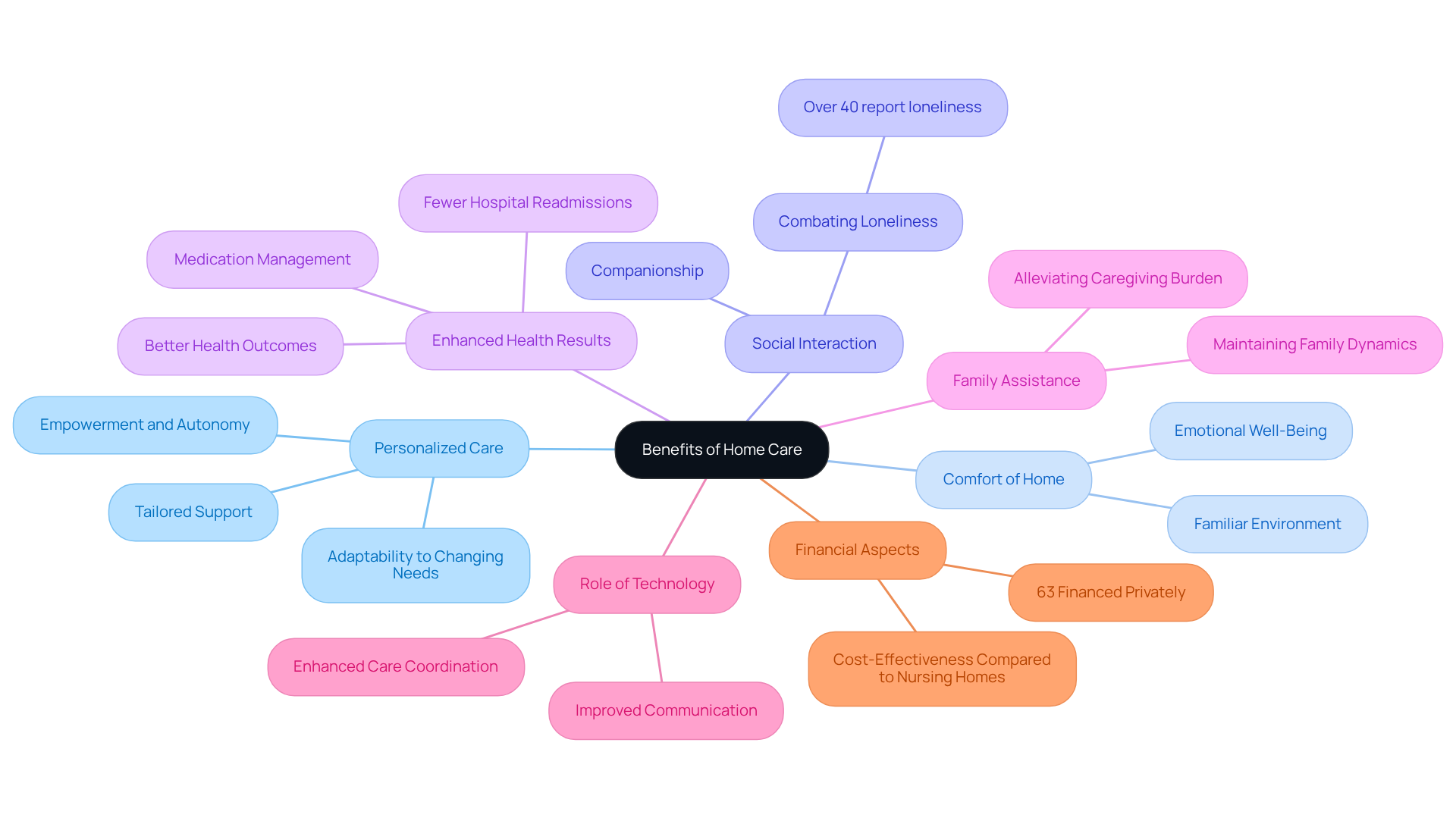
Personalized Care: Tailored support aligns with individual needs and preferences, fostering a sense of autonomy. This empowers seniors to maintain control over their daily lives, which is vital for their well-being.
-
Comfort of Home: Receiving care in familiar surroundings can alleviate anxiety and promote emotional well-being. Being surrounded by personal belongings and memories contributes to a sense of security, making the experience more comforting.
-
Social Interaction: Regular visits from caregivers offer companionship, effectively addressing loneliness and isolation—common challenges among older adults. Over 40% report feeling lonely regularly. Research shows that older adults who sustain strong social ties encounter reduced levels of stress and depression. Meaningful social time can be "powerful medicine for the mind," as Ryan-Seo notes, emphasizing the importance of social engagement in combating loneliness.
-
Enhanced Health Results: Studies indicate that seniors who receive in-home assistance from home care providers for elderly frequently achieve better health outcomes. They experience fewer hospital readmissions and improved management of chronic conditions due to personalized plans that adapt to their changing needs. For example, homemaking assistance helps elderly individuals with medication management, ensuring adherence and safety.
-
Family Assistance: Home care providers for elderly offer in-home support that alleviates the caregiving burden on relatives, allowing them to focus on meaningful moments with their loved ones instead of being overwhelmed by caregiving responsibilities. This support is crucial for maintaining family dynamics and emotional connections.
-
Role of Technology: The incorporation of technology in domestic support activities enhances the provision of individualized assistance. It improves communication and coordination among caregivers and families, making the care process smoother.
-
Financial Aspects: It's important to recognize that approximately 63% of domestic support options are financed directly by individuals or families. This indicates a significant shift towards private payment alternatives in elder assistance.
These components together illustrate how domestic support services not only enhance the quality of life for elderly individuals but also assist their families in managing the challenges of caregiving.
Home Care vs. Other Senior Living Options: A Comparative Analysis
When families evaluate care options for elderly loved ones, they often explore home care providers for elderly, making it an emotional journey filled with important decisions. Comparing home care with other senior living alternatives is a common step in this process:
-
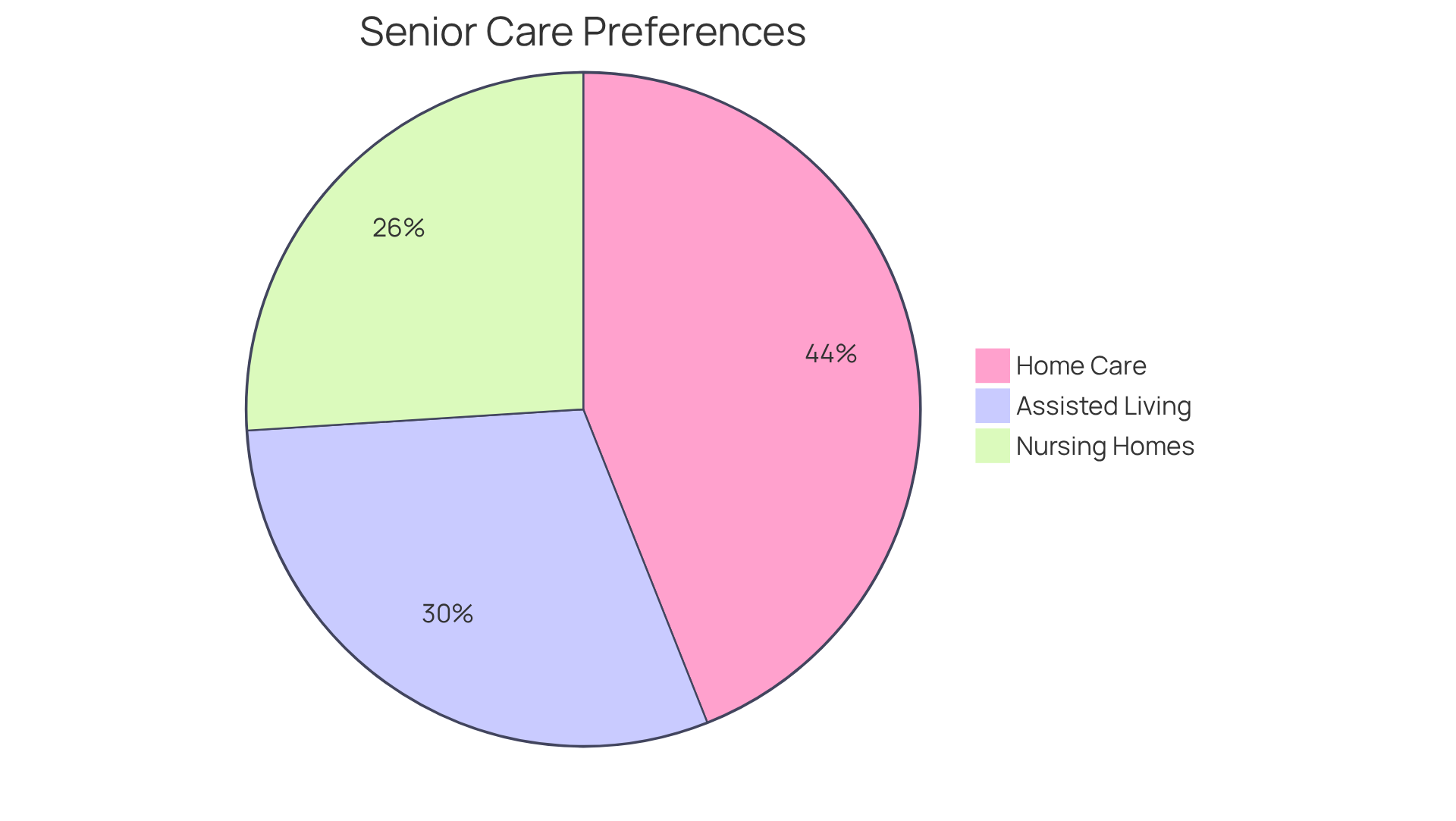
Home Care: This option offers personalized, in-home support that nurtures independence and comfort. It is particularly suited for older adults who wish to remain in their own residences while receiving assistance with daily tasks from home care providers for elderly. About 44% of home support recipients need assistance with at least one daily activity, and notably, 70% of home service patients are aged 65 and older. This highlights the growing demand for tailored support in familiar surroundings.
-
Assisted Living: This setting provides a community environment with shared living spaces and staff available for assistance. It is ideal for older adults who require more organized help but still desire a level of independence. However, families should consider the average monthly cost for assisted living, which ranges from $5,350 to $6,422, culminating in an average annual cost of approximately $48,612. This financial aspect can weigh heavily on caregivers.
-
Nursing Homes: These facilities deliver comprehensive medical care and supervision for elderly individuals with serious health issues. They are best suited for individuals who need constant medical attention and cannot live independently. The national average expense for a semi-private room in a nursing facility is around $225 daily, which can accumulate quickly for families.
Each option presents unique advantages and challenges. The decision often hinges on the individual's health status, personal preferences, and family dynamics. Many elderly individuals express a preference for home care providers for elderly, as these services allow them to maintain their autonomy and stay in a familiar environment. As the domestic support market is projected to grow to $225 billion by 2024, it signifies a broader trend towards in-home assistance that aligns with the services offered by home care providers for elderly populations.
However, families should also consider that the financial strain of remaining at home can often exceed their expectations for retirement and senior support planning. Understanding these differences is crucial for families to ensure their loved ones receive the appropriate level of care that meets their unique needs. This journey may be challenging, but with the right support and information, families can find the best care solutions for their loved ones.
Key Takeaways for Caregivers
Home care services for the elderly are truly essential in promoting independence, comfort, and overall well-being among seniors. As families navigate care options, it becomes crucial to understand the diverse offerings of home care providers. This knowledge empowers them to make informed decisions that resonate with the unique needs of their loved ones.
Throughout our exploration, we’ve uncovered key insights about the types of home care services available. From companionship care to post-hospital recovery assistance, respite support, and palliative care, each service significantly enhances the quality of life for older adults. These services provide personalized support that addresses both physical and emotional needs, fostering a nurturing environment.
The comparative analysis of home care versus other senior living options reveals a growing preference among seniors for in-home assistance. This underscores the importance of tailoring care to individual circumstances, ensuring that elderly loved ones receive the best possible support in a familiar and comforting setting.
Ultimately, the decision-making process surrounding home care transcends merely choosing a service; it reflects a heartfelt commitment to the well-being of elderly family members. Families are encouraged to consider all aspects of care, including financial implications and the emotional benefits of maintaining independence at home. By prioritizing informed choices, families can cultivate a nurturing atmosphere that profoundly enhances the lives of their elderly relatives.
https://iframe.tely.ai/cta/eyJhcnRpY2xlX2lkIjogIjY4ZmViNmEwNmI5OGRlZTM3ODcxNTI5MiIsICJjb21wYW55X2lkIjogIjY4ZWU1ZGNhNzMxNzYyNTU3ZjNjOTVjMSIsICJpbmRleCI6IG51bGwsICJ0eXBlIjogImFydGljbGUifQ==Frequently Asked Questions
What are home care services for the elderly?
Home care services for the elderly include in-home assistance that helps older adults with daily tasks while allowing them to remain in their own homes. Services can include personal care, companionship, medication management, and help with household chores.
What is the primary goal of home care services?
The primary goal of home care services is to enhance the quality of life for older adults by promoting independence and ensuring safety.
Why is there an increasing demand for home care services?
Approximately 75% of seniors prefer to stay in their homes rather than move to assisted living facilities, leading to a rising demand for support services. By 2029, it is projected that around 71.4 million Americans aged 65 and older will require some form of assistance.
How do home care services impact the mental well-being of seniors?
Case studies show that seniors receiving personalized assistance at home report improved mental well-being and a greater sense of autonomy, as caregivers help them with daily activities while respecting their independence.
What emotional benefits do home care services provide?
Home assistance services offer emotional support and companionship, which are vital for maintaining a high quality of life and can significantly reduce feelings of loneliness and isolation among elderly individuals.
What challenges do older adults face in accessing home care services?
Older adults often face challenges such as transportation issues, high medical costs, and emotional barriers when trying to access adequate support.
How do home care providers create tailored assistance plans?
Home care providers collaborate closely with seniors and their families to create tailored assistance plans that address the unique needs and preferences of the elderly.
What should families consider regarding the financial implications of home care?
Families should understand that the costs of home care services can vary widely based on the level of support required, making it important to consider financial implications when seeking assistance.
Why are regular physical assessments important in home health plans?
Regular physical assessments are crucial in home health plans to ensure that any changes in the health status of the elderly are promptly addressed, maintaining their overall well-being.