Crafting Your Answer: What Makes You a Good Caregiver?

For families in our service areas
For families in our service areas, this guide explains caregiver support and how non-medical in-home caregiving can support care planning in East Idaho, Treasure Valley & Magic Valley, Northern Wasatch, North Central West Virginia, and Northeast Ohio.
The Importance of Crafting Your Answer: What Makes You a
Understanding what makes a good caregiver is essential. Nearly 1 in 4 Americans takes on the vital role of providing care for loved ones, which presents significant challenges. Caregivers often face emotional and physical strains that can impact their well-being and effectiveness.
These complexities can lead to feelings of isolation and burnout, making it crucial for caregivers to communicate their strengths and experiences effectively. How can they do this in a way that resonates with potential employers?
By exploring these dimensions, caregivers can enhance their personal skills and articulate their value in the caregiving landscape. This article delves into the core responsibilities, unique qualities, and effective strategies that define successful caregiving, providing actionable tips to empower caregivers in their roles.
Define Your Caregiver Role and Responsibilities
Clarifying your support role begins with understanding the essential duties vital to efficient caregiving. Caregivers face significant challenges, including stress and burnout, which can lead to feelings of being overwhelmed and low energy. According to the American Medical Association, nearly 1 in 4 Americans is a family support provider, underscoring the prevalence of caregiving in society.
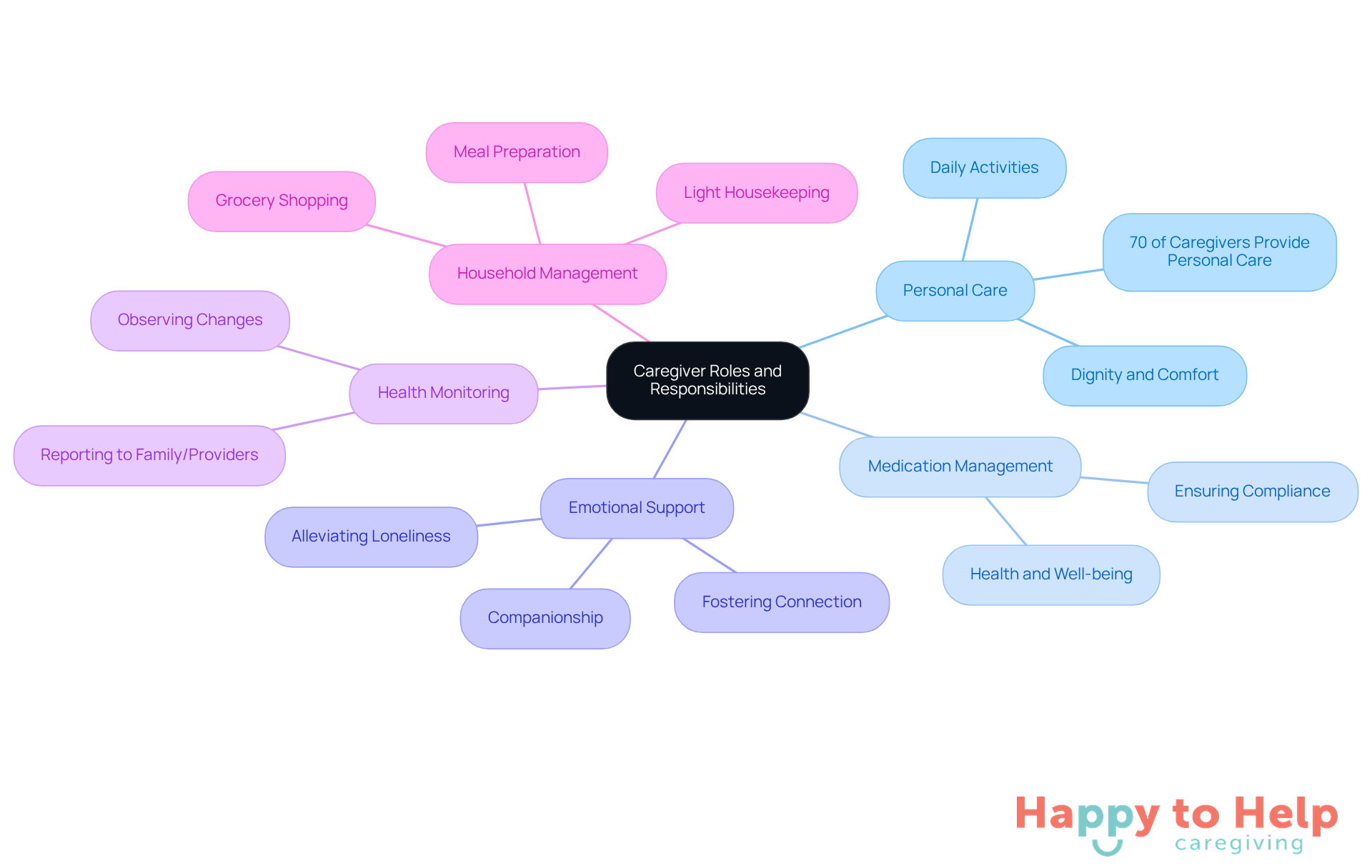
These responsibilities encompass a range of essential duties:
- Personal Care: Assisting clients with daily activities such as bathing, dressing, and grooming is crucial. Approximately 70% of caregivers offer personal care services, highlighting the significance of this aspect in preserving individuals' dignity and comfort.
- Medication Management: Ensuring that individuals take their medications as prescribed is vital for their health and well-being.
- Emotional Support: Providing companionship and emotional reassurance helps alleviate feelings of loneliness, a common issue among seniors and individuals with special needs. This support fosters a sense of connection and security.
- Health Monitoring: Observing and reporting any changes in the individual's health condition to family members or healthcare providers is a crucial duty that can significantly influence the individual's care plan.
- Household Management: Assisting with light housekeeping, meal preparation, and grocery shopping ensures that the client's living environment remains safe and comfortable.
By clearly defining these roles and acknowledging the challenges, caregivers can effectively communicate what makes you a good caregiver in their understanding of caregiving. This clarity not only enhances their caregiving approach but also reinforces their commitment to providing compassionate and personalized care that is essential in the field.
Identify Your Unique Strengths and Qualities
Identifying your unique strengths and qualities as a caregiver can be challenging. Many caregivers struggle to recognize what makes them effective in their roles, which relates to what makes you a good caregiver answer, and this struggle can lead to feelings of inadequacy and self-doubt. This lack of awareness not only affects their confidence but can also impact the quality of care they provide.
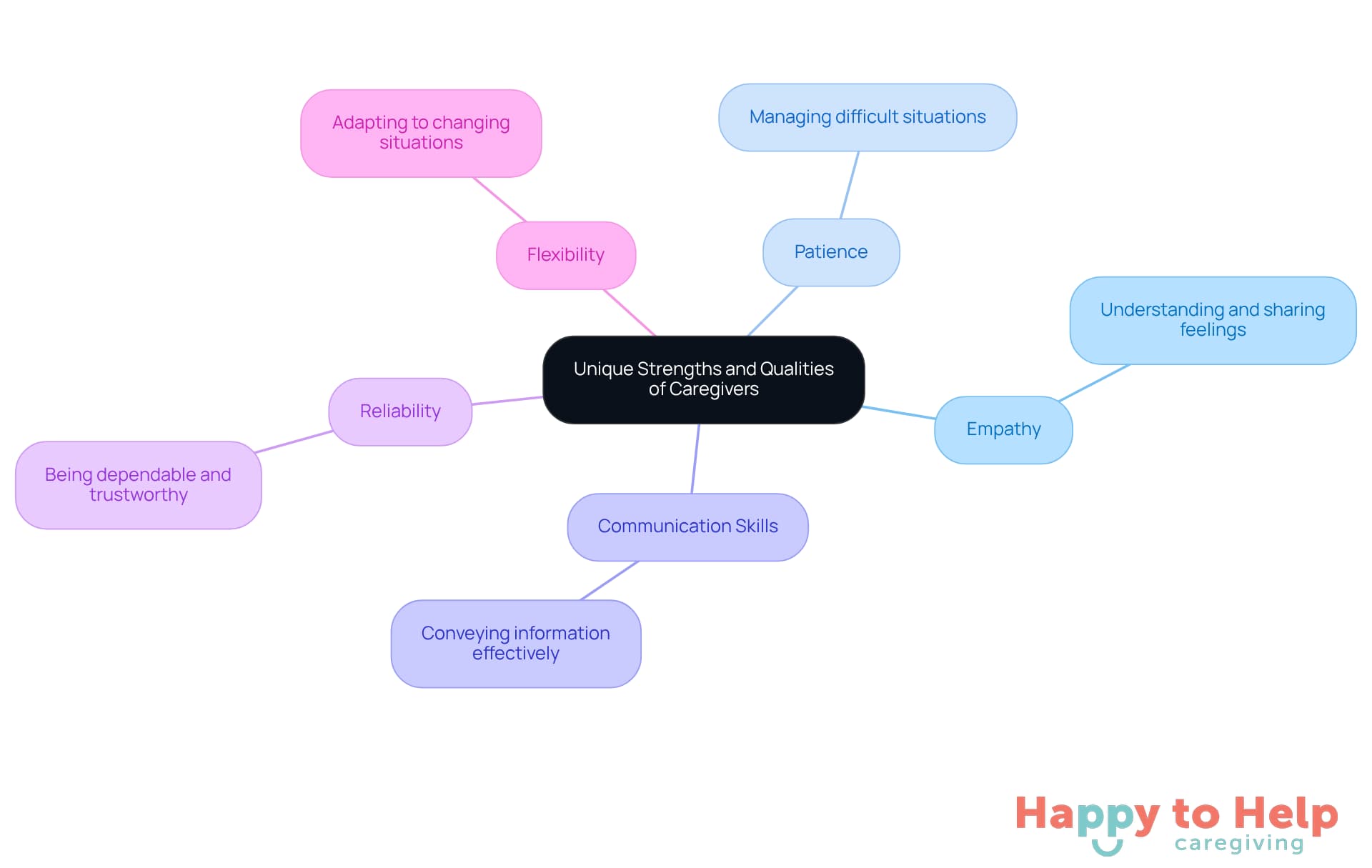
To address this issue, consider the following key qualities that are essential for effective caregiving:
- Empathy: Understanding and sharing the feelings of others is crucial for providing emotional support.
- Patience: This quality is vital for managing difficult situations, ensuring individuals feel at ease and valued.
- Communication Skills: Effectively conveying information to patients, families, and healthcare professionals is essential for successful caregiving.
- Reliability: Being dependable and trustworthy fosters a sense of security for clients and their families.
- Flexibility: Adapting to changing situations and client needs is a key trait for caregivers.
Reflecting on specific instances where you demonstrated these qualities can help you articulate what makes you a good caregiver answer more effectively. By recognizing and embracing these traits, you can enhance your caregiving skills and provide better support to those in your care.
Provide Concrete Examples of Your Caregiving Experience
Caregiving can be a complex and demanding role, often filled with challenges that can feel overwhelming. For instance, many caregivers struggle with managing medications and ensuring their loved ones receive proper nutrition. This complexity can lead to stress and uncertainty, making it crucial for caregivers to have effective strategies in place.
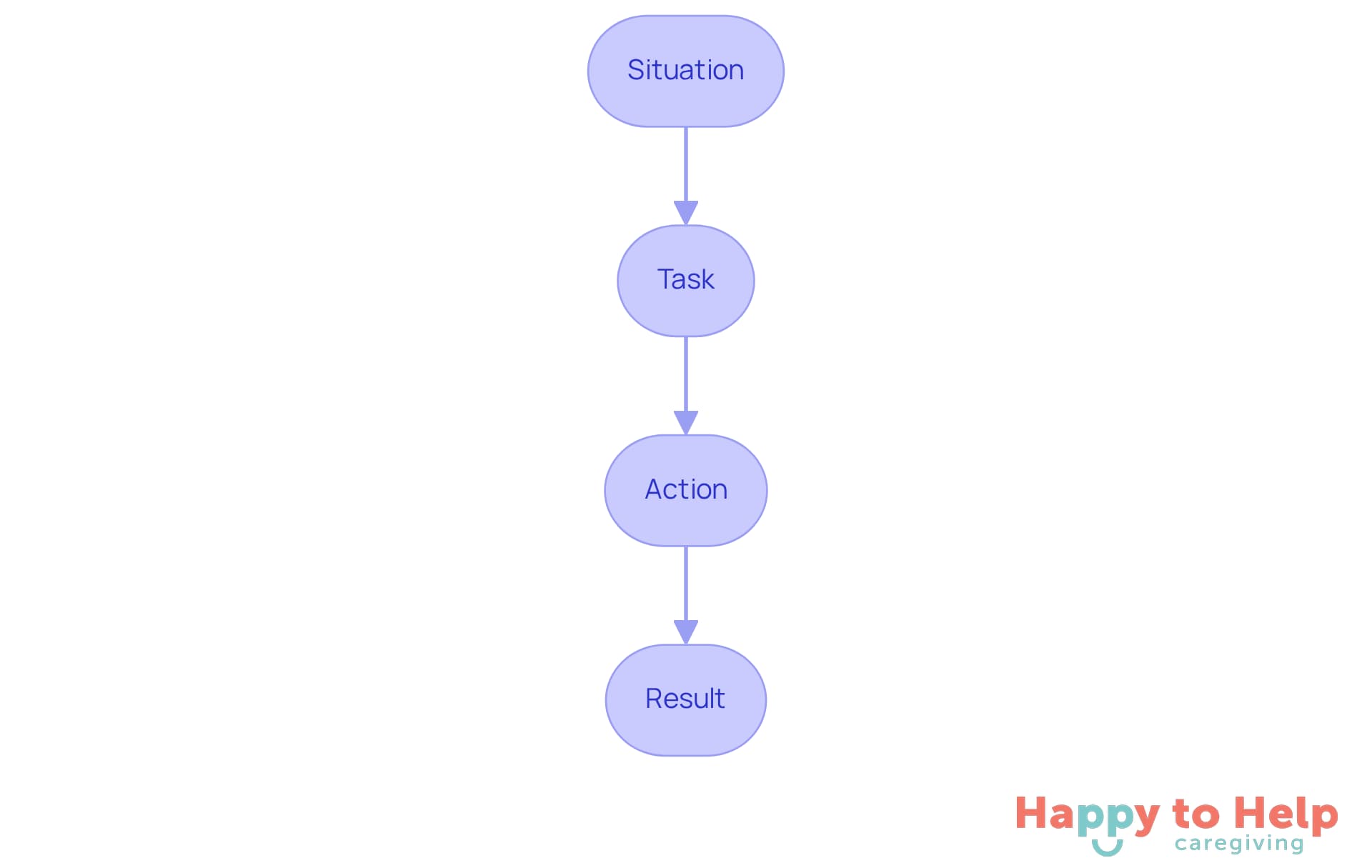
To illustrate how to effectively communicate your caregiving experience, consider the following structure:
- Situation: Describe the context of your caregiving role. For example, 'I cared for my grandmother who had Alzheimer's disease, navigating the complexities of her condition.'
- Task: Outline your specific duties. For instance, 'I was responsible for managing her daily medications and ensuring she ate nutritious meals tailored to her dietary needs.'
- Action: Detail the steps you took to fulfill your responsibilities. 'I created a daily schedule for her medications and prepared meals that catered to her dietary needs, ensuring she received the right nutrients.'
- Result: Share the outcome of your actions. 'As a result, her health improved significantly, and she felt more secure and comfortable in her home environment, which is crucial for individuals with cognitive impairments.'
Utilizing this framework can help you express your insights clearly and effectively. Research shows that proper medication management can lead to improved health outcomes, reinforcing the importance of your role. Additionally, family supporters spend an average of $7,242 each year on out-of-pocket expenses related to caregiving, highlighting the financial burden associated with this role. By sharing your background in this structured manner, you can effectively provide what makes you a good caregiver answer and convey the value of your caregiving contributions.
Moreover, as the number of family caregivers is expected to reach 63 million by 2025, sharing your organized insights can resonate with many who are facing similar challenges.
Tailor Your Answer to the Job Requirements
To effectively tailor your answer to job requirements, understanding what makes you a good caregiver answer is essential in recognizing the challenges faced by job seekers in a competitive market. Many candidates struggle to provide what makes you a good caregiver answer in a way that resonates with employers, which can lead to missed opportunities.
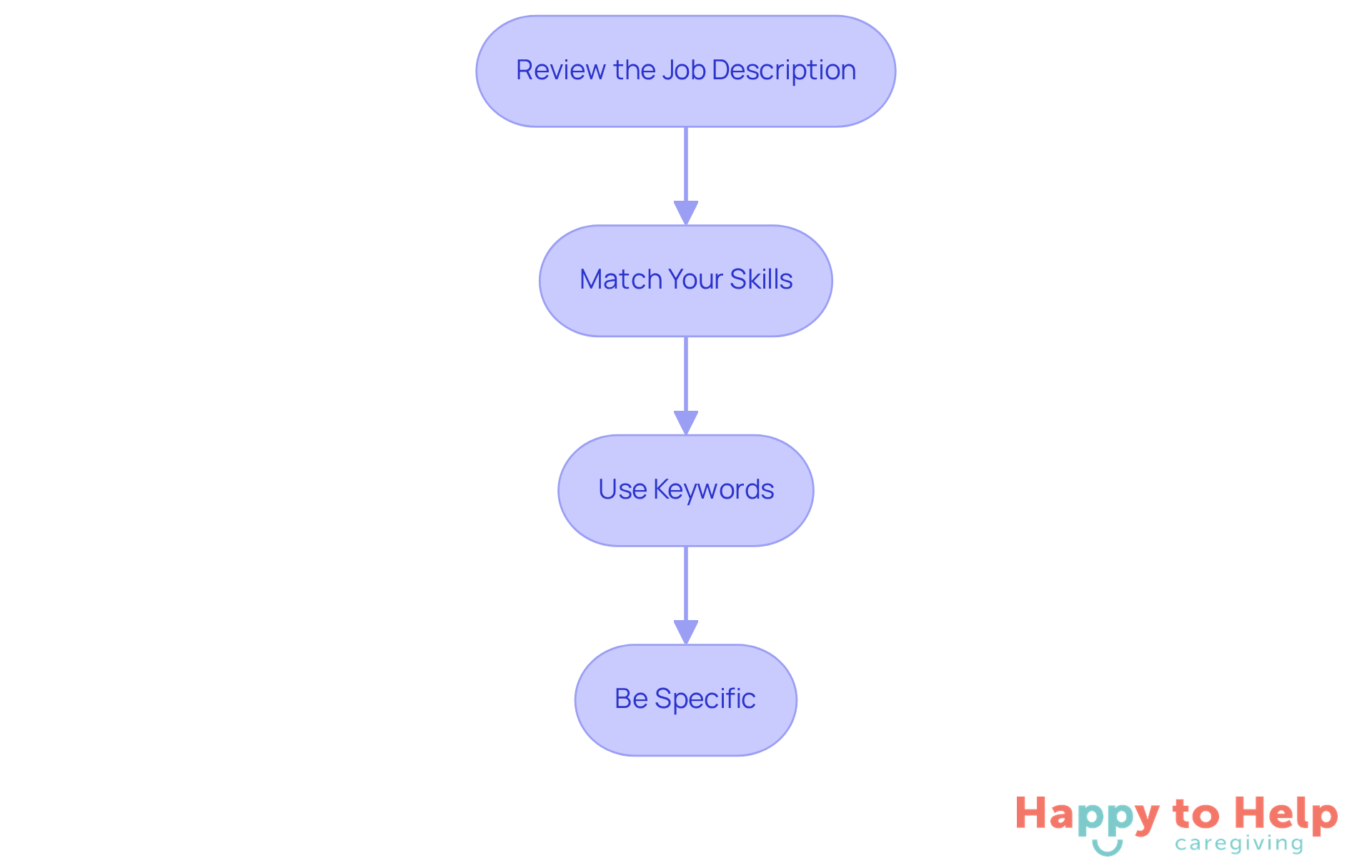
To address this issue, follow these steps:
- Review the Job Description: Identify key responsibilities and qualifications listed by the employer. This helps you understand what the employer values most.
- Match Your Skills: Align your strengths and qualifications with the specific requirements. For instance, if the job stresses the importance of patience, showcase your background in assisting individuals with difficult behaviors.
- Use Keywords: Incorporate keywords from the job description into your response to demonstrate your fit for the role. This not only shows your attention to detail but also helps your application stand out.
- Be Specific: Provide examples that directly relate to the job requirements. If the position requires experience with elderly clients, share your relevant experiences in that area.
By customizing your answer, you significantly increase your chances of making a positive impression on potential employers. This approach not only highlights your qualifications but also provides what makes you a good caregiver answer by demonstrating your understanding of the role and its demands.
Your Path Forward
Understanding what makes a good caregiver is essential, as it encompasses a range of responsibilities and personal qualities that contribute to effective caregiving. Caregivers face challenges such as defining their roles and identifying their unique strengths, which can hinder their ability to present themselves as capable and compassionate.
To address these challenges, caregivers must recognize their essential duties, including:
- Personal care
- Medication management
- Emotional support
These responsibilities are critical for maintaining the well-being of those they assist. Moreover, highlighting personal attributes like empathy, patience, and reliability can significantly enhance a caregiver's effectiveness.
Sharing structured examples of caregiving experiences not only conveys competence but also demonstrates a commitment to quality care. For instance, caregivers can illustrate their skills by discussing specific situations where they provided emotional support or managed medication effectively.
Ultimately, the journey of caregiving is both rewarding and challenging. By embracing the qualities and skills discussed, caregivers can improve their confidence and ensure they provide the highest level of support to those in need. As the demand for caregivers continues to rise, it is crucial for individuals to articulate their strengths and experiences effectively, paving the way for meaningful connections and improved outcomes in caregiving roles.
https://iframe.tely.ai/cta/eyJhcnRpY2xlX2lkIjogIjY5MjEwYTk0ZGI0NWVjMjkzNDBlODEyNiIsICJjb21wYW55X2lkIjogIjY4ZWU1ZGNhNzMxNzYyNTU3ZjNjOTVjMSIsICJpbmRleCI6IG51bGwsICJ0eXBlIjogImFydGljbGUifQ==Frequently Asked Questions
What is the importance of defining the caregiver role and responsibilities?
Defining the caregiver role is essential for efficient caregiving, as it helps clarify the duties involved and addresses the challenges caregivers face, such as stress and burnout.
What are the main responsibilities of a caregiver?
The main responsibilities of a caregiver include personal care, medication management, emotional support, health monitoring, and household management.
What does personal care involve in caregiving?
Personal care involves assisting clients with daily activities such as bathing, dressing, and grooming, which is crucial for preserving their dignity and comfort.
Why is medication management important for caregivers?
Medication management is vital because it ensures that individuals take their medications as prescribed, which is essential for their health and well-being.
How does emotional support play a role in caregiving?
Emotional support provides companionship and reassurance, helping to alleviate feelings of loneliness, particularly among seniors and individuals with special needs, fostering a sense of connection and security.
What is the significance of health monitoring in caregiving?
Health monitoring involves observing and reporting any changes in the individual's health condition to family members or healthcare providers, which can significantly influence the individual's care plan.
What tasks are included in household management for caregivers?
Household management tasks include assisting with light housekeeping, meal preparation, and grocery shopping to ensure the client's living environment remains safe and comfortable.
How can caregivers enhance their caregiving approach?
By clearly defining their roles and responsibilities, caregivers can communicate effectively and reinforce their commitment to providing compassionate and personalized care.
List of Sources
- Define Your Caregiver Role and Responsibilities
- As Family Caregiving Grows, So Does the Need for Reform - Medicare Rights Center (https://medicarerights.org/medicare-watch/2025/08/14/as-family-caregiving-grows-so-does-the-need-for-reform)
- 2023 Study — Caregiving in America, Statistics on Family Caregivers and Beyond | Guardian (https://guardianlife.com/reports/caregiving-in-america)
- National Alliance for Caregiving: Caregiving in the US 2025 Report (https://johnahartford.org/resources/view/national-alliance-for-caregiving-caregiving-in-the-us-2025-report)
- News & Information (https://wellnessalliance.org/resources-and-tools/news-and-information/2025/11/10/national-family-caregivers-month--preventing-caregiver-burnout)
- It’s Time to Care for Caregivers: Senator Markey Announces Comprehensive Family Caregiving Legislative Agenda | U.S. Senator Ed Markey of Massachusetts (https://markey.senate.gov/news/press-releases/11/20/2025/its-time-to-care-for-caregivers-senator-markey-announces-comprehensive-family-caregiving-legislative-agenda)
- Identify Your Unique Strengths and Qualities
- D-CARE study finds caregiver satisfaction higher with dementia care programs than usual care (https://uclahealth.org/news/release/d-care-study-finds-caregiver-satisfaction-higher-with)
- Caregiving can test you, body and soul. It can also unlock a new sense of self (https://npr.org/2025/04/01/nx-s1-5336314/caregiver-caregiving-identity-family-support-burnout)
- Empathy’s Influence: Dementia Patients Supporting Caregivers (https://caes.ucdavis.edu/news/empathys-influence-dementia-patients-supporting-caregivers)
- Empathy between the person receiving and giving care helps both. What happens when dementia tears that bond? (https://wfmz.com/news/area/pennsylvania/empathy-between-the-person-receiving-and-giving-care-helps-both-what-happens-when-dementia-tears/article\_3a37b22e-d762-11ef-a9c7-b34302d9f8af.html)
- Empathy in Action: Marie's Dedication to Caregivers | United Way Worldwide (https://unitedway.org/news/empathy-in-action-maries-dedication-to-caregivers)
- Provide Concrete Examples of Your Caregiving Experience
- She cares for her aging parents full time. That requires taking care of herself, too (https://npr.org/2025/11/20/nx-s1-5522341/unpaid-caregivers-elderly-support)
- Caregiving Crisis: Nearly 1 in 4 US adults serve as caregivers for relatives with complex needs (https://investigatetv.com/2025/11/04/caregiving-crisis-nearly-1-4-us-adults-serve-caregivers-relatives-with-complex-needs)
- His sick wife asked him to kill her. Now that she's gone, he says the loneliness is worse. (https://usatoday.com/story/life/health-wellness/2025/06/11/cost-of-care-caregiver-shares-journey-struggles/83410632007)
- What to expect when you become a caregiver– and how to cope with the challenges (https://heart.org/en/news/2025/11/20/what-to-expect-when-you-become-a-caregiver-and-how-to-cope-with-the-challenges)
- Could you cope with being a caregiver to a terminally ill loved one? (https://usatoday.com/videos/news/2025/06/11/handle-with-care-a-caregivers-story/83651033007)
- Tailor Your Answer to the Job Requirements
- How to Attract Top Caregivers with Effective Job Descriptions | Aaniie, formerly Smartcare Software (https://aaniie.com/news/how-to-attract-top-caregivers-with-effective-job-descriptions)
- Job Worth Doing: Update Descriptions (https://shrm.org/topics-tools/news/hr-magazine/job-worth-update-descriptions)
- Home Health and Personal Care Aides (https://bls.gov/ooh/healthcare/home-health-aides-and-personal-care-aides.htm)
- Caregiver Recruitment Strategies That Work | Rellevate (https://rellevate.com/news/caregiver-recruitment-strategies)
- Report looks at challenges many face juggling caregiving responsibilities — Harvard Gazette (https://news.harvard.edu/gazette/story/2024/10/report-looks-at-challenges-many-face-juggling-caregiving-responsibilities)