
For families in our service areas
For families in our service areas, this guide explains caregiver support and how non-medical in-home caregiving can support care planning in East Idaho, Treasure Valley & Magic Valley, Northern Wasatch, North Central West Virginia, and Northeast Ohio.
What You Need to Know About Create Your Caregiver Calendar: A
Creating a caregiver calendar addresses a significant challenge faced by many caregivers: the overwhelming complexity of their responsibilities. With numerous tasks to manage, caregivers often experience stress and anxiety, leading to missed appointments and a decline in the quality of care provided. This situation not only affects the caregivers but also impacts those they care for, creating a cycle of stress and disorganization.
To combat this issue, establishing an effective caregiver calendar can be a game-changer. This guide provides a clear, step-by-step approach to creating a calendar that organizes tasks and enhances communication among family members. By implementing this solution, caregivers can regain control over their schedules and reduce stress.
But what are the essential components of a truly effective caregiver calendar? How can caregivers ensure they are utilizing it to its fullest potential? In the following sections, we will explore practical tips and strategies to help caregivers maximize the benefits of their calendars.
Understand the Purpose of a Caregiver Calendar
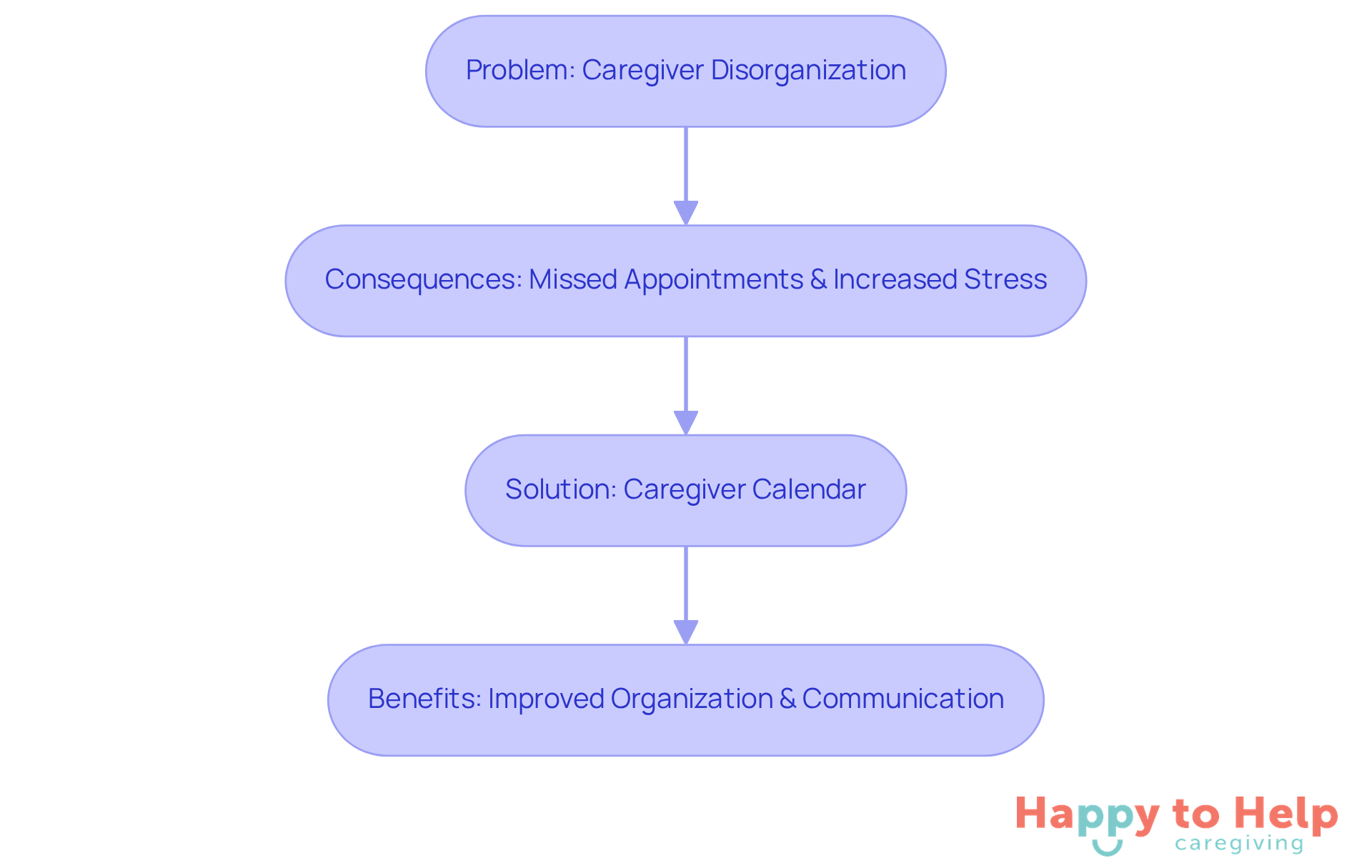
Problem: Caregivers often struggle to manage a multitude of care duties, appointments, and responsibilities. This disorganization can lead to missed medical appointments, overlooked medication schedules, and chaotic daily activities.
Agitate: The consequences of such disarray can be significant, impacting not only the caregiver's efficiency but also the well-being of those they care for. When care needs are not clearly outlined, it becomes challenging to prioritize tasks, leading to increased stress and potential health risks for the care recipient.
Solution: A support schedule serves as a vital tool in this scenario. By providing a clear overview of care needs, caregivers can effectively monitor medical appointments, medication schedules, and daily activities. This structured approach not only helps in managing time better but also fosters communication among family members, ensuring everyone involved in the care process stays updated and engaged.
Incorporating a caregiver calendar can transform the caregiving experience, making it more organized and less overwhelming.
Identify Key Components of Your Caregiver Calendar
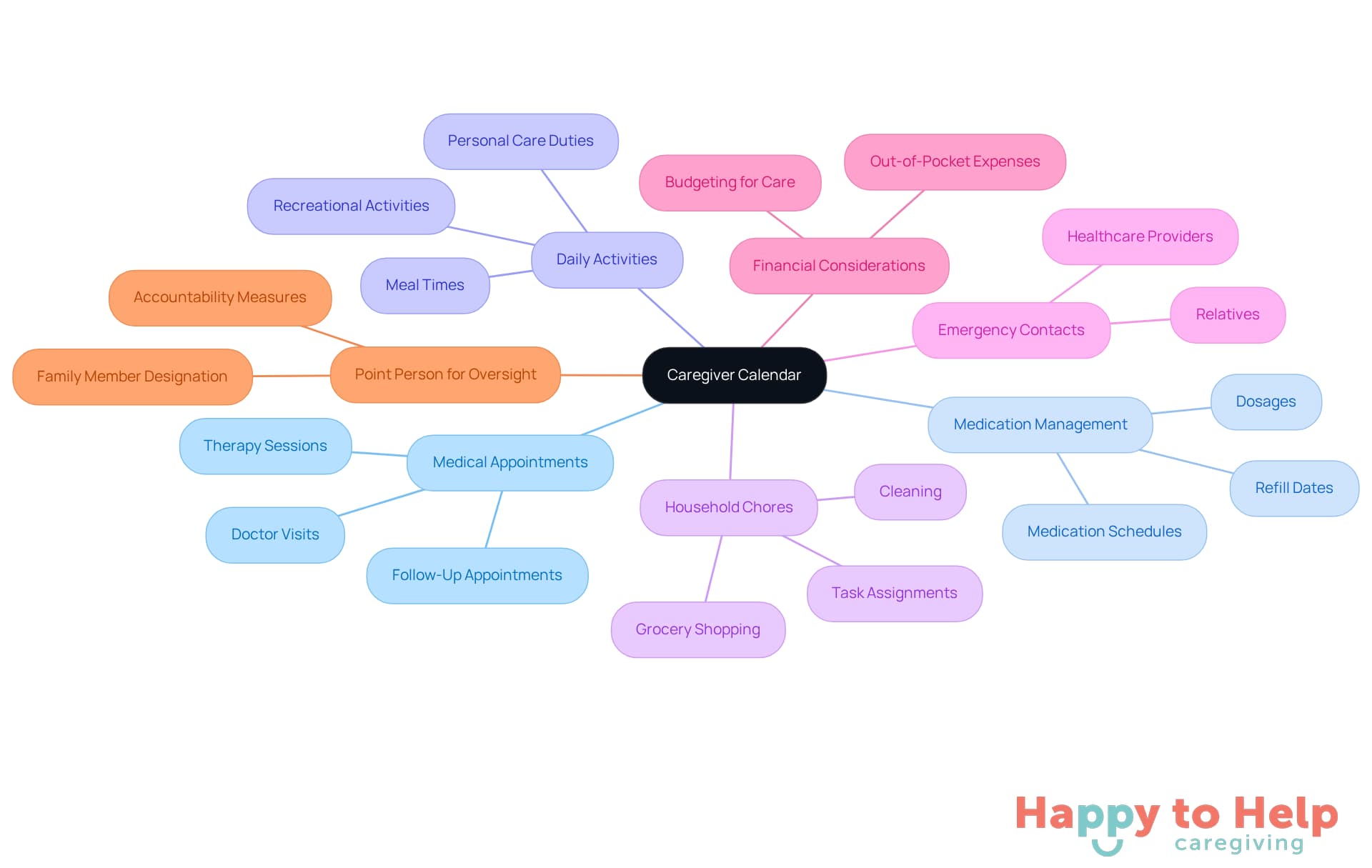
Creating a caregiver calendar is essential for effectively managing care responsibilities. Caregivers often face significant challenges, including juggling multiple appointments and tasks, which can lead to confusion and stress. Here are some key components to include in your calendar:
- Medical Appointments: Schedule all doctor visits, therapy sessions, and follow-up appointments. Nearly half of caregivers report supporting multiple recipients, complicating scheduling.
- Medication Management: Keep track of medication schedules, dosages, and refill dates. Mismanagement can lead to serious health consequences, especially when caregivers are balancing numerous responsibilities.
- Daily Activities: Outline daily routines, including personal care duties, meal times, and recreational activities. A consistent routine helps maintain the well-being of seniors, who thrive on familiarity and structure.
- Household Chores: Assign responsibilities for cleaning, grocery shopping, and other tasks. This promotes collaboration and ensures that the workload is shared among household members.
- Emergency Contacts: Maintain a list of essential contacts, including healthcare providers and relatives. Having this information readily available can significantly reduce stress during emergencies.
- Financial Considerations: With 71% of caregivers financially struggling and 63% living paycheck to paycheck, effective scheduling can alleviate some burdens by ensuring care tasks are managed efficiently.
- Point Person for Oversight: Designate a family member to oversee updates and scheduling, ensuring accountability and preventing conflicts.
Integrating these components into a caregiver calendar simplifies communication, clarifies duties, and ultimately improves the quality of care. Caregivers dedicate an average of 27 hours each week to caregiving tasks, so a structured schedule can help avoid burnout and ensure family members receive the assistance they need. As Rachelle Ehlert emphasizes, being specific helps everyone understand expectations and avoid confusion.
Set Up Your Caregiver Calendar Step-by-Step
Establishing your support schedule is crucial for efficient time management and coordination. Caregivers often struggle with balancing their responsibilities, leading to stress and confusion. According to research, 67% of employed relatives providing care find it challenging to juggle work and caregiving duties. This highlights the need for effective organization.
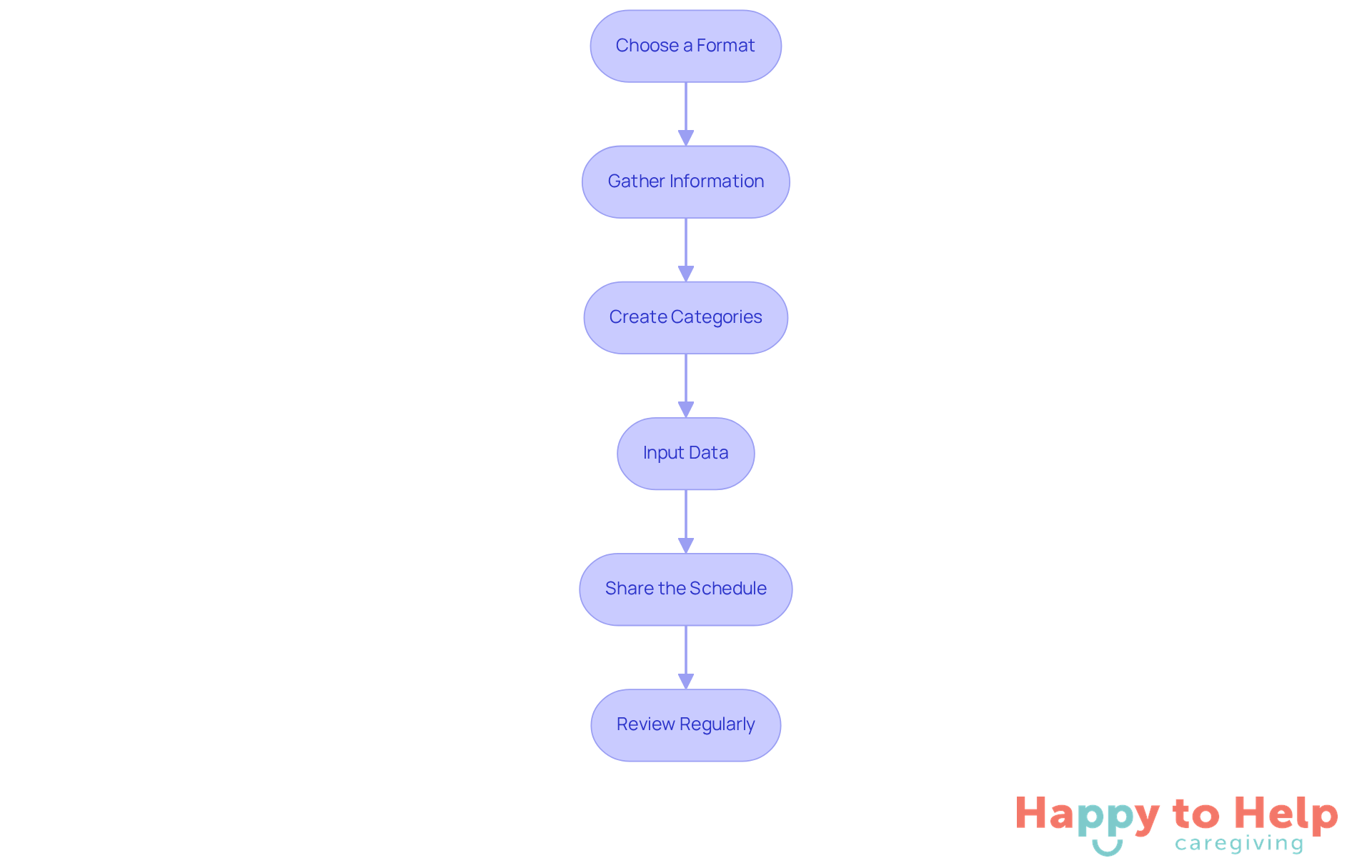
To tackle this issue, follow these steps to create a comprehensive caregiver calendar:
-
Choose a Format: Decide between a digital planner, like Google Calendar, or a physical organizer. Digital planners, particularly a caregiver calendar, offer effortless sharing, instant updates, and compatibility with other applications, making them ideal for families coordinating various caregivers. As freelance writer Casey Kelly-Barton notes, many users are already familiar with Google Calendar, which can ease the setup process.
-
Gather Information: Collect all necessary details, including medical appointments, medication schedules, and daily routines. This foundational information is essential for creating a well-organized schedule that meets all care needs.
-
Create Categories: Organize activities into clear categories such as medical, personal care, and household chores. This helps streamline responsibilities and ensures that nothing is overlooked.
-
Input Data: Begin entering the information into your selected scheduling format. Include dates, times, and any relevant notes to provide context for each task.
-
Share the Schedule: If using a digital format, share the schedule with family members and other caregivers. This transparency keeps everyone informed and engaged in the caregiving process, which can be organized with a caregiver calendar to foster collaboration and support.
-
Review Regularly: Set a reminder to review and update the schedule every 2-4 weeks. Frequent evaluations allow you to adapt to any changes in care requirements, ensuring that the schedule remains a dependable resource.
Using a support schedule can greatly alleviate stress and enhance communication among relatives. By implementing these best practices, families can create a supportive environment that enriches the caregiving experience.
Maintain and Utilize Your Caregiver Calendar Effectively
Managing a caregiver calendar can be difficult, particularly in keeping track of appointments and medication schedules. Without regular updates, important tasks can easily slip through the cracks, leading to confusion and potential health risks for the care recipient.
To tackle this issue, consider these actionable solutions:
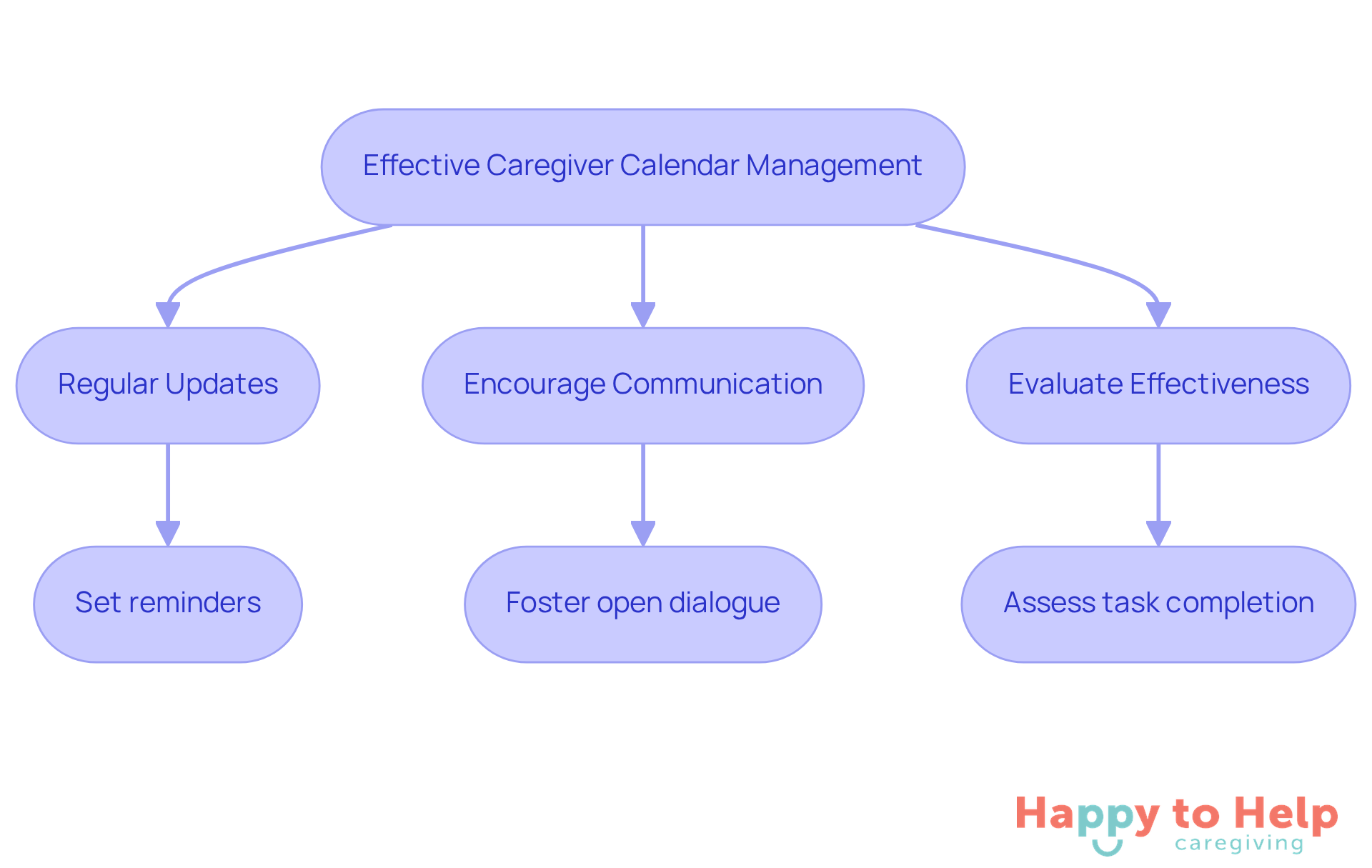
- Regular Updates: Make it a habit to update the calendar immediately after any changes occur, such as new appointments or changes in medication. This ensures that everyone involved is on the same page. Use the caregiver calendar to set reminders for important tasks, like medication times or upcoming appointments, to ensure nothing is missed. This proactive approach can significantly reduce stress.
- Encourage Communication: Foster open communication among family members and caregivers about any changes in the care recipient's condition or needs. This collaboration is key to effective caregiving.
- Evaluate Effectiveness: Periodically assess how well the calendar is working. Are tasks being completed? Are there any areas for improvement? Adjust as necessary to enhance its effectiveness.
Making the Right Choice
Creating a caregiver calendar addresses a significant challenge for those providing care: managing responsibilities and appointments. Without a structured approach, caregivers often experience heightened stress, which can negatively impact the quality of care they deliver. A dedicated calendar is essential, serving as a vital tool that helps both caregivers and care recipients thrive in a well-coordinated environment.
Key components of an effective caregiver calendar include:
- Scheduling medical appointments
- Managing medications
- Outlining daily activities
- Maintaining emergency contacts
Each element is crucial for enabling caregivers to balance their responsibilities efficiently while fostering communication among family members. Regular updates and open dialogue are necessary to adapt to changing circumstances, ensuring the calendar remains a practical resource.
Implementing a caregiver calendar goes beyond mere organization; it creates a supportive network that empowers caregivers and enhances the well-being of those they care for. By prioritizing structure and communication, caregivers can alleviate their burdens and focus on what truly matters - providing compassionate care. Embracing this approach leads to a more fulfilling caregiving experience, highlighting the significance of effective calendar management in the caregiving journey.
https://iframe.tely.ai/cta/eyJhcnRpY2xlX2lkIjogIjY5MjY0MzVjNTA1M2U2YTE3NTJiNzdjOCIsICJjb21wYW55X2lkIjogIjY4ZWU1ZGNhNzMxNzYyNTU3ZjNjOTVjMSIsICJpbmRleCI6IG51bGwsICJ0eXBlIjogImFydGljbGUifQ==Frequently Asked Questions
What is the main problem caregivers face regarding their responsibilities?
Caregivers often struggle with managing multiple care duties, appointments, and responsibilities, leading to disorganization that can result in missed medical appointments and overlooked medication schedules.
What are the consequences of disorganization for caregivers?
Disorganization can significantly impact the caregiver's efficiency and the well-being of those they care for, increasing stress and potential health risks for the care recipient.
How can a caregiver calendar help improve the situation?
A caregiver calendar provides a clear overview of care needs, allowing caregivers to effectively monitor medical appointments, medication schedules, and daily activities, which helps in managing time better.
What additional benefits does a caregiver calendar offer?
It fosters communication among family members involved in the care process, ensuring everyone stays updated and engaged.
How does incorporating a caregiver calendar transform the caregiving experience?
It makes the caregiving experience more organized and less overwhelming for caregivers, improving their ability to manage care effectively.
List of Sources
- Understand the Purpose of a Caregiver Calendar
- The Future of Caregiving: How Apps Are Revolutionizing Care (https://caily.com/blog/how-caregiving-apps-are-revolutionizing-care)
- Helpful Caregiver Apps (https://centerwellprimarycare.com/en/resources/helpful-caregiver-apps)
- The Benefits of Creating a Shared Calendar for Dementia Care (https://beynex.com/blogs/the-benefits-of-creating-a-shared-calendar-for-dementia-care)
- The Caregiving Landscape: Data & Insights on the Caregiver Experience in the U.S. (https://caregiveraction.org/caregiver-statistics)
- Caregiver Statistics: Demographics (https://caregiver.org/resource/caregiver-statistics-demographics)
- Identify Key Components of Your Caregiver Calendar
- The Caregiving Landscape: Data & Insights on the Caregiver Experience in the U.S. (https://caregiveraction.org/caregiver-statistics)
- National Alliance for Caregiving: Caregiving in the US 2025 Report (https://johnahartford.org/resources/view/national-alliance-for-caregiving-caregiving-in-the-us-2025-report)
- Organizing a Family Caregiving Calendar (https://caringseniorservice.com/blog/family-caregiving-calendar)
- Set Up Your Caregiver Calendar Step-by-Step
- National Family Caregiver Month 2025: How Tech Supports Care (https://caresmartz360.com/blog/home-care/empowering-family-caregivers-with-technology-this-caregivers-month)
- Using a Calendar to Share Caregiving Responsibilities - SeniorAdvisor.com Blog (https://senioradvisor.com/blog/2016/06/using-a-calendar-to-share-caregiving-responsibilities)
- Organizing a Family Caregiving Calendar (https://caringseniorservice.com/blog/family-caregiving-calendar)
- How to Create a Shared Caregiving Calendar on Google (https://aarp.org/espanol/videos/6090698941001)
- Maintain and Utilize Your Caregiver Calendar Effectively
- The Benefits of Creating a Shared Calendar for Dementia Care (https://beynex.com/blogs/the-benefits-of-creating-a-shared-calendar-for-dementia-care)
- Organizing a Family Caregiving Calendar (https://caringseniorservice.com/blog/family-caregiving-calendar)
- The Future of Caregiving: How Apps Are Revolutionizing Care (https://caily.com/blog/how-caregiving-apps-are-revolutionizing-care)
- As Family Caregiving Grows, So Does the Need for Reform - Medicare Rights Center (https://medicarerights.org/medicare-watch/2025/08/14/as-family-caregiving-grows-so-does-the-need-for-reform)
- Caregiver Statistics: Work and Caregiving (https://caregiver.org/resource/caregiver-statistics-work-and-caregiving)