Dementia Friendly Activities Near You: Engage and Support Loved

For families in our service areas
For families in our service areas, this guide explains dementia care and how non-medical in-home caregiving can support care planning in East Idaho, Treasure Valley & Magic Valley, Northern Wasatch, North Central West Virginia & Southwestern Pennsylvania, and Northeast Ohio.
Why Dementia Friendly Activities Near Me: Matters
Dementia presents significant challenges for caregivers, often resulting in frustration as they seek to engage their loved ones in meaningful ways. This struggle can lead to feelings of helplessness, as caregivers grapple with the cognitive needs of those with dementia.
To address these challenges, it’s essential to discover dementia-friendly activities that cater to individual interests and abilities. By bridging the gap between cognitive needs and enriching experiences, caregivers can foster connection and joy.
This article explores actionable strategies that enhance engagement while honoring the identity and dignity of individuals navigating the complexities of dementia.
Understand the Unique Needs of Individuals with Dementia
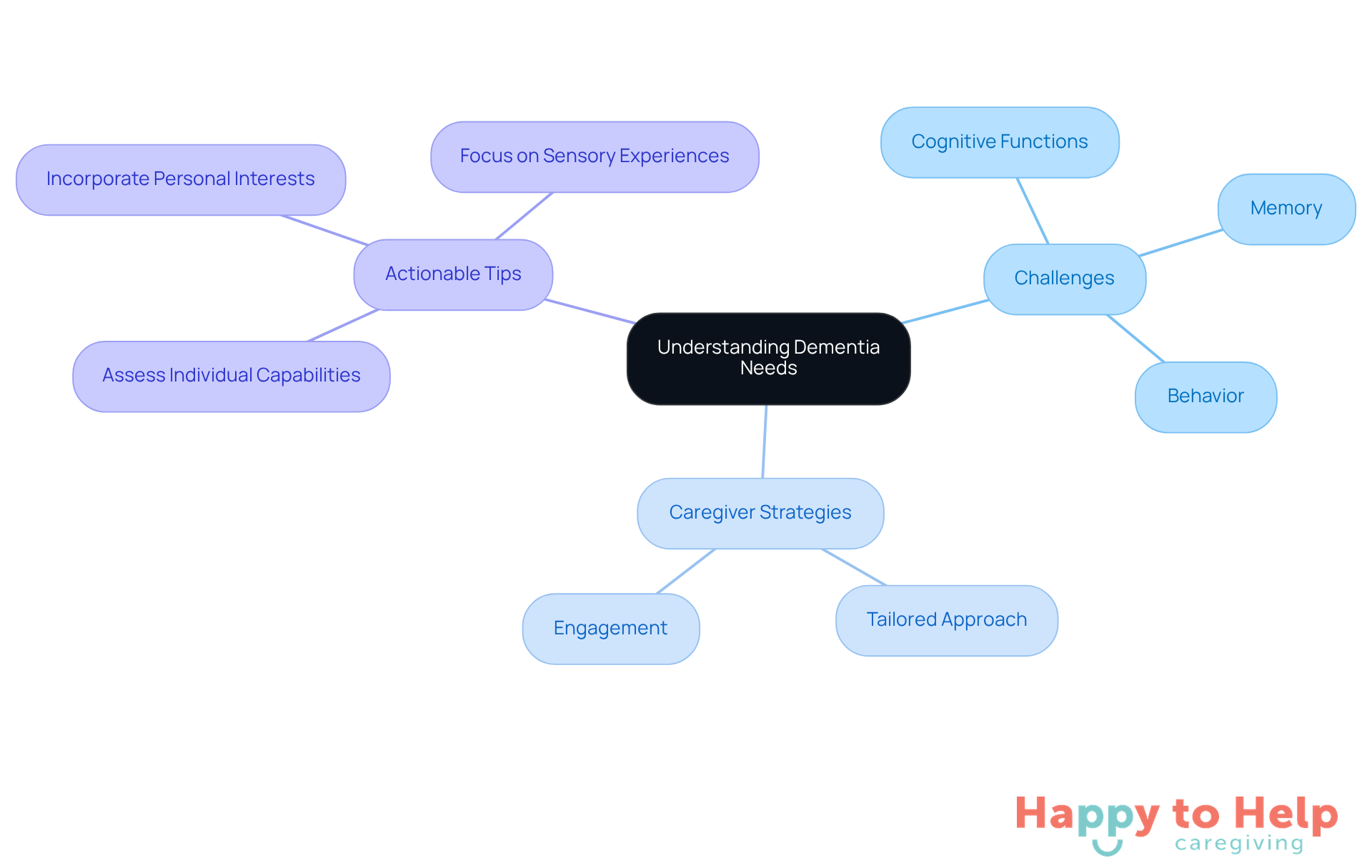
Dementia presents significant challenges for caregivers, affecting cognitive functions, memory, and behavior. These challenges vary for each individual, making it crucial to understand the different phases of dementia. For example, early-stage dementia may allow for more complex tasks, while late-stage dementia often requires simpler, sensory-oriented activities.
Caregivers face the challenge of engaging individuals with dementia in meaningful ways by utilizing dementia friendly activities near me. This can lead to frustration and feelings of inadequacy if not addressed. To mitigate these issues, it’s essential to consider the person’s personal history, preferences, and emotional responses when planning dementia friendly activities near me.
By adopting a tailored approach, caregivers can enhance engagement and foster a sense of dignity and respect for the individual’s identity by incorporating dementia friendly activities near me. Here are some actionable tips:
- Assess individual capabilities: Regularly evaluate the person's cognitive abilities to adjust activities accordingly.
- Incorporate personal interests: Use the individual’s hobbies and past experiences to create engaging activities.
- Focus on sensory experiences: For those in late stages, prioritize activities that stimulate the senses, such as music or art.
This method not only improves participation but also honors the person’s unique identity, making caregiving a more fulfilling experience.
Identify Engaging Activities Based on Interests and Abilities
Engaging individuals with dementia presents a significant challenge for caregivers. Many struggle to find dementia friendly activities near me that connect with their loved ones, leading to feelings of frustration and helplessness. Without meaningful engagement, individuals may experience increased isolation and a decline in cognitive function.
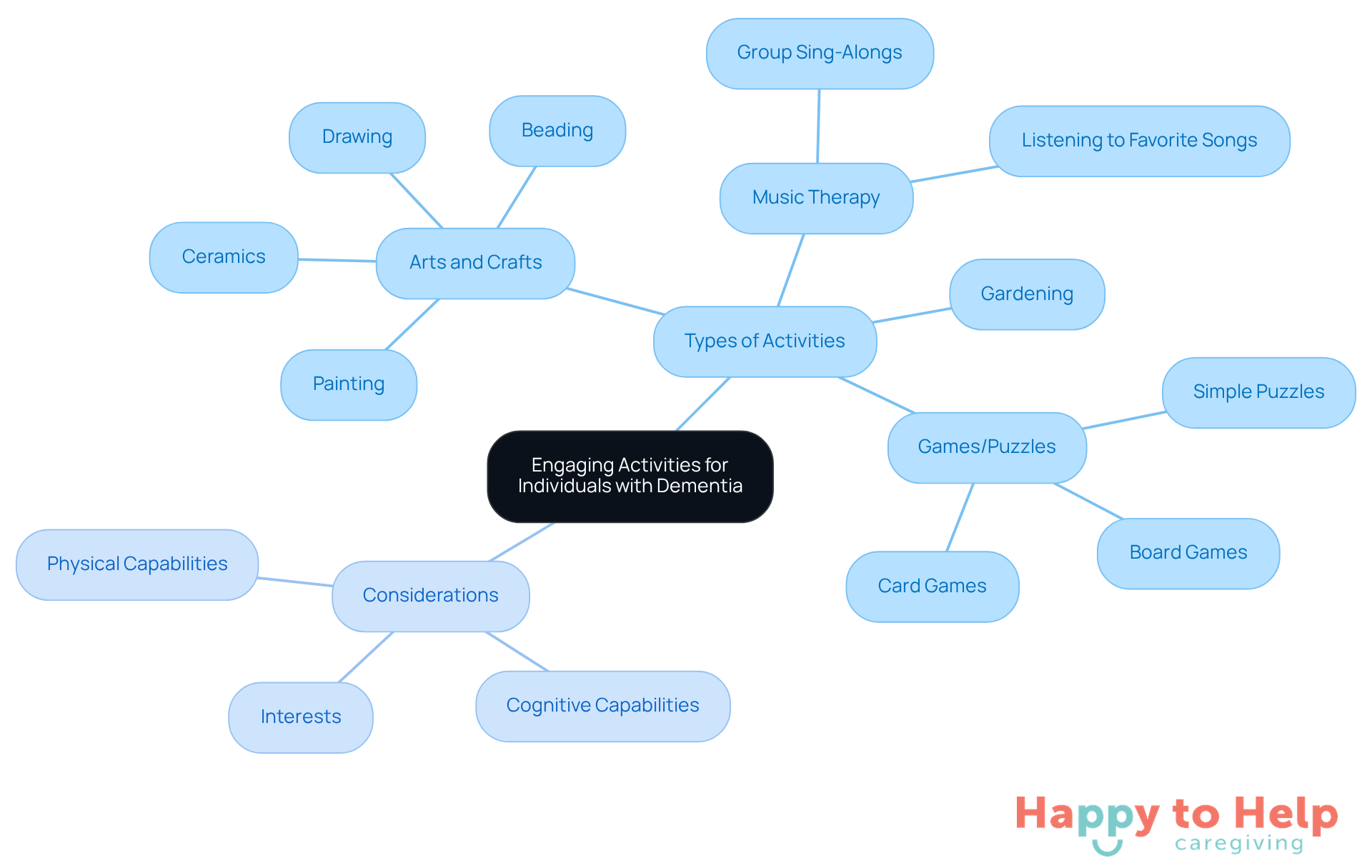
To address this issue, caregivers should start by evaluating the interests and skills of those they support. Examples of dementia friendly activities near me can include:
- Arts and crafts
- Gardening
- Music therapy
- Simple games or puzzles
For example, if a person enjoyed painting in their youth, reintroducing this activity can evoke positive memories and stimulate creativity.
Moreover, it’s essential to consider the individual’s cognitive and physical capabilities. Gentle movement exercises, such as chair yoga or light stretching, can be particularly beneficial for those with limited mobility. By tailoring tasks to fit each person's abilities, caregivers not only enhance enjoyment but also promote cognitive engagement and emotional connection.
Incorporate Social Interaction into Activities
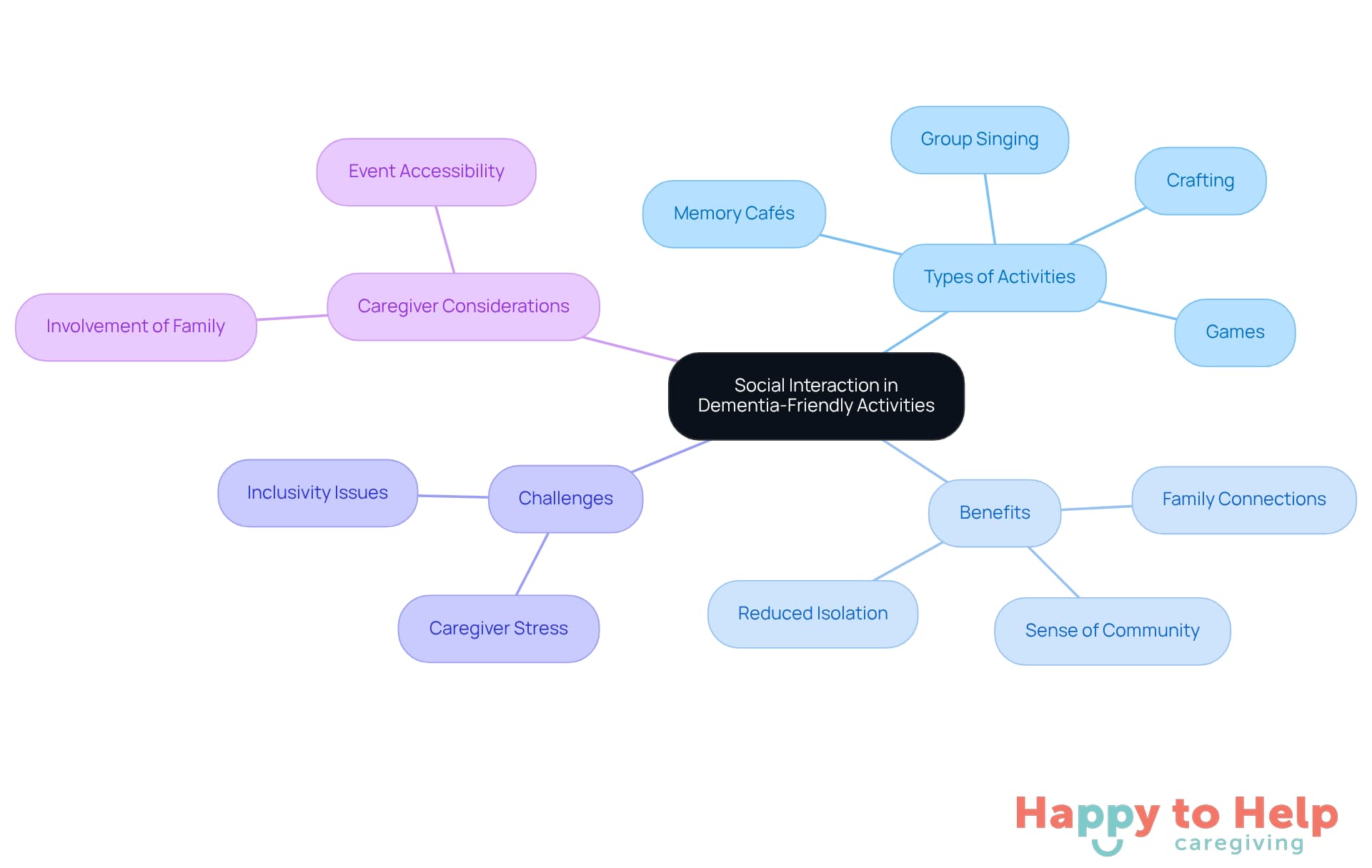
Social engagement is crucial in promoting dementia friendly activities near me, significantly impacting the well-being of individuals with cognitive impairments. Caregivers face the challenge of fostering social involvement, which can be addressed by organizing dementia friendly activities near me, including group events like memory cafés. These cafés provide welcoming spaces for individuals to share experiences and connect with others facing similar challenges. Research shows that participating in dementia friendly activities near me not only cultivates a sense of community but also helps reduce feelings of isolation, a major risk factor for cognitive decline. Alarmingly, the Alzheimer's Association projects that dementia cases in the U.S. will increase from 6.9 million to 13.8 million by 2060, highlighting the urgent need for social support services like memory cafés.
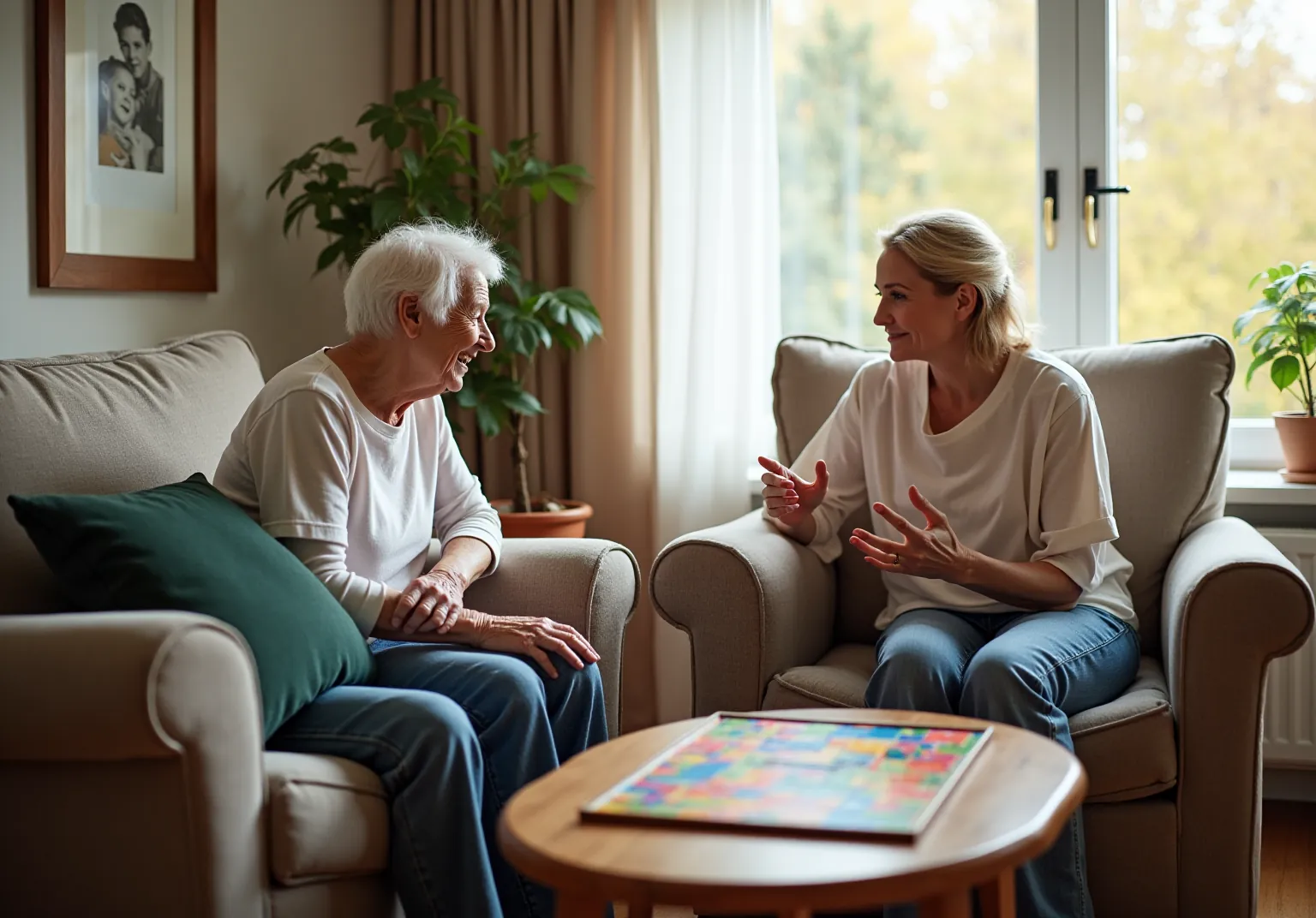
Group singing, games, and community events are examples of dementia friendly activities near me that effectively promote socialization. For example, dementia friendly activities near me often include trivia, crafting, and music, creating an enjoyable atmosphere that encourages participation. Psychologists, including Jason Karlawish, emphasize that familiar faces, like family members, can provide reassurance and enhance involvement. Therefore, it is essential for caregivers to include loved ones in these activities.
To organize successful group events, providers should consider the interests and preferences of participants, ensuring that the events are both enjoyable and accessible. Caregivers must be mindful of potential pitfalls, such as ensuring that activities are inclusive for all participants. By creating opportunities for social engagement, caregivers not only improve the experiences of individuals with dementia but also strengthen family connections, leading to a more supportive and fulfilling environment. Furthermore, with 70% of caregivers reporting that coordinating care is stressful, memory cafés can serve as a vital resource in alleviating this burden.
Adapt Activities for Safety and Comfort
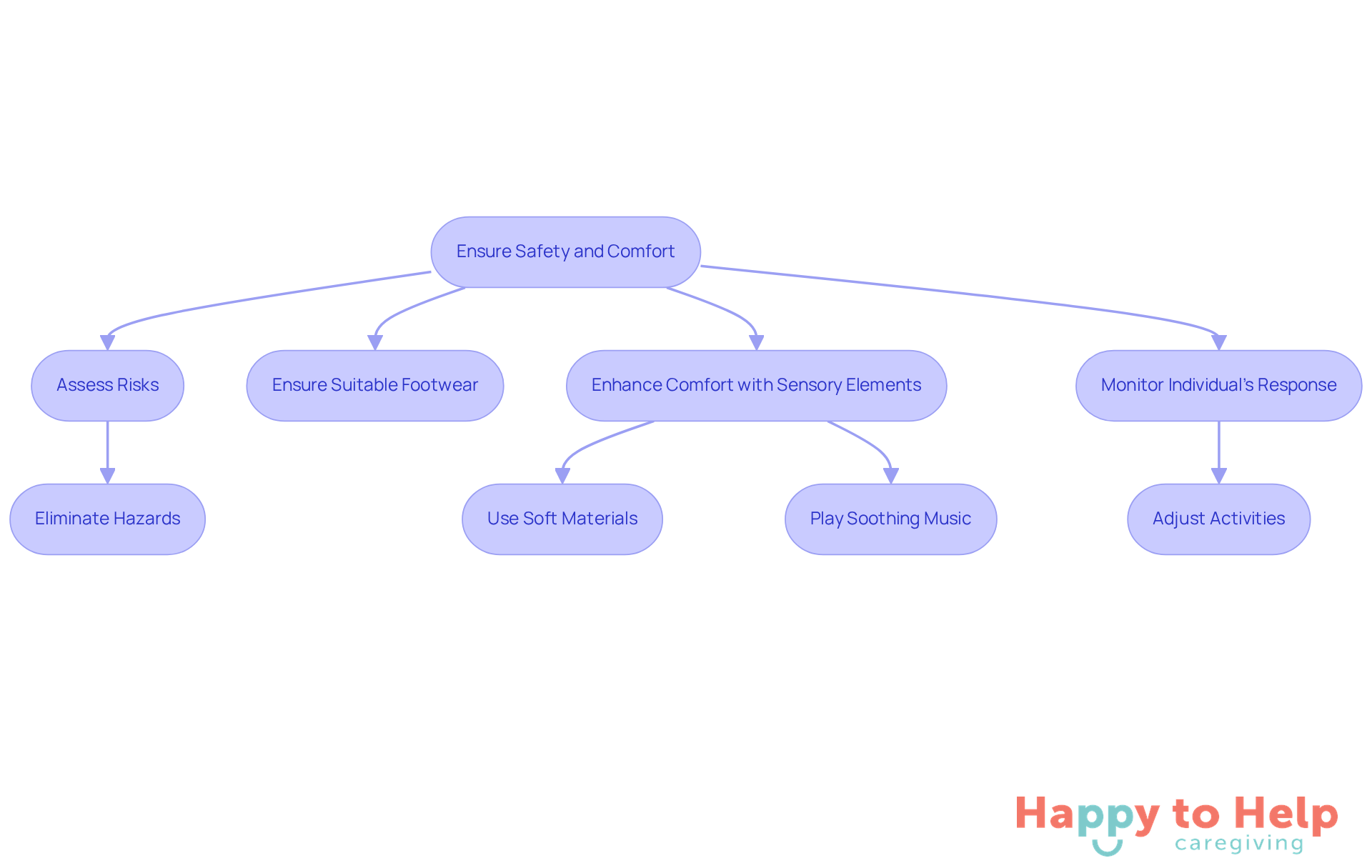
When organizing dementia friendly activities near me for persons with dementia, ensuring safety and comfort is of paramount concern. Caregivers face the challenge of creating an environment for dementia friendly activities near me that minimizes risks while promoting participation. Hazards such as sharp objects or slippery surfaces can pose significant dangers, making it essential to assess and eliminate these risks.
To address these concerns, caregivers should ensure that individuals are wearing suitable footwear during physical exercises and that the area is free of obstacles. Additionally, sensory elements play a crucial role in enhancing comfort. For example, using soft materials for crafts or playing soothing music can create a more pleasant atmosphere.
Monitoring the individual’s response to activities is vital. If signs of discomfort or fatigue arise, caregivers must be ready to adjust or change the activities accordingly. To further enhance safety, consider the following actionable solutions:
- Ensure adequate lighting in all areas.
- Simplify and declutter the home to reduce overwhelming visual and physical clutter.
- Install grab bars in bathrooms and use automatic shut-off appliances in kitchens.
By prioritizing safety and comfort, caregivers can foster a supportive environment that encourages participation and enjoyment.
Moving Forward with Dementia Friendly Activities Near Me:
Engaging individuals with dementia through tailored activities presents a significant challenge for caregivers. Without proper engagement, the quality of life for these individuals can diminish, leading to feelings of isolation and impacting cognitive health. Caregivers often struggle to find activities that resonate with the unique needs and interests of each person, which can hinder meaningful connections.
To address this issue, caregivers can:
- Assess individual capabilities and preferences, ensuring that activities are both safe and comfortable.
- Incorporate interests into dementia-friendly activities to stimulate cognitive function while honoring the individual’s identity.
- Explore options such as arts and crafts or social gatherings like memory cafés to provide diverse ways to connect meaningfully with loved ones.
Moreover, fostering social interaction is crucial in combating feelings of isolation. Caregivers are encouraged to:
- Explore local resources.
- Adapt activities to meet the specific needs of individuals with dementia.
By prioritizing engagement, safety, and socialization, caregivers can create a supportive environment that enriches the lives of those they care for and strengthens familial bonds.
In summary, taking proactive steps to implement these strategies can lead to transformative experiences for both caregivers and individuals with dementia. By focusing on tailored activities, caregivers not only enhance the well-being of those they care for but also improve their own caregiving experience.
https://iframe.tely.ai/cta/eyJhcnRpY2xlX2lkIjogIjY5NDBhMjMxM2RiOWY3ZmNiNDY0N2VjZSIsICJjb21wYW55X2lkIjogIjY4ZWU1ZGNhNzMxNzYyNTU3ZjNjOTVjMSIsICJpbmRleCI6IG51bGwsICJ0eXBlIjogImFydGljbGUifQ==Frequently Asked Questions
What challenges do caregivers face when caring for individuals with dementia?
Caregivers face significant challenges related to cognitive functions, memory, and behavior, which can vary for each individual with dementia.
How does the stage of dementia affect the type of activities that can be engaged in?
Early-stage dementia may allow for more complex tasks, while late-stage dementia often requires simpler, sensory-oriented activities.
Why is it important to understand the personal history and preferences of individuals with dementia?
Understanding a person's personal history, preferences, and emotional responses is essential for planning meaningful and engaging dementia-friendly activities.
What are some tips for caregivers to enhance engagement with individuals with dementia?
Caregivers can enhance engagement by regularly assessing individual capabilities, incorporating personal interests, and focusing on sensory experiences.
What types of activities are recommended for individuals in the late stages of dementia?
For those in late stages, activities that stimulate the senses, such as music or art, are recommended.
How can a tailored approach to caregiving benefit individuals with dementia?
A tailored approach can improve participation, enhance engagement, and foster a sense of dignity and respect for the individual's identity.
List of Sources
- Understand the Unique Needs of Individuals with Dementia
- Telemedicine shows promise in improving dementia care, WHO study finds (https://who.int/europe/news/item/06-11-2025-telemedicine-shows-promise-in-improving-dementia-care--who-study-finds)
- ADI - Dementia statistics (https://alzint.org/about/dementia-facts-figures/dementia-statistics)
- D-CARE study finds caregiver satisfaction higher with dementia care programs than usual care (https://uclahealth.org/news/release/d-care-study-finds-caregiver-satisfaction-higher-with)
- Alzheimer's Disease Facts and Figures (https://alz.org/alzheimers-dementia/facts-figures)
- Texas A&M study highlights urgent needs of dementia caregivers (https://stories.tamu.edu/news/2025/12/15/texas-am-study-highlights-urgent-needs-of-dementia-caregivers)
- Identify Engaging Activities Based on Interests and Abilities
- 12 Engaging Activities for Seniors With Dementia (https://seniorservicesofamerica.com/blog/12-engaging-activities-for-seniors-with-dementia)
- Lifestyle Enrichment in Later Life and Its Association With Dementia Risk - PMC (https://pmc.ncbi.nlm.nih.gov/articles/PMC10349343)
- Top List of Inspirational Dementia Quotes for Caregivers (https://rochesterlawcenter.com/dementia-resources/dementia-quotes)
- Memory Care Made Fun: Creative Activities for Those with Alzheimer’s and Dementia (https://gracevillagelc.com/news/creative-activities-memory-care)
- The impact of group activities and their content on persons with dementia attending them - PMC (https://pmc.ncbi.nlm.nih.gov/articles/PMC5887184)
- Incorporate Social Interaction into Activities
- Ten minutes of social interaction improves wellbeing in dementia care (https://alzheimers.org.uk/news/2025-10-08/ten-minutes-social-interaction-improves-wellbeing-dementia-care)
- Coping with Dementia: The power of social connection in dementia care (https://chronicleonline.com/lifestyle/health/coping-with-dementia-the-power-of-social-connection-in-dementia-care/article_e9ff8a7f-2359-5cad-9916-7248d8372d79.html)
- Active Social Lives Help Dementia Patients, Caregivers Thrive (https://ucsf.edu/news/2024/03/427276/active-social-lives-help-dementia-patients-caregivers-thrive)
- Memory cafes offer camaraderie and fun for people with dementia — and their caregivers (https://npr.org/sections/shots-health-news/2025/05/31/nx-s1-5317646/memory-cafes-dementia-caregiving-respite-social-support)
- Social connections as determinants of cognitive health and as targets for social interventions in persons with or at risk of Alzheimer’s disease and related disorders: a scoping review - PMC (https://pmc.ncbi.nlm.nih.gov/articles/PMC11058077)
- Adapt Activities for Safety and Comfort
- Home Safety | Alzheimer's Association (https://alz.org/help-support/caregiving/safety/home-safety)
- Dementia Statistics & Facts (https://mastermindbehavior.com/post/dementia-statistics-facts)
- (https://belleviecare.co.uk/support-advice/dementia-quotes-to-lift-your-spirits)
- Adapting Home Environments for Patients with Dementia: Practical Tips and Strategies (https://vnahg.org/adapting-home-environments-for-patients-with-dementia-practical-tips-and-strategies)
- Nursing Home Dementia Care Statistics (https://rosewood-nursing.com/post/nursing-home-dementia-care-statistics)