
Understanding Discover the Best Home Care
The landscape of home care for seniors is rapidly transforming, presenting families with a complex web of services tailored to meet the diverse needs of aging individuals. This complexity often leaves families struggling to balance their loved ones' well-being with the emotional and financial burdens of caregiving. As the demand for personalized support rises, families face the pressing question: how can they choose the best home care service that truly caters to their unique circumstances?
This article explores the standout features of Happy to Help Caregiving, comparing them to other available options. By shedding light on what sets this agency apart in a crowded marketplace, we aim to provide families with the insights they need to make informed decisions.
Overview of Home Care Options for Seniors
In 2025, the landscape of the best home care for seniors has evolved dramatically, offering a variety of services tailored to meet diverse needs. Caregivers face significant challenges in ensuring their loved ones receive the right support, which can lead to feelings of stress and uncertainty. The implications of inadequate assistance can be profound, affecting both the well-being of seniors and the peace of mind of their families.
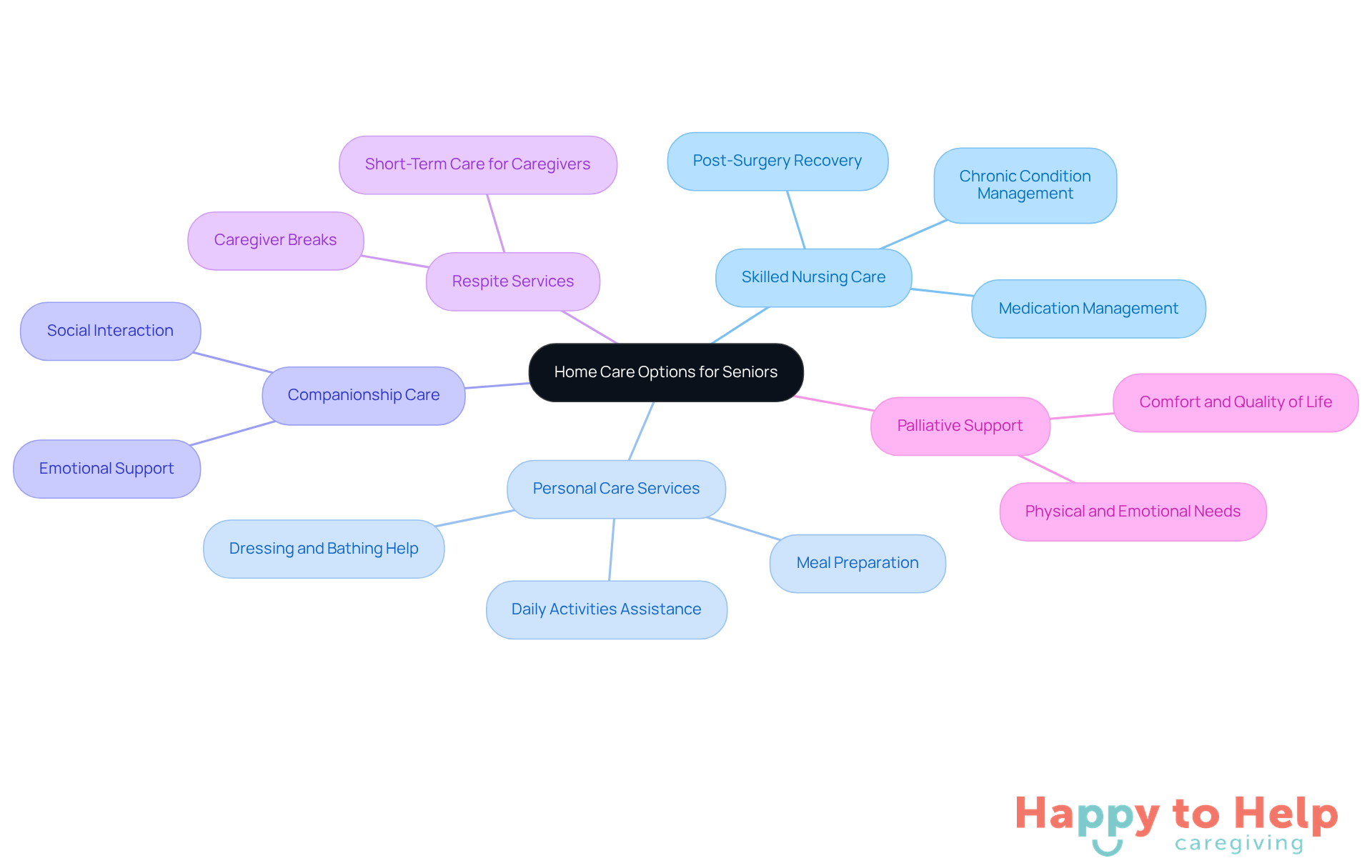
Key categories of home assistance services include:
- Skilled Nursing Care: Licensed medical professionals manage chronic conditions, assist with post-surgery recovery, and oversee medication management. This ensures that seniors receive the medical attention they require in the comfort of their homes.
- Personal Care Services: Non-medical assistance for daily activities such as bathing, dressing, and meal preparation allows seniors to maintain their dignity and independence.
- Companionship Care: This service focuses on emotional support and social interaction, helping to alleviate feelings of loneliness and isolation that many seniors experience.
- Respite Services: Providing short-term assistance for family caregivers, respite services ensure that loved ones are well looked after while caregivers take essential breaks to rejuvenate.
- Palliative Support: Specialized assistance for individuals with serious illnesses prioritizes comfort and quality of life, addressing both physical and emotional needs.
These options highlight the essential function of tailored support plans that address personal preferences and needs, a principle that Happy to Help Caregiving embodies. As the demand for the best home care for seniors continues to rise-projected to increase by 22% by 2034, according to Business Wire-agencies that prioritize personalized support are better positioned to meet the evolving needs of seniors. The focus on individualized support not only improves the quality of life for seniors but also offers reassurance for relatives managing the challenges of caregiving.
As Morgan Gonzales observes, households often prioritize their loved one's well-being above all else, even if cost is a strain, emphasizing the emotional importance of personalized support. Moreover, 88% of households concur that they require additional assistance and support while navigating the quest for elder support, highlighting the difficulties they encounter.
Distinctive Features of Happy to Help Caregiving
Happy to Help Caregiving addresses a common challenge faced by families: the need for the best home care for seniors that is both reliable and personalized. Many caregivers struggle to find services that truly cater to the unique needs of their loved ones, leading to feelings of frustration and uncertainty.
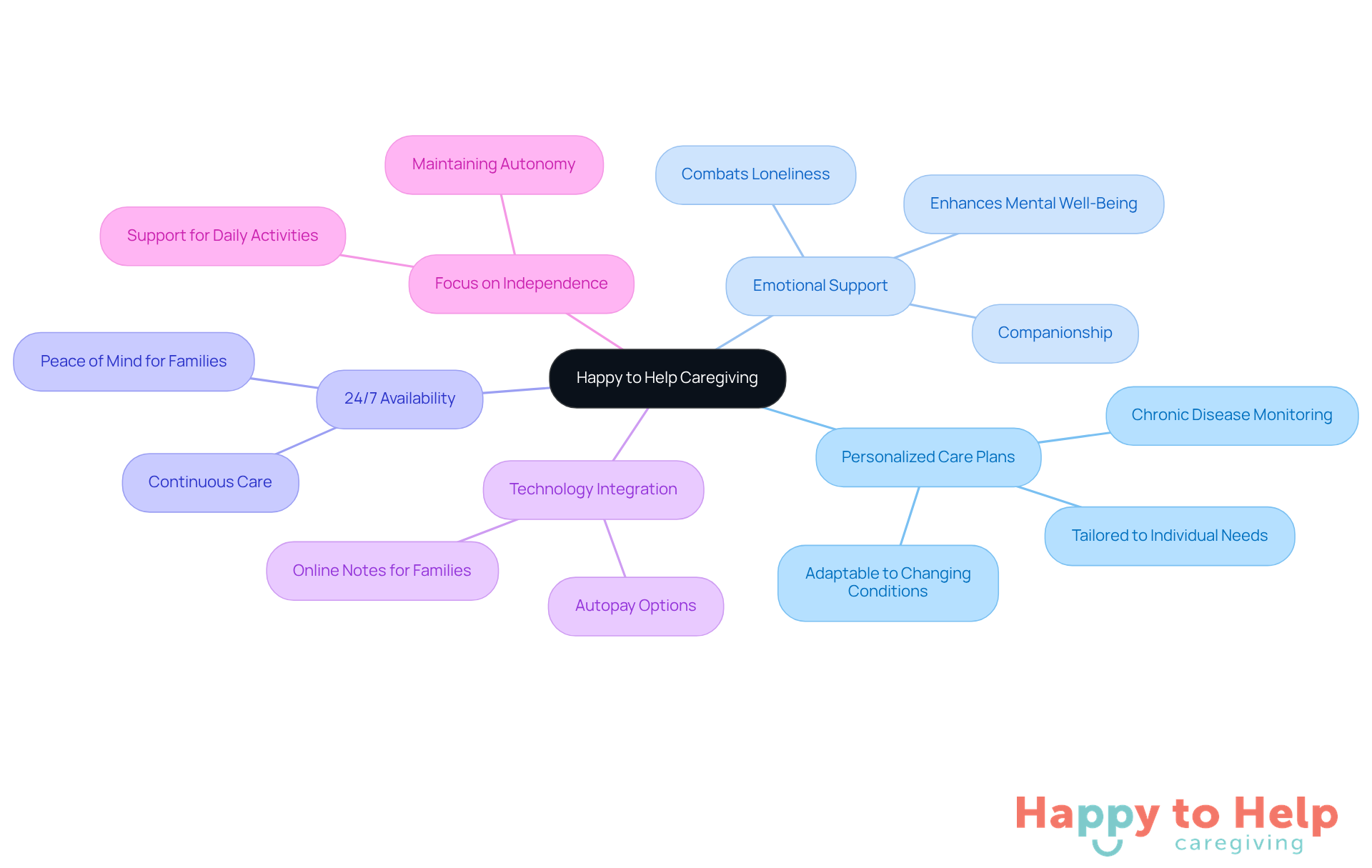
To tackle this issue, Happy to Help Caregiving offers several key features that stand out in the caregiving landscape:
- Personalized Care Plans: Each client receives a tailored care plan that reflects their specific needs and preferences, ensuring a customized approach to care.
- Best home care for seniors: Caregivers provide not only practical skills but also emotional support, fostering genuine connections with clients.
- 24/7 Availability: The agency provides the best home care for seniors, ensuring continuous services and peace of mind for households.
- Technology Integration: Features like online notes for family members and autopay options streamline communication and billing, enhancing the caregiving experience.
- Focus on Independence: The agency provides the best home care for seniors by emphasizing the maintenance of clients' independence, allowing them to thrive in their familiar environments.
These solutions not only alleviate the stress of caregiving but also ensure the best home care for seniors, promoting a nurturing environment where clients can flourish.
Challenges Faced by Family Caregivers
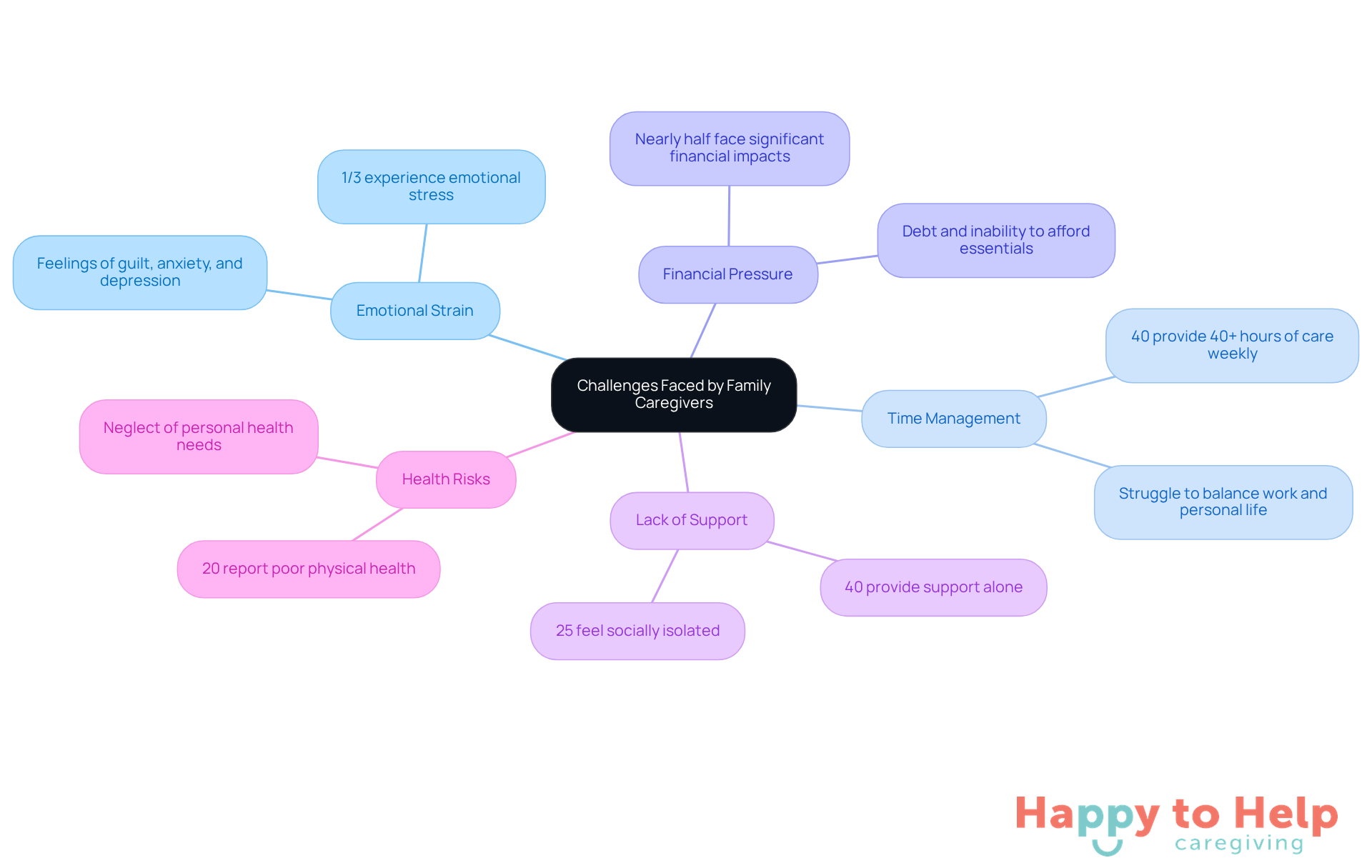
Family supporters often face considerable obstacles that can significantly affect their well-being and the quality of assistance they provide. These challenges include:
-
Emotional Strain: Caregiving responsibilities can lead to feelings of guilt, anxiety, and depression. In fact, more than one-third of caregivers experience significant emotional stress, impacting their mental well-being and overall quality of life.
-
Time Management: Balancing caregiving duties with work and personal life can be overwhelming. Many caregivers struggle to find time for themselves, leading to burnout. Statistics show that nearly one in four caregivers report providing 40 or more hours of assistance each week, complicating their ability to manage other responsibilities.
-
Financial Pressure: The financial burden of caregiving is substantial. Many caregivers face reduced work hours or out-of-pocket expenses for care-related costs. Almost half of caregivers report experiencing significant financial effects, such as incurring debt or being unable to afford essential items.
-
Lack of Support: Feelings of isolation are common among family helpers, with many lacking adequate support systems. Nearly 40% of caregivers report providing support alone, and about 25% feel socially isolated, intensifying feelings of loneliness and stress.
-
Health Risks: Caregivers often prioritize their loved ones' needs over their own health, leading to physical and mental health issues. Reports indicate that nearly two in ten caregivers experience seven or more days of poor physical health each month, underscoring the urgent need for self-care and support.
These challenges highlight the essential role of professional caregiving services, particularly the best home care for seniors provided by Caregiving Assistance. These services can alleviate some pressures on family members and enhance the overall caregiving experience, providing the best home care for seniors.
Comparative Analysis: Happy to Help Caregiving vs. Other Home Care Services
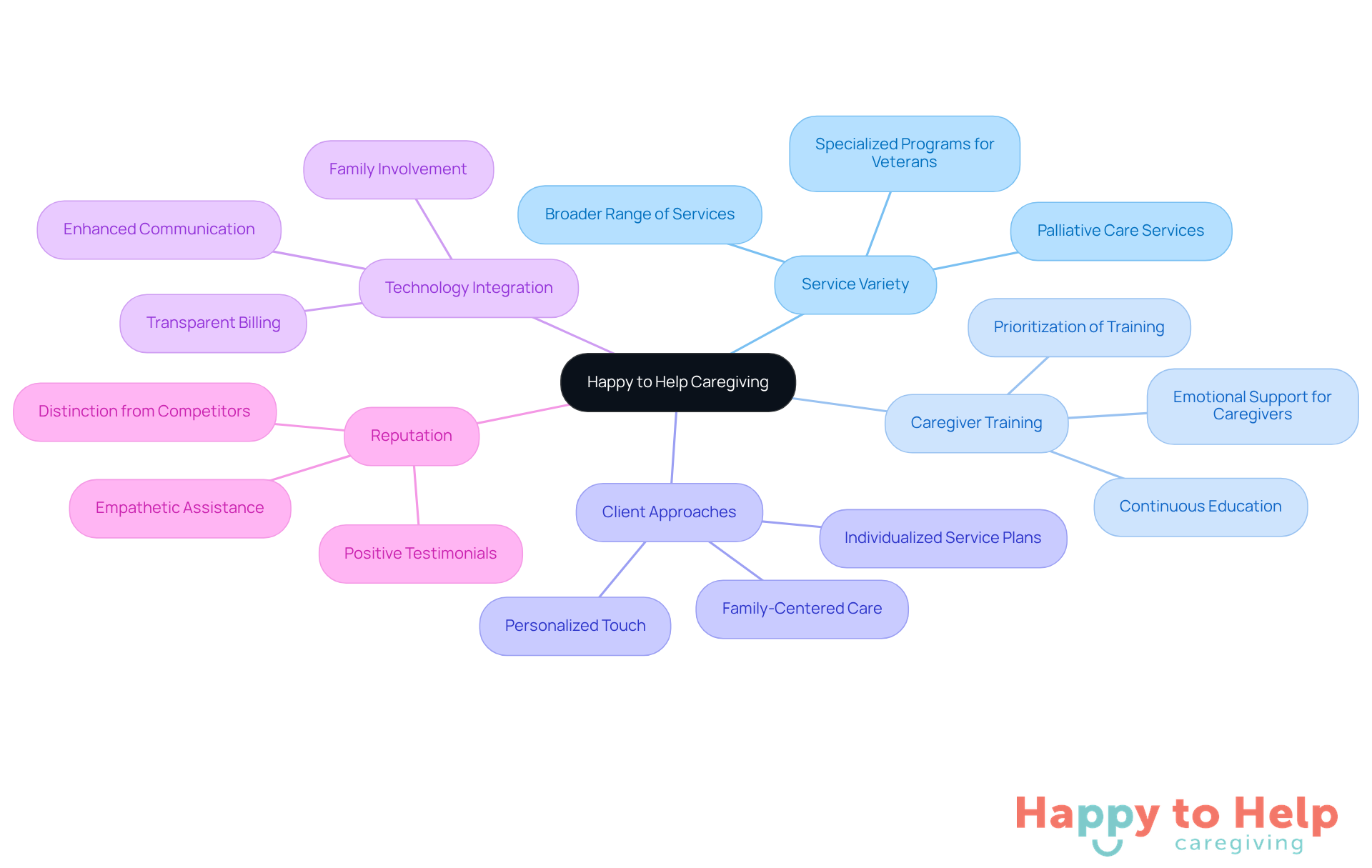
When comparing Happy to Help Caregiving with other home care services, several challenges arise that caregivers face:
-
Limited Service Variety: Many agencies offer only basic personal care, which can leave specific needs unmet. Happy to Help stands out by providing a broader range of services, including specialized programs for veterans and palliative care.
-
Inadequate Caregiver Training: While some agencies may not prioritize ongoing training, Happy to Help emphasizes continuous education and emotional support for caregivers, ensuring they are well-equipped to provide quality care.
-
Uniform Client Approaches: Certain rivals may adopt a one-size-fits-all strategy, lacking the personalized touch that many families desire. Happy to Help’s dedication to individualized service plans sets it apart.
-
Technology Integration: The use of technology for communication and billing enhances transparency and keeps family members involved, a notable benefit that not all services provide.
-
Reputation and Reviews: Positive testimonials from families highlight the empathetic assistance offered by Happy to Help, distinguishing it from agencies with mixed evaluations.
In summary, while many home care services exist, Happy to Help Caregiving is recognized as the best home care for seniors because of its comprehensive, empathetic approach to in-home care, addressing the specific needs of clients and caregivers alike.
Taking the Next Steps
Exploring home care options for seniors reveals a significant problem: the lack of personalized and reliable support systems tailored to the unique needs of elderly individuals. This gap can lead to increased stress for both seniors and their families, as they struggle to find appropriate care solutions.
The implications of inadequate support are profound. Seniors may experience a decline in their quality of life, while family caregivers often face overwhelming burdens. This is where Happy to Help Caregiving steps in, offering a solution that prioritizes customized care plans, emotional support, and a commitment to maintaining seniors' independence. By focusing on these aspects, they not only enhance the lives of seniors but also ease the pressures on family caregivers.
Key insights highlight the diverse types of home care services available, such as:
- Skilled nursing
- Personal care
- Companionship
- Respite services
Each of these plays a vital role in addressing the multifaceted challenges that seniors and their families encounter. Happy to Help Caregiving stands out with its comprehensive service offerings, ongoing caregiver training, and technology integration, ensuring families receive the best home care experience possible.
Ultimately, choosing the right home care service is crucial. Families should consider the specific needs of their loved ones and the potential benefits of services like those offered by Happy to Help Caregiving. By doing so, they can create a supportive environment that meets not only the physical needs of seniors but also nurtures their emotional well-being, paving the way for a fulfilling and dignified life at home.
https://iframe.tely.ai/cta/eyJhcnRpY2xlX2lkIjogIjY5MjRmMWVmZWM0Y2FiOGU3NGVjMDBmNiIsICJjb21wYW55X2lkIjogIjY4ZWU1ZGNhNzMxNzYyNTU3ZjNjOTVjMSIsICJpbmRleCI6IG51bGwsICJ0eXBlIjogImFydGljbGUifQ==Frequently Asked Questions
What are the main types of home care options available for seniors in 2025?
The main types of home care options for seniors include Skilled Nursing Care, Personal Care Services, Companionship Care, Respite Services, and Palliative Support.
What is Skilled Nursing Care?
Skilled Nursing Care involves licensed medical professionals who manage chronic conditions, assist with post-surgery recovery, and oversee medication management for seniors in their homes.
What do Personal Care Services entail?
Personal Care Services provide non-medical assistance for daily activities such as bathing, dressing, and meal preparation, helping seniors maintain their dignity and independence.
How does Companionship Care benefit seniors?
Companionship Care focuses on providing emotional support and social interaction, which helps alleviate feelings of loneliness and isolation that many seniors experience.
What are Respite Services?
Respite Services offer short-term assistance for family caregivers, ensuring that seniors are well looked after while caregivers take essential breaks to rejuvenate.
What is the purpose of Palliative Support?
Palliative Support provides specialized assistance for individuals with serious illnesses, prioritizing comfort and quality of life by addressing both physical and emotional needs.
Why is personalized support important in home care for seniors?
Personalized support is crucial as it addresses individual preferences and needs, improving the quality of life for seniors and offering reassurance to relatives managing caregiving challenges.
What is the projected demand for home care services for seniors by 2034?
The demand for home care services for seniors is projected to increase by 22% by 2034.
What challenges do families face when seeking home care for seniors?
Families often experience stress and uncertainty in ensuring their loved ones receive the right support, with 88% of households indicating they require additional assistance while navigating elder support options.
List of Sources
- Overview of Home Care Options for Seniors
- State of home care in 2025 (https://mcknightshomecare.com/state-of-home-care-in-2025)
- Home Care Industry Trends to Watch in 2025 (https://firstlighthomecare.com/blog/home-care-industry-trends)
- Families Prefer In-Home Care To Senior Living – Yet Struggle To Identify Needed Support (https://homehealthcarenews.com/2025/11/families-prefer-in-home-care-to-senior-living-yet-struggle-to-identify-needed-support)
- Senior Living Trends in 2025 | Juniper (https://junipercommunities.com/senior-living-trends-in-2025)
- Trends in Senior Care: What to Expect in 2025 (https://agingconnections.org/blog/trends-in-senior-care-what-to-expect-in-2025)
- Distinctive Features of Happy to Help Caregiving
- Home Care Is About Love: Why Compassion Is More Important Now | Home Care agency in New York (https://angelcareny.com/home-care-is-about-love-why-compassion-is-more-important-now)
- The Importance of Compassionate Care: Enhancing Quality of Life for Seniors (https://bryanskilledhomecare.com/2024/07/31/the-importance-of-compassionate-care-for-seniors-i-bryan-skilled-home-care)
- Customized Care at Home: The Benefits of Personalized Care Plans - VNA Health Group (https://vnahg.org/customized-care-at-home-the-benefits-of-personalized-care-plans)
- Compassion in Home Care (https://homeinstead.com/home-care/usa/la/carencro/347/news-and-media/compassion-in-home-care)
- Challenges Faced by Family Caregivers
- Family Caregivers Struggling In Some States More Than Others (https://disabilityscoop.com/2025/10/31/family-caregivers-struggling-in-some-states-more-than-others/31710)
- Family caregivers feeling squeezed in Washington, report finds • Washington State Standard (https://washingtonstatestandard.com/briefs/family-caregivers-feeling-squeezed-in-washington-report-finds)
- As Family Caregiving Grows, So Does the Need for Reform - Medicare Rights Center (https://medicarerights.org/medicare-watch/2025/08/14/as-family-caregiving-grows-so-does-the-need-for-reform)
- Opinion | America’s Caregivers Are in Crisis (https://nytimes.com/2025/11/24/opinion/caregiving-crisis.html)
- New Report Reveals Crisis Point for America’s 63 million Family Caregivers - Massachusetts Healthy Aging Collaborative (https://mahealthyagingcollaborative.org/new-report-reveals-crisis-point-for-americas-63-million-family-caregivers)
- Comparative Analysis: Happy to Help Caregiving vs. Other Home Care Services
- U.S. News to Debut Best Home Health Ratings in 2026 (https://prnewswire.com/news-releases/us-news-to-debut-best-home-health-ratings-in-2026-302601282.html)
- Home-Based Care Companies Improve Outcomes By Training Family Caregivers (https://homehealthcarenews.com/2025/10/home-based-care-companies-improve-outcomes-by-training-family-caregivers)
- How Senior Living Operators Can Turn the Tide in Competition with Home Care (https://seniorhousingnews.com/2024/09/19/how-senior-living-operators-can-turn-the-tide-in-competition-with-home-care)
- New Study Finds That While Aging Seniors Prefer In-Home Care, Most Are Critically Underprepared for Future Healthcare Needs | Cross Country Healthcare, Inc. (https://ir.crosscountry.com/news-releases/news-release-details/new-study-finds-while-aging-seniors-prefer-home-care-most-are)
- US News & World Report Highlights CCA's Caregiver Training (https://advancecaregivers.org/report-us-news-world-report-highlights-ccas-caregiver-training)