

For families in our service areas
For families in our service areas, this guide explains dementia care and how non-medical in-home caregiving can support care planning in East Idaho, Treasure Valley & Magic Valley, Northern Wasatch, North Central West Virginia, and Northeast Ohio.
Why Do Dementia Patients Have Matters
Understanding the complexities of dementia can be daunting, particularly regarding the troubling phenomenon of hallucinations. Nearly half of individuals with Alzheimer's may experience these vivid, yet false perceptions. This reality leaves caregivers grappling with how to provide effective support.
The challenge lies not only in recognizing the types of hallucinations but also in implementing strategies that foster a sense of safety and reassurance. Caregivers often feel overwhelmed, unsure of how to navigate these distressing experiences. How can they ensure their loved ones feel understood and secure?
To address this issue, caregivers can adopt several practical strategies:
- Educate themselves about the different types of hallucinations.
- Create a calm environment that minimizes triggers.
- Use clear communication to reassure their loved ones.
By understanding the nature of hallucinations and employing these strategies, caregivers can better support their loved ones, fostering a sense of safety and understanding.
Define Hallucinations in Dementia
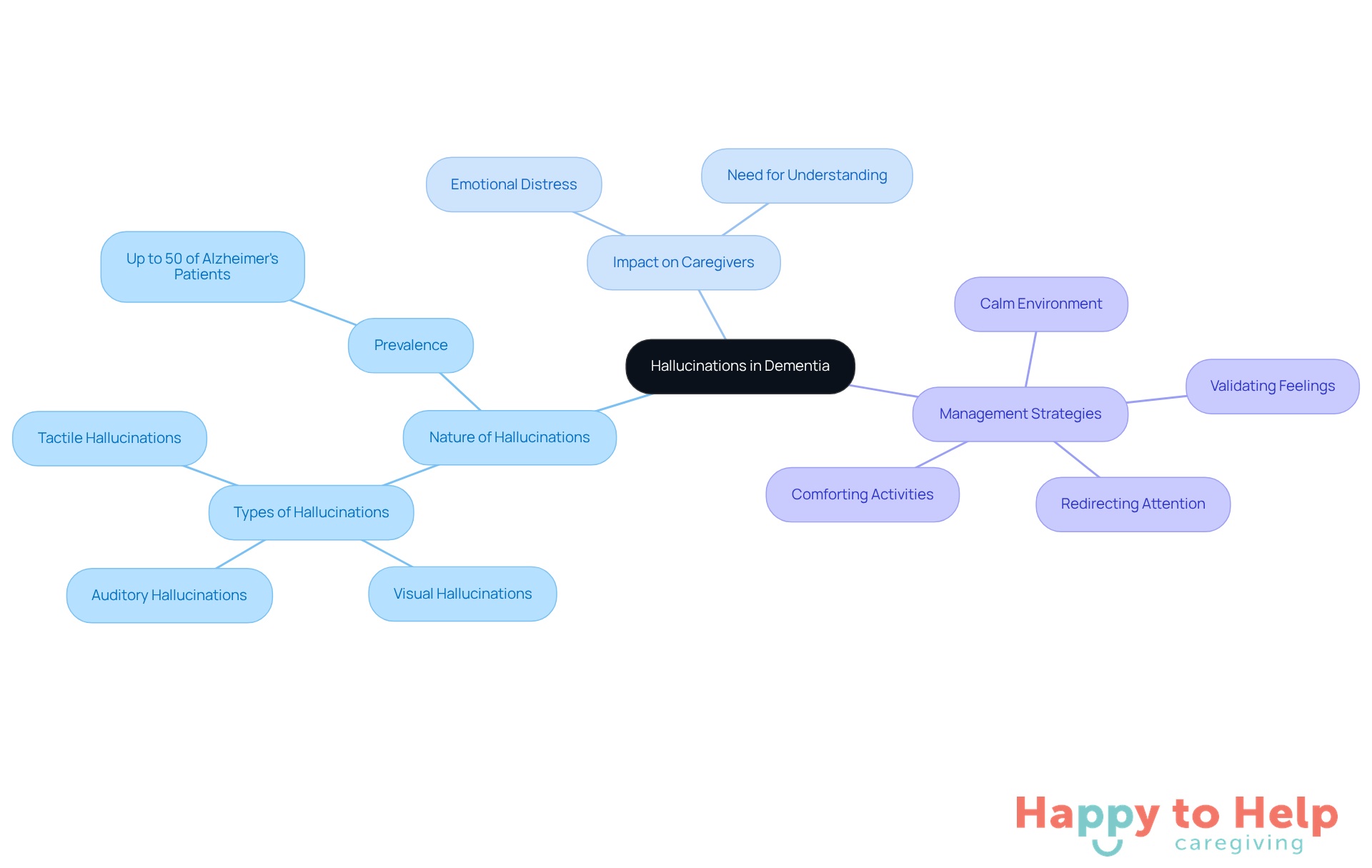
A significant challenge for caregivers is understanding whether dementia patients have hallucinations during cognitive decline. These sensory experiences, which feel real but are not based in reality, can lead to considerable distress for individuals. Many may perceive sights, sounds, smells, tastes, or sensations that do not exist, complicating their condition. Notably, studies indicate that up to 50 percent of people with Alzheimer's may experience false perceptions, delusions, or psychotic symptoms, which leads to the question of whether dementia patients have hallucinations, highlighting the prevalence of this issue within the dementia community.
Understanding that these false perceptions are a symptom of the illness rather than a reflection of the person's psychological state is crucial for caregivers. This perspective enables them to provide the necessary support and reassurance. For instance, journalist Greg O'Brien, diagnosed with early-onset Alzheimer's, has documented his experiences with illusions, which have evolved from seeing spider-like shapes to vivid images like lions and birds. His accounts reveal the often playful yet unsettling nature of these visions, underscoring the importance of empathy and understanding in caregiving.
To effectively manage sensory disturbances in dementia care, caregivers can implement several strategies:
- Creating a calm environment
- Engaging patients in comforting activities
- Validating the individual's feelings
- Gently redirecting their attention to foster a sense of security
By cultivating a nurturing atmosphere, caregivers can enhance the quality of life for those facing perception distortions, ensuring they feel understood and safe.
Identify Causes of Hallucinations
Caregivers face a significant challenge in determining if dementia patients have hallucinations. These episodes can stem from various factors, complicating the caregiving experience. Understanding the question of do dementia patients have hallucinations is crucial for creating a supportive environment.
-
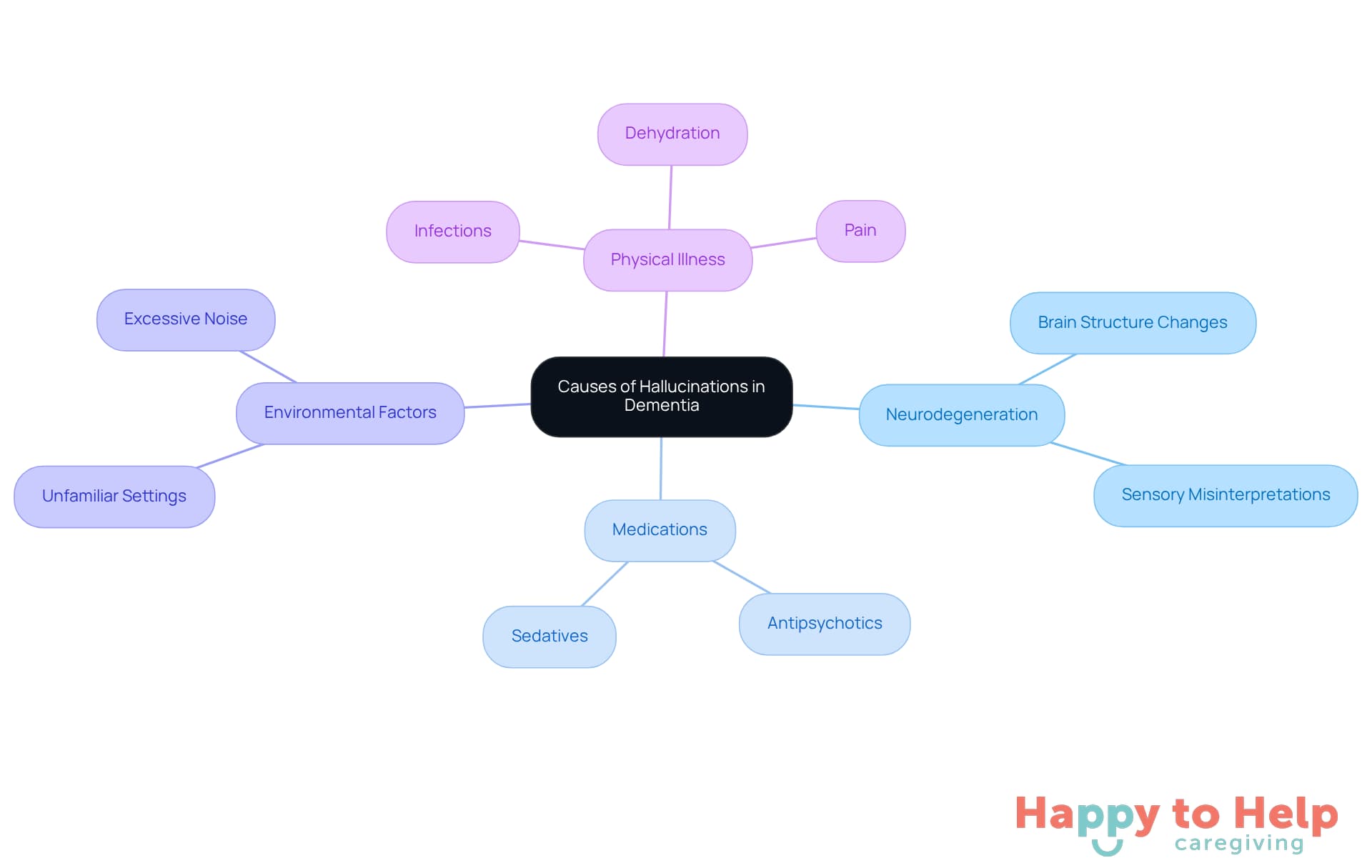
Neurodegeneration: Changes in brain structure and function due to dementia can lead to misinterpretations of sensory information. This can result in distressing experiences for both the individual and their caregivers, particularly when exploring whether do dementia patients have hallucinations.
-
Medications: Certain medications, particularly antipsychotics or sedatives, can worsen sensory distortions. Caregivers should be aware of the potential side effects of these drugs.
-
Environmental Factors: Changes in surroundings, such as unfamiliar settings or excessive noise, can provoke false perceptions. Caregivers can mitigate these effects by maintaining a calm and familiar environment.
-
Physical Illness: Conditions like infections, dehydration, or pain can also lead to hallucinations. Identifying and addressing these health issues is essential for determining if and when do dementia patients have hallucinations.
By recognizing these factors, caregivers can establish a more nurturing atmosphere, ultimately improving the quality of life for those affected by dementia.
Explore Types of Hallucinations
A common concern among caregivers is whether dementia patients have hallucinations, as these present significant challenges and impact individuals in various ways. Understanding whether dementia patients have hallucinations is crucial for providing appropriate support and interventions.
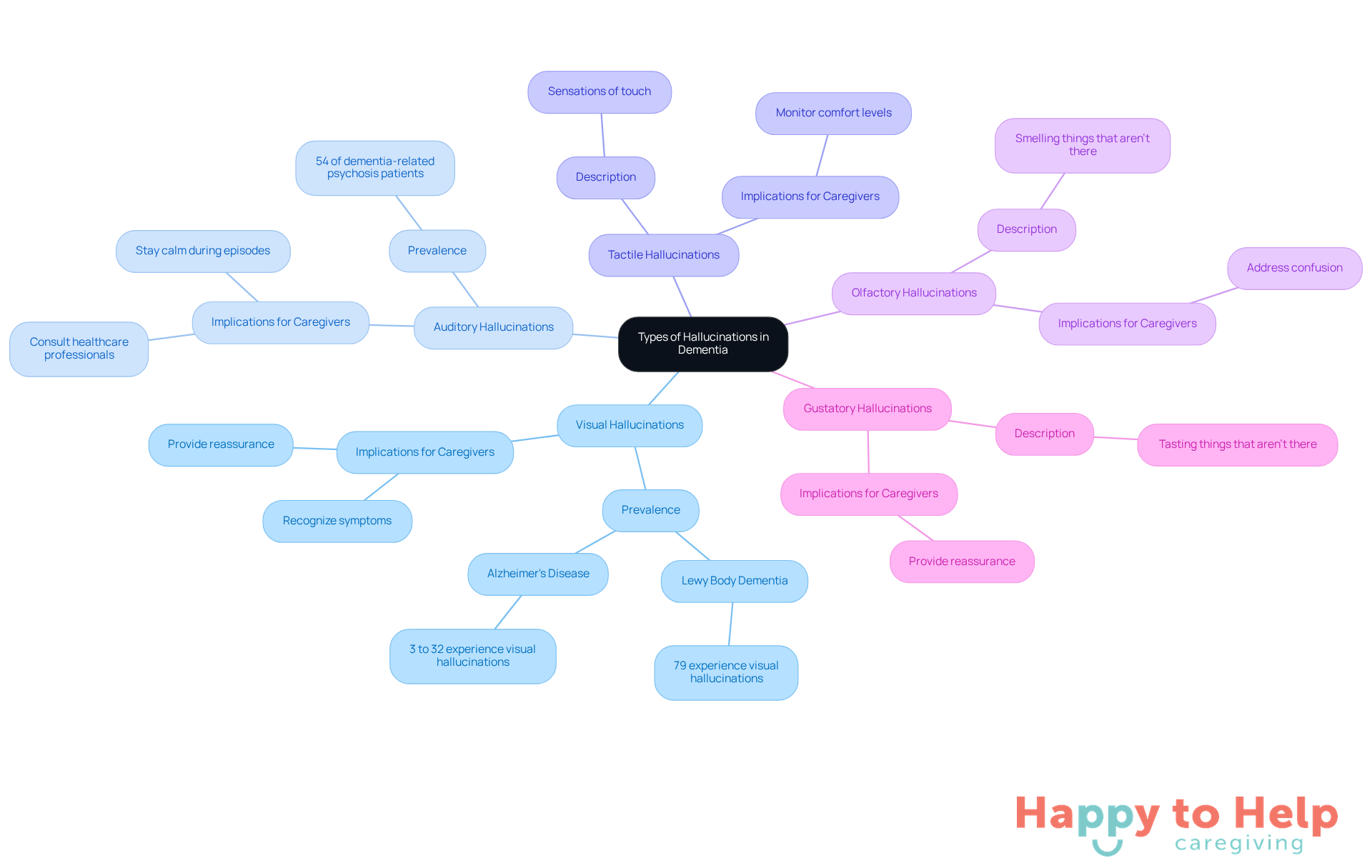
Visual Hallucinations: The most common type, where individuals perceive things that aren't present, such as seeing people, animals, or objects. Recent discoveries indicate that visual experiences can occur in as many as 79% of people with Lewy body disorder, which accounts for 10-15% of cognitive impairment diagnoses. This highlights the importance of recognizing this symptom in the later phases of the illness.
Auditory Hallucinations: Patients may hear sounds or voices that do not exist. Research shows that around 54% of individuals with dementia-related psychosis experience auditory perceptions, which leads to the inquiry of whether dementia patients have hallucinations. In contrast, studies suggest that visual or auditory distortions in Alzheimer's disease range from 3% to 32%, while in vascular cognitive impairment, they range from 7% to 20%. These variations can lead to confusion and distress, prompting the inquiry of whether dementia patients have hallucinations.
Tactile Hallucinations: These involve sensations of touch, such as feeling insects crawling on the skin. Although less common, they can significantly affect a person's comfort and well-being.
Olfactory and Gustatory Hallucinations: These types involve smelling or tasting things that aren't there. While less frequently reported, they can contribute to the overall confusion experienced by dementia patients.
Understanding these types of hallucinations is crucial for caregivers to effectively respond to whether dementia patients have hallucinations, ensuring individuals feel secure and supported. For instance, remaining calm and reassuring during episodes can help alleviate anxiety and confusion. Caregivers should consult healthcare professionals for guidance on managing delusions and enhancing the quality of life for those affected. As Teresa Brandt, PhD, noted, "The data indicates individuals with dementia-related psychosis encounter false perceptions and delusions that impose a significant burden on their lives.
Implement Support Strategies for Caregivers
Caregivers often face the challenging task of supporting individuals, especially when considering do dementia patients have hallucinations. This situation can lead to heightened anxiety and distress for both the caregiver and the individual. Understanding how to effectively manage experiences, particularly related to do dementia patients have hallucinations, is crucial for improving overall well-being.
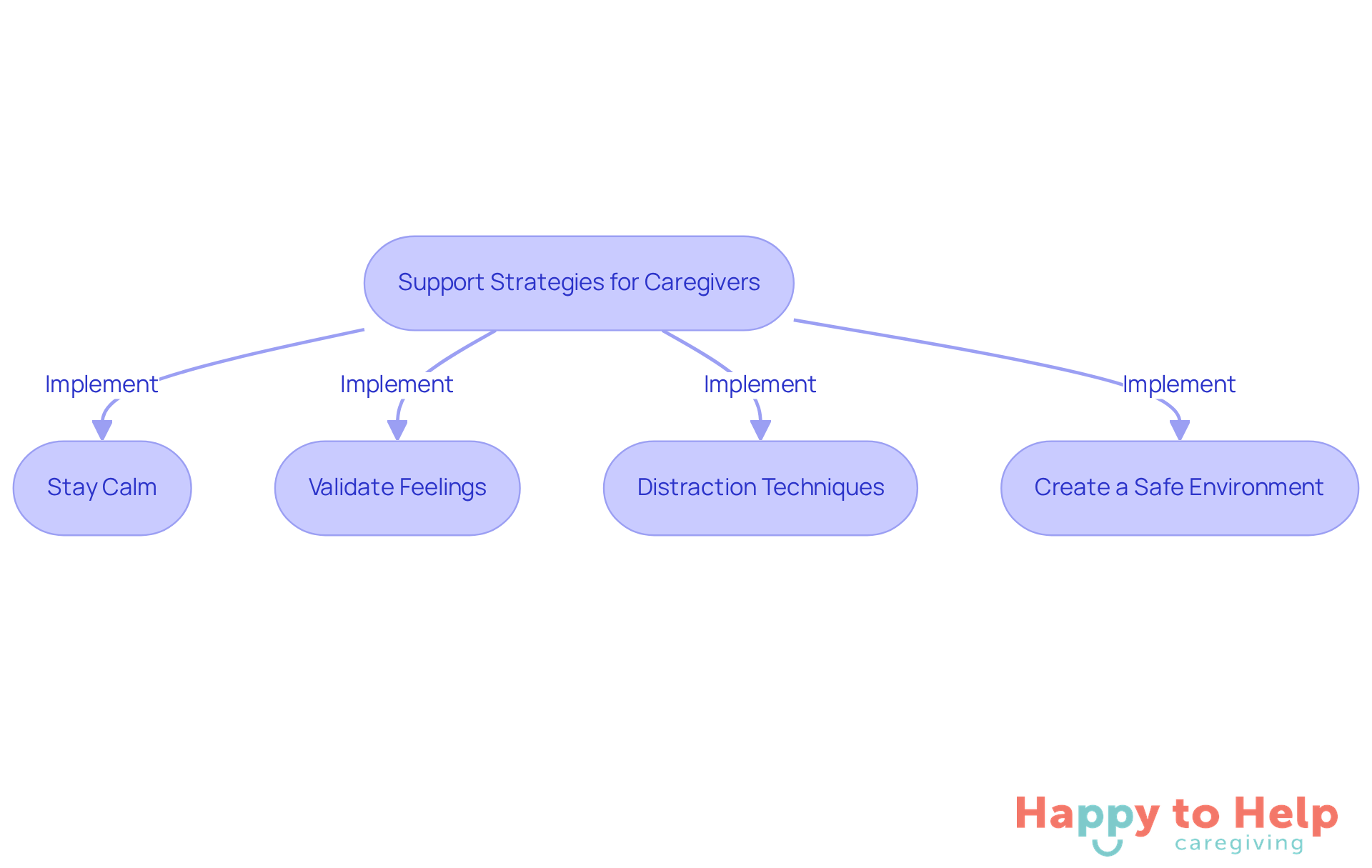
To address this issue, caregivers can implement several strategies:
- Stay Calm: Responding calmly can help reassure the individual and reduce anxiety.
- Validate Feelings: Acknowledge the person's emotions without disputing the existence of the experience.
- Distraction Techniques: Engage the individual in activities they enjoy, such as listening to music or going for a walk, to redirect their focus.
- Create a Safe Environment: Ensure the living space is well-lit and free from potential triggers that could worsen perceptions.
Consult healthcare professionals to regularly communicate with doctors about whether they do dementia patients have hallucinations and to adjust care plans as needed.
These strategies can significantly improve the quality of life for both caregivers and patients.
Your Path Forward
Understanding hallucinations in dementia patients poses a significant challenge for caregivers. These sensory experiences - sights, sounds, or sensations that aren't based in reality - can deeply affect both the individual and their caregivers. It's vital to recognize that these hallucinations are symptoms of dementia, not reflections of the person's mental state. This understanding is essential for creating a compassionate caregiving environment.
The prevalence of hallucinations among dementia patients is notable, with various types manifesting due to different contributing factors. Caregivers face unique challenges in managing these episodes, which can lead to distress for both parties. To address this, caregivers can implement several strategies:
- Maintaining a calm environment
- Validating feelings
- Engaging patients in comforting activities
These techniques are crucial for managing challenging situations and can significantly enhance the quality of life for those affected by dementia.
Ultimately, addressing hallucinations in dementia patients goes beyond symptom management; it’s about providing empathetic and informed care. Caregivers should actively seek resources and support to navigate this complex aspect of dementia. By fostering awareness and employing effective strategies, caregivers can ensure a more peaceful and fulfilling daily life for themselves and the individuals they care for. This approach transforms the caregiving journey into a more supportive and understanding experience for everyone involved.
https://iframe.tely.ai/cta/eyJhcnRpY2xlX2lkIjogIjY5MmZiYWE1MDUyOTZhNmExOTdiOGMxNyIsICJjb21wYW55X2lkIjogIjY4ZWU1ZGNhNzMxNzYyNTU3ZjNjOTVjMSIsICJpbmRleCI6IG51bGwsICJ0eXBlIjogImFydGljbGUifQ==Frequently Asked Questions
What are hallucinations in dementia?
Hallucinations in dementia are sensory experiences that feel real but are not based in reality, leading to considerable distress for individuals. They may perceive sights, sounds, smells, tastes, or sensations that do not exist.
How common are hallucinations in dementia patients?
Studies indicate that up to 50 percent of people with Alzheimer's may experience false perceptions, delusions, or psychotic symptoms, highlighting the prevalence of this issue within the dementia community.
Why is it important for caregivers to understand hallucinations as a symptom of dementia?
Understanding that hallucinations are a symptom of the illness rather than a reflection of the person's psychological state enables caregivers to provide necessary support and reassurance to those affected.
Can you provide an example of a person experiencing hallucinations related to dementia?
Journalist Greg O'Brien, diagnosed with early-onset Alzheimer's, documented his experiences with illusions, evolving from seeing spider-like shapes to vivid images like lions and birds, illustrating the often playful yet unsettling nature of these visions.
What strategies can caregivers use to manage sensory disturbances in dementia care?
Caregivers can implement several strategies, including creating a calm environment, engaging patients in comforting activities, validating the individual's feelings, and gently redirecting their attention to foster a sense of security.
How can caregivers enhance the quality of life for dementia patients experiencing hallucinations?
By cultivating a nurturing atmosphere and ensuring that patients feel understood and safe, caregivers can enhance the quality of life for those facing perception distortions.
List of Sources
- Define Hallucinations in Dementia
- In Alzheimer’s, Hallucinations Signal Faster Cognitive Decline - Charter Research (https://charterresearch.com/news/hallucinations-signal)
- Seeing What Isn't There: Inside Alzheimer's Hallucinations (https://npr.org/sections/health-shots/2015/05/30/408781343/seeing-what-isnt-there-inside-alzheimers-hallucinations)
- Survey Shows Significant Burden of Visual Hallucinations and Paranoid Delusions for People With Dementia (https://practicalneurology.com/news/survey-shows-significant-burden-of-visual-hallucinations-and-paranoid-delusions-for-people-with-dementia/2469337)
- Understanding Hallucinations in Dementia - Penn Memory Center (https://pennmemorycenter.org/understanding-hallucinations-in-dementia)
- Identify Causes of Hallucinations
- Anti-sickness drug being trialled for dementia-related hallucinations (https://ucl.ac.uk/news/2022/aug/anti-sickness-drug-being-trialled-dementia-related-hallucinations)
- Antipsychotics for dementia linked to more harms than previously acknowledged - Alzheimer's Research UK (https://alzheimersresearchuk.org/news/antipsychotics-for-dementia-linked-to-more-harms-than-previously-acknowledged)
- Survey Shows Significant Burden of Visual Hallucinations and Paranoid Delusions for People With Dementia (https://practicalneurology.com/news/survey-shows-significant-burden-of-visual-hallucinations-and-paranoid-delusions-for-people-with-dementia/2469337)
- Understanding Hallucinations in Dementia - Penn Memory Center (https://pennmemorycenter.org/understanding-hallucinations-in-dementia)
- Explore Types of Hallucinations
- People with Dementia and Caregivers Share the Significant Burden of Visual Hallucinations and Paranoid Delusions, New Survey Highlights (https://acadia.com/en-us/media/news-releases/people-dementia-and-caregivers-share-significant-burden-visual)
- Coping with hallucinations in a person with dementia (https://dementiauk.org/news/coping-with-hallucinations-in-a-person-with-dementia)
- Hallucinations and dementia: Recognizing them and support tips (https://medicalnewstoday.com/articles/hallucinations-and-dementia)
- Hallucinations, distorted senses common symptoms of dementia-related psychosis (https://healio.com/news/psychiatry/20200804/hallucinations-distorted-senses-common-symptoms-of-dementiarelated-psychosis)
- Hallucinations Greatly Increase Odds of LBD Over Alzheimer’s (https://lbda.org/early-visual-hallucinations-greatly-increase-odds-of-lbd-over-alzheimers)
- Implement Support Strategies for Caregivers
- Coping with hallucinations in a person with dementia (https://dementiauk.org/news/coping-with-hallucinations-in-a-person-with-dementia)
- Understanding Hallucinations in Dementia - Penn Memory Center (https://pennmemorycenter.org/understanding-hallucinations-in-dementia)
- How to Handle Hallucinations in the Elderly: A Caregiver's Guide - Happy To Help (https://happytohelpcaregiving.com/how-to-handle-hallucinations-in-the-elderly-a-caregivers-guide)
- Managing Hallucinations and Delusions (https://michaeljfox.org/news/managing-hallucinations-and-delusions)