What You Need to Know About Do Dementia Patients Know They Have
Memory loss can often blur the lines between normal aging and the more severe implications of dementia. This creates a complex emotional landscape for both patients and caregivers. As individuals grapple with cognitive decline, a critical question arises: do dementia patients know they have dementia?
This article delves into the nuances of awareness among dementia patients, revealing startling statistics that show a significant portion of individuals remain unaware of their condition. By exploring the distinctions between dementia and age-related memory changes, we uncover the vital role caregivers play in fostering understanding and support. This support ultimately enhances the quality of life for those affected.
How can caregivers bridge this gap in awareness and provide the necessary support for their loved ones? Together, we can navigate this journey with compassion and care.
Distinguishing Dementia from Age-Related Memory Changes
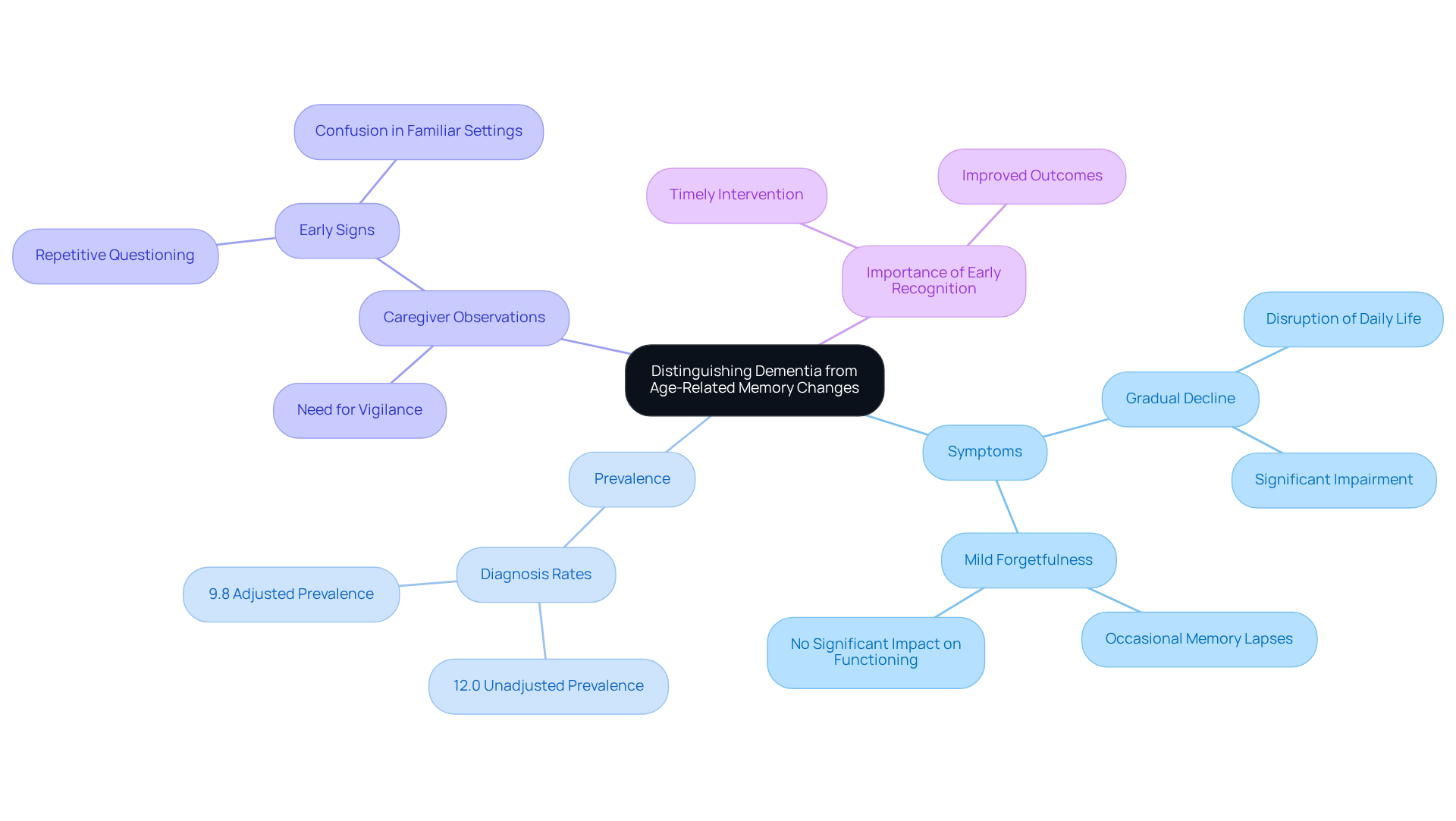
Dementia and age-related cognitive changes can often feel overwhelming, especially for caregivers. It's important to recognize that while dementia involves a gradual decline in mental abilities that disrupts daily life, age-related memory changes typically manifest as mild forgetfulness that doesn’t significantly impact overall functioning. For instance, a senior might misplace their keys but later recall where they left them - a common occurrence in normal aging. In contrast, someone experiencing memory loss may forget not just where the keys are, but also their purpose, indicating a deeper mental impairment.
Recent studies reveal that it can take an average of 3.5 years from the onset of cognitive decline symptoms to receive an official diagnosis. This underscores the need for caregivers and support providers to remain vigilant and attentive. Neurologists emphasize that while some memory lapses are a normal part of aging, significant mental decline warrants a medical evaluation.
Caregivers often notice subtle changes, like repetitive questioning or confusion in familiar settings, which can be early indicators of cognitive decline. Alarmingly, only a small percentage of U.S. older adults who show early signs of mental decline - 12.0% unadjusted prevalence and 9.8% adjusted prevalence - actually receive a diagnosis. This highlights the critical importance of recognizing symptoms early for timely intervention.
As Dr. Ken Zweig reminds us, "Dementia is not a normal part of aging." This statement reinforces the need for families to be aware and proactive. Understanding these distinctions is vital for families seeking appropriate care and interventions. Remember, you’re not alone in this journey; support is available, and recognizing these signs can lead to better outcomes for your loved ones.
Awareness of Dementia: Do Patients Recognize Their Condition?
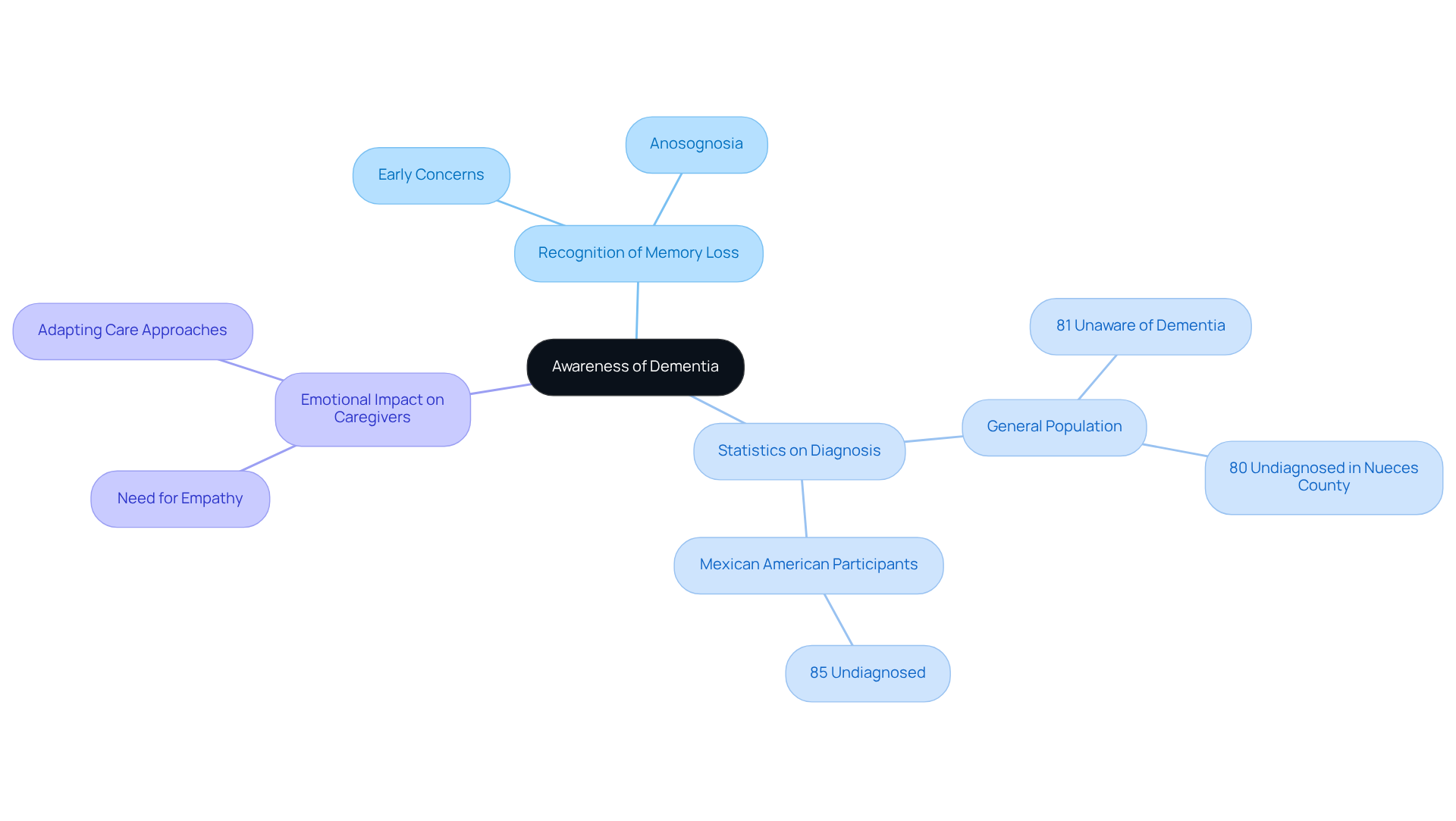
Memory loss can be a deeply personal and emotional journey, and recognition of this decline varies widely among individuals. Some may notice changes early on, expressing their concerns about their memory. Yet, as conditions progress, many wonder if do dementia patients know they have dementia, as they face anosognosia, a lack of awareness regarding their cognitive challenges. This can be particularly distressing. Research indicates that about 81% of individuals with likely cognitive impairment raise the question of whether do dementia patients know they have dementia, highlighting a significant gap in recognition that complicates care.
For example, a study in Nueces County, Texas, found that 80% of older adults with probable dementia had not received a formal diagnosis. This issue is even more pronounced among Mexican American participants, with nearly 85% remaining undiagnosed. Such unawareness can lead to resistance to help and non-adherence to treatment plans, creating significant hurdles for caregivers.
Navigating these complexities requires immense empathy and patience. Caregivers must adapt their approaches to meet the emotional and cognitive needs of their loved ones. Understanding these dynamics is crucial for providing effective support and fostering a collaborative care environment. By recognizing the emotional weight of this journey, caregivers can offer the nurturing presence that individuals with memory loss truly need.
Impact of Memory Loss: Dementia vs. Normal Aging
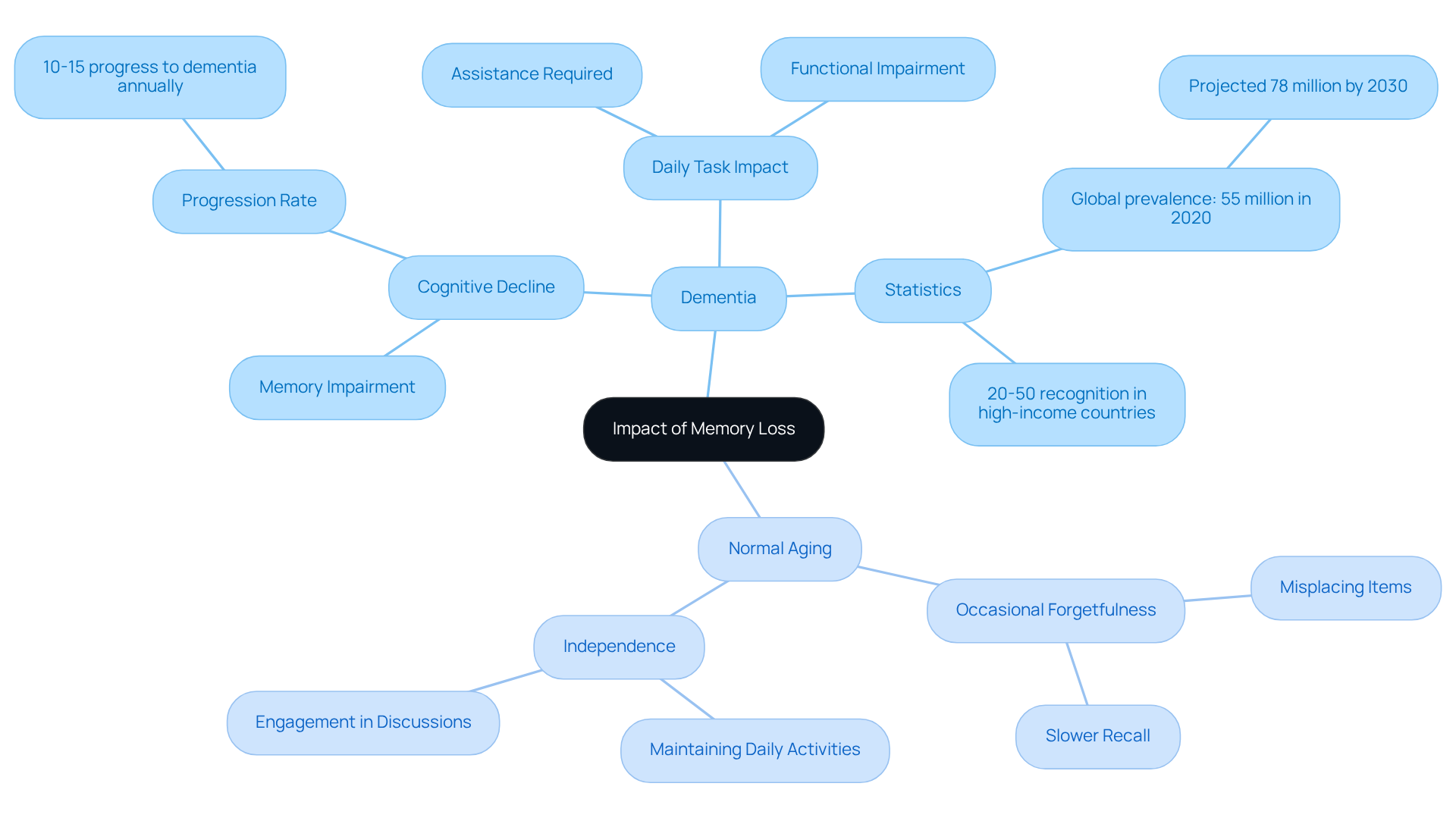
Cognitive decline in Alzheimer's can be deeply distressing, affecting not just memory but also the ability to carry out daily tasks. This can be overwhelming for both individuals and their caregivers. In contrast, normal aging might lead to occasional forgetfulness-like misplacing keys or struggling to recall a name-but most older adults still manage to maintain their independence.
For instance, someone with memory impairment may find it hard to remember recent conversations or recognize familiar faces. Meanwhile, an older adult might simply take a bit longer to recall a name but can still engage in meaningful discussions.
Statistics reveal that about 10% to 15% of individuals with mild cognitive impairment progress to a more severe cognitive condition each year. This highlights the seriousness of memory decline associated with this disorder. Moreover, research shows that in high-income countries, only 20-50% of cognitive decline cases are recognized and documented. This underscores the critical need for awareness and early diagnosis.
Understanding these differences is essential for caregivers. It enables them to provide tailored support and strategies that address the unique challenges faced by those with memory disorders. By fostering a compassionate approach, caregivers can help individuals navigate their experiences with dignity and care.
The Role of Caregivers in Supporting Awareness and Memory
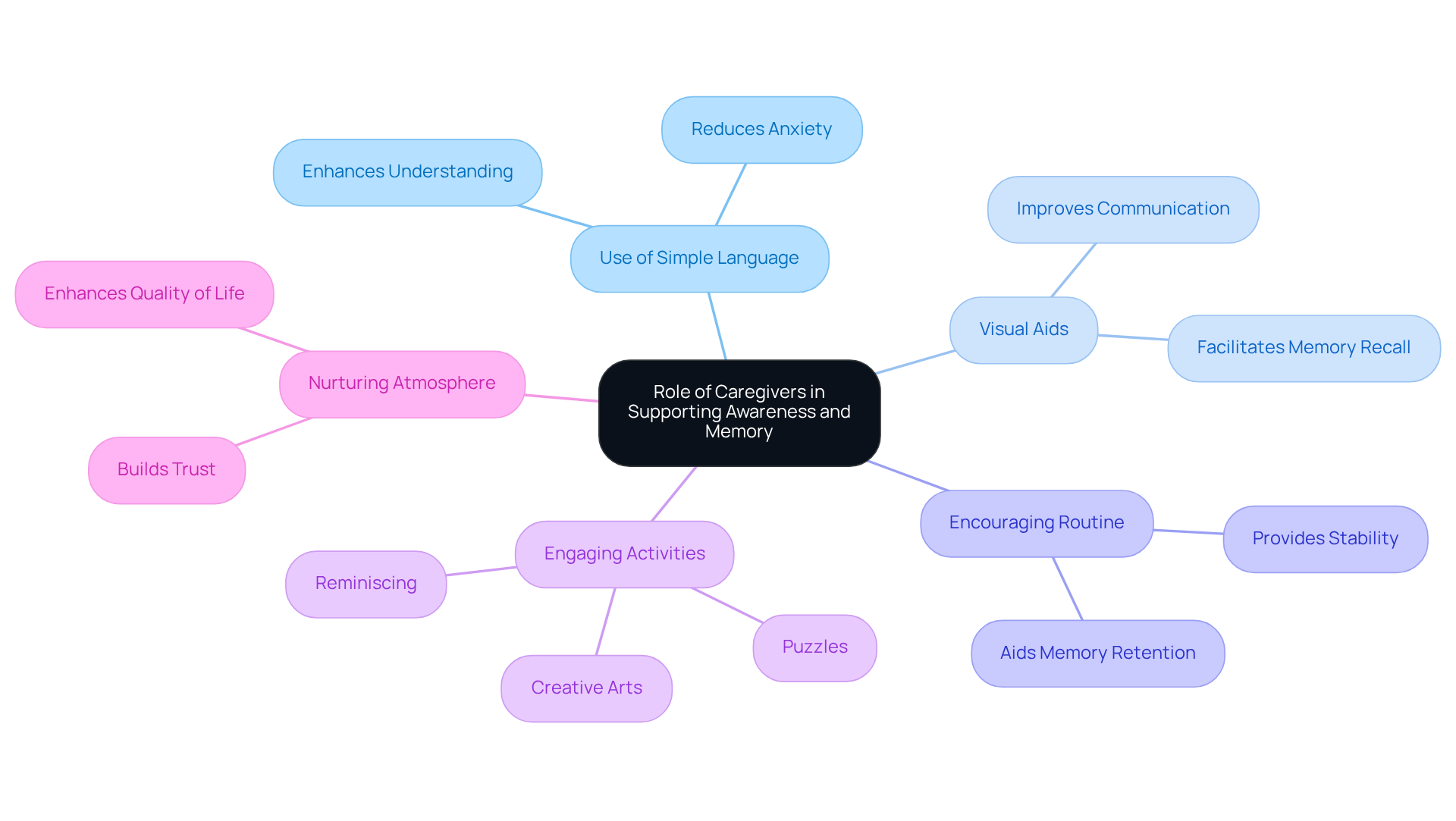
Caregivers play a vital role in supporting individuals with dementia, especially when it comes to raising awareness and managing cognitive decline. By using simple language and visual aids, caregivers can help patients feel more secure and understood. Encouraging routine and familiarity is also essential, as it aids memory retention. Engaging patients in activities that stimulate cognitive function - like puzzles or reminiscing about cherished memories - can be incredibly beneficial. When caregivers establish a nurturing atmosphere, they significantly enhance the quality of life for those living with cognitive impairment, helping them navigate their condition with dignity and respect.
Statistics reveal that nearly 80% of adults with Alzheimer's disease and similar cognitive disorders receive care at home, primarily from family members or friends. This underscores the importance of support providers being equipped with effective strategies to communicate and connect with their loved ones. Real-life stories show that caregivers who actively engage in meaningful conversations and activities foster a sense of belonging and understanding, which is crucial for individuals facing the challenges of dementia. Ultimately, the compassionate approach of caregivers not only aids memory retention but also nurtures a deeper connection, allowing patients to maintain their identity and dignity throughout their caregiving journey.
Taking the Next Steps
The complexities surrounding dementia and how patients recognize it highlight a crucial need for awareness and understanding. Dementia signifies a significant decline in cognitive abilities that disrupts daily life. It’s essential to distinguish it from normal age-related memory changes, which typically don’t hinder overall functioning. Recognizing these differences is vital for caregivers and families, as it lays the groundwork for timely interventions and appropriate support.
Key insights reveal that many individuals with dementia remain unaware of their condition. Studies indicate that up to 81% of those with probable dementia lack recognition of their cognitive decline. This unawareness often leads to resistance to assistance, complicating the caregiving process. Caregivers play a pivotal role in fostering an environment of empathy and understanding, which is crucial for effectively supporting individuals facing these challenges.
Ultimately, navigating through dementia isn’t just about managing memory loss; it’s about maintaining dignity and connection. By enhancing awareness and understanding, caregivers can significantly improve the quality of life for those with cognitive impairments. Families and support networks must educate themselves on the signs of dementia and engage in open conversations, ensuring that individuals receive the compassionate care they deserve.
https://iframe.tely.ai/cta/eyJhcnRpY2xlX2lkIjogIjY5MWZkYzVjN2I4YTJhOGJkNzc1MGI5NiIsICJjb21wYW55X2lkIjogIjY4ZWU1ZGNhNzMxNzYyNTU3ZjNjOTVjMSIsICJpbmRleCI6IG51bGwsICJ0eXBlIjogImFydGljbGUifQ==Frequently Asked Questions
What is the difference between dementia and age-related memory changes?
Dementia involves a gradual decline in mental abilities that disrupts daily life, while age-related memory changes typically manifest as mild forgetfulness that doesn’t significantly impact overall functioning.
Can you provide an example of age-related memory changes?
An example of age-related memory changes is a senior misplacing their keys but later recalling where they left them, which is common in normal aging.
What are signs that may indicate cognitive decline?
Signs of cognitive decline may include repetitive questioning or confusion in familiar settings.
How long does it generally take to receive an official diagnosis after cognitive decline symptoms begin?
It can take an average of 3.5 years from the onset of cognitive decline symptoms to receive an official diagnosis.
What percentage of older adults with early signs of mental decline receive a diagnosis?
Only about 12.0% unadjusted prevalence and 9.8% adjusted prevalence of U.S. older adults showing early signs of mental decline actually receive a diagnosis.
Why is it important for caregivers to recognize early signs of cognitive decline?
Recognizing early signs of cognitive decline is critical for timely intervention and can lead to better outcomes for loved ones.
Is dementia considered a normal part of aging?
No, dementia is not a normal part of aging, as emphasized by experts in the field.