Do People with Dementia Know They Have Dementia? Understanding
For families in our service areas
For families in our service areas, this guide explains dementia care and how non-medical in-home caregiving can support care planning in East Idaho, Treasure Valley & Magic Valley, Northern Wasatch, North Central West Virginia & Southwestern Pennsylvania, and Northeast Ohio.
Why Do People with Dementia Know They Have Matters
Dementia is a complex condition that affects millions globally. A critical aspect often overlooked is the self-awareness of those living with it. Understanding whether individuals with dementia recognize their cognitive decline can significantly influence the quality of care they receive.
As many as 60-80% of those with moderate dementia may lack awareness of their condition. This raises vital questions about their ability to engage in care decisions and the emotional strain on caregivers. Caregivers face the challenge of navigating this intricate landscape, providing compassionate support while addressing the fluctuating awareness of their loved ones.
To effectively manage this situation, caregivers can implement several strategies:
- Educate themselves about the stages of dementia and the typical signs of self-awareness.
- Communicate openly with healthcare professionals to understand the best approaches for care.
- Engage in supportive conversations that respect the individual's feelings and perceptions, even if they differ from reality.
By recognizing the complexities of dementia and adapting their caregiving strategies, caregivers can enhance the quality of care and support they provide.
Define Dementia: Understanding the Condition
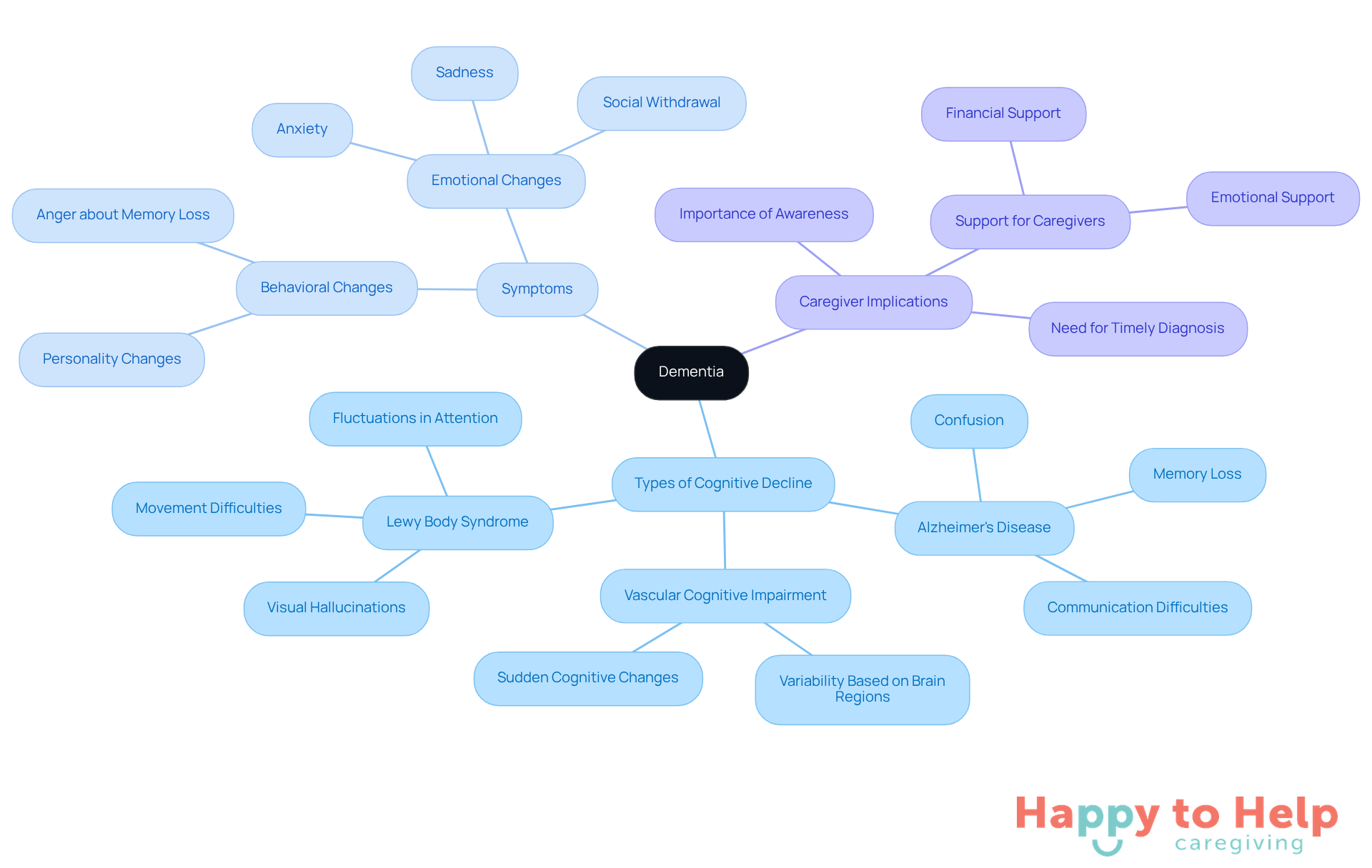
Dementia encompasses various mental impairments that can significantly disrupt daily life. It leads to a decline in memory, thinking, and social abilities, impacting a person's capacity to perform everyday activities. Common types of cognitive decline include:
- Alzheimer's disease
- Vascular cognitive impairment
- Lewy body syndrome
Each type has unique symptoms and progression patterns, but they all share the common feature of mental decline. Understanding cognitive decline is crucial for caregivers and families to provide appropriate support and care.
Alzheimer's disease often starts with memory loss and confusion, gradually resulting in difficulties with communication and recognizing loved ones. Vascular cognitive impairment, typically caused by strokes or blood circulation issues in the brain, may present with sudden changes in cognitive function, varying significantly based on the affected brain regions. Lewy body disorder is marked by fluctuations in attention, visual hallucinations, and movement difficulties, complicating diagnosis.
The problem is clear: up to 75% of cognitive decline cases worldwide remain undiagnosed. In wealthier nations, only 20-50% of these cases are identified, underscoring the need for greater awareness among caregivers. Emotional and behavioral changes, such as anxiety, sadness, and social withdrawal, are common in individuals with cognitive decline. Caregivers must recognize these signs to provide better support.
As the global population ages, the prevalence of cognitive decline is projected to nearly double every 20 years, potentially reaching around 78 million by 2030. This statistic highlights the importance of ongoing research and public awareness initiatives aimed at improving understanding and support for those experiencing cognitive decline. The economic impact of caring for individuals with cognitive impairment is significant, with the estimated annual cost per person in the U.S. around $81,000. This information is vital for support providers to understand the broader implications of memory care.
Mayo Clinic researchers emphasize that timely diagnosis is essential for connecting individuals with appropriate treatments. This further stresses the necessity for caregivers to be informed and prepared.
Explore Self-Awareness in Dementia Patients
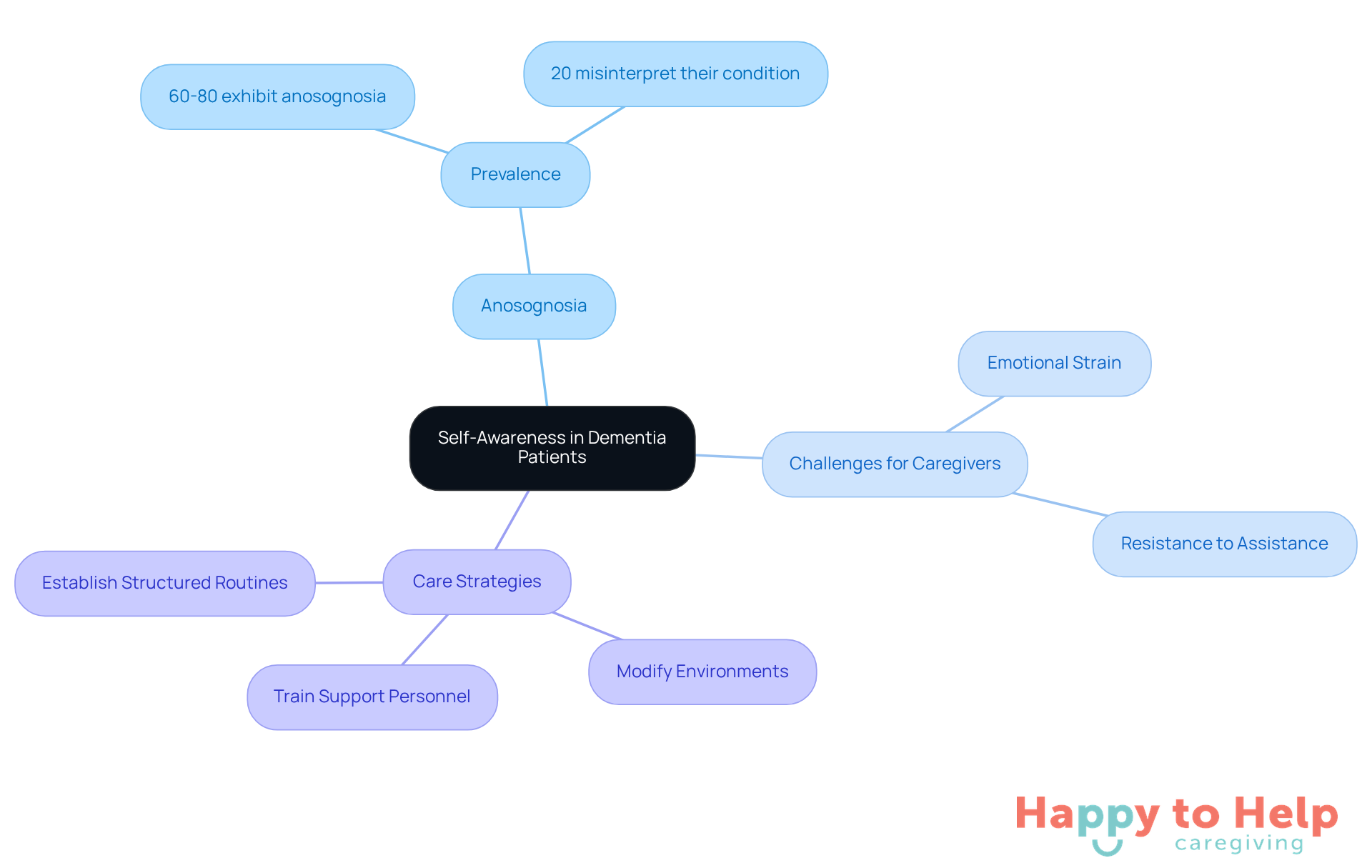
A significant challenge is self-awareness among individuals with memory disorders, leading to the question of do people with dementia know they have dementia, especially in conditions like anosognosia. This neurological condition leads many to lack awareness of their cognitive deficits, prompting the question of do people with dementia know they have dementia, which complicates care. Research indicates that approximately 60-80% of individuals with moderate dementia exhibit some degree of anosognosia, leading to the question of do people with dementia know they have dementia, while around 20% of those with Alzheimer's disease misinterpret their condition. This disconnect can create confusion and frustration for both patients and caregivers, especially when discussing do people with dementia know they have dementia, as individuals may resist assistance, believing they can manage independently.
Understanding this phenomenon is crucial for effective caregiving, particularly when exploring do people with dementia know they have dementia. Psychologists stress the need for communication strategies and care plans that respect the dignity of those affected. For instance, TheKey trains support personnel and Client Success Managers to recognize signs of anosognosia and respond with dignity and clinical accuracy. This approach helps navigate the complexities of care and fosters a supportive environment that promotes well-being.
Caregivers often face emotional strain when their loved ones refuse to acknowledge their condition, prompting the difficult question: do people with dementia know they have dementia, which leads to feelings of guilt and stress. Recent findings highlight the necessity for tailored strategies in cognitive impairment care, especially considering the question of whether do people with dementia know they have dementia, as anosognosia can fluctuate daily, affecting how individuals perceive their need for assistance. Implementing environmental modifications and structured routines can significantly enhance safety and support for individuals with dementia.
By integrating insights from psychological research and practical experiences, caregivers can develop effective strategies that improve the quality of life for both patients and their families. Here are some actionable tips:
- Train support personnel to recognize and respond to signs of anosognosia.
- Modify environments to enhance safety and comfort.
- Establish structured routines to provide stability and predictability.
These strategies not only address the challenges posed by memory disorders but also empower caregivers to provide compassionate and effective support.
Examine Stages of Dementia and Awareness Levels
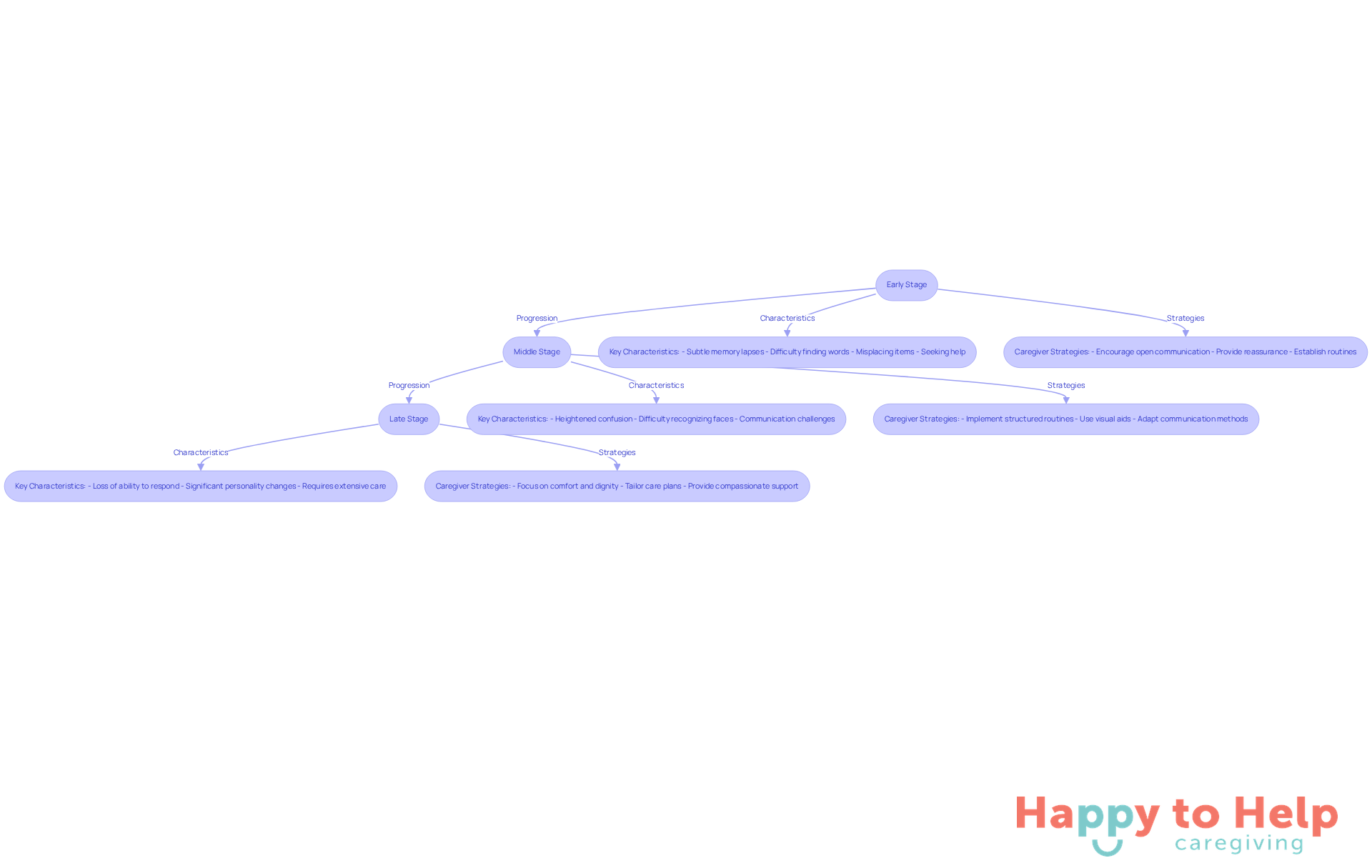
Dementia progresses through three main stages: early, middle, and late, each marked by distinct mental changes and varying levels of self-awareness. In the early stage, which typically lasts about two years, individuals may notice subtle memory lapses and mental shifts, prompting the question of do people with dementia know they have dementia. They might struggle to find words or misplace items, prompting them to seek help or express concerns about their cognitive health.
As dementia transitions into the middle stage, lasting approximately two to four years, it raises the question of whether do people with dementia know they have dementia, as awareness often diminishes. Individuals may face heightened confusion, difficulty recognizing familiar faces, and challenges in communication. Caregivers must adapt their strategies to meet the evolving needs of those they support. For example, implementing structured routines and utilizing visual aids can enhance communication and assist with daily tasks, promoting a sense of independence while ensuring safety.
In the late stage, which generally lasts one to two years, individuals may lose the ability to respond to their surroundings and communicate effectively. This stage necessitates extensive care, as patients often struggle to comprehend their condition, raising the question, do people with dementia know they have dementia, and they may undergo significant personality changes. Caregivers play a vital role in providing compassionate support, focusing on comfort and dignity. Research shows that during this stage, individuals typically require assistance with all aspects of daily life, highlighting the need for tailored care plans that cater to their unique requirements.
Understanding cognitive decline and its progression is crucial for effective caregiving. As cognitive decline advances, caregivers must remain vigilant and responsive to the changing needs of their loved ones, ensuring that support is both empathetic and effective. Recognizing the typical duration of each phase and the associated shifts in awareness enables caregivers to provide the most effective assistance throughout the cognitive decline journey.
Discuss Implications of Awareness for Caregivers
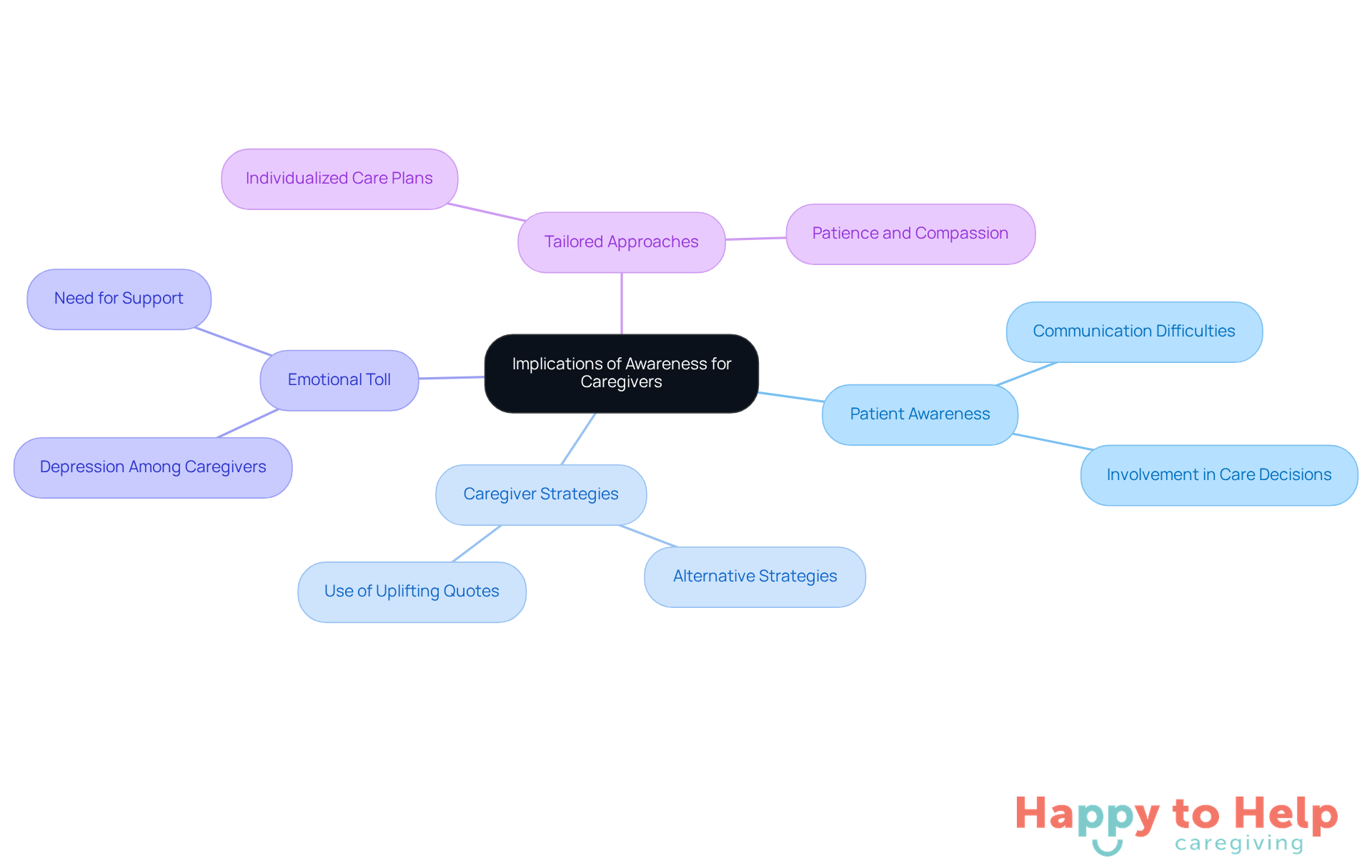
A significant challenge for caregivers is understanding do people with dementia know they have dementia and the degree of awareness in these individuals. When patients are aware of their condition, specifically regarding do people with dementia know they have dementia, caregivers can engage them in discussions about care preferences and involve them in decision-making. However, when awareness is lacking, it raises the question of do people with dementia know they have dementia, which leads to communication difficulties that complicate the caregiving process.
According to the National Alliance for Caregiving and AARP, 66% of caregivers find it easy to organize treatment recommended by health professionals when patients are involved in care decisions. This highlights the importance of fostering awareness and involvement. Conversely, caregivers may need to employ alternative strategies to ensure the comfort and safety of individuals who lack awareness. Patience and compassion are essential, as each patient's experience with cognitive decline is unique and may require tailored approaches.
To bridge the gap in understanding, caregivers can use uplifting quotes about cognitive decline to promote positivity and connection. Additionally, the emotional and physical toll on caregivers is considerable; approximately 40% of family supporters of individuals with memory loss experience depression. This underscores the necessity for caregivers to seek assistance and resources.
Ultimately, recognizing the nuances of awareness in dementia patients brings up the important question of do people with dementia know they have dementia, which enables caregivers to adapt their strategies effectively. By doing so, they can ensure that care remains compassionate and responsive to individual needs.
Key Takeaways for Caregivers
Understanding whether individuals with dementia recognize their condition presents a significant challenge for caregivers. Many people with dementia, especially those experiencing anosognosia, may not be aware of their cognitive decline. This lack of self-awareness complicates the caregiving process, leading to difficulties for both patients and caregivers.
Research shows that a substantial percentage of individuals with moderate dementia exhibit some degree of unawareness about their condition. This necessitates specialized communication techniques and tailored care plans. By understanding the various types of dementia and the stages of cognitive decline, caregivers can anticipate changing needs and adjust their support accordingly.
Fostering awareness - both in patients and caregivers - can lead to improved care experiences and outcomes. Caregivers are encouraged to seek resources and support systems that can help them navigate the emotional and practical challenges of caring for someone with dementia. By prioritizing understanding and compassion, caregivers can significantly enhance the quality of life for individuals with cognitive impairments. Awareness, or the lack thereof, plays a pivotal role in the caregiving journey.
https://iframe.tely.ai/cta/eyJhcnRpY2xlX2lkIjogIjY5MmY5MTk3Y2E4MDg5MWIwMmZiMDBmMSIsICJjb21wYW55X2lkIjogIjY4ZWU1ZGNhNzMxNzYyNTU3ZjNjOTVjMSIsICJpbmRleCI6IG51bGwsICJ0eXBlIjogImFydGljbGUifQ==Frequently Asked Questions
What is dementia?
Dementia is a term that encompasses various mental impairments that disrupt daily life, leading to a decline in memory, thinking, and social abilities, which affects a person's capacity to perform everyday activities.
What are the common types of cognitive decline associated with dementia?
The common types of cognitive decline include Alzheimer's disease, vascular cognitive impairment, and Lewy body syndrome. Each type has unique symptoms and progression patterns but shares the common feature of mental decline.
What are the symptoms of Alzheimer's disease?
Alzheimer's disease typically starts with memory loss and confusion, gradually leading to difficulties with communication and recognizing loved ones.
How does vascular cognitive impairment manifest?
Vascular cognitive impairment is usually caused by strokes or blood circulation issues in the brain and may present with sudden changes in cognitive function, which can vary significantly based on the affected brain regions.
What characterizes Lewy body syndrome?
Lewy body syndrome is marked by fluctuations in attention, visual hallucinations, and movement difficulties, which can complicate diagnosis.
How prevalent is undiagnosed cognitive decline?
Up to 75% of cognitive decline cases worldwide remain undiagnosed, with only 20-50% of these cases identified in wealthier nations, indicating a need for greater awareness among caregivers.
What emotional and behavioral changes are common in individuals with cognitive decline?
Common changes include anxiety, sadness, and social withdrawal. Caregivers must recognize these signs to provide better support.
What is the projected prevalence of cognitive decline by 2030?
The prevalence of cognitive decline is projected to nearly double every 20 years, potentially reaching around 78 million individuals by 2030.
What is the economic impact of caring for individuals with cognitive impairment?
The estimated annual cost per person for memory care in the U.S. is around $81,000, highlighting the significant economic impact of caring for individuals with cognitive impairment.
Why is timely diagnosis important for dementia?
Timely diagnosis is essential for connecting individuals with appropriate treatments, emphasizing the necessity for caregivers to be informed and prepared.
List of Sources
- Define Dementia: Understanding the Condition
- Alzheimer's Disease Facts and Figures (https://alz.org/alzheimers-dementia/facts-figures)
- Risk and future burden of dementia in the United States (https://nih.gov/news-events/nih-research-matters/risk-future-burden-dementia-united-states)
- Dementia (https://who.int/news-room/fact-sheets/detail/dementia)
- Mayo Clinic's AI tool identifies 9 dementia types, including Alzheimer's, with one scan - Mayo Clinic News Network (https://newsnetwork.mayoclinic.org/discussion/mayo-clinics-ai-tool-identifies-9-dementia-types-including-alzheimers-with-one-scan)
- Dementia Statistics & Facts | Advanced Autism Services (https://advancedautism.com/post/dementia-statistics-facts)
- Explore Self-Awareness in Dementia Patients
- The Link Between Dementia and Anosognosia (https://mentalhealth.com/library/are-people-with-dementia-aware-of-their-condition)
- (PDF) Effects of Tracking Technology on Daily Life of Persons With Dementia: Three Experimental Single-Case Studies (https://researchgate.net/publication/261923008_Effects_of_Tracking_Technology_on_Daily_Life_of_Persons_With_Dementia_Three_Experimental_Single-Case_Studies)
- When Insight Is Lost: Understanding Anosognosia in Dementia and What Families Can Do (https://thekey.com/learning-center/anosognosia)
- Self-reported awareness of performance in dementia (https://sciencedirect.com/science/article/abs/pii/S0926641005001217)
- Frontiers | Anosognosia is associated with increased prevalence and faster development of neuropsychiatric symptoms in mild cognitive impairment (https://frontiersin.org/journals/aging-neuroscience/articles/10.3389/fnagi.2024.1335878/full)
- Examine Stages of Dementia and Awareness Levels
- Alzheimer's Stages - Early, Middle, Late Dementia Symptoms | alz.org (https://alz.org/alzheimers-dementia/stages)
- Alzheimer's Disease Facts and Figures (https://alz.org/alzheimers-dementia/facts-figures)
- ADI - Dementia statistics (https://alzint.org/about/dementia-facts-figures/dementia-statistics)
- How Fast Do the Stages of Dementia Progress? (https://onelifeseniorliving.com/blog/how-fast-do-the-stages-of-dementia-progress)
- New Survey Reveals Critical Gaps in Awareness and Understanding of Agitation in Alzheimer’s Dementia - Alliance for Aging Research (https://agingresearch.org/news/new-survey-reveals-critical-gaps-in-awareness-and-understanding-of-agitation-in-alzheimers-dementia)
- Discuss Implications of Awareness for Caregivers
- (https://belleviecare.co.uk/support-advice/dementia-quotes-to-lift-your-spirits)
- Supporting decision making for individuals living with dementia and their care partners with knowledge translation: An umbrella review (https://alz-journals.onlinelibrary.wiley.com/doi/full/10.1002/alz.70636)
- Caregiver Statistics: Health, Technology, and Caregiving Resources (https://caregiver.org/resource/caregiver-statistics-health-technology-and-caregiving-resources)
- Tech-enabled caregiving can help dementia patients stay at home — perhaps for too long (https://statnews.com/2025/11/24/dementia-caregiving-technology-assistance)