
For families in our service areas
For families in our service areas, this guide explains dementia care and how non-medical in-home caregiving can support care planning in East Idaho, Treasure Valley & Magic Valley, Northern Wasatch, North Central West Virginia, and Northeast Ohio.
What You Need to Know About Do People with Dementia Know They Have
Dementia presents a significant challenge, not just for those diagnosed but also for their caregivers. The cognitive decline associated with dementia complicates daily interactions and emotional support, making it essential for caregivers to understand the nuances of awareness in their loved ones. Research shows that individuals with different types and stages of dementia exhibit varying levels of self-awareness, raising an important question: do people with dementia truly recognize their condition?
This exploration delves into the complexities of dementia awareness. Understanding these intricacies is crucial for caregivers, as it can directly influence their caregiving strategies and emotional support. By recognizing the signs of self-awareness, caregivers can tailor their approaches to better meet the needs of those they care for.
To foster a supportive environment, caregivers can implement several actionable strategies. These include:
- Maintaining open lines of communication
- Using simple language
- Providing reassurance
Additionally, engaging in activities that promote cognitive function can help enhance the quality of life for both caregivers and patients. By addressing the challenges of dementia awareness, caregivers can create a more empathetic and effective caregiving experience.
Understanding Dementia Awareness
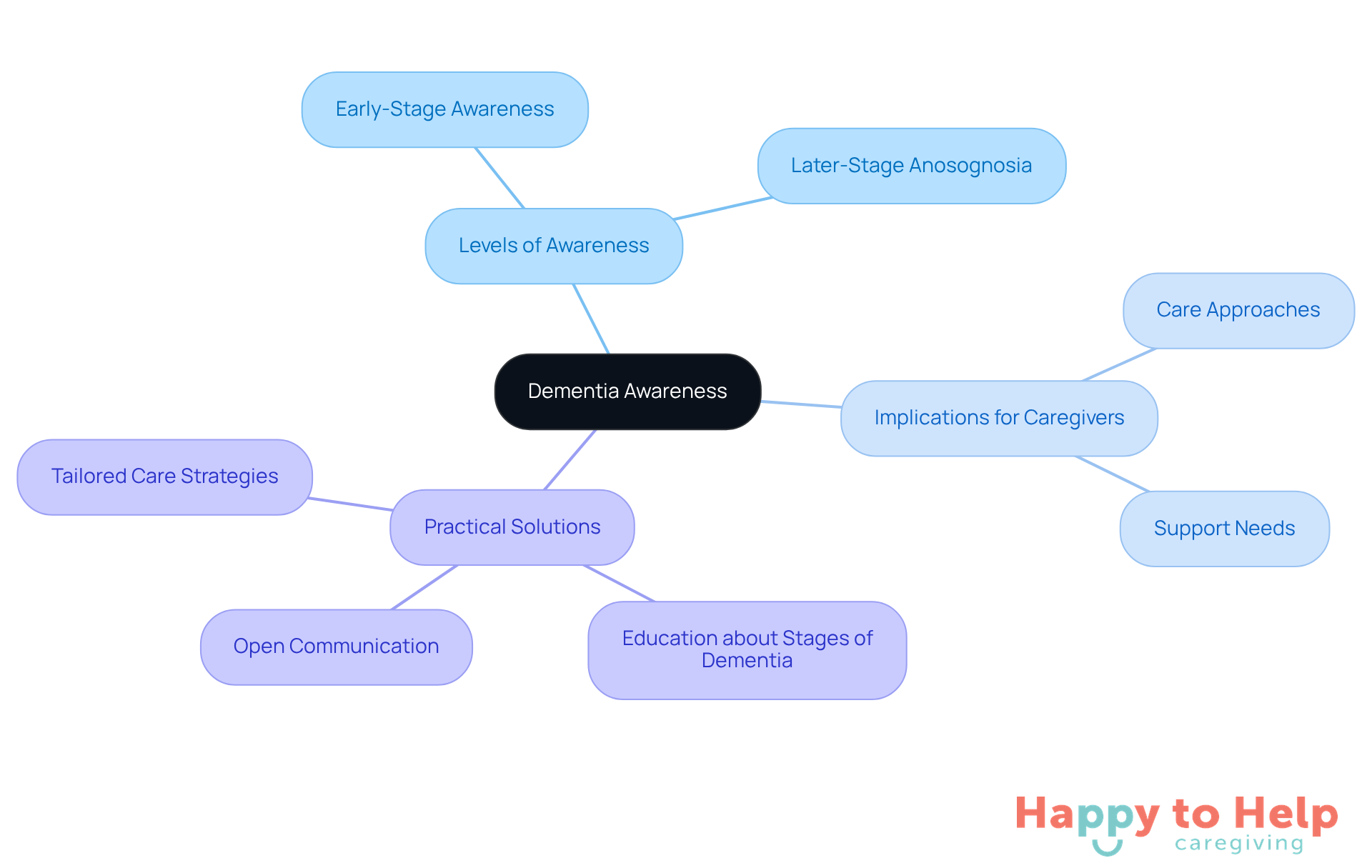
Dementia recognition poses a significant challenge for caregivers, as it requires understanding do people with dementia know they have it and the varying levels of awareness among individuals experiencing cognitive decline. Studies indicate that this awareness can differ greatly, influenced by the type and stage of dementia. For instance, early-stage dementia patients often have a clearer grasp of their condition, raising the question of do people with dementia know they have it, while those in later stages may exhibit anosognosia, which is a lack of awareness regarding their mental deficits.
This discrepancy poses critical implications for caregivers. It affects how they approach care and the level of support required. Caregivers must recognize that understanding these dynamics is essential for effective interaction and care strategies.
To address this issue, families can implement several practical solutions:
- Educate themselves about the stages of dementia and the associated awareness levels.
- Communicate openly with patients, using clear and simple language.
- Tailor care strategies based on the patient's awareness, ensuring that support is appropriate for their cognitive state.
By adopting these strategies, caregivers can enhance their approach to care, fostering a more supportive environment for those affected by dementia.
Types of Dementia and Their Impact on Awareness
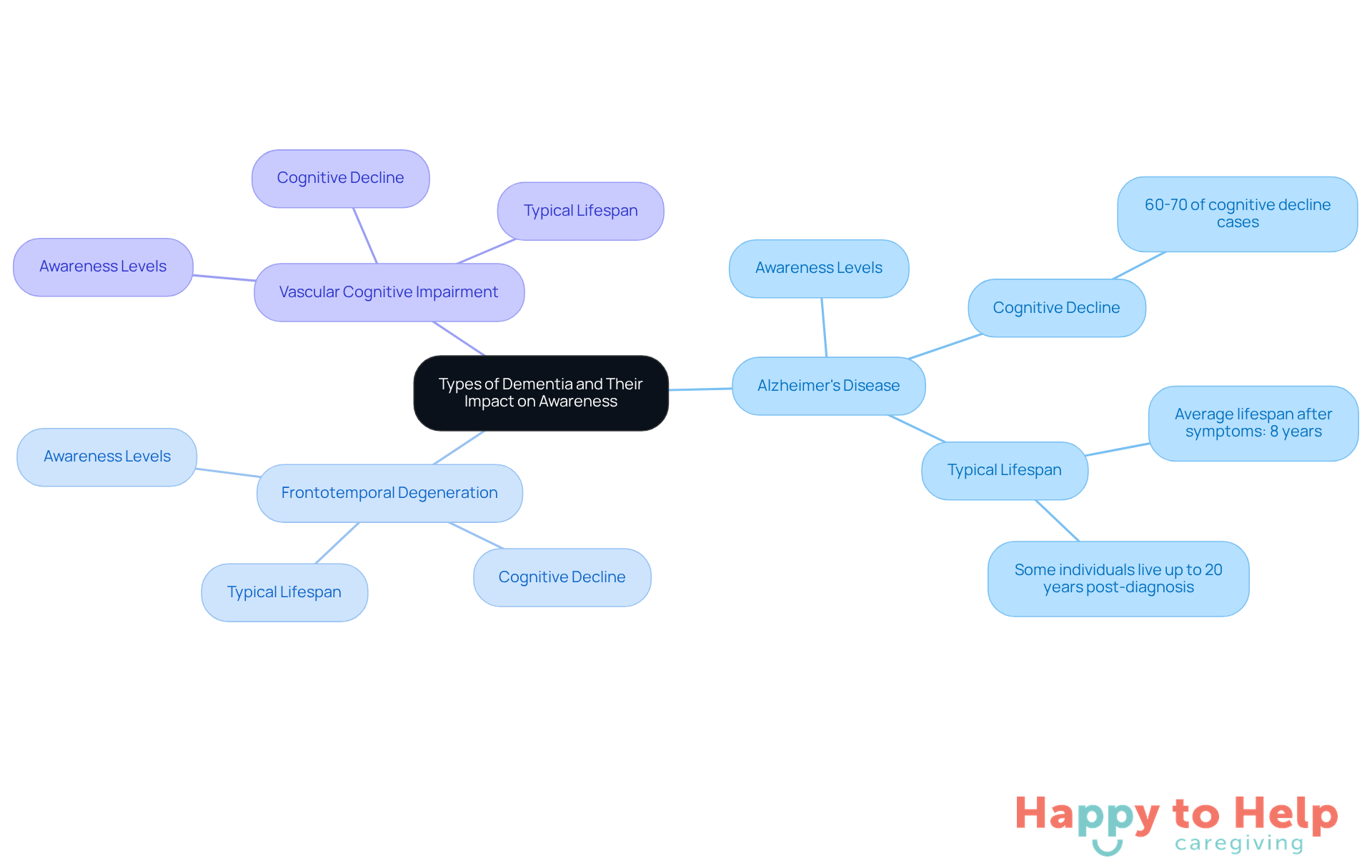
A significant challenge of dementia is understanding do people with dementia know they have it, as it affects awareness in various ways. Alzheimer's disease, the most common form, often begins with mild memory loss that can escalate into severe cognitive impairment, raising the question of do people with dementia know they have it. Alarmingly, research indicates that nearly 60-70% of cognitive decline cases are attributed to Alzheimer's, highlighting its profound impact on individuals' understanding of their condition. Moreover, as cognitive decline progresses, it raises the question of do people with dementia know they have it, highlighting the urgency of addressing this issue.
The typical lifespan after the first signs of Alzheimer's is about eight years, illustrating the progressive nature of the disease and its effect on awareness over time. In contrast, frontotemporal degeneration may allow for some initial understanding of the condition, but as it advances, do people with dementia know they have it? Many individuals often struggle to recognize their symptoms. Vascular cognitive impairment adds another layer of complexity, as awareness can vary depending on the severity of vascular incidents affecting the brain.
Compounding these challenges, approximately three-quarters of people with dementia worldwide remain undiagnosed, leading to uncertainty about whether do people with dementia know they have it, which complicates the recognition of their condition. For caregivers, understanding these distinctions is crucial. It enables them to develop personalized care strategies that align with each individual's mental state, ensuring that support is both effective and compassionate.
Actionable Tips for Caregivers:
- Stay informed about the different types of dementia and their effects on awareness.
- Regularly assess the individual's cognitive state to tailor care approaches.
- Foster open communication to help individuals express their needs and feelings.
- Collaborate with healthcare professionals for accurate diagnosis and ongoing support.
Emotional and Psychological Effects of Dementia
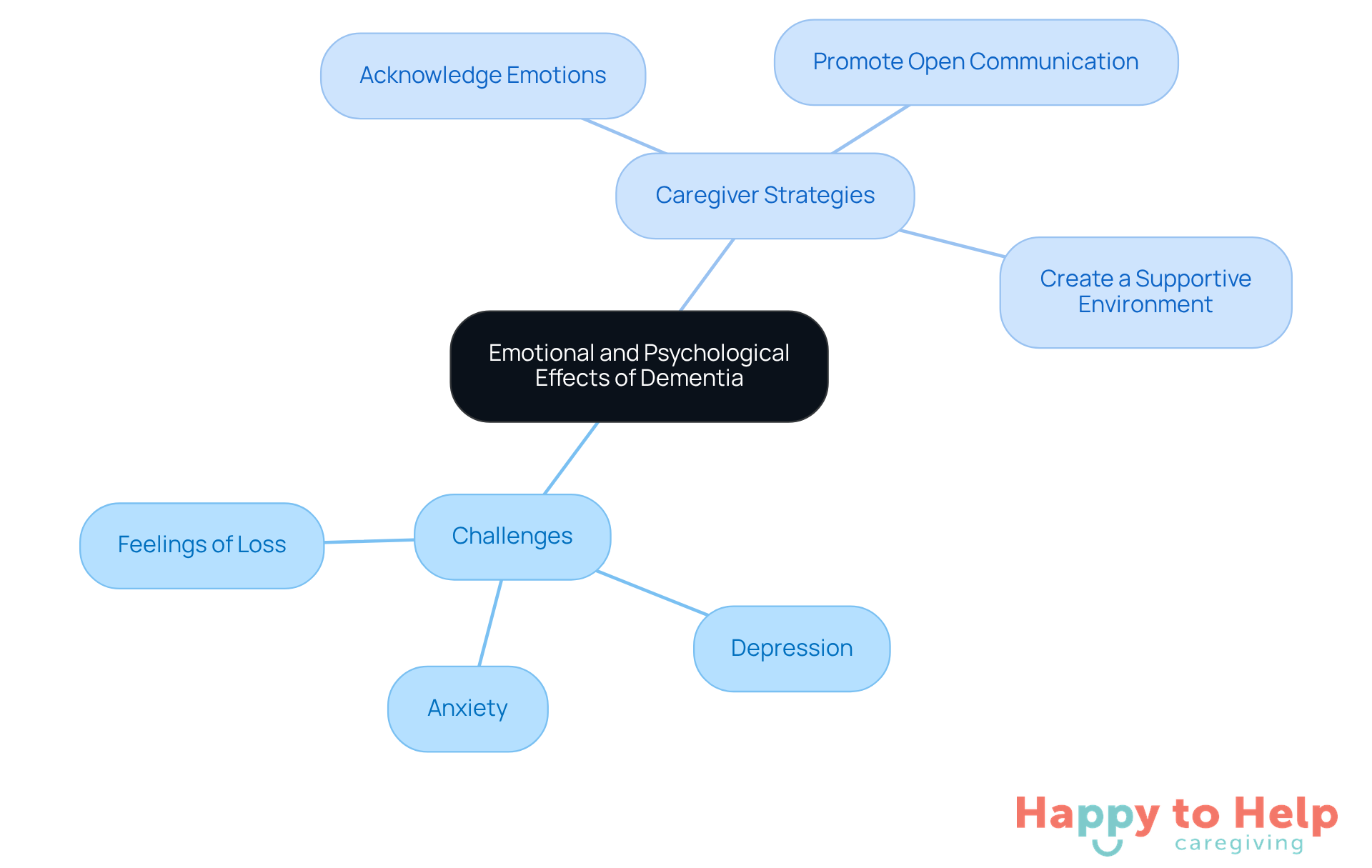
Dementia presents significant emotional and psychological challenges, including anxiety, depression, and feelings of loss. Individuals facing cognitive decline often struggle with the realization of their condition, leading to the question of whether do people with dementia know they have it, which can result in emotional distress. This distress complicates their understanding of dementia and raises the question of do people with dementia know they have it, as they may deny or minimize their symptoms as a coping mechanism.
Caregivers play a crucial role in addressing these emotional responses. Recognizing the signs of distress is essential for providing the necessary reassurance and support. Establishing a secure and empathetic atmosphere can significantly reduce feelings of fear and loneliness. Here are some actionable tips for caregivers:
- Acknowledge emotions: Validate the feelings of those experiencing cognitive decline, showing that their emotions are understood.
- Promote open communication: Encourage discussions about feelings and experiences, fostering a sense of connection.
- Create a supportive environment: Ensure that the surroundings are calm and comforting, which can help alleviate anxiety.
By implementing these strategies, caregivers can enhance communication and involvement, ultimately improving the quality of life for those affected by dementia.
Caregiver Strategies for Supporting Awareness
Caregivers face a significant challenge in fostering awareness about whether people with dementia know they have it among individuals with cognitive decline. With over 6 million people in the US living with Alzheimer's Disease and Related Dementia (ADRD), the need for effective strategies is critical. Cognitive decline can lead to confusion and distress, making it essential for caregivers to implement supportive measures.
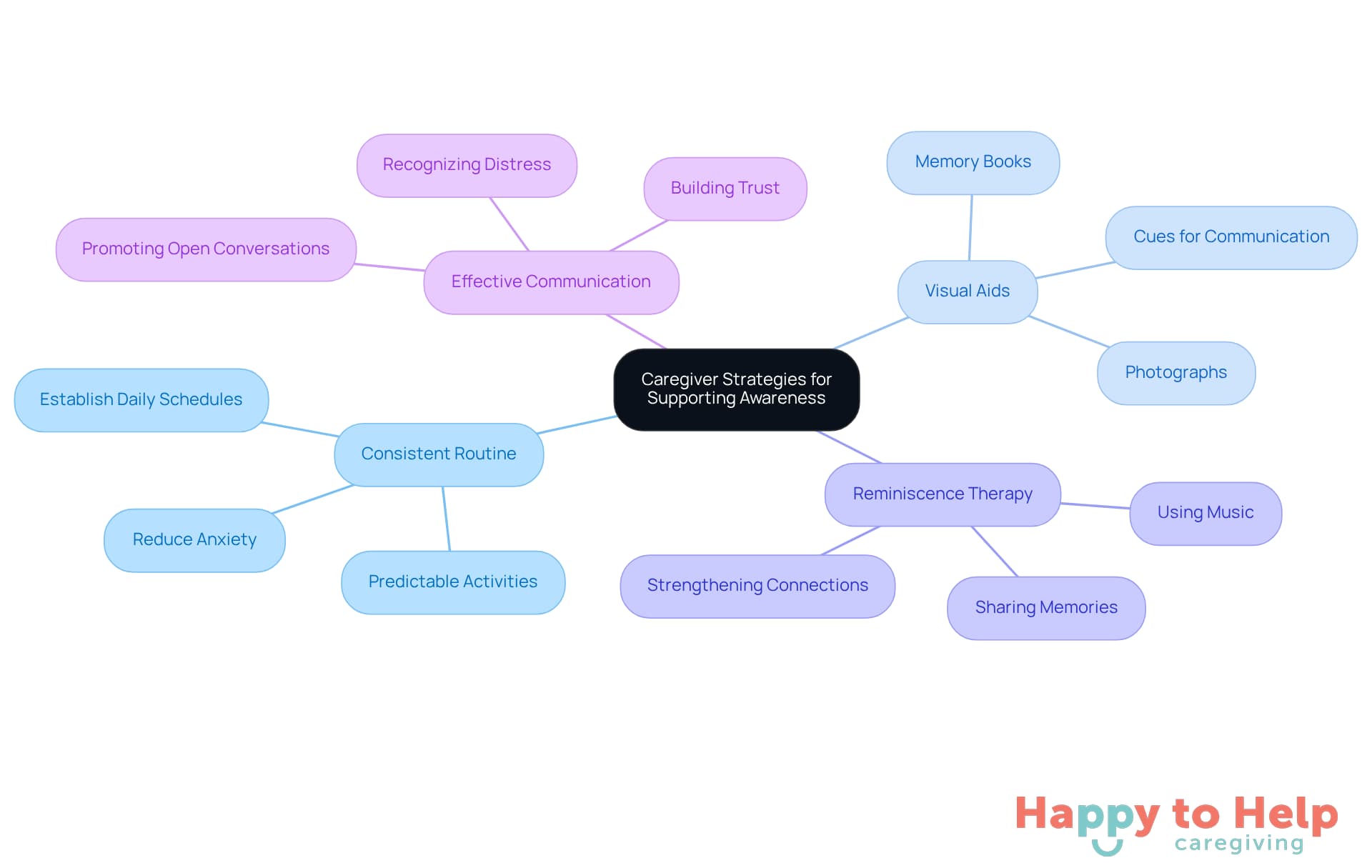
To address this issue, caregivers can adopt several strategies:
- Maintaining a consistent routine
- Using visual aids like photographs and memory books
- Engaging in reminiscence therapy
Visual aids serve as powerful tools in dementia care, helping to trigger memories and facilitate communication. Reminiscence therapy, which encourages sharing memories through cues such as old photographs or music, has proven beneficial in strengthening connections to the past.
Effective communication is another cornerstone of supporting awareness. Caregivers should be trained to recognize signs of distress or confusion, allowing them to respond appropriately and compassionately. As Fawn A. Cothran notes, understanding the individual behind the cognitive impairment diagnosis is essential for effective caregiving. Promoting open conversations about emotions and experiences fosters a sense of safety and connection, which is vital for those facing cognitive challenges.
By applying these strategies, caregivers can significantly enhance the quality of life for individuals affected by cognitive decline. This approach not only fosters a sense of agency but also strengthens connections, despite the challenges posed by the condition. As the number of individuals living with dementia continues to rise, it is increasingly vital for caregivers to support awareness and understanding regarding whether people with dementia know they have it.
Your Path Forward
Understanding whether individuals with dementia are aware of their condition presents a significant challenge for caregivers. This issue is multifaceted and varies widely depending on the type and stage of dementia. Early-stage patients often retain some insight into their cognitive decline, while those in advanced stages may lack this awareness entirely. This discrepancy can complicate the caregiving process, making it essential for caregivers to recognize these differences to provide effective and compassionate support tailored to each individual's needs.
Education is crucial for caregivers to navigate the complexities of dementia and its effects on awareness. By understanding the various types of dementia, caregivers can better address the emotional and psychological challenges faced by those they care for. Here are some actionable strategies:
- Maintain consistent routines to provide stability.
- Utilize visual aids to enhance communication.
- Foster open dialogue to acknowledge feelings and promote connection.
As the prevalence of dementia continues to rise, prioritizing awareness and understanding becomes increasingly critical. By implementing these strategies and maintaining empathy, caregivers can significantly improve the quality of life for individuals affected by cognitive decline. Embracing this knowledge not only strengthens caregiver-patient relationships but also fosters a more compassionate approach to dementia care, ultimately benefiting those navigating the complexities of this condition.
https://iframe.tely.ai/cta/eyJhcnRpY2xlX2lkIjogIjY5MjY0MzkxMDBmNGUzMjBmNzc3ZTdlNCIsICJjb21wYW55X2lkIjogIjY4ZWU1ZGNhNzMxNzYyNTU3ZjNjOTVjMSIsICJpbmRleCI6IG51bGwsICJ0eXBlIjogImFydGljbGUifQ==Frequently Asked Questions
What is the main challenge in recognizing dementia for caregivers?
The main challenge is understanding the varying levels of awareness among individuals with dementia, including whether they know they have the condition.
How does awareness of dementia differ among patients?
Awareness can vary greatly depending on the type and stage of dementia. Early-stage patients often have a clearer understanding of their condition, while later-stage patients may experience anosognosia, which is a lack of awareness of their mental deficits.
What implications does the discrepancy in awareness have for caregivers?
It affects how caregivers approach care and the level of support required, making it essential for them to understand these dynamics for effective interaction and care strategies.
What practical solutions can families implement to address dementia awareness?
Families can educate themselves about the stages of dementia, communicate openly with patients using clear language, and tailor care strategies based on the patient's awareness.
How can caregivers enhance their approach to care for dementia patients?
By adopting strategies that consider the patient's level of awareness, caregivers can foster a more supportive environment and provide appropriate support for those affected by dementia.
List of Sources
- Types of Dementia and Their Impact on Awareness
- Dementia: What It Is, Causes, Symptoms, Treatment & Types (https://my.clevelandclinic.org/health/diseases/9170-dementia)
- Dementia (https://who.int/news-room/fact-sheets/detail/dementia)
- 2025 NIH Alzheimer’s Disease and Related Dementias Research Progress Report: Advances and Achievements (https://nia.nih.gov/about/2025-nih-dementia-research-progress-report)
- ADI - Dementia statistics (https://alzint.org/about/dementia-facts-figures/dementia-statistics)
- Caregiver Strategies for Supporting Awareness
- Tech-enabled caregiving can help dementia patients stay at home — perhaps for too long (https://statnews.com/2025/11/24/dementia-caregiving-technology-assistance)
- Virtual reality adds empathy to dementia care (https://publichealth.gmu.edu/news/2025-06/virtual-reality-adds-empathy-dementia-care)
- Caring for the Caregivers: An Alzheimer’s Disease Research Center Call to Action - PMC (https://pmc.ncbi.nlm.nih.gov/articles/PMC9047452)
- Top List of Inspirational Dementia Quotes for Caregivers (https://rochesterlawcenter.com/dementia-resources/dementia-quotes)
- (https://belleviecare.co.uk/support-advice/dementia-quotes-to-lift-your-spirits)