Does a Caregiver Need to Be Certified? Key Comparisons Explained
For families in our service areas
For families in our service areas, this guide explains caregiver support and how non-medical in-home caregiving can support care planning in East Idaho, Treasure Valley & Magic Valley, Northern Wasatch, North Central West Virginia & Southwestern Pennsylvania, and Northeast Ohio.
Why Does a Caregiver Need to Be Certified? Matters
Navigating the world of caregiving presents a significant challenge, particularly due to the varying certification requirements that differ from state to state. Families often find themselves grappling with a crucial question: does a caregiver need to be certified to provide the best possible care for their loved ones? This uncertainty can lead to confusion and anxiety, as families strive to ensure the safety and well-being of those they care for.
Understanding the nuances of caregiver qualifications is essential. Certified caregivers may offer certain advantages, such as formal training and adherence to state regulations, which can enhance the quality of care. However, non-certified caregivers can also provide compassionate and effective support, often drawing from personal experience and dedication. As families seek clarity in this complex landscape, it becomes vital to weigh the pros and cons of each option.
To navigate these challenges effectively, families should consider the specific needs of their loved ones and the qualifications of potential caregivers. Engaging in open discussions about care expectations and exploring local resources can help families make informed decisions. By understanding the implications of caregiver certification, families can ensure they are providing the best possible care.
Understanding Caregiver Certification Requirements
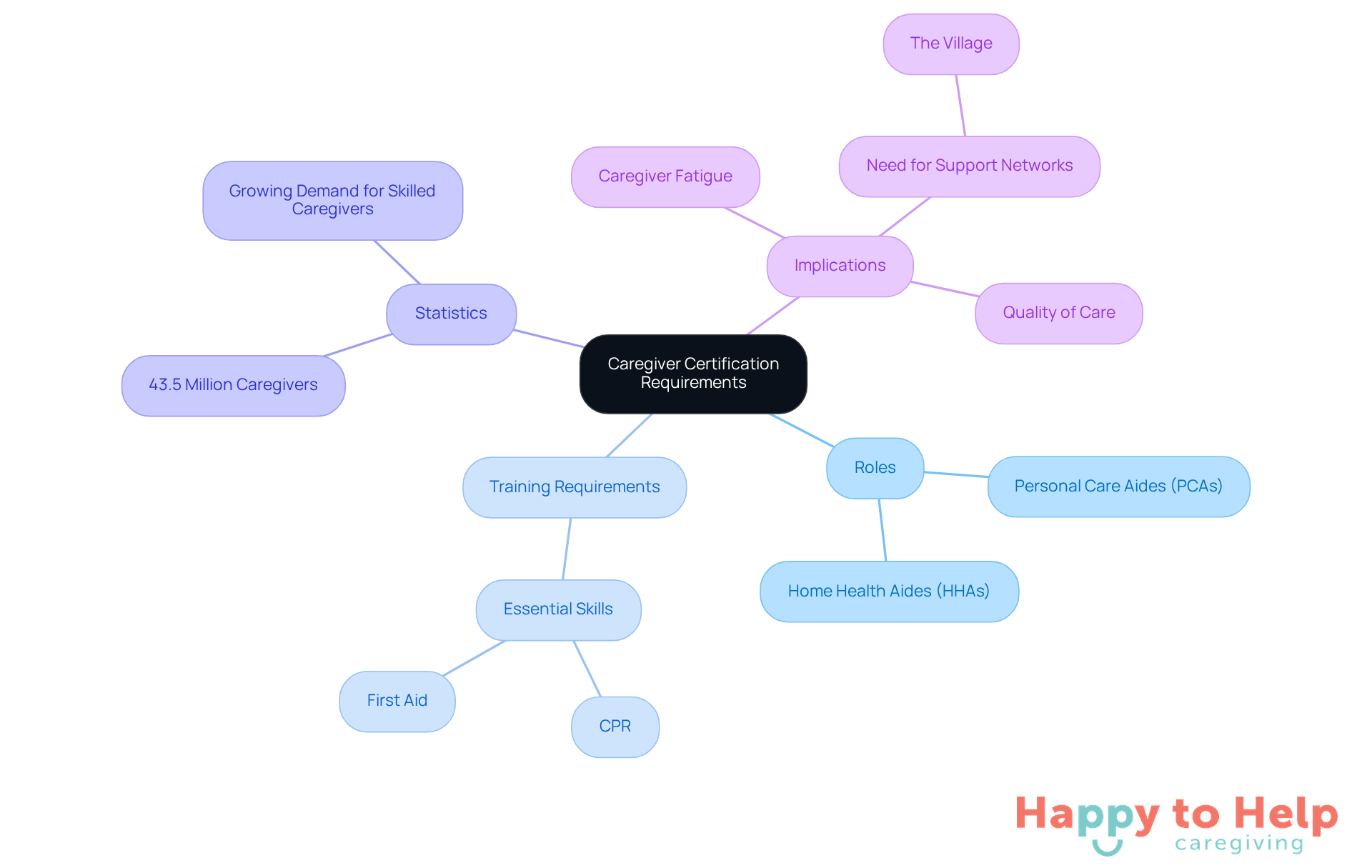
Caregiver certification requirements vary significantly across states and caregiving roles, creating challenges for families navigating this landscape. For example, in Pennsylvania:
- Personal Care Aides (PCAs) do not need certification.
- Home Health Aides (HHAs) must complete state-approved educational programs.
This training often includes essential skills like CPR and First Aid, which many employers prefer, as they directly contribute to the safety and well-being of clients.
Statistics indicate that individuals with formal training are better equipped to manage complex medical needs, a necessity given the increasing demand for qualified professionals due to the aging population. Currently, around 43.5 million people are assisting their loved ones in the United States, underscoring the widespread challenges of caregiving. Many caregivers report feeling overwhelmed by their responsibilities, highlighting the urgent need for comprehensive training programs that include vital life-saving skills.
Moreover, case studies reveal that those who obtain certification not only enhance their qualifications but also improve the overall quality of care provided. This is especially crucial in non-medical settings, where knowledge of basic health protocols can significantly impact client outcomes. Additionally, caregiver fatigue is a prevalent issue, and establishing support networks, such as 'The Village,' can help alleviate some of the emotional and physical burdens associated with caregiving.
While certification may not be required for every caregiving role, many people ask, does a caregiver need to be certified to ensure a safe and effective caregiving environment? When considering the care of their loved ones, families often wonder, does a caregiver need to be certified to ensure the highest standard of care? As Rosalynn Carter wisely noted, "There are only four kinds of people in the world: those who have provided care, those who are providing care, those who will provide care, and those who will require care." This quote emphasizes the universality of caregiving and the shared experiences that connect caregivers.
Comparing Certified and Non-Certified Caregivers
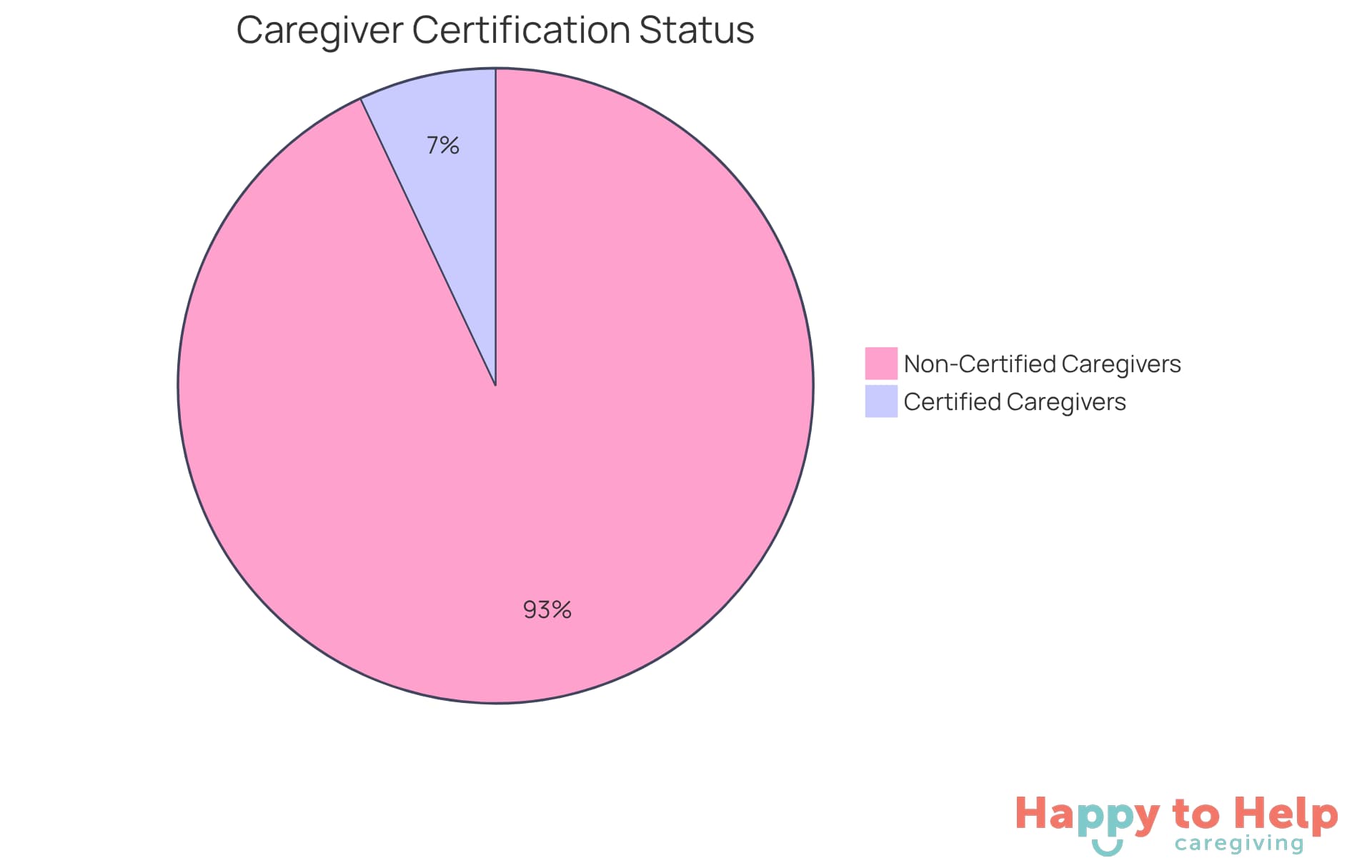
The Problem: Many caregivers lack formal training, leading to concerns about whether a caregiver needs to be certified, which can significantly impact the quality of care provided to older adults. Studies reveal that only 7% of individuals supporting older adults have received relevant instruction for their caregiving roles. This gap in education can lead to inadequate support, especially for clients with complex health needs.
The Implications: Without proper training, caregivers may struggle to deliver essential medical aid and emergency response. This is particularly concerning for families whose loved ones require specialized assistance, such as dementia care or palliative support. Families may wonder, does a caregiver need to be certified, as the absence of certified professionals can leave them feeling anxious about the level of care their loved ones receive.
The Solution: Investing in certified support providers raises the question of whether a caregiver does need to be certified. Certified professionals not only earn higher salaries but also bring improved service outcomes, enhancing the quality of life for clients. As Nancy LeaMond noted, the lack of proper education can make caregiving significantly more challenging. Families often wonder, does a caregiver need to be certified to ensure their loved ones receive the best possible support?
Pros and Cons of Certified vs. Non-Certified Caregivers
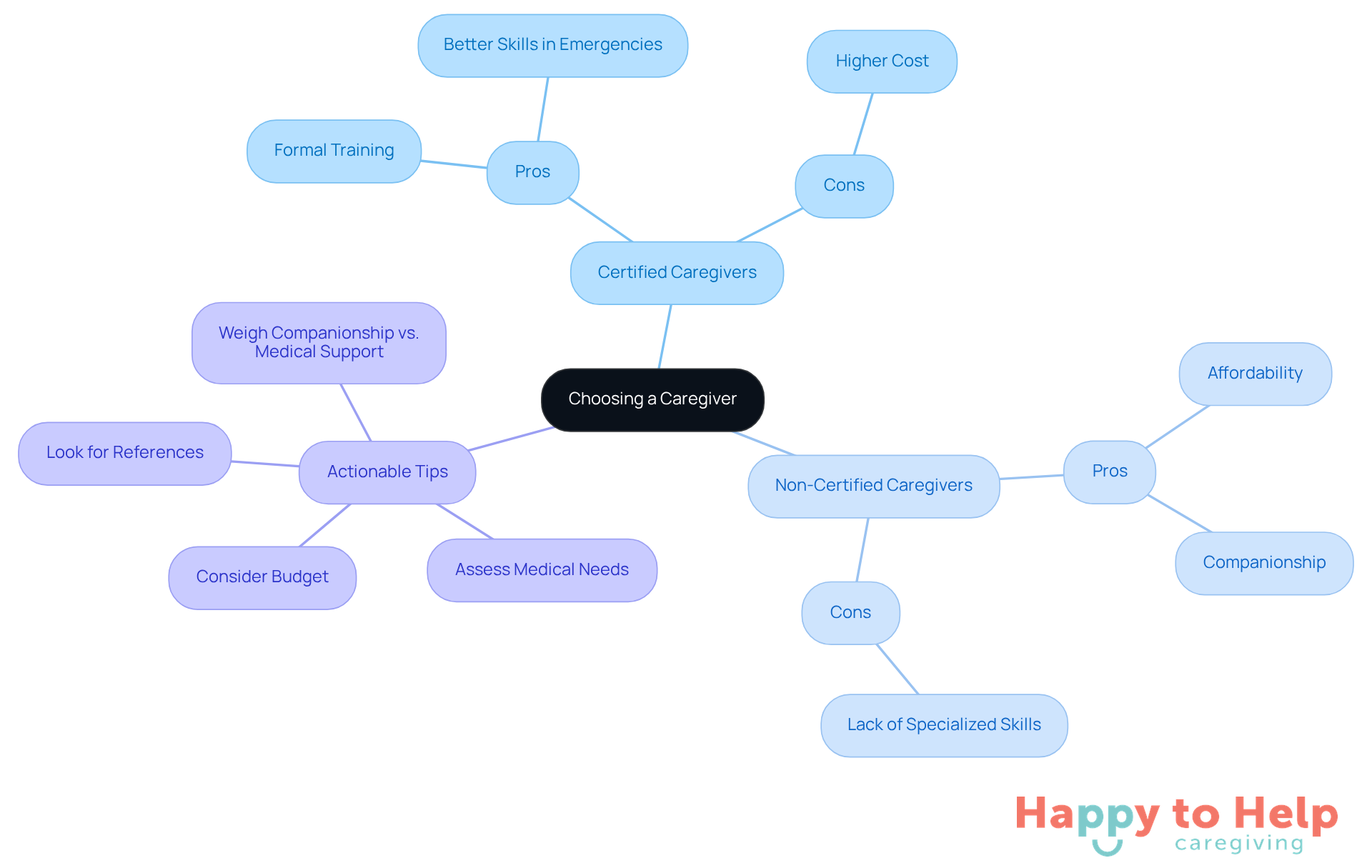
Problem: Choosing the right caregiver can be challenging for families. The question of whether a caregiver needs to be certified is important, as certified professionals offer formal training that often leads to superior skills in managing medical emergencies and specialized care needs. However, this expertise comes at a higher cost.
Agitate: On the flip side, non-certified caregivers may be more affordable and provide excellent companionship and support for daily activities. Yet, they might lack the necessary skills for complex support situations, potentially putting clients with significant health challenges at risk. This dilemma can leave families feeling uncertain about whether a caregiver needs to be certified for their loved ones.
Solution: Families should carefully evaluate their specific support requirements before making a decision. Here are some actionable tips:
- Assess the medical needs of the individual requiring care.
- Consider the budget available for caregiving services.
- Look for caregiver references and reviews to gauge their effectiveness.
- Weigh the importance of companionship versus specialized medical support.
By taking these steps, families can make informed decisions that best suit their needs.
Evaluating Care Needs and Caregiver Suitability
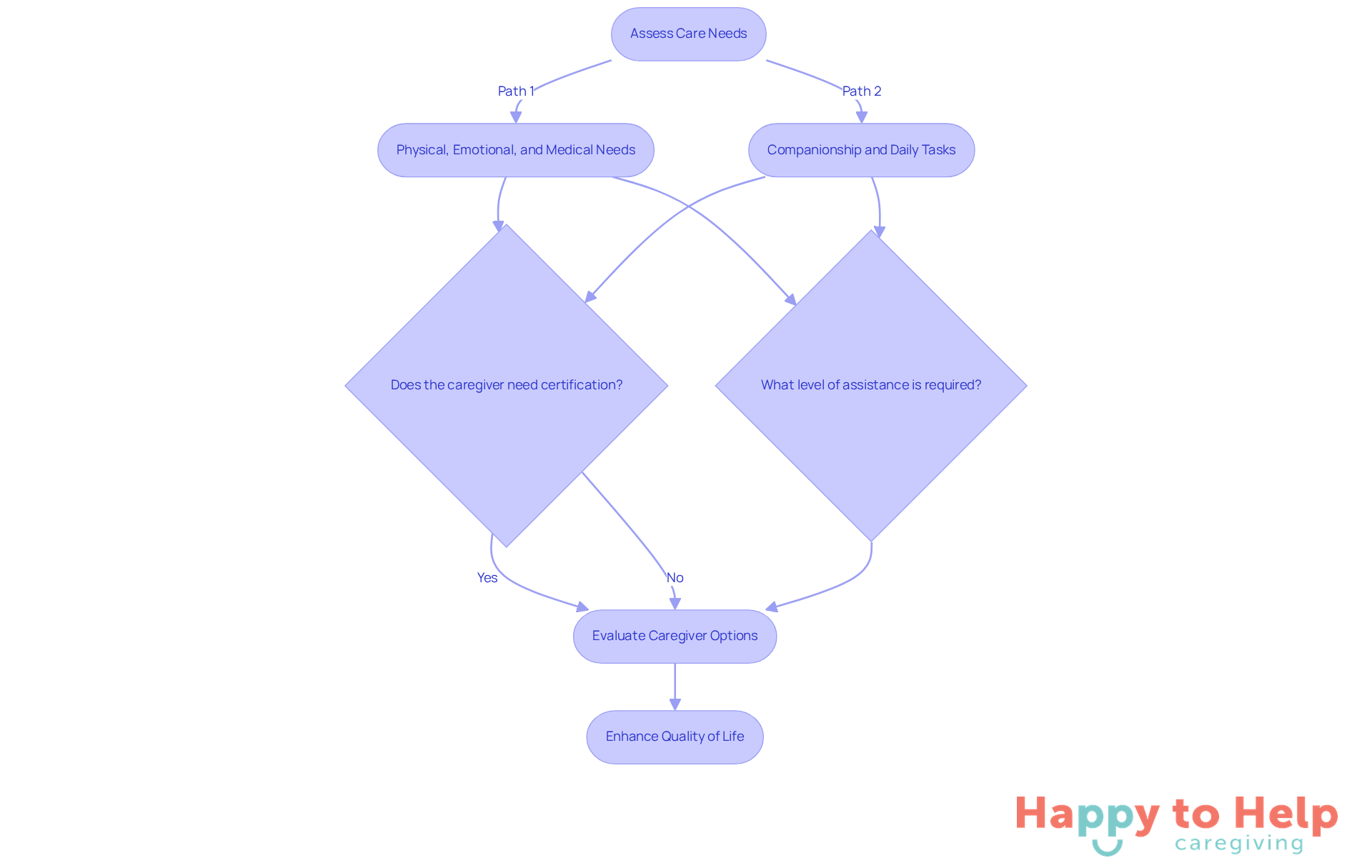
When families assess care requirements, they face a significant challenge: understanding the physical, emotional, and medical needs of their loved ones. This is especially crucial for seniors with chronic illnesses, as it raises the question of whether a caregiver needs to be certified to effectively manage medications and monitor health conditions. Without proper evaluation, families risk inadequate support, which can lead to deteriorating health and quality of life.
On the other hand, individuals who need companionship and assistance with daily tasks might ask, does a caregiver need to be certified to effectively meet their needs? This highlights the importance of a thorough evaluation process. Families should engage in comprehensive assessments, including discussions with healthcare professionals, to determine the level of assistance required.
To ensure the chosen caregiver can provide the right support, families must prioritize this evaluation. By doing so, they enhance the overall quality of life for the care recipient, ensuring that their specific needs are met with the appropriate level of care.
Making the Right Choice
The necessity of caregiver certification presents a significant challenge for families seeking the best care for their loved ones. While not every caregiving role mandates formal certification, evidence indicates that certified caregivers typically deliver a higher standard of care, especially when managing complex health needs. Understanding the distinctions between certified and non-certified caregivers is crucial for families to make informed decisions tailored to their loved ones' specific needs.
The variability in caregiver certification requirements across states can be alarming. Many caregivers lack formal training, which can lead to inadequate support for specialized medical needs. This gap in training not only affects the quality of care but also places an emotional and physical burden on caregivers themselves. Thorough evaluations are essential to assess care needs and ensure they align with the appropriate caregiver qualifications.
Families must carefully consider their unique caregiving requirements against the available options. By prioritizing certified caregivers, families can mitigate potential challenges associated with non-certified individuals. Seeking certified support when necessary can significantly enhance the quality of care, ensuring loved ones receive the support they truly deserve. This approach not only addresses immediate caregiving needs but also cultivates a compassionate and effective caregiving environment that benefits everyone involved.
https://iframe.tely.ai/cta/eyJhcnRpY2xlX2lkIjogIjY5MjUwZjlmMTk5OWZjNThlNjA5NGVjYiIsICJjb21wYW55X2lkIjogIjY4ZWU1ZGNhNzMxNzYyNTU3ZjNjOTVjMSIsICJpbmRleCI6IG51bGwsICJ0eXBlIjogImFydGljbGUifQ==Frequently Asked Questions
What are the caregiver certification requirements in Pennsylvania?
In Pennsylvania, Personal Care Aides (PCAs) do not need certification, while Home Health Aides (HHAs) must complete state-approved educational programs.
What kind of training do Home Health Aides receive?
Home Health Aides typically receive training that includes essential skills like CPR and First Aid, which are preferred by many employers for ensuring client safety and well-being.
Why is formal training important for caregivers?
Formal training is important because it equips caregivers to manage complex medical needs, which is increasingly necessary due to the growing demand for qualified professionals as the population ages.
How many people are currently assisting their loved ones in the United States?
Approximately 43.5 million people are currently assisting their loved ones in the United States.
What challenges do caregivers face?
Many caregivers report feeling overwhelmed by their responsibilities, highlighting the need for comprehensive training programs that include vital life-saving skills.
What are the benefits of obtaining caregiver certification?
Obtaining certification enhances a caregiver's qualifications and improves the overall quality of care provided, especially in non-medical settings where knowledge of basic health protocols is crucial.
What is caregiver fatigue and how can it be addressed?
Caregiver fatigue is a prevalent issue among caregivers, and establishing support networks, such as 'The Village,' can help alleviate some of the emotional and physical burdens associated with caregiving.
Do caregivers need to be certified to ensure a safe and effective caregiving environment?
While certification may not be required for every caregiving role, many families wonder if it is necessary to ensure the highest standard of care for their loved ones.
List of Sources
- Understanding Caregiver Certification Requirements
- CaringBridge (https://caringbridge.org/resources/inspirational-quotes-on-caregiving)
- 40 Inspirational Quotes for Caregivers - Care Options for Kids (https://careoptionsforkids.com/blog/inspirational-quotes-for-caregivers)
- 2025 home care trends include tightened EVV oversight, investments in caregiver training (https://mcknightshomecare.com/2025-home-care-trends-include-tightened-evv-oversight-investments-in-caregiver-training)
- 42 inspirational quotes for caregivers (https://care.com/c/40-inspirational-caregiver-quotes)
- Caregiver Training Requirements by State (https://careacademy.com/blog/do-you-know-the-caregiver-training-requirements-in-your-state)
- Comparing Certified and Non-Certified Caregivers
- A New Medicare Proposal Would Cover Training for Family Caregivers - KFF Health News (https://kffhealthnews.org/news/article/a-new-medicare-proposal-would-cover-training-for-family-caregivers)
- 20 Inspirational Quotes for Caregivers (https://carearoundtheblock.com/post/20-inspirational-quotes-for-caregivers)
- Changes to Medicare in 2025: Support for caregivers and more (https://medicalnewstoday.com/articles/changes-to-medicare-in-2025)
- Caregiver Statistics: Demographics (https://caregiver.org/resource/caregiver-statistics-demographics)
- New Medicare program offers much-needed relief for caregivers of dementia patients (https://finance.yahoo.com/news/new-medicare-program-offers-much-needed-relief-for-caregivers-of-dementia-patients-203450020.html)
- Pros and Cons of Certified vs. Non-Certified Caregivers
- How Much Do In-Home Caregivers Cost? - WTOP News (https://wtop.com/news/2025/11/how-much-do-in-home-caregivers-cost)
- Home Care Costs in 2025: A State-by-State Guide (https://aplaceformom.com/caregiver-resources/articles/in-home-care-costs)
- The Cost of In-Home Caregivers May Surprise You (https://health.usnews.com/senior-care/caregiving/articles/how-much-do-in-home-caregivers-cost)
- The Cost of Dignity: A Guide to In-Home Care Costs and Happier Aging in 2025 | Nurse Next Door (https://nursenextdoor.com/blog/how-much-does-senior-home-care-cost)
- Cost of in-home care for seniors: What you need to know (https://care.com/c/cost-of-in-home-care-and-how-to-pay)
- Evaluating Care Needs and Caregiver Suitability
- New Report Reveals Crisis Point for America’s 63 million Family Caregivers (https://press.aarp.org/2025-07-24-New-Report-Reveals-Crisis-Point-for-Americas-63-million-Family-Caregivers)
- New Study Explores the Need for Expanded Long-Term Care Services to Support Aging-in-Place | Johns Hopkins Bloomberg School of Public Health (https://publichealth.jhu.edu/2025/new-study-explores-the-need-for-expanded-long-term-care-services-to-support-aging-in-place)
- 'More pressure on families.' Nearly half of US states are on the brink of a caregiving emergency (https://usatoday.com/story/news/health/2025/05/21/columbia-university-state-caregiving-study/83651201007)
- Booker Introduces Legislation to Support Unpaid Family Caregivers | U.S. Senator Cory Booker of New Jersey (https://booker.senate.gov/news/press/-booker-introduces-legislation-to-support-unpaid-family-caregivers)