

For families in our service areas
For families in our service areas, this guide explains alzheimer's care and how non-medical in-home caregiving can support care planning in East Idaho, Treasure Valley & Magic Valley, Northern Wasatch, North Central West Virginia, and Northeast Ohio.
Understanding Does a Person with Alzheimer
Alzheimer's disease presents a significant challenge, not just in terms of memory and cognition, but also in the realm of self-awareness for those affected. As the disease progresses through its stages - early, middle, and late - the awareness individuals have of their condition can vary widely. This fluctuation poses a problem for caregivers, who must navigate the emotional and practical challenges that arise from these varying degrees of awareness.
Understanding these nuances is crucial. When individuals begin to lose their sense of self, it can lead to confusion and distress, both for them and their caregivers. Caregivers often find themselves grappling with how to provide support while also managing their own emotional responses. This situation can be overwhelming, but there are practical solutions that can help.
By recognizing the stages of awareness in Alzheimer’s patients, caregivers can adapt their approaches to improve the quality of care. For instance, maintaining open lines of communication and using simple, clear language can foster a sense of connection. Additionally, engaging patients in familiar activities can help reinforce their sense of identity.
In summary, while the challenges of fluctuating self-awareness in Alzheimer's patients are significant, caregivers can implement strategies to enhance their support. By focusing on understanding and adapting to these variations, caregivers can improve both their own experience and that of the individuals they care for.
Understanding Alzheimer's Disease and Its Stages
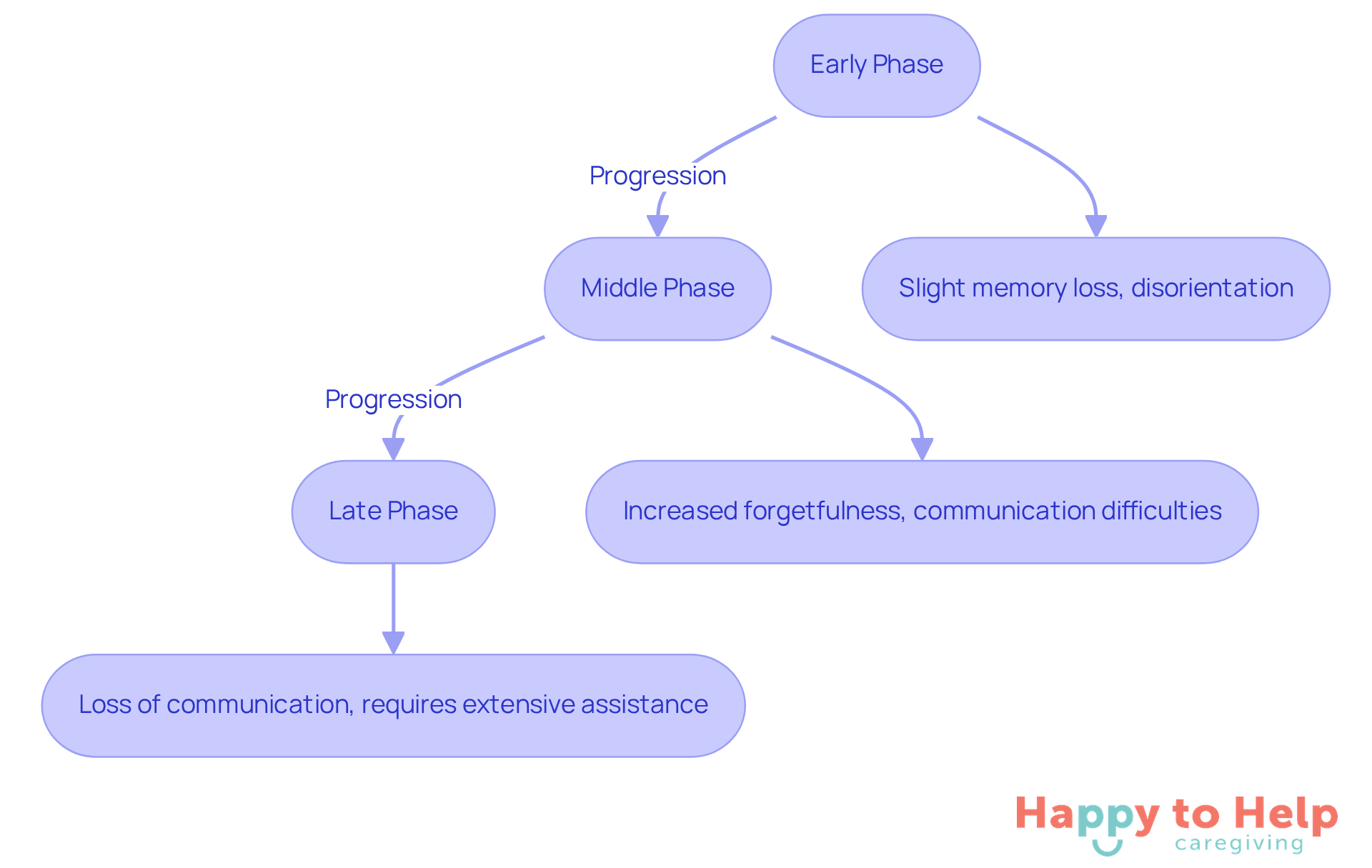
Alzheimer's disease presents a significant challenge as a progressive neurodegenerative disorder that primarily affects memory, thinking, and behavior. This condition leads to a gradual decline in cognitive function, which can be divided into three primary phases: early, middle, and late.
In the early phase, individuals may experience slight memory loss and disorientation, leading to the question of whether a person with Alzheimer's knows they have it. This awareness can be distressing for both the person affected and their caregivers, particularly when considering if a person with Alzheimer's knows they have it. As the disease progresses to the middle phase, cognitive decline becomes more pronounced, resulting in increased forgetfulness and communication difficulties. This stage can be particularly challenging for caregivers, who may struggle to provide the necessary support.
In the late phase, individuals may lose the ability to communicate entirely and require extensive assistance with daily activities. Understanding these phases is crucial for caregivers and families, as it informs the level of support and intervention needed at each stage.
To effectively navigate these challenges, caregivers can implement several strategies:
- Educate themselves about the disease and its progression.
- Establish routines to provide structure and familiarity for the individual.
- Utilize communication aids to facilitate interaction.
- Seek support from local resources and support groups.
By comprehending the phases of Alzheimer's disease, caregivers can better prepare themselves to offer the necessary support and improve the quality of life for those affected.
Awareness Levels in Early, Middle, and Late Stages of Alzheimer's
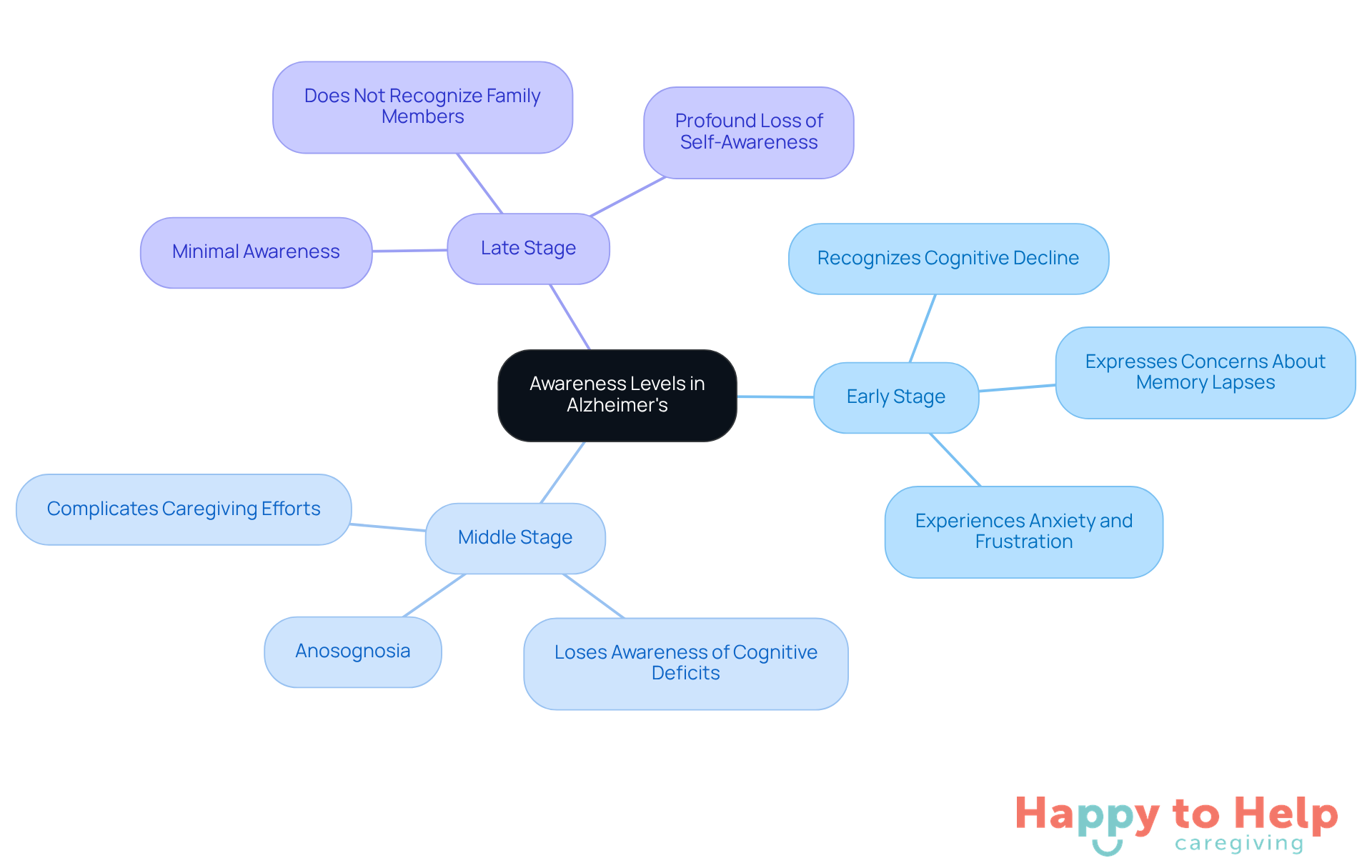
The challenge for caregivers is that awareness of one’s condition varies significantly throughout the phases of Alzheimer’s disease, raising the question of whether a person with Alzheimer's knows they have it. In the initial phase, individuals often recognize their cognitive decline and question whether a person with Alzheimer's knows they have it, expressing concerns about memory lapses. This awareness can lead to anxiety and frustration as they struggle with their changing abilities.
As the disease progresses to the intermediate phase, many begin to lose this awareness, leading us to consider if a person with Alzheimer's knows they have it, a phenomenon known as anosognosia. They may not acknowledge their cognitive deficits or the need for support, which can complicate caregiving efforts. By the late stage, awareness is typically minimal; individuals may not recognize family members or understand their surroundings, which leads to the question of whether a person with Alzheimer's knows they have it, resulting in a profound loss of self-awareness.
To address these challenges, caregivers should implement customized communication strategies tailored to the individual’s level of awareness. This approach not only fosters better interactions but also enhances the quality of care provided. Understanding the progression of Alzheimer’s and adapting to these changes is crucial for effective caregiving.
Impact of Awareness on Caregiving Approaches
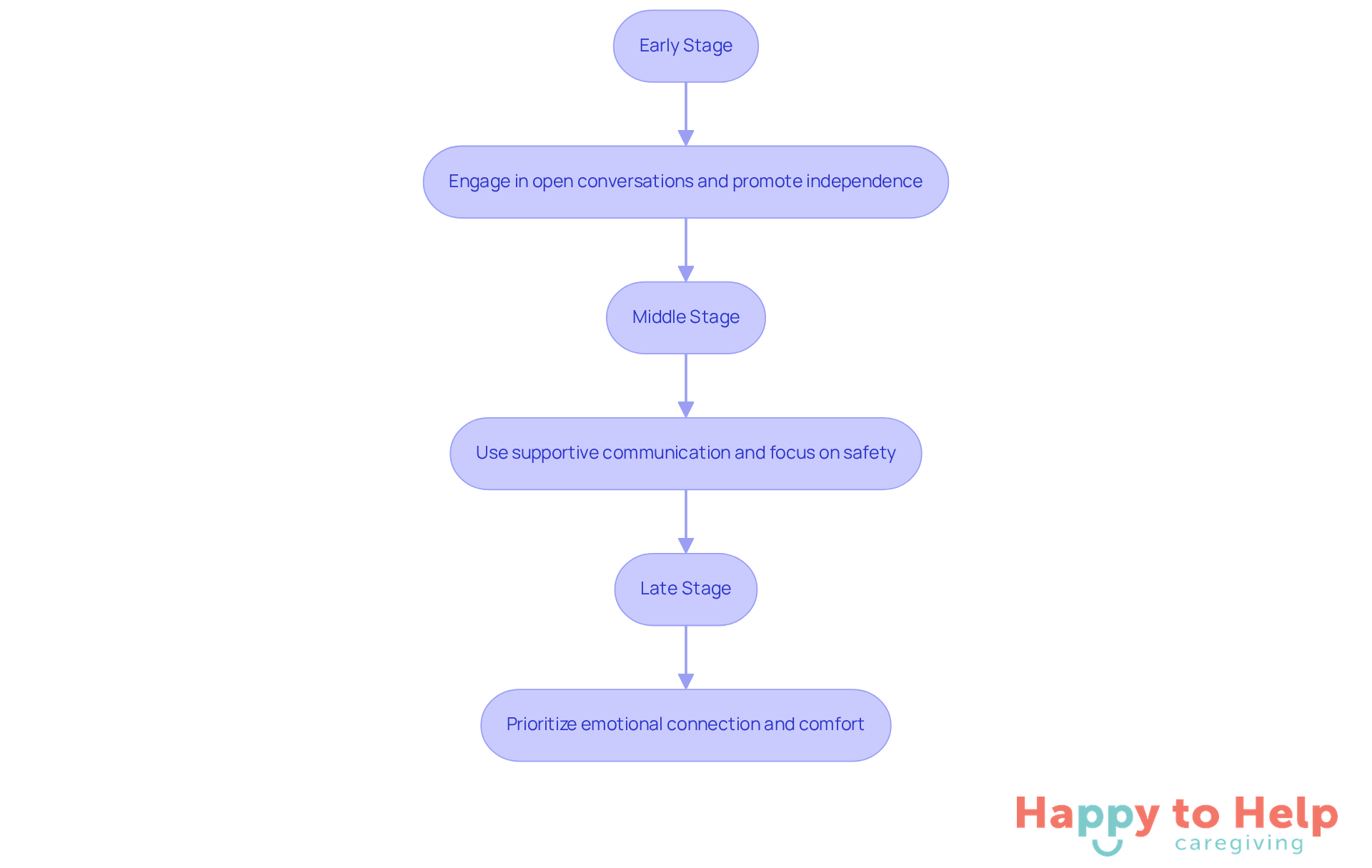
The degree of awareness in people with Alzheimer's creates a significant challenge for caregivers in understanding if and when does a person with Alzheimer's know they have it. In the early stages, caregivers can engage in meaningful discussions, address concerns, and encourage autonomy while providing necessary support. However, as awareness diminishes in the middle phase, caregivers may need to shift their communication style to be more supportive and reassuring, especially when considering whether a person with Alzheimer's knows they have it, and focusing on creating a safe environment rather than confronting the individual about their cognitive decline.
In the late stage, caregivers often transition to a more compassionate, patient-centered approach. Here, the priority shifts to ensuring comfort and fostering emotional connections over cognitive engagement. Understanding these dynamics is crucial for caregivers, as it enables them to create a supportive environment that respects the dignity of the individual and enhances their quality of life.
Key Strategies for Caregivers:
- Early Stage: Engage in open conversations and promote independence.
- Middle Stage: Use supportive communication and focus on safety.
- Late Stage: Prioritize emotional connection and comfort.
Challenges Faced by Caregivers Based on Awareness Levels
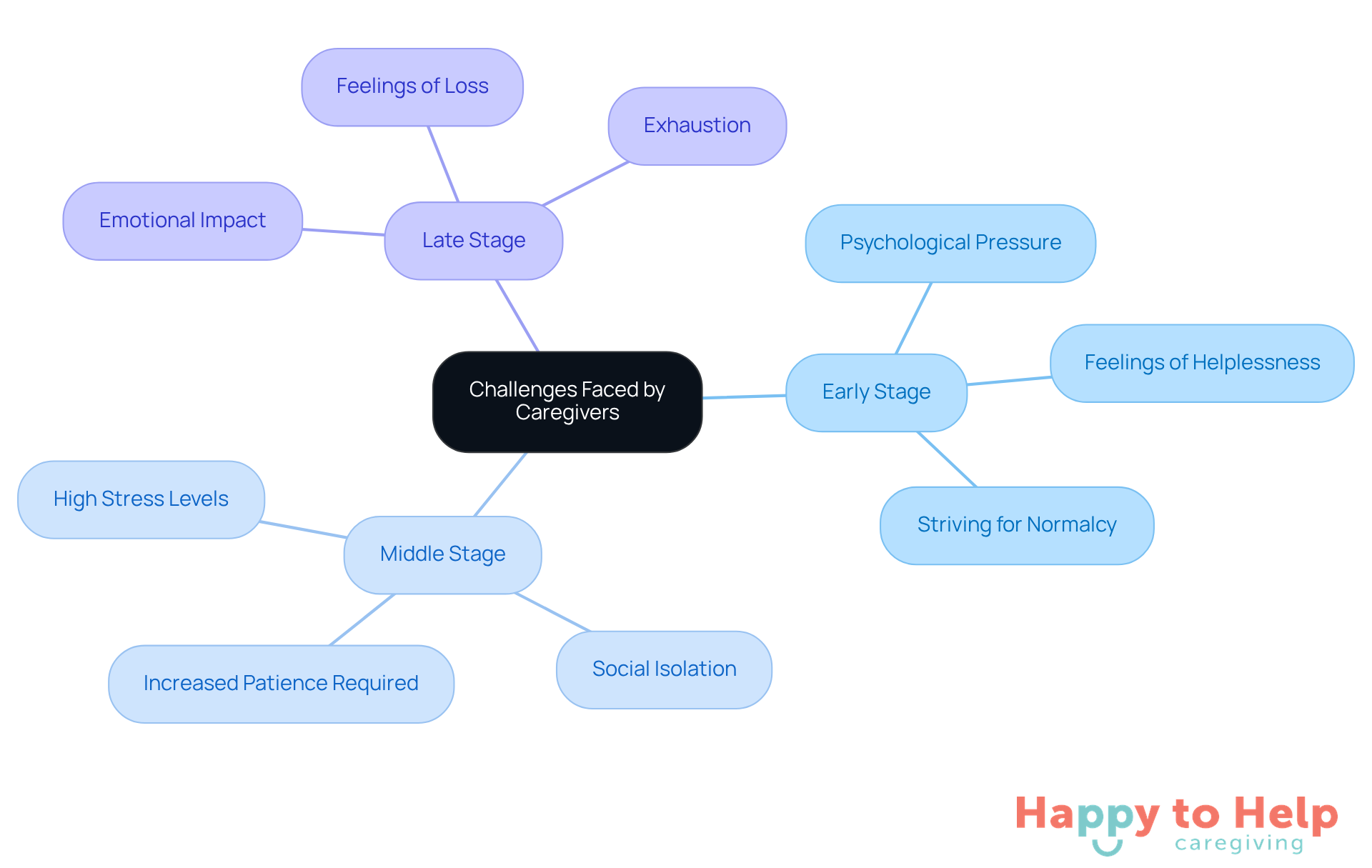
Caregivers face significant challenges that vary depending on whether or not a person with Alzheimer's knows they have it. In the early stages of Alzheimer's, caregivers often experience considerable psychological pressure as they wonder if a person with Alzheimer's knows they have it while witnessing their loved ones struggling with memory loss and diminished self-awareness. This situation can lead to feelings of helplessness and frustration, particularly as caregivers strive to maintain a sense of normalcy. In fact, statistics reveal that 74% of individuals caring for those with dementia express concerns about their own health since taking on caregiving duties, highlighting the psychological burden they carry.
As the disease progresses to the middle stage, caregivers encounter additional challenges due to their loved ones' confusion and agitation. This stage demands increased patience and flexibility, as caregivers must navigate unpredictable behaviors while managing their own emotions. Nearly half of caregivers report feeling more socially isolated after assuming this role, complicating their mental landscape. Moreover, 59% of caregivers for individuals with dementia report high levels of stress related to their responsibilities, underscoring the significant psychological toll.
In the late stages of Alzheimer's, caregivers confront the profound emotional impact of watching their loved ones lose their sense of self, which often leads to the question of whether a person with Alzheimer's knows they have it. This experience often results in deep sorrow and exhaustion, as caregivers grapple with the reality of their loved ones' decline. Real-life examples illustrate this strain; caregivers frequently express feelings of loss and sadness as they see familiar personalities fade away. For instance, Adkins shares her caregiving experience, voicing concern about her father's condition and the psychological strain it imposes on her.
Recognizing these emotional challenges is crucial for caregivers, as it encourages them to seek essential support through respite services, support groups, or professional counseling. Such resources are vital in helping caregivers continue to provide compassionate care while also prioritizing their own well-being.
Your Path Forward
The varying levels of awareness among individuals with Alzheimer's disease present a significant challenge for both patients and their caregivers. Understanding whether a person with Alzheimer's recognizes their condition is crucial, as this awareness changes throughout the disease's progression. In the early stages, individuals often acknowledge their cognitive decline, but as the disease advances, this self-awareness tends to diminish. This decline can lead to increased difficulties for caregivers, who must adapt to the evolving needs of their loved ones.
Caregivers face the problem of navigating these changing dynamics. They must:
- Engage in open conversations during the early stages.
- Transition to supportive communication in the middle phase.
- Focus on emotional connections in the late stage.
This shift in approach is essential for effective caregiving. Additionally, caregivers must acknowledge their own psychological burdens as they manage the complexities of providing care while maintaining their emotional well-being.
To address these challenges, caregivers can implement several practical strategies. First, fostering a supportive environment is key. This includes:
- Seeking support for themselves.
- Remaining attuned to the needs of their loved ones.
By prioritizing emotional connections and adapting their communication styles, caregivers can significantly enhance the quality of life for individuals with Alzheimer's.
Recognizing the dynamics of awareness in Alzheimer's disease not only improves caregiving practices but also highlights the importance of compassion and understanding. As the journey through Alzheimer's unfolds, caregivers are encouraged to remain proactive in seeking resources and support, ensuring that dignity and emotional connection remain at the forefront of care.
https://iframe.tely.ai/cta/eyJhcnRpY2xlX2lkIjogIjY5MjY0Mzk3MTRjODUwNzI1NGI4N2FiZCIsICJjb21wYW55X2lkIjogIjY4ZWU1ZGNhNzMxNzYyNTU3ZjNjOTVjMSIsICJpbmRleCI6IG51bGwsICJ0eXBlIjogImFydGljbGUifQ==Frequently Asked Questions
What is Alzheimer's disease?
Alzheimer's disease is a progressive neurodegenerative disorder that primarily affects memory, thinking, and behavior, leading to a gradual decline in cognitive function.
What are the main phases of Alzheimer's disease?
Alzheimer's disease is divided into three primary phases: early, middle, and late.
What symptoms are experienced in the early phase of Alzheimer's?
In the early phase, individuals may experience slight memory loss and disorientation.
Are individuals in the early phase aware of their condition?
Yes, individuals may be aware of their condition, which can be distressing for both them and their caregivers.
What changes occur during the middle phase of Alzheimer's?
In the middle phase, cognitive decline becomes more pronounced, resulting in increased forgetfulness and communication difficulties.
What challenges do caregivers face during the middle phase?
Caregivers may struggle to provide the necessary support due to the individual's increased forgetfulness and communication challenges.
What happens in the late phase of Alzheimer's?
In the late phase, individuals may lose the ability to communicate entirely and require extensive assistance with daily activities.
Why is it important for caregivers to understand the phases of Alzheimer's disease?
Understanding these phases helps caregivers and families determine the level of support and intervention needed at each stage.
What strategies can caregivers implement to support individuals with Alzheimer's?
Caregivers can educate themselves about the disease, establish routines, utilize communication aids, and seek support from local resources and support groups.
List of Sources
- Impact of Awareness on Caregiving Approaches
- The D-CARE Trial Finds No Differences Between Dementia Care Approaches on Patient Behavioral Symptoms or Caregiver Strain, But Comprehensive Care Improved Caregiver Self-Efficacy (https://newsroom.wakehealth.edu/news-releases/2025/01/trial-finds-no-differences-between-dementia-care-approaches-or-caregiver-strain)
- Alzheimer’s Association Highlights Unique Challenges That Dementia Caregivers Face and Tips for Supporting Them (https://alz.org/news/2023/alzheimers-association-highlights-unique-challenges-that-dementia-caregivers-face-and-tips-for-supp)
- 27 Inspirational Quotes for Caregivers (https://ultimatecareny.com/resources/27-quotes-for-caregivers)
- Impact of Alzheimer’s Disease on Caregivers in the United States - PMC (https://pmc.ncbi.nlm.nih.gov/articles/PMC9392839)
- New Survey Reveals Critical Gaps in Awareness and Understanding of Agitation in Alzheimer’s Dementia - Alliance for Aging Research (https://agingresearch.org/news/new-survey-reveals-critical-gaps-in-awareness-and-understanding-of-agitation-in-alzheimers-dementia)
- Challenges Faced by Caregivers Based on Awareness Levels
- 'More pressure on families.' Nearly half of US states are on the brink of a caregiving emergency (https://usatoday.com/story/news/health/2025/05/21/columbia-university-state-caregiving-study/83651201007)
- Opinion | America’s Caregivers Are in Crisis (https://nytimes.com/2025/11/24/opinion/caregiving-crisis.html)
- Alzheimer’s Association Highlights Unique Challenges That Dementia Caregivers Face and Tips for Supporting Them (https://alz.org/news/2023/alzheimers-association-highlights-unique-challenges-that-dementia-caregivers-face-and-tips-for-supp)
- Alzheimer's Disease Facts and Figures (https://alz.org/alzheimers-dementia/facts-figures)
- Impact of Alzheimer’s Disease on Caregivers in the United States - PMC (https://pmc.ncbi.nlm.nih.gov/articles/PMC9392839)