Does a Person with Dementia Know They Are Confused? Understanding

For families in our service areas
For families in our service areas, this guide explains dementia care and how non-medical in-home caregiving can support care planning in East Idaho, Treasure Valley & Magic Valley, Northern Wasatch, North Central West Virginia, and Northeast Ohio.
Understanding Does a Person with Dementia Know They
Dementia encompasses various cognitive impairments, presenting profound challenges for both those diagnosed and their caregivers. As individuals face memory loss, disorientation, and emotional turmoil, a pressing question arises: do dementia patients recognize their confusion?
This exploration delves into the complexities of awareness in dementia. It offers insights that can empower caregivers to navigate the emotional landscape of their loved ones' experiences. Understanding the nuances of cognitive awareness could be the key to fostering a supportive environment. This environment can alleviate distress and enhance the quality of care, providing much-needed relief for caregivers.
Caring for someone with dementia can be overwhelming. The emotional toll often leads to feelings of stress and burnout. However, there are resources and support systems available to help caregivers manage these challenges. By sharing personal stories and testimonials, we can highlight the compassionate care that makes a difference in the lives of both patients and caregivers.
As we journey through this exploration, let’s remember that understanding and compassion are vital. Together, we can create a nurturing atmosphere that not only supports those with dementia but also uplifts their caregivers.
Define Dementia and Its Impact on Cognition
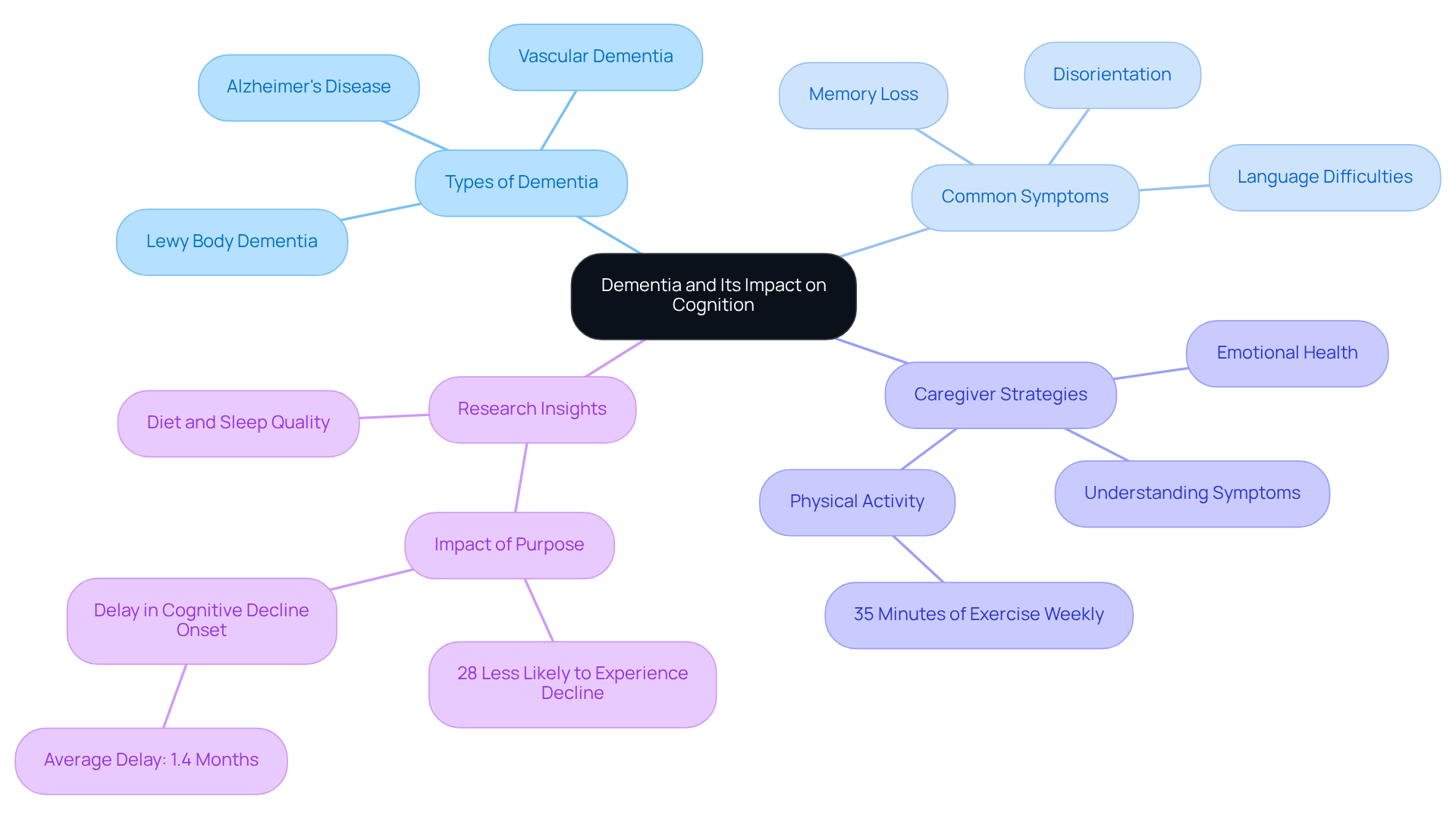
Dementia can be a heavy burden, not just for those who experience it, but also for their caregivers. It’s a term that encompasses a decline in cognitive function, affecting memory, thinking, and social abilities, which can significantly impair daily life. Types like Alzheimer's disease, vascular dementia, and Lewy body dementia each present unique challenges. Common symptoms, such as memory loss, disorientation, and difficulty with language and problem-solving, often lead to the concern of whether a person with dementia knows they are confused, which can be distressing for both the individual and their loved ones.
Understanding these symptoms is crucial for caregivers. It helps them identify signs of mental decline and adjust their care approaches accordingly. For example, while a person in the early stages of dementia may still have moments of clarity, it raises the question of whether a person with dementia knows they are confused, especially as those in advanced stages might struggle to recognize familiar faces or places. This can lead to increased confusion and distress, making the caregiver's role even more challenging.
Research indicates that individuals with a stronger sense of purpose are about 28% less likely to experience mental decline. This highlights the importance of emotional and psychological health in managing memory disorders. Additionally, studies suggest that engaging in regular physical activity-just 35 minutes of moderate to vigorous exercise per week-can reduce the risk of Alzheimer's disease by 41%. However, it’s essential to remember that these studies do not establish a direct cause-and-effect relationship between higher purpose levels and reduced cognitive decline rates.
These insights underscore the complex effects of cognitive decline on mental performance and everyday activities. They also emphasize the necessity for personalized assistance and strategies. Caregivers, you are not alone in this journey. There are resources and support systems available to help you navigate these challenges with compassion and understanding.
Assess Awareness of Confusion in Dementia Patients
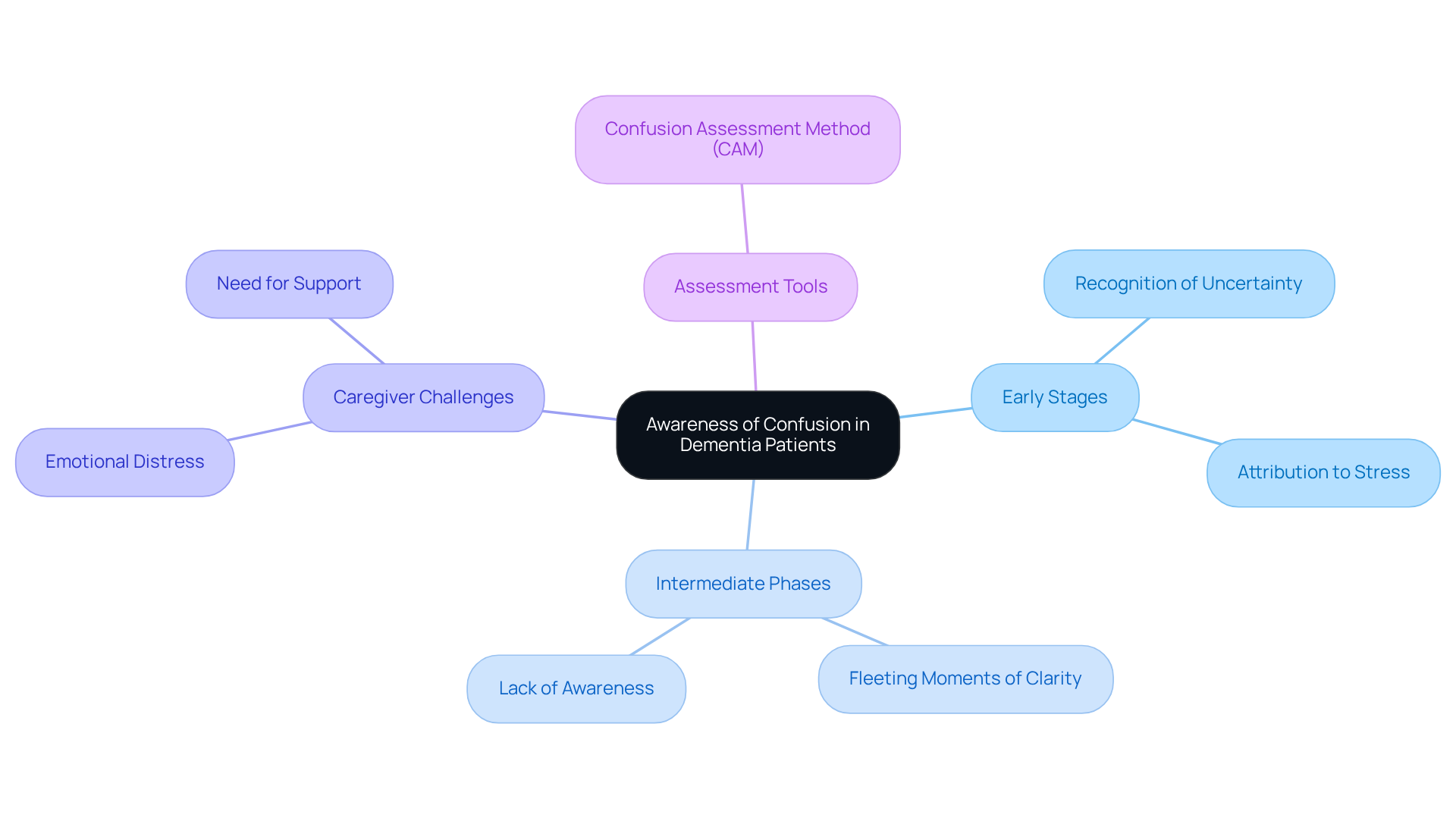
Understanding disorientation in individuals with cognitive decline can be a challenging journey for caregivers. In the early stages of the illness, many individuals may recognize their uncertainty and question whether a person with dementia knows they are confused, often attributing it to stress or anxiety. This acknowledgment can provide some small comfort, but as dementia progresses, it becomes uncertain whether a person with dementia knows they are confused as that awareness tends to fade.
During the intermediate phases, some may experience fleeting moments of clarity, where they accept their disorientation. Others, however, might not realize the extent of their mental decline at all. This variability can be distressing for caregivers, who are often left navigating these emotional waters alone.
It's crucial for caregivers to observe these patterns closely. Understanding if a person with dementia knows they are confused can significantly influence how they communicate and respond to confusion. Tools like the Confusion Assessment Method (CAM) can be invaluable in this regard, helping caregivers assess cognitive status and awareness effectively.
Remember, you are not alone in this journey. Many caregivers share similar experiences, and finding support can make a world of difference. By fostering a compassionate approach, you can create a nurturing environment that not only addresses the needs of those you care for but also supports your own emotional well-being.
Explore Emotional and Psychological Effects of Confusion
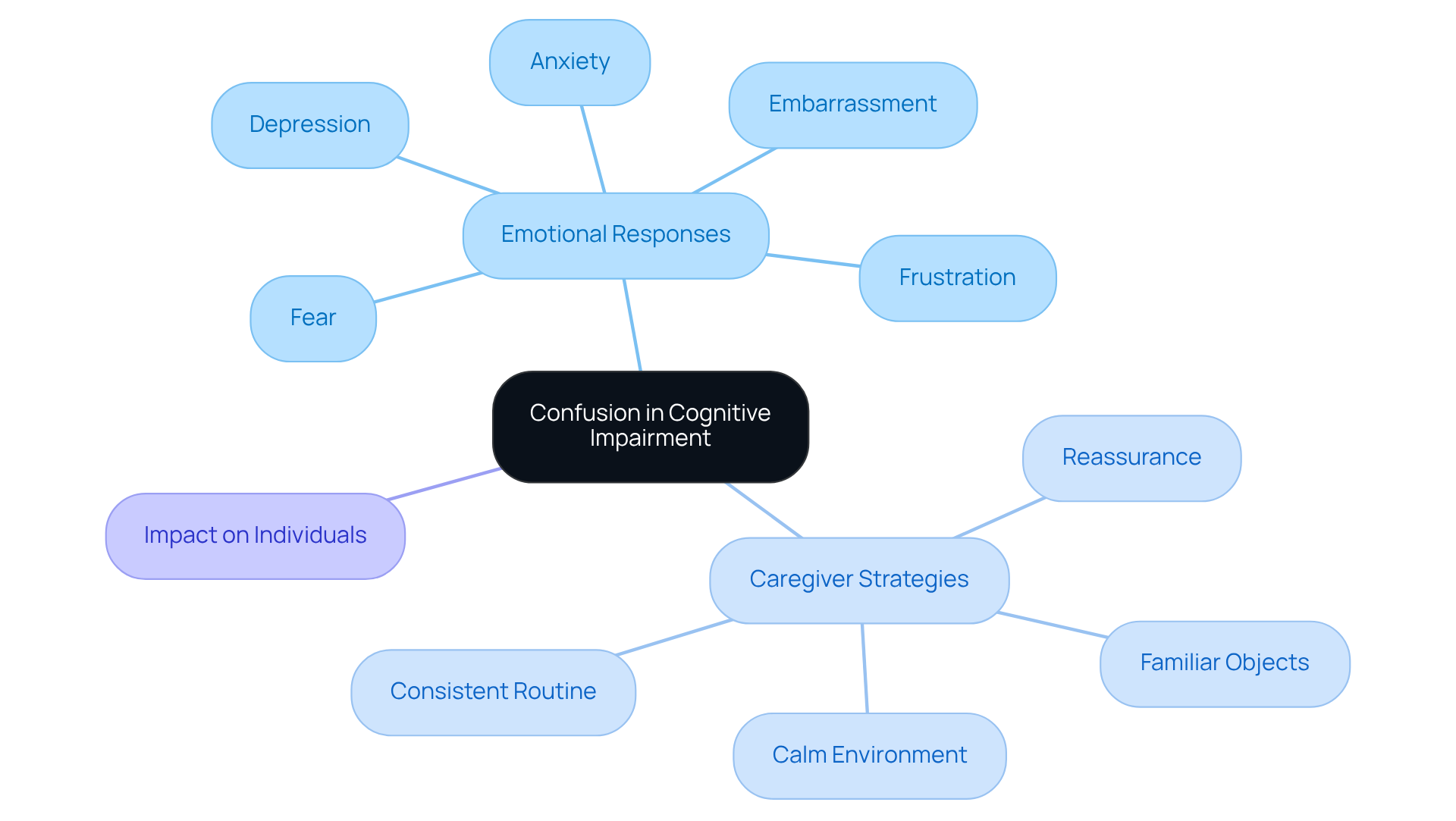
Confusion in individuals with cognitive impairment can lead to a range of emotional and psychological challenges. Feelings of anxiety, frustration, and even depression may arise. It’s not uncommon for patients to feel scared or embarrassed about their struggles to remember or understand their surroundings. This can deepen their sense of isolation.
As caregivers, it’s crucial to recognize these emotional responses. Providing reassurance and support can make a significant difference. Creating a calm environment, surrounding individuals with familiar objects, and maintaining a consistent routine can help ease anxiety.
Moreover, affirming the individual’s feelings and offering gentle prompts can foster a sense of safety and comfort. This approach can lighten the emotional burden of uncertainty, allowing both patients and caregivers to navigate these challenges together.
Implement Strategies for Caregiver Response to Confusion
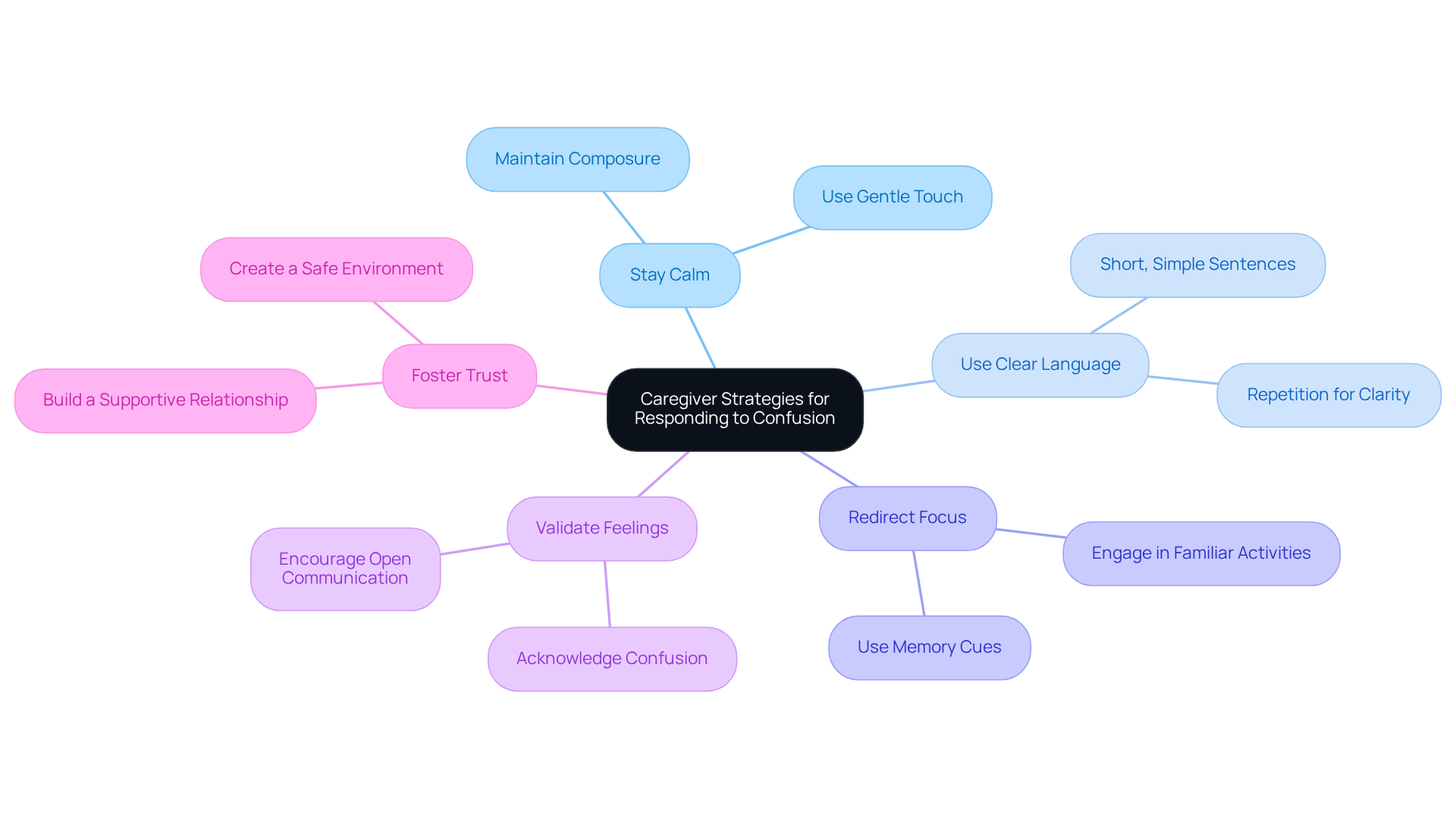
Caring for individuals with dementia can be challenging, especially in understanding whether a person with dementia knows they are confused, so it's essential for caregivers to adopt effective strategies to address this issue. Staying calm and composed is crucial; showing frustration can heighten anxiety for those in their care. Using straightforward, clear language is vital - overloading individuals with too much information can be overwhelming.
Redirecting focus to familiar activities or objects can significantly ease uncertainty. For instance, involving someone in a cherished hobby or sharing a family photo can evoke feelings of comfort and clarity. It's also important to validate their feelings to determine if a person with dementia knows they are confused. Acknowledging their confusion, particularly considering whether a person with dementia knows they are confused, fosters trust and encourages open communication.
This supportive approach not only helps individuals express their needs and emotions but also strengthens the caregiver-patient relationship. Ultimately, this nurturing connection enhances the quality of care provided. Remember, you’re not alone in this journey; many caregivers share similar experiences and feelings. Together, we can create a compassionate environment that truly supports those we care for.
Making the Right Choice
Understanding the complexities of dementia and its impact on cognitive function is crucial for both caregivers and those affected. It’s essential to recognize the emotional challenges that come with this journey. Many caregivers experience feelings of stress and burnout as they navigate the needs of their loved ones.
The article delves into whether individuals with dementia are aware of their confusion, highlighting the varying degrees of awareness that can exist as the disease progresses. Early-stage dementia patients may recognize their disorientation, while those in advanced stages often struggle to understand their condition. This exploration emphasizes the importance of empathy and tailored strategies in caregiving, ensuring that both the emotional and psychological needs of individuals with dementia are met.
Caregivers play a vital role in creating supportive environments. Utilizing strategies such as clear communication and familiar stimuli can ease anxiety and foster trust. Recognizing emotional responses and validating feelings can significantly improve the quality of care and the overall experience for both patients and caregivers.
Ultimately, the journey of caregiving for individuals with dementia is filled with challenges, yet it also presents opportunities for connection and compassion. By adopting effective strategies and seeking support, caregivers can navigate this complex landscape, ensuring that those they care for feel understood and valued. Embracing a compassionate approach not only enhances the caregiver-patient relationship but also underscores the importance of awareness and emotional well-being in the face of cognitive decline.
As one caregiver shared, "Every moment spent with my loved one is a chance to connect, to show that they are not alone in this journey." This sentiment captures the essence of compassionate caregiving, reminding us that even in the face of difficulties, there is always room for love and understanding.
https://iframe.tely.ai/cta/eyJhcnRpY2xlX2lkIjogIjY5MWU1YWJkYzBkNDJlMTUwMDY1YWNjMSIsICJjb21wYW55X2lkIjogIjY4ZWU1ZGNhNzMxNzYyNTU3ZjNjOTVjMSIsICJpbmRleCI6IG51bGwsICJ0eXBlIjogImFydGljbGUifQ==Frequently Asked Questions
What is dementia?
Dementia is a term that refers to a decline in cognitive function, affecting memory, thinking, and social abilities, which can significantly impair daily life.
What are some types of dementia?
Common types of dementia include Alzheimer's disease, vascular dementia, and Lewy body dementia, each presenting unique challenges.
What are the common symptoms of dementia?
Common symptoms of dementia include memory loss, disorientation, and difficulty with language and problem-solving.
Do individuals with dementia know they are confused?
In the early stages of dementia, individuals may have moments of clarity, but as the condition progresses, especially in advanced stages, they may struggle to recognize familiar faces or places, leading to increased confusion and distress.
Why is understanding dementia symptoms important for caregivers?
Understanding dementia symptoms is crucial for caregivers as it helps them identify signs of mental decline and adjust their care approaches accordingly.
How does a sense of purpose affect cognitive decline?
Research indicates that individuals with a stronger sense of purpose are about 28% less likely to experience mental decline, highlighting the importance of emotional and psychological health in managing memory disorders.
Can physical activity impact the risk of Alzheimer's disease?
Yes, studies suggest that engaging in regular physical activity, specifically just 35 minutes of moderate to vigorous exercise per week, can reduce the risk of Alzheimer's disease by 41%.
Do the studies on purpose and exercise establish a direct cause-and-effect relationship with cognitive decline?
No, the studies do not establish a direct cause-and-effect relationship between higher purpose levels or exercise and reduced cognitive decline rates.
What resources are available for caregivers of individuals with dementia?
There are various resources and support systems available to help caregivers navigate the challenges of caring for individuals with dementia with compassion and understanding.