Why Does a Person with Dementia Know They Matters
Dementia presents a significant challenge, affecting not only cognitive abilities but also the awareness of those diagnosed. Caregivers often find themselves navigating a complex landscape where understanding the varying levels of awareness is crucial. This raises an important question: do individuals with dementia recognize their condition?
The implications of this question are profound. Many caregivers struggle with the emotional toll of seeing their loved ones decline, often feeling helpless in the face of cognitive changes. Understanding the nuances of different dementia types and the phenomenon of anosognosia - where individuals are unaware of their condition - can help caregivers better support their loved ones.
To bridge the gap between understanding and compassion, caregivers can implement effective strategies. These include:
- Fostering open communication
- Utilizing supportive resources
- Engaging in patient-centered care practices
By doing so, caregivers can enhance the quality of care and improve the emotional well-being of both patients and themselves.
Ultimately, recognizing the complexities of dementia is the first step toward compassionate caregiving.
Define Dementia and Its Types
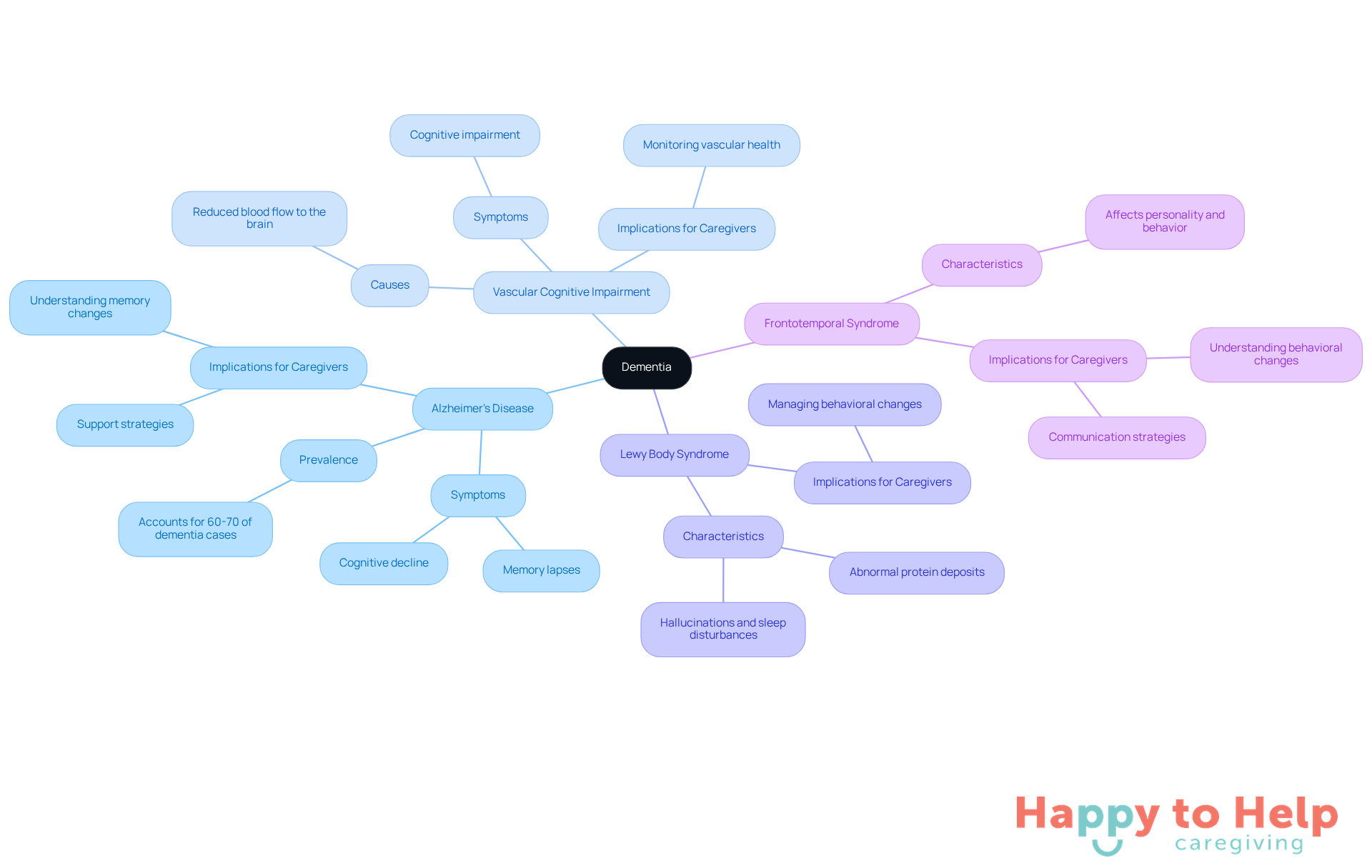
Dementia presents a significant problem, encompassing a range of cognitive impairments that disrupt daily functioning. These impairments primarily affect memory, thinking, and social interactions, creating challenges not only for those diagnosed but also for their caregivers.
Alzheimer's disease, the most prevalent form of dementia, accounts for approximately 60-70% of cognitive decline cases. Other notable types include vascular cognitive impairment, which results from reduced blood flow to the brain, Lewy body syndrome, marked by abnormal protein deposits, and frontotemporal syndrome, which primarily impacts personality and behavior. Each type has unique symptoms and progression patterns, which can affect whether a person with dementia knows they have it.
For instance, individuals with Alzheimer's may first notice memory lapses, while those with frontotemporal conditions often become more aware of behavioral changes, prompting the question: does a person with dementia know they have it? Understanding these differences is crucial for caregivers, as they can significantly affect diagnosis and treatment approaches.
To support caregivers, it’s essential to recognize these challenges and implement practical solutions. Here are some actionable tips:
- Educate yourself about the specific type of dementia affecting your loved one.
- Monitor changes in behavior and cognition to provide accurate information to healthcare professionals.
- Engage in open communication with your loved one to foster understanding and support.
Recent research emphasizes the importance of these insights, highlighting how tailored approaches can improve care and enhance the quality of life for both caregivers and those living with dementia.
Examine Awareness in Dementia Patients
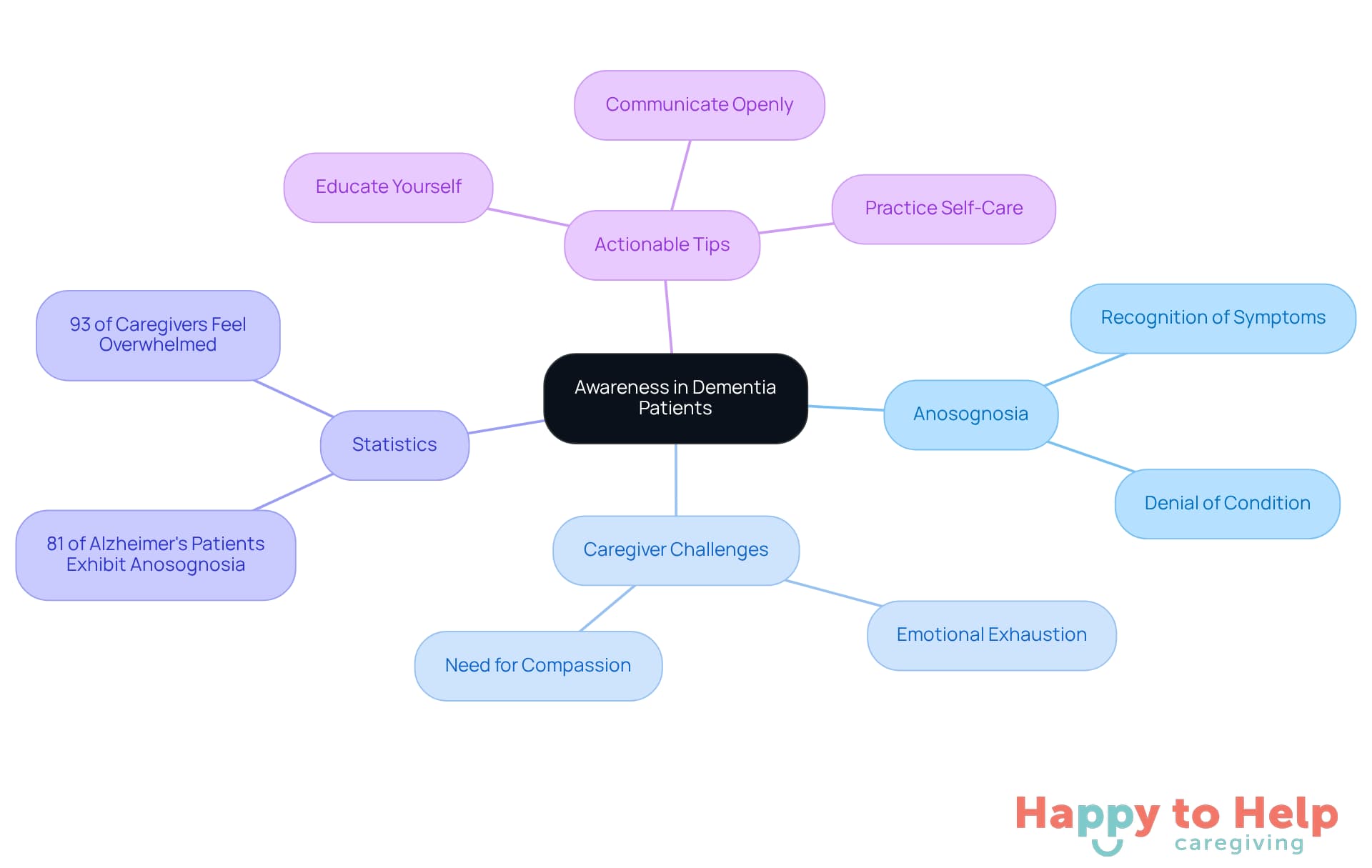
Awareness in individuals with cognitive decline presents a significant challenge for caregivers. In the early stages of conditions like Alzheimer's disease, many individuals may question if a person with dementia knows they have it, as they might recognize changes in their memory or behavior. However, as dementia progresses, they often lose this understanding, which leads to the question of whether a person with dementia knows they have it, resulting in a condition known as anosognosia. This lack of insight can lead to the concern about whether a person with dementia knows they have it, complicating caregiving efforts.
The implications of anosognosia are profound. Studies indicate that while some patients may acknowledge their symptoms, others might completely reject them, which leads to the question: does a person with dementia know they have it? This rejection can be misinterpreted as denial rather than an authentic lack of awareness. Understanding these dynamics is crucial for caregivers, who must approach their roles with empathy and tailored strategies. As Mother Teresa poignantly stated, "It is not how much you do, but how much love you put in the doing," highlighting the importance of compassion in caregiving.
Statistics reveal that approximately 81% of individuals with Alzheimer's exhibit some degree of anosognosia. This underscores the critical need for awareness in effective caregiving. Additionally, a survey found that 93% of caregivers feel overwhelmed or emotionally exhausted, illustrating the emotional pressure linked to this role.
As cognitive decline advances, the effects on both individuals experiencing it and their caregivers become increasingly evident. Caregivers must adopt a compassionate and knowledgeable approach to care, focusing on understanding the unique challenges posed by cognitive decline. Here are some actionable tips:
- Educate yourself about the stages of cognitive decline and their implications.
- Communicate openly with healthcare professionals for guidance and support.
- Practice self-care to manage emotional exhaustion and maintain your well-being.
By implementing these strategies, caregivers can navigate the complexities of cognitive decline with greater confidence and compassion.
Explore Anosognosia and Its Effects
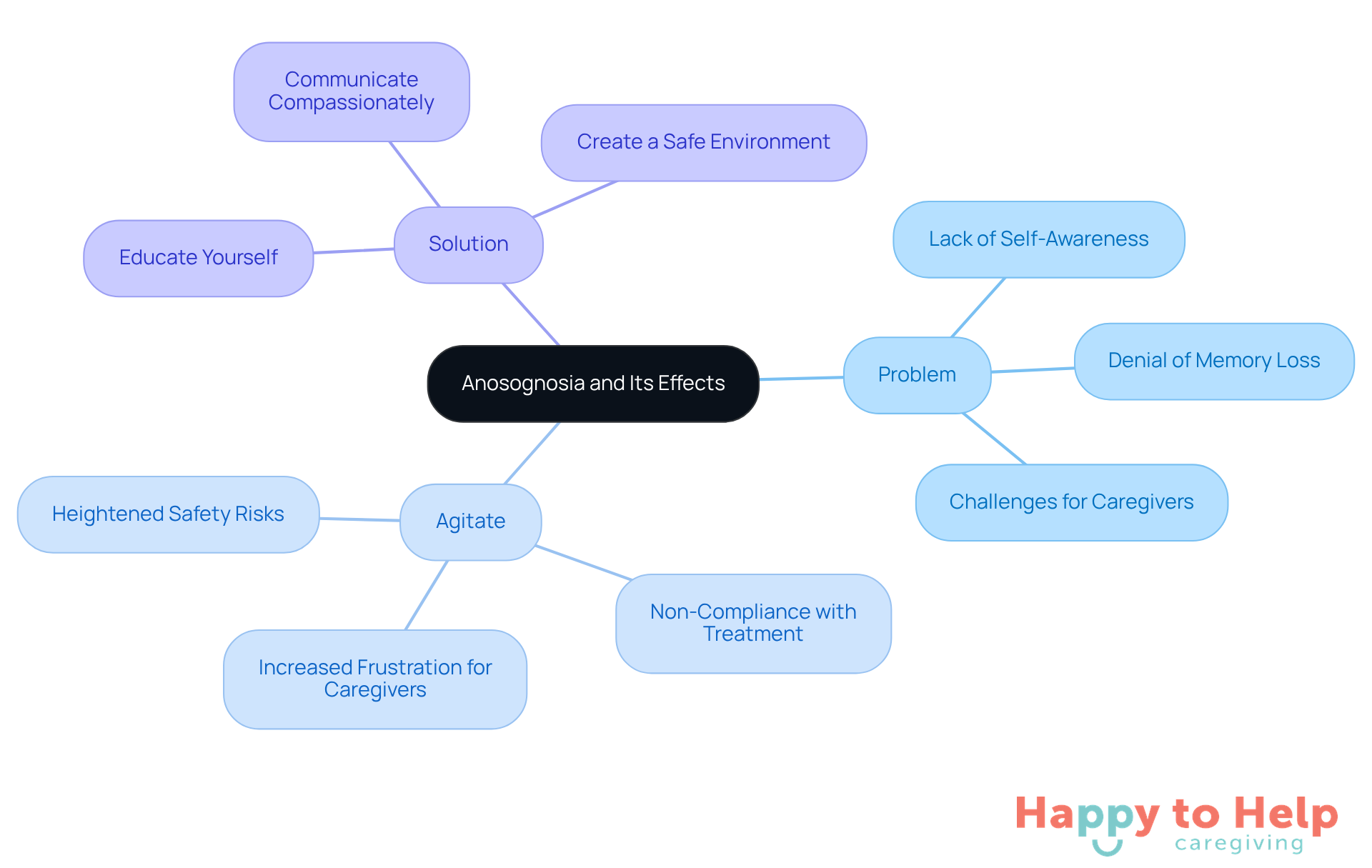
Problem: Anosognosia is a condition where individuals with dementia, particularly those with Alzheimer's disease, often do not understand the question of whether a person with dementia knows they have it. This presents significant challenges for caregivers, especially regarding the question of whether does a person with dementia know they have it, as these individuals may completely deny their memory loss or behavioral changes.
Agitate: The consequences of anosognosia are profound. It often leads to non-compliance with treatment plans, increased frustration for caregivers, and heightened safety risks. For instance, a person might refuse help with daily activities, believing they can manage independently, which can result in dangerous situations.
Solution: Understanding anosognosia is crucial for caregivers. It requires a compassionate approach that respects the individual's dignity while ensuring their safety and well-being. Caregivers should remember that their role extends beyond providing care; they must also navigate the emotional complexities that arise from this condition. Here are some actionable tips:
- Educate Yourself: Learn about anosognosia to better understand the challenges faced by those with dementia.
- Communicate Compassionately: Use empathetic communication to engage with the individual, acknowledging their feelings while gently guiding them towards necessary support.
- Create a Safe Environment: Implement safety measures at home to minimize risks, ensuring the individual can navigate their space safely.
By fostering a supportive environment that acknowledges both past and current struggles, caregivers can significantly improve the quality of life for those affected by anosognosia.
Discuss Caregiving Strategies Based on Awareness Levels
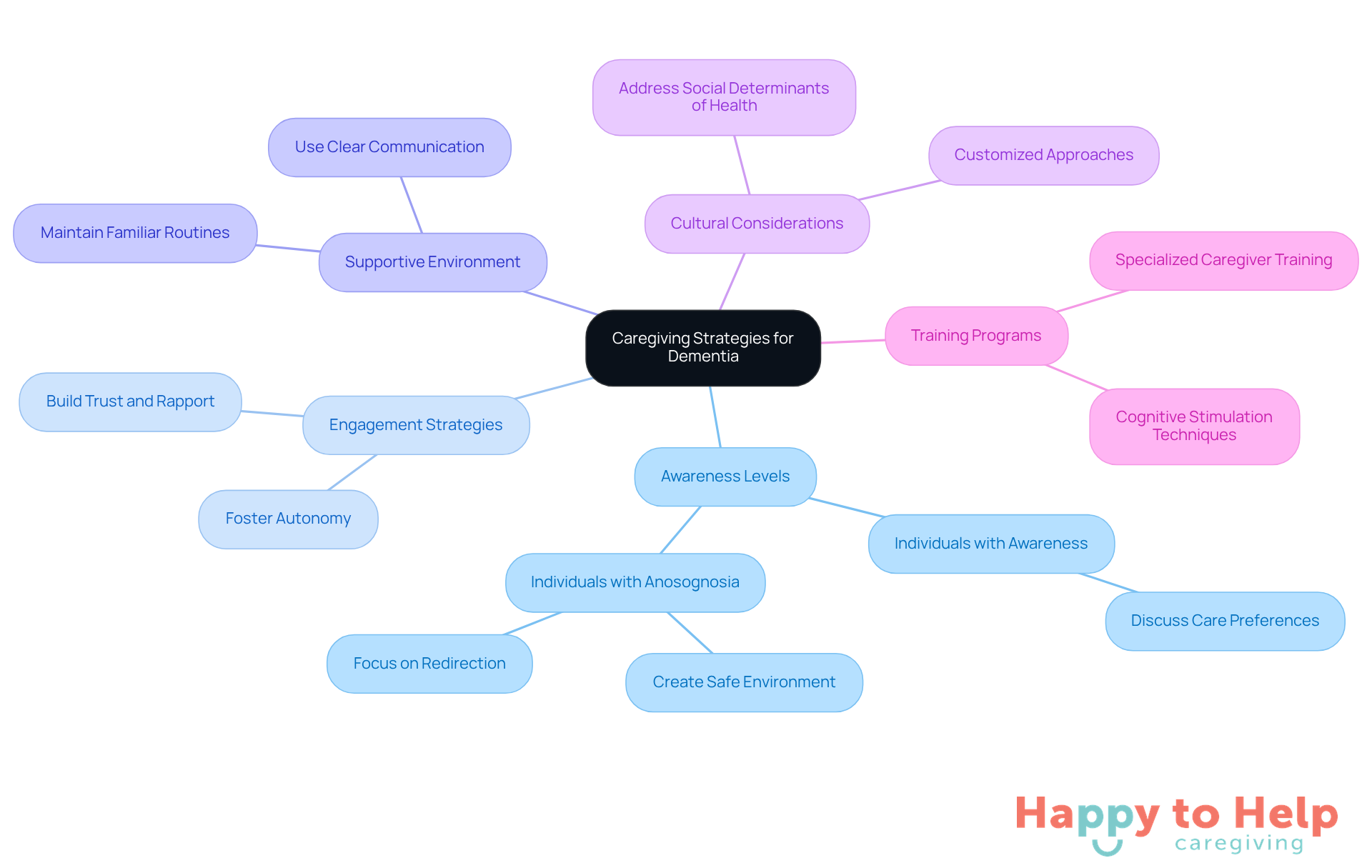
Caregiving for individuals with dementia presents significant challenges that require tailored approaches. As the number of Americans with Alzheimer's and related cognitive disorders is projected to exceed 12 million by 2050, the need for effective caregiving strategies is more pressing than ever. Caregivers must adapt their methods to the varying levels of awareness among those they support, especially in understanding does a person with dementia know they have it, to ensure effective assistance.
For individuals who retain some awareness, engaging them in discussions about their care preferences is crucial, especially when considering does a person with dementia know they have it. This practice not only fosters autonomy but also shows respect for their dignity. Research indicates that caregivers who adjust their approaches based on the individual's understanding report improved outcomes for both themselves and those they care for. In contrast, for individuals exhibiting anosognosia-where they are unaware of their condition-it becomes paramount to create a safe and supportive environment, particularly when exploring the question of whether a person with dementia knows they have it. Addressing dementia directly can cause distress; therefore, caregivers should focus on redirection, maintaining familiar routines, and using simple, clear communication.
Building trust and rapport is essential in these situations, as it encourages individuals to accept help without feeling threatened. Oanh L Meyer highlights that in communities of color, caregiving challenges may be intensified due to cultural values and social determinants of health, underscoring the necessity for customized approaches.
Training programs for support providers have shown effectiveness in equipping caregivers with the skills needed to navigate these complexities. Those who complete specialized training often report greater satisfaction and effectiveness in their roles. Real-life examples illustrate that employing these strategies can significantly enhance the involvement and well-being of individuals, even those with severe cognitive impairments.
By focusing on individualized care methods, caregivers can improve the overall experience, ensuring that patients feel valued and understood. With over 16 million dementia caregivers in the U.S. providing more than 18 billion hours of care annually, the importance of effective training and support for caregivers cannot be overstated.
Making the Right Choice
Understanding the complexities of dementia and the varying levels of awareness among individuals diagnosed is crucial for effective caregiving. The problem arises when some individuals may initially recognize their cognitive decline, yet many struggle with awareness, particularly due to conditions like anosognosia. This lack of insight not only impacts their understanding of their situation but also complicates the caregiving process, emphasizing the need for tailored approaches that respect the dignity and autonomy of those affected.
The implications of this issue are significant. A notable percentage of individuals with Alzheimer's may not recognize their symptoms, leading to challenges in compliance with care plans and increased emotional strain on caregivers. This situation can create a cycle of frustration and misunderstanding, making it essential for caregivers to adopt effective strategies.
To address these challenges, caregivers can implement several actionable solutions:
- Compassionate communication is key; caregivers should strive to engage with individuals in a way that fosters understanding and connection.
- Educating both caregivers and patients about the condition can empower them, helping to bridge the gap created by varying awareness levels.
- Creating a safe and supportive environment is also crucial, as it can enhance the quality of life for both caregivers and those living with dementia.
Ultimately, the journey of caregiving for individuals with dementia requires empathy, understanding, and adaptability. By acknowledging the unique challenges posed by varying awareness levels and implementing effective strategies, caregivers can foster a supportive environment that enhances the well-being of individuals with dementia. Embracing these practices not only benefits those affected but also alleviates the emotional burden on caregivers, reinforcing the vital role they play in this challenging yet meaningful endeavor.
https://iframe.tely.ai/cta/eyJhcnRpY2xlX2lkIjogIjY5M2Y1MDgyNjk1NDdlMzRlNWE0ZWU1ZCIsICJjb21wYW55X2lkIjogIjY4ZWU1ZGNhNzMxNzYyNTU3ZjNjOTVjMSIsICJpbmRleCI6IG51bGwsICJ0eXBlIjogImFydGljbGUifQ==Frequently Asked Questions
What is dementia?
Dementia is a significant problem characterized by a range of cognitive impairments that disrupt daily functioning, primarily affecting memory, thinking, and social interactions.
What are the main types of dementia?
The main types of dementia include Alzheimer's disease, which accounts for 60-70% of cases, vascular cognitive impairment, Lewy body syndrome, and frontotemporal syndrome.
How does Alzheimer's disease differ from other types of dementia?
Alzheimer's disease primarily manifests as memory lapses, while other types, such as frontotemporal syndrome, often lead individuals to become more aware of behavioral changes.
Do individuals with dementia know they have it?
Awareness of the condition can vary; individuals with Alzheimer's may notice memory issues, whereas those with frontotemporal conditions may be more cognizant of behavioral changes.
Why is it important for caregivers to understand the different types of dementia?
Understanding the different types of dementia is crucial for caregivers as it affects diagnosis, treatment approaches, and the overall care provided to those living with dementia.
What are some practical tips for caregivers of individuals with dementia?
Caregivers should educate themselves about the specific type of dementia, monitor changes in behavior and cognition, and engage in open communication with their loved ones.
How can tailored approaches improve care for those with dementia?
Tailored approaches can enhance the quality of life for both caregivers and individuals with dementia by providing more effective support and care strategies based on the specific type of dementia.
List of Sources
- Define Dementia and Its Types
- Subtypes of dementia - Dementia Statistics Hub (https://dementiastatistics.org/about-dementia/subtypes)
- Prevalence of dementia subtypes in U.S. Medicare fee-for-service beneficiaries, 2011-2013 - PMC (https://pmc.ncbi.nlm.nih.gov/articles/PMC5104686)
- ADI - Dementia statistics (https://alzint.org/about/dementia-facts-figures/dementia-statistics)
- Examine Awareness in Dementia Patients
- Top List of Inspirational Dementia Quotes for Caregivers (https://rochesterlawcenter.com/dementia-resources/dementia-quotes)
- Caregiver Dementia Quotes (Encouragement For Dementia Caregivers) (https://optoceutics.com/caregiver-dementia-quotes-encouragement-dementia-caregivers?srsltid=AfmBOoq\_16xhAJRUFilWGKNxVqqOHP4hfoGPulmxG1q-hqAGi2teW9ic)
- 80 Quotes About Loving Someone With Alzheimer's (https://parade.com/1178790/kaitlin-vogel/alzheimers-quotes)
- New Survey Reveals Critical Gaps in Awareness and Understanding of Agitation in Alzheimer’s Dementia - Alliance for Aging Research (https://agingresearch.org/news/new-survey-reveals-critical-gaps-in-awareness-and-understanding-of-agitation-in-alzheimers-dementia)
- TOP 25 DEMENTIA QUOTES (of 74) | A-Z Quotes (https://azquotes.com/quotes/topics/dementia.html)
- Explore Anosognosia and Its Effects
- Association between anosognosia and neuropsychiatric symptoms in Alzheimer's disease dementia patients - NewsBreak (https://newsbreak.com/news/4381062179934-association-between-anosognosia-and-neuropsychiatric-symptoms-in-alzheimer-s-disease-dementia-patients)
- Caregiver Dementia Quotes (Encouragement For Dementia Caregivers) (https://optoceutics.com/caregiver-dementia-quotes-encouragement-dementia-caregivers?srsltid=AfmBOorgldpXEu1NwagrHCueuyrD1uemxYYgpSUr3bjniIgNm5GE5jQB)
- Anosognosia and Dementia (https://ourparents.com/senior-health/anosognosia-and-alzheimers)
- The Link Between Dementia and Anosognosia (https://mentalhealth.com/library/are-people-with-dementia-aware-of-their-condition)
- Anosognosia is associated with increased prevalence and faster development of neuropsychiatric symptoms in mild cognitive impairment - PMC (https://pmc.ncbi.nlm.nih.gov/articles/PMC10950916)
- Discuss Caregiving Strategies Based on Awareness Levels
- Unforgotten: Supporting People with Dementia and Their Caregivers - NASHP (https://nashp.org/unforgotten-supporting-people-with-dementia-and-their-caregivers)
- Caring for the Caregivers: An Alzheimer’s Disease Research Center Call to Action - PMC (https://pmc.ncbi.nlm.nih.gov/articles/PMC9047452)
- Dementia training program significantly improves home care worker skills, study finds (https://mcknights.com/news/dementia-training-program-significantly-improves-home-care-worker-skills-study-finds)
- Caregiver training: Evidence of its effectiveness for cognitive and functional improvement in older adults - PMC (https://pmc.ncbi.nlm.nih.gov/articles/PMC10078788)
- Improv training: A new approach to dementia care | Emory University | Atlanta GA (https://news.emory.edu/stories/2025/01/hs\_improving\_dementia\_care\_through\_improv\_15-01-2025/story.html)