
Understanding Your Options
Palliative care can truly come to your home, offering vital support that enhances the quality of life for patients dealing with serious illnesses. Imagine the comfort of receiving personalized attention and holistic services right where you feel most at ease. Home-based palliative care allows families to experience compassionate care in a familiar environment, which can significantly ease anxiety and uplift overall well-being during these challenging times.
For caregivers, the emotional toll can be overwhelming. The stress and burnout often felt can weigh heavily on the heart. But there’s hope. With home-based palliative care, you’re not alone. This service provides not just medical support, but also emotional and practical assistance, helping to lighten the load.
Families can share their stories of how this compassionate care has made a difference. One caregiver shared, "Having the team come to our home made everything feel more manageable. It was like a weight lifted off my shoulders." Such testimonials highlight the profound impact of receiving care in a nurturing environment.
As you navigate these tough times, remember that support is available. Embracing home-based palliative care means choosing a path filled with understanding and kindness, allowing you to focus on what truly matters—being present with your loved ones.
The Importance of Does Palliative Care Come to Your Home?
Palliative care is a compassionate approach that prioritizes comfort and quality of life for individuals facing serious illnesses. Yet, many families find themselves wondering if this essential support can be delivered in the familiar surroundings of their own homes. As more patients express a desire to receive care at home, understanding the various services and emotional support available becomes crucial.
However, the journey to accessing home-based palliative care often raises questions about logistics, emotional readiness, and the integration of family involvement. Families may feel overwhelmed, grappling with stress and uncertainty. How can they navigate these challenges to ensure their loved ones receive the compassionate care they deserve?
It's important to recognize that support is available. From skilled nursing to emotional counseling, a range of services can help ease the burden on families. By exploring these options, families can find the reassurance they need, knowing that they are not alone in this journey.
Define Palliative Care: A Comprehensive Overview
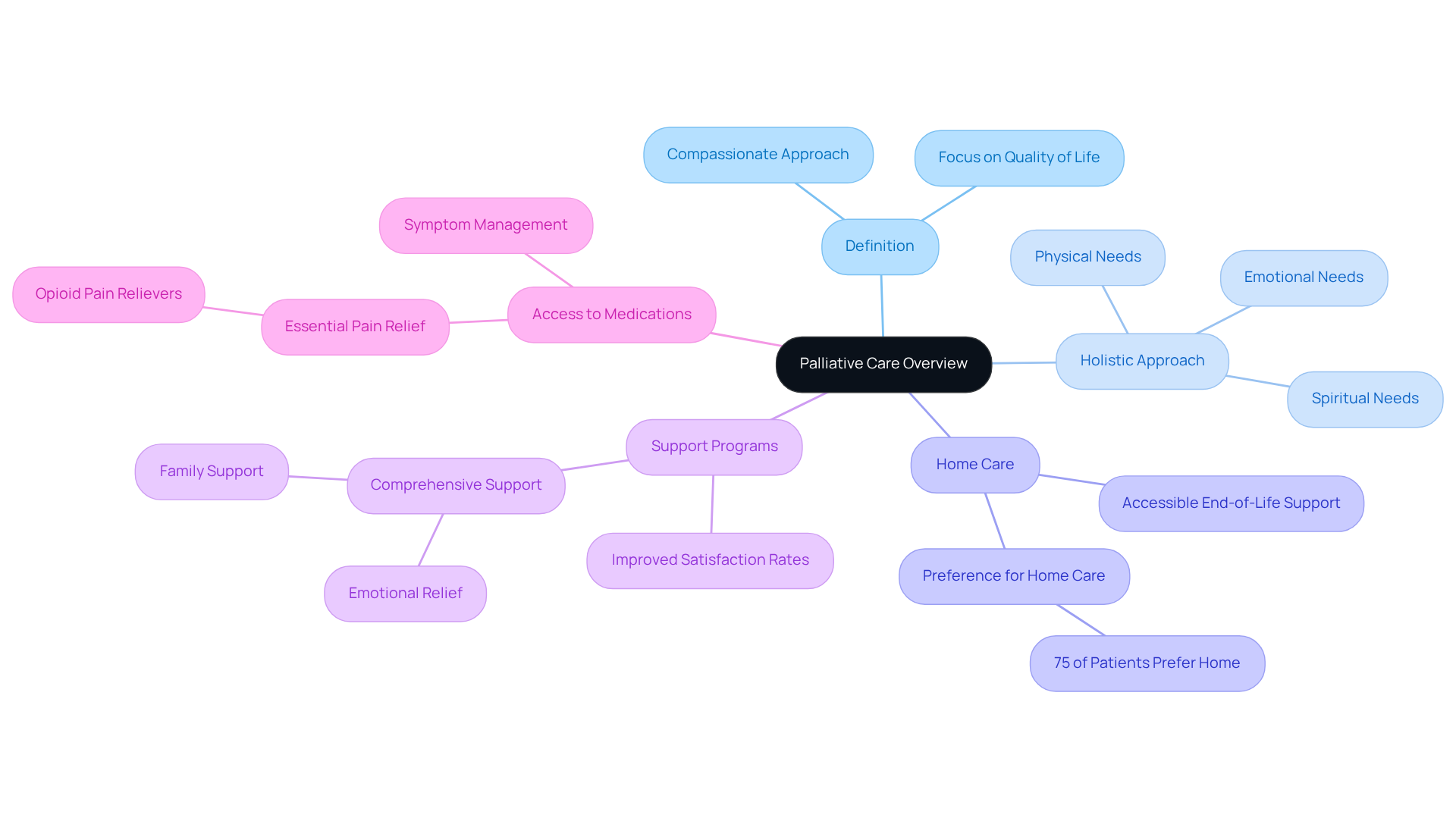
Palliative treatment is a compassionate approach designed to enhance the quality of life for those facing serious illnesses. It focuses on alleviating symptoms, pain, and stress, regardless of the diagnosis or stage of the disease. Unlike curative treatments that aim to eliminate illness, palliative care emphasizes comfort and support, addressing the physical, emotional, and spiritual needs of both individuals and their families.
This holistic approach is relevant at any phase of illness and can be seamlessly combined with curative treatments, offering a versatile option for those seeking comprehensive support. Many individuals with severe conditions—almost three-quarters (75%)—choose to receive care at home, which raises the question: does palliative care come to your home, highlighting the importance of accessible end-of-life support services.
Moreover, effective supportive programs have shown significant improvements in satisfaction rates, underscoring the vital role of this care in enhancing the overall well-being of individuals and their families. As healthcare professionals often remind us, "Palliative support is essential not just for managing symptoms but for enhancing the overall quality of life for patients and their families."
Access to crucial medications, especially opioid pain relievers, is also essential for effective symptom management in end-of-life care. This support not only helps manage physical discomfort but also provides emotional relief, allowing families to focus on what truly matters—being together during this challenging time.
Understanding Palliative Care at Home: Importance and Benefits
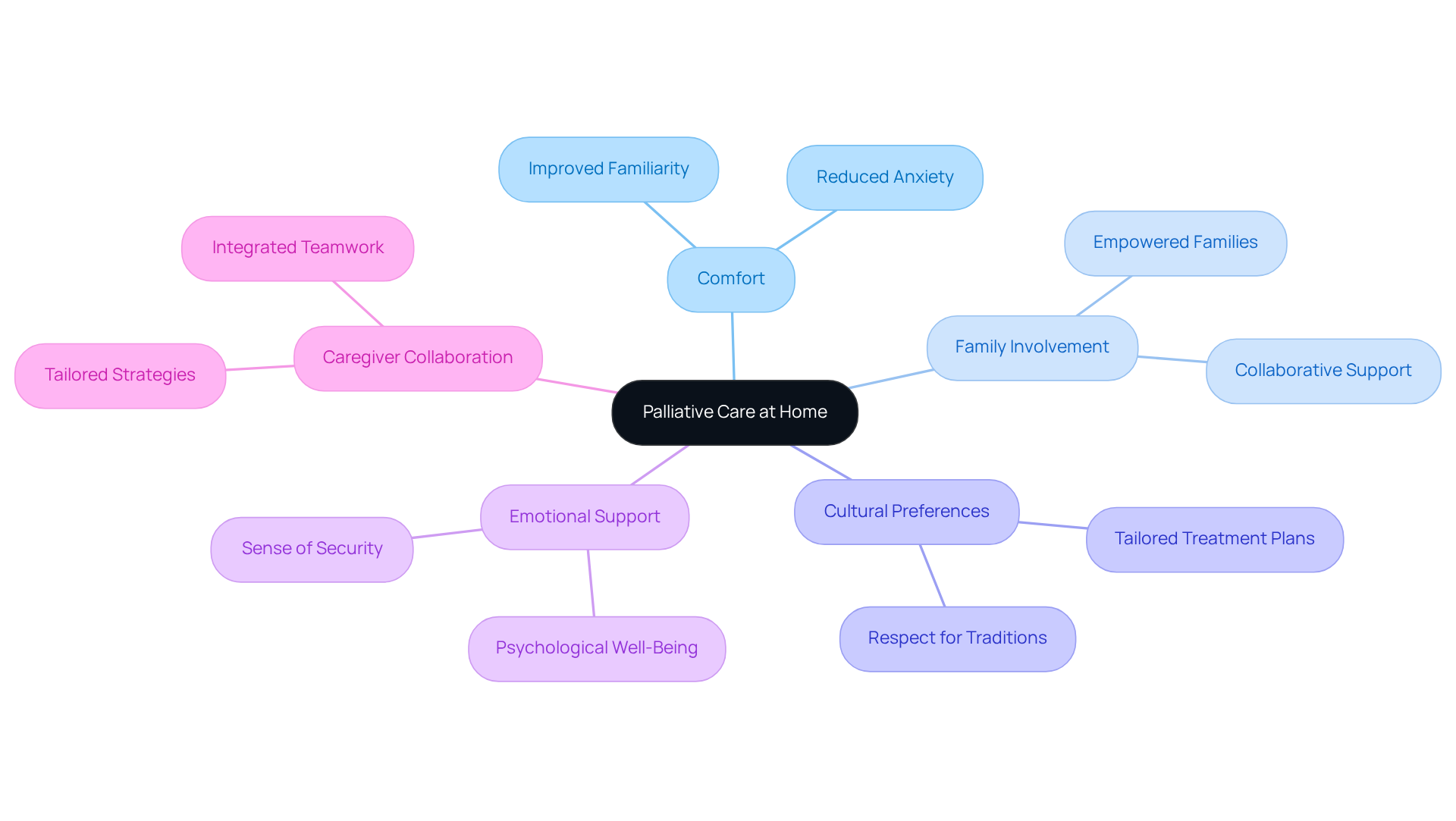
Home-based palliative assistance raises the important question of how does palliative care come to your home, offering significant benefits that extend beyond just physical care. It offers improved comfort, familiarity, and essential psychological support. Imagine receiving care in the warmth of your own home; when it comes to comfort, many wonder, does palliative care come to your home, helping to reduce anxiety and stress while creating a vital sense of security during challenging times?
The personalized attention from caregivers allows for tailored strategies that meet the unique needs of each individual. This not only enhances symptom management but also contributes to overall well-being. When families are included in the support process, they feel empowered, fostering collaboration and creating a supportive network during these difficult moments.
This approach not only improves the quality of life for individuals but also equips families with the resources they need to navigate the complexities of caregiving. It’s crucial to consider cultural and religious preferences in treatment plans, ensuring that the distinct needs of patients are honored.
Moreover, understanding how does palliative care come to your home is essential for emotional readiness when transitioning to home support after a hospital stay. Families may face challenges, such as feelings of isolation and anxiety due to the absence of visible clinical support. This highlights the importance of integrated collaboration among healthcare providers to ensure that does palliative care come to your home for effective end-of-life support.
In these moments, remember that you are not alone. There are compassionate caregivers ready to walk alongside you, providing the support and understanding you need.
Explore Types of Palliative Care Services Offered at Home
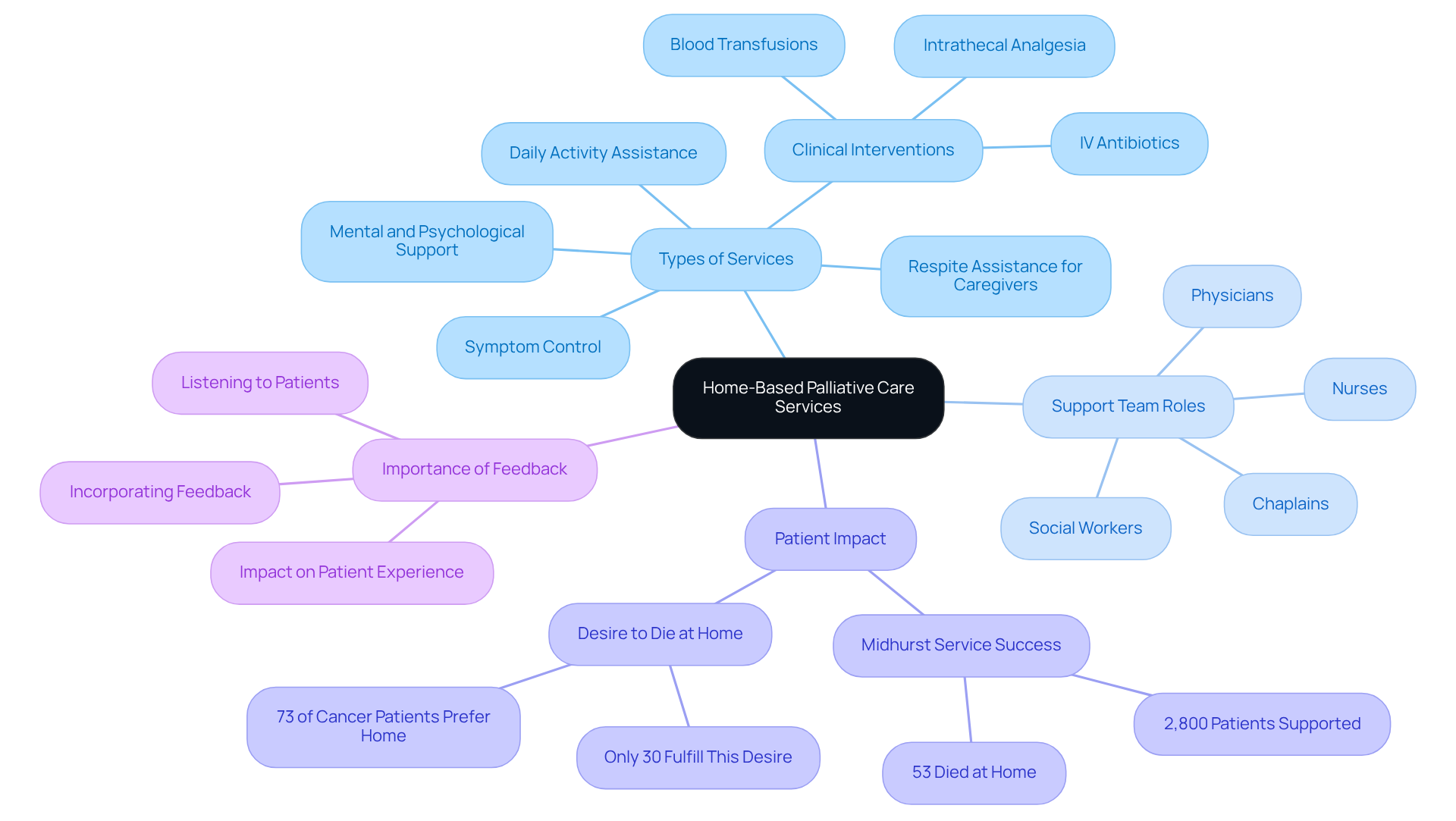
Home-based palliative support offers a compassionate range of services, which raises the question of how does palliative care come to your home to meet the unique needs of patients and their families. It’s not just about managing pain; it’s about providing holistic care that includes symptom control, mental and psychological support, help with daily activities, and seamless coordination among healthcare providers. For family caregivers, respite assistance is a vital resource, allowing them to take necessary breaks while ensuring their loved ones continue to receive the care they need.
Palliative support teams typically consist of physicians, nurses, social workers, and chaplains, all collaborating to create a comprehensive care plan that addresses both medical and emotional needs. Understanding how does palliative care come to your home is essential. Studies show that nearly three-quarters of individuals with cancer wish to spend their final days at home, yet less than a third are able to fulfill this desire.
Recent advancements in home palliative support services emphasize the question of how does palliative care come to your home for effective pain management. Take the Midhurst service, for instance. Since its inception, it has helped over 2,800 individuals, demonstrating that clinical interventions at home not only empower patients but also enhance their overall experience. Remarkably, 53% of those in the Midhurst service were able to pass away at home, raising the question of how does palliative care come to your home and showcasing the profound impact of home-based support.
Healthcare providers stress the importance of truly listening to individuals and incorporating their feedback. This sentiment is echoed by specialists who assert that the quality of treatment is shaped by the patient’s perception and experience, not solely by the provider’s intentions. By focusing on these crucial elements, home-based supportive treatment can significantly improve patient satisfaction and health outcomes.
In this journey, it’s vital to remember that you’re not alone. The support available is designed to ease the burden, offering both emotional and practical assistance. Together, we can create a nurturing environment that honors the wishes of those we care for.
Navigating Emotional and Practical Aspects of Home-Based Palliative Care
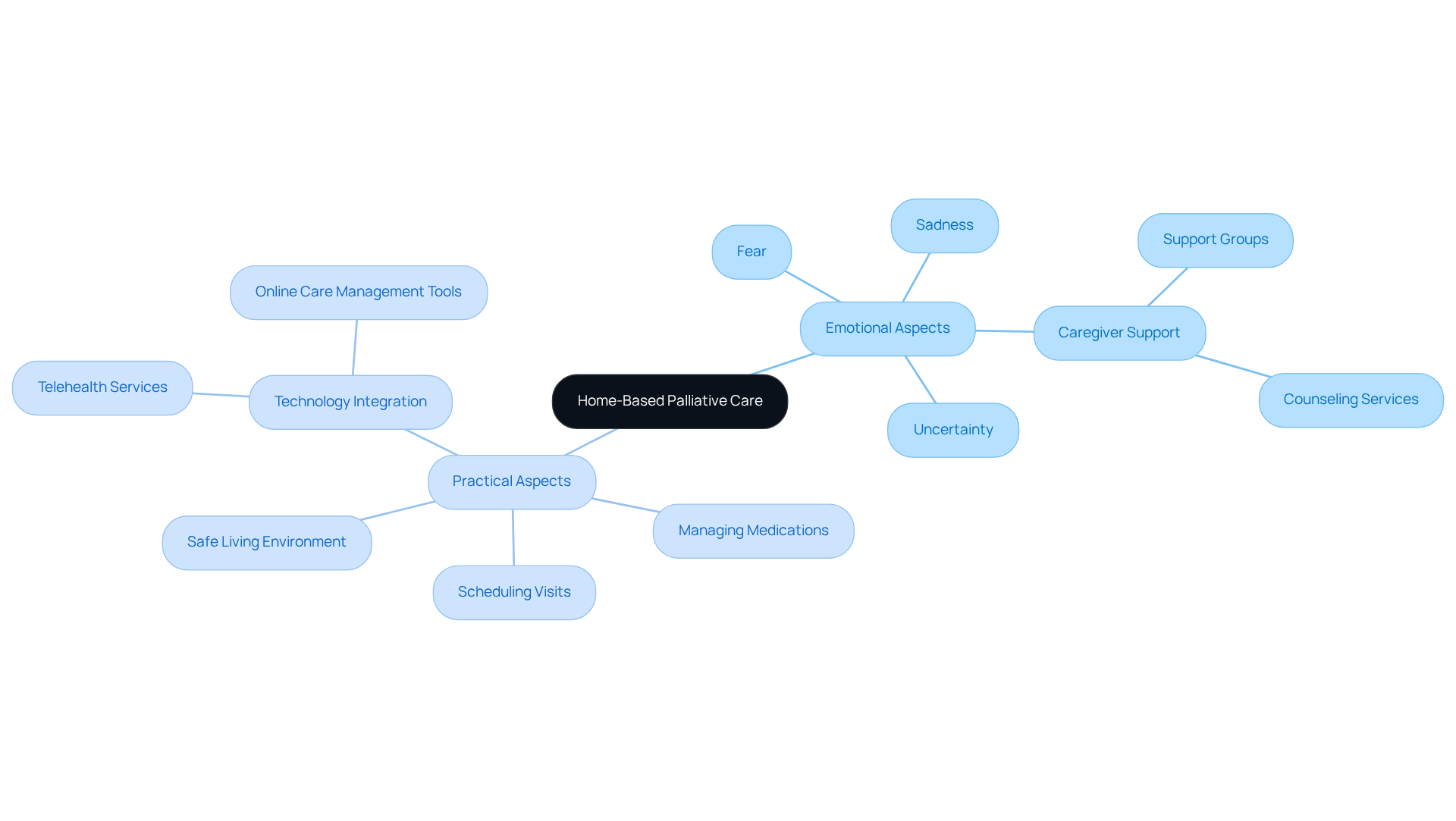
Navigating home-based end-of-life support can be incredibly challenging, especially when considering if palliative care comes to your home. Families often find themselves grappling with a whirlwind of feelings—fear, sadness, and uncertainty about what lies ahead. It’s crucial for caregivers to communicate openly, seeking support from healthcare professionals, support groups, or counseling services. Research shows that caregiver support groups can significantly enhance emotional well-being and lessen feelings of isolation, underscoring the power of community in these trying times.
In practical terms, families should think about the logistics of care. This includes:
- Scheduling visits from healthcare providers
- Managing medications
- Ensuring a safe living environment
The Midhurst Macmillan Community Specialist Palliative Support service exemplifies successful home-based palliative management and addresses the question of how palliative care comes to your home, showing how families can adapt to these circumstances with grace. Embracing technology, like telehealth services and online care management tools, can also ease communication and coordination of care, making the journey smoother for everyone involved.
By prioritizing both emotional and practical aspects, families can cultivate a nurturing environment that honors dignity and comfort for their loved ones during this critical time. Remember, you’re not alone in this journey; support is available, and it’s okay to reach out for help.
Moving Forward with Does Palliative Care Come to Your Home?
Palliative care embodies a compassionate approach that prioritizes comfort and quality of life for those facing serious illnesses. It goes beyond just alleviating physical symptoms; it also addresses emotional and spiritual needs, making it an essential part of comprehensive healthcare. The question of how palliative care can come to your home is crucial, especially since many individuals prefer to receive this support in the familiar and comforting environment of their own homes.
Key insights throughout this article highlight the significance of home-based palliative care. It offers tailored support that enhances both symptom management and overall well-being, empowering families to navigate the complexities of caregiving. With the integration of healthcare professionals, patients receive holistic care that respects their unique needs and preferences. Moreover, the emotional and practical aspects of home care underscore the importance of community and support networks during challenging times.
Understanding the nuances of home-based palliative care is essential for families facing the challenges of serious illness. By embracing this approach, individuals can create an environment that honors dignity and comfort while fostering connections with caregivers and support systems. It’s vital to reach out for help and utilize available resources to ensure that both patients and families receive the compassionate care they deserve during this critical journey.
https://iframe.tely.ai/cta/eyJhcnRpY2xlX2lkIjogIjY5MDY5ZmM2NDU2Mjg5NjcwNzBjNGVhYiIsICJjb21wYW55X2lkIjogIjY4ZWU1ZGNhNzMxNzYyNTU3ZjNjOTVjMSIsICJpbmRleCI6IG51bGwsICJ0eXBlIjogImFydGljbGUifQ==Frequently Asked Questions
What is palliative care?
Palliative care is a compassionate approach aimed at enhancing the quality of life for individuals facing serious illnesses by alleviating symptoms, pain, and stress, regardless of the diagnosis or stage of the disease.
How does palliative care differ from curative treatments?
Unlike curative treatments that aim to eliminate illness, palliative care emphasizes comfort and support, addressing the physical, emotional, and spiritual needs of patients and their families.
At what stage of illness is palliative care relevant?
Palliative care is relevant at any phase of illness and can be combined with curative treatments, providing comprehensive support throughout the disease process.
Can palliative care be provided at home?
Yes, many individuals with severe conditions—approximately 75%—choose to receive palliative care at home, highlighting the importance of accessible end-of-life support services.
What impact does palliative care have on patient and family satisfaction?
Effective supportive programs in palliative care have shown significant improvements in satisfaction rates, enhancing the overall well-being of both patients and their families.
Why is access to medications important in palliative care?
Access to crucial medications, such as opioid pain relievers, is essential for effective symptom management in end-of-life care, helping to manage physical discomfort and providing emotional relief for families.