
Active service-area notice
Happy to Help does not currently list California as an active service area. This article is general educational information. For local care availability, browse our active service areas.
Browse active service areasFor families in our service areas
For families in our service areas, this guide explains in-home care and how non-medical in-home caregiving can support care planning in East Idaho, Treasure Valley & Magic Valley, Northern Wasatch, North Central West Virginia, and Northeast Ohio.
Understanding Elder Care in California: In-Home Care
Elder care in California poses a significant challenge for families as they navigate the complex landscape of support options for their loved ones. The decision between in-home care and assisted living facilities is not just about logistics; it impacts emotional well-being and financial stability.
With a growing preference for aging in place, many seniors are choosing in-home care, which allows them to maintain independence while receiving personalized assistance. However, this option may not always provide the social connections and safety that assisted living facilities offer. These structured environments can foster community and ensure a higher level of care, which is crucial for many elderly individuals.
As families weigh these choices, they must consider which option strikes the best balance of care, emotional well-being, and financial feasibility. Evaluating the specific needs of their loved ones is essential in making an informed decision.
In summary, understanding the unique benefits of both in-home care and assisted living can help families make the best choice for their elderly relatives.
Defining In-Home Care and Assisted Living
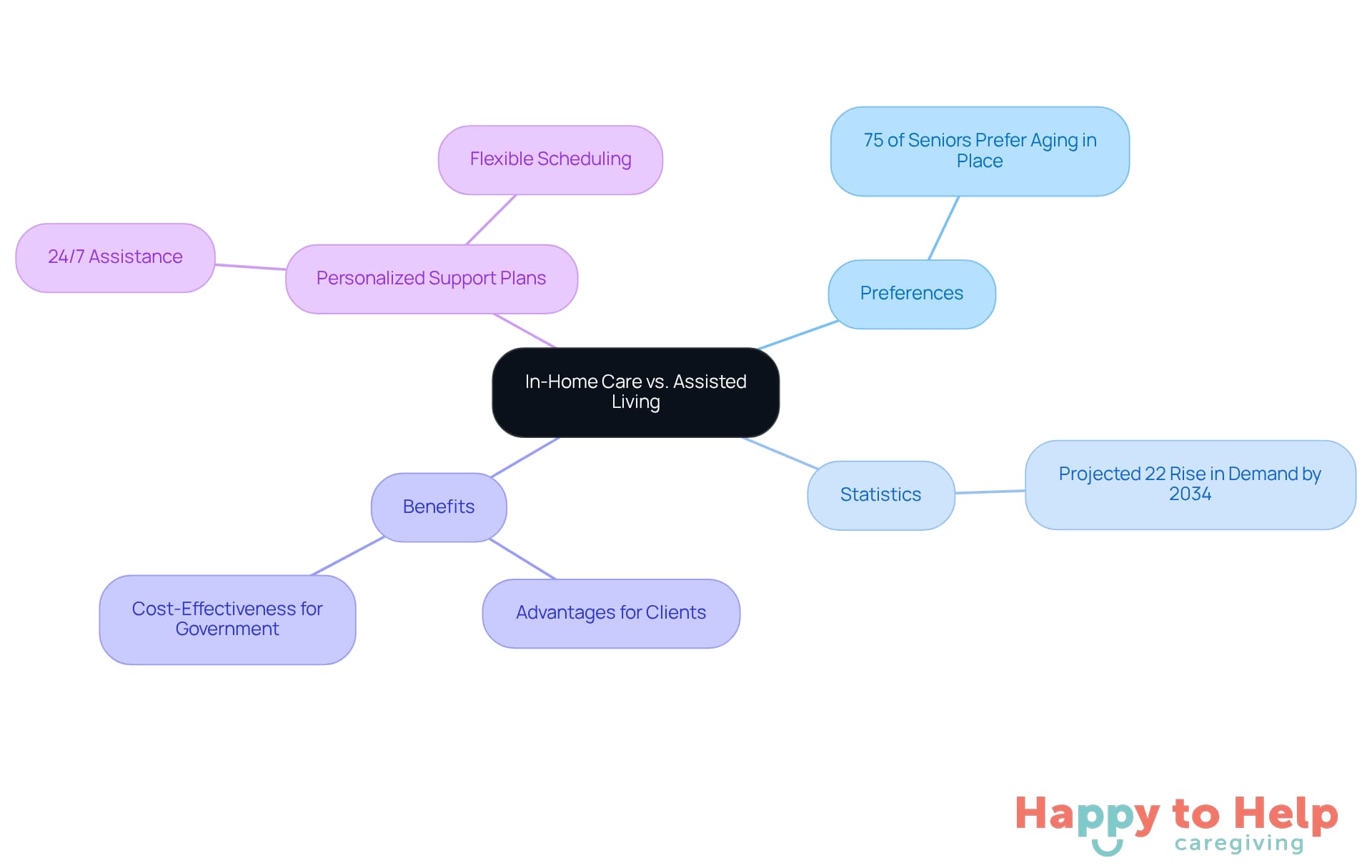
In-home support addresses a significant challenge faced by elderly individuals: the need for assistance while striving to maintain their independence. Many seniors prefer to receive help in the comfort of their own homes rather than transitioning to assisted living facilities. This preference is underscored by statistics showing that approximately 75% of seniors would rather age in place.
However, the implications of this choice are profound. As the demand for home assistance services is projected to rise by 22% by 2034, driven by demographic shifts and a growing desire for aging in place, it’s crucial to recognize the benefits of in-home support. Vicki Hoak, Executive Director of the Home Care Association of America, notes that "home assistance is beneficial for clients and the government: a benefit for older individuals who prefer to receive support in their own residences and it’s advantageous for the government because home assistance is more economical than institutional treatment."
To address the needs of elderly individuals, personalized support plans can be a practical solution. These plans often include:
- 24/7 assistance
- Flexible scheduling
These can significantly enhance emotional and physical well-being. In contrast, assisted living facilities may not provide the same level of individualized attention, as residents share caregivers and resources with others.
This distinction highlights the importance of viewing in-home assistance as a viable and often preferred option for elder care in California. By prioritizing personalized care, families can ensure their loved ones receive the tailored support they need while enjoying the familiarity of their own homes.
Advantages of In-Home Care
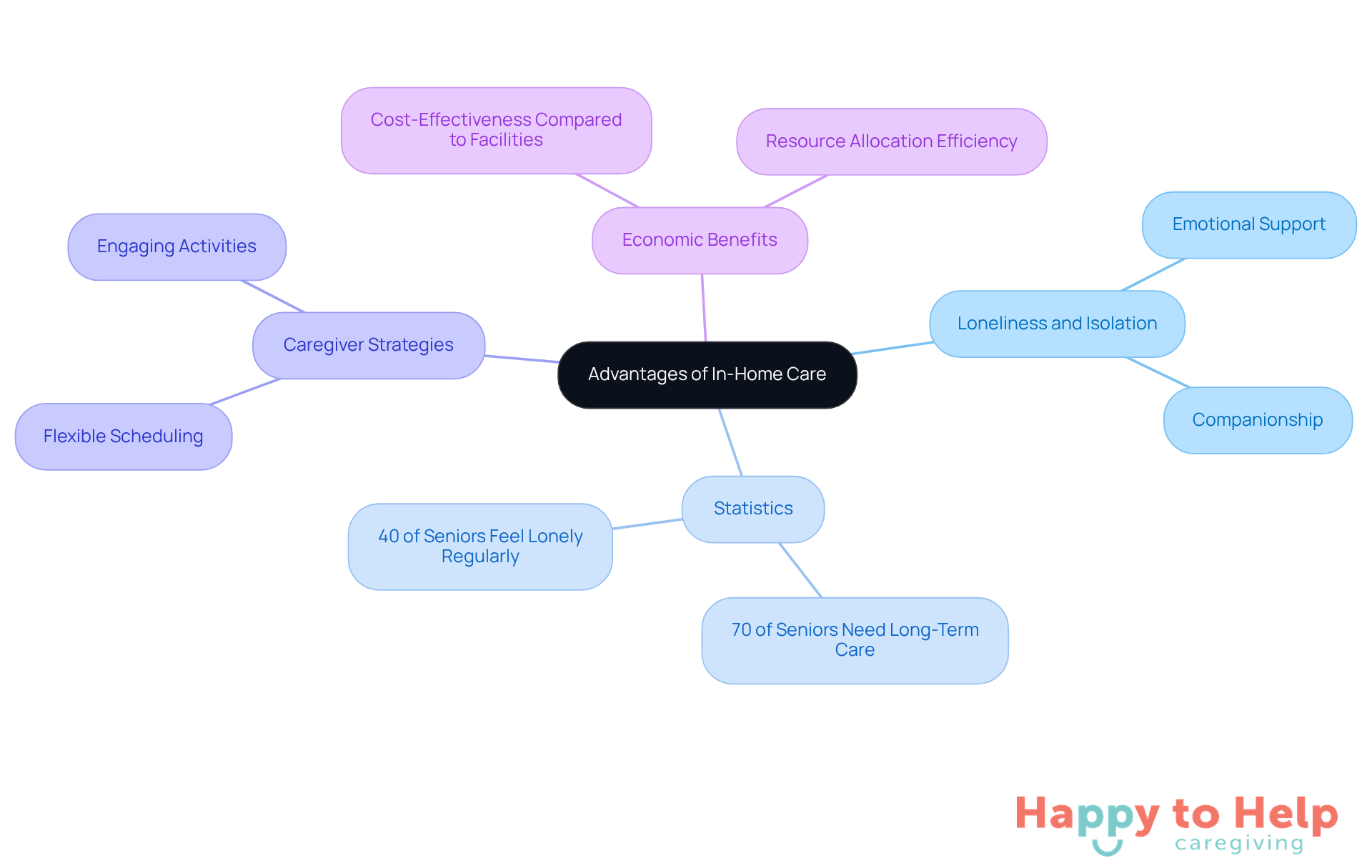
In-home assistance addresses a significant problem: loneliness and isolation among older adults. Research shows that nearly 70% of individuals aged 65 and older will need long-term support, highlighting the urgent need for effective solutions. This isolation can lead to increased anxiety and a decline in mental well-being, making it crucial to find ways to foster companionship and connection.
The implications of this issue are profound. Over 40% of older adults report feeling lonely regularly, which can severely impact their quality of life. In-home assistance services provide a tailored approach that not only improves safety but also enhances emotional support. By implementing personalized support plans, caregivers can address the unique needs of each individual, promoting autonomy and dignity.
So, what can caregivers do?
- Create flexible schedules that adapt to the evolving needs of their clients. This flexibility allows families to adjust support as situations change, ensuring that older adults receive the care they need when they need it.
- Engage clients in enjoyable activities to foster companionship, significantly reducing feelings of loneliness.
Moreover, in-home care is often more economical than traditional assisted living facilities, allowing families to allocate resources more effectively. This tailored attention not only improves safety but also strengthens relationships, leading to a more satisfying and connected life for older adults at home. By prioritizing in-home assistance, caregivers can make a meaningful difference in the lives of those they support.
Benefits of Assisted Living
Elder care in California, specifically through assisted living facilities, addresses a significant problem: the loneliness and lack of support that many elderly individuals face. This isolation can lead to detrimental effects on mental well-being, making it crucial for caregivers to find effective solutions.
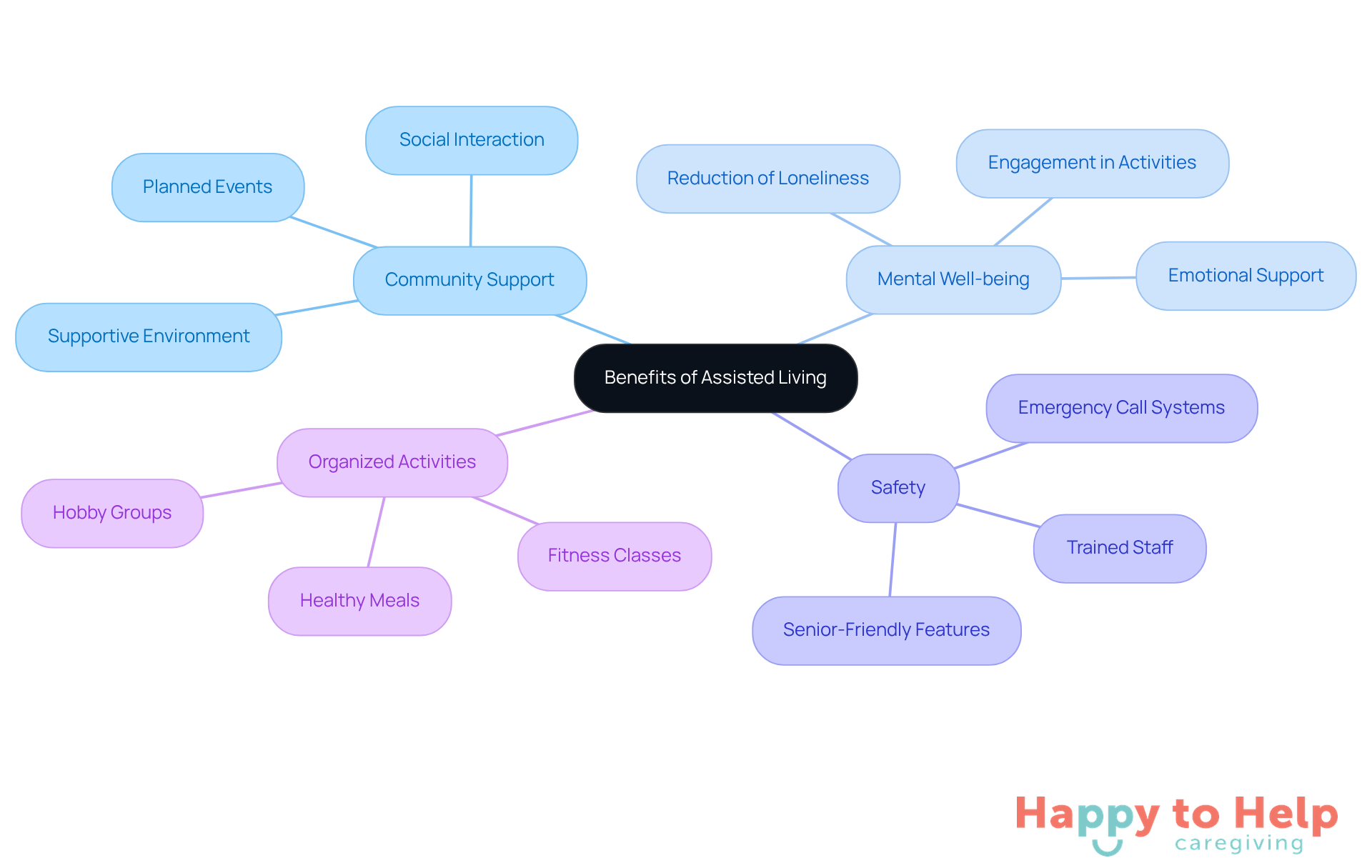
These facilities create a nurturing community where residents receive round-the-clock assistance with daily activities, significantly enhancing their quality of life. The supportive environment encourages social interaction, which is vital for reducing feelings of loneliness.
Organized timetables featuring healthy meals, leisure activities, and consistent health assessments cater to both physical and emotional needs. Research shows that older adults in senior housing receive four more days of preventative and rehabilitative services at home compared to their community-dwelling peers. This statistic underscores the benefits of these communities.
The presence of trained staff not only ensures safety but also provides families with peace of mind, knowing their loved ones are in a secure and caring environment. For instance, residents engage in planned events, fitness classes, and hobby groups, which combat isolation and enhance emotional well-being.
As Ray Braun, CEO of the National Investment Center for Seniors Housing and Assistance, states, "Senior housing and support communities aid older adults by maintaining their health at home." This highlights that supportive communities in elder care California are designed to help older adults retain their independence while ensuring their safety and well-being.
In 2025, these facilities will continue to be an appealing option for families seeking the best care for their loved ones.
Cost Comparison: In-Home Care vs. Assisted Living
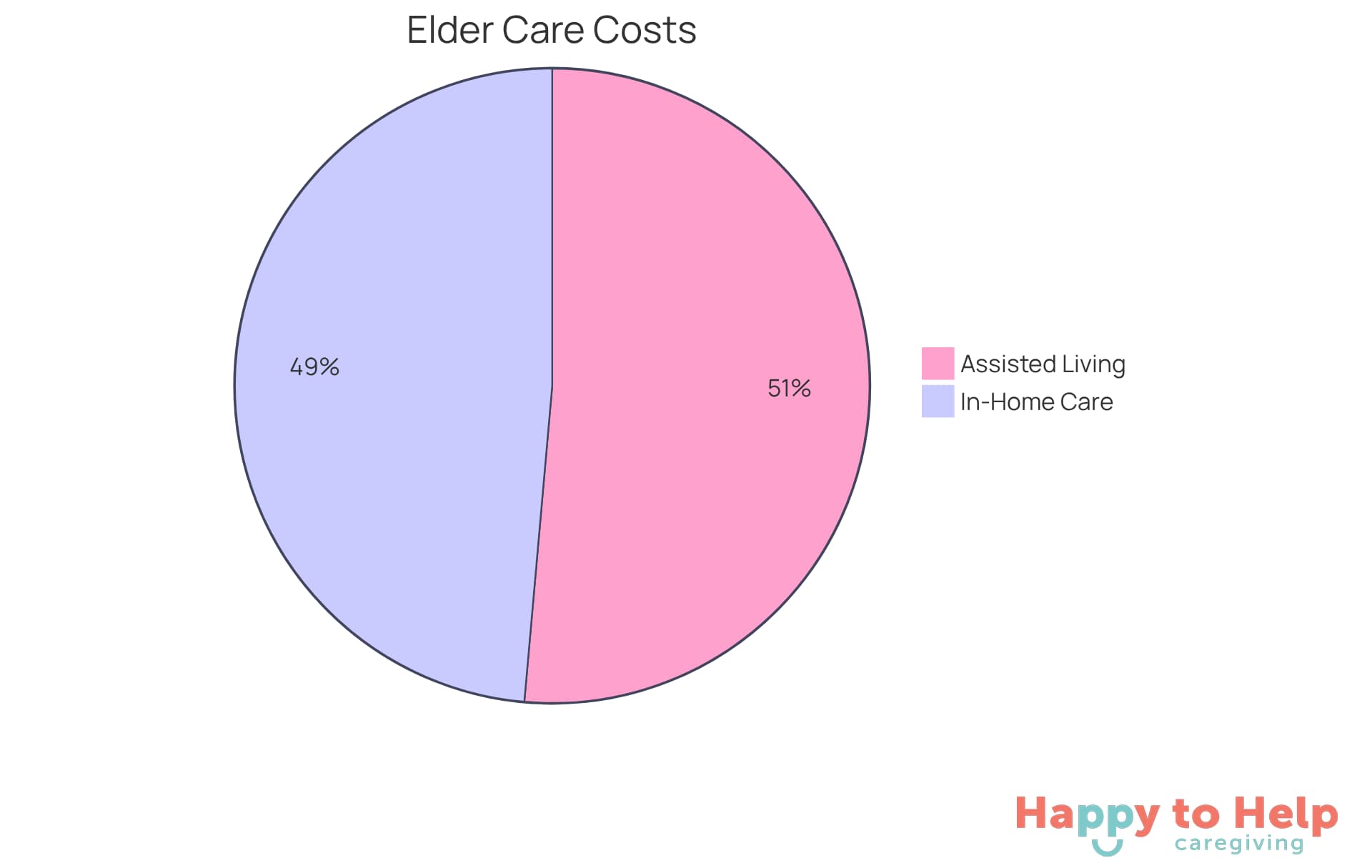
In California, families face a significant challenge when it comes to the costs associated with elder care, including in-home assistance and assisted living facilities. The typical monthly expense for in-home support ranges from $4,000 to $6,400, depending on the level of care required. On the other hand, assisted living facilities usually charge between $4,500 and $6,631 per month. While in-home care might initially appear more affordable for those needing only a few hours of help, expenses can escalate quickly as care needs increase.
For example, costs for 40-hour weekly assistance are projected to rise from about $6,620 per month in 2025 to over $10,000 by 2040. This trend can create financial strain for families. Conversely, elder care in California offers a comprehensive range of services, including meals, social events, and 24/7 staff assistance, which can justify the higher costs for families seeking a structured and nurturing environment for their loved ones.
Moreover, families often find that the bundled services in assisted living not only alleviate the burden of coordination but also enhance the overall quality of life for residents. To navigate these financial challenges, it's crucial for families to budget for potential additional costs associated with in-home assistance, such as home modifications and transportation expenses. Investigating available tax deductions or credits for employing caregivers directly can also provide financial relief. By understanding these factors, families can make informed decisions that best suit their caregiving needs.
Emotional and Social Considerations
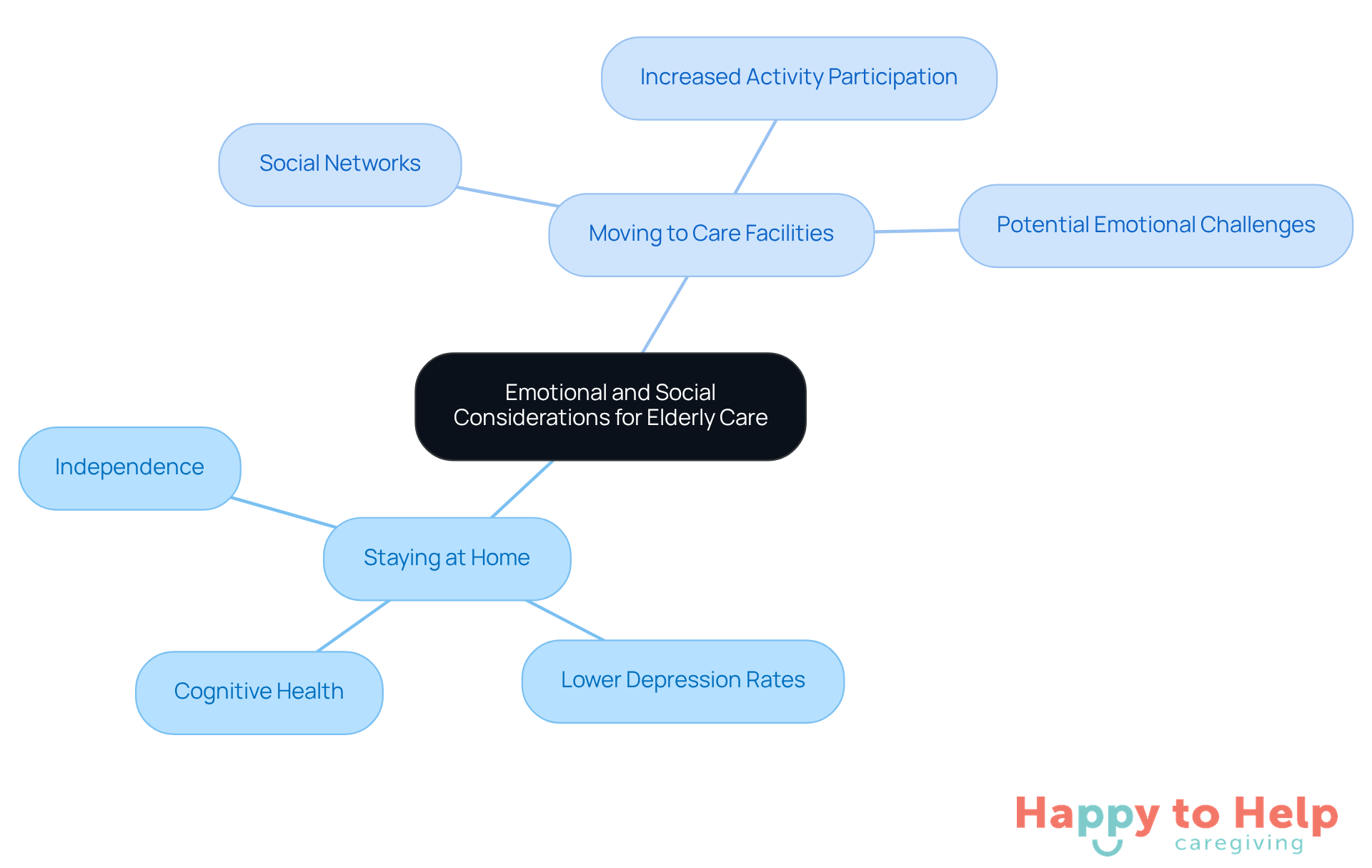
Elderly individuals often face significant emotional challenges, particularly feelings of loneliness and isolation. These issues can lead to poor mental and physical health, making it crucial for caregivers to consider the best living arrangements for their loved ones. Research indicates that elderly individuals who remain in their homes experience lower rates of depression and cognitive decline compared to those who transition to new housing options. In fact, 84% of respondents value their loved one's independence, which is essential for emotional well-being.
On the other hand, care facilities provide organized social networks that encourage group activities and peer interactions. For many, these communal environments can be beneficial. Participation in social activities within these communities has been shown to increase by over 15% after residents move in, highlighting the positive impact of social engagement on mental health. However, the transition to supportive housing can be daunting, often leading to feelings of loss or unease about leaving familiar surroundings.
Dr. Timothy Holahan notes that settings promoting social interaction can enhance cognitive abilities, underscoring the importance of addressing emotional and social needs when choosing between in-home assistance and assisted living. Caregivers must weigh the benefits of personalized assistance against the potential for improved social interaction in a community setting. Ultimately, ensuring that elderly individuals receive the support that aligns with their emotional and social well-being is paramount.
Key Differences and Similarities
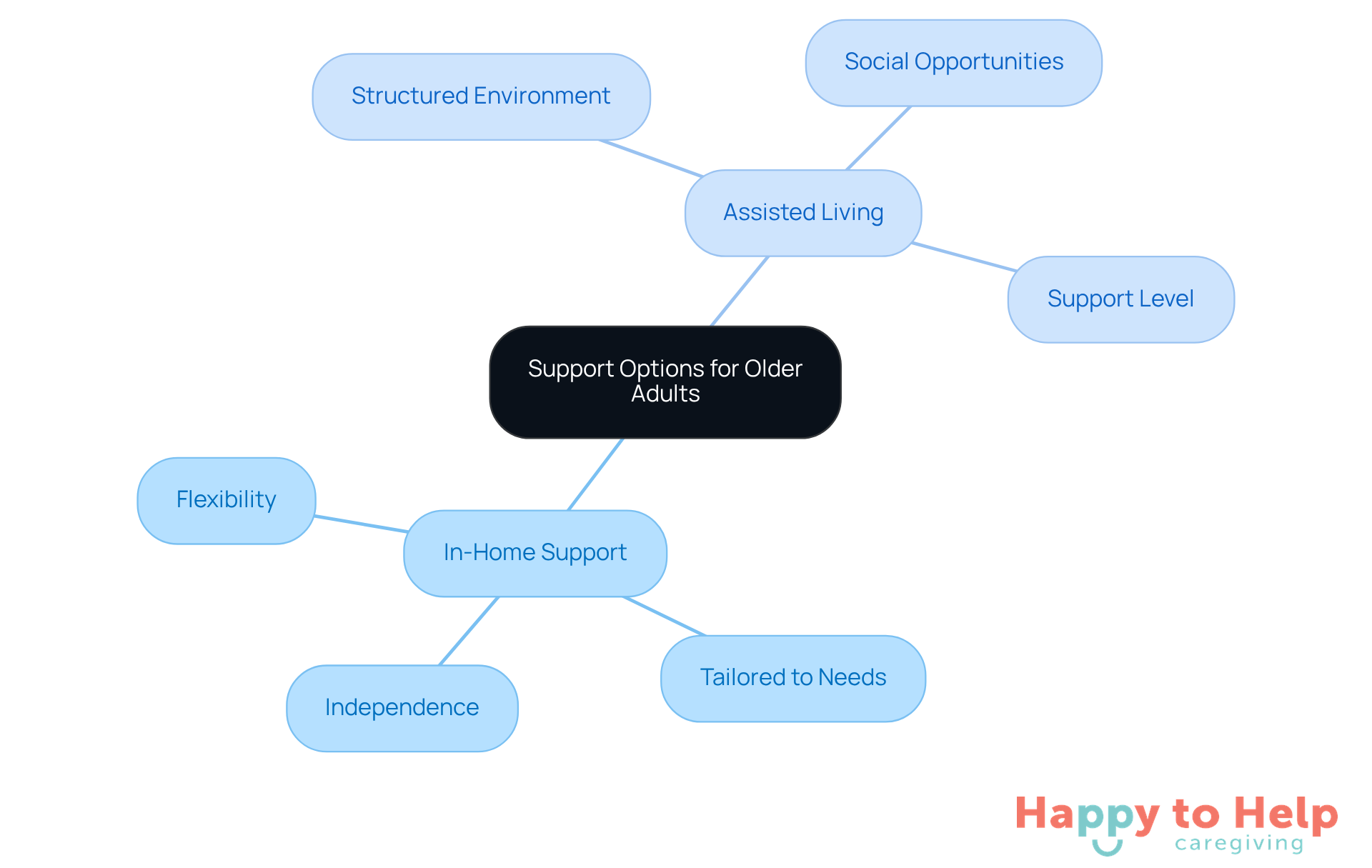
Maintaining independence is a significant challenge for older adults, and both in-house support and aid programs aim to address this issue. The key difference lies in the environment: in-home support allows seniors to remain in their own homes, while facility-based assistance requires relocation.
In-home assistance offers greater flexibility and can be tailored to individual needs, making it a viable option for many. On the other hand, assisted living provides a structured environment with various services and social opportunities, which can be beneficial for those who require more support.
Ultimately, the decision between in-home support and assisted living hinges on the senior's level of independence, care requirements, and personal preferences. Caregivers should consider these factors carefully to ensure the best possible outcome for their loved ones.
Key Takeaways for Caregivers
Choosing the right elder care option in California can be a daunting task for families. The decision between in-home care and assisted living is crucial, as it significantly impacts the quality of life for seniors. Each option addresses unique needs, but they come with distinct advantages that cater to individual preferences and circumstances.
In-home care offers personalized support in a familiar environment, allowing seniors to maintain their independence while receiving necessary assistance. This option not only alleviates feelings of loneliness and isolation but also provides flexibility through tailored support plans that enhance overall well-being.
On the other hand, assisted living facilities promote community engagement and structured care, which can be beneficial for those requiring more comprehensive assistance. However, families must also consider the financial implications of each choice, weighing both immediate and long-term costs.
Ultimately, the decision should align with the specific needs and emotional well-being of the elderly individual. By carefully evaluating the benefits and drawbacks of each option, families can make informed choices that prioritize their loved ones' happiness and health. Embracing the right elder care solution not only enhances the quality of life for seniors but also fosters a supportive environment that respects their dignity and independence.
https://iframe.tely.ai/cta/eyJhcnRpY2xlX2lkIjogIjY5NDFmMzUyMjI1ZjA3N2M1ZmMwYzAzYSIsICJjb21wYW55X2lkIjogIjY4ZWU1ZGNhNzMxNzYyNTU3ZjNjOTVjMSIsICJpbmRleCI6IG51bGwsICJ0eXBlIjogImFydGljbGUifQ==Frequently Asked Questions
What is in-home care and how does it differ from assisted living?
In-home care provides support to elderly individuals in their own homes, allowing them to maintain their independence. In contrast, assisted living facilities offer care in a shared environment where residents may not receive the same level of individualized attention.
Why do many seniors prefer in-home care?
Approximately 75% of seniors prefer to age in place and receive assistance in the comfort of their own homes rather than moving to assisted living facilities. This preference is driven by the desire for familiarity and independence.
What are the benefits of in-home care for elderly individuals?
In-home care enhances emotional and physical well-being by providing personalized support plans, which can include 24/7 assistance and flexible scheduling. This tailored approach addresses individual needs and promotes autonomy.
What are the statistics regarding the demand for in-home assistance?
The demand for home assistance services is projected to rise by 22% by 2034, driven by demographic shifts and an increasing desire for aging in place among seniors.
How does in-home care address loneliness and isolation among older adults?
In-home care helps combat loneliness and isolation by providing companionship and emotional support. Caregivers can engage clients in enjoyable activities and create flexible schedules that adapt to their evolving needs.
What role does personalized support play in in-home care?
Personalized support plans allow caregivers to address the unique needs of each individual, promoting autonomy, dignity, and improved safety for older adults.
Is in-home care more economical than assisted living facilities?
Yes, in-home care is often more economical than traditional assisted living facilities, allowing families to allocate their resources more effectively while providing tailored attention to their loved ones.
List of Sources
- Defining In-Home Care and Assisted Living
- News Releases (https://hcaoa.org/news-releases.html)
- Home Care Industry Trends to Watch in 2025 (https://firstlighthomecare.com/blog/home-care-industry-trends)
- Families Prefer In-Home Care To Senior Living – Yet Struggle To Identify Needed Support (https://homehealthcarenews.com/2025/11/families-prefer-in-home-care-to-senior-living-yet-struggle-to-identify-needed-support)
- Home Health and Personal Care Aides (https://bls.gov/oes/2023/may/oes311120.htm)
- The business of caring for older Americans is in a deepening crisis (https://washingtonpost.com/business/2025/12/04/elder-care-home-health-shortage)
- Advantages of In-Home Care
- Family caregivers prefer in-home care over senior living, new industry report finds (https://mcknightshomecare.com/news/family-caregivers-prefer-in-home-care-over-senior-living-new-industry-report-finds)
- 5 Benefits of Senior In-Home Care in 2025 | Valley Home Care (https://valleyhca.com/the-top-5-benefits-of-in-home-senior-care-for-aging-loved-ones-in-2025)
- Families Prefer In-Home Care To Senior Living – Yet Struggle To Identify Needed Support (https://homehealthcarenews.com/2025/11/families-prefer-in-home-care-to-senior-living-yet-struggle-to-identify-needed-support)
- Top Benefits of In-Home Care for Seniors | AccuCare Home Health (https://accucare.com/2025/01/17/top-benefits-of-care-at-home-for-seniors)
- How In-Home Care Is Redefining Independence for Aging Adults in 2025 - Corporate Carebuilders (https://carebuildersathome.com/blog/how-in-home-care-is-redefining-independence-for-aging-adults-in-2025)
- Benefits of Assisted Living
- Opinion | The unexpected benefits of moving to a long-term care facility (https://washingtonpost.com/opinions/2025/10/30/nursing-home-assisted-living-social-benefits-research)
- Senior Housing Residents Live Longer Than Counterparts Living In The Community - National Investment Center (https://nic.org/news-press/senior-housing-residents-live-longer-than-counterparts-living-in-the-community)
- New NIC-NORC Study Shows Wellness, Health Benefits of Senior Living (https://seniorhousingnews.com/2025/09/09/new-nic-norc-study-shows-wellness-health-benefits-of-senior-living)
- 7 Benefits of Moving to an Assisted Living Community - Wesley Manor Retirement (https://wesman.org/7-benefits-of-moving-to-an-assisted-living-community)
- Cost Comparison: In-Home Care vs. Assisted Living
- What Is the Cost of Assisted Living vs. Home Care? - Cappella of Grand Junction (https://cappellagrandjunction.com/blog/what-is-the-cost-of-assisted-living-vs-home-care)
- Senior Care Costs Compared: Home vs. Community Living | Thrive Senior Living (https://thrivesl.com/blog/understanding-the-cost-of-long-term-care)
- Cost of Assisted Living vs. In-Home Care: Key Considerations (https://carescout.com/resources/cost-of-assisted-living-vs-in-home-care-key-considerations)
- Cost of In-Home Care in California (2025) + 11 Ways to Pay (https://lovinghomecareinc.com/blog/cost-of-in-home-care-california)
- Assisted Living vs In-Home Care Comparisons (https://seniorliving.org/compare/assisted-living-vs-home-care)
- Emotional and Social Considerations
- Family caregivers prefer in-home care over senior living, new industry report finds (https://mcknightshomecare.com/news/family-caregivers-prefer-in-home-care-over-senior-living-new-industry-report-finds)
- Families Prefer In-Home Care To Senior Living – Yet Struggle To Identify Needed Support (https://homehealthcarenews.com/2025/11/families-prefer-in-home-care-to-senior-living-yet-struggle-to-identify-needed-support)
- Home Care vs Assisted Living: Which Is Right? - ElderHonor (https://elderhonor.com/2025/10/17/home-care-vs-assisted-living-which-is-right)
- At-Home Care vs. Community Living: Social Benefits for Seniors (https://paradiselivingcenters.com/social-opportunities-at-home-care-vs-community)
- Residential Care Increases Social Participation But Gaps Remain (https://news.cuanschutz.edu/news-stories/residential-care-increases-social-participation-but-gaps-remain)
- Key Differences and Similarities
- 28 Senior Care Statistics: In-Home & Assisted Living | Shortlister (https://myshortlister.com/insights/senior-care-statistics)
- Most Americans expect to need long-term care in the future, and they don’t want that care in assisted living (https://mcknightsseniorliving.com/news/most-americans-expect-to-need-long-term-care-in-the-future-and-they-dont-want-that-care-in-assisted-living)
- Families Prefer In-Home Care To Senior Living – Yet Struggle To Identify Needed Support (https://homehealthcarenews.com/2025/11/families-prefer-in-home-care-to-senior-living-yet-struggle-to-identify-needed-support)
- Facts & Figures (https://ahcancal.org/Assisted-Living/Facts-and-Figures/Pages/default.aspx)
- Family caregivers prefer in-home care over senior living, new industry report finds (https://mcknightshomecare.com/news/family-caregivers-prefer-in-home-care-over-senior-living-new-industry-report-finds)