Emotional Support for Family Caregivers: 3 Key Strategies

For families in our service areas
For families in our service areas, this guide explains caregiver support and how non-medical in-home caregiving can support care planning in East Idaho, Treasure Valley & Magic Valley, Northern Wasatch, North Central West Virginia, and Northeast Ohio.
What You Need to Know About Emotional Support
Emotional support for family caregivers is not merely a luxury; it is a necessity that significantly impacts their mental health and caregiving effectiveness. Millions dedicate their lives to caring for loved ones, yet the emotional toll can lead to stress, burnout, and feelings of isolation.
This situation poses a serious problem. Without adequate emotional support, caregivers may struggle to maintain their own well-being, which in turn affects the quality of care they provide. The implications are profound, as caregivers often face overwhelming challenges that can lead to a cycle of stress and exhaustion.
To address these challenges, it’s crucial for caregivers to prioritize their emotional well-being. Here are three key strategies that can empower them to thrive:
- Seek Support: Connect with support groups or counseling services to share experiences and gain insights.
- Practice Self-Care: Engage in regular self-care activities that promote relaxation and rejuvenation.
- Set Boundaries: Learn to set healthy boundaries to protect personal time and mental space.
By implementing these strategies, caregivers can effectively seek and utilize the support they need to sustain their roles and themselves.
Understand the Importance of Emotional Support for Caregivers
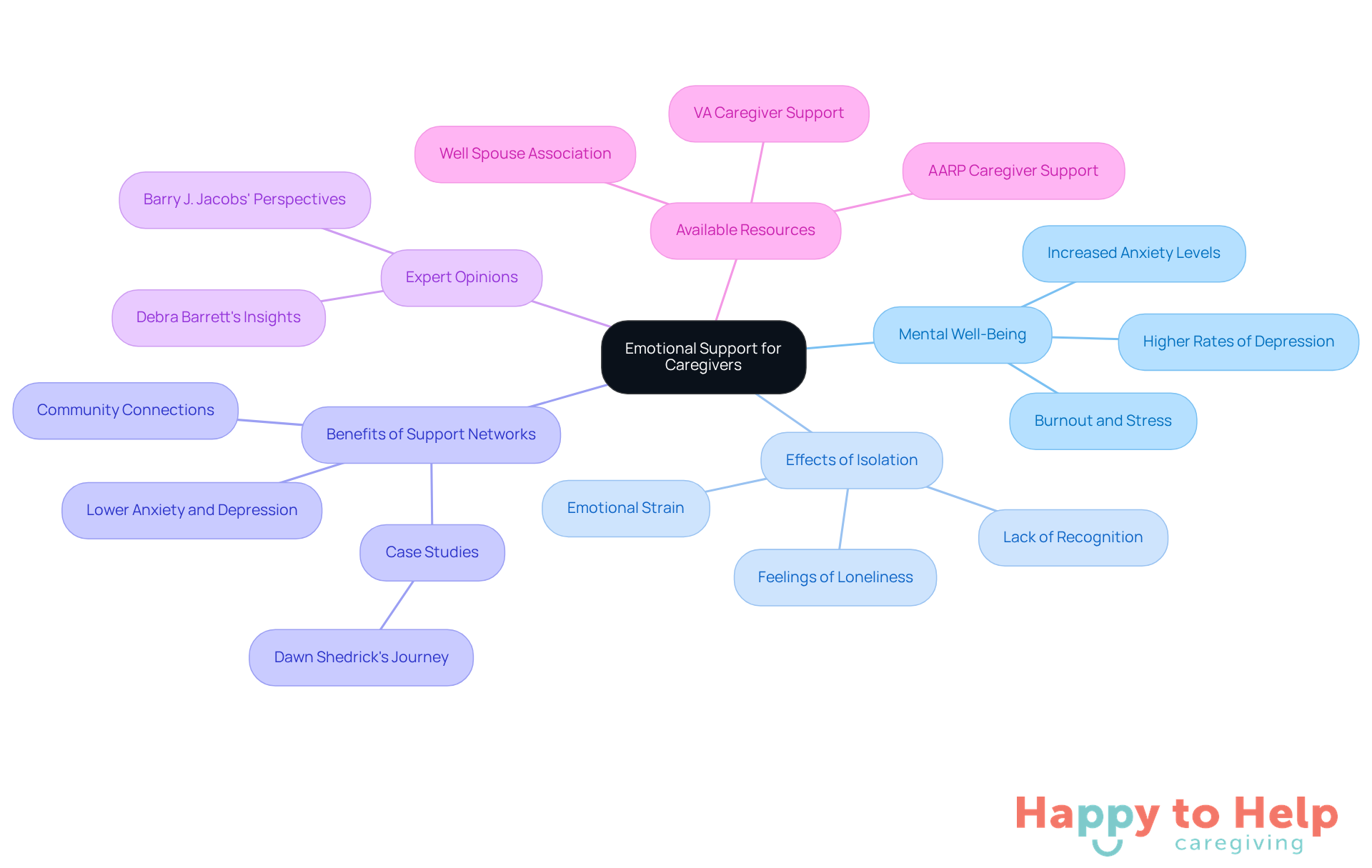
Emotional support for family caregivers is a critical issue that significantly affects their mental well-being and caregiving abilities. Many providers experience feelings of isolation, stress, and burnout, which can diminish their effectiveness in delivering care. Studies reveal that family providers face higher levels of depression, anxiety, and burnout compared to nonproviders, highlighting the urgent need for emotional support for family caregivers.
Caregivers who seek psychological assistance are better equipped to manage stress and maintain their health, ultimately benefiting those they care for. For example, research indicates that individuals involved in support networks experience lower levels of anxiety and depression, highlighting the importance of community connections. Case studies illustrate this point, such as Dawn Shedrick, who recognized her need for help after years of caregiving. By seeking assistance, she not only alleviated her psychological burden but also enhanced her ability to care for her mother.
Mental health experts like Debra Barrett emphasize that building relationships with others can significantly boost the resilience of caregivers. By prioritizing emotional support for family caregivers, providers can create a network that enables them to thrive in their roles while safeguarding both their well-being and that of their family members. Additionally, organizations such as the Well Spouse Association offer valuable resources and support networks, enabling caregivers to connect with others who understand their challenges.
Implement Effective Strategies for Emotional Well-Being
To foster emotional well-being, caregivers face significant challenges that can lead to stress and burnout, underscoring the importance of emotional support for family caregivers. With nearly 53 million unpaid supporters in the US delivering over 36 billion hours of assistance each year, the emotional toll highlights the importance of emotional support for family caregivers. Prioritizing self-care is crucial for sustaining well-being.
-
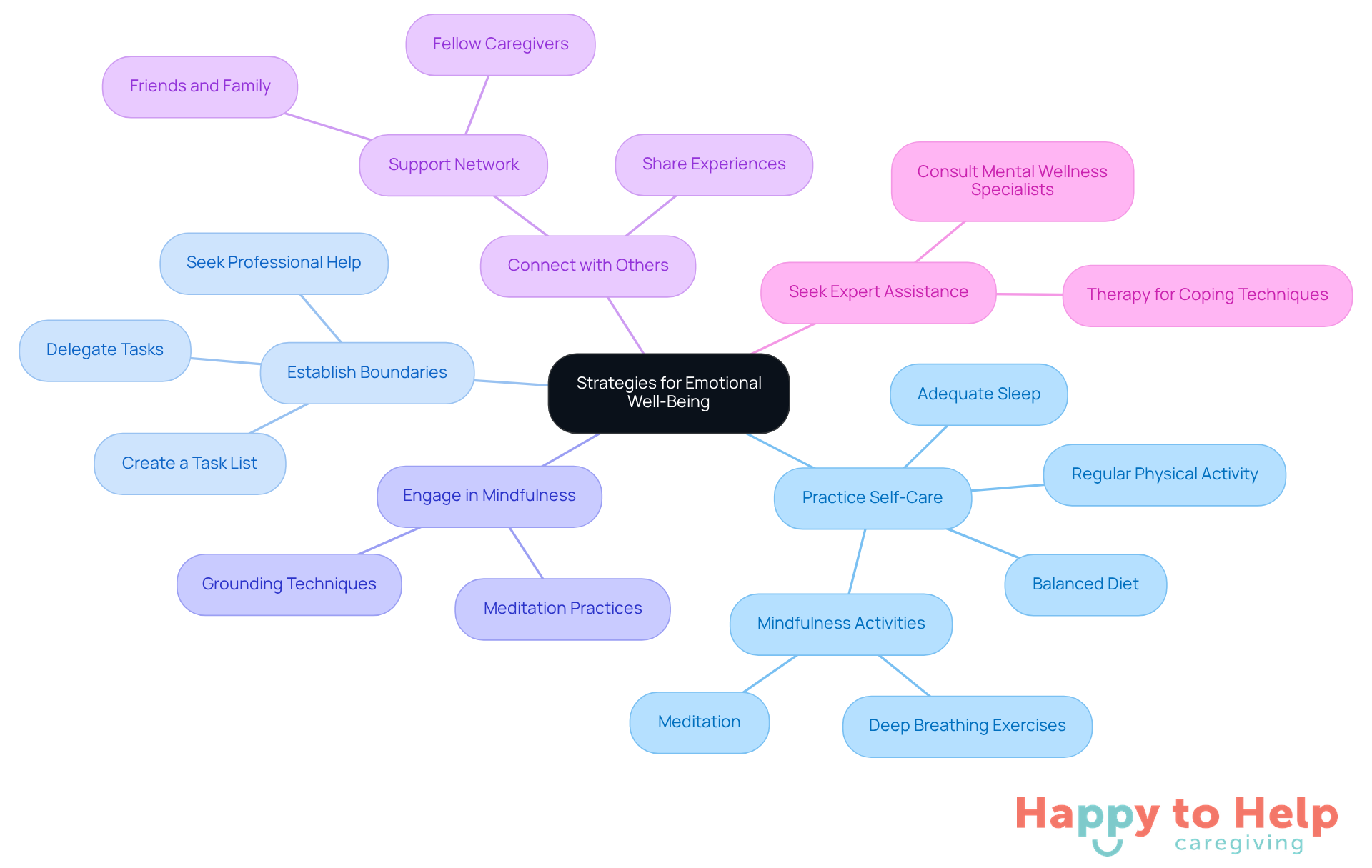
Practice Self-Care: Caregivers should prioritize their personal well-being by engaging in regular physical activity, maintaining a balanced diet, and ensuring adequate sleep. Simple practices like taking short walks or meditating can significantly reduce stress levels. Research indicates that those who incorporate physical activity into their routines experience lower stress and improved overall health.
-
Establish Boundaries: Setting clear boundaries regarding caregiving responsibilities is essential to prevent overwhelm. This may involve delegating tasks to other family members or seeking professional help when needed. Experts highlight that caregivers often grapple with feelings of inadequacy when seeking help, yet establishing boundaries is vital for providing emotional support for family caregivers. A structured method, like making a list of specific tasks that can be assigned, can enable caregivers to receive assistance more willingly. Dr. Taylor Rush emphasizes that self-care is essential for those providing support to prevent feelings of depression and anxiety.
-
Engage in Mindfulness: Mindfulness practices, such as meditation or deep breathing exercises, can help caregivers stay grounded and manage stress. Studies indicate that mindfulness can improve resilience and lessen feelings of anxiety, making it a valuable resource for those managing the psychological challenges of their role.
-
Connect with Others: Establishing a support network of friends, family, or fellow caregivers can offer psychological relief. Sharing experiences and challenges can alleviate feelings of isolation and foster a sense of community. Connecting with others who understand the caregiving journey can offer emotional support for family caregivers, fostering a shared understanding and alleviating the psychological burden. Jessica C. Guthrie's experience emphasizes the importance of sharing feelings to combat isolation.
-
Seek Expert Assistance: If feelings of stress or anxiety become overwhelming, caregivers should consider consulting a mental wellness specialist. Therapy can offer valuable coping techniques and emotional support for family caregivers, assisting individuals in managing their responsibilities while prioritizing their mental well-being.
Leverage Community and Professional Resources for Support
The lack of emotional support for family caregivers often leads to significant challenges, resulting in stress and burnout. Actively seeking out community and professional resources can provide essential emotional support for family caregivers, strengthening their assistance networks. Here are some valuable options:
-
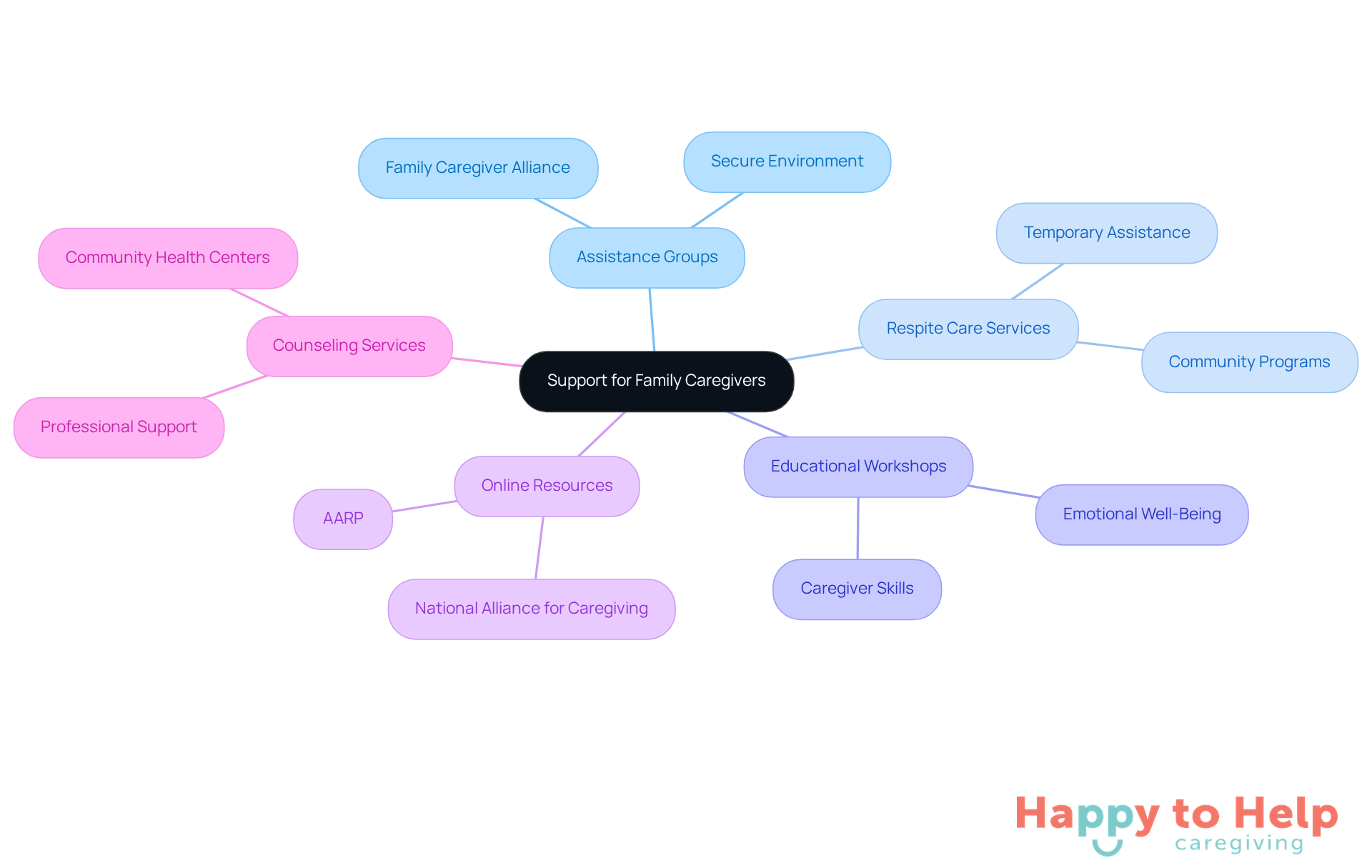
Assistance Groups: Joining groups for caregivers provides a secure environment to share experiences and gain insights from others facing similar difficulties. Organizations like the Family Caregiver Alliance provide resources and connections to local support groups that offer emotional support for family caregivers.
-
Respite Care Services: Utilizing respite care services allows caregivers to take necessary breaks, reducing stress and preventing burnout. This can involve hiring skilled individuals or accessing community programs that provide temporary assistance.
-
Educational Workshops: Many organizations offer workshops and training sessions focused on caregiver skills and emotional well-being. These sessions equip individuals with tools to manage their responsibilities more effectively.
-
Online Resources: Websites such as AARP and the National Alliance for Caregiving provide a wealth of information, including articles, webinars, and forums where caregivers can connect and share advice.
-
Counseling Services: Professional counseling can offer emotional support for family caregivers who are struggling with emotional challenges. Many community health centers offer affordable mental health services tailored to caregivers' needs.
Moving Forward with Emotional Support
Emotional support for family caregivers is not just beneficial; it is essential for their mental health and overall effectiveness in providing care. Caregivers face significant emotional challenges that can hinder their resilience and well-being, ultimately impacting the quality of care they provide. Recognizing the importance of this support is the first step toward creating a healthier caregiving environment.
To foster emotional well-being among caregivers, consider these three key strategies:
- Practice Self-Care: Prioritizing health through physical activity and adequate rest can help caregivers mitigate stress and prevent burnout.
- Establish Boundaries: Setting clear boundaries around caregiving responsibilities allows caregivers to seek help without feeling inadequate.
- Engage in Mindfulness: Mindfulness practices equip caregivers with tools to manage stress effectively, promoting a more balanced approach to their responsibilities.
In conclusion, the emotional health of family caregivers is a vital aspect of caregiving that deserves attention and action. By leveraging community resources, seeking professional assistance, and fostering connections with others who understand their journey, caregivers can find the support they need to thrive. It is imperative to prioritize emotional well-being not only for the caregivers themselves but also for the quality of care they provide. Embracing these strategies can lead to a more sustainable and fulfilling caregiving experience, ultimately benefiting everyone involved.
https://iframe.tely.ai/cta/eyJhcnRpY2xlX2lkIjogIjY5MjI0ZjU3NGZjYWRhOTUwOGRlNDNiOSIsICJjb21wYW55X2lkIjogIjY4ZWU1ZGNhNzMxNzYyNTU3ZjNjOTVjMSIsICJpbmRleCI6IG51bGwsICJ0eXBlIjogImFydGljbGUifQ==Frequently Asked Questions
Why is emotional support important for family caregivers?
Emotional support is crucial for family caregivers as it significantly impacts their mental well-being and caregiving abilities. Many caregivers experience feelings of isolation, stress, and burnout, which can reduce their effectiveness in providing care.
How do family caregivers' mental health issues compare to nonproviders?
Family caregivers tend to experience higher levels of depression, anxiety, and burnout compared to nonproviders, indicating a pressing need for emotional support.
What benefits do caregivers gain from seeking psychological assistance?
Caregivers who seek psychological assistance are better able to manage stress and maintain their health, which ultimately benefits those they care for.
How do support networks affect caregivers' mental health?
Research shows that caregivers involved in support networks experience lower levels of anxiety and depression, demonstrating the importance of community connections.
Can you provide an example of a caregiver who benefited from seeking help?
Dawn Shedrick is an example of a caregiver who recognized her need for help after years of caregiving. By seeking assistance, she alleviated her psychological burden and improved her ability to care for her mother.
What do mental health experts say about building relationships for caregivers?
Mental health experts, like Debra Barrett, emphasize that building relationships with others can greatly enhance the resilience of caregivers.
What resources are available for family caregivers seeking support?
Organizations such as the Well Spouse Association offer valuable resources and support networks, helping caregivers connect with others who understand their challenges.
List of Sources
- Understand the Importance of Emotional Support for Caregivers
- Family Caregiver Support, Education Needs Growing (https://hospicenews.com/2025/11/11/family-caregiver-support-education-needs-growing)
- Caregiving’s Mental Health Crisis (https://forbes.com/sites/otsuka/2025/10/02/caregivings-mental-health-crisis)
- I Can’t Talk to My Ill Spouse. How Can I Get Support? (https://aarp.org/caregiving/basics/caregiver-find-emotional-support)
- Caregiving is taking a toll on the mental health of millions of Americans (https://npr.org/2025/01/26/nx-s1-5271537/caregiving-is-taking-a-toll-on-the-mental-health-of-millions-of-americans)
- Implement Effective Strategies for Emotional Well-Being
- 5 Self-Care Tips for Caregivers | United Way Worldwide (https://unitedway.org/news/5-self-care-tips-for-caregivers)
- Facebook (https://newsroom.clevelandclinic.org/2025/11/19/importance-of-self-care-for-family-caregivers)
- What to expect when you become a caregiver– and how to cope with the challenges (https://heart.org/en/news/2025/11/20/what-to-expect-when-you-become-a-caregiver-and-how-to-cope-with-the-challenges)
- National Family Caregivers Month 2025 | Plug-in to Care Hub (https://caregiveraction.org/nfc2025)
- A caregiver's survival guide: Advice from people who've been there (https://npr.org/2025/10/18/nx-s1-5558451/caregiver-caregiving-family-burnout-support-advice)
- Leverage Community and Professional Resources for Support
- It’s Time to Care for Caregivers: Senator Markey Announces Comprehensive Family Caregiving Legislative Agenda | U.S. Senator Ed Markey of Massachusetts (https://markey.senate.gov/news/press-releases/11/20/2025/its-time-to-care-for-caregivers-senator-markey-announces-comprehensive-family-caregiving-legislative-agenda)
- Caregiver Statistics: Health, Technology, and Caregiving Resources (https://caregiver.org/resource/caregiver-statistics-health-technology-and-caregiving-resources)
- Exploring the Benefits of Respite Services to Family Caregivers: Methodological Issues and Current Findings - PMC (https://pmc.ncbi.nlm.nih.gov/articles/PMC5550302)
- National Family Caregivers Month 2025 (https://johnahartford.org/resources/view/national-family-caregivers-month-2025)