Why Empower Seniors Socializing: Key Matters
Seniors often find themselves in a challenging situation. Nearly one in three adults report feelings of loneliness, which can lead to serious consequences for their mental and emotional well-being. Engaging in social activities isn’t just a nice-to-have; it’s essential. These connections can significantly enhance their quality of life, boost cognitive function, and even lower the risk of dementia.
But how can caregivers nurture these vital relationships in a world that sometimes overlooks the importance of socialization for the elderly? It’s a question that weighs heavily on many hearts. The stress and burnout caregivers experience can be overwhelming, but there are compassionate solutions available.
By fostering social connections, caregivers can help seniors feel valued and understood. Personal stories from caregivers reveal the profound impact of companionship, showcasing how even small interactions can brighten a senior's day. Remember, you’re not alone in this journey. Together, we can create a supportive environment that encourages social engagement and enriches lives.
Explore the Importance of Socialization for Seniors
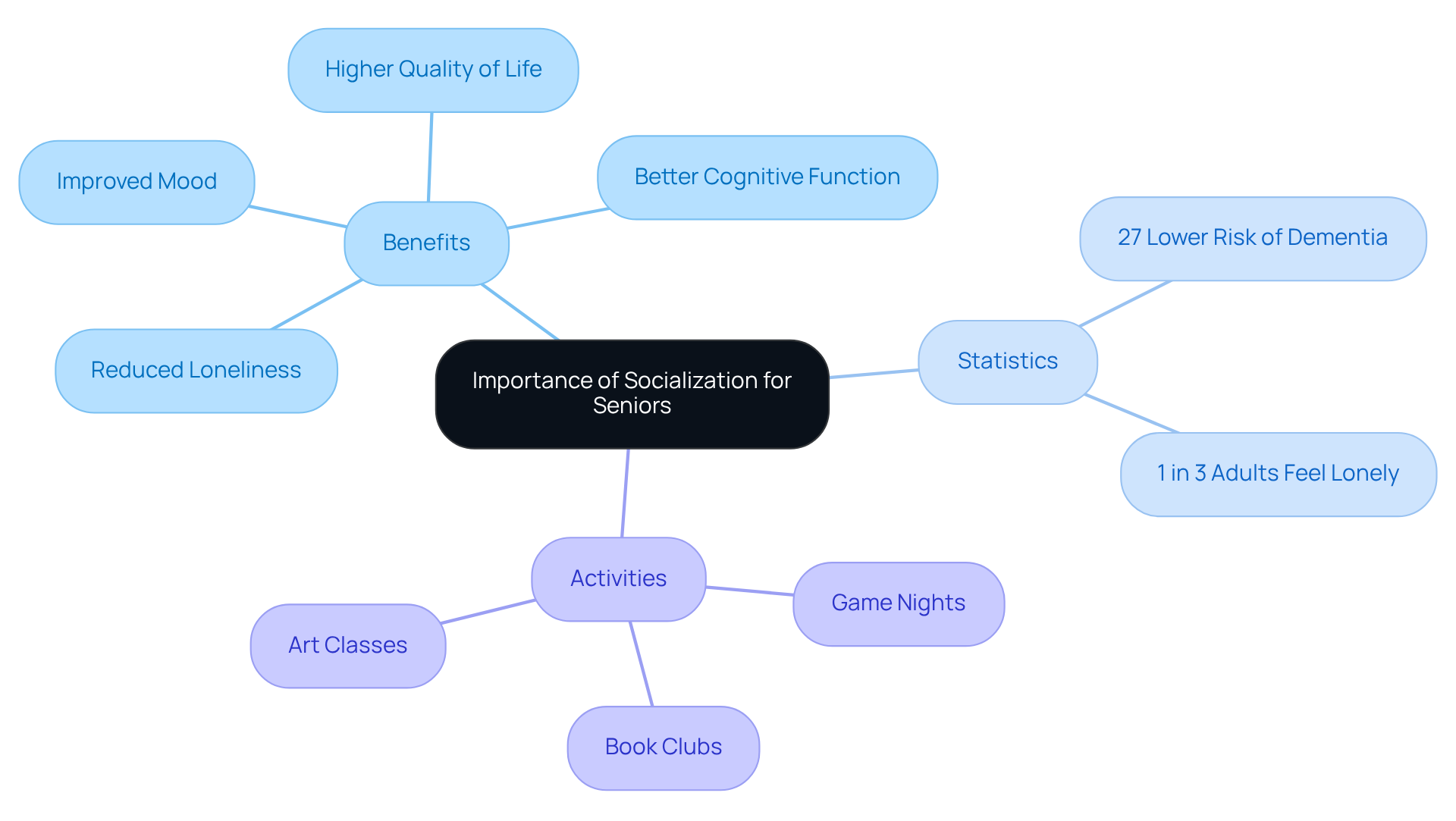
Seniors socializing is vital, as it deeply impacts their mental and emotional well-being. Engaging in seniors socializing significantly reduces feelings of loneliness and isolation that many older adults face. Research shows that seniors socializing can enhance interpersonal interaction, leading to improved mood, better cognitive function, and a higher overall quality of life. For example, studies reveal that seniors socializing have a 27% lower risk of developing dementia over nine years compared to those who are socially isolated. Alarmingly, about 1 in 3 adults across the nation report feeling lonely, highlighting the urgency of this concern.
Caregivers must understand that creating opportunities for seniors socializing is essential for their clients' well-being, not just beneficial. As Dr. Eileen Graham notes, "Individuals with high generativity exhibit greater social resilience," which underscores the importance of nurturing relationships. By recognizing the value of socialization, caregivers can advocate for and implement activities like:
- Game nights
- Book clubs
- Art classes
that facilitate seniors socializing in their care plans. These initiatives foster environments that promote seniors socializing and connection.
This proactive approach not only enhances the quality of life for older adults but also contributes to their longevity and overall health. Remember, every small effort counts in making a significant difference in their lives.
Identify the Key Benefits of Socialization
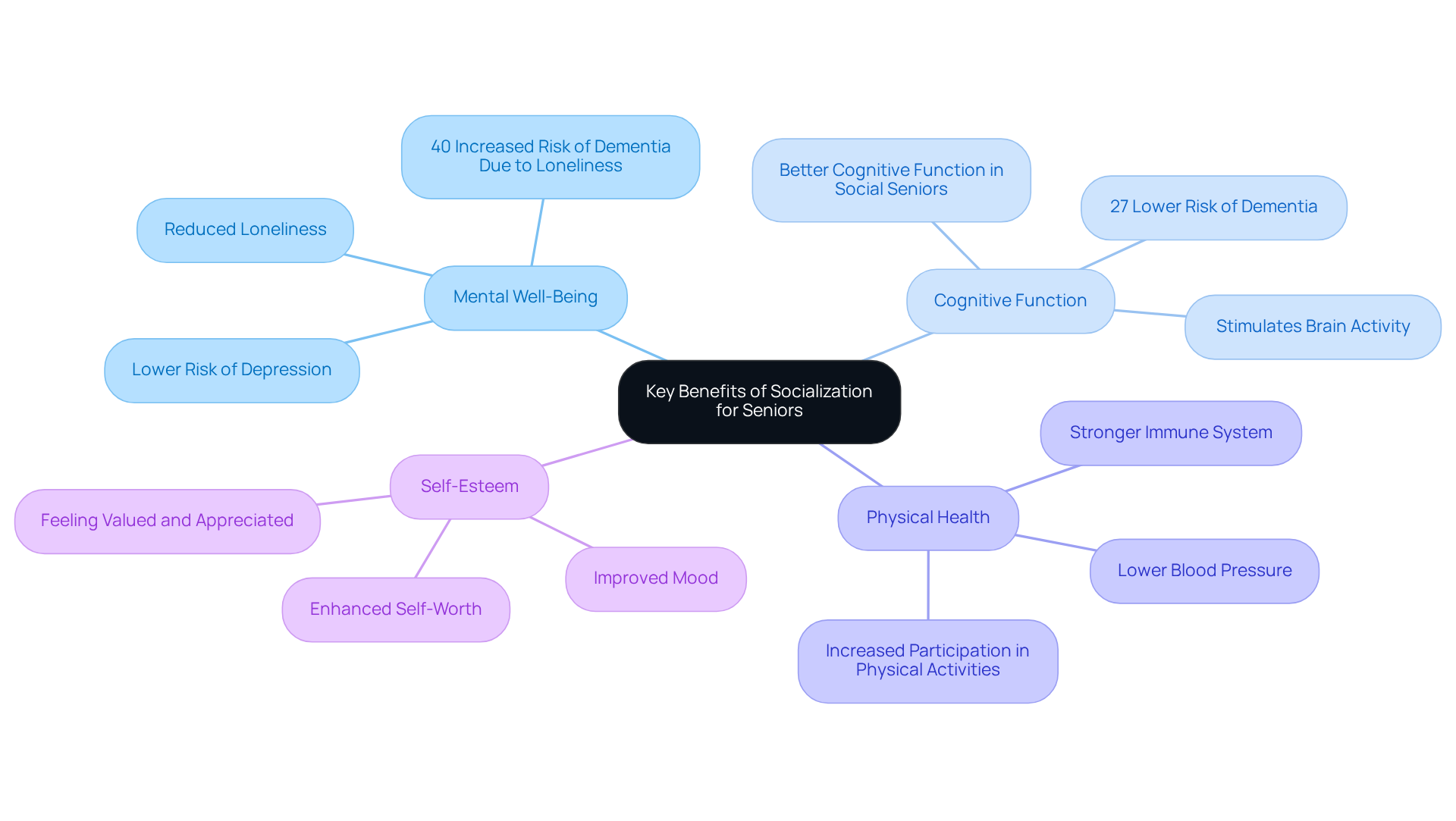
The benefits of seniors socializing are truly profound and multifaceted. Let’s explore some key advantages:
-
Enhanced Mental Well-Being: Regular interaction with others can significantly reduce feelings of loneliness and depression. This engagement fosters a more optimistic outlook on life. Research shows that loneliness can increase the risk of Alzheimer’s disease and other dementias by up to 40%. Lisa Conway, a Registered Nurse and Certified Dementia Practitioner, notes that seniors socializing is crucial for mental health.
-
Enhanced Cognitive Function: When seniors engage with others, it stimulates their brains, helping to maintain cognitive abilities and lower the risk of dementia. Studies reveal that seniors socializing are likely to demonstrate better cognitive function compared to those who are isolated. In fact, seniors socializing face a 27% lower risk of developing dementia over a nine-year period than their socially isolated peers.
-
Increased Physical Health: Seniors who maintain social connections often participate in more physical activities, contributing to better overall health and longevity. These social ties encourage seniors socializing, which promotes involvement in group exercises and community events, fostering a more active lifestyle.
Seniors socializing helps build connections among individuals, nurturing a greater sense of belonging and community, which is vital for emotional well-being. Meaningful relationships can enhance life satisfaction and provide emotional support during challenging times.
- Boosted Self-Esteem: Positive interactions can enhance self-worth and confidence, making seniors feel valued and appreciated. Participating in communal events often leads to improved mood and a stronger sense of self.
It’s important to recognize that prolonged isolation can lead to sadness and anxiety. This highlights the need for nurturing connections. By understanding these advantages, caregivers can effectively encourage seniors socializing, as they know this significantly enhances their clients’ overall well-being and joy.
Implement Effective Strategies to Promote Socialization
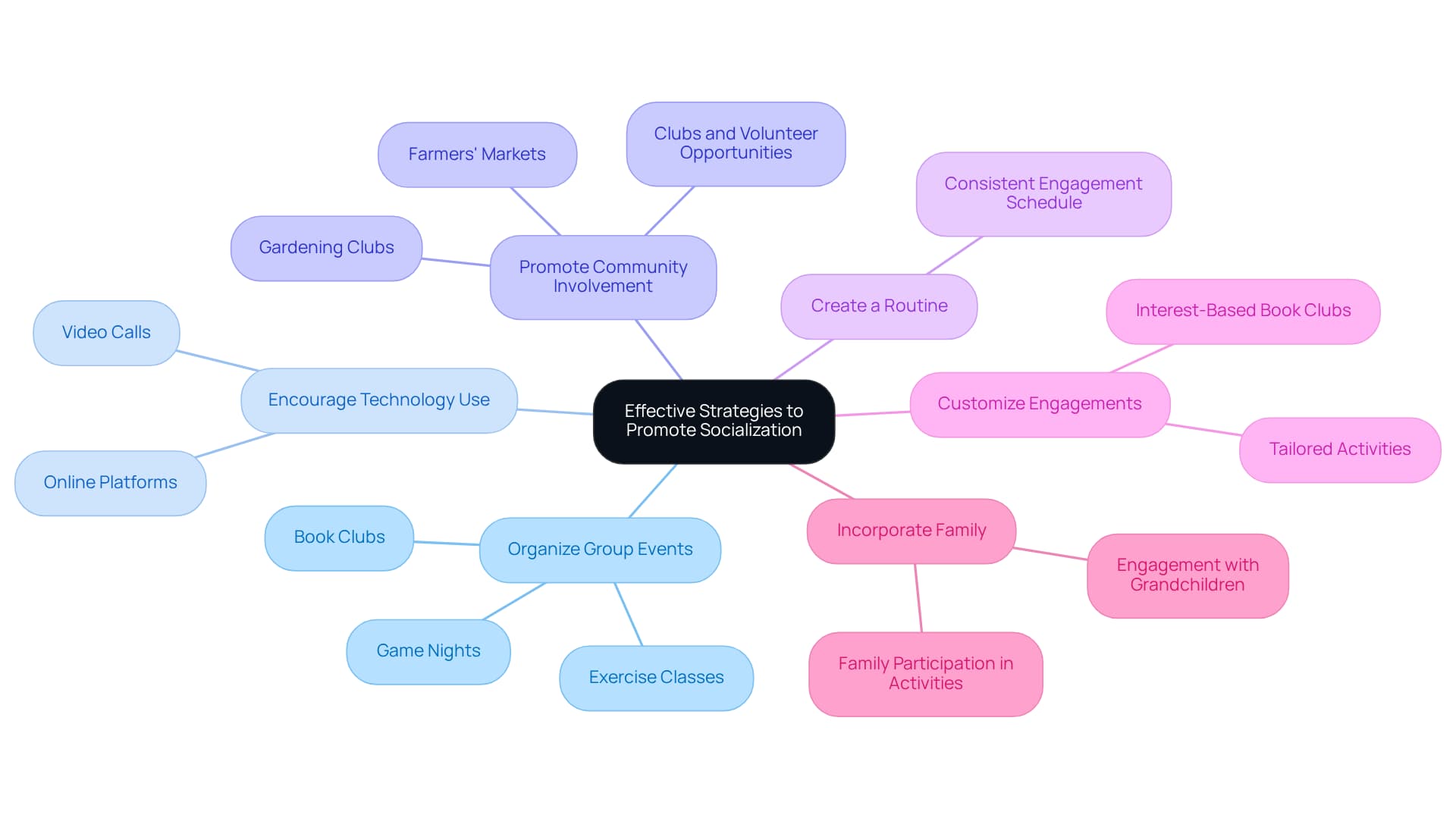
To foster socialization among seniors, caregivers can implement several effective strategies that truly make a difference:
-
Organize Group Events: Regular group outings or events, like game nights, book clubs, or exercise classes, can significantly encourage interaction. Research shows that seniors socializing and engaging in group pursuits report heightened feelings of belonging and joy, leading to a longer, healthier life. It’s important to note that one in four seniors socializing aged 65 and above encounter isolation, highlighting the value of these activities.
-
Encourage Technology Use: Teaching older adults how to use video calls and online platforms can help bridge communication gaps, especially for those who are homebound. Engaging with family and friends through technology not only combats loneliness but also enhances cognitive function. For seniors, socializing is crucial for maintaining mental health. As Nancy Kriseman wisely said, "Maintaining relationships with family, friends, and neighbors is an excellent method for seniors socializing to fend off isolation and loneliness."
-
Promote community involvement by helping older adults find nearby clubs, volunteer opportunities, or community events that align with their interests, which can enhance seniors socializing and lead to meaningful interactions. Activities like visiting farmers' markets or joining gardening clubs provide unique chances for seniors socializing and fostering connection. For instance, Linda Abbit took her mother to a playground, where interactions with children significantly brightened her spirits.
-
Creating a routine for seniors socializing involves establishing a consistent schedule for engagements, making them a regular part of an elder's life and promoting stability and anticipation. This routine can help alleviate feelings of isolation and encourage seniors socializing.
-
Customizing engagements by tailoring communal experiences to the unique tastes of seniors socializing ensures that these interactions are enjoyable and meaningful. For example, book clubs can be organized around genres that resonate with participants, fostering lively discussions and relationships.
-
Incorporating seniors socializing by encouraging family members to join in communal activities strengthens bonds and enhances the overall experience. Specialists emphasize that maintaining connections with family and friends is crucial for preventing isolation and loneliness.
By employing these compassionate strategies, caregivers can significantly enhance the socializing of seniors, leading to improved mental and emotional health. Remember, every small effort counts in making a positive impact.
Your Path Forward
Seniors socializing isn’t just a nice thing to do; it’s essential for their health and happiness. It’s vital to nurture those social connections among older adults. These interactions can significantly lessen feelings of loneliness and isolation, boost mental health, and even enhance cognitive function. When caregivers recognize the profound impact of socialization, they can truly make a difference in the lives of seniors, leading to a richer quality of life.
The benefits of socializing for seniors are vast and varied. Improved mental well-being, sharper cognitive function, better physical health, and increased self-esteem are just a few of the many advantages. By implementing effective strategies - like organizing group events, encouraging the use of technology, and promoting community involvement - caregivers can create meaningful opportunities for seniors to connect with others. These initiatives not only help combat isolation but also foster a sense of belonging and purpose.
Understanding the importance of socialization in elderly care is crucial for both caregivers and the seniors they support. By prioritizing social engagement, caregivers can truly change the lives of older adults, nurturing emotional resilience and a stronger sense of community. Every effort to facilitate social interaction is a step toward enhancing the overall well-being of seniors, reinforcing the belief that a connected life is a healthier life.
https://iframe.tely.ai/cta/eyJhcnRpY2xlX2lkIjogIjY5MWJjOGEyMDA4NWVhMTA5MGU4MDY3MyIsICJjb21wYW55X2lkIjogIjY4ZWU1ZGNhNzMxNzYyNTU3ZjNjOTVjMSIsICJpbmRleCI6IG51bGwsICJ0eXBlIjogImFydGljbGUifQ==Frequently Asked Questions
Why is socialization important for seniors?
Socialization is vital for seniors as it significantly impacts their mental and emotional well-being, reducing feelings of loneliness and isolation.
How does socializing affect seniors' health?
Engaging in social activities enhances interpersonal interaction, improves mood, boosts cognitive function, and increases overall quality of life.
What are the statistics related to socialization and dementia risk in seniors?
Research indicates that seniors who socialize have a 27% lower risk of developing dementia over nine years compared to those who are socially isolated.
What is the prevalence of loneliness among older adults?
Approximately 1 in 3 adults across the nation report feeling lonely, highlighting the urgency of addressing this concern.
What role do caregivers play in facilitating socialization for seniors?
Caregivers must create opportunities for seniors to socialize, as it is essential for their clients' well-being. They can advocate for and implement social activities in care plans.
What types of activities can promote socialization among seniors?
Activities that facilitate seniors socializing include game nights, book clubs, and art classes.
How does socialization contribute to the longevity and health of older adults?
Socialization enhances the quality of life for older adults and contributes to their longevity and overall health by fostering connections and reducing isolation.