
The Importance of Essential Aids
Understanding the unique challenges faced by seniors is crucial in fostering their independence and well-being. Mobility aids play a pivotal role in this journey, offering essential support that enhances both physical movement and emotional confidence. However, caregivers often struggle with selecting the right aids tailored to individual needs.
This article delves into the significance of mobility aids for seniors, exploring their benefits, types, and best practices for effective usage and maintenance. By addressing these challenges, we aim to empower caregivers to make informed decisions that can transform lives.
Key Considerations for Caregivers:
- Assess individual mobility needs.
- Explore various types of mobility aids available.
- Implement best practices for usage and maintenance.
Explore the Importance of Mobility Aids for Seniors
Mobility devices are crucial for older adults as they navigate their daily lives. These tools not only aid in physical movement but also significantly enhance overall well-being.
-
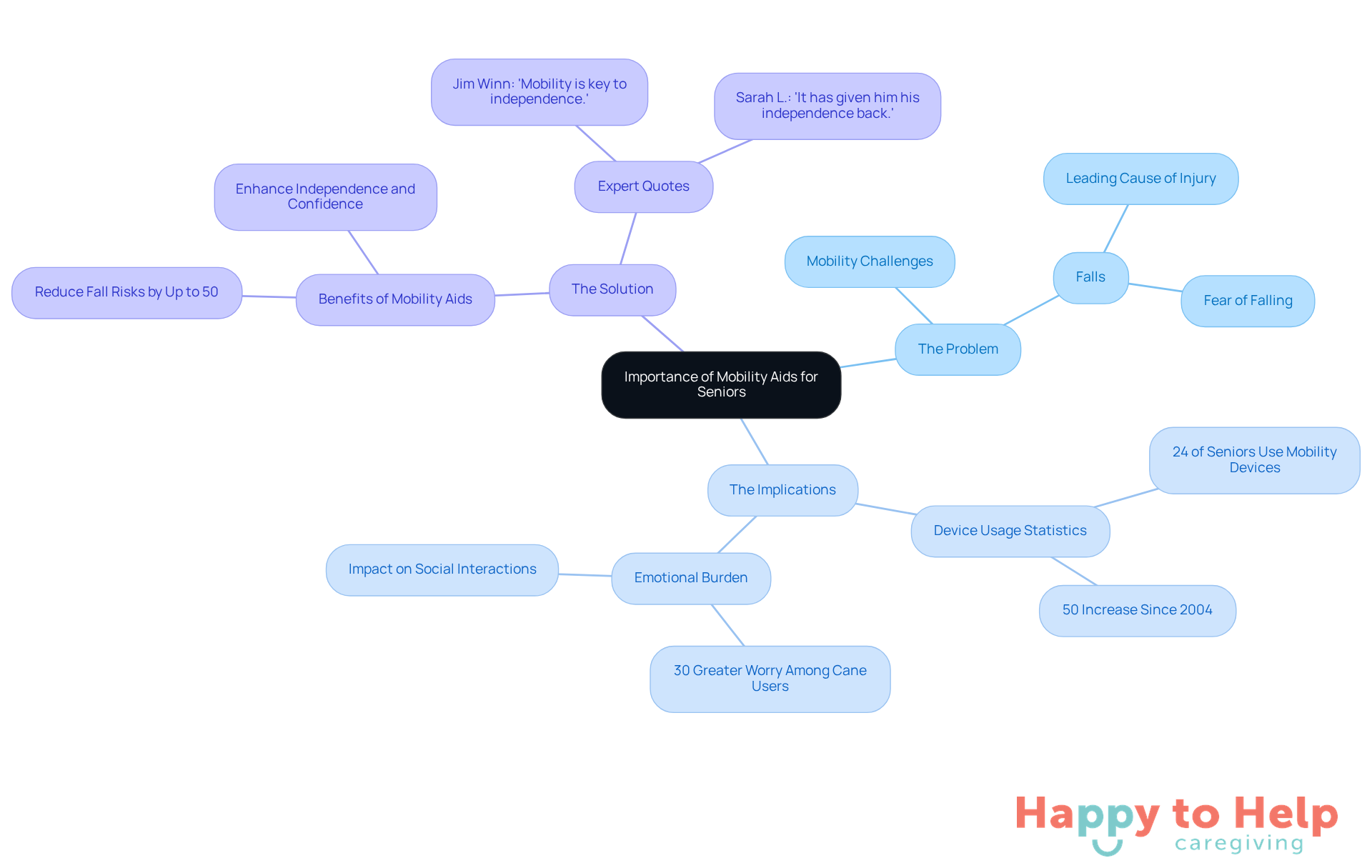
The Problem: Many seniors face mobility challenges that can hinder their independence and safety. Falls are a leading cause of injury among older adults, and the fear of falling can restrict their activities and social interactions.
-
The Implications: A staggering 24% of U.S. adults aged 65 and above reported using a movement assistance device in the past month, highlighting the prevalence of mobility issues. Additionally, studies show that worry about falls is 30% greater among cane-only users compared to those who do not use devices, indicating a significant emotional burden.
-
The Solution: Aids for seniors can empower them to perform daily activities independently, fostering a sense of autonomy. For instance, properly fitted walkers or rollators can reduce fall risks by up to 50%, allowing older adults to navigate confidently. With the right assistance, seniors can feel more secure, boosting their self-esteem and encouraging social interactions.
As Jim Winn, owner of Comfort Keepers of Pitman, NJ, states, "Mobility is key to independence. With appropriate assistance and movement devices, elderly individuals gain confidence, well-being, and can live securely and happily at home."
The almost 50% rise in the usage of aids for seniors since 2004 underscores their growing importance in enhancing the quality of life for older adults. Investing in aids for seniors is a vital step in promoting their self-sufficiency and well-being.
Identify Common Types of Mobility Aids
Aids for seniors are essential assistive devices that enhance the independence and quality of life for older adults facing movement challenges. Understanding the various types of assistance available is vital for caregivers to provide tailored support. Here’s a look at some common mobility aids:
- Canes: Ideal for seniors needing minimal support, canes improve balance and stability, making them a practical choice for those who may feel unsteady while walking.
- Walkers: Offering more support than canes, walkers serve as vital aids for seniors requiring assistance while walking. They provide a stable frame that helps prevent falls.
- Rollators: Aids for seniors, rollators are an upgrade from traditional walkers, featuring wheels for easier movement. Many models include a seat, allowing users to rest when needed, which is particularly beneficial during longer outings.
- Wheelchairs: Wheelchairs serve as essential aids for seniors with significant movement restrictions, enabling independent navigation. They are crucial for those unable to walk or stand for extended periods.
- Mobility Scooters: These electric devices serve as aids for seniors who can no longer walk long distances but still wish to maintain their independence. Mobility scooters allow users to navigate their environment comfortably and safely.
Statistics reveal that assistive devices are increasingly utilized among older adults, with scooters and wheelchairs accounting for a substantial market share, estimated at USD 14.3 billion in 2024. The CDC indicates that over 36 million seniors experience falls annually, highlighting the importance of support devices in preventing such incidents. Real-life examples illustrate the impact of these aids; older adults using rollators report feeling more confident participating in social activities, while wheelchair users often express gratitude for the independence they provide.
Experts stress the significance of selecting the right aids for seniors based on individual needs. Caregivers should consider factors such as the elderly person's physical capabilities and living situation when choosing aids. This thoughtful approach not only enhances safety but also preserves dignity and independence, enabling elderly individuals to lead fulfilling lives.

Select the Right Mobility Aid for Individual Needs
Choosing the right aids for seniors is crucial, yet it can be challenging. The primary problem is that many caregivers may not fully understand the specific needs of the individual, which can lead to inadequate support and increased risk of falls. According to the CDC, falls are the leading cause of accidents and fatalities among older adults, highlighting the importance of selecting the right assistance.
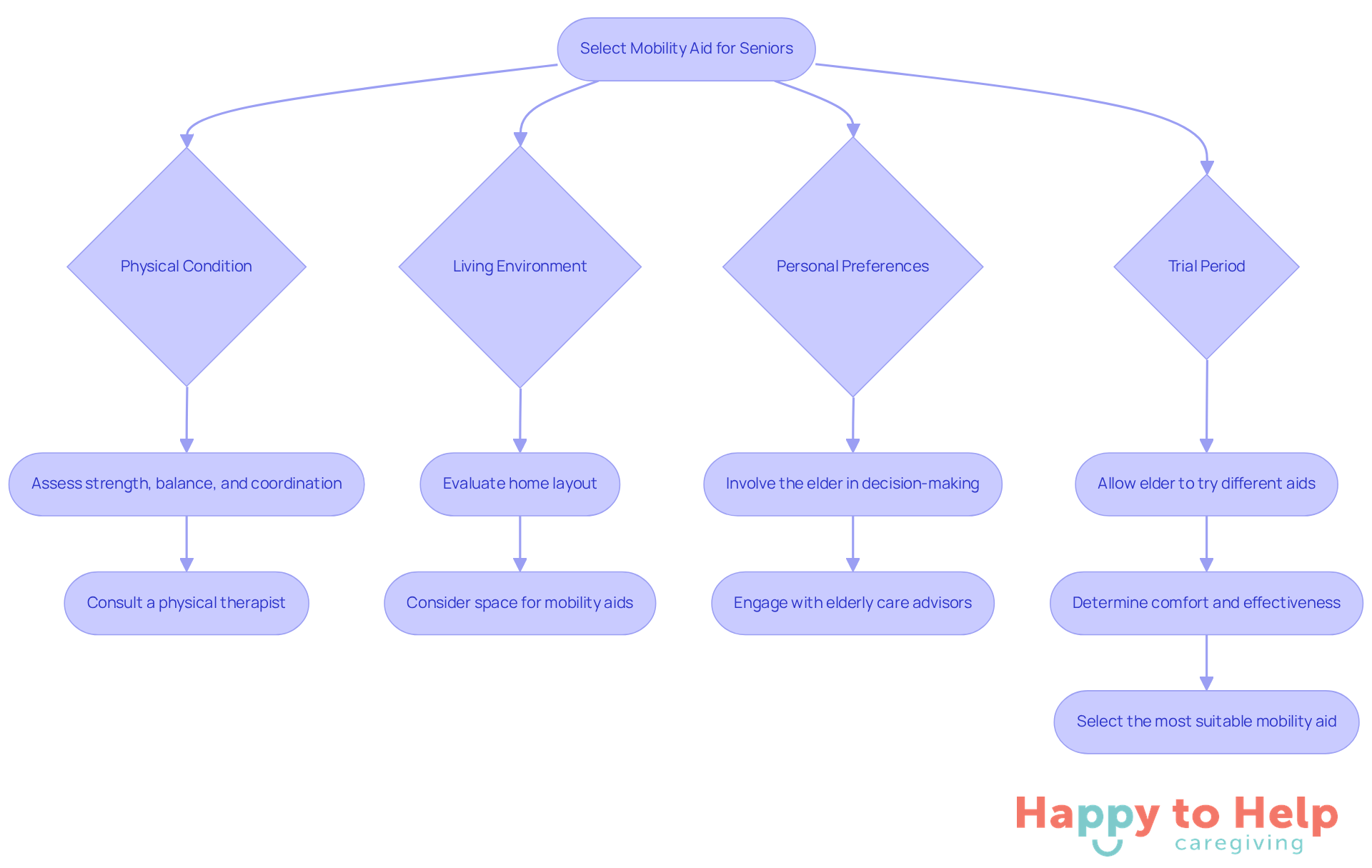
To address this issue, caregivers should consider several key factors:
-
Physical Condition: Assess the senior's strength, balance, and coordination. Consulting a physical therapist can provide valuable insights into which mobility aid would be most beneficial.
-
Living Environment: Evaluate the home layout. For example, narrow hallways may necessitate a slimmer walker or cane, while larger spaces might accommodate a rollator or scooter. This consideration is vital, as the right aids for seniors can help prevent hazardous falls, ensuring safety and allowing them to maintain their independence.
-
Personal Preferences: Involve the elder in the decision-making process. Their comfort and confidence in using the aid are paramount. Engaging with elderly care advisors can further assist in identifying the most suitable options tailored to individual needs.
-
Trial Period: If feasible, allow the elder to try different aids to determine which one feels most comfortable and effective. This hands-on approach can significantly enhance their willingness to use the aid.
By considering these factors, caregivers can select aids for seniors that genuinely enhance the elder's quality of life. For instance, walkers designed for enhanced stability can greatly boost the independence of older adults over time, as evidenced by various case studies. Ultimately, choosing the appropriate assistive device enables caregivers to help elderly individuals manage their daily activities with increased comfort and assurance.
Utilize and Maintain Mobility Aids Effectively
To maximize the benefits of mobility aids, caregivers face the challenge of ensuring both proper usage and maintenance. Without these, the safety and independence of elderly individuals can be compromised.
Usage Tips:
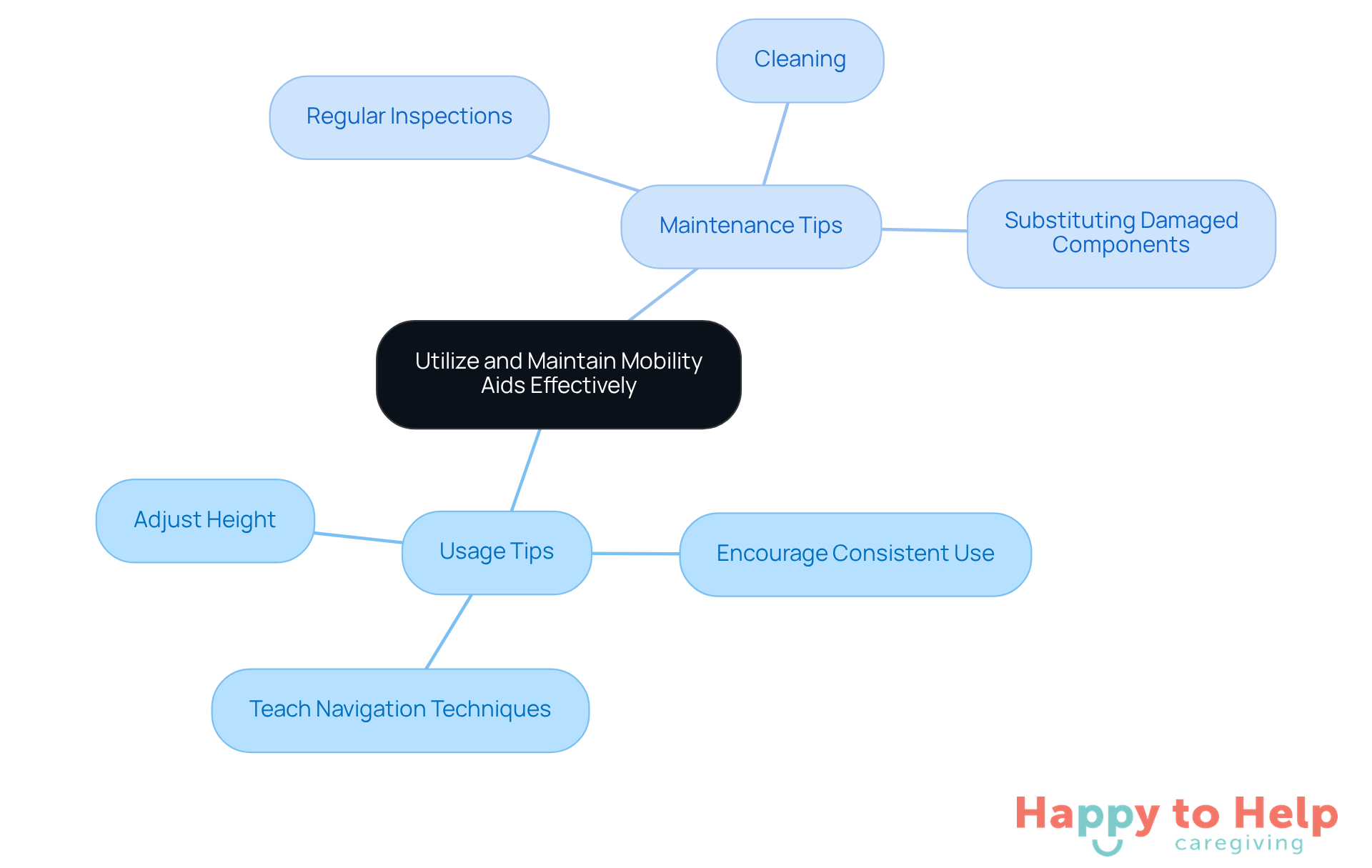
- Adjust the aid to the correct height for the user, promoting comfort and safety.
- Encourage older adults to utilize the assistance consistently; regular use fosters confidence and enhances movement.
- Teach proper techniques for navigating stairs, curbs, and uneven surfaces to prevent falls, a leading cause of injury among seniors.
Maintenance Tips:
- Conduct regular inspections of the mobility aid for signs of wear and tear, such as loose screws or frayed straps, as these can compromise safety.
- Clean the aid according to manufacturer instructions to prevent dirt buildup, ensuring smooth operation and longevity.
- Swiftly substitute any damaged components to ensure safety and performance. Studies show that assistive devices undergoing consistent upkeep can endure considerably longer; for instance, scooters that receive quarterly servicing last up to 40% longer than those that are not regularly serviced, boosting user confidence.
By following these guidelines, caregivers can enable elderly individuals to use their mobility aids effectively, enhancing their independence and safety. Regular maintenance not only prevents potential mishaps but also fosters a sense of security, allowing seniors to navigate their environments with greater ease.
Taking the Next Steps
Mobility challenges can significantly hinder the independence and safety of seniors, creating a pressing problem for caregivers. These challenges not only affect daily activities but can also lead to a decline in overall well-being. Understanding the importance of mobility aids is essential for caregivers who wish to support older adults effectively.
Various types of mobility aids, such as canes, walkers, rollators, wheelchairs, and mobility scooters, are designed to address specific needs. When selecting the right aid, caregivers should:
- Assess the senior's physical condition
- Evaluate their living environment
- Consider personal preferences
- Allow for trial periods
Proper usage and maintenance of these aids are crucial; regular upkeep can extend their lifespan and boost user confidence.
Investing time and effort into choosing and maintaining mobility aids is vital for promoting the independence and dignity of elderly individuals. Caregivers should adopt a proactive approach to understand and address the unique needs of seniors. This not only enhances their safety but also empowers them to lead fulfilling lives. By prioritizing mobility support, caregivers can help seniors thrive, fostering a sense of autonomy that is essential for their overall well-being.
https://iframe.tely.ai/cta/eyJhcnRpY2xlX2lkIjogIjY5MjNhMGM3MjcyNDliYTNkMmMzZTYxZiIsICJjb21wYW55X2lkIjogIjY4ZWU1ZGNhNzMxNzYyNTU3ZjNjOTVjMSIsICJpbmRleCI6IG51bGwsICJ0eXBlIjogImFydGljbGUifQ==Frequently Asked Questions
Why are mobility aids important for seniors?
Mobility aids are crucial for seniors as they help navigate daily life, enhance physical movement, and significantly improve overall well-being.
What challenges do seniors face regarding mobility?
Many seniors experience mobility challenges that can hinder their independence and safety, with falls being a leading cause of injury among older adults. The fear of falling can also restrict their activities and social interactions.
How prevalent is the use of mobility devices among older adults?
Approximately 24% of U.S. adults aged 65 and above reported using a movement assistance device in the past month, indicating a significant prevalence of mobility issues.
What emotional impact do mobility challenges have on seniors?
Seniors using cane-only devices report a 30% greater worry about falls compared to those who do not use mobility devices, highlighting the emotional burden associated with mobility challenges.
How do mobility aids benefit seniors in their daily activities?
Mobility aids empower seniors to perform daily activities independently, fostering a sense of autonomy. Properly fitted walkers or rollators can reduce fall risks by up to 50%, allowing seniors to navigate confidently.
What effect do mobility aids have on seniors' self-esteem and social interactions?
With the right assistance, seniors can feel more secure, which boosts their self-esteem and encourages them to engage in social interactions.
What has been the trend in the usage of mobility aids for seniors since 2004?
There has been an almost 50% rise in the usage of aids for seniors since 2004, underscoring their growing importance in enhancing the quality of life for older adults.
What is the overall message regarding the investment in mobility aids for seniors?
Investing in aids for seniors is vital for promoting their self-sufficiency and well-being, allowing them to live securely and happily at home.
List of Sources
- Explore the Importance of Mobility Aids for Seniors
- Comfort Keepers of Pitman, NJ Shares the Benefits of Mobility Aids for Seniors (https://kron4.com/business/press-releases/ein-presswire/866931728/comfort-keepers-of-pitman-nj-shares-the-benefits-of-mobility-aids-for-seniors)
- New Study Finds Mobility Aids for Seniors Enhances Better Quality of Life and Independence (https://markets.financialcontent.com/stocks/article/marketersmedia-2025-3-18-new-study-finds-mobility-aids-for-seniors-enhances-better-quality-of-life-and-independence)
- Mobility Device Use Among Older Adults and Incidence of Falls and Worry About Falling: Findings From the 2011–2012 National Health and Aging Trends Study - PMC (https://pmc.ncbi.nlm.nih.gov/articles/PMC4439269)
- New device improves mobility among seniors through arm movement - UMaine News - University of Maine (https://umaine.edu/news/blog/2025/04/11/new-device-improves-mobility-among-seniors-through-arm-movement)
- Breaking News: Fall 2025 Brings a New Era of Lightweight Walkers and Rollators for Seniors (https://koin.com/business/press-releases/ein-presswire/850373373/breaking-news-fall-2025-brings-a-new-era-of-lightweight-walkers-and-rollators-for-seniors)
- Identify Common Types of Mobility Aids
- Global Trends in Innovative Products for Elderly Care: From Smart Devices to Mobility Solutions - INTCO Medical (https://intcowheelchair.com/news/global-trends-in-innovative-products-for-elderly-care-from-smart-devices-to-mobility-solutions)
- 7 Must-Have Assistive Devices for Elderly Parents in 2025 (https://arhomecare.com/7-must-have-assistive-devices-for-elderly-parents-in-2025)
- Elderly Medical Aids & Handicap Living Assists - Living Spinal (https://livingspinal.com/daily-living-aids-assists?srsltid=AfmBOopD\_X-cmXQM34a0mgntHc4SM65MBH9L3EmIfItuHh61adpSvIA6)
- The Latest Trends in Mobility Aid Technology for 2025 (https://everythingmedicalonline.com/blogs/news/the-latest-trends-in-mobility-aid-technology-for-2025?srsltid=AfmBOooB2c8dDCb3BBwrMXnPXzI7DtZaF7FYk1JxzUXJ7Fx1xMqvdfrw)
- Breaking News: Fall 2025 Brings a New Era of Lightweight Walkers and Rollators for Seniors (https://cbs42.com/business/press-releases/ein-presswire/850373373/breaking-news-fall-2025-brings-a-new-era-of-lightweight-walkers-and-rollators-for-seniors)
- Select the Right Mobility Aid for Individual Needs
- Best Mobility Aids for Seniors: How to Choose the Right One | Home Care agency in New York (https://angelcareny.com/best-mobility-aids-for-seniors-how-to-choose-the-right-one)
- How to Choose the Best Mobility Aid for Seniors (https://floridaseniorconsulting.com/how-to-choose-the-best-mobility-aids-for-seniors)
- Need Mobility Equipment? Read This First. - Consumer Reports (https://consumerreports.org/health/mobility-equipment-buying-advice-a8546548736)
- From Canes to Power Chairs: How to Choose the Right Mobility Aid for Older Family Members (https://ltcnews.com/articles/cranes-to-power-chairs-choose-right-mobility-aid-older-family-members)
- Choosing Mobility Aids For Seniors: A Guide | CarePatrol (https://carepatrol.com/blog/mobility-solutions-for-seniors)
- Utilize and Maintain Mobility Aids Effectively
- Safety First: Proper Maintenance and Use of Mobility Aids (https://ezwalkerrollators.com/blog/post/safety-first-proper-maintenance-and-use-of-mobility-aids?srsltid=AfmBOor627XzCkeYzXEK1oHE4rXg1MMjv715yGmFOktLG1CPhCgL2w9y)
- The Latest Trends in Mobility Aid Technology for 2025 (https://everythingmedicalonline.com/blogs/news/the-latest-trends-in-mobility-aid-technology-for-2025?srsltid=AfmBOopMIp9IopcTBraz2smxi4twI9x4GgXkvv7F75tpYwwdx56USnMr)
- Growing Importance of Mobility Scooter Maintenance Services - INTCO Medical (https://intcowheelchair.com/news/growing-importance-of-mobility-scooter-maintenance-services)
- Maintaining mobility and preventing disability are key to living independently as we age (https://nia.nih.gov/news/maintaining-mobility-and-preventing-disability-are-key-living-independently-we-age)
- How to Help Seniors with Mobility Aids (https://careindeed.com/blogs/how-to-help-seniors-with-mobility-aids)