
For families in our service areas
For families in our service areas, this guide explains caregiving and how non-medical in-home caregiving can support care planning in East Idaho, Treasure Valley & Magic Valley, Northern Wasatch, North Central West Virginia, and Northeast Ohio.
Understanding Essential Best Practices for Stroke
Caring for stroke patients at home presents a significant challenge that requires a multifaceted approach. Caregivers must ensure a safe environment while also addressing the emotional and physical needs of those recovering from a stroke. This dual responsibility can be overwhelming, leading to stress and burnout among caregivers.
The implications of this challenge are profound. Stroke survivors often require extensive support, and caregivers may struggle to balance their own well-being with the demands of care. How can caregivers effectively navigate these complexities? The answer lies in implementing best practices that enhance recovery for stroke survivors while also supporting caregivers in their vital roles.
To foster an environment that promotes healing and independence, caregivers can adopt several strategies:
- Create a Safe Space: Ensure that the home is free from hazards that could lead to falls or injuries.
- Encourage Independence: Support stroke survivors in performing daily tasks to boost their confidence and self-esteem.
- Prioritize Self-Care: Caregivers should take time for themselves to recharge and maintain their health.
By focusing on these actionable solutions, caregivers can create a nurturing environment that benefits both themselves and the stroke survivors they care for.
Understand Core Principles of Home Care for Stroke Patients
Providing stroke care at home presents significant challenges for caregivers. Ensuring a safe and supportive environment is crucial for recovery. Without proper safety measures, patients may face increased risks of injury, which can hinder their rehabilitation process.
To address these challenges, caregivers should focus on several core principles:
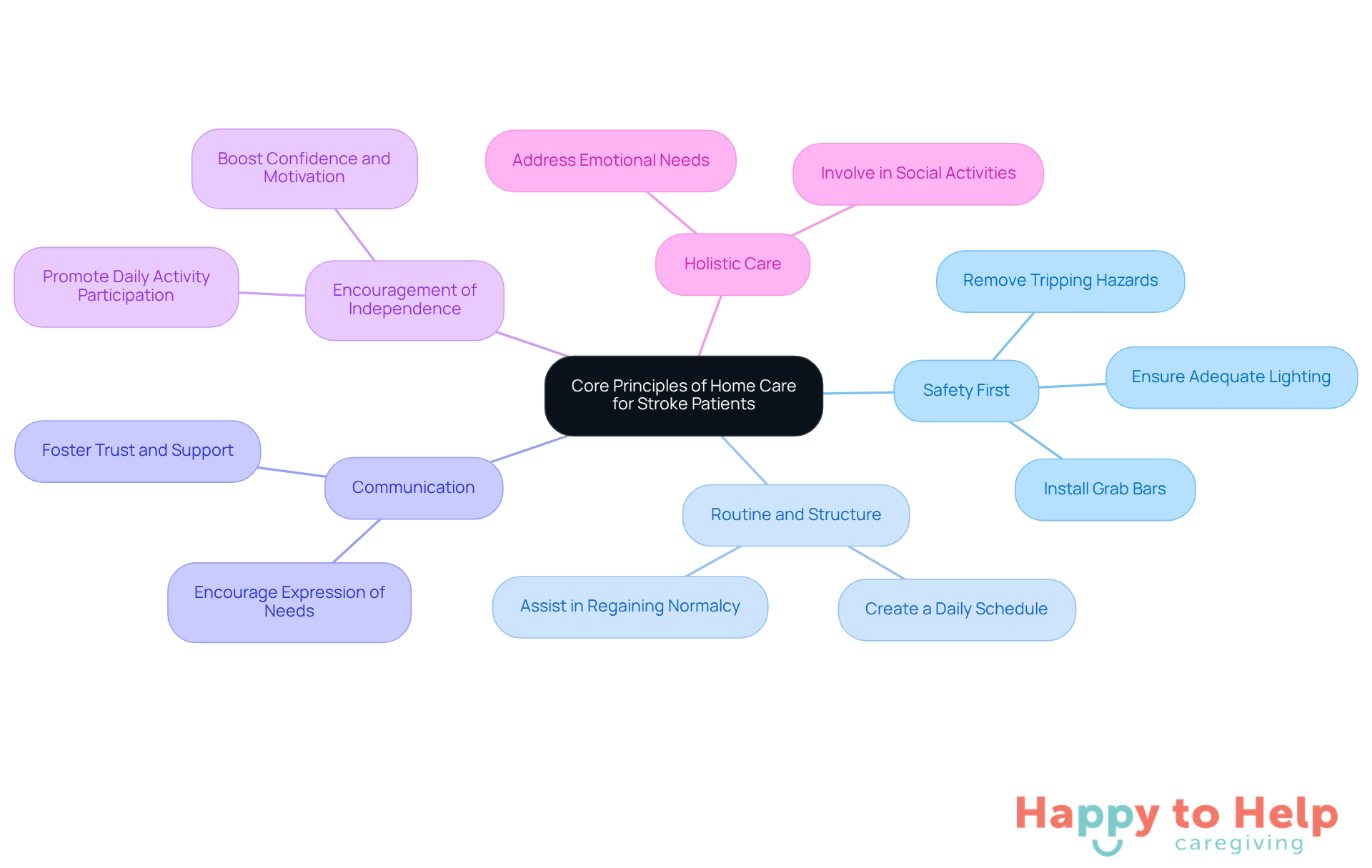
- Safety First: Ensure the home environment is free from hazards. This includes removing tripping hazards, installing grab bars, and ensuring adequate lighting.
- Routine and Structure: Creating a daily schedule assists individuals recovering from a brain injury in regaining a sense of normalcy and predictability, which is essential for their emotional well-being.
- Communication: Effective communication is vital. Caregivers should encourage patients to express their needs and feelings, fostering an environment of trust and support.
- Encouragement of Independence: While assistance is necessary, promoting independence in daily activities can significantly boost a stroke survivor's confidence and motivation.
- Holistic Care: Address not only physical needs but also emotional and social aspects of healing. Involving individuals in social activities can help combat feelings of isolation.
By implementing these principles, caregivers can create a nurturing atmosphere that significantly aids in the recovery journey of individuals who need stroke care at home.
Facilitate Effective Transition from Hospital to Home Care
Transitioning from hospital to stroke care at home presents significant challenges for caregivers. Without meticulous planning and execution, this process can lead to confusion and complications that hinder recovery.
-
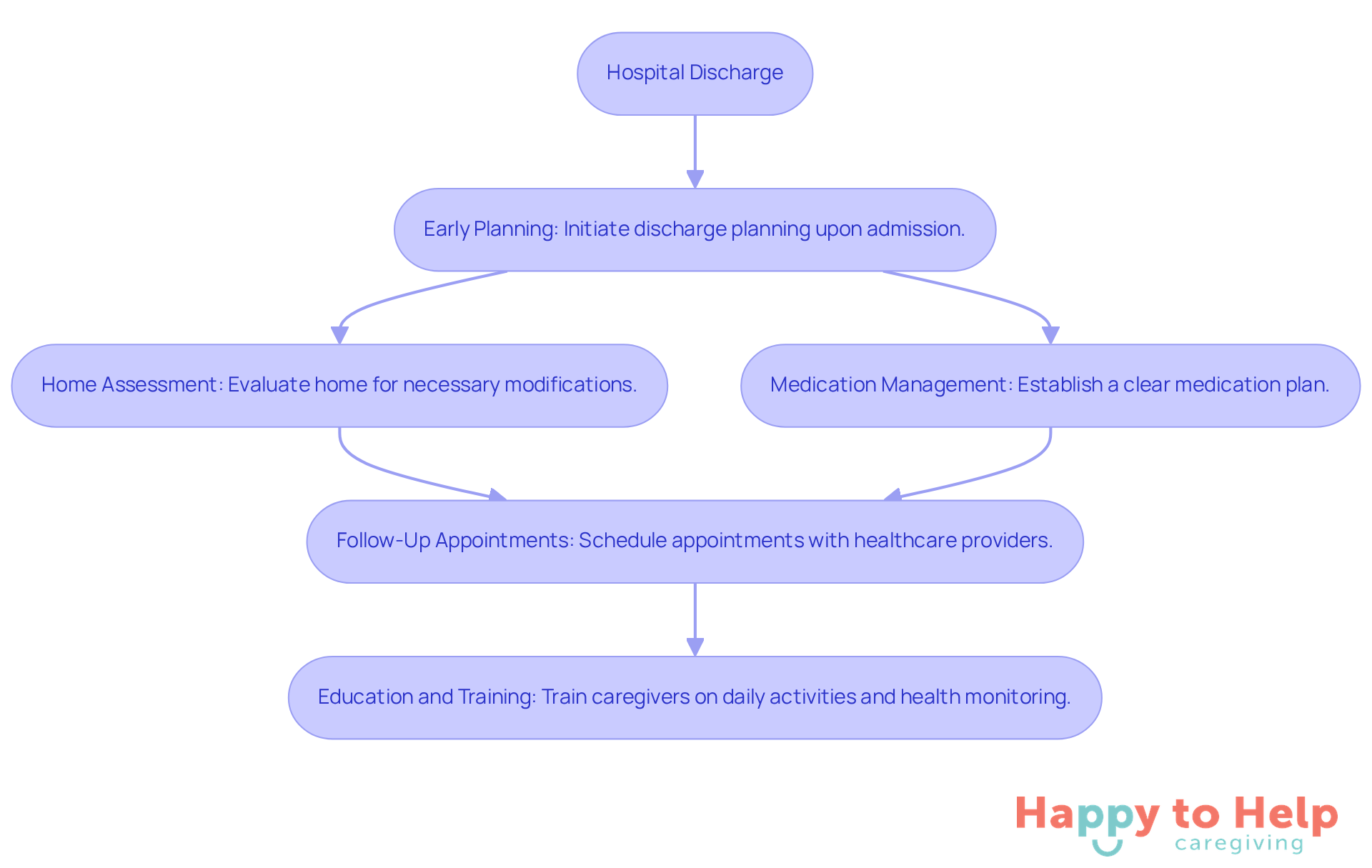
Early Planning: Initiating discharge planning upon admission is crucial. Engaging healthcare providers and family members in discussions about care needs early on can facilitate a smoother transition. Research shows that individuals with high FIM cognitive scores have an odds ratio of 17.83 for being discharged home, highlighting the importance of early planning.
-
Home Assessment: A comprehensive evaluation of the home environment is essential to identify necessary modifications. This may involve installing ramps, eliminating fall hazards, or rearranging furniture to enhance accessibility and safety. A study of 2085 individuals with cerebrovascular incidents found that younger individuals and those with improved motor function were more likely to be sent home, underscoring the need for tailored home evaluations.
-
Medication Management: Caregivers must be well-informed about the individual's medication regimen, including dosages and schedules. Establishing a clear medication management plan is vital to prevent errors and ensure adherence. Faulty communication at discharge can lead to incorrect medication administration, making this step critical.
-
Follow-Up Appointments: Scheduling follow-up appointments with healthcare providers before discharge ensures continuity of care. This allows for timely adjustments to the care plan as needed. According to the NIH, many stroke patients are readmitted shortly after discharge, emphasizing the importance of these appointments.
-
Education and Training: Equipping support providers with training on assisting with daily activities, monitoring health indicators, and recognizing signs of complications is essential. This knowledge enables effective assistance and improves the individual's recovery experience. As noted by T.I. from Kyoto University, factors related to physical and cognitive function are useful predictors for discharge to home, making caregiver education vital.
Implementing these strategies can significantly ease the transition process, allowing individuals recovering from a neurological event to acclimate to their home environment more comfortably through stroke care at home. A well-coordinated discharge plan can reduce hospital readmissions, underscoring the importance of thorough preparation and support during this critical period.
Design Personalized Care Plans for Stroke Recovery
Creating personalized care plans for stroke recovery is crucial, yet it presents several challenges for caregivers providing stroke care at home. Stroke survivors often face a complex array of physical, emotional, and social needs that require careful consideration. The American Heart Association highlights that equitable access to high-quality stroke rehabilitation is essential for all survivors in the United States, underscoring the urgency of addressing these needs.
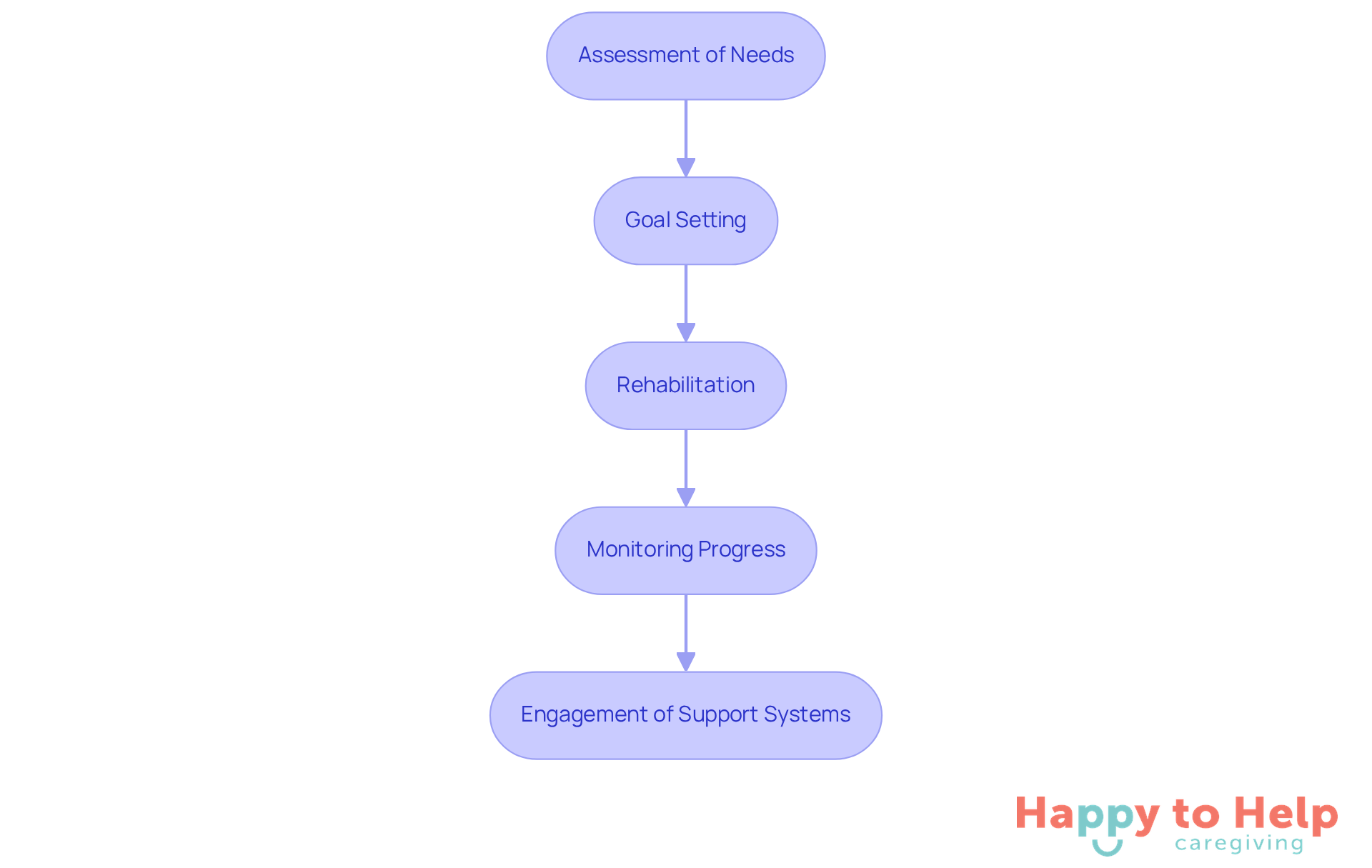
To tackle this issue, caregivers must begin with a thorough assessment of needs. This involves evaluating the individual's situation with input from healthcare professionals and family members. By understanding the full scope of the survivor's needs, caregivers can lay the groundwork for effective recovery.
Next, goal setting is vital. Collaboratively establishing realistic and achievable objectives can significantly enhance daily living activities, improve mobility, and elevate overall quality of life. Research indicates that individuals who undergo over 40 therapy sessions in six months have a 26% lower risk of mortality, highlighting the importance of clear treatment goals.
Incorporating rehabilitation exercises into the care plan is another essential step. These exercises should be tailored to the individual's current abilities and healing stage. Evidence shows that early and sustained therapy leads to better functional outcomes and reduces complications. Additionally, integrating psychological interventions is crucial, as early therapy within six months of stroke onset correlates with improved recovery outcomes.
Regularly monitoring progress is key to ensuring the care plan remains effective. Caregivers should review and adjust the plan based on the individual's feedback and progress. This adaptive approach fosters a sense of achievement and motivation. Engaging in psychological therapy can significantly benefit stroke survivors, with about 71.3% reporting improvements in depression and anxiety symptoms.
Finally, the engagement of support systems is essential. Actively involving family members and caregivers creates a robust support network that not only aids the individual's recovery but also alleviates caregiver exhaustion. Case studies reveal that non-medical home care services provide vital respite for family members, allowing them to balance personal responsibilities while ensuring their loved ones receive proper care.
By following these steps, caregivers can develop effective, personalized care plans for stroke care at home that support optimal recovery for stroke patients, ultimately enhancing their independence and quality of life.
Manage Caregiver Well-Being and Prevent Burnout
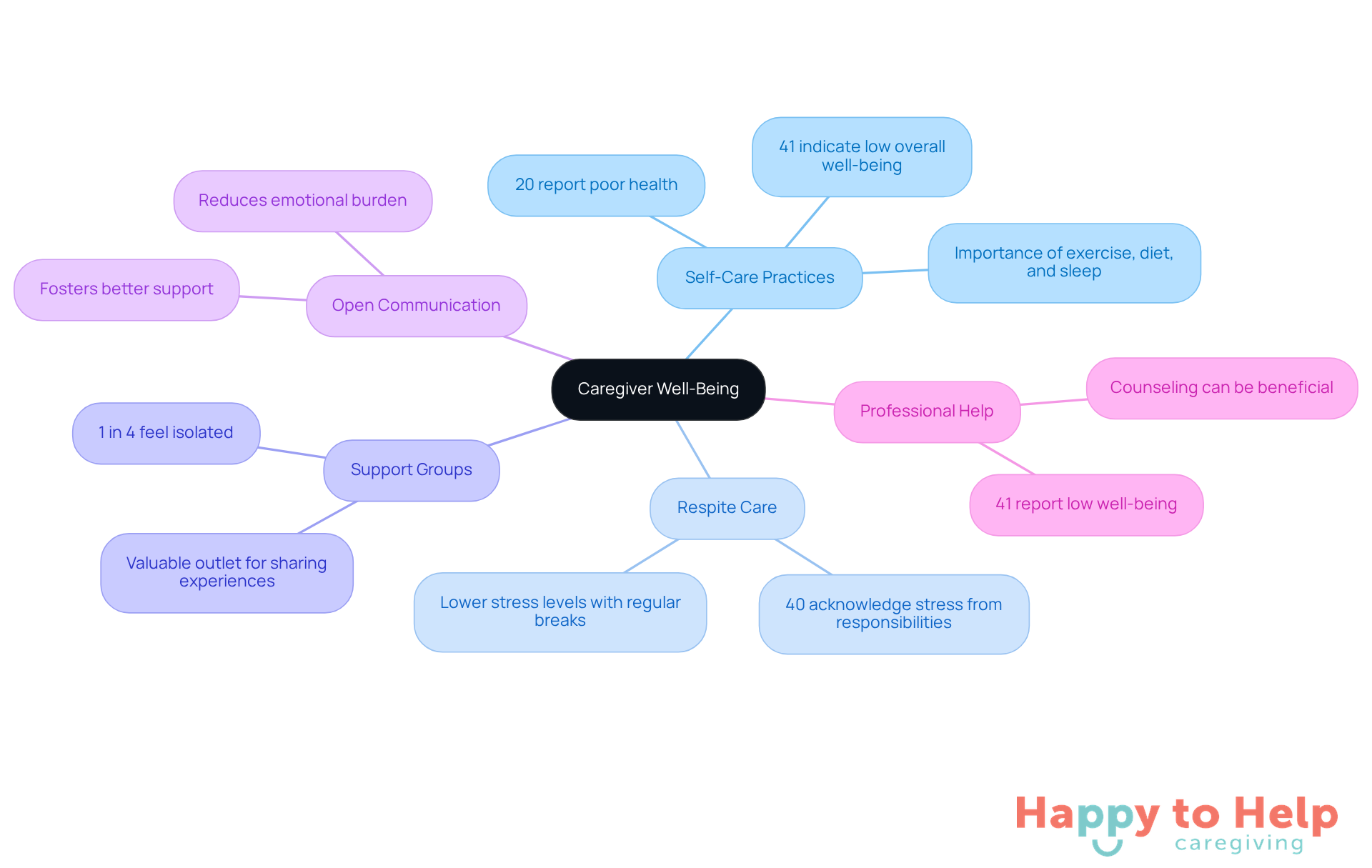
To ensure caregivers remain healthy and effective, it’s crucial to address the challenges they face. Many caregivers struggle with their own health, with 20% reporting poor health and 41% indicating low overall well-being. This situation not only affects them but also the quality of care they provide.
Self-Care Practices: Caregivers should prioritize their health by engaging in regular exercise, maintaining a balanced diet, and ensuring adequate sleep. These self-care practices are vital for their well-being and can significantly improve their ability to support others.
Respite Care: Utilizing respite care services is essential for caregivers to take much-needed breaks. Research shows that individuals who take regular breaks report lower stress levels. In fact, 40% of caregivers acknowledge that their responsibilities negatively impact their stress, highlighting the importance of respite in preventing burnout.
Support Groups: Joining support groups can offer caregivers a valuable outlet for sharing experiences and coping strategies. Connecting with peers who understand their challenges can alleviate feelings of isolation, which affects 1 in 4 caregivers.
Open Communication: Establishing an environment where caregivers feel comfortable sharing their emotions with family and healthcare professionals is vital. Open dialogue fosters better support and understanding, reducing the emotional burden they carry.
Professional Help: If feelings of stress, anxiety, or depression arise, seeking professional counseling can be beneficial. With 41% of caregivers reporting low well-being, professional support can be a crucial resource.
By implementing these strategies, caregivers can maintain their well-being, which is essential for delivering the best stroke care at home to patients. Integrating stroke care at home not only helps prevent caregiver burnout but also enhances the overall quality of care provided, ensuring caregivers can continue to support their loved ones effectively.
Making the Right Choice
Providing stroke care at home presents significant challenges for caregivers, who must navigate the unique needs of stroke survivors. This multifaceted endeavor can often feel overwhelming, as it requires careful attention to safety, structured routines, effective communication, and the promotion of independence. Without a clear plan, caregivers may struggle to create an environment that fosters recovery.
To address these challenges, early planning is crucial for a smooth transition from hospital to home. Conducting thorough home assessments, managing medications effectively, and ensuring follow-up appointments are scheduled are essential steps in minimizing complications and ensuring continuity of care. Additionally, personalized care plans that cater to both physical and emotional needs play a vital role in enhancing the quality of life for stroke patients.
Caregiver well-being is equally important. Implementing self-care practices, utilizing respite care, and fostering open communication can significantly reduce the risk of burnout. By prioritizing their own health, caregivers can better support their loved ones.
Ultimately, the effectiveness of stroke care at home hinges on a collaborative approach that addresses the needs of both patients and caregivers. By adopting best practices and remaining vigilant in support strategies, caregivers can improve recovery outcomes for stroke survivors while enhancing their own well-being. Embracing these essential practices will pave the way for a more supportive and effective home care experience for everyone involved.
https://iframe.tely.ai/cta/eyJhcnRpY2xlX2lkIjogIjY5M2Y3NWEwZDhjZTU2YzVlYjdjNjlkNCIsICJjb21wYW55X2lkIjogIjY4ZWU1ZGNhNzMxNzYyNTU3ZjNjOTVjMSIsICJpbmRleCI6IG51bGwsICJ0eXBlIjogImFydGljbGUifQ==Frequently Asked Questions
What are the main challenges of providing home care for stroke patients?
The main challenges include ensuring a safe and supportive environment to prevent injuries that could hinder the patient's rehabilitation process.
What is the first core principle of home care for stroke patients?
The first core principle is "Safety First," which involves making the home environment free from hazards by removing tripping hazards, installing grab bars, and ensuring adequate lighting.
Why is routine and structure important for stroke patients?
Creating a daily schedule helps individuals recovering from a brain injury regain a sense of normalcy and predictability, which is essential for their emotional well-being.
How should caregivers approach communication with stroke patients?
Caregivers should encourage patients to express their needs and feelings, fostering an environment of trust and support.
What role does promoting independence play in stroke recovery?
Encouraging independence in daily activities can significantly boost a stroke survivor's confidence and motivation, even while assistance is provided.
What does holistic care involve for stroke patients?
Holistic care involves addressing not only physical needs but also emotional and social aspects of healing, including involving individuals in social activities to combat feelings of isolation.
How can caregivers create a nurturing atmosphere for stroke recovery at home?
By implementing the core principles of safety, routine, communication, encouragement of independence, and holistic care, caregivers can create a nurturing atmosphere that aids in the recovery journey of stroke patients.
List of Sources
- Understand Core Principles of Home Care for Stroke Patients
- New policy statement highlights major gaps in U.S stroke rehabilitation and urges better care (https://news-medical.net/news/20250805/New-policy-statement-highlights-major-gaps-in-US-stroke-rehabilitation-and-urges-better-care.aspx)
- Home Modifications (https://stroke.org/en/life-after-stroke/recovery/home-modifications)
- Palliative Care Integration: AHA Scientific Statement Underscores Importance for Survivors of Stroke | Docwire News (https://docwirenews.com/post/new-american-heart-association-scientific-statement-outlines-importance-of-palliative-care-integration-for-survivors-of-stroke-caregivers)
- This underused type of care can help in stroke recovery, report says (https://heart.org/en/news/2024/12/16/this-underused-type-of-care-can-help-in-stroke-recovery-report-says)
- Facilitate Effective Transition from Hospital to Home Care
- Modifying homes for stroke survivors saves lives, extends independence | WashU Medicine (https://medicine.washu.edu/news/modifying-homes-for-stroke-survivors-saves-lives-extends-independence)
- Supporting Stroke Recovery at Home: The Role of Home Health Agencies - Advanced Nursing & Home Care (https://advancednursing.care/strokes-brain-and-head-injuries/supporting-stroke-recovery-at-home-the-role-of-home-health-agencies)
- Assessment Model to Identify Patients With Stroke With a High Possibility of Discharge to Home | Stroke (https://ahajournals.org/doi/10.1161/strokeaha.117.018075)
- Postacute Stroke Care: Transitioning from Hospital to Home (https://practicalneurology.com/diseases-diagnoses/stroke/postacute-stroke-care-transitioning-from-hospital-to-home/31961)
- Factors Associated With Discharge to Home Versus Discharge to Institutional Care After Inpatient Stroke Rehabilitation (https://sciencedirect.com/science/article/abs/pii/S0003999315002555)
- Design Personalized Care Plans for Stroke Recovery
- Improving Access to Stroke Rehabilitation and Recovery: A Policy Statement From the American Heart Association/American Stroke Association | Stroke (https://ahajournals.org/doi/10.1161/STR.0000000000000493)
- Supporting Stroke Recovery at Home: The Role of Home Health Agencies - Advanced Nursing & Home Care (https://advancednursing.care/strokes-brain-and-head-injuries/supporting-stroke-recovery-at-home-the-role-of-home-health-agencies)
- Personalizing Stroke Care and Recovery (https://vizientinc.com/insights/podcasts/sg2-perspectives/2025/personalizing-stroke-care-and-recovery)
- Post-Stroke Rehabilitation Outcomes: Statistics on Physical Therapy Effectiveness - obrienphysicaltherapy.net (https://obrienphysicaltherapy.net/blog/post-stroke-rehabilitation-outcomes-statistics-on-physical-therapy-effectiveness)
- Stronger policy, improved recovery: closing gaps in stroke rehabilitation improves lives (https://newsroom.heart.org/news/stronger-policy-improved-recovery-closing-gaps-in-stroke-rehabilitation-improves-lives)
- Manage Caregiver Well-Being and Prevent Burnout
- Changes in Health Indicators Among Caregivers... (https://cdc.gov/mmwr/volumes/73/wr/mm7334a2.htm)
- Caregiving Statistics US 2025: Insights for Family Caregivers (https://zencaregiving.org/caregiving-statistics-us-2025)
- What to expect when you become a caregiver– and how to cope with the challenges (https://heart.org/en/news/2025/11/20/what-to-expect-when-you-become-a-caregiver-and-how-to-cope-with-the-challenges)
- The Caregiving Landscape: Data & Insights on the Caregiver Experience in the U.S. (https://caregiveraction.org/caregiver-statistics)