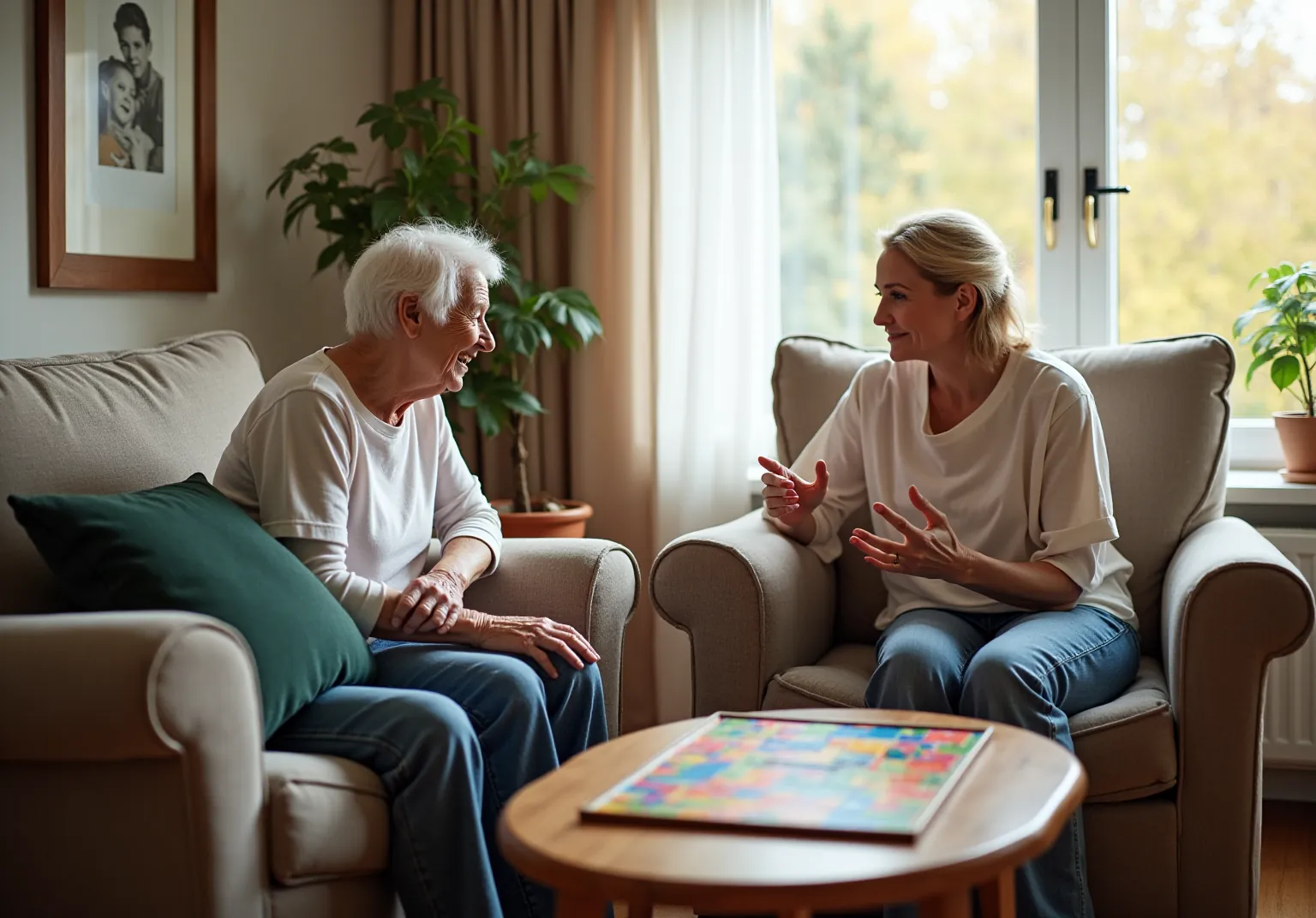
Essential Care and Help Strategies for Family Caregivers

For families in our service areas
For families in our service areas, this guide explains caregiver support and how non-medical in-home caregiving can support care planning in East Idaho, Treasure Valley & Magic Valley, Northern Wasatch, North Central West Virginia, and Northeast Ohio.
The Importance of Essential Care and Help Strategies
Navigating the complex landscape of caregiving presents a significant challenge for many family caregivers. The emotional and physical demands can be overwhelming, often leading to caregiver burnout. Millions provide essential support to their loved ones, yet they frequently struggle to balance their own well-being with the needs of those they care for.
As the demands of caregiving evolve, caregivers must ask: how can they meet the unique needs of their loved ones without sacrificing their health? This article explores effective strategies that empower caregivers to enhance the quality of care they deliver while prioritizing their own self-care.
To address these challenges, we will delve into:
- Tailored care assessments
- Self-care practices
- Collaborative approaches with healthcare professionals
These insights aim to foster a sustainable caregiving journey, ensuring that caregivers can provide the best support possible while maintaining their own health.
Assess Individual Needs for Tailored Care
Assessing individual needs in caregiving is crucial, yet many caregivers face challenges in understanding the specific requirements of those they support. Without a thorough evaluation, caregivers may overlook essential aspects of care, leading to inadequate support and diminished quality of life for recipients.
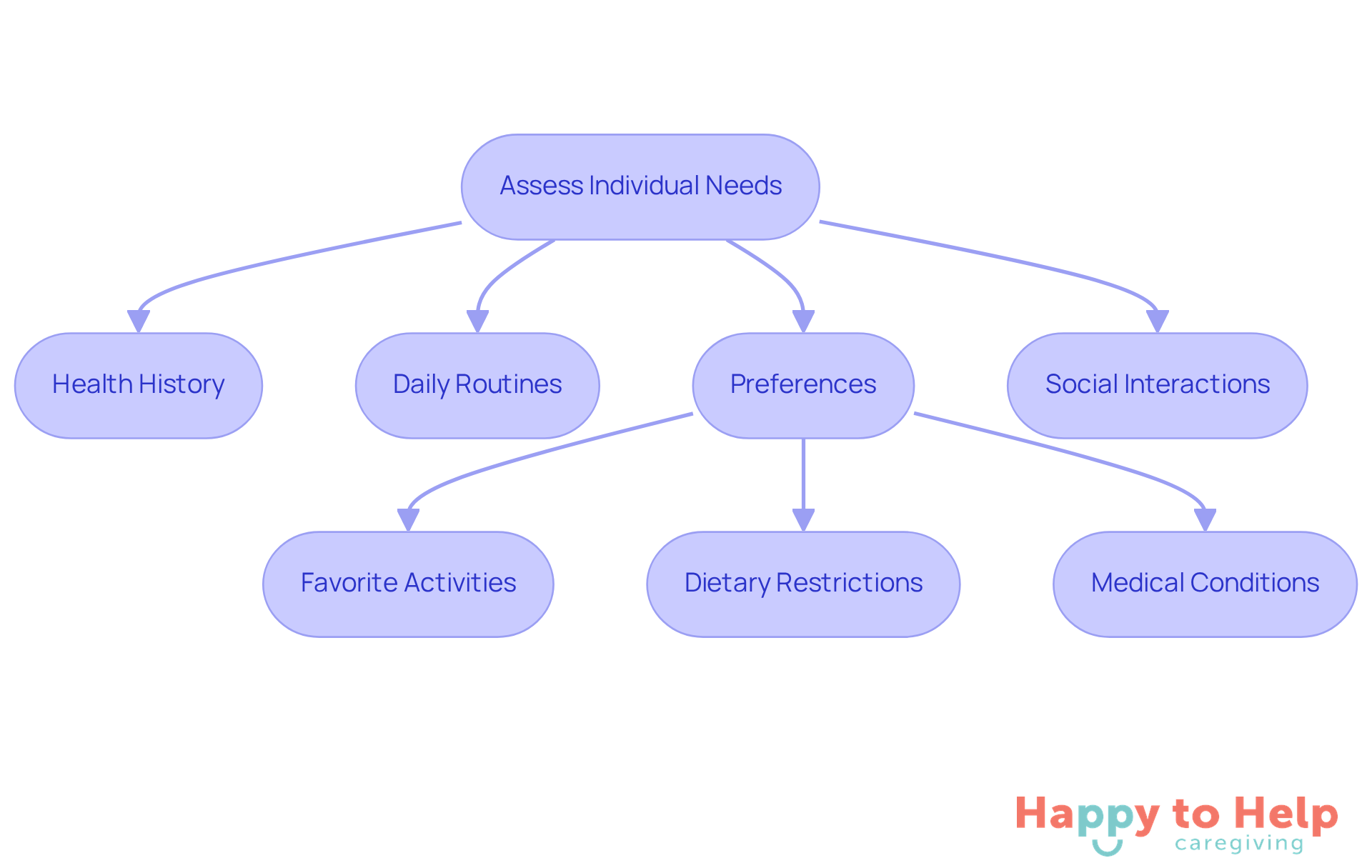
To address this issue, caregivers should conduct comprehensive evaluations that encompass:
- Health history
- Daily routines
- Preferences
- Social interactions
Utilizing tools like questionnaires or checklists can streamline the process of gathering vital information from both the individual receiving care and their family. For example, caregivers might ask about:
- Favorite activities
- Dietary restrictions
- Any medical conditions that require special attention
This approach not only helps in crafting a personalized support strategy but also fosters dignity and respect for the individual’s choices.
Regularly reviewing and updating these evaluations is essential, as needs can evolve over time. This ensures that the support provided remains relevant and effective. Statistics reveal that approximately 63 million Americans provide ongoing support to loved ones, highlighting the necessity of tailored assistance to enhance the well-being of seniors.
Effective case studies, such as the Illinois Caregiver Assessment Impact, demonstrate that when providers integrate clients' preferences and routines into service plans, it results in more engaged and satisfied recipients. Therefore, conducting a thorough assessment is not just a procedural step; it is a vital component of delivering effective in-home support that provides care and help.
Implement Self-Care Strategies to Prevent Burnout
Caregivers face a significant problem: burnout. With over 53 million family supporters in the U.S. providing more than 36 billion hours of unpaid assistance each year, the need for self-care strategies is critical. Neglecting personal well-being can lead to severe consequences, not just for caregivers but also for those they support.
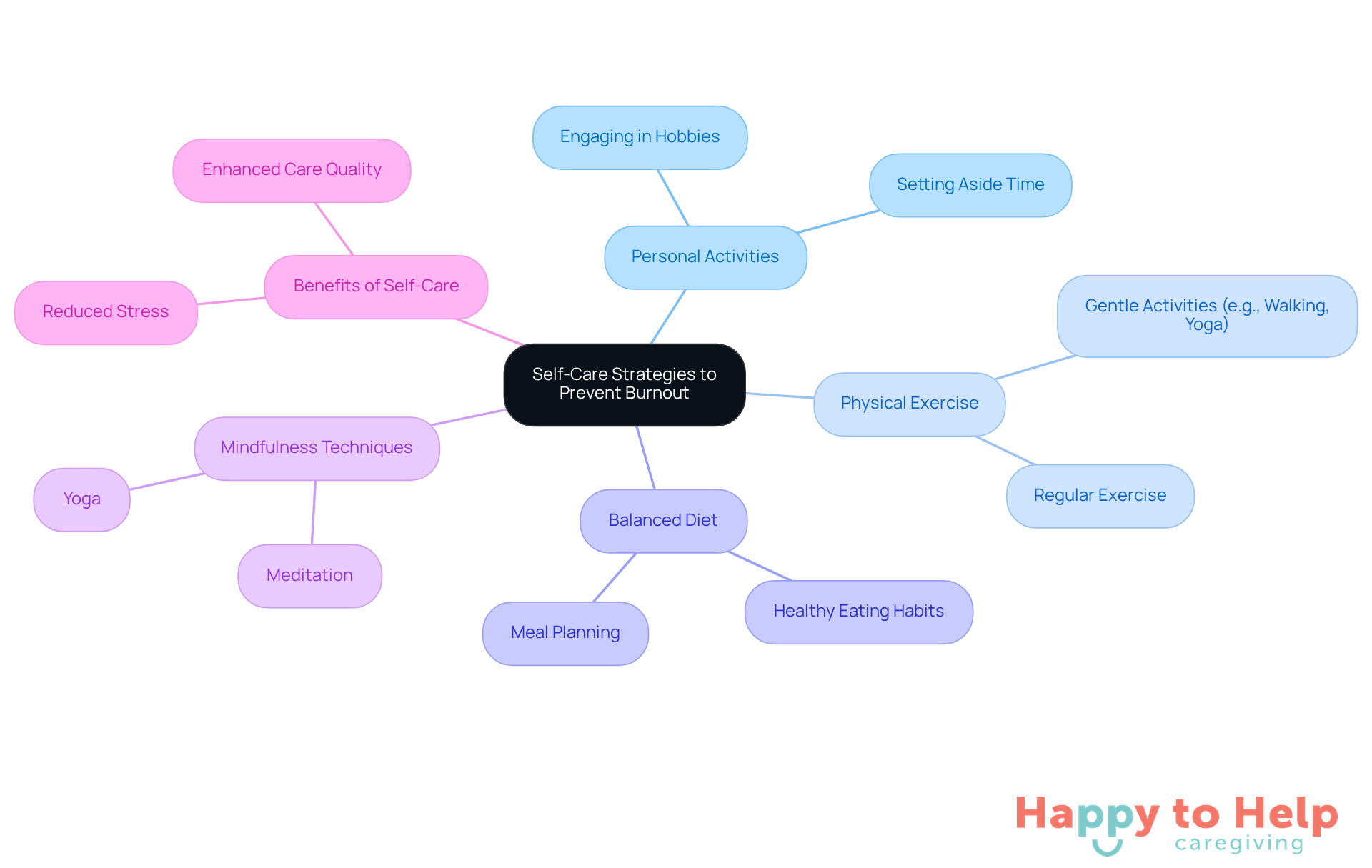
To combat this issue, prioritizing self-nurturing is essential. Consider the following foundational practices:
- Setting aside time for personal activities
- Engaging in regular physical exercise
- Maintaining a balanced diet
Mindfulness techniques, such as meditation and yoga, play a crucial role in managing stress. For instance, planning brief pauses during the day allows caregivers to refresh and restore their concentration.
Studies show that individuals who engage in self-care activities experience notably reduced levels of stress and burnout. This not only benefits the caregiver but also enhances the care and help provided to those in need. Dr. Taylor Rush emphasizes that self-care is not selfish; it is vital for maintaining the health of caregivers and the quality of service they deliver.
Additionally, participating in support groups or seeking professional counseling can provide emotional comfort and foster a sense of community. This reinforces the idea that caregivers are not alone in their journey. The case study 'Building a Support System for Caregivers' illustrates how a dependable support network can improve individuals' ability to manage their responsibilities.
By prioritizing self-care and help, caregivers can cultivate resilience and maintain their ability to assist others effectively.
Collaborate with Healthcare Professionals for Comprehensive Support
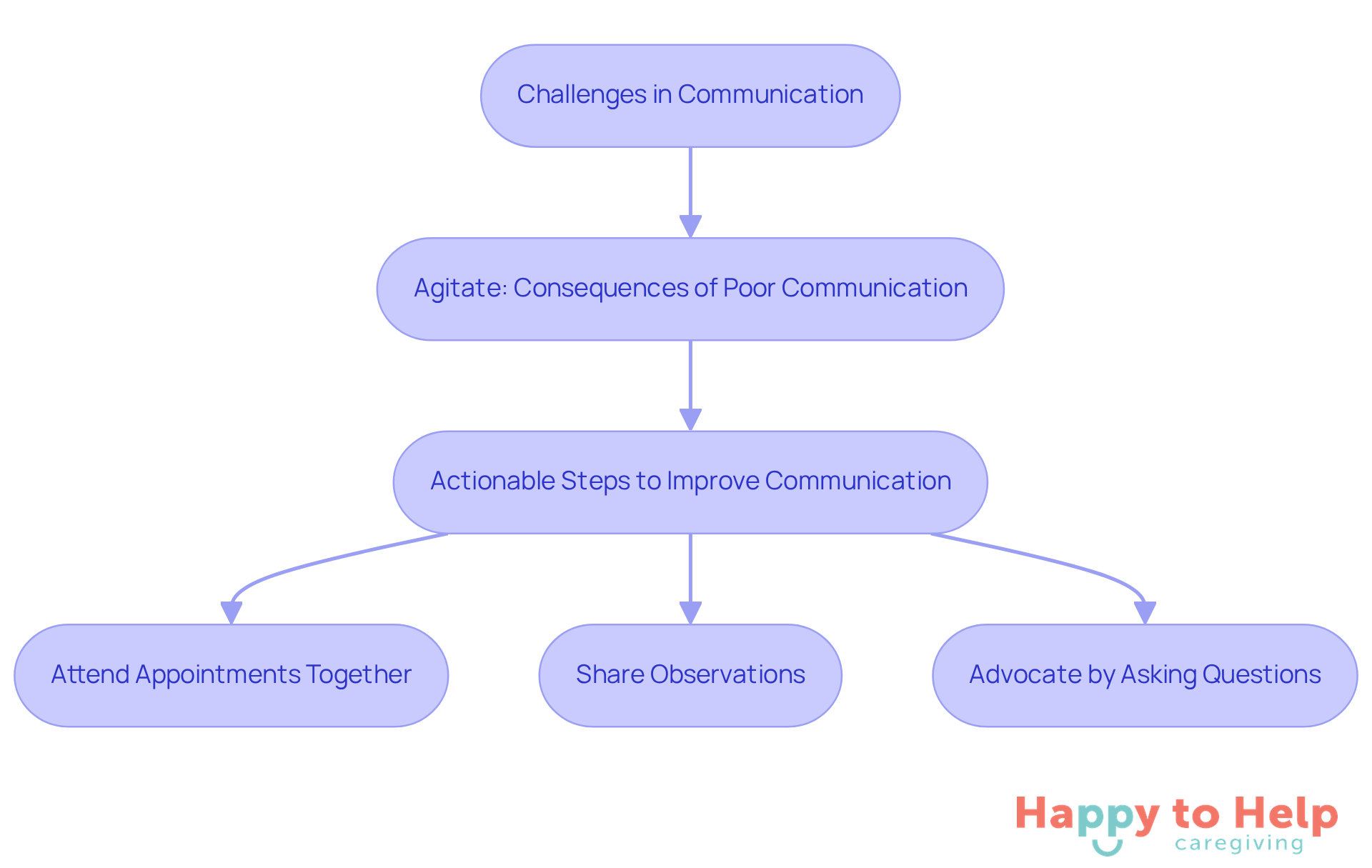
Caregivers often face challenges in communicating effectively with healthcare professionals, which can hinder the care and help they provide to their loved ones.
Without open lines of communication, important observations about a patient’s condition may go unshared, leading to misunderstandings and inadequate care and help for the patient. This can result in caregivers feeling overwhelmed and unsure about how to advocate for their loved ones.
To foster cooperation with healthcare professionals, caregivers should prioritize communication with doctors, nurses, and therapists to ensure the best care and help for their loved ones. Here are some actionable steps:
- Attend medical appointments together to stay informed.
- Share observations about the individual’s condition and discuss any changes in behavior or health.
- Advocate by asking questions and seeking clarification on treatment plans. For example, if a patient is prescribed new medication, inquire about possible side effects and interactions with current medications.
Establishing a solid collaboration with healthcare providers not only enhances the quality of care but also empowers caregivers with essential knowledge and resources.
Develop a Flexible Care Plan for Consistent Support
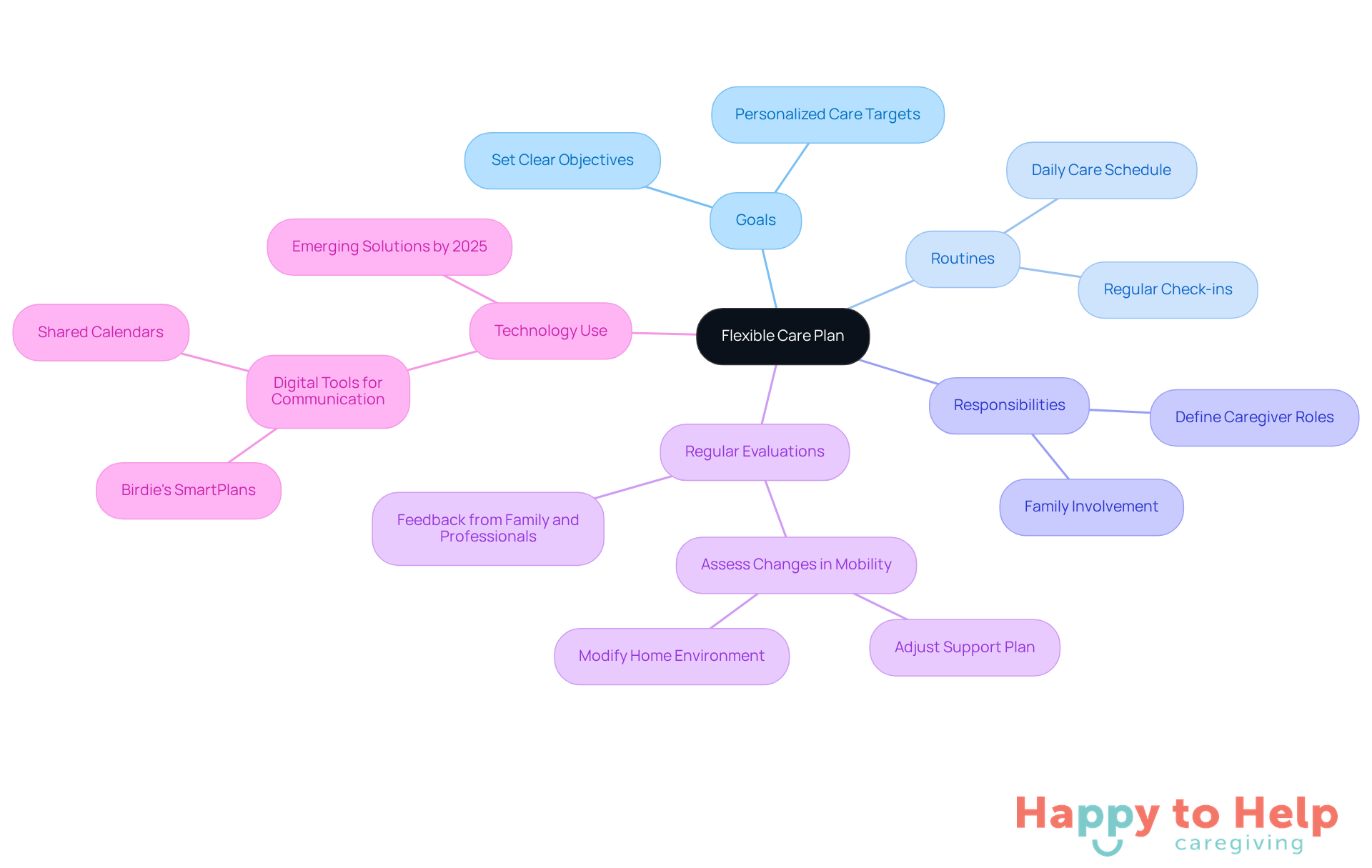
Creating a versatile support strategy is essential for delivering reliable care and help to those in need. Caregivers often face the challenge of ensuring that care and help remain effective as circumstances change. Without a clear plan, the quality of care and help can diminish, leading to frustration for both caregivers and recipients.
To address this issue, it's crucial to set specific goals, routines, and responsibilities while providing care and help for necessary adjustments. Regular evaluations of the support strategy with family members and healthcare professionals provide the necessary care and help to maintain its relevance. For example, if a recipient experiences a decline in mobility, the support plan should be revised to include additional care and help with daily tasks and modifications to the home environment for improved safety.
The significance of these evaluations is underscored by data showing that individuals who actively participate in planning report higher satisfaction levels. Notably, 35% of individuals providing support who feel backed by their employer indicate excellent emotional well-being. This highlights the positive impact of effective support planning.
Digital tools, such as Birdie's SmartPlans and shared calendars, can greatly enhance communication and updates among family members and caregivers. These technologies are expected to play a vital role in home-based assistance as new solutions emerge by 2025. By prioritizing regular assessments - ideally every 6 to 12 months - and leveraging technology, caregivers can effectively adapt to changing needs, ensuring that both care and help remain personalized and responsive.
In summary, a proactive strategy not only improves service quality but also fosters a collaborative environment where all parties feel informed and engaged.
Key Takeaways for Caregivers
Understanding the essential care and help strategies for family caregivers is vital for ensuring that both caregivers and their loved ones receive the support they deserve. Caregivers face significant challenges, including burnout and the overwhelming responsibility of providing care. Without proper support, both caregivers and their loved ones can suffer.
To address these issues, focusing on tailored care, self-care practices, effective communication with healthcare professionals, and flexible care plans is crucial. By implementing these strategies, caregivers can significantly enhance the quality of life for those they support while also safeguarding their own well-being.
Assessing individual needs is key to creating personalized care strategies that respect the preferences and routines of recipients. Self-care plays a critical role in preventing caregiver burnout, and actionable strategies that promote mental and physical health are essential. Additionally, fostering collaboration with healthcare professionals ensures that caregivers are well-informed and empowered to advocate for their loved ones, ultimately leading to better care outcomes.
In light of these insights, caregivers must actively embrace these best practices. By prioritizing personalized assessments, self-care, open communication, and adaptable care plans, caregivers can cultivate a more sustainable and fulfilling caregiving experience. The journey may be challenging, but with the right strategies in place, caregivers can thrive while providing the necessary support to their loved ones. Effective caregiving is a collaborative and evolving process, and with the right tools, caregivers can navigate this journey successfully.
https://iframe.tely.ai/cta/eyJhcnRpY2xlX2lkIjogIjY5MjEwYWFiYmQ1MDUyMmU1ODBkMDJlYiIsICJjb21wYW55X2lkIjogIjY4ZWU1ZGNhNzMxNzYyNTU3ZjNjOTVjMSIsICJpbmRleCI6IG51bGwsICJ0eXBlIjogImFydGljbGUifQ==Frequently Asked Questions
Why is assessing individual needs important in caregiving?
Assessing individual needs is crucial because it helps caregivers understand the specific requirements of those they support, ensuring adequate support and enhancing the quality of life for recipients.
What should caregivers evaluate when assessing individual needs?
Caregivers should conduct comprehensive evaluations that include health history, daily routines, preferences, and social interactions.
How can caregivers streamline the process of gathering information?
Caregivers can use tools like questionnaires or checklists to gather vital information from both the individual receiving care and their family.
What types of questions might caregivers ask during evaluations?
Caregivers might ask about favorite activities, dietary restrictions, and any medical conditions that require special attention.
Why is it important to regularly review and update assessments?
Regularly reviewing and updating assessments is essential because individual needs can evolve over time, ensuring that the support provided remains relevant and effective.
How many Americans provide caregiving support, and why does this matter?
Approximately 63 million Americans provide ongoing support to loved ones, highlighting the necessity of tailored assistance to enhance the well-being of seniors.
What do effective case studies, like the Illinois Caregiver Assessment Impact, demonstrate?
Effective case studies show that integrating clients' preferences and routines into service plans leads to more engaged and satisfied recipients.
What is the overall significance of conducting thorough assessments in caregiving?
Conducting thorough assessments is vital for delivering effective in-home support that provides care and helps meet the individual needs of recipients.
List of Sources
- Assess Individual Needs for Tailored Care
- As Family Caregiving Grows, So Does the Need for Reform - Medicare Rights Center (https://medicarerights.org/medicare-watch/2025/08/14/as-family-caregiving-grows-so-does-the-need-for-reform)
- State Strategies and New Resources to Advance Family Caregiver Assessments - NASHP (https://nashp.org/state-strategies-and-new-resources-to-advance-family-caregiver-assessments)
- Caregiving Crisis: 45% Increase in Americans Providing Care (https://aarp.org/caregiving/basics/caregiving-in-us-survey-2025)
- Family Caregiver Support, Education Needs Growing (https://hospicenews.com/2025/11/11/family-caregiver-support-education-needs-growing)
- New Report Shows Nearly Half of U.S. States Are on the Threshold of a Caregiving Emergency | Otsuka US (https://otsuka-us.com/news/new-report-shows-nearly-half-us-states-are-threshold-caregiving-emergency)
- Implement Self-Care Strategies to Prevent Burnout
- News & Information (https://wellnessalliance.org/resources-and-tools/news-and-information/2025/11/10/national-family-caregivers-month--preventing-caregiver-burnout)
- Facebook (https://newsroom.clevelandclinic.org/2025/11/19/importance-of-self-care-for-family-caregivers)
- The Caregiver Compass: Self-care Strategies for Family Caregivers (https://livingto100.club/the-caregiver-compass-self-care-strategies-to-sustain-well-being-when-supporting-others?utm\_source=rss&utm\_medium=rss&utm\_campaign=the-caregiver-compass-self-care-strategies-to-sustain-well-being-when-supporting-others)
- Why is self-care so important for family caregivers? – Traditions at Stacey Lee (https://traditionsseniorhome.com/2025/10/22/why-is-self-care-so-important-for-family-caregivers)
- A caregiver's survival guide: Advice from people who've been there (https://npr.org/2025/10/18/nx-s1-5558451/caregiver-caregiving-family-burnout-support-advice)
- Collaborate with Healthcare Professionals for Comprehensive Support
- Building a lifeline for family caregivers across the US (https://news.mit.edu/2025/ianacare-builds-lifeline-for-family-caregivers-across-us-0811)
- Changes in Health Indicators Among Caregivers... (https://cdc.gov/mmwr/volumes/73/wr/mm7334a2.htm)
- Healthcare Workers and Family Caregivers: Honoring the Essential Partnership in Care (https://lifework.arizona.edu/news/2025/healthcare-workers-and-family-caregivers-honoring-essential-partnership-care)
- WHO and Noora Health begin collaboration to strengthen support for family caregivers (https://who.int/news/item/29-07-2025-who-and-noora-health-begin-collaboration-to-strengthen-support-for-family-caregivers)
- Develop a Flexible Care Plan for Consistent Support
- Why Should Care Plans Be Updated Regularly | Birdie Blog (https://birdie.care/blog/why-should-care-plans-be-updated-regularly)
- Home Care Providers Turn to Tech for More Flexible, Cost-Effective Models (https://homehealthcarenews.com/2025/02/home-care-providers-turn-to-tech-for-more-flexible-cost-effective-models)
- 2023 Study — Caregiving in America, Statistics on Family Caregivers and Beyond | Guardian (https://guardianlife.com/reports/caregiving-in-america)
- Importance of Regular Review and Adaptation of Care Plans (https://catalystgrp.co.uk/blog/importance-of-regular-review-and-adaptation-of-care-plans)
- Care planning model allows for more flexibility in the event of serious illness (https://mcknights.com/news/care-planning-model-allows-for-more-flexibility-in-the-event-of-serious-illness)