

For families in our service areas
For families in our service areas, this guide explains caregiving and how non-medical in-home caregiving can support care planning in East Idaho, Treasure Valley & Magic Valley, Northern Wasatch, North Central West Virginia, and Northeast Ohio.
Why Essential Checklist for Choosing Matters
Ensuring safe access for elderly individuals with mobility challenges presents a significant problem for caregivers. Selecting the right outdoor ramps is crucial, as these structures are not merely functional; they play a vital role in promoting independence and preventing accidents. The implications of inadequate access can lead to increased risks of falls and a loss of autonomy for those affected.
Navigating the complex guidelines and personal needs involved in choosing the right ramp can be overwhelming. Caregivers often find themselves balancing safety, accessibility, and individual preferences. This challenge can lead to frustration and uncertainty, making it essential to approach the selection process with clear strategies.
To create the most effective solution, caregivers should consider the following actionable tips:
- Assess the specific mobility needs of the individual.
- Research local regulations and guidelines for ramp construction.
- Consult with experts in mobility solutions to find the best options available.
By focusing on these key areas, caregivers can ensure that they select ramps that not only meet safety standards but also enhance the quality of life for elderly individuals.
Determine Required Ramp Size
Ensuring safe access for individuals with mobility challenges can be a significant concern for caregivers, particularly when considering outdoor ramps for elderly. Steep inclines and inadequate widths can pose serious risks.
Agitate: For instance, if the incline is too steep, it can lead to dangerous situations for both users and caregivers. The ADA guidelines highlight the importance of a proper slope ratio to prevent these hazards.
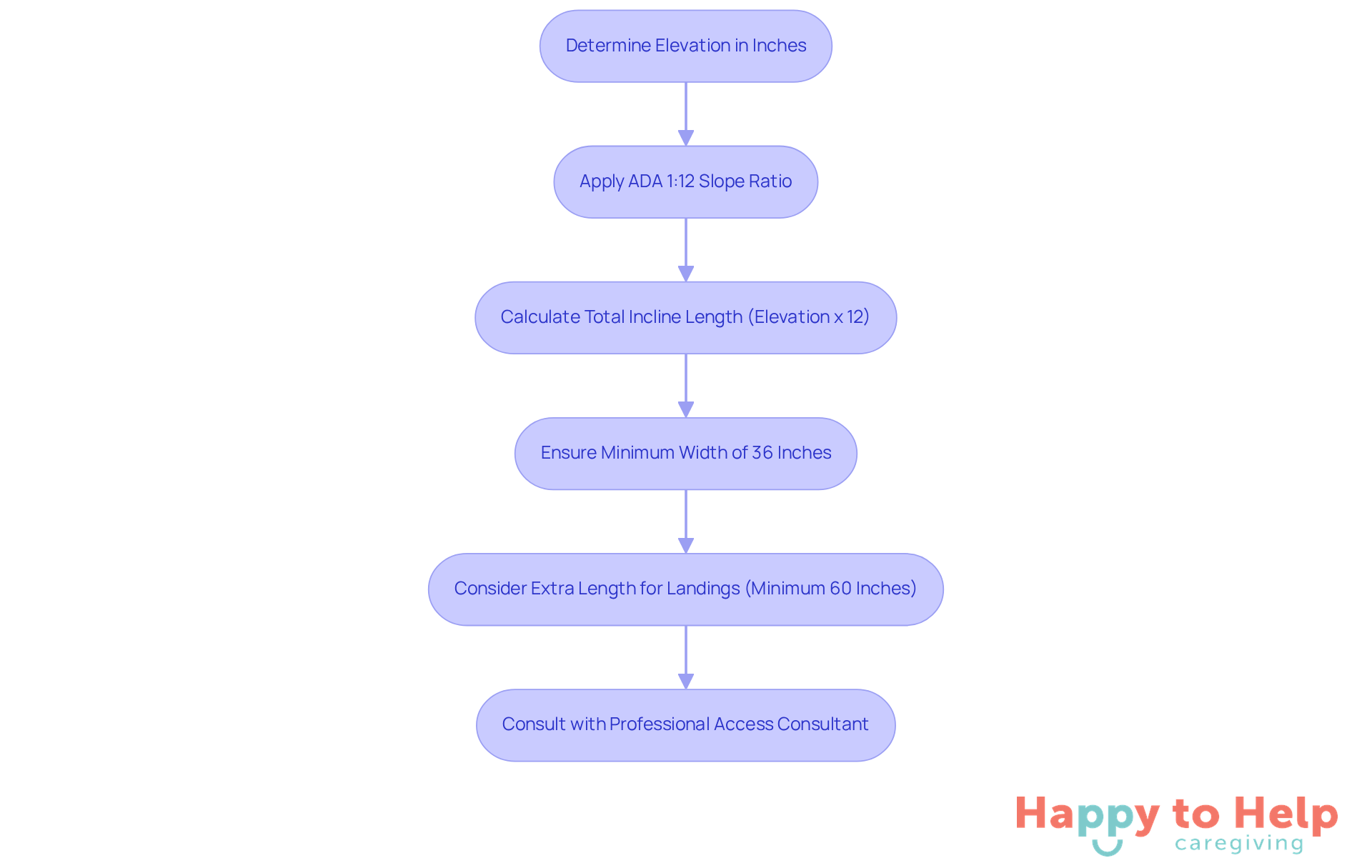
Solution: Start by gauging the elevation of the entry point in inches to establish the vertical ascent. Apply the ADA guideline of a 1:12 slope ratio, meaning for every inch of elevation, you need 12 inches of length for the incline. This slope ratio is crucial for ensuring safety and ease of use in outdoor ramps for elderly individuals.
Calculate the total incline length needed by multiplying the elevation by 12. For example, a 24-inch rise requires a slope length of 24 feet. This calculation is essential to prevent inclines from being too steep.
Ensure the width of the incline is at least 36 centimeters to facilitate outdoor ramps for elderly and allow for comfortable wheelchair access. This width provides adequate space for maneuvering.
Consider extra length for landings at both the top and bottom of the incline, which should be a minimum of 60 inches long. These landings improve safety and maneuverability, offering resting points and enabling safe transitions.
Additionally, edge protection is vital as required by the ADA to prevent wheelchairs from sliding off the incline. This feature guarantees user security.
Lastly, consulting with a professional access consultant is advisable to assess specific needs related to outdoor ramps for elderly individuals and ensure compliance with local regulations and safety standards.
Evaluate Layout and Accessibility Needs
Evaluating Installation Space for Inclines
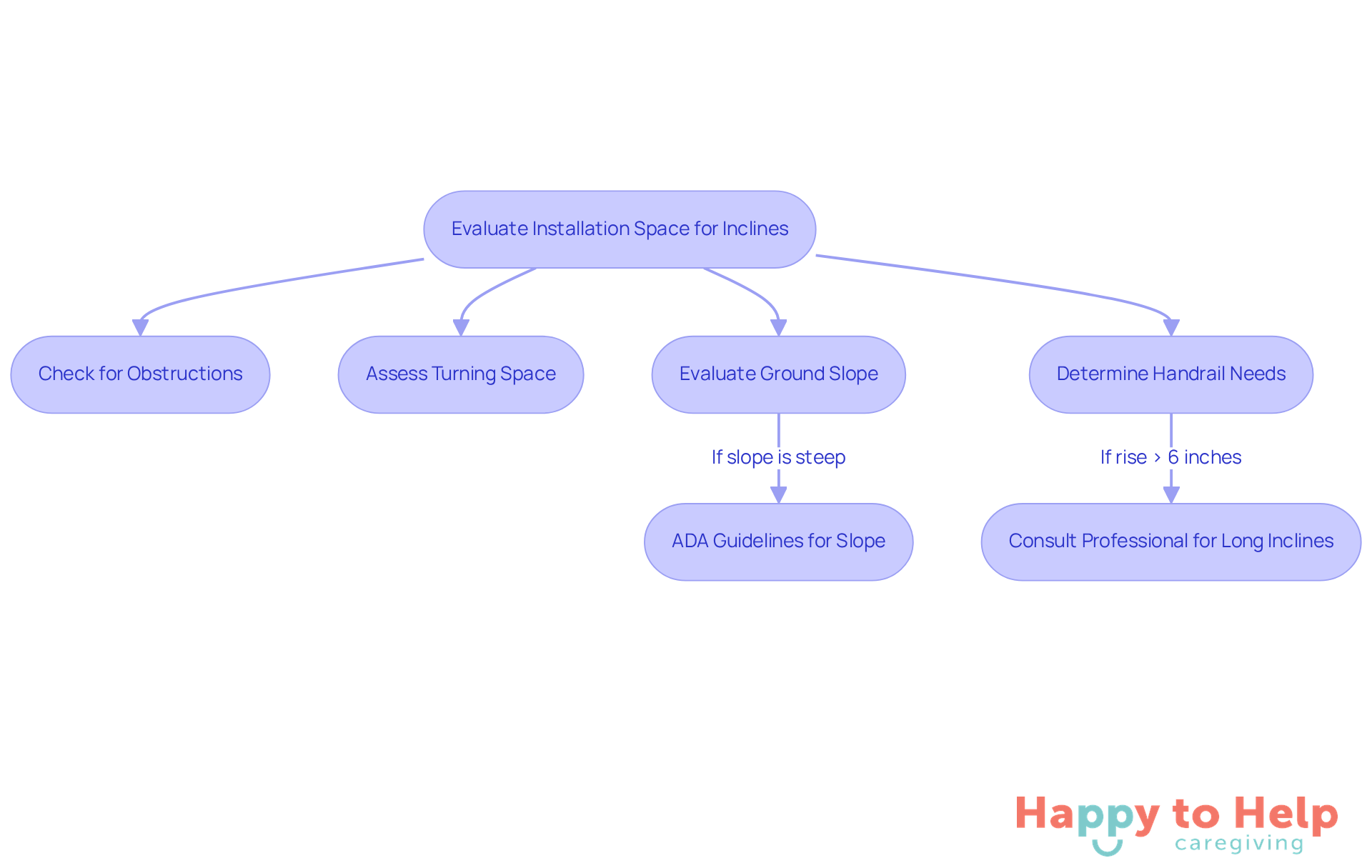
When installing an incline, the first challenge is evaluating the installation space. Potential hindrances like doors, landscaping elements, or irregular surfaces can obstruct access, making it difficult for users to navigate safely.
To ensure safe navigation, it’s crucial to have sufficient space for the incline to extend freely without any obstructions. Additionally, check for adequate turning space at both the top and bottom of the incline to facilitate easy maneuvering for wheelchair users.
Another important factor is the slope of the ground where the incline will be positioned. Maintaining a safe and usable gradient is essential to prevent accidents. According to ADA guidelines, the maximum incline for a slope should be 1:12, meaning that for every unit of vertical elevation, the slope should be at least 12 units long.
Handrails may also be necessary depending on the user's mobility and stability needs. They are required when the rise is greater than 6 inches, providing essential support and helping to prevent falls.
For inclined surfaces longer than 2 feet, it’s advisable to consult a professional to ensure safety and compliance with local building codes. Be aware that steep inclines can increase the risk of loss of control, making it challenging for users to safely ascend or descend.
Assess Individual Needs and Preferences
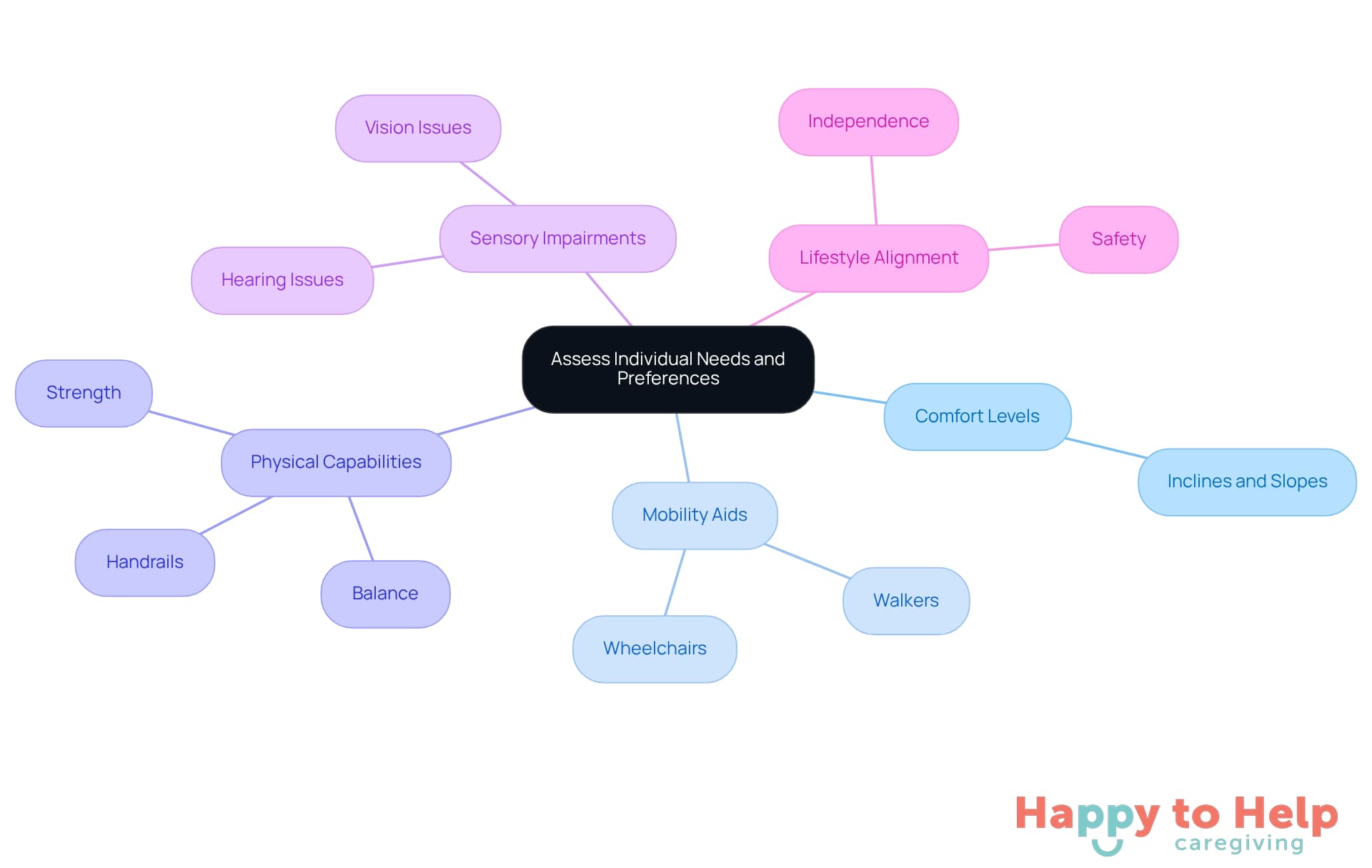
Participating in discussions with seniors about their comfort levels regarding different types of inclines and slopes is crucial. A 2022 AARP study reveals that 71% of seniors face accessibility issues in their homes, highlighting the importance of outdoor ramps for elderly when addressing these needs during incline selection. Understanding their specific mobility aids, such as walkers or wheelchairs, is vital for identifying the most suitable incline design for outdoor ramps for elderly individuals.
Evaluating their physical capabilities, including strength and balance, helps determine necessary features like handrails that enhance safety and usability. Additionally, consider any sensory impairments, such as vision or hearing issues, that may impact their ability to navigate the incline effectively. As Kenneth Taylor, a recent beneficiary of an access solution for his wife, noted, "When I'm not home, she's stuck inside." This incline not only aids her in going outside and exercising but also provides emergency exits.
Ultimately, the design of outdoor ramps for elderly individuals should align with their lifestyle and preferences, promoting independence and ensuring they feel secure while using outdoor ramps for elderly. Programs like Habitat for Humanity offer complimentary structures installed by volunteer groups, allowing seniors to remain in their homes safely.
Choose Safe Materials and Features
Safety on inclines can pose significant risks for caregivers and those they assist, highlighting the need for outdoor ramps for elderly individuals. Without proper measures, falls and accidents can occur, especially in adverse weather conditions.
Agitate: The consequences of inadequate safety features can be severe. Slips and falls not only lead to injuries but also create anxiety for caregivers and those relying on their support. Ensuring a safe environment, such as by providing outdoor ramps for elderly individuals, is crucial for peace of mind.
Solution:
- Select durable materials: Choose weather-resistant options like aluminum or pressure-treated wood, capable of supporting a weight capacity of 600-800 pounds.
- Implement outdoor ramps for elderly: Equip these ramps with non-slip surfaces to significantly reduce the risk of falls, particularly in wet or icy conditions. This is essential for maintaining accessibility and security year-round with the use of outdoor ramps for elderly.
- Add edge protection: Consider installing curbs or elevated strips to prevent wheels or feet from slipping off the incline, enhancing overall safety.
- Install robust handrails: For outdoor ramps for elderly that exceed a certain height or slope, ensure handrails are easy to grip for added support. The ADA recommends a slope of 1:12 for access inclines, meaning for every inch of rise, there should be 12 inches of incline.
- Conduct routine examinations: Regularly check the incline for deterioration and promptly replace any broken parts to uphold security and operability. Keeping ramps clear of leaves, debris, ice, and snow is vital for ongoing safety.

Key Takeaways for Caregivers
Choosing the right outdoor ramps for elderly care presents a significant challenge. Mobility issues can severely limit independence and safety for seniors, making it crucial for caregivers to address these concerns effectively.
To enhance safety and accessibility, caregivers must consider essential factors such as ramp size, layout, individual needs, and safety features. Properly designed ramps not only facilitate mobility but also foster independence, allowing elderly individuals to navigate their surroundings with confidence.
Key considerations include:
- Adhering to ADA guidelines for slope ratios
- Ensuring adequate space for maneuverability
- Selecting materials that prioritize safety
Evaluating the specific needs of seniors, including their mobility aids and physical capabilities, is vital for customizing ramp designs that best suit their preferences.
Furthermore, implementing safety features like non-slip surfaces and robust handrails can prevent accidents and provide peace of mind for both users and caregivers.
Ultimately, investing time and resources into selecting and installing outdoor ramps is not just about compliance with regulations; it’s about creating an environment that promotes independence, security, and dignity. By prioritizing these elements, caregivers can help seniors maintain an active lifestyle while ensuring their safety and comfort in navigating their homes and communities.
https://iframe.tely.ai/cta/eyJhcnRpY2xlX2lkIjogIjY5NDBhMjNjMjI1ZjA3N2M1ZmMwYmY1NSIsICJjb21wYW55X2lkIjogIjY4ZWU1ZGNhNzMxNzYyNTU3ZjNjOTVjMSIsICJpbmRleCI6IG51bGwsICJ0eXBlIjogImFydGljbGUifQ==Frequently Asked Questions
Why is ramp size important for individuals with mobility challenges?
Ramp size is crucial for ensuring safe access for individuals with mobility challenges, particularly the elderly, as steep inclines and inadequate widths can pose serious risks.
What are the dangers of a steep ramp incline?
A steep incline can lead to dangerous situations for both users and caregivers, increasing the risk of accidents and falls.
What is the recommended slope ratio according to ADA guidelines?
The ADA guidelines recommend a slope ratio of 1:12, meaning for every inch of elevation, there should be 12 inches of length for the incline.
How do you calculate the total length needed for a ramp?
To calculate the total incline length needed, multiply the elevation in inches by 12. For example, a 24-inch rise requires a slope length of 24 feet.
What is the minimum width required for a ramp?
The minimum width required for a ramp is at least 36 centimeters to facilitate comfortable wheelchair access and maneuvering.
Why are landings important on ramps?
Landings at both the top and bottom of the incline should be a minimum of 60 inches long to improve safety, provide resting points, and enable safe transitions.
What is edge protection and why is it necessary?
Edge protection is a feature required by the ADA to prevent wheelchairs from sliding off the incline, ensuring user security and safety.
Should I consult a professional when planning a ramp?
Yes, it is advisable to consult with a professional access consultant to assess specific needs related to outdoor ramps for elderly individuals and ensure compliance with local regulations and safety standards.
List of Sources
- Determine Required Ramp Size
- Common ADA Ramp Mistakes to Avoid for Home Wheelchair Access (https://homeaccess.nationalramp.com/news/avoiding-ada-access-ramp-mistakes-at-home)
- How Long Should a Wheelchair Ramp Be? (https://lifewaymobility.com/blog/how-long-should-a-wheelchair-ramp-be)
- ADA Requirements for Ramps: Standards and Compliance (https://accessibilitychecker.org/blog/ada-requirements-for-ramps)
- Freedom Now Ramp Guide | National Ramp (https://homeaccess.nationalramp.com/news/live-your-life-to-the-fullest-with-our-national-ramp-freedom-now-guide)
- Wheelchair Ramp Slope | ADA Compliance | BraunAbility (https://braunability.com/us/en/blog/disability-rights/wheelchair-ramp-slope.html)
- Evaluate Layout and Accessibility Needs
- Why ADA-Compliant Ramps Matter: Safety and Accessibility for Seniors - Michigan Wheelchair Ramp Rental and Installation (https://seniorhomesolutions.com/why-ada-compliant-ramps-matter-safety-and-accessibility-for-seniors)
- Common ADA Ramp Mistakes to Avoid for Home Wheelchair Access (https://homeaccess.nationalramp.com/news/avoiding-ada-access-ramp-mistakes-at-home)
- What to Consider When Installing a Wheelchair Ramp for Home – Home Healthsmith (https://homehealthsmith.com/what-to-consider-when-installing-a-wheelchair-ramp-for-home)
- What to Consider Before Adding a Wheelchair Ramp (https://communityrenovations.net/what-to-consider-before-adding-a-wheelchair-ramp)
- Make Your Home ADA Friendly: Easy Accessibility Tips (https://homeaccess.nationalramp.com/news/how-to-make-your-home-ada-friendly)
- Assess Individual Needs and Preferences
- Habitat for Humanity ramps up efforts to help aging seniors (https://spectrumlocalnews.com/nys/central-ny/CTV/2024/09/10/habitat-for-humanity-ramps-aging-in-place-solutions)
- Choose Safe Materials and Features
- Common ADA Ramp Mistakes to Avoid for Home Wheelchair Access (https://homeaccess.nationalramp.com/news/avoiding-ada-access-ramp-mistakes-at-home)
- Anti-Slip Access Ramps for Safety and Accessibility (https://safetread.co.uk/about-safe-tread/news/product-information/96-anti-slip-access-ramps-for-safety-and-accessibility)
- The Importance of Making Outdoor Ramps Non-Slip - Handi-Treads Solutions for Slips, Trips & Falls (https://handitreads.com/making-outdoor-ramps-non-slip?srsltid=AfmBOopPPaZw4caCIAJGf58Ud1pjPrC7373F\_PqM9kjDsmhPKGDr9WYD)
- The Best Wheelchair Ramp Materials (https://medmartonline.com/blog/the-comprehensive-guide-to-the-best-wheelchair-ramp-materials?srsltid=AfmBOor99JEgafGYtlcB02gFsBCmfBKykQi7e-QRwZdVMwnog-RAa7UW)