Essential Dementia Care Support: Best Practices for Family

For families in our service areas
For families in our service areas, this guide explains dementia care and how non-medical in-home caregiving can support care planning in East Idaho, Treasure Valley & Magic Valley, Northern Wasatch, North Central West Virginia, and Northeast Ohio.
Why Essential Dementia Care Support: Best Matters
Caring for a loved one with dementia presents significant challenges, often filled with emotional and physical hurdles. Family caregivers play a crucial role in providing support, yet many grapple with the complexities of cognitive decline and its impact on daily life. This situation can lead to feelings of frustration and helplessness, making it essential to address these issues head-on.
To navigate this intricate landscape, caregivers need effective strategies that empower them. This article explores essential best practices, offering insights on:
- Personalized care techniques
- Self-care strategies
- Effective communication methods
By implementing these actionable solutions, caregivers can enhance the quality of life for both themselves and their loved ones, fostering a more supportive environment.
Understand Dementia: Key Concepts and Challenges
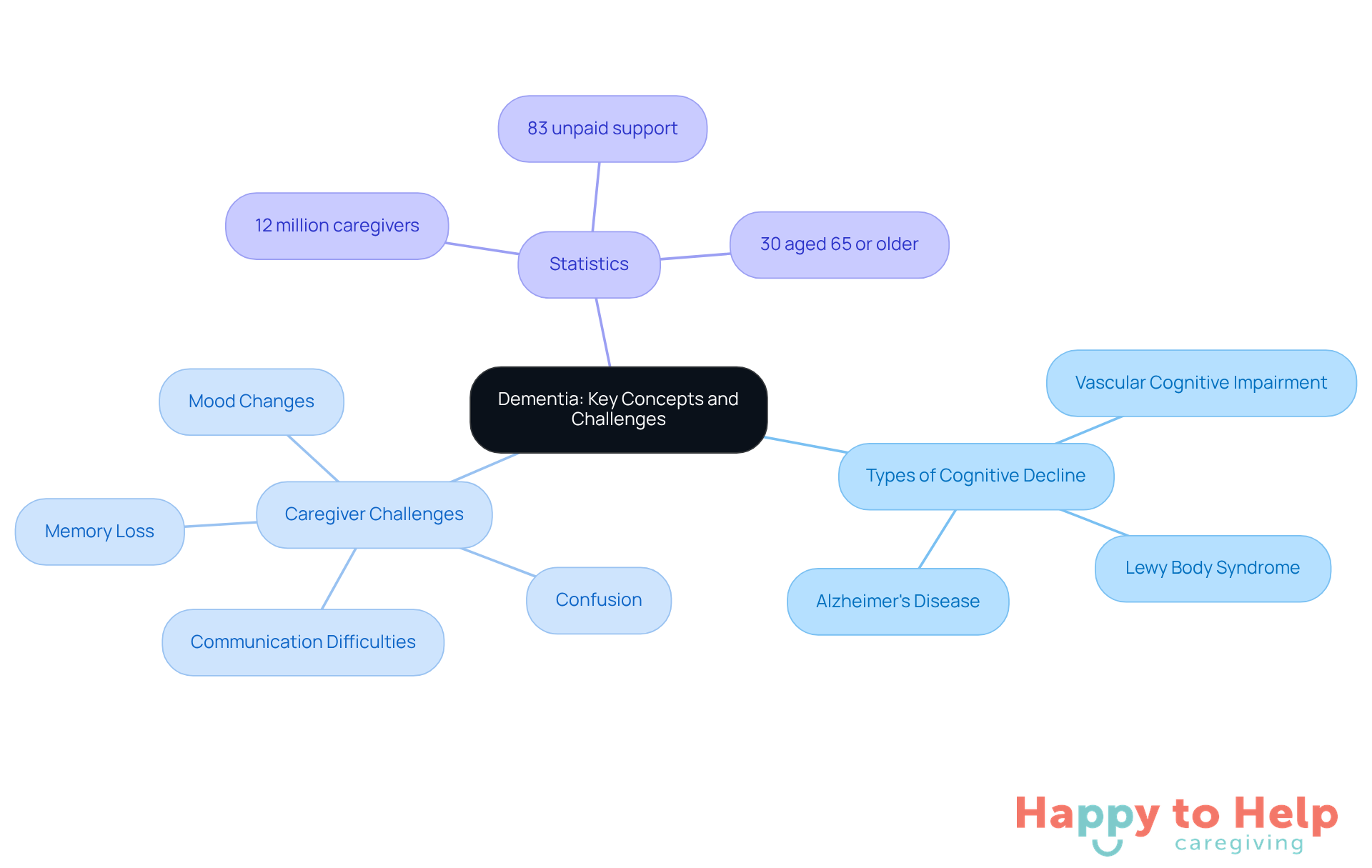
Cognitive decline presents a significant challenge for caregivers, affecting memory, thinking, and behavior. This progressive neurological disorder manifests in various forms, including Alzheimer's disease, vascular cognitive impairment, and Lewy body syndrome. Understanding that cognitive decline encompasses a range of symptoms is crucial for those providing care.
Caregivers often face key challenges such as:
- Memory loss
- Confusion
- Communication difficulties
- Mood or behavioral changes
For instance, repetitive questioning is a common symptom that should not be seen as a lack of understanding; rather, it reflects the nature of the disease. Recognizing these nuances is vital, as prompt identification of symptoms allows caregivers to adjust their approaches effectively, enriching the support experience and enhancing the quality of life for both the caregiver and the individual experiencing cognitive decline.
Statistics reveal that nearly 12 million Americans provide unpaid support for individuals with memory loss. Notably, 83% of assistance given to elderly individuals in the U.S. comes from unpaid supporters, highlighting the emotional and physical pressures they endure. Furthermore, research indicates that 30% of those providing support are aged 65 or older, with 66% being women who often face their own health challenges while managing the complexities of caregiving.
By understanding the types and signs of cognitive decline, caregivers can better address the evolving needs of their loved ones. This understanding fosters a nurturing environment that promotes dignity and independence. As the financial implications of cognitive decline continue to rise-estimated health and prolonged support costs for individuals living with Alzheimer's projected to reach $384 billion in 2025-grasping these challenges becomes increasingly essential.
Implement Personalized Care Techniques for Better Outcomes
Supporting individuals with cognitive impairments often requires dementia care support, which presents significant challenges for caregivers. Understanding the unique preferences, routines, and interests of each person is crucial. Without this understanding, caregivers may struggle to provide effective dementia care support, which can lead to increased anxiety and frustration for both the caregiver and the individual.
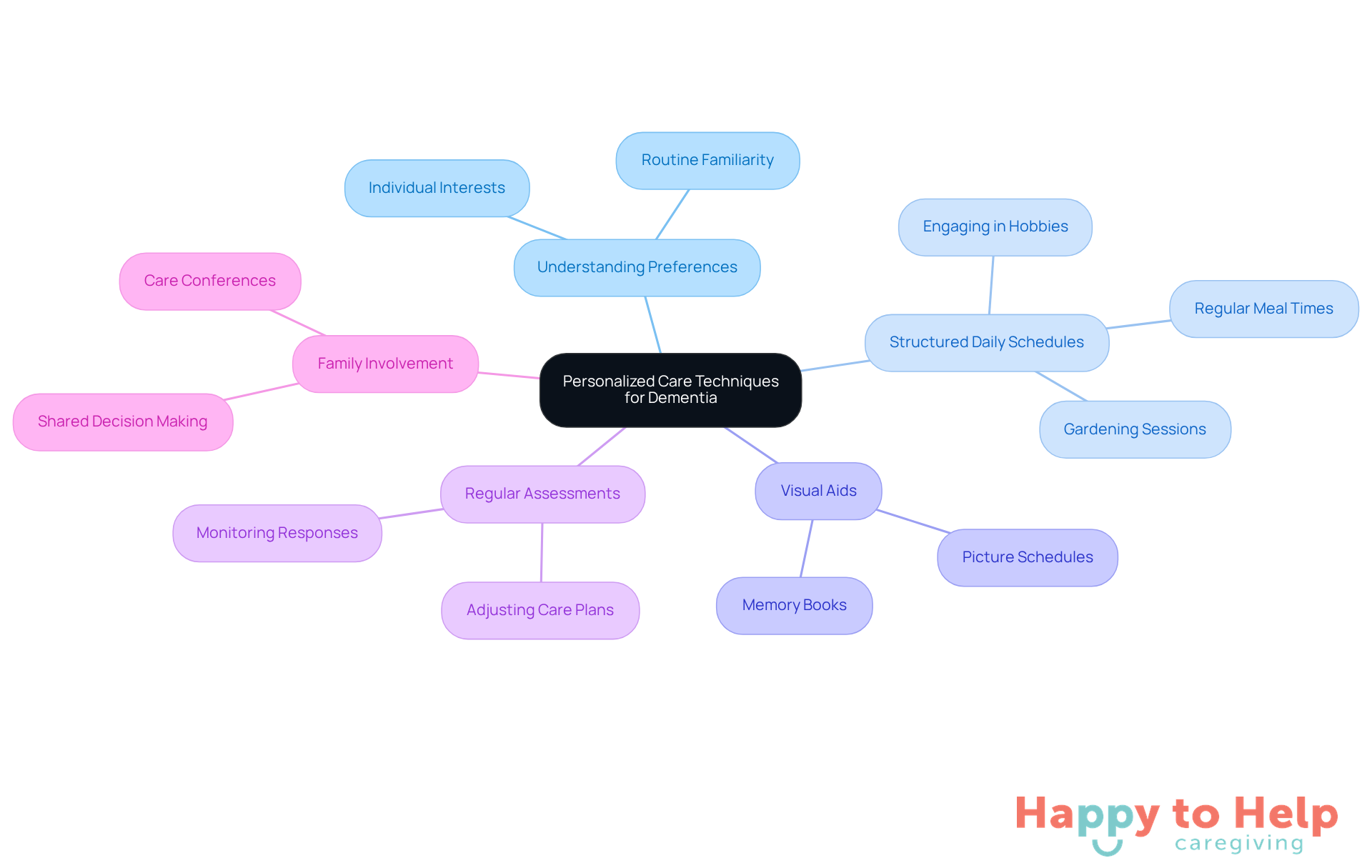
To address these challenges, caregivers can implement personalized techniques as part of their dementia care support. Creating a structured daily schedule that includes familiar activities - such as engaging in favorite hobbies or listening to cherished music - can evoke positive memories and alleviate anxiety. For example, if gardening is a beloved pastime, facilitating outdoor sessions can encourage participation and enhance emotional well-being.
Research shows that maintaining regular meal times helps anchor a patient's day, further improving the organization of their routine. Additionally, utilizing visual aids like picture schedules or memory books can reinforce daily routines, providing a sense of comfort and stability.
Personalized care plans for dementia care support should also consider factors such as medical history and lifestyle preferences to tailor care effectively. Regular assessments and adjustments based on the individual's responses are crucial for preserving dignity and enhancing overall quality of life. As cognitive decline progresses, consistent observation and modifications become essential for dementia care support to tackle emerging difficulties.
Participating in significant activities not only enhances the lives of individuals with dementia but also strengthens the emotional connections between supporters and their loved ones. A case study from a family supporter illustrated this point: incorporating daily gardening sessions significantly improved their loved one's mood and engagement, showcasing the positive impact of personalized routines on emotional well-being.
Prioritize Caregiver Well-Being: Strategies for Self-Care
Caregivers often face significant emotional and physical challenges, making self-care essential for their well-being. Statistics indicate that caregivers are more likely to experience health issues, such as high blood pressure and depression, compared to those who do not provide care. This highlights the urgent need for proactive self-care strategies.
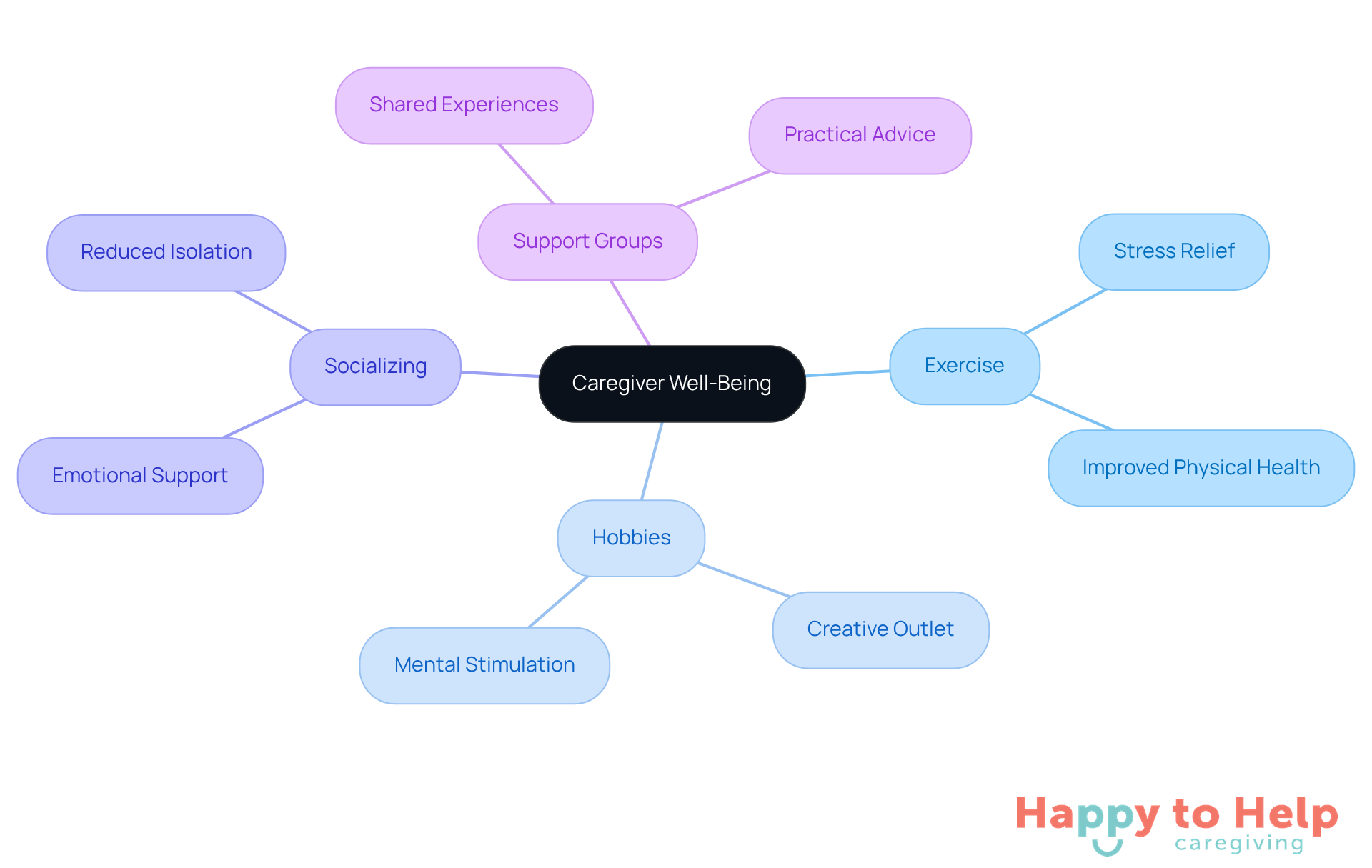
To address these challenges, caregivers can dedicate time to personal activities like:
- Exercise
- Hobbies
- Socializing with friends
These activities can significantly alleviate stress. Additionally, engaging in support groups provides not only emotional relief but also practical advice from peers who understand similar circumstances.
Recognizing signs of burnout - such as exhaustion, irritability, and social withdrawal - is crucial. Caregivers should seek help when needed. Utilizing respite assistance services, like those offered by Happy to Help Caregiving, can provide essential breaks, allowing caregivers to recharge and return to their responsibilities with renewed energy and focus.
As Dr. Taylor Rush emphasizes, "Self-care is essential, not optional," underscoring the importance of prioritizing personal health. This proactive approach to self-maintenance not only enhances the caregiver's well-being but also improves the quality of dementia care support they provide to their family members, particularly in memory-related assistance.
For instance, a caregiver who regularly participates in dementia care support groups reported feeling less isolated and better equipped to handle the challenges of caring for a loved one with cognitive decline. This illustrates the effectiveness of these self-care strategies.
Enhance Communication and Collaboration with Families
Effective communication with relatives poses a significant challenge in enhancing dementia support outcomes. Without frequent updates about a person's condition and changing support needs, transparency and trust can suffer. This lack of communication can leave relatives feeling disconnected and unsure about how to assist their loved ones.
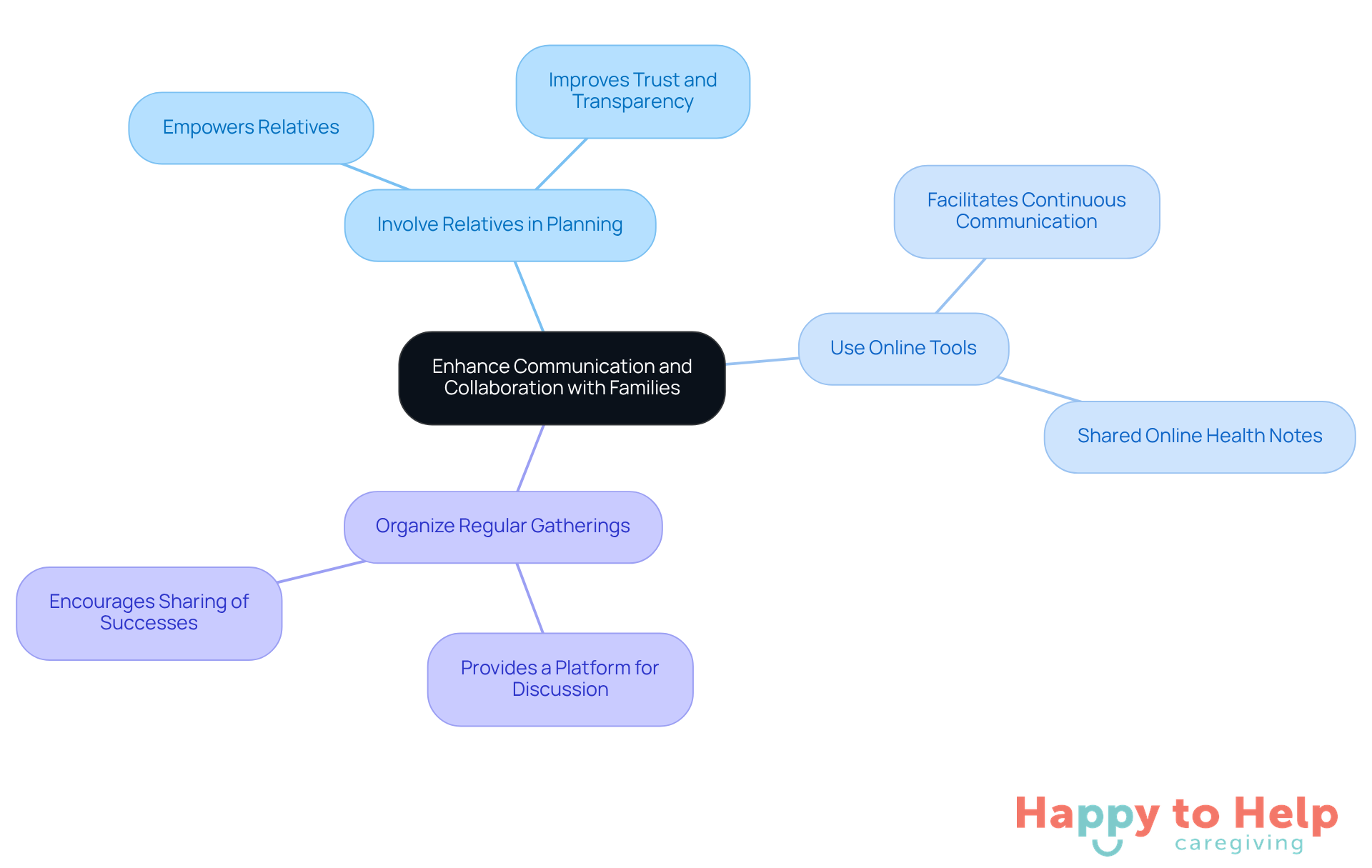
To address this issue, supporters should actively involve relatives in planning and decision-making. This collaborative approach fosters an environment where everyone feels empowered to contribute. Tools like shared online health notes can facilitate continuous communication, ensuring that all relatives remain informed and engaged in the support process.
Additionally, organizing regular gatherings with relatives can be beneficial. These meetings provide a platform for discussing concerns, sharing successes, and making necessary modifications to support plans. This cooperative method not only empowers relatives but also enhances dementia care support for individuals with cognitive decline, leading to improved well-being and quality of life.
Statistics reveal that nearly 8 out of 10 adults with cognitive impairment live at home with relatives, underscoring the importance of including loved ones in support strategies. Successful case studies show that families actively engaged in care planning feel more reassured and capable of navigating the complexities of dementia care. This engagement ultimately benefits both the caregiver and the individual receiving care.
Key Takeaways for Caregivers
Understanding and supporting individuals with dementia presents a significant challenge for family caregivers. The complexities of dementia, including memory loss and communication difficulties, can leave caregivers feeling overwhelmed and unsure of how to provide the best care. This situation not only affects the individuals living with dementia but also takes a toll on the caregivers' well-being.
To address these challenges, caregivers can implement several effective strategies:
- Recognizing the unique needs of each individual is crucial.
- Personalized care techniques, such as creating structured routines and engaging in activities that evoke positive memories, can significantly reduce anxiety and enhance the quality of life for both caregivers and their loved ones.
- Prioritizing self-care is essential for caregivers to maintain their physical and emotional health.
Open communication among family members is another key strategy. By fostering collaboration, everyone involved in the care process stays informed and engaged, leading to improved outcomes for those affected by cognitive decline. This collective approach not only supports the individual with dementia but also strengthens family bonds.
Ultimately, caregiving in dementia care is about more than just providing support; it’s about nurturing relationships and promoting dignity. By committing to these essential practices, caregivers can create a compassionate and effective care environment. Embracing these strategies uplifts the spirits of those receiving care and fortifies the emotional connections that are vital for navigating the challenges of this journey together.
https://iframe.tely.ai/cta/eyJhcnRpY2xlX2lkIjogIjY5MjI0ZjY0ZmViYTIxODdjZTM2NWJhZCIsICJjb21wYW55X2lkIjogIjY4ZWU1ZGNhNzMxNzYyNTU3ZjNjOTVjMSIsICJpbmRleCI6IG51bGwsICJ0eXBlIjogImFydGljbGUifQ==Frequently Asked Questions
What is cognitive decline and what are its main forms?
Cognitive decline refers to a significant challenge affecting memory, thinking, and behavior. It manifests in various forms, including Alzheimer's disease, vascular cognitive impairment, and Lewy body syndrome.
What are some common challenges faced by caregivers of individuals with cognitive decline?
Caregivers often face challenges such as memory loss, confusion, communication difficulties, and mood or behavioral changes.
How should caregivers interpret repetitive questioning in individuals with cognitive decline?
Repetitive questioning should not be seen as a lack of understanding; it reflects the nature of the disease. Recognizing this is important for caregivers to adjust their approaches effectively.
How many Americans provide unpaid support for individuals with memory loss?
Nearly 12 million Americans provide unpaid support for individuals with memory loss.
What percentage of assistance given to elderly individuals in the U.S. comes from unpaid supporters?
83% of assistance given to elderly individuals in the U.S. comes from unpaid supporters.
What demographic information is available about those providing caregiving support?
Research indicates that 30% of those providing support are aged 65 or older, and 66% are women who often face their own health challenges while caregiving.
Why is it important for caregivers to understand the types and signs of cognitive decline?
Understanding the types and signs of cognitive decline helps caregivers better address the evolving needs of their loved ones, fostering a nurturing environment that promotes dignity and independence.
What are the projected financial implications of cognitive decline, specifically for Alzheimer's care?
The estimated health and prolonged support costs for individuals living with Alzheimer's are projected to reach $384 billion in 2025.
List of Sources
- Understand Dementia: Key Concepts and Challenges
- Dementia (https://who.int/news-room/fact-sheets/detail/dementia)
- Telemedicine shows promise in improving dementia care, WHO study finds (https://who.int/europe/news/item/06-11-2025-telemedicine-shows-promise-in-improving-dementia-care--who-study-finds)
- Bridging Gaps in Dementia Care: PAs as Champions of Early Detection and Support Bridging Gaps in Dementia Care: PAs as Champions of Early Detection and Support (https://aapa.org/news-central/2025/11/bridging-gaps-in-dementia-care-pas-as-champions-of-early-detection-and-support)
- Alzheimer's Disease Facts and Figures (https://alz.org/alzheimers-dementia/facts-figures)
- ADI - Dementia statistics (https://alzint.org/about/dementia-facts-figures/dementia-statistics)
- Implement Personalized Care Techniques for Better Outcomes
- Memory Care: Three New Methods of Support for Families (https://frontporch.net/community/walnut-village/blog/memory-care-revolution-three-new-methods-of-support-for-families)
- Meaningful activities for a person with dementia (https://dementiauk.org/news/meaningful-activities-for-a-person-with-dementia)
- Enhancing Dementia Care | The Power of Personalized Care Plans (https://allheartcare.com/the-importance-of-personalized-care-plans-in-dementia-support)
- Leading the way in dementia-friendly care (https://wellspan.org/articles/2025/11/web---dementia-friendly-care)
- VHS launches GUIDE program to assist individuals diagnosed with dementia and their caregivers (https://vahs.com/vhs-launches-guide-program-dementia-caregivers)
- Prioritize Caregiver Well-Being: Strategies for Self-Care
- Facebook (https://newsroom.clevelandclinic.org/2025/11/19/importance-of-self-care-for-family-caregivers)
- A caregiver's survival guide: Advice from people who've been there (https://npr.org/2025/10/18/nx-s1-5558451/caregiver-caregiving-family-burnout-support-advice)
- Tips for Family Caregivers: Balancing Care and Self-Care - Bryan Skilled Home Care (https://bryanskilledhomecare.com/2025/11/20/tips-for-family-caregivers-balancing-care-and-self-care)
- Why is self-care so important for family caregivers? – Senior Transitions of Central Ohio (https://seniortransitionsohio.com/2025/10/22/why-is-self-care-so-important-for-family-caregivers)
- 5 Self-Care Tips for Caregivers | United Way Worldwide (https://unitedway.org/news/5-self-care-tips-for-caregivers)
- Enhance Communication and Collaboration with Families
- Bridging the gap in dementia care (https://geisinger.org/about-geisinger/news-and-media/news-releases/2025/11/17/18/28/bridging-the-gap-in-dementia-care)
- New Medicare program offers much-needed relief for caregivers of dementia patients (https://finance.yahoo.com/news/new-medicare-program-offers-much-needed-relief-for-caregivers-of-dementia-patients-203450020.html)
- Pa., N.J. and Del.families can now enroll in a new Medicare dementia program (https://whyy.org/articles/medicare-dementia-guide-program-pennsylvania-new-jersey-delaware)
- Bridging Gaps in Dementia Care: PAs as Champions of Early Detection and Support Bridging Gaps in Dementia Care: PAs as Champions of Early Detection and Support (https://aapa.org/news-central/2025/11/bridging-gaps-in-dementia-care-pas-as-champions-of-early-detection-and-support)