Essential Elderly Financial Assistance for Family Caregivers

For families in our service areas
For families in our service areas, this guide explains caregiver support and how non-medical in-home caregiving can support care planning in East Idaho, Treasure Valley & Magic Valley, Northern Wasatch, North Central West Virginia & Southwestern Pennsylvania, and Northeast Ohio.
Understanding Essential Elderly Financial Assistance
Navigating the financial landscape can be particularly daunting for seniors. Many grapple with rising living and healthcare costs, which can significantly impact their quality of life. Nearly half of older adults rely on Social Security for a substantial portion of their income, making it crucial to understand available financial assistance options.
However, caregivers often face a web of complexities and challenges that can hinder access to these essential resources. This situation not only affects the seniors they care for but also adds stress to caregivers who strive to provide support. How can caregivers effectively bridge the gap between financial aid opportunities and the needs of the seniors they care for?
To tackle this issue, caregivers must first familiarize themselves with the various financial assistance programs available. This includes understanding eligibility requirements and application processes. Additionally, seeking guidance from financial advisors or local agencies can provide valuable insights and support.
By taking proactive steps to educate themselves and their loved ones about financial resources, caregivers can help ensure that seniors receive the assistance they need to maintain their quality of life.
Explore Financial Assistance Options for Seniors
Seniors face significant challenges in managing living expenses and healthcare costs, underscoring the importance of elderly financial assistance. Many rely heavily on various support options, such as elderly financial assistance, to navigate these financial pressures.
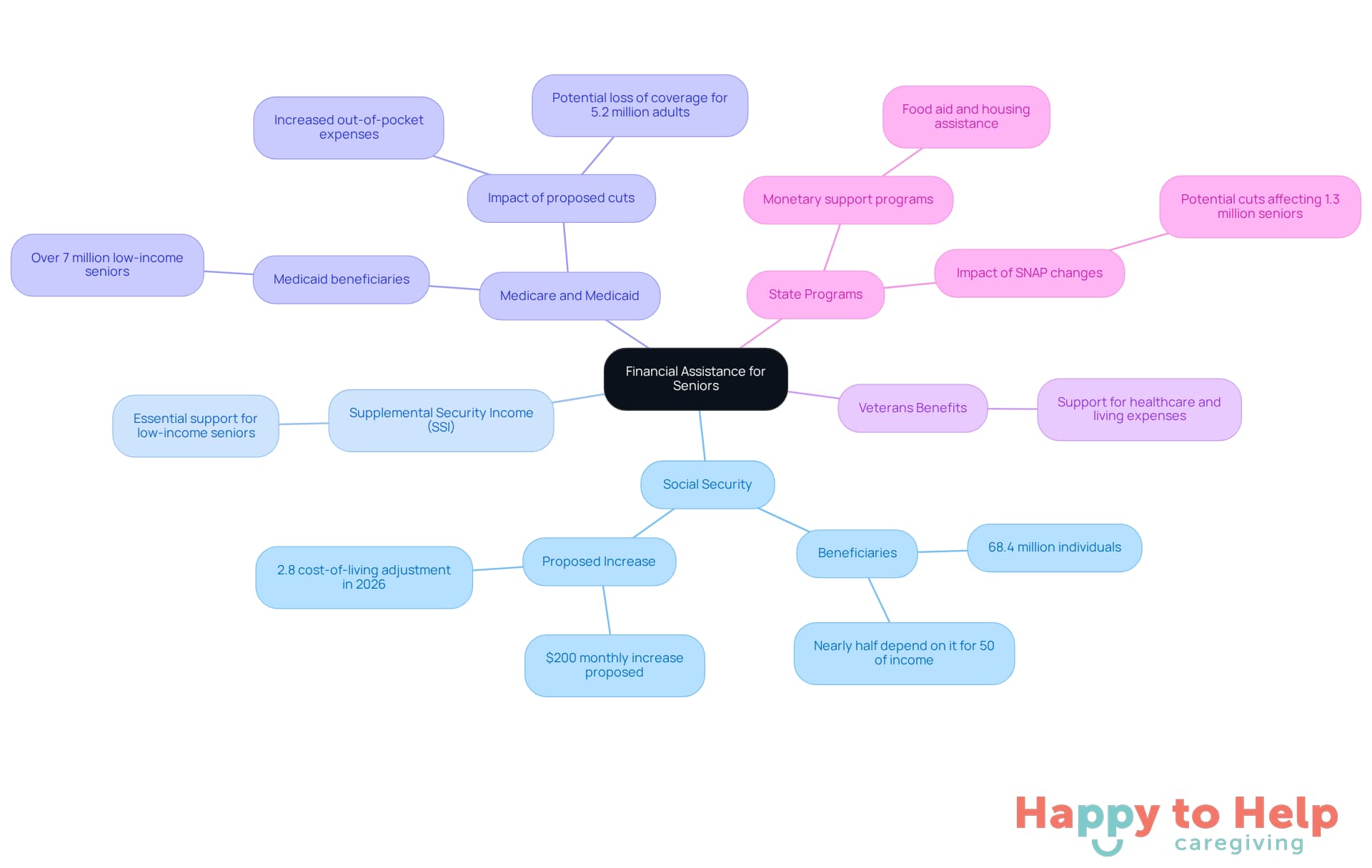
Problem: Nearly all seniors qualify for Social Security, which provides a monthly income based on their work history. As of 2024, about 68.4 million individuals receive these benefits, underscoring the program's critical role in supporting older Americans. Alarmingly, almost half of all older adults depend on Social Security for at least 50% of their income, making it a cornerstone of their financial planning.
Agitate: For elderly individuals with limited income and resources, elderly financial assistance provided by Supplemental Security Income (SSI) offers essential support, ensuring they can maintain a basic standard of living. Additionally, Medicare and Medicaid are vital programs that cover healthcare expenses. More than 7 million low-income elderly individuals rely on Medicaid for health coverage, emphasizing its importance in their financial strategies. Proposed reductions to Medicaid could severely impact these individuals' access to necessary healthcare services, further complicating their economic situation.
Solution: Veterans may also qualify for specific benefits that assist with healthcare and living expenses, providing crucial support for those who have served the country. Furthermore, many states offer tailored monetary support programs for elderly financial assistance, which include food aid and housing assistance to alleviate economic pressures. However, suggested modifications to SNAP could limit access to food aid for many older adults, exacerbating their financial challenges.
Caregivers play a vital role in encouraging elderly individuals to explore these options and assist them in the application process. By doing so, they can help ensure that older adults receive the necessary support to thrive in their daily lives. As Senator Elizabeth Warren noted, the proposed legislation aims to serve as an 'emergency lifeline' for older Americans, highlighting the ongoing need for robust support alternatives.
Identify Common Debt Challenges Faced by Seniors
Seniors frequently face a range of debt challenges that can complicate their financial stability:
-
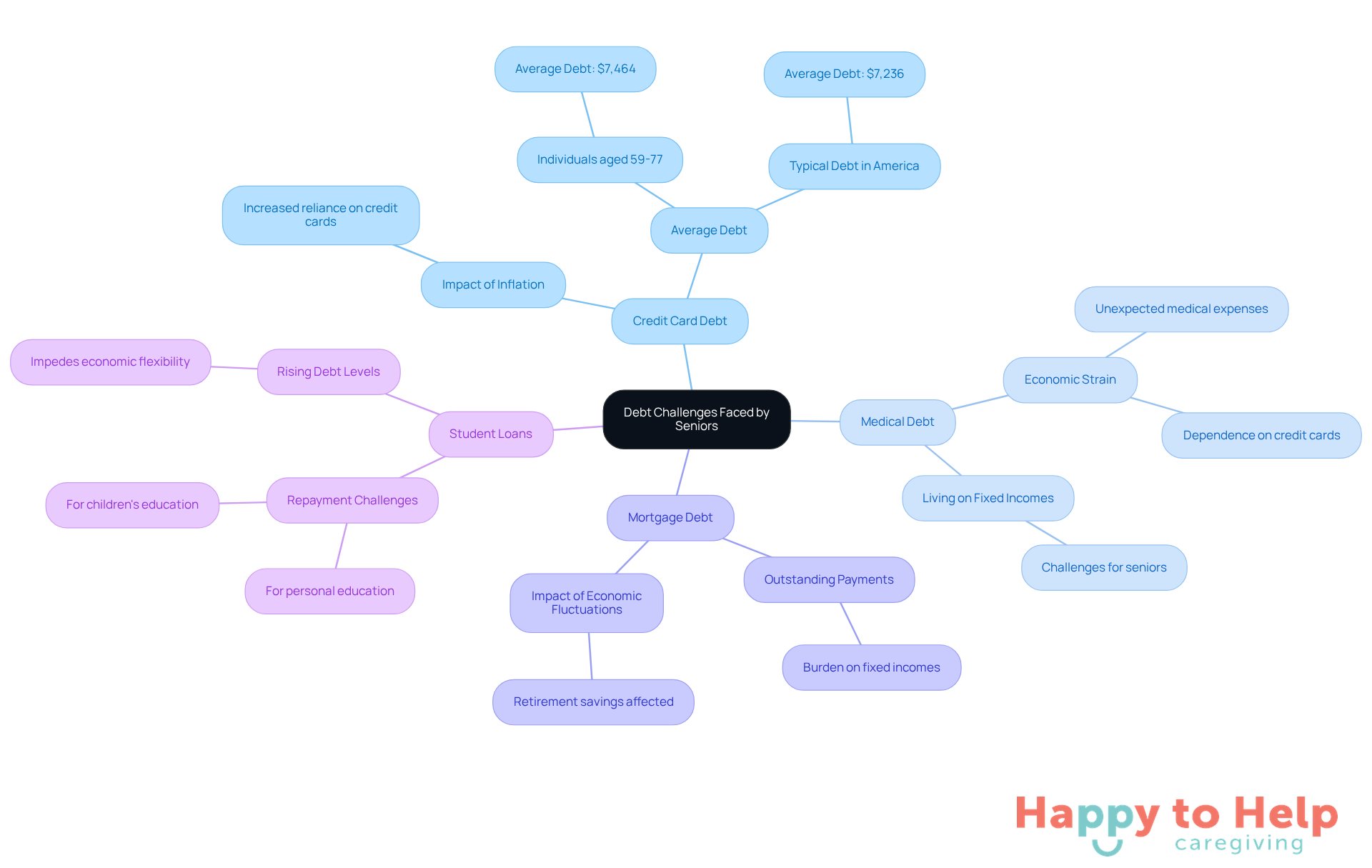
Credit Card Debt: A significant number of seniors carry credit card balances, which often accrue high-interest charges, making repayment increasingly difficult. As of 2025, the average credit card debt among individuals aged 59-77 is around $7,464, indicating ongoing monetary obligations as they prepare for retirement. This trend is exacerbated by rising inflation, leading many to rely more heavily on credit cards for everyday expenses. According to LendingTree, the typical credit card debt in America is approximately $7,236, suggesting that older adults are not alone in encountering these financial challenges.
-
Medical Debt: Unexpected medical expenses can impose substantial economic strain, particularly for those living on fixed incomes. The average medical debt for older adults in the U.S. can be overwhelming, especially when combined with other financial obligations. Reports indicate that many older adults struggle with medical expenses, resulting in greater dependence on credit cards to manage these costs.
-
Mortgage Debt: Many older adults still have outstanding mortgage payments, which can become burdensome if their income decreases. This situation is particularly challenging for those whose retirement savings have been impacted by economic fluctuations. Data shows that a considerable segment of older adults continues to hold mortgage debt, obstructing their economic flexibility as they age.
-
Student Loans: Some seniors are still repaying student loans, either for their own education or for their children, adding another layer of financial stress. This demographic has seen a rise in student loan debt, with many older adults holding balances that impede their economic flexibility. Recent findings reveal that older adults are increasingly taking on student loans, reflecting a broader trend of financial obligations extending into later life.
By understanding these challenges, caregivers can better support elderly individuals in creating effective strategies that incorporate elderly financial assistance to manage and reduce their debt, ultimately improving their financial well-being.
Access Government Programs and Support Organizations for Seniors
Caregivers face significant challenges when it comes to providing support for seniors, particularly in securing the financial aid necessary for effective caregiving. Without adequate resources, caregivers may struggle to maintain their roles, leading to stress and burnout.
Fortunately, numerous government initiatives and assistance organizations offer essential financial aid to seniors, which can significantly benefit family caregivers. Here are some key programs:
-
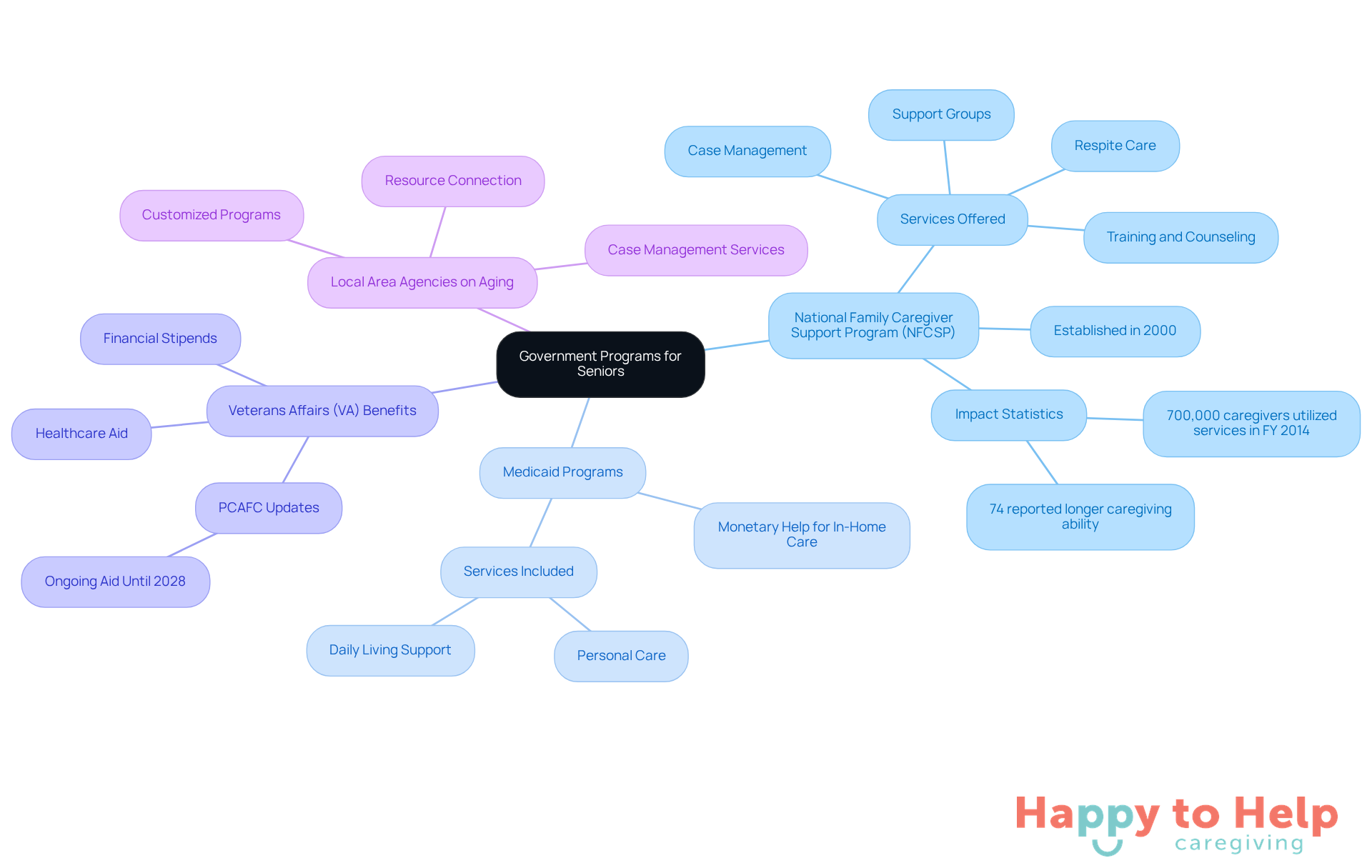
National Family Caregiver Support Program (NFCSP): Established in 2000, this program provides grants to states, enabling them to deliver essential services that assist family caregivers. In FY 2014, over 700,000 caregivers utilized its services, which include respite care, training, counseling, case management, and assistance groups. Notably, 74% of caregivers reported that NFCSP services allowed them to provide care longer than they could have otherwise, underscoring its impact.
-
Medicaid Programs: Many states have Medicaid initiatives that offer monetary help for in-home care services, ensuring that seniors can receive the aid they require while staying in their residences. These programs often encompass a variety of services, including personal care and support with daily living activities.
-
Veterans Affairs (VA) Benefits: The VA provides extensive assistance for family caregivers of veterans, including financial stipends and healthcare aid. Recent updates indicate that caregivers enrolled in the Program of Comprehensive Assistance for Family Caregivers (PCAFC) can expect ongoing aid without a decrease in their monthly stipends, as the transition period has been extended through September 30, 2028, ensuring stability during their caregiving journey.
-
Local Area Agencies on Aging: These organizations serve as essential connections, linking older adults and caregivers with local resources and customized programs. They provide information on available services, case management, and assistance groups, which are vital for navigating the complexities of caregiving and fostering community connections.
Caregivers are encouraged to actively pursue these programs and assist seniors in applying for the benefits for which they qualify. By doing so, they can ensure that seniors receive the essential resources needed to thrive.
Integrate Caregiving Support with Financial Assistance Strategies
Caregivers often face the challenge of managing caregiving expenses alongside financial assistance strategies. This can lead to stress and uncertainty, impacting both their well-being and the quality of care provided to seniors.
To address these challenges, caregivers can implement several effective strategies:
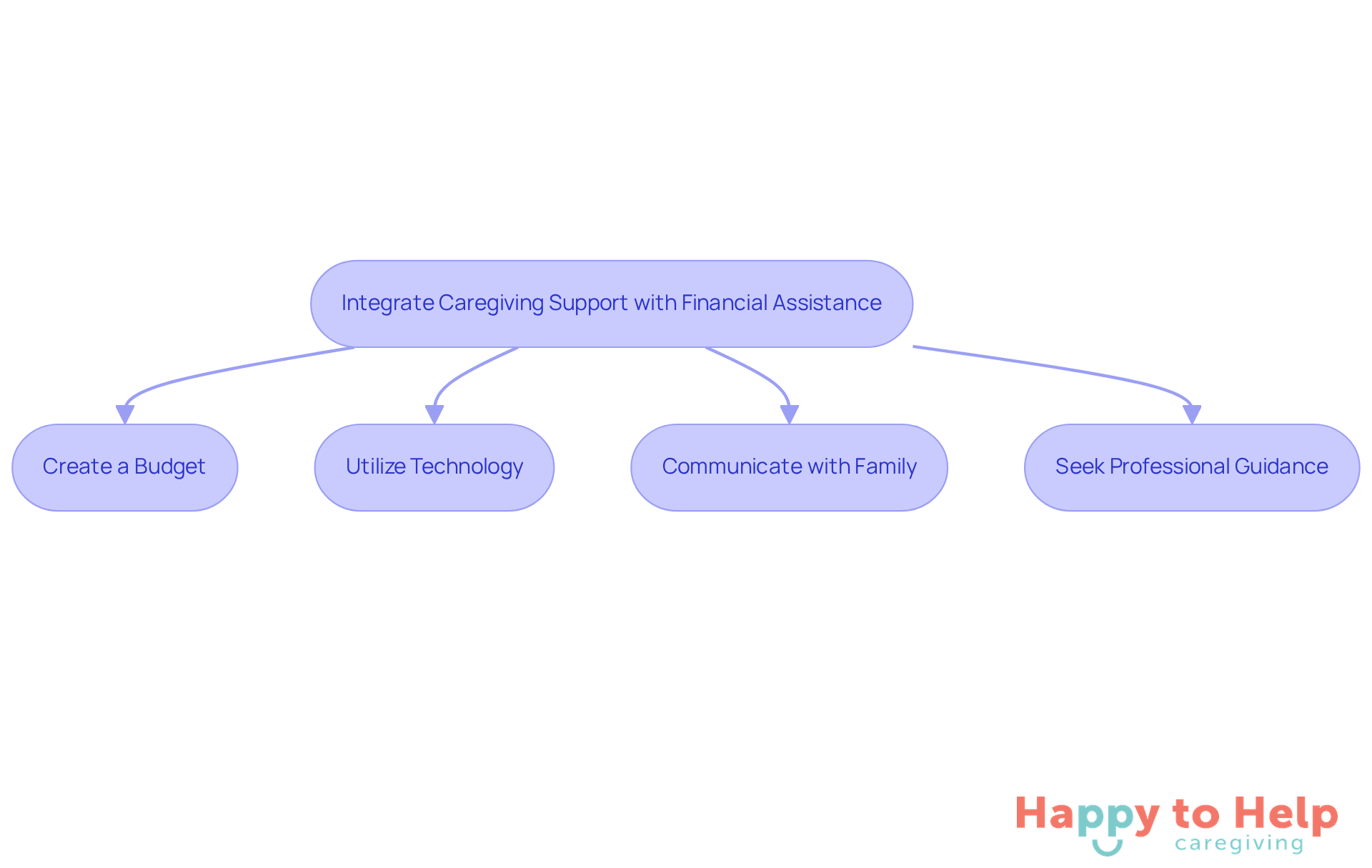
- Create a Budget: Develop a budget that accounts for caregiving expenses and available financial assistance, ensuring that all costs are covered.
- Utilize Technology: Use apps and online tools to track expenses and manage resources efficiently.
- Communicate with Family: Maintain open lines of communication with family members about monetary needs and available resources, fostering a supportive environment.
- Seek professional guidance by consulting with money advisors or elder law attorneys to navigate complex monetary situations and ensure that older adults are receiving elderly financial assistance to maximize their benefits.
By combining caregiving efforts with these financial strategies, caregivers can significantly improve the quality of life for seniors.
Taking the Next Steps
Financial assistance for elderly individuals presents a significant challenge in navigating their complex financial landscape. Many seniors face mounting pressures from debt, including credit card, medical, and mortgage obligations, which can jeopardize their financial stability. Understanding and accessing support systems like Social Security, Supplemental Security Income (SSI), and Medicaid is crucial for ensuring a stable and fulfilling life for older adults.
Caregivers play a vital role as advocates, guiding elderly individuals through the maze of financial assistance options and government programs designed to alleviate their burdens. They must recognize the importance of these resources and actively seek them out to help seniors manage their financial pressures effectively.
To enhance the quality of life for seniors, integrating caregiving support with financial assistance strategies is essential. Caregivers are encouraged to implement practical solutions such as:
- Budgeting strategies
- Fostering open communication within families
By doing so, they can empower older adults to not only survive but thrive, ensuring they receive the necessary support to maintain their dignity and independence in their later years.
https://iframe.tely.ai/cta/eyJhcnRpY2xlX2lkIjogIjY5MjY0Mzc2NTA1M2U2YTE3NTJiNzdkMiIsICJjb21wYW55X2lkIjogIjY4ZWU1ZGNhNzMxNzYyNTU3ZjNjOTVjMSIsICJpbmRleCI6IG51bGwsICJ0eXBlIjogImFydGljbGUifQ==Frequently Asked Questions
What financial challenges do seniors face?
Seniors often struggle with managing living expenses and healthcare costs, making elderly financial assistance crucial for navigating these financial pressures.
How significant is Social Security for seniors?
Nearly all seniors qualify for Social Security, which provides a monthly income based on their work history. As of 2024, about 68.4 million individuals receive these benefits, and almost half of older adults depend on Social Security for at least 50% of their income.
What is Supplemental Security Income (SSI) and who benefits from it?
Supplemental Security Income (SSI) offers essential support for elderly individuals with limited income and resources, helping them maintain a basic standard of living.
How do Medicare and Medicaid support elderly individuals?
Medicare and Medicaid are vital programs that cover healthcare expenses for seniors. More than 7 million low-income elderly individuals rely on Medicaid for health coverage.
What risks do proposed reductions to Medicaid pose for seniors?
Proposed reductions to Medicaid could severely impact low-income elderly individuals' access to necessary healthcare services, complicating their economic situation.
Are there specific benefits available for veterans?
Yes, veterans may qualify for specific benefits that assist with healthcare and living expenses, providing crucial support for those who have served the country.
What types of financial assistance programs do states offer for seniors?
Many states offer tailored monetary support programs for elderly financial assistance, including food aid and housing assistance to alleviate economic pressures.
How could modifications to SNAP affect older adults?
Suggested modifications to the Supplemental Nutrition Assistance Program (SNAP) could limit access to food aid for many older adults, exacerbating their financial challenges.
What role do caregivers play in assisting elderly individuals with financial assistance options?
Caregivers play a vital role in encouraging elderly individuals to explore financial assistance options and assist them in the application process, helping ensure they receive necessary support.
What is the purpose of the proposed legislation mentioned by Senator Elizabeth Warren?
The proposed legislation aims to serve as an 'emergency lifeline' for older Americans, highlighting the ongoing need for robust support alternatives.
List of Sources
- Explore Financial Assistance Options for Seniors
- 'Our Bill Provides A Financial Lifeline To Seniors' – Senate Democrats Propose $200 Monthly Social Security Increase To Offset Inflation (https://finance.yahoo.com/news/bill-provides-financial-lifeline-seniors-193128451.html)
- 2025 Budget Impacts: House Bill Would Cut Assistance and Raise Costs for Seniors (https://cbpp.org/research/federal-budget/2025-budget-impacts-house-bill-would-cut-assistance-and-raise-costs-for)
- What the data says about Social Security (https://pewresearch.org/short-reads/2025/05/20/what-the-data-says-about-social-security)
- Monthly Statistical Snapshot, August 2025 (https://ssa.gov/policy/docs/quickfacts/stat_snapshot)
- Social Security Beneficiary Statistics (https://ssa.gov/oact/STATS/OASDIbenies.html)
- Identify Common Debt Challenges Faced by Seniors
- 30 Debt Quotes: Showing Empathy and the Burden of Debt | PDCflow Blog (https://pdcflow.com/debt-collection/30-debt-quotes-showing-empathy-burden-of-debt)
- Older Americans and Credit Card Debt (https://aarp.org/pri/topics/work-finances-retirement/financial-security-retirement/in-the-red-older-americans-credit-card-debt-AARP-ppi-sec)
- How to Deal With Credit Card Debt on a Fixed Income (https://homestreet.com/education-center/education-center-blogs/2025/03/21/how-to-deal-with-credit-card-debt-on-a-fixed-income)
- Debt Quotes That Can Teach You About Money Management (https://nationaldebtrelief.com/blog/financial-wellness/financial-education/interesting-debt-quotes-teaches-lot-money-management)
- 2025 Average Credit Card Debt Statistics: What to Know (https://ramp.com/blog/credit-card-statistics)
- Access Government Programs and Support Organizations for Seniors
- National Family Caregiver Support Program (https://aging.ny.gov/national-family-caregiver-support-program)
- VA.gov | Veterans Affairs (https://caregiver.va.gov/support/support_benefits.asp)
- National Family Caregiver Support Program | ACL Administration for Community Living (https://acl.gov/programs/support-caregivers/national-family-caregiver-support-program)
- Number of Family Caregivers Supporting Older Adults Increased Nearly One-Third Between 2011 and 2022 | Johns Hopkins Bloomberg School of Public Health (https://publichealth.jhu.edu/2025/number-of-family-caregivers-supporting-older-adults-increased-nearly-one-third-between-2011-and-2022)
- 10 Essential Dementia Caregiver Services for Family Support - Happy To Help (https://happytohelpcaregiving.com/10-essential-dementia-caregiver-services-for-family-support)
- Integrate Caregiving Support with Financial Assistance Strategies
- Caregiving in the US 2025 (https://aarp.org/pri/topics/ltss/family-caregiving/caregiving-in-the-us-2025)
- A bill in Congress would return $5,000 to millions of family caregivers every year, but will it pass? (https://cbsnews.com/newyork/news/credit-for-caring-act-family-caregiver-tax-credit)
- Family caregivers feeling squeezed in Washington, report finds • Washington State Standard (https://washingtonstatestandard.com/briefs/family-caregivers-feeling-squeezed-in-washington-report-finds)
- Federal budget committee greenlights millions in spending for family caregivers, respite services (https://mcknightshomecare.com/news/federal-budget-committee-greenlights-millions-in-spending-for-family-caregivers-respite-services)