

For families in our service areas
For families in our service areas, this guide explains dementia care and how non-medical in-home caregiving can support care planning in East Idaho, Treasure Valley & Magic Valley, Northern Wasatch, North Central West Virginia, and Northeast Ohio.
Understanding Essential Gadgets for Dementia
Caring for individuals with dementia presents a significant challenge for many caregivers. The emotional and logistical hurdles can often leave them feeling overwhelmed and unsure of how to provide the best care. This situation not only affects the caregivers but also impacts the quality of life for their loved ones.
Fortunately, the right assistive gadgets can offer innovative solutions that enhance safety and promote independence. These tools simplify daily routines, making caregiving more manageable. However, with so many options available, caregivers may struggle to identify which tools truly meet the unique needs of their loved ones.
This article explores essential gadgets for dementia care, comparing both high-tech and low-tech solutions. By providing clear, practical information, we aim to empower caregivers to make informed choices that enhance both care and quality of life.
Understanding Assistive Products for Dementia Care
Caring for individuals with dementia presents significant challenges, particularly when it comes to assisting them with daily tasks. Cognitive impairments can hinder their ability to remember important information and navigate their environment, which can be distressing for both caregivers and those they care for.
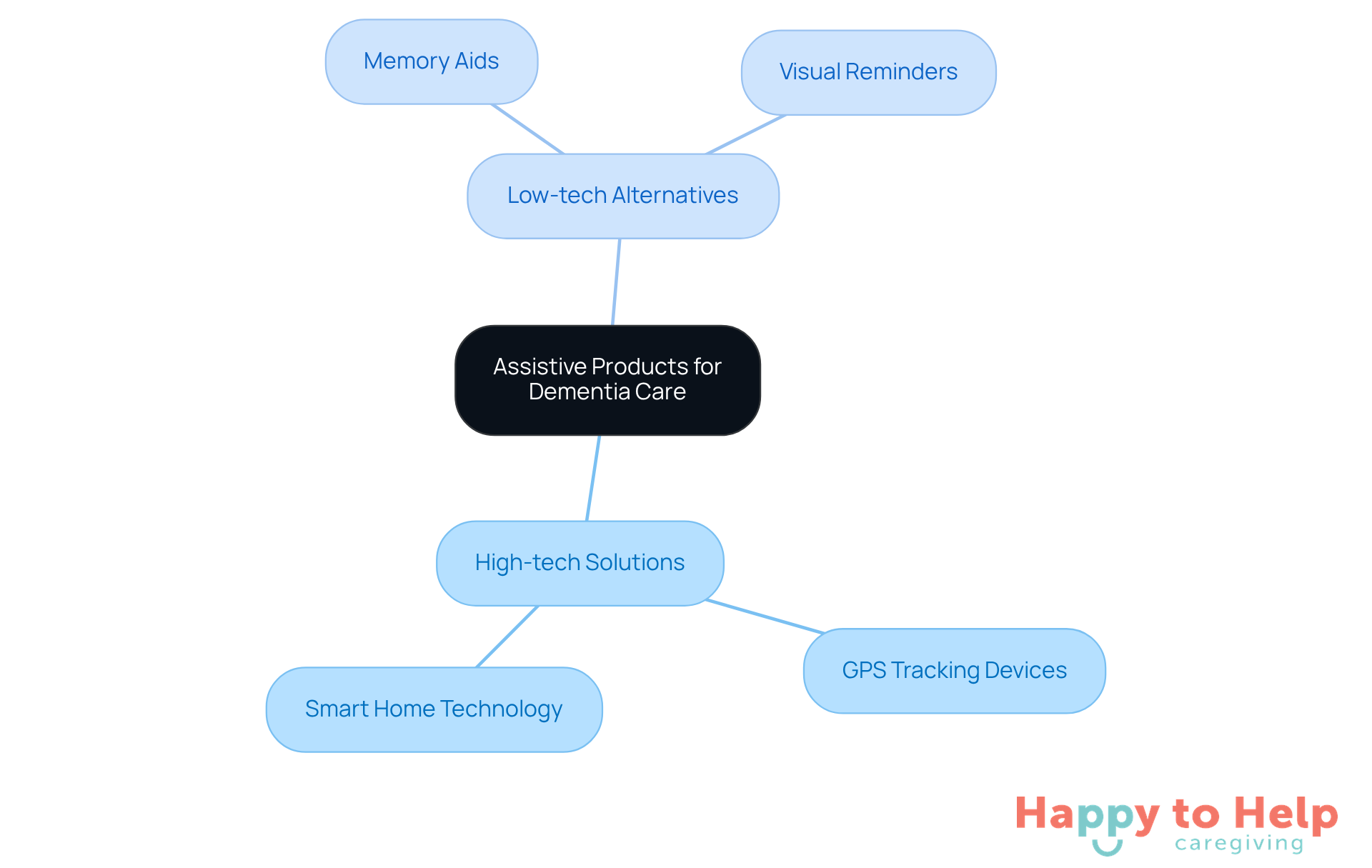
To address these challenges, a variety of assistive tools are available. These can be categorized into:
- High-tech solutions, such as GPS tracking devices and smart home technology
- Low-tech alternatives, like memory aids and visual reminders
High-tech devices often allow caregivers to monitor individuals from a distance, ensuring their safety while promoting independence. On the other hand, low-tech products, such as large-print calendars and simple labeling systems, help individuals manage their daily routines and recall essential tasks.
Understanding these classifications is crucial for caregivers. By selecting the right tools tailored to the unique needs of each individual, caregivers can significantly enhance the quality of life for those with dementia. This approach not only fosters independence but also provides peace of mind for caregivers.
Criteria for Evaluating Dementia Assistive Gadgets
When it comes to selecting gadgets for dementia patients, caregivers often face a significant challenge: finding the right tools that meet their needs. This task can be overwhelming, as the wrong choice can impact the safety and well-being of the individual.
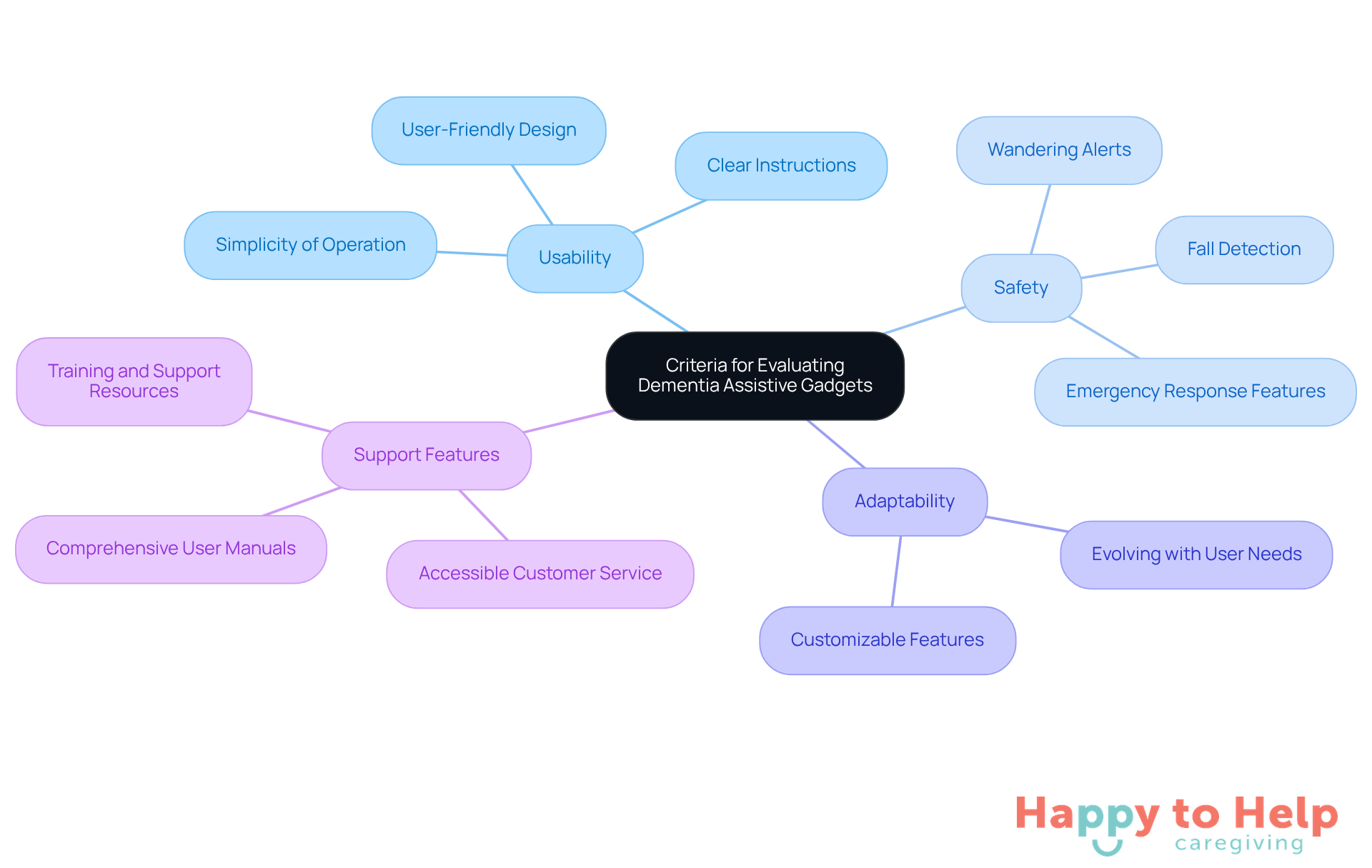
To navigate this complexity, caregivers should focus on several key criteria:
- Usability
- Safety
- Adaptability
- Support features
Usability is crucial; the device must be simple for both the user and caregiver to operate. If a device is too complicated, it can lead to frustration and decreased effectiveness. Safety features are equally important. Devices that include alerts for wandering or fall detection can provide peace of mind and ensure the individual’s well-being.
Moreover, adaptability allows the device to evolve with the user's changing needs, ensuring long-term effectiveness. Finally, support features, such as accessible customer service and clear user manuals, can significantly enhance the overall user experience.
By prioritizing these standards, caregivers can effectively narrow down their options and discover the most suitable gadgets for dementia patients for their loved ones.
Comparing Top Assistive Products for Dementia Patients
Caregivers of individuals with dementia often face significant challenges in ensuring their loved ones' safety and well-being. Managing medication schedules, tracking daily activities, and providing reminders can be overwhelming. Fortunately, several gadgets for dementia patients can help alleviate these burdens.
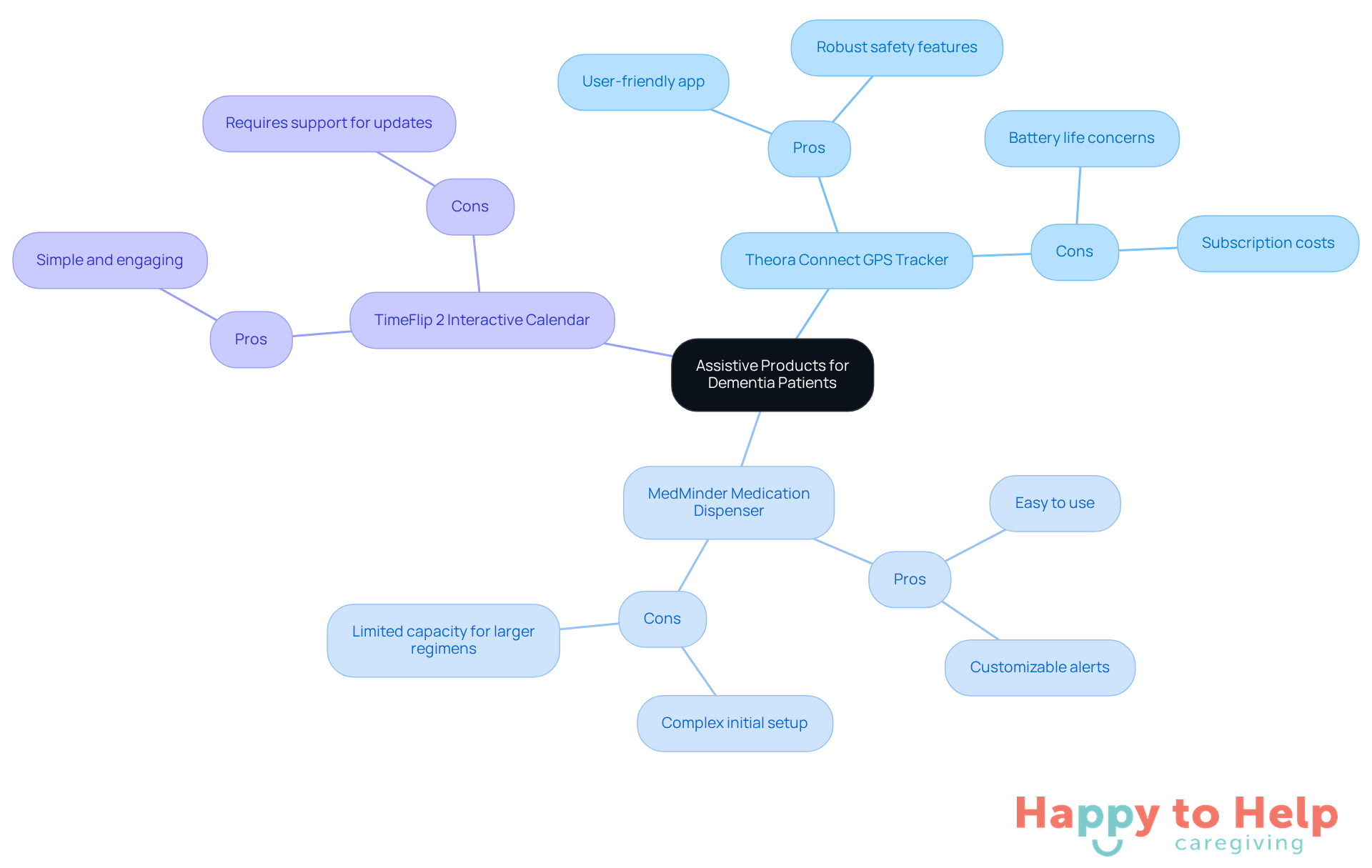
Theora Connect GPS Tracker: This device offers real-time location monitoring and geofencing features, allowing caregivers to set safe zones. If the individual strays outside these areas, notifications are sent.
- Pros: User-friendly app, robust safety features.
- Cons: Battery life and subscription costs may be concerns.
MedMinder Medication Dispenser: This automated pill dispenser ensures timely medication intake with visual and auditory reminders, making it ideal for those with memory issues.
- Pros: Easy to use, customizable alerts.
- Cons: Initial setup can be complex, and it may have limited capacity for larger medication regimens.
TimeFlip 2 Interactive Calendar: A low-tech solution that provides a tactile way for patients to track daily activities. Caregivers can personalize the calendar with reminders.
- Pros: Simple and engaging.
- Cons: Requires support from others to update regularly.
By evaluating these options, caregivers can choose the best gadgets for dementia patients that fit their loved one's needs and lifestyle.
Impact of Assistive Products on Caregiving and Patient Independence
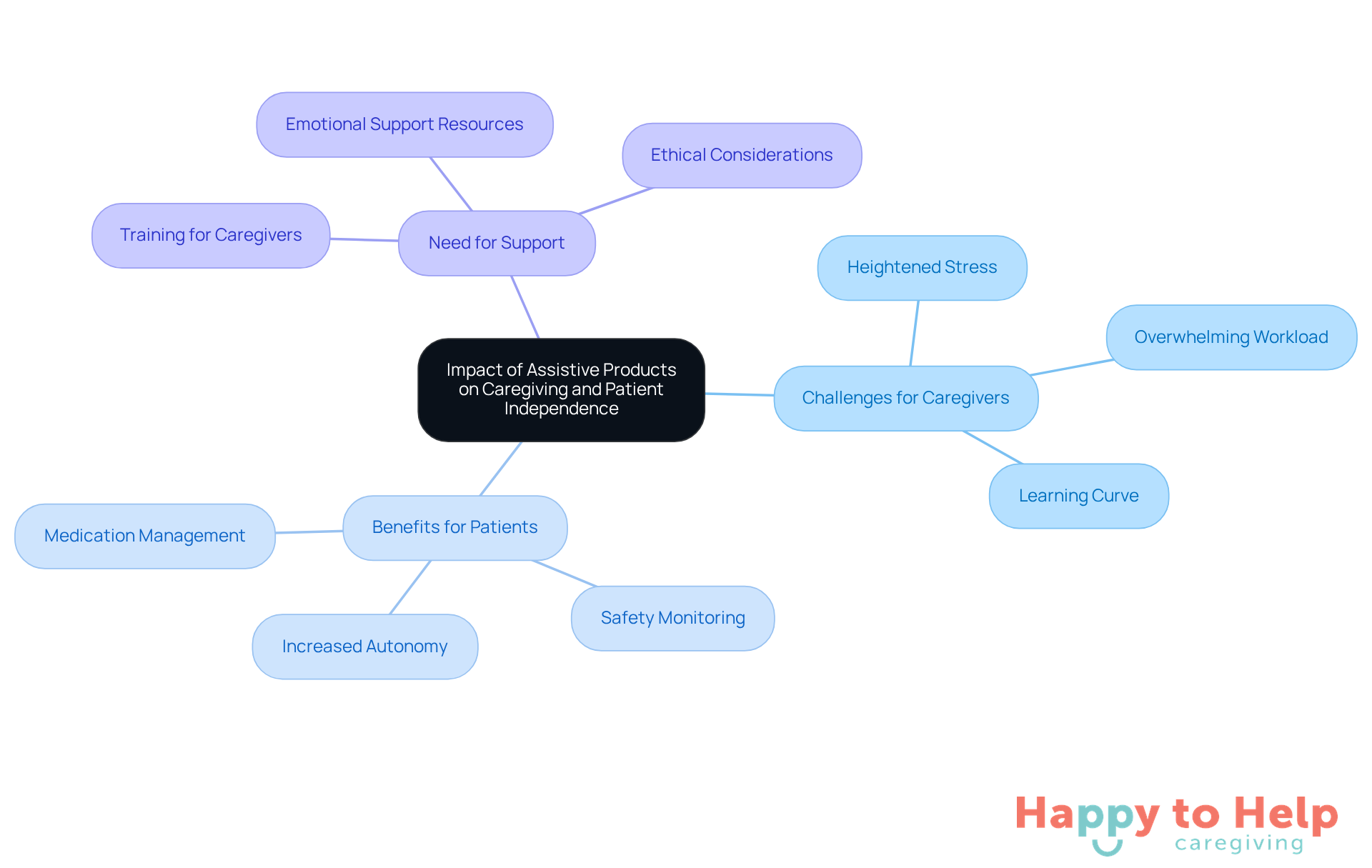
The incorporation of assistive products into dementia care presents a significant challenge for caregivers. Many supporters experience heightened stress and an overwhelming workload due to the demands of managing essential tasks like medication management and safety monitoring. This situation not only affects caregivers but also impacts the emotional support and companionship that are crucial for the well-being of individuals with dementia.
However, gadgets for dementia patients provide a viable solution. By automating these essential tasks, caregivers can allocate more time to providing emotional support, which is vital for those they care for. For instance, gadgets for dementia patients such as GPS trackers empower them to explore their surroundings safely, while medication dispensers help ensure adherence to treatment plans without the need for constant supervision. Research shows that approximately 6.9 million Americans aged 65 and older are living with Alzheimer's disease, highlighting the importance of these technologies in promoting autonomy and independence.
Despite the numerous advantages, caregivers must adapt to new technologies, which can involve a learning curve. Managing multiple devices may increase their burden, and ethical implications such as privacy concerns and dependency on technology must be considered.
In summary, while the positive impact of gadgets for dementia patients on caregiving dynamics and patient autonomy is substantial, it is essential for caregivers to receive support in navigating these changes. By embracing these technologies, caregivers can foster a more supportive environment for both themselves and the individuals they care for.
Making the Right Choice
The exploration of essential gadgets for dementia patients reveals a significant problem: caregivers often struggle to balance their responsibilities while ensuring the independence and safety of those they care for. This challenge can lead to emotional strain and a diminished quality of life for both caregivers and patients.
The implications of this issue are profound. Caregivers may feel overwhelmed, and patients can experience a loss of autonomy, which affects their emotional well-being. However, there is a solution. By integrating assistive technology - ranging from GPS trackers to medication dispensers - caregivers can alleviate some of these burdens. These gadgets not only enhance safety but also empower patients to engage more freely with their surroundings.
Key insights emphasize the importance of usability, safety, adaptability, and support features when selecting assistive products. Gadgets like interactive calendars can significantly improve the quality of life for dementia patients, fostering a sense of autonomy while ensuring their safety. This dual benefit underscores the critical role these tools play in modern dementia care, addressing both practical needs and emotional well-being.
In light of the challenges presented by these technologies, it is essential for caregivers to remain informed and supported. Embracing assistive gadgets can lead to a more balanced caregiving experience, allowing for greater emotional connection and enhanced independence for individuals with dementia. As the demand for innovative solutions continues to grow, prioritizing the right tools can profoundly impact the lives of caregivers and patients alike.
https://iframe.tely.ai/cta/eyJhcnRpY2xlX2lkIjogIjY5NDBhMjEzNGFiMmI4OGM4M2NiZjU5MSIsICJjb21wYW55X2lkIjogIjY4ZWU1ZGNhNzMxNzYyNTU3ZjNjOTVjMSIsICJpbmRleCI6IG51bGwsICJ0eXBlIjogImFydGljbGUifQ==Frequently Asked Questions
What are the main challenges of caring for individuals with dementia?
The main challenges include assisting with daily tasks due to cognitive impairments that hinder memory and navigation, which can be distressing for both caregivers and those they care for.
What types of assistive tools are available for dementia care?
Assistive tools can be categorized into high-tech solutions, such as GPS tracking devices and smart home technology, and low-tech alternatives, like memory aids and visual reminders.
How do high-tech devices assist caregivers of individuals with dementia?
High-tech devices allow caregivers to monitor individuals from a distance, ensuring their safety while promoting independence.
What are some examples of low-tech products for dementia care?
Examples of low-tech products include large-print calendars and simple labeling systems that help individuals manage their daily routines and recall essential tasks.
Why is it important for caregivers to understand the classifications of assistive tools?
Understanding these classifications is crucial for caregivers to select the right tools tailored to the unique needs of each individual, which can significantly enhance the quality of life for those with dementia.
How can the right assistive tools impact the quality of life for individuals with dementia?
The right assistive tools can foster independence and provide peace of mind for caregivers, thereby enhancing the overall quality of life for individuals with dementia.
List of Sources
- Understanding Assistive Products for Dementia Care
- Latest Dementia Research & Innovations in Treatment and Care (https://ariacare.co.uk/knowledge-hub/latest-dementia-research-innovations-in-treatment-and-care)
- Billions Of Dollars Are Flowing Into ‘Dementia Tech’ (https://forbes.com/sites/saibala/2025/08/31/billions-of-dollars-are-flowing-into-dementia-tech)
- Japan is facing a dementia crisis – can technology help? (https://bbc.com/news/articles/c4g9e34yzvgo)
- Innovations in Dementia Care: What’s New in 2025? (https://elitecaresol.com/2025/08/10/dementia-care-innovations-2025)
- Technology In Dementia Care (https://careinnovationsummit.co.uk/technology-in-dementia-care)
- Criteria for Evaluating Dementia Assistive Gadgets
- Digital assistive technology vital to dignity for dementia patients (https://mcknights.com/news/digital-assistive-technology-vital-to-dignity-for-dementia-patients)
- Technology that CARES: Enhancing dementia care through everyday technologies - PMC (https://pmc.ncbi.nlm.nih.gov/articles/PMC11667529)
- How technology can help (https://alzheimers.org.uk/get-support/living-with-dementia/how-technology-can-help)
- New NIA grant advances tools for dementia caregiving (https://news-medical.net/news/20251015/New-NIA-grant-advances-tools-for-dementia-caregiving.aspx)
- 5 Ways Tech Can Help Caregivers of Dementia Patients (https://aarp.org/personal-technology/dementia-caregiver-technology)
- Comparing Top Assistive Products for Dementia Patients
- News Archives (https://medminder.com/category/news)
- Dementia Management Market Size & Trends 2025-2035 (https://futuremarketinsights.com/reports/dementia-management-market)
- 4 Best GPS Trackers for Dementia Patients (2025 Review) | SafeWise (https://safewise.com/best-gps-trackers-dementia-patients)
- Impact of Assistive Products on Caregiving and Patient Independence
- Digital assistive technology vital to dignity for dementia patients (https://mcknights.com/news/digital-assistive-technology-vital-to-dignity-for-dementia-patients)
- Revolutionizing Dementia Care: The Power of Assistive Tech - Innovation & Tech Today (https://innotechtoday.com/revolutionizing-dementia-care-the-power-of-assistive-tech)
- Technology that CARES: Enhancing dementia care through everyday technologies - PMC (https://pmc.ncbi.nlm.nih.gov/articles/PMC11667529)
- Technology improves caregiver experience for families dealing with dementia (https://news-medical.net/news/20250203/Technology-improves-caregiver-experience-for-families-dealing-with-dementia.aspx)
- Innovations in Memory Care Technology - Parc Provence (https://parcprovence.com/innovations-in-memory-care-technology)