
For families in our service areas
For families in our service areas, this guide explains caregiving and how non-medical in-home caregiving can support care planning in East Idaho, Treasure Valley & Magic Valley, Northern Wasatch, North Central West Virginia, and Northeast Ohio.
Understanding Essential Guide to Choosing a Blood
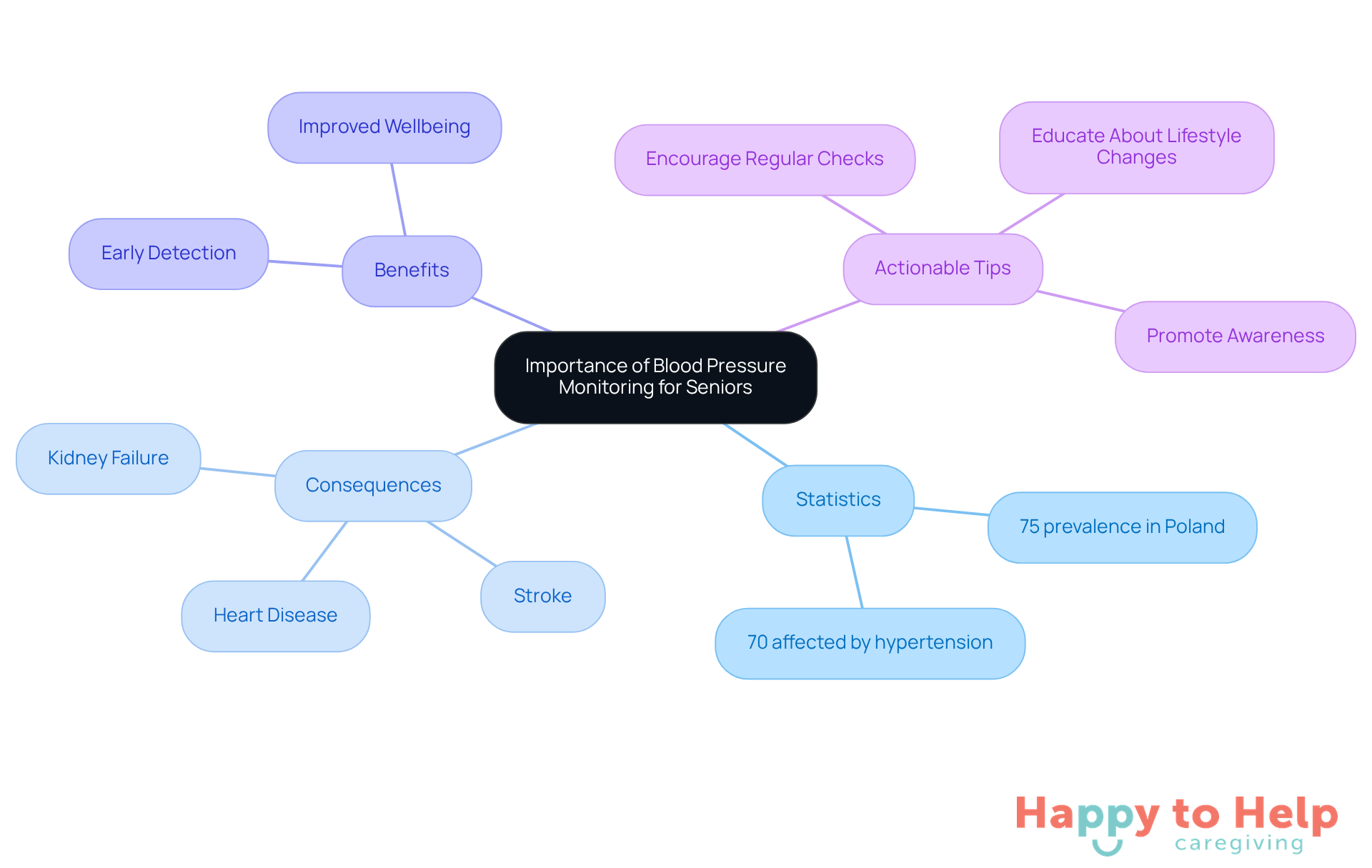
Monitoring blood pressure is crucial for elderly healthcare, particularly considering that over 70% of seniors aged 65 and older suffer from hypertension. This condition, often labeled the 'silent killer,' can lead to serious health complications if not properly managed. Caregivers face the challenge of selecting an appropriate blood pressure monitor that meets the unique needs of older adults.
The implications of hypertension are significant. Left unchecked, it can result in severe health issues, including heart disease and stroke. Therefore, caregivers must prioritize accuracy, usability, and individual requirements when choosing a device. But how can they ensure they select the right monitor that promotes independence while effectively managing health risks?
To address these concerns, caregivers should consider the following actionable tips:
- Accuracy: Choose monitors that have been clinically validated for accuracy.
- Usability: Look for devices that are easy to operate, especially for those with limited dexterity.
- Individual Needs: Assess the specific health conditions and preferences of the senior to find a suitable device.
By focusing on these factors, caregivers can make informed decisions that enhance the quality of life for older adults while effectively managing hypertension.
Explore the Importance of Blood Pressure Monitoring for Seniors
Monitoring blood flow with a blood pressure monitor for elderly individuals is crucial, particularly given that over 70% of older adults aged 65 and above are affected by hypertension, as reported by the US National Health and Nutrition Examination Survey (NHANES). This condition, often labeled the 'silent killer,' can lead to severe complications such as heart disease, stroke, and kidney failure if not managed properly.
Regular use of a blood pressure monitor for elderly individuals allows for early detection of potential health issues, enabling timely interventions that can significantly improve wellbeing outcomes. Research shows that consistent blood assessments enhance hypertension control, which is vital for maintaining optimal cardiovascular health and reducing the risk of serious medical crises. For example, a study in Poland revealed that the prevalence of hypertension in individuals over 65 years may reach as high as 75%.
By proactively using a blood pressure monitor for elderly individuals, seniors can take charge of their health, ultimately improving their quality of life and fostering a sense of security in their daily routines. Dr. Daniel W. Jones emphasizes the importance of lifestyle changes in managing high blood levels, highlighting the need for ongoing education and awareness regarding hypertension management.
Furthermore, projections indicate that by 2025, the number of individuals with hypertension could rise by 15-20%, reaching nearly 1.5 billion. This underscores the growing challenge of managing hypertension in the elderly population, highlighting the need for a blood pressure monitor for elderly individuals.
Actionable Tips for Caregivers:
- Encourage regular blood pressure checks.
- Educate seniors about lifestyle modifications.
- Promote awareness of hypertension management strategies.
Compare Upper Arm and Wrist Blood Pressure Monitors
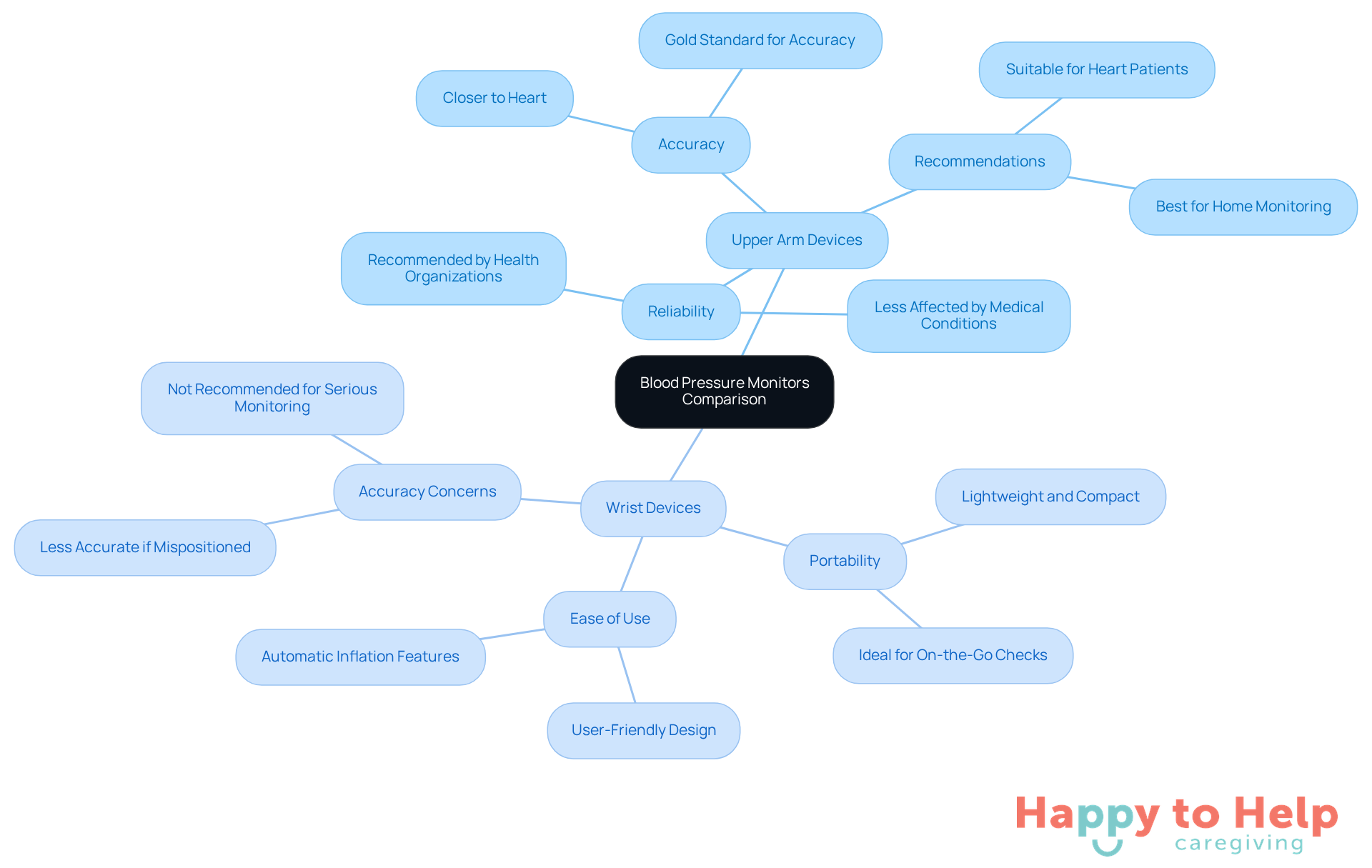
When selecting a blood circulation device, caregivers face a crucial decision: should they choose an upper arm or wrist device? This choice can significantly impact the accuracy of blood pressure readings, which is vital for effective monitoring.
Upper arm devices are generally regarded as more precise and dependable, as they assess blood pressure closer to the heart. Health organizations like the American Heart Association recommend these devices for their reliability. On the other hand, a blood pressure monitor for elderly individuals, such as wrist devices, offers portability and ease of use, making them appealing for those who may struggle with traditional arm cuffs. However, it's important to note that wrist devices can yield less accurate results if not positioned correctly.
For seniors, the decision regarding a blood pressure monitor for elderly often hinges on their physical condition and comfort level with each type of device. Caregivers should ensure that whichever display is selected, it is validated for accuracy. This step is essential to guarantee that the readings are trustworthy, ultimately supporting better health outcomes.
Differentiate Between Automatic and Manual Blood Pressure Monitors
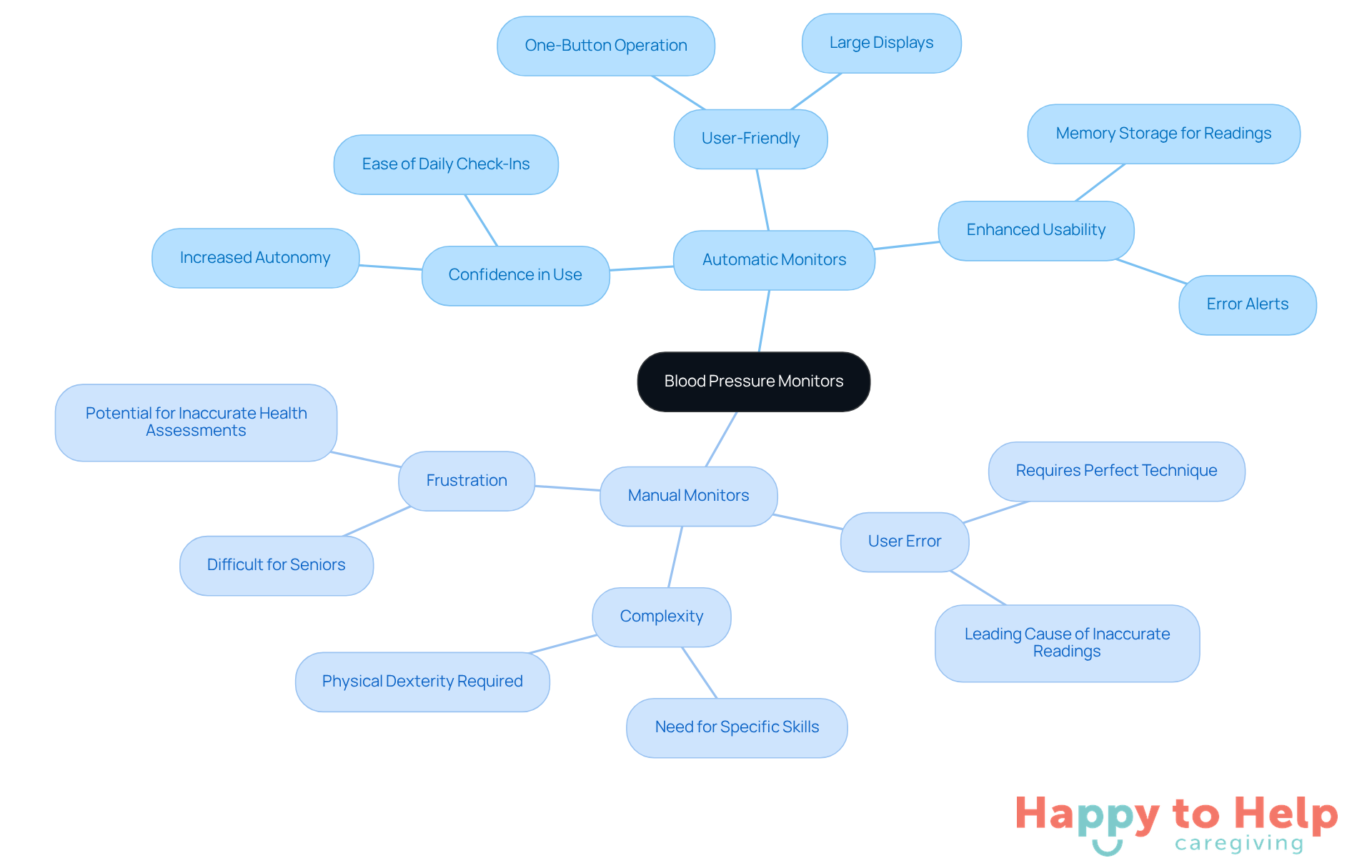
A blood pressure monitor for elderly individuals presents a challenge for many caregivers, particularly when it comes to ensuring accurate readings. Manual devices often lead to user error, which is a significant issue. In fact, studies show that user error is the leading cause of inaccurate readings in home monitoring, especially among seniors who may lack the necessary skills and dexterity for manual inflation.
This problem can have serious implications for health management. Seniors may struggle with the complexities of manual devices, leading to frustration and potentially inaccurate health assessments. Caregivers need to be aware of these challenges to provide the best support possible.
A practical solution lies in automatic blood pressure devices. These user-friendly tools inflate the cuff and display readings at the push of a button, significantly reducing the risk of user mistakes. Seniors using automatic devices report increased confidence in managing their health, as they can easily perform daily or weekly check-ins without assistance. Additionally, these devices often feature large displays and memory storage for prior readings, enhancing usability.
Given these advantages, a blood pressure monitor for elderly individuals is generally recommended. Caregivers should prioritize the elder's ability to operate the device when making a choice. Ensuring that the selected display aligns with their needs and capabilities not only encourages autonomy but also aids in improved wellness management for older adults.
Identify Key Features of Senior-Friendly Blood Pressure Monitors
Choosing the right blood circulation monitor for older adults can be challenging. Many caregivers face the problem of usability with a blood pressure monitor for elderly, as older adults often struggle with devices that are difficult to read or operate. This can lead to inaccurate readings and increased frustration.
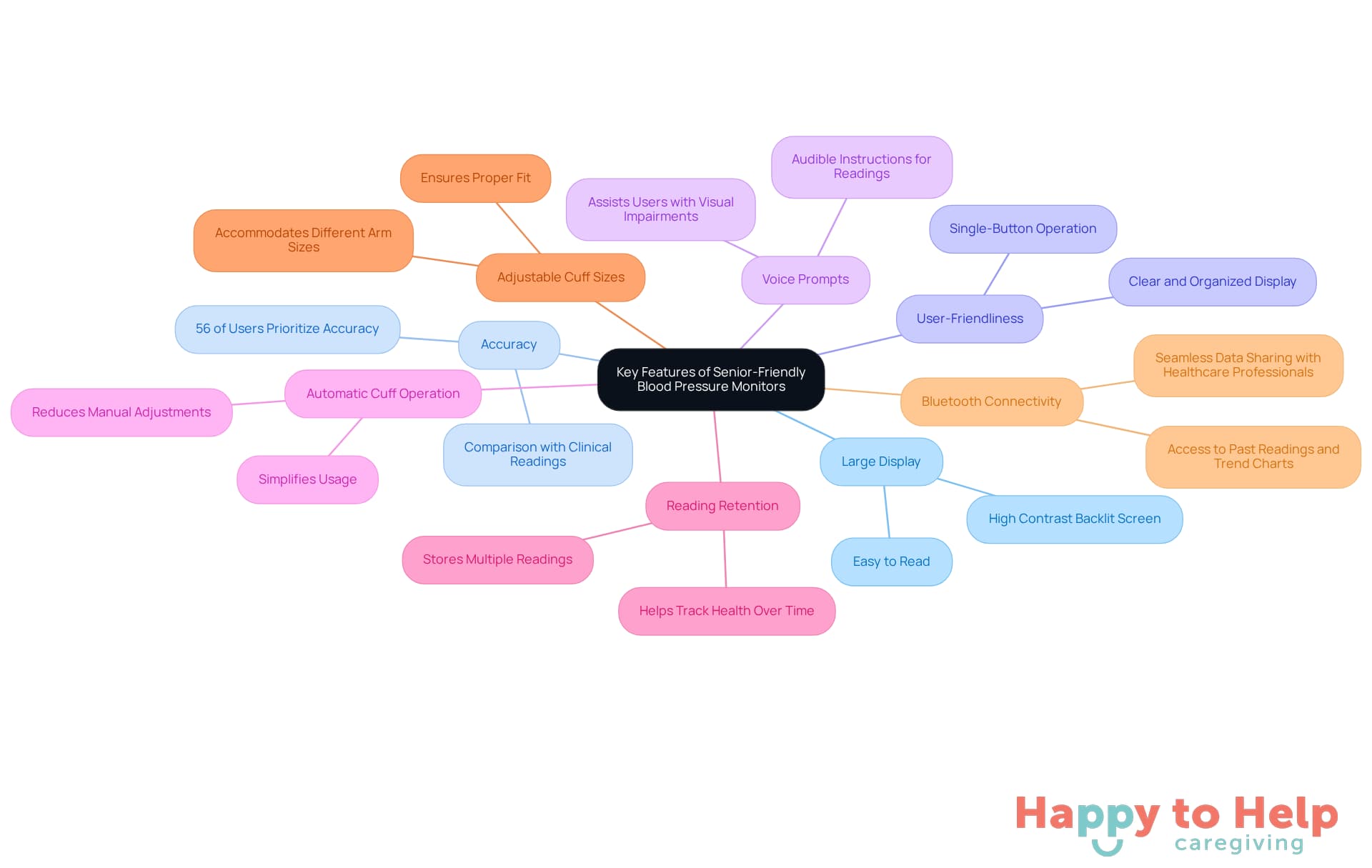
To address these issues, it’s essential to focus on specific features of a blood pressure monitor for elderly that enhance usability. For instance, a blood pressure monitor for elderly with a large, easy-to-read display is crucial. In fact, 56 percent of survey participants ranked accuracy as the most important factor, while 25.5 percent emphasized user-friendliness. Additionally, a blood pressure monitor for elderly that offers voice prompts or visual indicators for readings caters to those with visual impairments, making monitoring more accessible.
The automatic inflation and deflation of the cuff in a blood pressure monitor for elderly simplify the process, reducing the need for manual adjustments. Displays that retain various readings are especially helpful for monitoring blood levels over time, assisting both elderly individuals and their healthcare practitioners in managing health efficiently. Other valuable features of the blood pressure monitor for elderly include adjustable cuff sizes to ensure a proper fit and Bluetooth connectivity for seamless data sharing with healthcare professionals.
For example, the A&D Medical Talking Blood Pressure Monitor for elderly, priced at $109.95, provides audible instructions and an innovative cuff design, making it an excellent choice for those with visual impairments. Meanwhile, the Omron Evolv, priced at $85.95, features a compact design with a large display and wireless capabilities, serving as an excellent blood pressure monitor for elderly who are active.
Select the Right Blood Pressure Monitor for Individual Needs
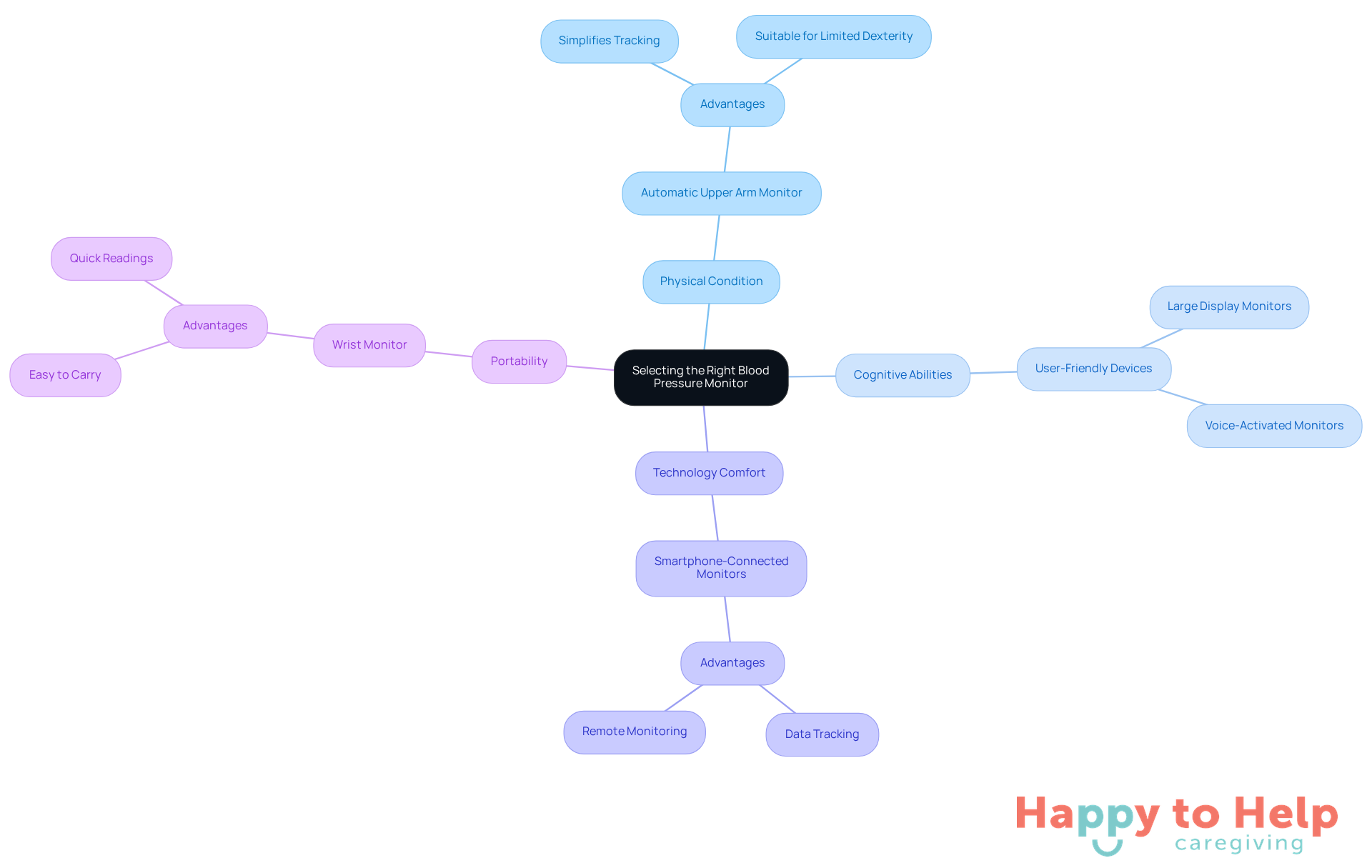
Choosing the right blood pressure device for older adults can be challenging. Caregivers must evaluate specific needs and preferences, considering factors like physical condition, cognitive abilities, and comfort with technology. For seniors with limited dexterity, a blood pressure monitor for elderly that is an automatic upper arm device simplifies tracking, making it a suitable choice. On the other hand, if portability is essential, a blood pressure monitor for elderly that is worn on the wrist may be ideal, as long as it’s used correctly to ensure accurate readings.
Consulting healthcare providers is crucial in the decision-making process for selecting a blood pressure monitor for elderly. They can offer insights into which monitors align with medical recommendations and best practices. According to Yechiam Ostchega, Ph.D., R.N., "Hypertension increased with age," highlighting the need for regular monitoring among older adults. Notably, the age-adjusted prevalence of hypertension among adults was 45.4% in 2017-2018.
Caregiver suggestions also play a vital role. They can assist families in selecting devices that meet medical requirements while integrating smoothly into the senior's daily routine. This personalized approach not only encourages regular use of a blood pressure monitor for elderly individuals but also enhances overall health management, fostering a sense of independence and well-being.
Your Path Forward
Monitoring blood pressure is crucial for elderly individuals, particularly given the alarming prevalence of hypertension in this demographic. With over 70% of seniors affected by this condition, the need for a reliable blood pressure monitor is clear. Regular monitoring empowers seniors to take control of their health, facilitating early detection and management of potential complications from uncontrolled hypertension.
Caregivers face the challenge of selecting the right blood pressure monitor for elderly care. It's essential to choose between upper arm and wrist monitors, as upper arm devices generally provide more accurate readings. Automatic monitors are particularly beneficial, as they reduce user error and enhance usability. Caregivers should also prioritize features that improve accessibility, such as large displays and voice prompts, ensuring the device meets the senior's specific needs.
In light of the growing challenges posed by hypertension, caregivers and families must prioritize regular blood pressure monitoring for seniors. By selecting the right device and fostering an environment of support and education, caregivers can significantly enhance the health and quality of life for older adults. Taking proactive steps today can pave the way for healthier tomorrows, ultimately empowering seniors to live with greater independence and confidence in managing their health.
https://iframe.tely.ai/cta/eyJhcnRpY2xlX2lkIjogIjY5M2Y1MDdmMmI4ODNiM2YwNWZiOTk3MiIsICJjb21wYW55X2lkIjogIjY4ZWU1ZGNhNzMxNzYyNTU3ZjNjOTVjMSIsICJpbmRleCI6IG51bGwsICJ0eXBlIjogImFydGljbGUifQ==Frequently Asked Questions
Why is blood pressure monitoring important for seniors?
Blood pressure monitoring is crucial for seniors because over 70% of older adults aged 65 and above are affected by hypertension, which can lead to severe complications such as heart disease, stroke, and kidney failure if not managed properly.
What are the benefits of regular blood pressure monitoring for elderly individuals?
Regular blood pressure monitoring allows for early detection of potential health issues, enables timely interventions, enhances hypertension control, and ultimately improves overall wellbeing and quality of life for seniors.
What did research indicate about the prevalence of hypertension in seniors?
Research shows that the prevalence of hypertension in individuals over 65 years may reach as high as 75%, highlighting the need for effective monitoring and management.
What lifestyle changes are important for managing high blood pressure in seniors?
Lifestyle changes such as maintaining a healthy diet, engaging in regular physical activity, and being educated about hypertension management are important for controlling high blood pressure in seniors.
What type of blood pressure monitor is recommended for elderly individuals?
Upper arm blood pressure monitors are generally recommended for their accuracy and reliability, as they measure blood pressure closer to the heart. However, wrist monitors may be suitable for those who find arm cuffs difficult to use.
What are the advantages and disadvantages of wrist blood pressure monitors?
Wrist blood pressure monitors offer portability and ease of use, but they can yield less accurate results if not positioned correctly. Upper arm monitors are more precise but may be less convenient for some seniors.
How can caregivers assist seniors with blood pressure monitoring?
Caregivers can encourage regular blood pressure checks, educate seniors about lifestyle modifications, and promote awareness of hypertension management strategies to help them take charge of their health.
What is the projected trend for hypertension among the elderly population?
Projections indicate that by 2025, the number of individuals with hypertension could rise by 15-20%, reaching nearly 1.5 billion, highlighting the growing challenge of managing hypertension in the elderly population.
List of Sources
- Explore the Importance of Blood Pressure Monitoring for Seniors
- Prevalence and Awareness of Hypertension Among Older Adults (https://cureus.com/articles/369809-prevalence-and-awareness-of-hypertension-among-older-adults)
- Risk factors and prevalence of hypertension in older adults from south-eastern Poland: an observational study - PMC (https://pmc.ncbi.nlm.nih.gov/articles/PMC10792009)
- Hypertension is most common chronic condition among Americans 85 and older, CDC study reveals (https://mcknights.com/news/hypertension-is-most-common-chronic-condition-among-americans-85-and-older-cdc-study-reveals)
- New high blood pressure guideline emphasizes prevention, early treatment to reduce CVD risk (https://newsroom.heart.org/news/new-high-blood-pressure-guideline-emphasizes-prevention-early-treatment-to-reduce-cvd-risk)
- Hypertension Prevalence in the U.S. | Million Hearts® (https://millionhearts.hhs.gov/data-reports/hypertension-prevalence.html)
- Compare Upper Arm and Wrist Blood Pressure Monitors
- Arm vs. Wrist Blood Pressure Monitors: Accuracy and Convenience Explored (https://hs770.com/arm-vs-wrist-blood-pressure-monitors-accuracy-explored?srsltid=AfmBOopw2BwmoHNx1wPtvnh65DjiqmGYX0oLF9cjiGy2ykUtW8UyCq3I)
- Difference Between Wrist & Upper Arm BP Monitor (https://hingmedical.com/upper-arm-blood-pressure-monitors-why-they-are-standard)
- Do Wrist Blood Pressure Monitors Work? (https://my.clevelandclinic.org/health/articles/24566-wrist-blood-pressure-monitor)
- Differentiate Between Automatic and Manual Blood Pressure Monitors
- Home Oxygen Support Systems: What You Need to Know (https://alfahealthcaresupplyinc.com/automatic-vs-manual-blood-pressure-monitors-which-is-more-accurate)
- How Can Seniors Benefit from Using a Bluetooth Blood Pressure Monitor at Home? - Guangdong Transtek Medical Electronics Co.,Ltd. (https://transtekcorp.com/how-can-seniors-benefit-from-using-a-bluetooth-blood-pressure-monitor-at-home.html)
- Manual vs Digital Blood Pressure Monitor: What to Choose - Advanced Healthcare Blog (https://ahealthcare.com/blog/en/manual-vs-digital-blood-pressure-monitor)
- Case Studies Archive - Raygain Technologies (https://raygain.com/case\_studies)
- Are Automated Office Blood Pressure Readings More Variable Than Home Readings? | Hypertension (https://ahajournals.org/doi/10.1161/HYPERTENSIONAHA.119.14171)
- Identify Key Features of Senior-Friendly Blood Pressure Monitors
- Best Home Blood Pressure Monitors of 2025 - Consumer Reports (https://consumerreports.org/health/blood-pressure-monitors/best-home-blood-pressure-monitors-of-the-year-a2729131535)
- Medicare Guidance Simplified | Chapter (https://askchapter.org/magazine/senior-health-wellness/medical-devices-equipment/best-blood-pressure-monitors-for-seniors-top-picks)
- Best Blood Pressure Monitors of 2025 (https://aarp.org/health/conditions-treatments/best-blood-pressure-monitors)
- Blood Pressure Monitors | ILA (https://independentliving.com/healthcare/blood-pressure-monitors?srsltid=AfmBOophCh8x5oIbrVFeU3RWR6qCeTMu8K4ABOC\_PfEUYLHcnsy-GJeD)
- Discovering The Best Blood Pressure Monitors For Seniors (https://springmillseniorliving.com/senior-living-blog/discovering-the-best-blood-pressure-monitors-for-seniors)
- Select the Right Blood Pressure Monitor for Individual Needs
- 30 Quotes About the Future of Healthcare: Expert Takes (https://deliberatedirections.com/quotes-future-of-healthcare)
- New at-home monitoring program for patients with high blood pressure (https://health.ucdavis.edu/news/headlines/new-at-home-monitoring-program-for-patients-with-high-blood-pressure-/2024/06)
- OMRON Healthcare Issues National Call-to-Action on Routine At-Home Blood Pressure Monitoring in Response to New Guidelines (https://prnewswire.com/news-releases/omron-healthcare-issues-national-call-to-action-on-routine-at-home-blood-pressure-monitoring-in-response-to-new-guidelines-302533998.html)
- Products - Data Briefs - Number 364 - April 2020 (https://cdc.gov/nchs/products/databriefs/db364.htm)
- Prevalence and Frequency of Self-measured Blood Pressure Monitoring in US Adults (https://jamanetwork.com/journals/jamanetworkopen/fullarticle/2796184)