

For families in our service areas
For families in our service areas, this guide explains caregiving and how non-medical in-home caregiving can support care planning in East Idaho, Treasure Valley & Magic Valley, Northern Wasatch, North Central West Virginia, and Northeast Ohio.
Understanding Essential Internet Safety
Cybersecurity threats are increasingly targeting elderly individuals, making internet safety for seniors a pressing concern. Many seniors navigate the digital landscape unaware of potential dangers, such as phishing scams and identity theft. These threats can lead to devastating financial losses and compromised personal information.
As caregivers, it’s crucial to recognize the implications of these risks. Seniors may not fully understand how to protect themselves online, leaving them vulnerable in an ever-evolving digital world. This article delves into essential strategies caregivers can implement to empower seniors with the knowledge and tools needed to safeguard their online presence.
So, how can families ensure their loved ones are equipped to recognize and respond to these threats? By adopting proactive measures and fostering open communication, caregivers can play a pivotal role in enhancing the cybersecurity awareness of seniors.
Understand Cybersecurity Fundamentals for Seniors
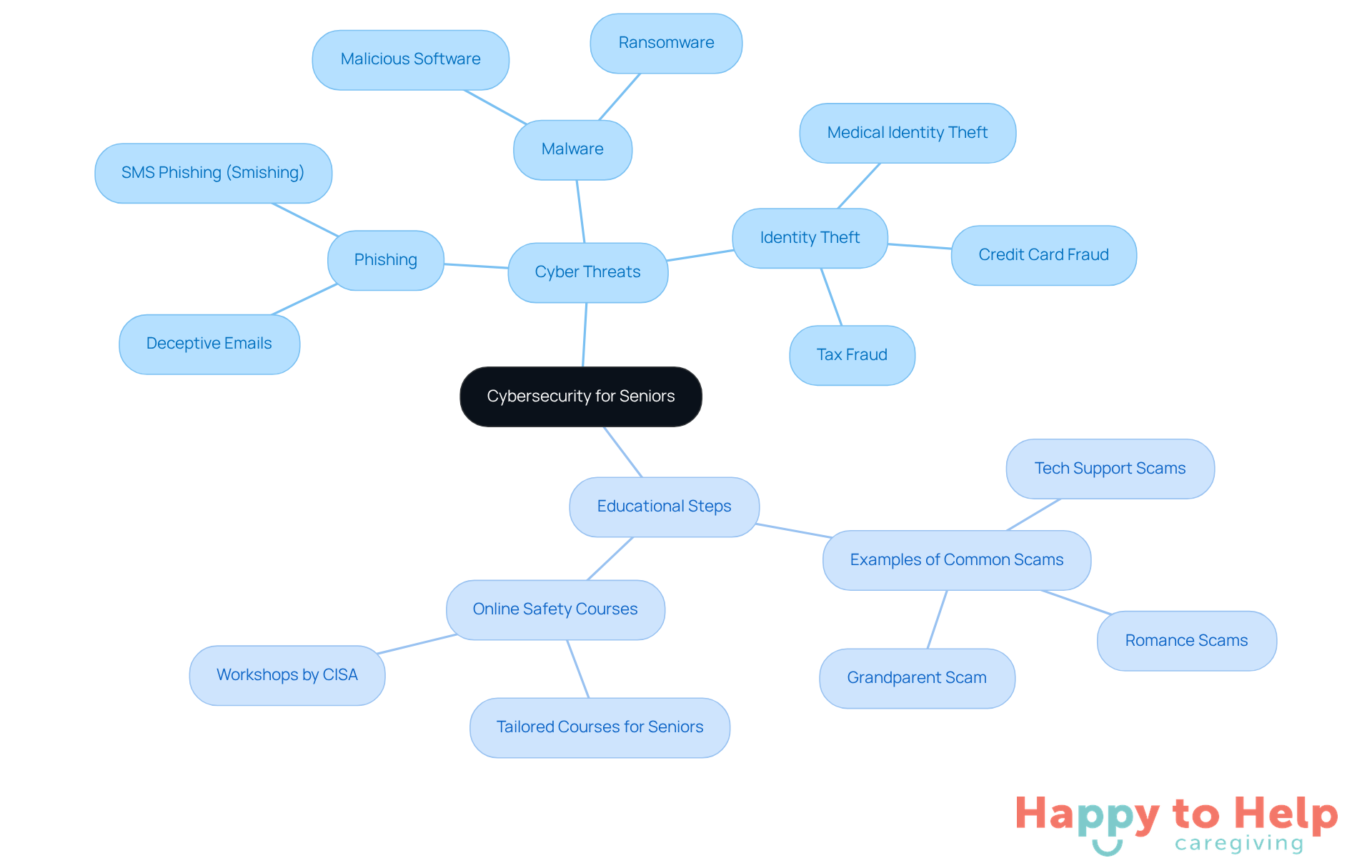
Cybersecurity poses a significant problem for elderly individuals, making internet safety for seniors a crucial concern, as they are often targeted by cyber threats like phishing, malware, and identity theft. These threats can lead to severe consequences, including financial loss and compromised personal information. It's crucial for seniors to recognize the signs of suspicious emails, links, and phone calls. For example, legitimate organizations will never request sensitive information through unsolicited communications.
To address this issue, caregivers can take actionable steps to educate seniors:
- Providing examples of common scams can help them identify potential dangers.
- Recommending resources such as online safety courses tailored for older adults can significantly enhance their understanding and confidence in internet safety for seniors while using technology safely.
By empowering seniors with knowledge, we can help them navigate the digital world more securely.
Recognize and Respond to Online Scams
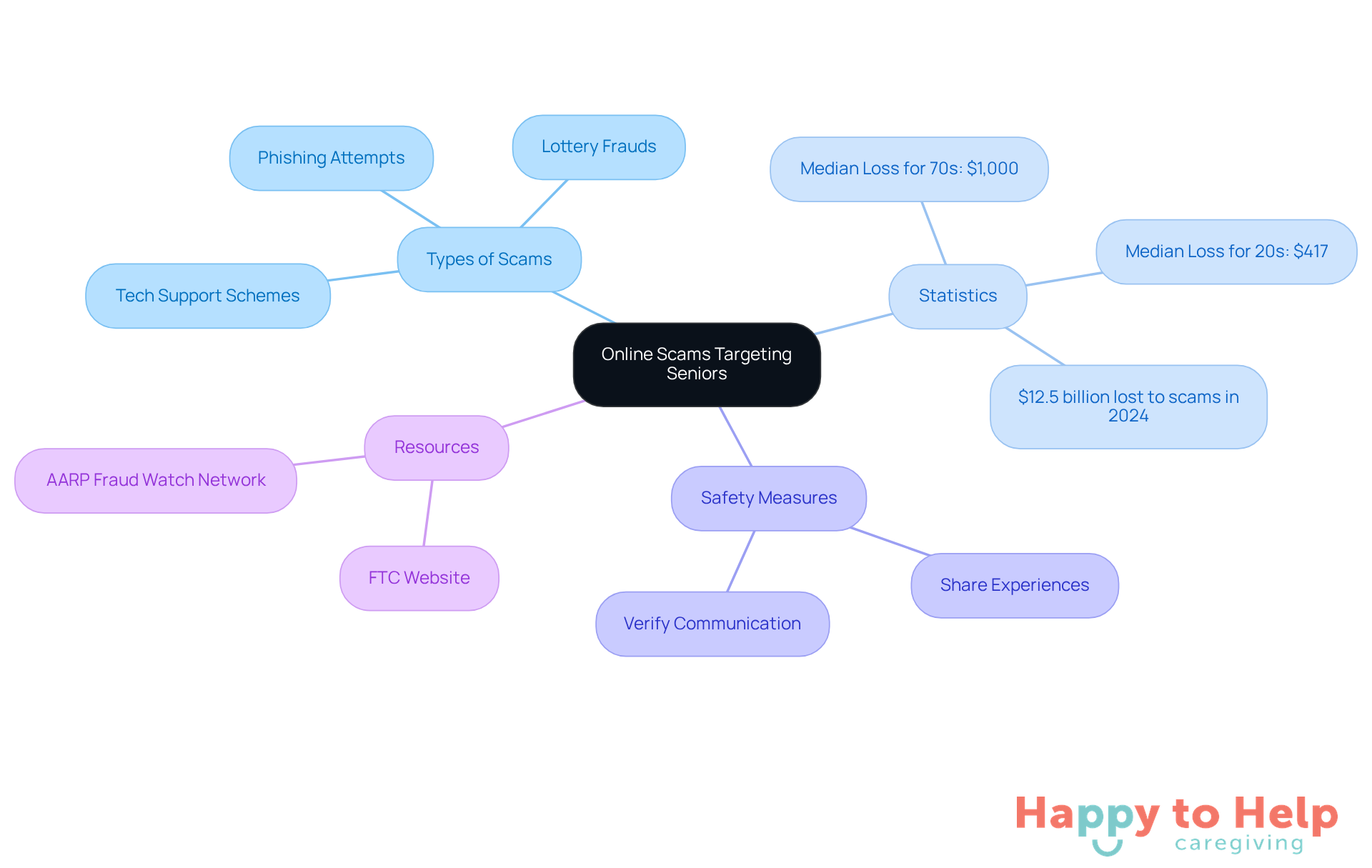
Seniors face a significant problem with online fraud, which underscores the need for internet safety for seniors, including awareness of tech support schemes, lottery frauds, and phishing attempts. This issue is particularly concerning as statistics show that older adults are especially susceptible, emphasizing the importance of internet safety for seniors, with technology assistance fraud costing them millions each year. For instance, individuals in their 70s reported a median loss of $1,000 due to fraudulent activities, compared to just $417 for those in their 20s.
To combat this, it’s crucial for seniors to ensure internet safety for seniors by taking a moment to verify any unsolicited communication before taking action. If they receive a call claiming to be from their bank, they should hang up and contact the bank directly using a verified number. Encouraging older adults to share their experiences with family members or caregivers can foster a supportive community that enhances awareness and vigilance about internet safety for seniors.
Initiatives that promote conversations about fraud are important for internet safety for seniors, as they help older adults safeguard themselves. Resources such as the Federal Trade Commission's website offer updated information on current frauds and guidance related to internet safety for seniors, including how to report them. Additionally, the AARP Fraud Watch Network Helpline (877-908-3360) provides support for seniors who may have fallen victim to scams.
As Christina Ianzito points out, scammers take billions of dollars from consumers annually, underscoring the necessity of remaining informed and proactive.
Maintain Updated Devices and Strong Passwords
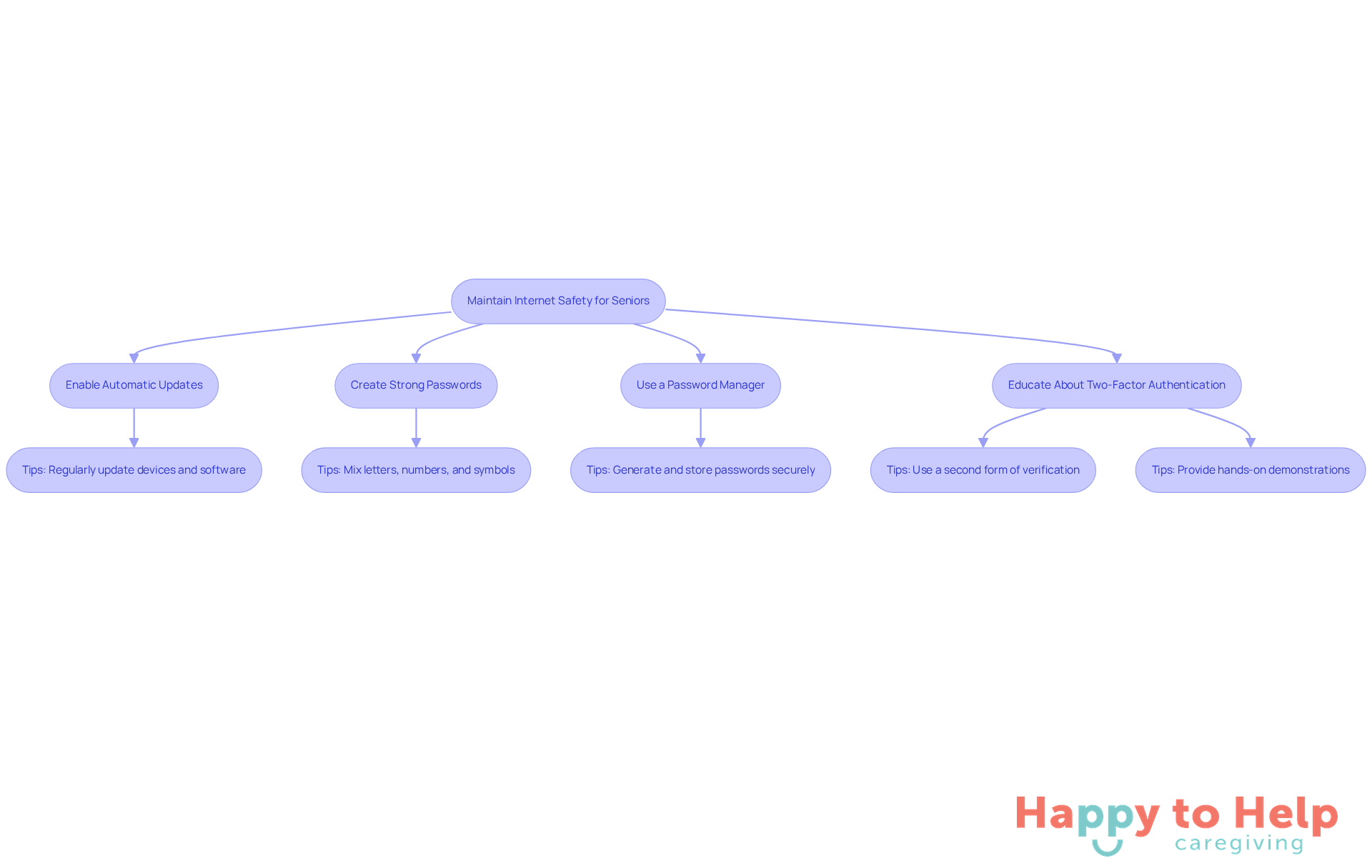
For internet safety for seniors, it is crucial that their devices and software are regularly updated to avoid significant risks and vulnerabilities to security threats. This issue can lead to unauthorized access to personal information, financial loss, and a general sense of insecurity in using technology.
To ensure internet safety for seniors, they should:
- Enable automatic updates whenever possible to combat these vulnerabilities.
- Create strong, unique passwords for each account. A strong password should include a mix of letters, numbers, and symbols, making it difficult for anyone to guess.
- Use a password manager to simplify the process of managing passwords effectively.
Moreover, educating seniors about internet safety, particularly the importance of two-factor authentication, can significantly enhance their security. This extra layer of protection requires a second form of verification, making it much harder for unauthorized users to gain access. Providing hands-on demonstrations can help seniors feel more comfortable with these practices, ensuring they can implement them effectively.
Moving Forward with Essential Internet Safety
Ensuring internet safety for seniors is a pressing issue in today’s digital landscape. Elderly individuals are increasingly targeted by cyber threats, making it crucial for caregivers to understand the risks involved. Without proper education, seniors may fall victim to scams that can have devastating consequences.
The implications of these threats are significant. Common scams, such as phishing and tech support fraud, disproportionately affect older adults, leading to financial loss and emotional distress. This highlights the urgent need for caregivers to foster awareness and provide support to their loved ones.
To combat these challenges, caregivers can take proactive steps:
- Educating seniors about cybersecurity fundamentals is essential.
- Encourage them to recognize online scams and maintain updated devices with strong passwords.
- Resources like the Federal Trade Commission and AARP offer valuable information that can empower seniors to protect themselves.
Additionally, creating a supportive community where seniors can share their experiences is vital. This not only helps them learn from one another but also reinforces the importance of ongoing education in this area. By prioritizing discussions about internet safety, caregivers can cultivate a safer online environment for older adults.
Ultimately, safeguarding seniors in the digital realm is a shared responsibility. By implementing these strategies today, caregivers can help seniors navigate the complexities of the internet with confidence, leading to a more secure online experience.
https://iframe.tely.ai/cta/eyJhcnRpY2xlX2lkIjogIjY5MjRmMjBkZWM0Y2FiOGU3NGVjMDExMSIsICJjb21wYW55X2lkIjogIjY4ZWU1ZGNhNzMxNzYyNTU3ZjNjOTVjMSIsICJpbmRleCI6IG51bGwsICJ0eXBlIjogImFydGljbGUifQ==Frequently Asked Questions
Why is cybersecurity a significant concern for seniors?
Cybersecurity is a significant concern for seniors because they are often targeted by cyber threats such as phishing, malware, and identity theft, which can lead to severe consequences like financial loss and compromised personal information.
What types of cyber threats are seniors most vulnerable to?
Seniors are most vulnerable to threats like phishing scams, malware infections, and identity theft.
How can seniors recognize suspicious communications?
Seniors can recognize suspicious communications by being aware that legitimate organizations will never request sensitive information through unsolicited emails, links, or phone calls.
What steps can caregivers take to help educate seniors about cybersecurity?
Caregivers can help educate seniors by providing examples of common scams and recommending resources such as online safety courses tailored for older adults.
How can online safety courses benefit seniors?
Online safety courses can significantly enhance seniors' understanding and confidence in internet safety, allowing them to use technology more safely.
What is the overall goal of educating seniors about cybersecurity?
The overall goal is to empower seniors with knowledge so they can navigate the digital world more securely and avoid potential dangers.
List of Sources
- Understand Cybersecurity Fundamentals for Seniors
- Cybersecurity Awareness Month: Helping Older Adults Avoid Online Scams (https://about.fb.com/news/2025/10/cybersecurity-awareness-month-helping-older-adults-avoid-online-scams)
- 2025 Statistics on Senior Identity Theft (https://seniorliving.org/identity-theft-protection/statistics)
- Older Adults Being Targeted By the Rise of Cybercrime (https://cybersecurityasia.net/rise-cyber-crime-targeting-older-adults)
- Elder Fraud, in Focus | Federal Bureau of Investigation (https://fbi.gov/news/stories/elder-fraud-in-focus)
- Cybersecurity for Seniors: A Guide for Loved Ones | Morgan Stanley (https://morganstanley.com/articles/cybersecurity-for-seniors)
- Recognize and Respond to Online Scams
- My favorite security quotes (https://johnopdenakker.com/my-favorite-security-quotes)
- 70 Cybersecurity Quotes Every Leader Should Know (https://deliberatedirections.com/cybersecurity-quotes)
- 200 Inspirational Cybersecurity Quotes [2025] (https://digitaldefynd.com/IQ/inspirational-cybersecurity-quotes)
- $12.5 Billion Lost to Scams and Fraud in 2024, Older Adults Hit Hard (https://aarp.org/money/scams-fraud/older-adults-ftc-fraud-report)
- 29 Cybersecurity Quotes to Protect Your Digital Life (https://acecloudhosting.com/blog/cybersecurity-quotes)
- Maintain Updated Devices and Strong Passwords
- Weak Passwords Put Seniors at Risk: Here's How to Stay Safe (https://ltcnews.com/articles/weak-passwords-seniors-at-risk-how-to-stay-safe)
- 70+ Password Statistics for 2025 (https://spacelift.io/blog/password-statistics)
- 18 Awesome Technology Quotes to Inspire & Motivate (https://criteriaforsuccess.com/18-awesome-technology-quotes-to-inspire-motivate)
- 125+ Password Statistics to Inspire Better Security Practices in 2025 (https://secureframe.com/blog/password-statistics)
- BNS Video Phones Case Study (https://blog.grandstream.com/case\_studies/bns-video-phones-case-study)