Understanding Your Options
Caregivers for the elderly at home play a vital role in enhancing the quality of life for their clients. They should focus on essential practices such as:
- Personal care
- Medication management
- Meal preparation
- Companionship
- Safety monitoring
These responsibilities are not just tasks; they are acts of compassion that can significantly impact the lives of those they care for.
However, it’s important to recognize the emotional challenges that caregivers face. The stress and burnout can be overwhelming. By mastering these essential practices and prioritizing their own well-being through self-care and support, caregivers can navigate these challenges more effectively. This balance allows them to provide compassionate and effective care, ensuring they are emotionally equipped to meet their clients' needs.
Incorporating self-care isn’t just beneficial for caregivers; it’s essential. When caregivers take time to recharge, they can offer the nurturing support their clients deserve. This cycle of care—both for the elderly and for themselves—creates a more positive and fulfilling caregiving experience.
Ultimately, the journey of caregiving is one filled with both challenges and rewards. By focusing on these key practices and embracing the importance of self-care, caregivers can foster a nurturing environment that uplifts both themselves and their clients.
The Importance of Essential Practices
Caregivers for the elderly hold a vital role in enhancing the quality of life for those they assist. However, the emotional and physical demands of this responsibility can lead to significant stress and burnout. It's essential to recognize these challenges. Understanding the core responsibilities and best practices for effective caregiving not only benefits the elderly but also supports the well-being of caregivers themselves.
How can caregivers navigate these challenges while ensuring they provide compassionate, personalized care? This article delves into essential practices that empower caregivers. It offers strategies to manage their well-being and utilize technology to enhance their caregiving efforts. Together, we can explore ways to foster a nurturing environment that prioritizes both the caregiver and the elderly's needs.
Understand Core Caregiver Responsibilities
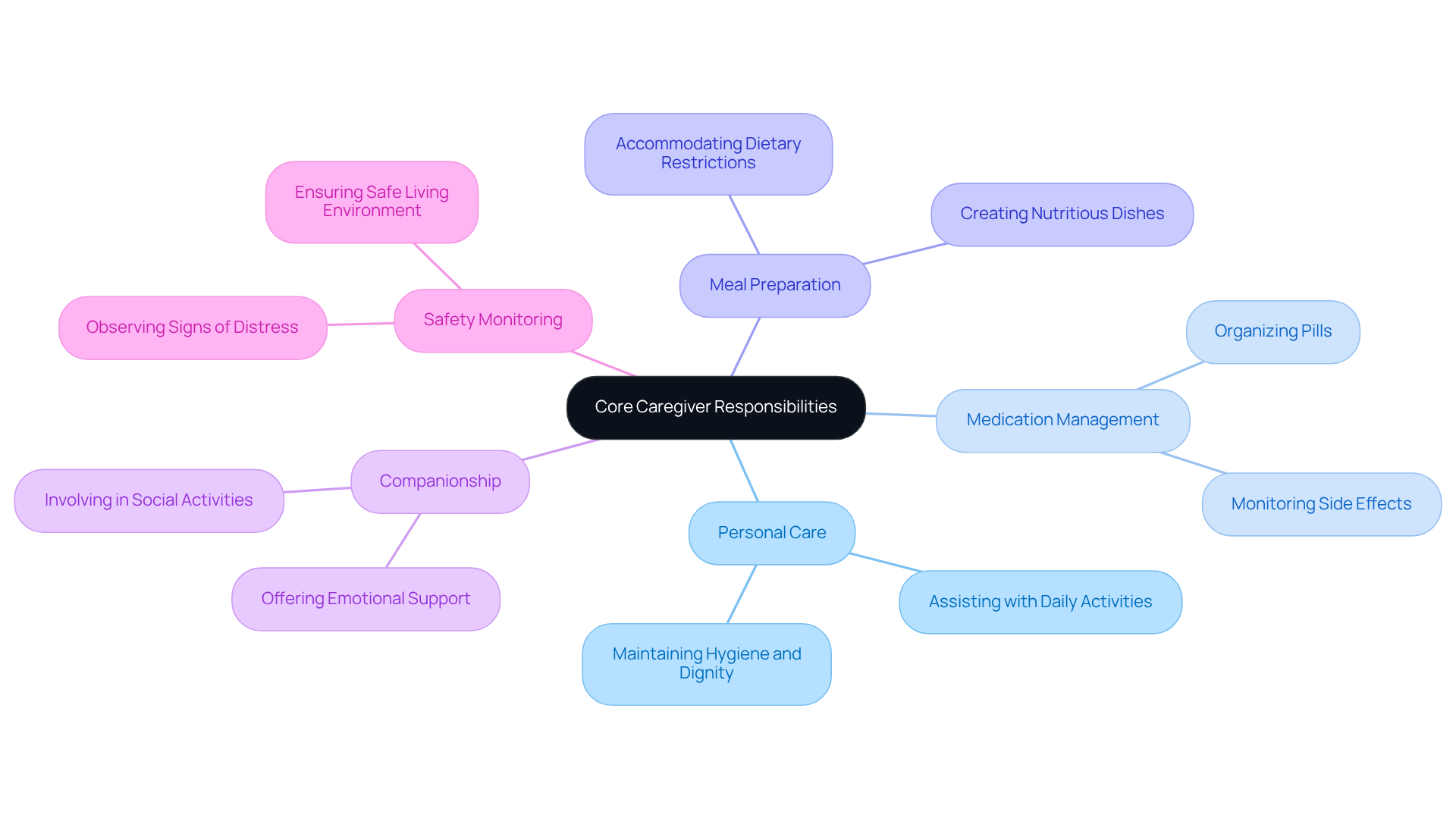
Caregivers for elderly at home hold a vital place in the daily lives of elderly individuals, and recognizing their essential responsibilities is key to effective caregiving. It’s important to understand the emotional challenges caregivers face, as they often experience stress and burnout while striving to provide the best care possible.
Key responsibilities include:
- Personal Care: Assisting with daily activities such as bathing, dressing, and grooming helps maintain hygiene and dignity.
- Medication Management: Ensuring individuals take their medications as prescribed may involve organizing pills and monitoring side effects, relieving some of the worry caregivers feel.
- Meal Preparation: Creating nutritious dishes that accommodate dietary restrictions and preferences not only enhances wellness but also nurtures a sense of care and attention.
- Companionship: Offering emotional support and involving individuals in social activities can alleviate loneliness, making a significant difference in mental well-being.
- Safety Monitoring: Observing individuals for any signs of distress or changes in health ensures their living environment is safe and accessible, providing peace of mind for both caregivers and clients.
By mastering these responsibilities, caregivers for elderly at home can significantly improve the quality of life for their clients. This dedication fosters a sense of security and independence within the home environment, allowing elderly individuals to thrive thanks to caregivers for elderly at home. Remember, you are not alone in this journey; support is available to help navigate these challenges with compassion and understanding.
Manage Caregiver Well-Being and Burnout
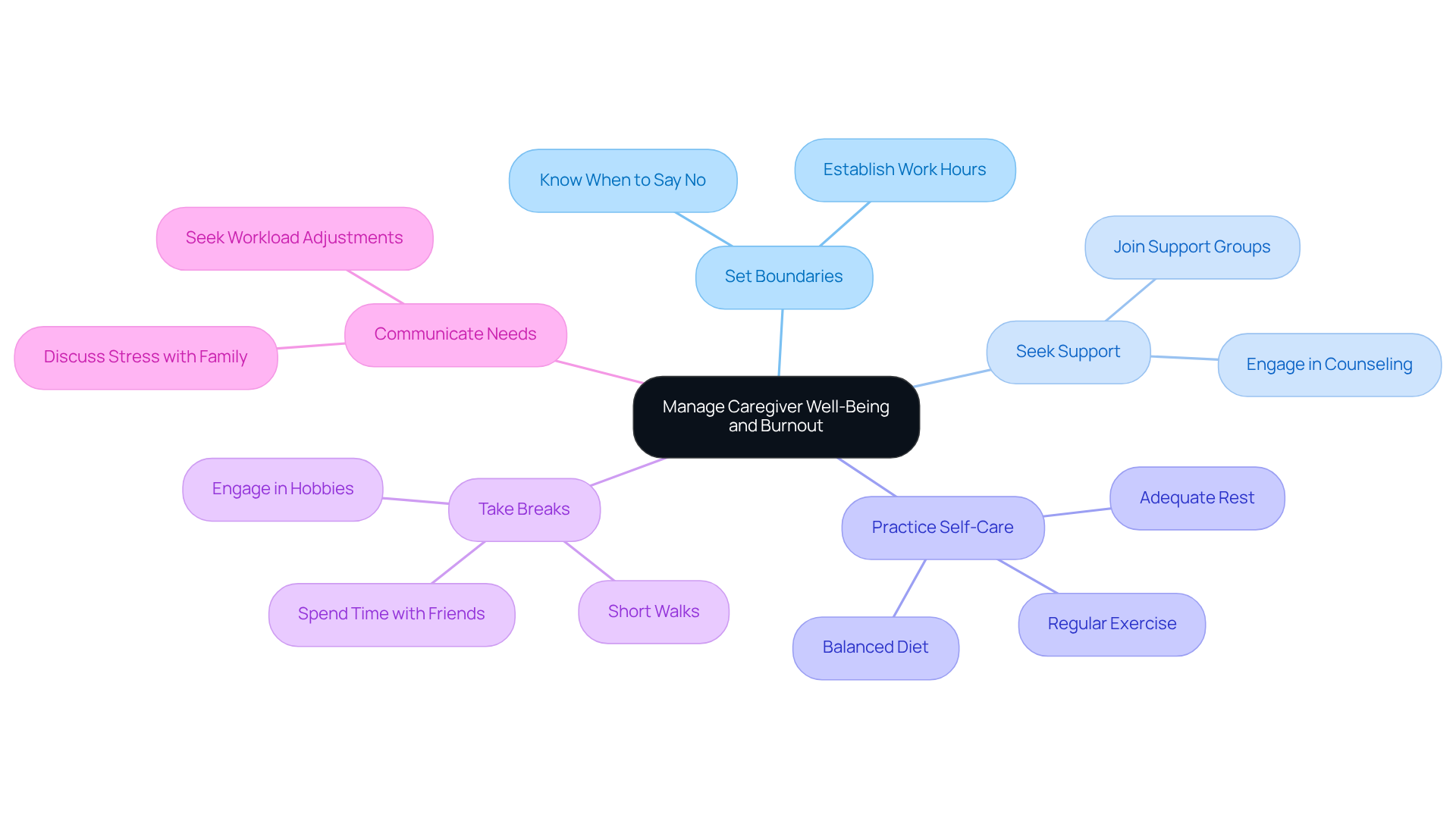
Caregivers for elderly at home can face emotionally and physically demanding situations, often leading to feelings of burnout if not managed properly. It’s crucial for caregivers for elderly at home to prioritize their own well-being. Here are some nurturing suggestions to help caregivers thrive:
- Set Boundaries: Establish clear limits on work hours and responsibilities to prevent overwhelm. Knowing when to say no can be a powerful act of self-care.
- Seek Support: Engage with support groups or counseling services. Sharing experiences with others who understand can provide invaluable emotional support.
- Practice Self-Care: Prioritize your personal health by engaging in regular exercise, maintaining a balanced diet, and ensuring you get adequate rest. Remember, taking care of yourself is not selfish; it’s essential.
- Take Breaks: Schedule regular breaks to recharge. Whether it’s a short walk, indulging in a hobby, or spending time with friends, these moments can rejuvenate your spirit.
- Communicate Needs: Openly discuss feelings of stress or burnout with family members or employers. Seeking assistance or adjustments in your workload can alleviate pressure.
By emphasizing their own health, caregivers for elderly at home can maintain their energy and empathy. This not only benefits caregivers for elderly at home but also enhances the quality of care they provide to the individuals they assist. Remember, you are not alone in this journey, and prioritizing your well-being is a vital step toward compassionate caregiving.
Develop Personalized Care Plans for Clients
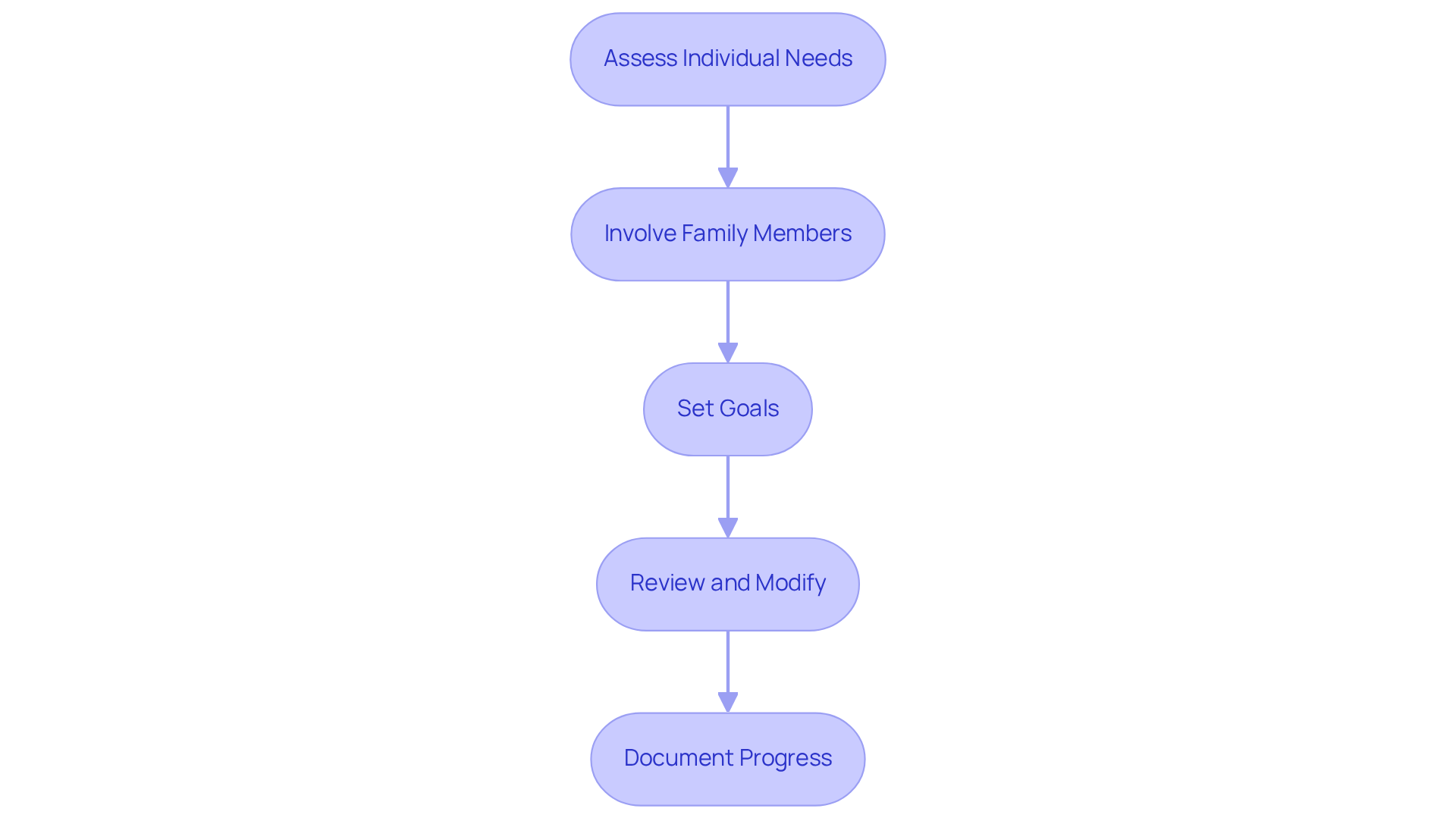
Creating customized support plans is vital for providing effective assistance. Caregivers are encouraged to:
- Assess Individual Needs: Take the time to conduct thorough assessments of clients' physical, emotional, and social needs. This understanding is crucial for developing care strategies that truly resonate.
- Involve Family Members: Collaborate with family members to gather insights and preferences. Their involvement ensures the plan aligns seamlessly with the individual's lifestyle and values.
- Set Goals: Establish clear, achievable objectives that focus on enhancing the individual's quality of life and promoting independence. These goals serve as a guiding light in the care journey.
- Review and Modify: Regularly assess the support plan and be open to making adjustments based on the individual's evolving needs or valuable input from family members. Flexibility is key to effective care.
- Document Progress: Keep detailed records of the individual's progress and any changes in health status. This documentation is essential for guiding future treatment decisions and ensuring continuity of care.
By focusing on tailored support, caregivers can foster a nurturing environment that honors each individual's uniqueness, ultimately enhancing their well-being. This compassionate approach not only addresses the emotional challenges faced by caregivers but also reinforces the importance of connection and understanding in the care process.
Utilize Technology to Enhance Caregiving
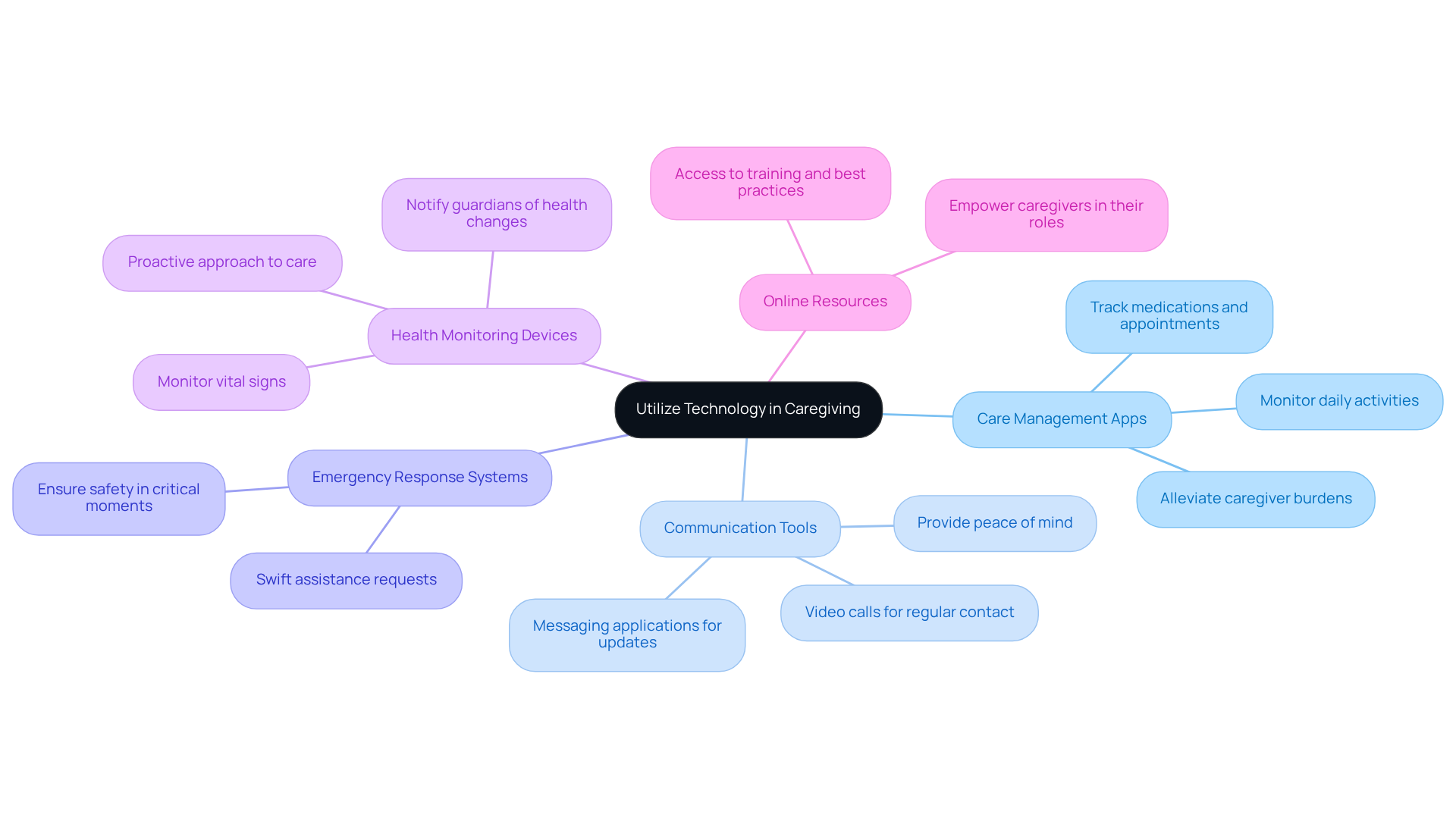
Incorporating technology into the work of caregivers for elderly at home can significantly enhance the quality of care provided. Caregivers often face emotional challenges, such as stress and burnout, and embracing technology can be a comforting solution. Here are some thoughtful tools to consider:
- Care Management Apps: These apps help track medications, appointments, and daily activities, ensuring that nothing is overlooked. They can alleviate some of the burdens caregivers face.
- Communication Tools: Video calls and messaging applications allow caregivers to maintain regular contact with family members, keeping them updated about their loved one's status. This connection can provide peace of mind for everyone involved.
- Emergency Response Systems: Implementing emergency alert systems enables users to request assistance swiftly if necessary, ensuring safety and support in critical moments.
- Health Monitoring Devices: Wearable gadgets that monitor vital signs can notify guardians of any alarming changes in health. This proactive approach can ease worries and enhance care.
- Online Resources: Accessing online training and resources helps caregivers stay updated on best practices and new caregiving techniques, empowering them in their roles.
By embracing technology, caregivers for elderly at home can improve efficiency, enhance communication, and ultimately provide better care for the elderly. Remember, you are not alone in this journey; there are tools and resources available to support you every step of the way.
Key Takeaways for Caregivers
Recognizing the essential practices for caregivers of the elderly at home is crucial for fostering a supportive and nurturing environment. Understanding core responsibilities, managing personal well-being, developing personalized care plans, and utilizing technology can significantly enhance the quality of care provided. These practices not only improve the lives of elderly individuals but also empower caregivers to thrive in their roles.
Throughout this article, we highlighted key insights, such as:
- The importance of personal care
- Medication management
- Companionship
- Safety monitoring
We also discussed strategies for managing caregiver burnout, including:
- Setting boundaries
- Seeking support
The significance of tailored care plans that involve family input and regular assessments was emphasized, along with the transformative role technology can play in caregiving.
Ultimately, embracing these practices is not just about fulfilling responsibilities; it is about creating connections and ensuring the well-being of both caregivers and those they care for. By prioritizing self-care and leveraging available resources, caregivers can navigate their challenges with compassion and resilience. Taking these steps enriches the caregiving experience and fosters a sense of community and support that benefits everyone involved.
https://iframe.tely.ai/cta/eyJhcnRpY2xlX2lkIjogIjY4Zjk3MTBiNzE1OWY4OGZhOTZmZDE5NSIsICJjb21wYW55X2lkIjogIjY4ZWU1ZGNhNzMxNzYyNTU3ZjNjOTVjMSIsICJpbmRleCI6IG51bGwsICJ0eXBlIjogImFydGljbGUifQ==Frequently Asked Questions
What are the core responsibilities of caregivers for the elderly at home?
Core responsibilities include personal care (bathing, dressing, grooming), medication management (ensuring medications are taken as prescribed), meal preparation (creating nutritious meals), companionship (providing emotional support and social activities), and safety monitoring (observing signs of distress or health changes).
How does personal care contribute to the well-being of elderly individuals?
Personal care helps maintain hygiene and dignity, which are essential for the overall well-being of elderly individuals.
What role does medication management play in caregiving?
Medication management involves ensuring that individuals take their medications as prescribed, organizing pills, and monitoring side effects, which helps alleviate caregiver worry.
Why is meal preparation important for elderly care?
Meal preparation is important because it involves creating nutritious dishes that accommodate dietary restrictions and preferences, enhancing wellness and demonstrating care.
How can companionship impact the mental well-being of elderly individuals?
Companionship can alleviate loneliness by offering emotional support and involving individuals in social activities, significantly improving their mental well-being.
What is the significance of safety monitoring in elderly caregiving?
Safety monitoring is crucial as it involves observing individuals for signs of distress or changes in health, ensuring a safe and accessible living environment for both caregivers and clients.
How can caregivers improve the quality of life for elderly individuals?
By mastering their responsibilities, caregivers can significantly enhance the quality of life for elderly individuals, fostering a sense of security and independence within the home.
What support is available for caregivers facing challenges?
Caregivers are encouraged to seek support to help navigate the emotional challenges, stress, and burnout that may arise in their caregiving journey.