Essential Recommended D3 Dosage for Seniors: A Caregiver's Guide

For families in our service areas
For families in our service areas, this guide explains caregiver support and how non-medical in-home caregiving can support care planning in East Idaho, Treasure Valley & Magic Valley, Northern Wasatch, North Central West Virginia & Southwestern Pennsylvania, and Northeast Ohio.
The Importance of Essential Recommended D3 Dosage
Vitamin D3 is a crucial nutrient for maintaining health, yet it often becomes a silent adversary for seniors. Deficiencies can lead to severe consequences, including increased fall risks and weakened immune systems. Caregivers face the challenge of addressing these deficiencies effectively.
With so many conflicting guidelines and personal health factors to consider, navigating the complexities of Vitamin D3 intake can be daunting. However, caregivers can play a pivotal role in enhancing their clients' well-being through proper supplementation and dietary strategies.
To ensure optimal health for the seniors they support, caregivers need clear, actionable solutions. This article will explore the essential recommended D3 dosage for older adults, providing insights and tips to help caregivers make informed decisions.
Explore the Role of Vitamin D3 in Senior Health
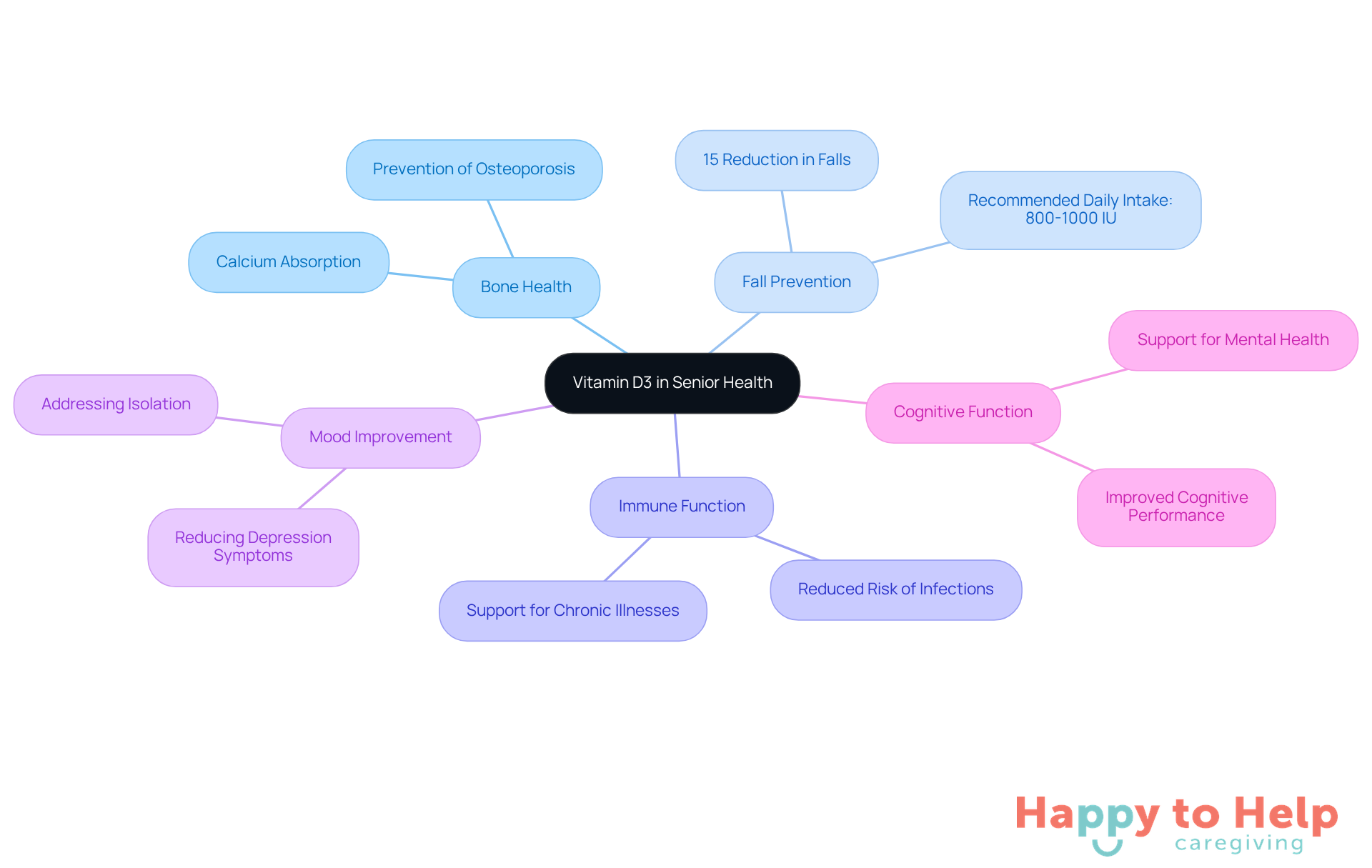
Cholecalciferol, or D3, poses a significant challenge for seniors, as its deficiency can lead to serious health issues. This vitamin is crucial for calcium absorption, essential for maintaining bone health and preventing conditions like osteoporosis. Without adequate D3, older adults face an increased risk of fractures and falls, which can severely impact their quality of life.
Research highlights the urgency of this issue: sufficient D3 concentrations can reduce fall occurrences by 15%, according to a meta-analysis of 35 randomized controlled trials involving 58,937 seniors. This statistic underscores the importance of D3 in fall prevention strategies for older adults. Additionally, D3 plays a vital role in supporting immune function, which is critical for reducing the risk of infections and chronic illnesses that disproportionately affect seniors.
Moreover, adequate D3 levels are linked to improved mood and cognitive function, addressing issues like isolation and depression that many seniors face. A meta-analysis indicates that a daily intake of 800-1000 IU of D3 is associated with a significant decrease in fall risk, particularly for those with low initial levels. Given that 39.5% of nursing home residents have insufficient serum D levels, health professionals recommend a general supplementation of 25 mcg (1000 IU) daily as the recommended D3 dosage for seniors to ensure adequate levels.
To combat these challenges, caregivers should actively promote suitable D3 intake through diet or supplements. By understanding the diverse advantages of D3, caregivers can significantly enhance their clients' overall health and quality of life, fostering healthier aging for the seniors they assist.
Assess Vitamin D Status: Testing and Interpretation
Problem: Vitamin D deficiency is a significant concern for older adults, with studies indicating that up to 59.7% may not meet the recommended D3 dosage for seniors. This deficiency can lead to symptoms such as fatigue, muscle weakness, and bone pain, impacting overall health and wellness.
Agitate: Caregivers must recognize the implications of these deficiencies. A lack of adequate Vitamin D can hinder bone health and overall well-being, making it crucial for families to discuss testing with healthcare providers, especially if seniors exhibit signs of deficiency.
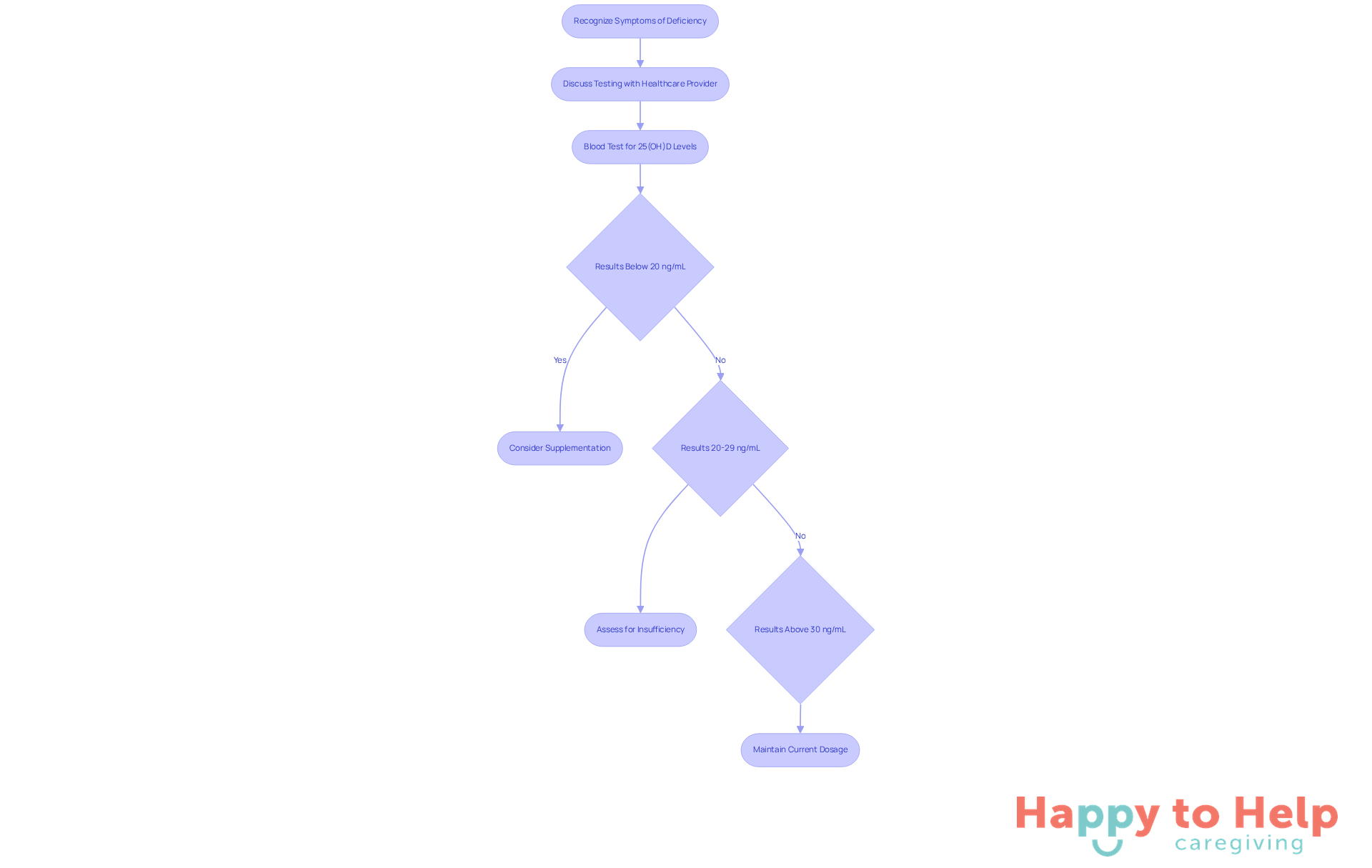
Solution: To assess Vitamin D status, healthcare providers typically recommend a blood test measuring 25-hydroxyvitamin D (25(OH)D). A level below 20 ng/mL is considered deficient, while 20 to 29 ng/mL indicates insufficiency. For older adults, the recommended D3 dosage for seniors is to maintain at least 30 ng/mL. Dr. Edward Giovannucci suggests that the recommended D3 dosage for seniors is a daily intake of 1,000 to 2,000 IU, tailored to individual test results.
Real-life examples underscore the importance of accurate interpretation of these levels. For instance, a senior with a 25(OH)D concentration of 25 ng/mL may experience chronic fatigue, prompting a healthcare provider to recommend increased supplementation. In contrast, a level of 35 ng/mL may indicate adequate status, allowing for a maintenance dose.
Understanding these nuances in Vitamin D levels empowers caregivers to advocate effectively for their loved ones' health needs, ensuring they receive appropriate care.
Review Recommended D3 Dosage for Seniors
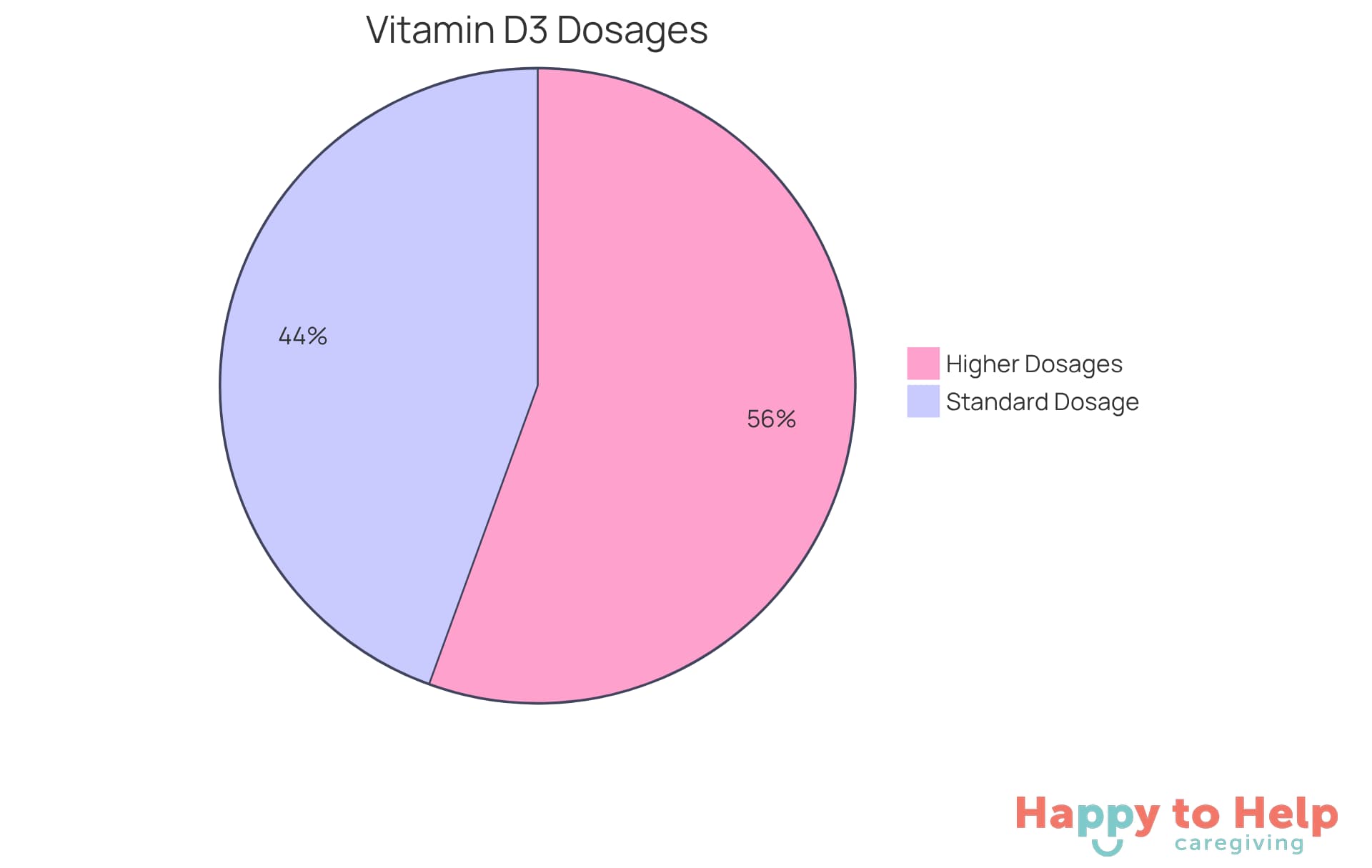
For older adults, particularly those aged 70 and older, the recommended D3 dosage for seniors is crucial to help maintain adequate vitamin D levels. The recommended D3 dosage for seniors is typically set at 800 IU (20 mcg) per day. However, many studies indicate that the recommended D3 dosage for seniors, which can be higher, up to 1,000 IU or more, may be beneficial for improving muscle strength and reducing the risk of falls.
Caregivers play a vital role in ensuring their clients receive the appropriate dosage of vitamin D3. It's essential to consult with medical professionals to determine the suitable amount, taking into account factors such as existing medical conditions, dietary intake, and sun exposure. By addressing these considerations, caregivers can help enhance their clients' overall health and well-being.
Identify Sources of Vitamin D3: Food and Sunlight
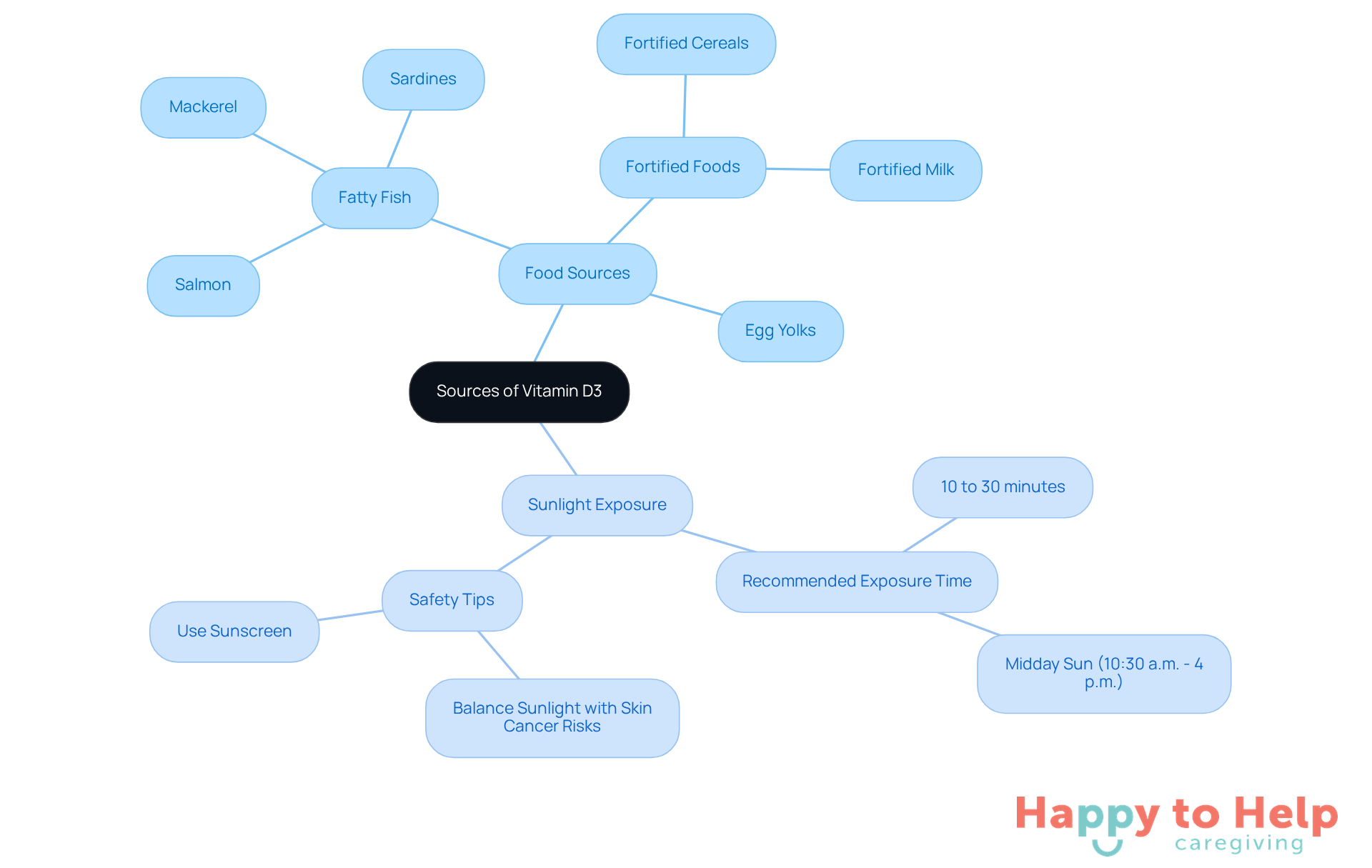
Vitamin D3 deficiency poses a significant challenge for older adults, highlighting the need for the recommended D3 dosage for seniors to support their overall health. While this essential vitamin can be obtained from both food and sunlight, many seniors struggle to meet the recommended D3 dosage for seniors. Key dietary sources include:
- Fatty fish like salmon, mackerel, and sardines
- Egg yolks
- Fortified foods such as milk and cereals
However, research shows that dietary sources contribute only about 5-10 percent of the required Vitamin D, highlighting the need for additional strategies.
Sunlight exposure is a natural and effective way to boost D3 levels. Experts recommend that older adults aim for approximately 10 to 30 minutes of midday sun exposure several times a week, particularly between 10:30 a.m. and 4 p.m., when UV rays are most intense. Caregivers must balance the need for sunlight with the risks of skin cancer, which can be heightened in older populations.
To ensure seniors maintain adequate Vitamin D3 levels, caregivers can combine dietary strategies with the recommended D3 dosage for seniors and safe sun exposure. For instance, incorporating a portion of salmon into a senior's weekly meal plan can significantly enhance their D3 intake. By focusing on both nutrition and sunlight, caregivers can help support the health and well-being of older adults.
Moving Forward with Essential Recommended D3 Dosage
Ensuring that seniors receive adequate Vitamin D3 is essential for promoting their overall health and well-being. Unfortunately, many older adults face a significant problem: Vitamin D deficiency. Studies show that a large percentage of seniors do not meet the necessary dosage requirements, which can lead to serious health implications, including weakened bones, increased risk of falls, and diminished cognitive function.
To address this issue, caregivers can take proactive steps:
- Understanding the importance of regular testing and interpreting Vitamin D levels is crucial.
- By advocating for their clients' health, caregivers can ensure that seniors receive the recommended daily intake of 800 to 1,000 IU of D3.
- Incorporating dietary sources of Vitamin D3, such as fatty fish, fortified foods, and egg yolks, along with promoting safe sun exposure, are practical strategies that can significantly bolster Vitamin D levels in older adults.
Ultimately, caregivers play a pivotal role in enhancing the quality of life for seniors through proper Vitamin D3 management. By addressing deficiencies and ensuring adequate intake, they can foster healthier aging and improve the overall well-being of the seniors they support. The importance of Vitamin D3 cannot be overstated; it is a key component in the pursuit of a healthier, more vibrant life for older adults.
https://iframe.tely.ai/cta/eyJhcnRpY2xlX2lkIjogIjY5MjNhMDk3ZTUyZmU2NjM2Njg4NjcwZiIsICJjb21wYW55X2lkIjogIjY4ZWU1ZGNhNzMxNzYyNTU3ZjNjOTVjMSIsICJpbmRleCI6IG51bGwsICJ0eXBlIjogImFydGljbGUifQ==Frequently Asked Questions
What is Vitamin D3 and why is it important for seniors?
Vitamin D3, also known as cholecalciferol, is crucial for calcium absorption, which is essential for maintaining bone health and preventing conditions like osteoporosis. It helps reduce the risk of fractures and falls in older adults, significantly impacting their quality of life.
How does Vitamin D3 deficiency affect seniors?
A deficiency in Vitamin D3 can lead to serious health issues for seniors, including an increased risk of fractures and falls, which can severely affect their overall well-being.
What does research say about the impact of Vitamin D3 on fall prevention?
Research indicates that sufficient Vitamin D3 concentrations can reduce fall occurrences by 15%. This finding is based on a meta-analysis of 35 randomized controlled trials involving 58,937 seniors, highlighting the importance of D3 in fall prevention strategies.
Besides bone health, what other roles does Vitamin D3 play in senior health?
Vitamin D3 supports immune function, which is critical for reducing the risk of infections and chronic illnesses that disproportionately affect seniors. It is also linked to improved mood and cognitive function, helping to address issues like isolation and depression.
What is the recommended daily intake of Vitamin D3 for seniors?
Health professionals recommend a daily intake of 25 mcg (1000 IU) of Vitamin D3 for seniors to ensure adequate levels, especially since 39.5% of nursing home residents have insufficient serum D levels.
How can caregivers promote adequate Vitamin D3 intake for seniors?
Caregivers can promote suitable Vitamin D3 intake through diet or supplements, understanding its diverse advantages to enhance their clients' overall health and quality of life, thus fostering healthier aging.
List of Sources
- Explore the Role of Vitamin D3 in Senior Health
- Vitamin D supplements may slow biological aging — Harvard Gazette (https://news.harvard.edu/gazette/story/2025/05/vitamin-d-supplements-may-slow-biological-aging)
- Prevalence of vitamin D deficiency in seniors – A retrospective study (https://sciencedirect.com/science/article/pii/S2405457723005387)
- Office of Dietary Supplements - Vitamin D (https://ods.od.nih.gov/factsheets/VitaminD-HealthProfessional)
- Effect of vitamin D, calcium, or combined supplementation on fall prevention: a systematic review and updated network meta-analysis - BMC Geriatrics (https://bmcgeriatr.biomedcentral.com/articles/10.1186/s12877-024-05009-x)
- Vitamin D supplements may lower blood pressure in older people with obesity (https://endocrine.org/news-and-advocacy/news-room/2024/vitamin-d-supplements-may-lower-blood-pressure-in-older-people-with-obesity)
- Assess Vitamin D Status: Testing and Interpretation
- The Global Prevalence of Vitamin D Deficiency in the Elderly: A Meta-analysis - PMC (https://pmc.ncbi.nlm.nih.gov/articles/PMC10899554)
- Quotes on the State of Vitamin D Science, Reference to IOM Report - GrassrootsHealth (https://grassrootshealth.net/quotes-on-the-state-of-vitamin-d-science-reference-to-iom-report)
- Frontiers | Prevalence of vitamin D deficiency and associated risk of all-cause and cause-specific mortality among middle-aged and older adults in the United States (https://frontiersin.org/journals/nutrition/articles/10.3389/fnut.2023.1163737/full)
- Roundup: Caution Urged on Use of Vitamin D, Calcium Supplements for Older Adults; and More News (https://baptisthealth.net/baptist-health-news/caution-urged-on-use-of-vitamin-d-and-calcium-supplements-for-older-adults)
- Vitamin D Deficiency and Related Disorders: Practice Essentials, Background, Pathophysiology (https://emedicine.medscape.com/article/128762-overview)
- Identify Sources of Vitamin D3: Food and Sunlight
- Vitamin D (https://betterhealth.vic.gov.au/health/healthyliving/vitamin-d)
- Vitamin D (https://dietitiansaustralia.org.au/health-advice/vitamin-d)
- How to get the most out of vitamin D3 (https://today.com/health/diet-fitness/vitamin-d3-rcna145117)
- How Much Sunshine Do You Need for Optimal Vitamin D Levels? (https://health.com/how-much-sun-for-vitamin-d-11754641)
- Top Foods Rich in Vitamin D (https://verywellhealth.com/foods-rich-in-vitamin-d-8348470)