Essential Steps for Dealing with a Parent with Alzheimer's

For families in our service areas
For families in our service areas, this guide explains alzheimer's care and how non-medical in-home caregiving can support care planning in East Idaho, Treasure Valley & Magic Valley, Northern Wasatch, North Central West Virginia & Southwestern Pennsylvania, and Northeast Ohio.
The Importance of Essential Steps for Dealing with a
Caring for a parent with Alzheimer's disease presents a significant challenge, often overwhelming caregivers with emotional and practical hurdles. As the number of individuals affected by this progressive neurological disorder continues to grow, understanding its stages and symptoms is essential for those providing care.
The implications of this situation are profound. Caregivers frequently find themselves balancing their own well-being while trying to offer compassionate support to a loved one grappling with the realities of Alzheimer's. This dual burden can lead to stress and burnout, making it crucial to seek effective strategies for managing these challenges.
This guide outlines essential steps to enhance the caregiving experience. From planning meaningful activities to fostering emotional connections, these solutions aim to improve the quality of life for both caregivers and their loved ones. By implementing these strategies, caregivers can create a more supportive environment that benefits everyone involved.
Understand Alzheimer's Disease and Its Impact
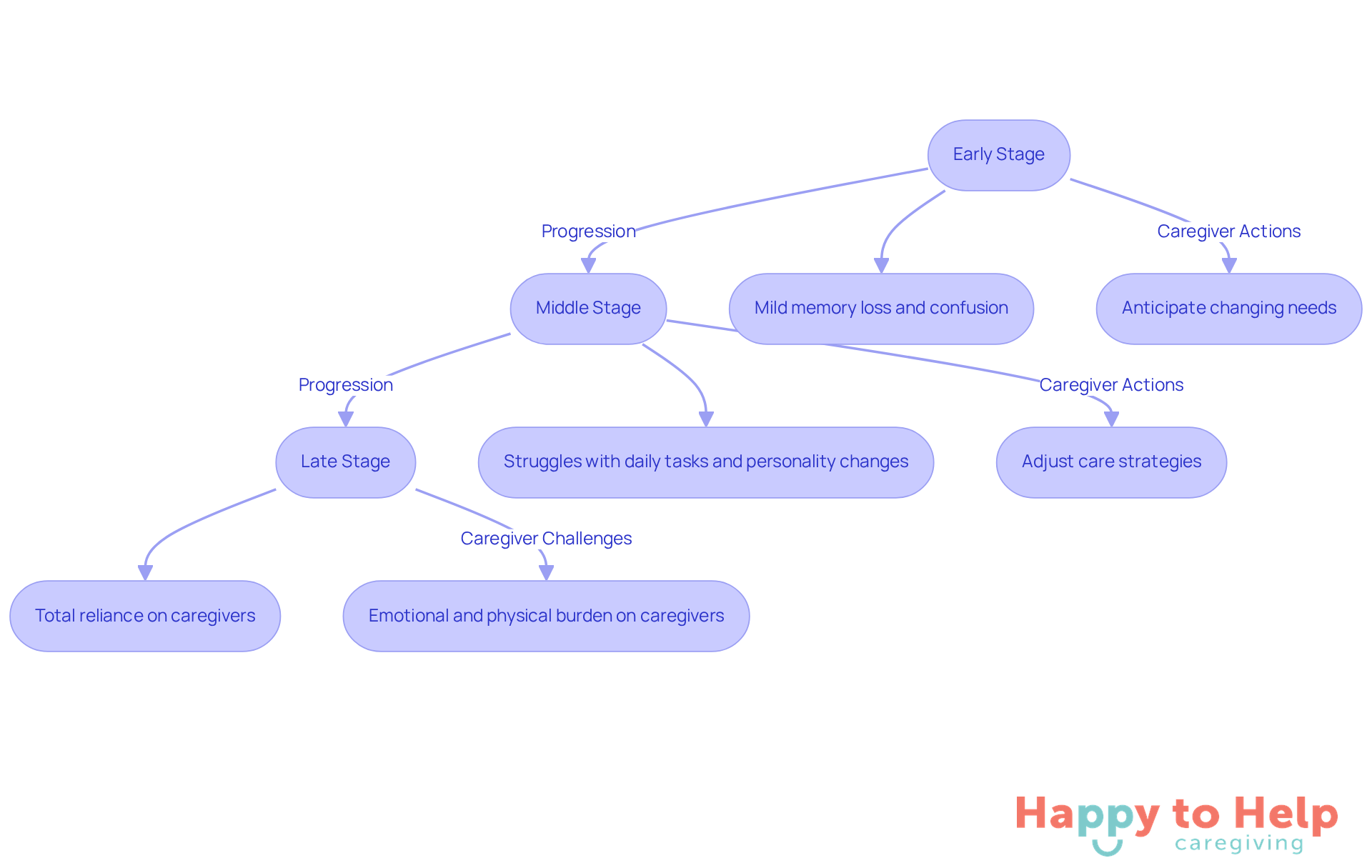
Dealing with a parent with Alzheimer's disease presents a significant challenge for caregivers, as it is a progressive neurological disorder that deeply affects memory, thinking, and behavior. This condition typically unfolds in three stages: early, middle, and late.
- In the early stage, individuals may experience mild memory loss and confusion, which can easily be overlooked.
- As the disease progresses to the middle stage, challenges become more pronounced; individuals may struggle with daily tasks, exhibit personality changes, and require increased support.
- In the advanced phase, notable cognitive deterioration occurs, often resulting in total reliance on caregivers for everyday tasks.
For caregivers dealing with a parent with Alzheimer's, understanding these phases is crucial. It allows them to anticipate the changing needs of their loved ones and adjust their care strategies accordingly. Common symptoms that arise when dealing with a parent with Alzheimer's include forgetfulness, difficulty in communication, and mood fluctuations, all of which can significantly impact interactions and care routines. For example, a parent who once enjoyed social activities may withdraw due to confusion or anxiety, necessitating a shift in engagement strategies.
Recent research highlights the emotional and physical burden on caregivers who are dealing with a parent with Alzheimer's. Studies suggest that they face double the emotional, financial, and physical challenges compared to those supporting individuals without dementia. This underscores the importance of robust support systems and effective coping strategies for caregivers who are dealing with a parent with Alzheimer's. Neurologists emphasize that recognizing the progression of dementia is essential for those dealing with a parent with Alzheimer's, as it enables caregivers to implement preventive measures, such as establishing routines and utilizing memory aids, which can enhance the quality of life for both the caregiver and the person with dementia.
As of 2025, an estimated 7.2 million Americans aged 65 and older are living with dementia, illustrating the widespread impact of this condition on families. Furthermore, fatalities from dementia have more than doubled between 2000 and 2022, indicating the growing severity of the illness. The NIH is dedicated to advancing research that improves the accuracy and precision of diagnostic tests, which is vital for early detection and effective treatment. Notably, one in three older Americans dies with Alzheimer's or another form of dementia, highlighting the seriousness of this disease.
Plan Meaningful Activities and Outings
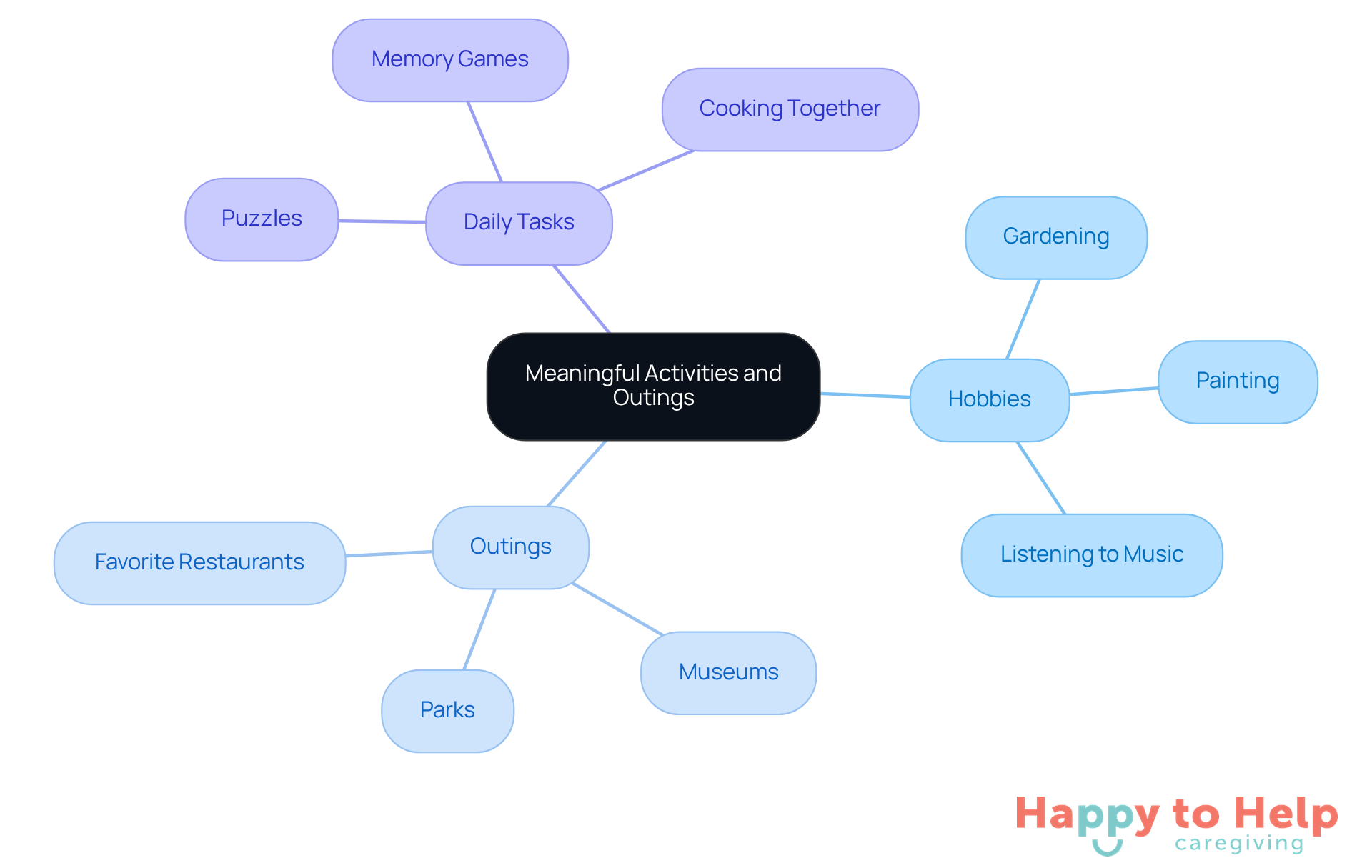
Engaging your loved one in activities that resonate with their interests is crucial. Many caregivers who are dealing with a parent with Alzheimer's face the challenge of finding meaningful ways to connect, which can lead to feelings of isolation for both parties. Identifying hobbies or pastimes they enjoyed, such as:
- Gardening
- Painting
- Listening to music
can significantly enhance their quality of life.
To foster these connections, schedule regular outings to familiar places like:
- Parks
- Museums
- Favorite restaurants
It's essential to ensure these environments are safe and comfortable, as this can greatly impact their enjoyment. Incorporate straightforward, organized tasks into daily routines, such as:
- Puzzles
- Memory games
- Cooking together
These activities not only stimulate the mind but also create opportunities for bonding.
Always have a backup plan in case the initial activity does not go as expected. Flexibility is key; being ready to adapt to their mood and energy levels can make all the difference in their experience. By implementing these strategies, caregivers who are dealing with a parent with Alzheimer's can create a supportive and engaging environment that nurtures their loved one's interests.
Communicate Effectively and Foster Emotional Connections
Effective communication is a significant challenge for caregivers dealing with a parent with Alzheimer's who is experiencing memory loss. Dealing with a parent with Alzheimer's can lead to feelings of frustration and anxiety for both parties, making interactions difficult and less meaningful.
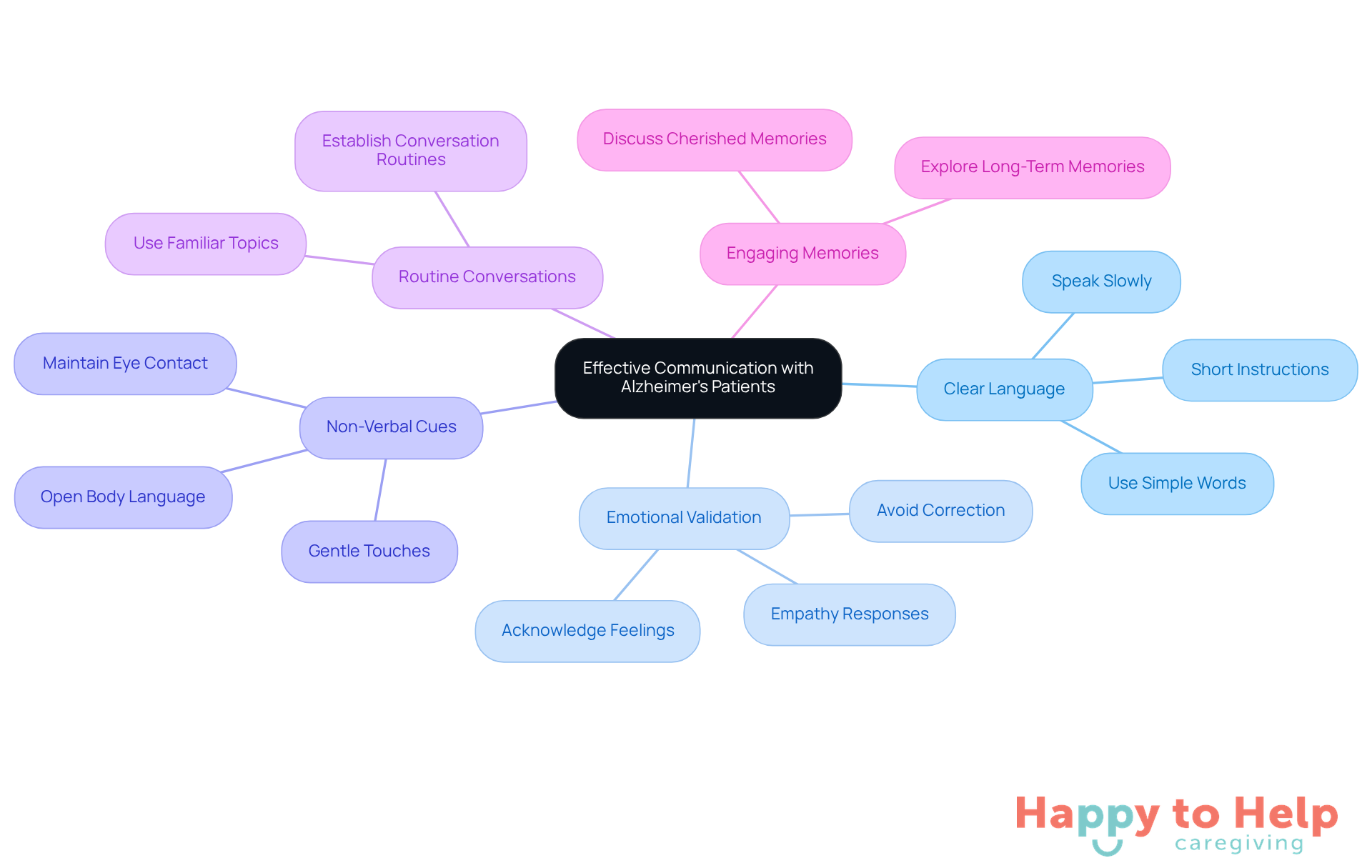
To address this, caregivers who are dealing with a parent with Alzheimer's should adopt a considerate approach that nurtures personal connections. Start by using clear, simple language and maintaining eye contact to establish rapport. Speak slowly and patiently, allowing ample time for responses. This can help alleviate feelings of frustration and create a more comfortable environment.
It's crucial to validate the emotions of individuals who are dealing with a parent with Alzheimer's. For instance, if they express sadness, respond with empathy rather than attempting to correct their perception. This approach acknowledges their feelings and reinforces their sense of dignity.
Non-verbal cues also play a significant role in communication. Gentle touches, warm smiles, and open body language can convey understanding and compassion, enhancing the connection. Establishing a routine for conversations can further reduce anxiety and confusion, making interactions more comfortable.
Research indicates that nurturing personal connections significantly affects the well-being of individuals, especially when dealing with a parent with Alzheimer's. Engaging in discussions about cherished memories or shared experiences can evoke positive emotions and stimulate cognitive engagement, especially when dealing with a parent with Alzheimer's. Caregivers might explore distant memories, which often remain intact even as short-term memory diminishes. This enriches interactions and helps preserve family stories and connections.
Psychologists emphasize the importance of validating feelings when dealing with a parent with Alzheimer's in the context of dementia care. Techniques such as the 'yes, and...' principle encourage caregivers to build on the patient's feelings, promoting more meaningful dialogue. By focusing on the individual's strengths and interests, caregivers can create a nurturing atmosphere that fosters emotional health.
Incorporating these strategies into daily interactions can lead to more fulfilling relationships, ultimately enhancing the quality of life for both caregivers and their loved ones.
Incorporate Enjoyable Activities for Engagement
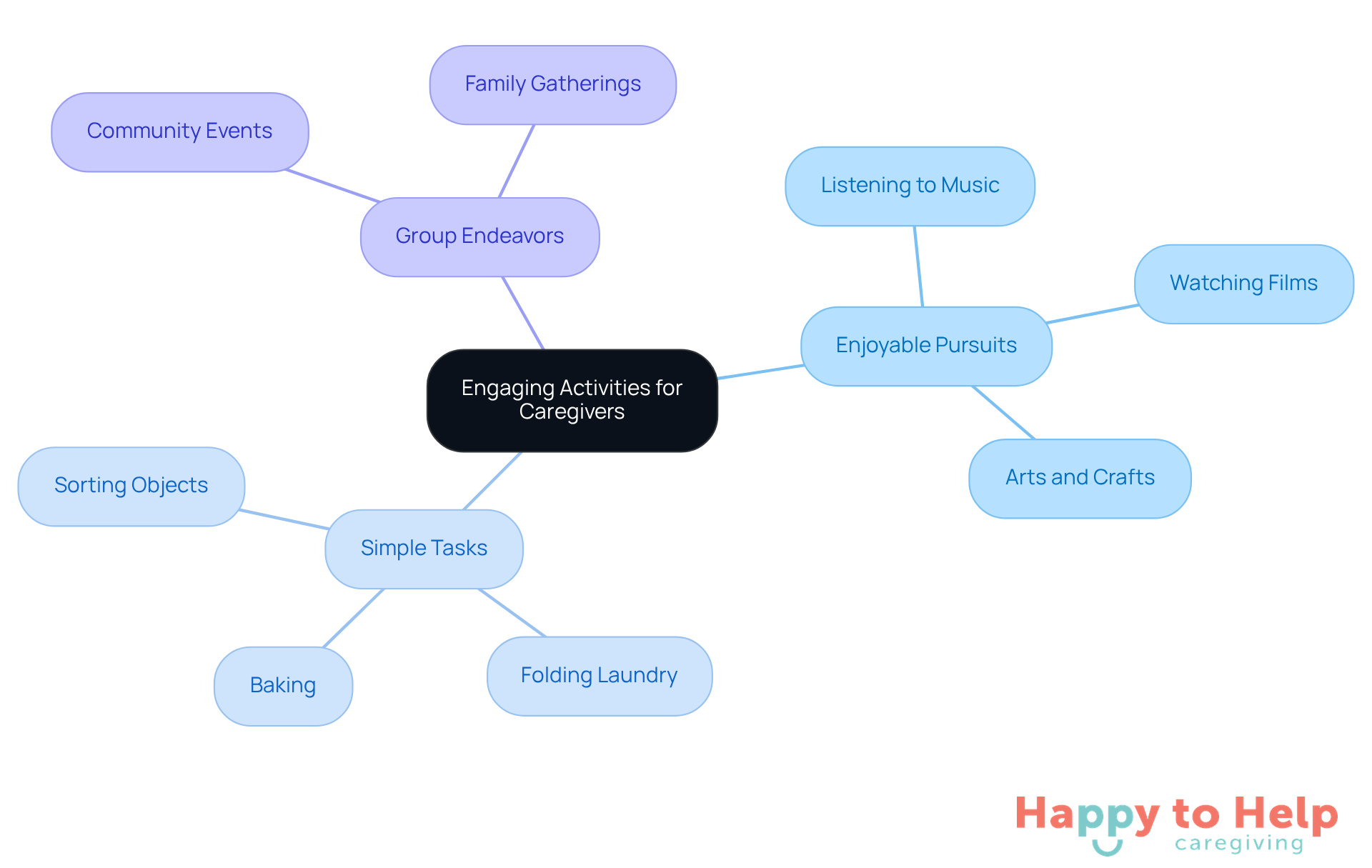
Caregivers often face the challenge of burnout, which can significantly impact their well-being. Engaging in enjoyable pursuits is essential for uplifting spirits and stimulating cognitive function. Activities like:
- Listening to favorite music
- Watching classic films
- Participating in arts and crafts
can provide much-needed relief.
Moreover, simple tasks such as:
- Sorting objects
- Folding laundry
- Baking
can foster a sense of accomplishment. These activities not only break the monotony but also contribute positively to mental health. To further enhance social connections, caregivers should promote involvement in group endeavors, such as:
- Community events
- Family gatherings
It's crucial to ensure that all activities are safe and tailored to individual abilities, allowing for modifications as needed. By incorporating these enjoyable pursuits into daily routines, caregivers can combat burnout and improve their overall quality of life.
Prioritize Self-Care and Manage Caregiver Stress
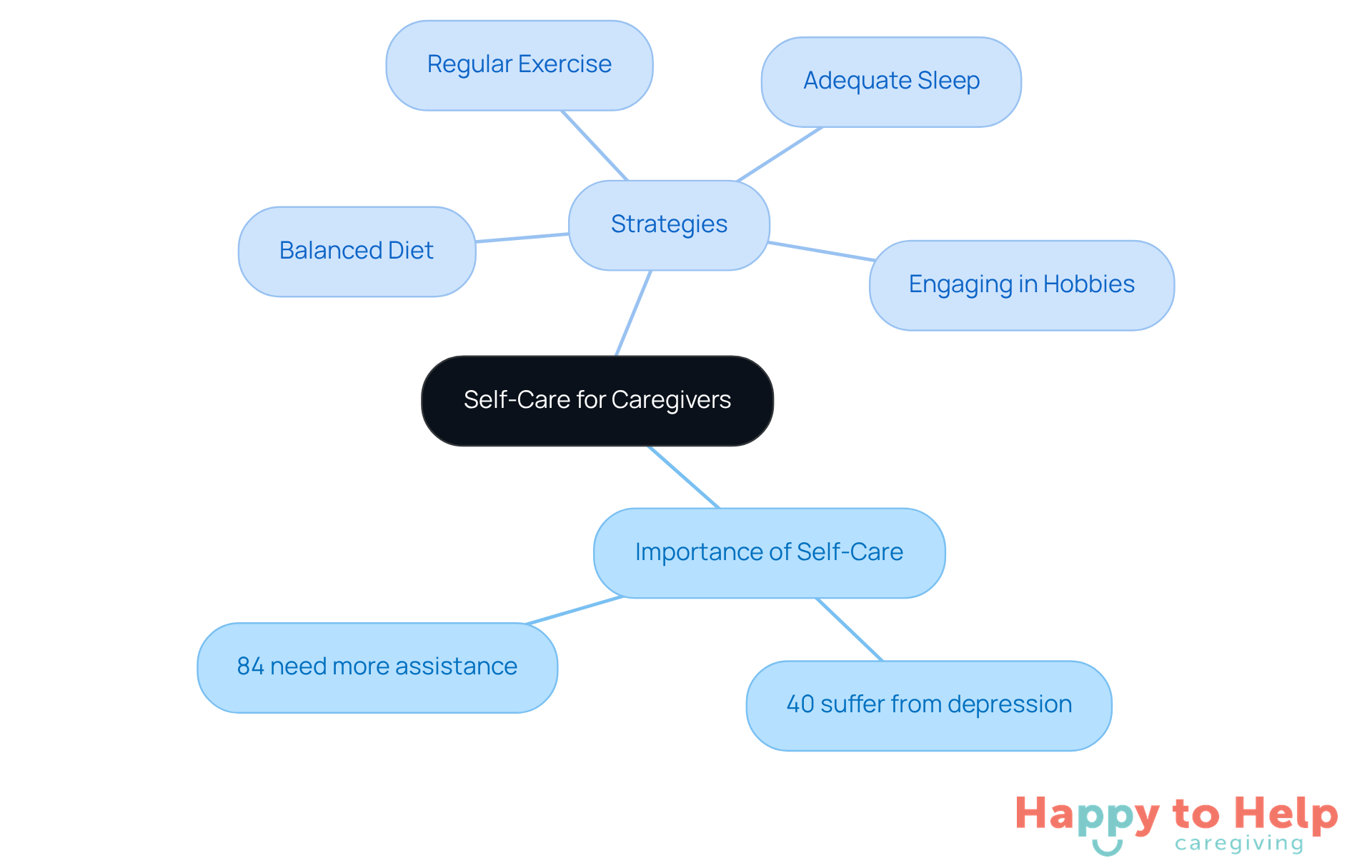
Self-care is essential for caregivers to maintain their ability to provide compassionate support. The problem is clear: without regular breaks, caregivers can quickly become overwhelmed. Research from the Mason CARES program highlights that intentional breaks can significantly reduce stress levels. Consider incorporating short walks, engaging in hobbies, or socializing with friends to recharge.
The implications of neglecting self-care are serious. A staggering 40% of family caregivers of people with dementia suffer from depression, underscoring the urgency of prioritizing one’s own well-being. Additionally, 84% of caregivers report needing more assistance with at least 14 specific caregiving subjects. Joining a support group can be particularly beneficial, offering a space to share experiences and gain insights from others facing similar challenges.
To combat stress, caregivers should prioritize their physical health:
- Maintain a balanced diet
- Exercise regularly
- Ensure you get adequate sleep
Be vigilant for signs of stress, and don’t hesitate to seek professional help when needed. Remember, taking care of yourself is not selfish; it is vital for your well-being and directly influences the quality of care you provide. As Jessica advises, "Let someone know what you’re holding. You don’t have to carry it alone."
Engaging in self-care practices not only fosters your emotional health but also enhances your ability to care for others.
Taking the Next Steps
Caring for a parent diagnosed with Alzheimer's disease presents significant challenges that demand understanding, patience, and adaptability. The emotional and physical toll on caregivers can be profound, often leading to feelings of isolation and stress. Recognizing the stages of Alzheimer's is crucial, as it allows caregivers to tailor their approach to meet the evolving needs of their loved ones.
To effectively navigate this journey, caregivers can implement several key strategies:
- Plan meaningful activities that resonate with the interests of the individual, fostering engagement and connection.
- Employ effective communication techniques to nurture emotional bonds, ensuring that interactions remain positive and supportive.
- Prioritize self-care to manage the inevitable stress that caregiving entails, allowing for essential breaks to recharge.
Engaging in enjoyable pursuits and maintaining a routine can significantly alleviate feelings of isolation and enhance interactions. These practices not only improve the quality of life for the individual affected but also support the caregiver's well-being.
Ultimately, the journey of caring for a parent with Alzheimer's is a shared experience that profoundly influences both the individual and the caregiver. Embracing self-care and seeking support are vital steps in mitigating the emotional and physical toll of caregiving. As the prevalence of Alzheimer's continues to rise, fostering understanding and compassion becomes increasingly important, ensuring that both caregivers and their loved ones can navigate this challenging path together.
https://iframe.tely.ai/cta/eyJhcnRpY2xlX2lkIjogIjY5MmY5MTlmZGM0MTVjZWNlZTQ2NmM3ZSIsICJjb21wYW55X2lkIjogIjY4ZWU1ZGNhNzMxNzYyNTU3ZjNjOTVjMSIsICJpbmRleCI6IG51bGwsICJ0eXBlIjogImFydGljbGUifQ==Frequently Asked Questions
What is Alzheimer's disease and how does it affect individuals?
Alzheimer's disease is a progressive neurological disorder that impacts memory, thinking, and behavior. It typically unfolds in three stages: early, middle, and late, with symptoms ranging from mild memory loss and confusion in the early stage to total reliance on caregivers in the advanced phase.
What are the main stages of Alzheimer's disease?
The disease progresses through three main stages:
- Early Stage: Mild memory loss and confusion.
- Middle Stage: Increased difficulty with daily tasks, personality changes, and a need for more support.
- Late Stage: Significant cognitive deterioration, resulting in total dependence on caregivers for everyday tasks.
Why is it important for caregivers to understand the stages of Alzheimer's?
Understanding the stages of Alzheimer's allows caregivers to anticipate the changing needs of their loved ones and adjust their care strategies accordingly.
What are common symptoms of Alzheimer's disease?
Common symptoms include forgetfulness, difficulty in communication, and mood fluctuations, which can significantly impact interactions and care routines.
How can caregivers engage their loved ones with Alzheimer's in meaningful activities?
Caregivers can engage their loved ones by identifying hobbies or pastimes they enjoyed, such as gardening, painting, or listening to music, and scheduling regular outings to familiar places like parks, museums, or favorite restaurants.
What types of activities can be incorporated into daily routines for individuals with Alzheimer's?
Activities such as puzzles, memory games, and cooking together can stimulate the mind and create bonding opportunities.
What should caregivers do if an activity does not go as planned?
Caregivers should always have a backup plan and be flexible, ready to adapt to their loved one's mood and energy levels to ensure a positive experience.
What challenges do caregivers face when caring for a parent with Alzheimer's?
Caregivers often face emotional, financial, and physical challenges that are double those encountered by caregivers of individuals without dementia, highlighting the need for robust support systems.
What is the significance of recognizing the progression of dementia?
Recognizing the progression of dementia enables caregivers to implement preventive measures, such as establishing routines and utilizing memory aids, which can enhance the quality of life for both the caregiver and the person with dementia.
What is the current prevalence of Alzheimer's disease among older Americans?
As of 2025, an estimated 7.2 million Americans aged 65 and older are living with dementia, and one in three older Americans dies with Alzheimer's or another form of dementia.
List of Sources
- Understand Alzheimer's Disease and Its Impact
- ‘A tipping point’: An update from the frontiers of Alzheimer’s disease research (https://news.yale.edu/2025/08/08/tipping-point-update-frontiers-alzheimers-disease-research)
- 2025 NIH Alzheimer’s Disease and Related Dementias Research Progress Report: Advances and Achievements (https://nia.nih.gov/about/2025-nih-dementia-research-progress-report)
- New Alzheimer's discoveries unveiled at the 2025 Alzheimer's Association International Conference (https://alz.org/wi/news/aaic-2025)
- 8 recent breakthroughs in the fight against Alzheimer’s disease (https://weforum.org/stories/2025/06/recent-breakthroughs-fight-against-alzheimers-disease)
- Alzheimer's Disease Facts and Figures (https://alz.org/alzheimers-dementia/facts-figures)
- Communicate Effectively and Foster Emotional Connections
- How to Stay Connected with a Loved One with Alzheimer’s Disease (https://yalemedicine.org/news/alzheimers-disease-dementia-care)
- Tips for communicating with and caring for Alzheimer's patients (https://cbsnews.com/news/alzheimers-disease-morning-rounds-tips-communicating-care)
- Improv training: A new approach to dementia care | Emory University | Atlanta GA (https://news.emory.edu/stories/2025/01/hs_improving_dementia_care_through_improv_15-01-2025/story.html)
- Communication strategies for delivering personalised dementia care and support: a mixed-methods systematic review and narrative synthesis - PMC (https://pmc.ncbi.nlm.nih.gov/articles/PMC12078768)
- Incorporate Enjoyable Activities for Engagement
- Memory cafes offer camaraderie and fun for people with dementia — and their caregivers (https://npr.org/sections/shots-health-news/2025/05/31/nx-s1-5317646/memory-cafes-dementia-caregiving-respite-social-support)
- Frequent social engagement may delay dementia onset (https://news-medical.net/news/20250130/Frequent-social-engagement-may-delay-dementia-onset.aspx)
- Evaluation of the ‘Ladder to the Moon, Culture Change Studio Engagement Programme’ staff training: Two quasi-experimental case studies | Request PDF (https://researchgate.net/publication/313538369_Evaluation_of_the_'Ladder_to_the_Moon_Culture_Change_Studio_Engagement_Programme'_staff_training_Two_quasi-experimental_case_studies)
- Prioritize Self-Care and Manage Caregiver Stress
- Caregivers: the invisible backbone of dementia care (https://publichealth.gmu.edu/news/2025-11/caregivers-invisible-backbone-dementia-care)
- 5 Self-Care Tips for Caregivers | United Way Worldwide (https://unitedway.org/news/5-self-care-tips-for-caregivers)
- 5 Ways to Combat Caregiver Stress - ChristianaCare News (https://news.christianacare.org/2019/05/five-ways-to-combat-caregiver-stress)
- Caregiver Statistics: Health, Technology, and Caregiving Resources (https://caregiver.org/resource/caregiver-statistics-health-technology-and-caregiving-resources)