

Active service-area notice
Happy to Help does not currently list MS as an active service area. This article is general educational information. For local care availability, browse our active service areas.
Browse active service areasFor families in our service areas
For families in our service areas, this guide explains caregiving and how non-medical in-home caregiving can support care planning in East Idaho, Treasure Valley & Magic Valley, Northern Wasatch, North Central West Virginia, and Northeast Ohio.
The Importance of Essential Steps to Care for MS Patients
Caring for someone with Multiple Sclerosis (MS) presents a unique set of challenges that can profoundly affect both the patient and the caregiver. The complexities of MS - ranging from debilitating fatigue to mobility issues - create significant hurdles for caregivers, often leading to emotional and physical strain. This toll frequently goes unnoticed, raising an important question: how can caregivers prioritize their own well-being while ensuring the best care for their loved ones?
To address this issue, it’s crucial for caregivers to understand the impact of their role. The emotional burden can lead to burnout, while the physical demands can result in health issues of their own. Recognizing these challenges is the first step toward finding effective solutions.
Fortunately, there are essential strategies caregivers can implement to manage the multifaceted aspects of MS caregiving. By focusing on both patient care and caregiver self-care, they can create a more balanced approach. This article delves into these strategies, offering insights that empower caregivers to provide effective support while also taking care of their own needs.
Understand Multiple Sclerosis and Its Impact on Daily Life
Multiple Sclerosis (MS) is a long-lasting condition that influences the central nervous system, leading to various symptoms that can significantly impact daily life. To provide effective support, caregivers must understand these common symptoms to care for MS patients at home.
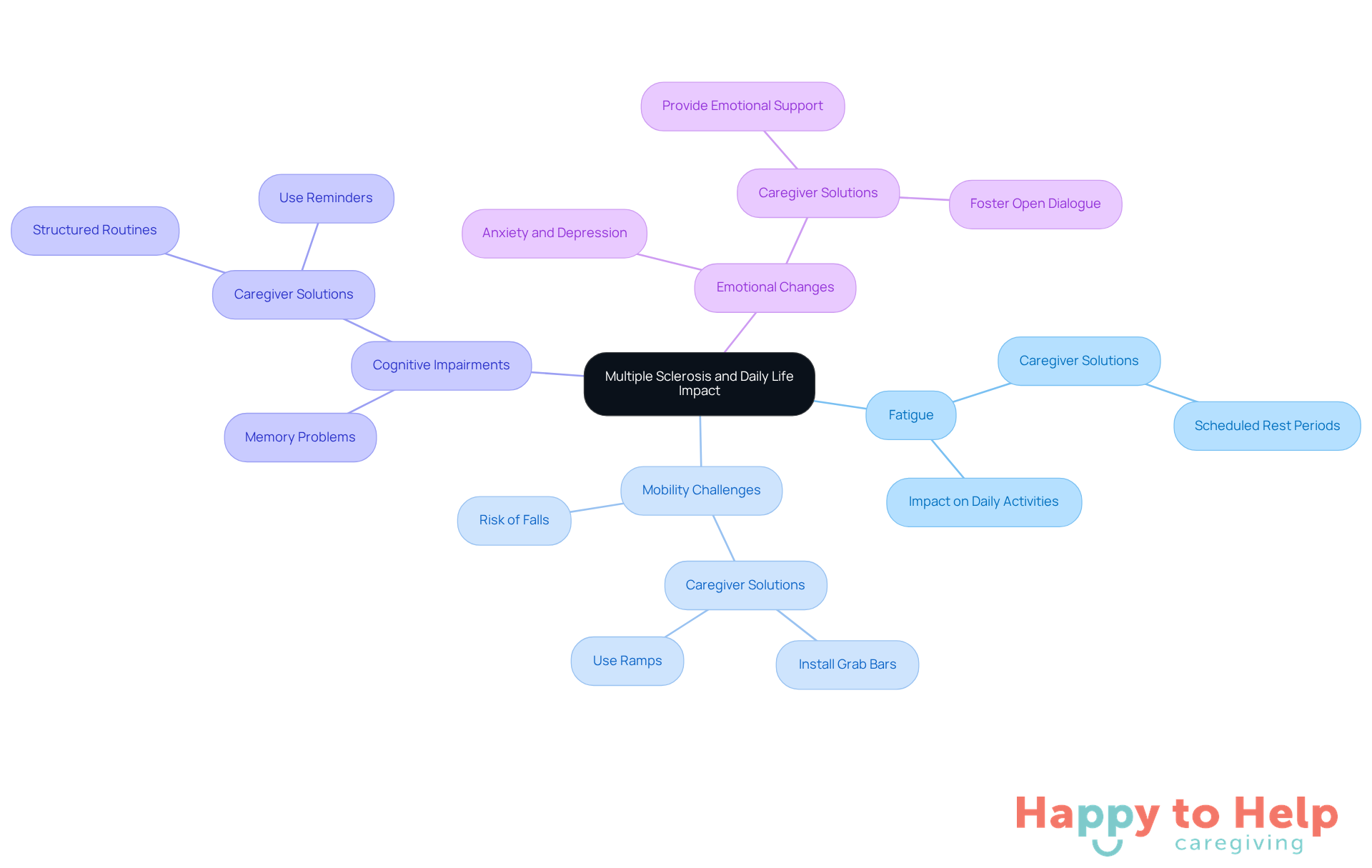
Problem: One of the most prevalent challenges faced by caregivers is fatigue. This often debilitating symptom can severely restrict an individual's ability to engage in daily activities. Studies indicate that fatigue affects approximately 75% of individuals with MS, making it a critical concern for caregivers.
Agitate: Additionally, many individuals encounter mobility challenges. Difficulties with walking and balance can elevate the risk of falls. Research shows that nearly 50% of individuals with MS report mobility issues, necessitating careful monitoring and potential home modifications to enhance safety.
Solution: Caregivers should consider installing grab bars or ramps to ensure safety and independence.
Cognitive impairments also pose a significant challenge. Memory problems and difficulties with concentration complicate communication and daily tasks. Approximately 65% of individuals with MS experience cognitive changes, which can be frustrating for both those affected and caregivers.
To address this, caregivers can implement structured routines and use reminders to assist with memory and focus.
Emotional changes such as anxiety and depression are common among individuals with MS, with studies indicating that up to 50% may experience these conditions. Caregivers who care for MS patients at home play a crucial role in providing emotional support, which helps to alleviate feelings of isolation and distress.
Daily Life Adjustments: Caregivers should closely observe how these symptoms manifest in the individual's daily routine. For example, fatigue may necessitate scheduled rest periods.
Communication: Fostering open dialogue with the patient about their experiences and needs is essential. This method not only assists caregivers in personalizing their aid but also fosters a trusting relationship, which is vital for effective caregiving. By understanding the complexities of MS symptoms, caregivers can better navigate the challenges and improve their ability to care for MS patients at home, thereby enhancing the quality of life for those they assist.
Implement Self-Care Strategies for Caregivers
Self-care is essential for caregivers to maintain their physical and emotional well-being. However, many caregivers struggle to prioritize their own needs, leading to increased stress and burnout. In fact, over 60% of caregivers experience symptoms of burnout, highlighting the urgent need for effective self-care strategies.
To combat this issue, here are actionable strategies caregivers can implement:
-
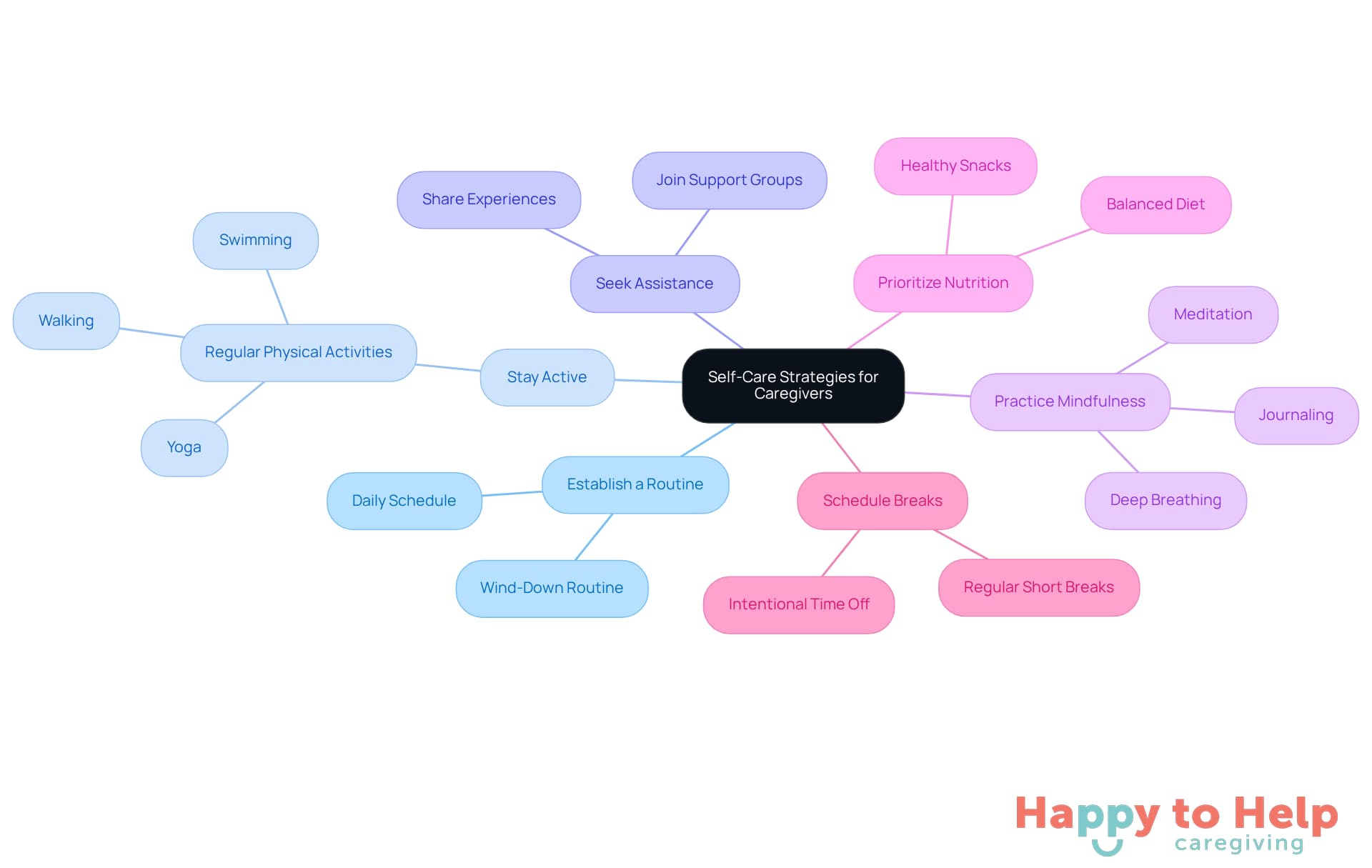
Establish a Routine: Develop a daily schedule that includes personal activities, exercise, and relaxation. Consistency in your routine can significantly reduce stress levels and enhance overall stability. Consider incorporating a wind-down routine to signal to your body that it's time to rest, which can improve sleep quality.
-
Stay Active: Engage in regular physical activities such as walking, yoga, or swimming. Exercise not only boosts mood but also increases energy levels, making it easier to handle caregiving responsibilities.
-
Seek Assistance: Join caregiver assistance groups or online forums to share experiences and gain insights from others facing similar challenges. Establishing relationships with peers can help reduce feelings of isolation and offer valuable emotional support. As Jessica C. Guthrie emphasizes, being clear about the type of help needed increases the likelihood of receiving support.
-
Practice Mindfulness: Incorporate mindfulness techniques such as meditation, deep breathing, or journaling into your daily routine. Dedicating just a few minutes each day to these practices can effectively manage stress and promote emotional resilience.
-
Prioritize Nutrition: Focus on a balanced diet that includes plenty of fruits, vegetables, whole grains, and lean proteins. Adequate nutrition is essential for maintaining energy levels and general well-being, allowing caregivers to carry out their responsibilities more efficiently.
-
Schedule Breaks: Make it a point to take regular short breaks to recharge. Even a few minutes away from caregiving tasks can help clear your mind, reduce stress, and improve your ability to provide care.
Organize Care Responsibilities and Seek Additional Support
Effective organization of care responsibilities is crucial for providing comprehensive support to individuals with MS, particularly when caregivers must care for MS patients at home, as they often face challenges in managing daily tasks, medication schedules, and appointments, which can lead to missed medications and inadequate care.
To address these issues, here are some actionable solutions:
-
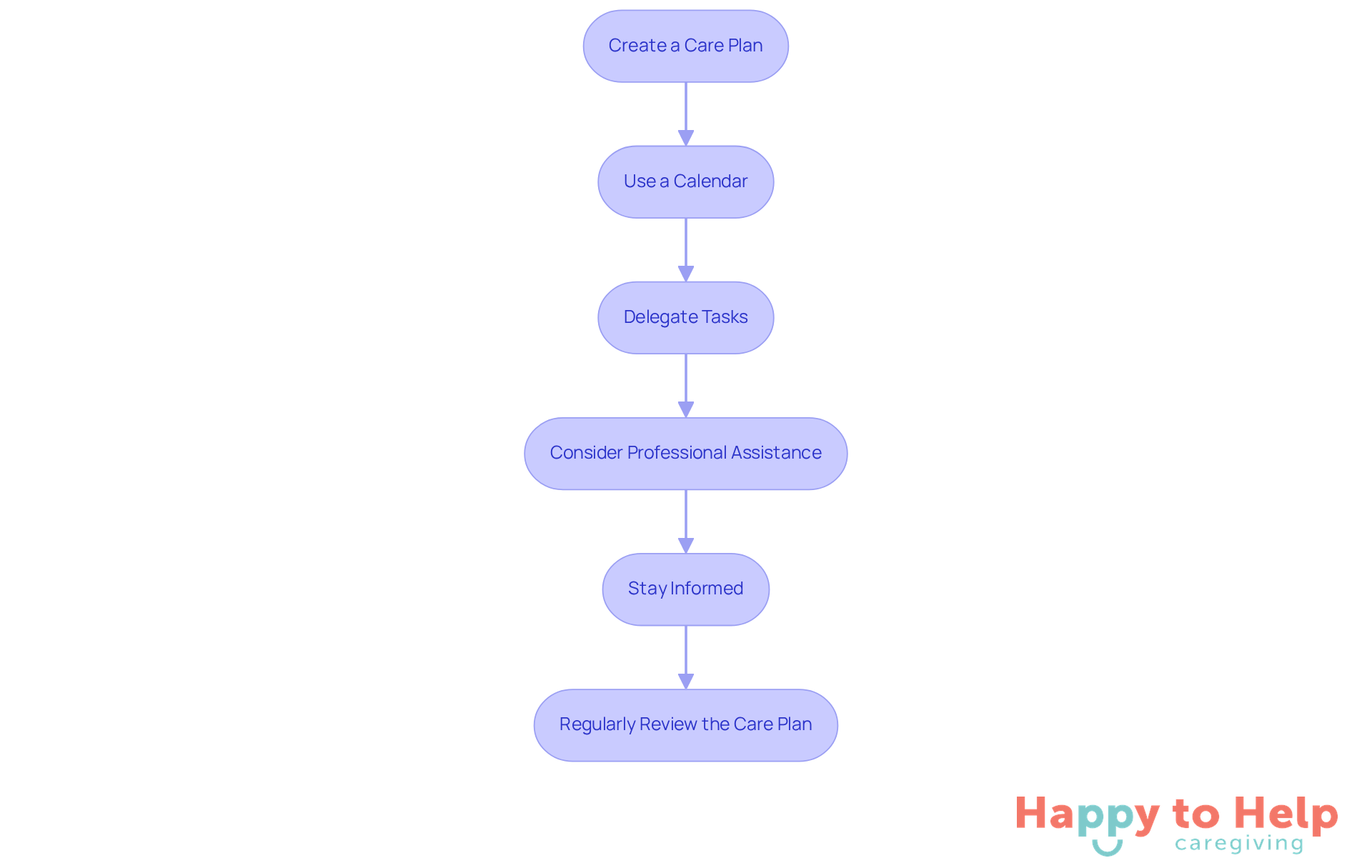
Create a Care Plan: Develop a detailed care plan that outlines daily tasks, medication schedules, and appointments. Ensure this plan is flexible to accommodate the patient's changing needs.
-
Use a Calendar: Utilize a digital or physical calendar to track appointments, medication times, and support staff shifts. This helps prevent missed medications and ensures the care for MS patients at home is timely.
-
Delegate Tasks: Involve family members or friends in caregiving tasks. Assign specific responsibilities to each person to distribute the workload effectively.
-
Consider professional assistance to help care for MS patients at home by exploring options for hiring support workers or respite care services. This can provide essential rest for primary caregivers and ensure that the individual receives continuous attention.
-
Stay Informed: Keep up-to-date with resources and support services available for individuals with MS and their caregivers. Organizations like the National MS Society offer valuable information and assistance.
-
Regularly Review the Care Plan: Schedule periodic reviews of the care plan to assess its effectiveness and make necessary adjustments based on the patient’s evolving needs.
Making the Right Choice
Caring for individuals with Multiple Sclerosis (MS) presents significant challenges for caregivers. The complexities of the condition, including fatigue, mobility issues, cognitive impairments, and emotional changes, can overwhelm those providing support. This dual burden not only affects the quality of care for the patient but also jeopardizes the caregiver's well-being.
To navigate these challenges effectively, caregivers must adopt practical strategies. The following approaches can be beneficial:
- Creating structured routines to help manage daily tasks.
- Fostering open communication to ensure that both the caregiver and the patient feel supported.
- Implementing self-care practices, prioritizing their own health to maintain the energy and resilience needed for caregiving.
- Organizing care responsibilities and seeking external support to alleviate some of the burdens, leading to a more balanced approach.
Ultimately, while the journey of caring for someone with MS is demanding, it also offers opportunities for personal growth and resilience. By prioritizing self-care and employing effective caregiving strategies, caregivers can enhance their own lives while providing the best possible support for their loved ones. Embracing these essential steps not only improves the quality of life for MS patients but also nurtures the well-being of those who care for them, reinforcing the importance of mutual care in this challenging journey.
https://iframe.tely.ai/cta/eyJhcnRpY2xlX2lkIjogIjY5Mjc5NTIwMTRjODUwNzI1NGI4N2M3MCIsICJjb21wYW55X2lkIjogIjY4ZWU1ZGNhNzMxNzYyNTU3ZjNjOTVjMSIsICJpbmRleCI6IG51bGwsICJ0eXBlIjogImFydGljbGUifQ==Frequently Asked Questions
What is Multiple Sclerosis (MS)?
Multiple Sclerosis (MS) is a long-lasting condition that affects the central nervous system, leading to various symptoms that can significantly impact daily life.
What is one of the most common challenges faced by caregivers of MS patients?
Fatigue is one of the most prevalent challenges, affecting approximately 75% of individuals with MS and severely restricting their ability to engage in daily activities.
How does MS affect mobility?
Nearly 50% of individuals with MS report mobility issues, which can lead to difficulties with walking and balance, increasing the risk of falls.
What solutions can caregivers implement to enhance safety for individuals with mobility challenges?
Caregivers should consider installing grab bars or ramps to improve safety and independence for individuals with mobility challenges.
What cognitive challenges do individuals with MS experience?
Approximately 65% of individuals with MS experience cognitive impairments, such as memory problems and difficulties with concentration, which complicate communication and daily tasks.
How can caregivers assist individuals with cognitive impairments?
Caregivers can implement structured routines and use reminders to help individuals with memory and focus.
Are emotional changes common among individuals with MS?
Yes, emotional changes such as anxiety and depression are common, with studies indicating that up to 50% of individuals with MS may experience these conditions.
What role do caregivers play in providing emotional support to MS patients?
Caregivers play a crucial role in providing emotional support, which helps alleviate feelings of isolation and distress among MS patients.
How should caregivers adjust daily life for individuals with MS?
Caregivers should closely observe how symptoms manifest in daily routines, such as scheduling rest periods to manage fatigue.
Why is communication important between caregivers and MS patients?
Fostering open dialogue about experiences and needs is essential for personalizing care and building a trusting relationship, which is vital for effective caregiving.
List of Sources
- Understand Multiple Sclerosis and Its Impact on Daily Life
- Empowering people affected by MS to live their best lives (https://nationalmssociety.org/news-and-magazine/news)
- Number of people with MS | Atlas of MS (https://atlasofms.org)
- Multiple sclerosis statistics 2025 (https://singlecare.com/blog/news/multiple-sclerosis-statistics)
- Rising prevalence of multiple sclerosis worldwide: Insights from the Atlas of MS, third edition - PMC (https://pmc.ncbi.nlm.nih.gov/articles/PMC7720355)
- Implement Self-Care Strategies for Caregivers
- 5 Self-Care Tips for Caregivers | United Way Worldwide (https://unitedway.org/news/5-self-care-tips-for-caregivers)
- Self-Care Strategies for Brain Tumor Caregivers - National Brain Tumor Society (https://braintumor.org/news/self-care-strategies-for-brain-tumor-caregivers)
- Caregiver Support: A Guide to Self-Care for Caregivers | Pfizer (https://pfizer.com/news/articles/caregiver\_support\_a\_guide\_to\_self\_care\_for\_caregivers)
- Why self-care for caregivers matters | Kaiser Permanente (https://healthy.kaiserpermanente.org/health-wellness/care-stories/why-caregiver-self-care-matters)
- New program reduces burnout in dementia caregivers, novel research evaluation proves (https://publichealth.gmu.edu/news/2025-10/new-program-reduces-burnout-dementia-caregivers-novel-research-evaluation-proves)
- Organize Care Responsibilities and Seek Additional Support
- The Caregiving Landscape: Data & Insights on the Caregiver Experience in the U.S. (https://caregiveraction.org/caregiver-statistics)
- Caregivers: Tips for Navigating a New MS Diagnosis (https://templehealth.org/about/blog/caregivers-tips-navigating-new-ms-diagnosis)
- Trends in Multiple Chronic Conditions Among US Adults, By Life Stage, Behavioral Risk Factor Surveillance System, 2013–2023 (https://cdc.gov/pcd/issues/2025/24\_0539.htm)
- Steps for Creating and Maintaining a Care Plan (https://cdc.gov/caregiving/guidelines)
- The Relation of the Chronic Disease Epidemic to the Health Care Crisis - PMC (https://pmc.ncbi.nlm.nih.gov/articles/PMC7077778)