For families in our service areas
For families in our service areas, this guide explains alzheimer's care and how non-medical in-home caregiving can support care planning in East Idaho, Treasure Valley & Magic Valley, Northern Wasatch, North Central West Virginia, and Northeast Ohio.
What You Need to Know About Essential Strategies for Alzheimer
Caring for someone with Alzheimer's at home presents unique challenges that require a thorough understanding of the disease's progression and its effects on both patients and caregivers. Caregivers often face emotional and physical demands that can be overwhelming. How can they balance these challenges while also taking care of their own well-being?
By exploring essential strategies tailored to different stages of Alzheimer's, caregivers can enhance their approach. This ensures a supportive environment that promotes dignity and quality of life for those affected. This article delves into actionable tips and best practices that empower caregivers to navigate the complexities of Alzheimer's care with confidence and compassion.
Understand Alzheimer's Disease and Its Stages
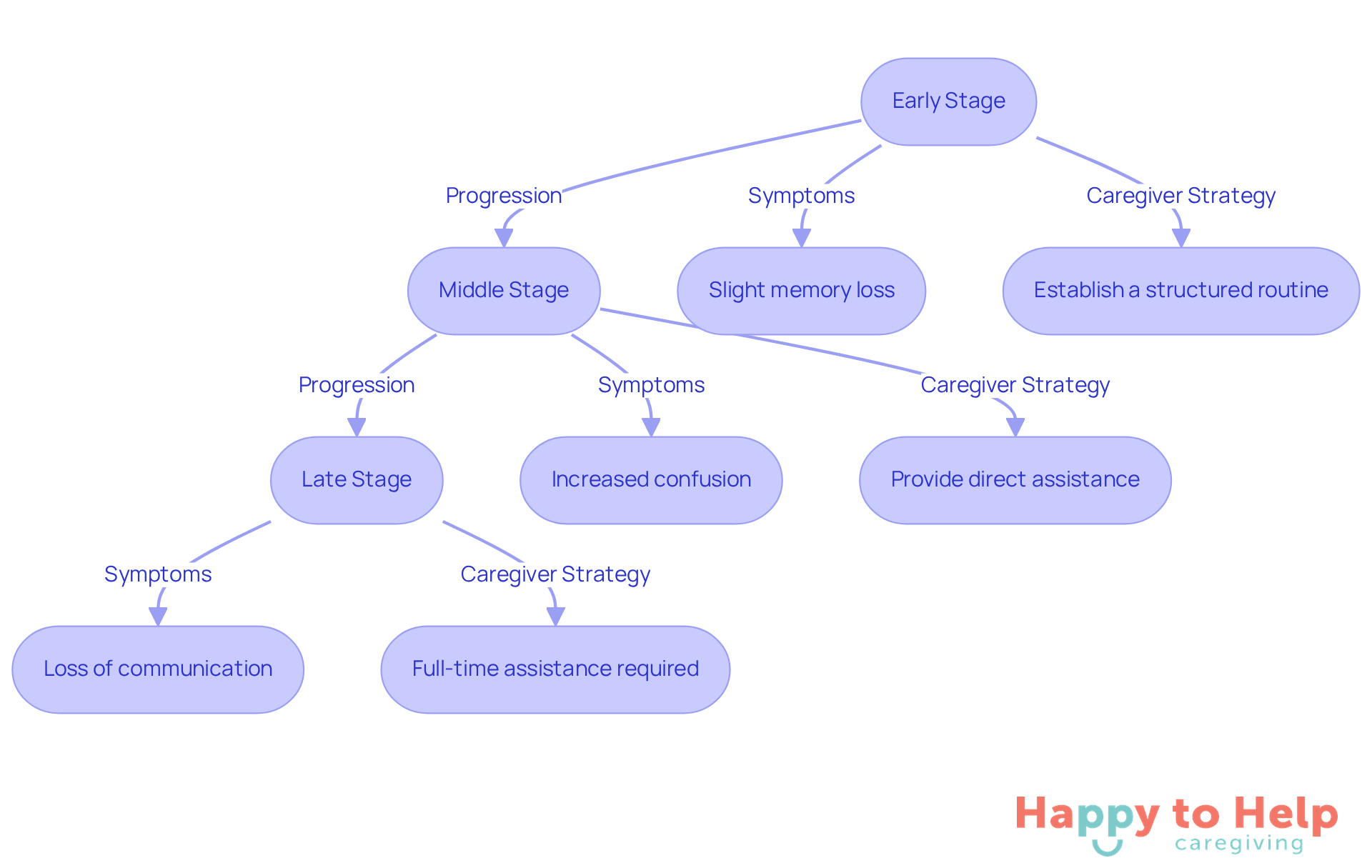
Alzheimer's care at home presents significant challenges for caregivers, as the disease advances through three main stages: early, middle, and late. Each stage displays distinct symptoms that require tailored support. In the early phase, individuals may experience slight memory loss and disorientation. This makes it crucial for caregivers to establish a structured routine and maintain a familiar environment, fostering comfort and security.
As the disease progresses to the middle stage, confusion intensifies, and daily activities become increasingly difficult. Caregivers must provide more direct assistance and adapt their approaches to meet the evolving needs of those they support. By recognizing these changes, caregivers can better prepare for the challenges ahead.
In the late stage, individuals often lose the ability to communicate and may require full-time assistance. This situation calls for a compassionate and patient approach from caregivers. Understanding these stages not only helps caregivers anticipate changes but also empowers them to customize their support effectively in Alzheimer's care at home, promoting dignity and respect for those affected by the disease.
Neurologists stress the importance of recognizing these stages for implementing appropriate interventions. By doing so, caregivers can enhance the quality of life for both patients and themselves. Here are some actionable tips for caregivers:
- Establish a daily routine to provide structure.
- Create a familiar environment to reduce confusion.
- Offer direct assistance as needed, adjusting approaches based on the individual's condition.
By following these strategies, caregivers can navigate the complexities of Alzheimer's disease with greater confidence and effectiveness.
Establish a Safe and Structured Home Environment
Creating a secure environment for individuals receiving Alzheimer's care at home presents a significant challenge for caregivers. The need for safety and independence is paramount, yet many homes are not equipped to meet these needs. Cluttered spaces can lead to confusion and potential hazards, making it essential to address these issues.
To enhance safety, consider the following steps:
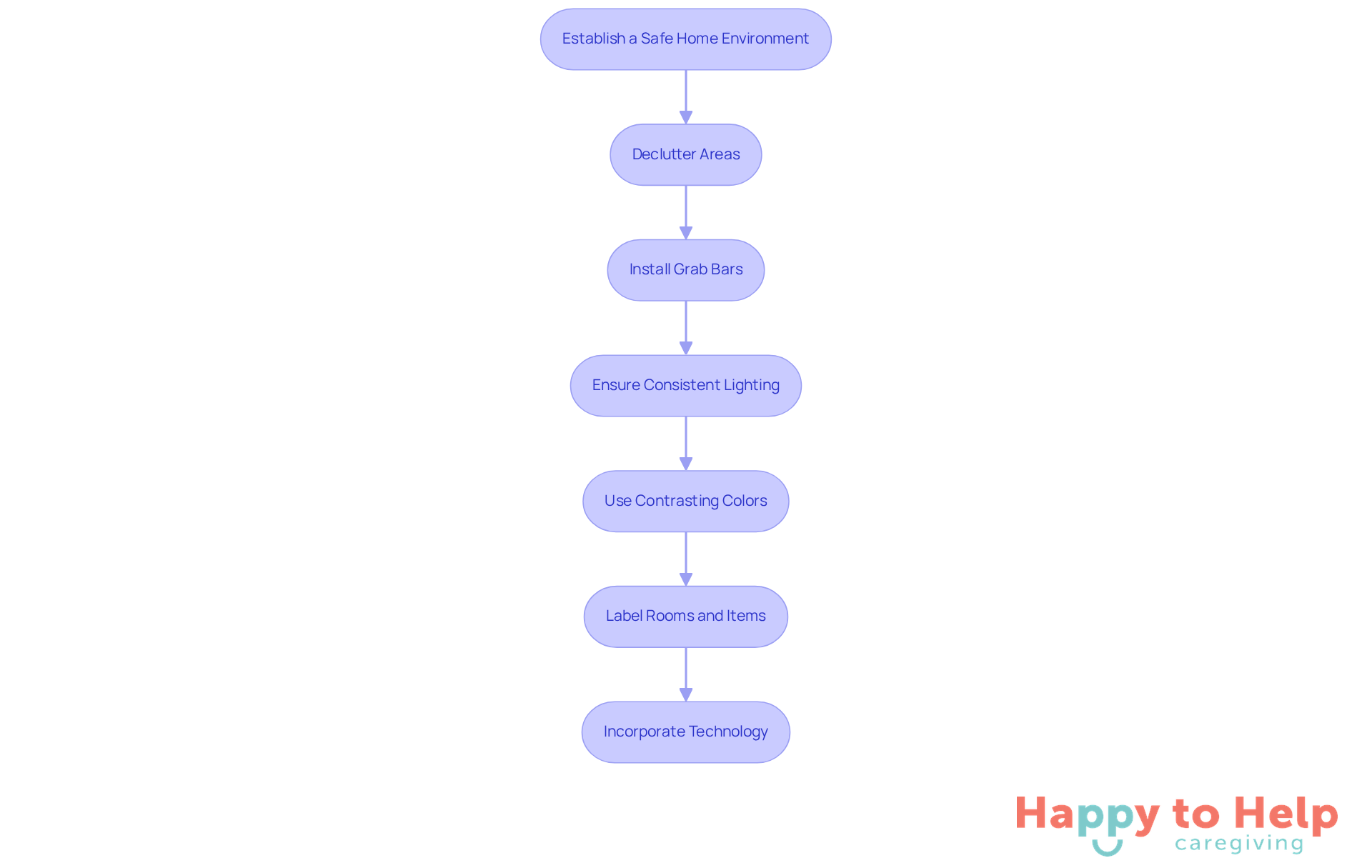
- Declutter areas to minimize confusion.
- Install grab bars in bathrooms.
- Ensure consistent lighting throughout the home.
- Use contrasting colors for furniture and walls to improve visibility.
- Label rooms and essential items with clear signs or images to assist navigation.
Incorporating technology can further bolster safety. Consider using:
- Motion sensors or alarms to alert caregivers if a person wanders, providing peace of mind.
These modifications not only enhance safety but also support Alzheimer's care at home, allowing individuals to maintain a sense of independence while fostering a secure and comfortable living environment.
Occupational therapists stress that home modifications should feel like natural improvements rather than medical interventions. This approach preserves the emotional warmth of the home. By implementing these strategies, families can create a nurturing environment that enhances the well-being and dignity of their loved ones with dementia.
Enhance Communication and Emotional Engagement
Effective communication with individuals living with Alzheimer's is a significant challenge for caregivers. Complex sentences and rapid exchanges can hinder understanding, leading to frustration for both parties. Caregivers must recognize the importance of adapting their communication style to foster connection and emotional well-being.
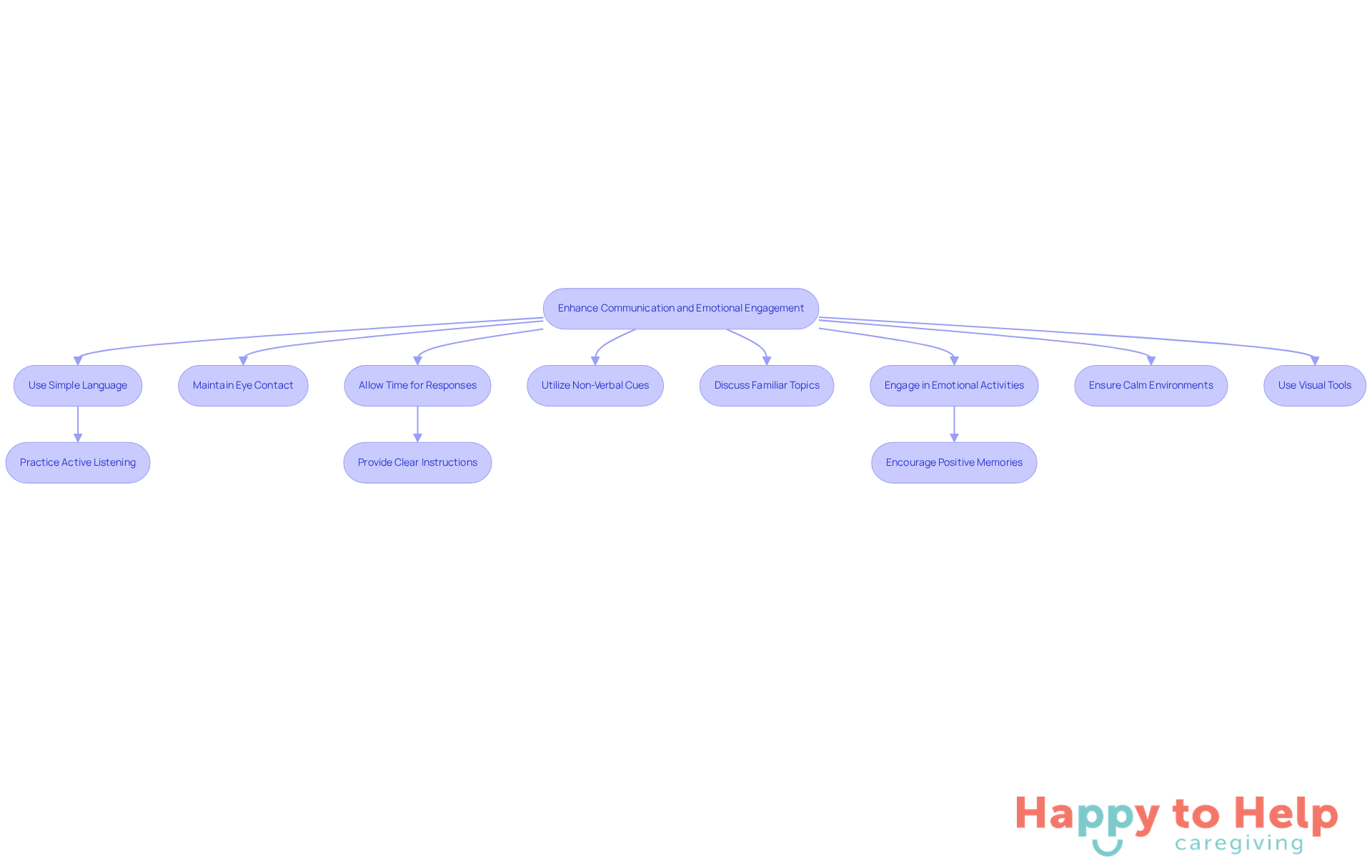
To address these challenges, caregivers should prioritize the use of simple, clear language. Maintaining eye contact is essential, as it helps establish a connection and shows attentiveness. Allowing ample time for responses respects the individual's processing pace, making conversations more meaningful.
Non-verbal cues, such as gestures and facial expressions, play a crucial role in enhancing understanding. Engaging in discussions about familiar topics can evoke positive memories and emotions, which are vital for emotional health. Activities that encourage emotional involvement, like recalling past experiences or browsing through photo albums, can significantly strengthen the bond between the caregiver and the individual.
Additionally, caregivers should conduct conversations in calm environments with minimal interruptions. Utilizing visual tools can further improve comprehension. These strategies not only promote a sense of connection and comfort but also enhance the overall caregiving experience in Alzheimer's care at home, leading to better outcomes for those affected by dementia.
With nearly 66 million informal or family caregivers supporting adults in America, implementing effective communication strategies is crucial for improving the caregiving experience.
Prioritize Caregiver Well-Being and Support
Caregivers often face a significant challenge in prioritizing their own health while providing Alzheimer's care at home for individuals. This neglect can lead to increased stress and emotional strain, ultimately affecting the quality of care provided.
To combat this issue, regular breaks are essential. Taking time for oneself and arranging for respite care can rejuvenate both the mind and body. Utilizing respite care services not only alleviates stress but also allows caregivers to rest, ensuring their loved ones receive quality support.
Engaging in physical activities, maintaining a balanced diet, and practicing stress-reduction techniques such as mindfulness or yoga can enhance resilience and emotional stability. These practices are vital for caregivers to sustain their well-being.
Additionally, joining support groups can offer invaluable assistance, especially if a personal support network is lacking. These groups provide emotional relief and practical advice from peers facing similar challenges.
Caregivers should also acknowledge and validate their emotions, which can range from love to frustration. By focusing on their own needs, caregivers can improve their capacity to support their loved ones effectively in providing Alzheimer's care at home, fostering a healthier caregiving environment.

Your Path Forward
Caring for someone with Alzheimer's at home presents significant challenges. Caregivers often face the daunting task of adapting to the evolving needs of individuals affected by the disease. This can lead to feelings of overwhelm and uncertainty, impacting both the quality of care provided and the caregiver's well-being.
Recognizing the distinct stages of Alzheimer's is crucial. By understanding how the disease progresses, caregivers can tailor their support effectively. This not only enhances the quality of life for patients but also alleviates some of the stress caregivers experience. Key strategies include:
- Establishing structured routines: Consistency helps individuals with Alzheimer's feel more secure and reduces confusion.
- Creating a safe environment: Ensuring the living space is free from hazards can prevent accidents and promote independence.
- Fostering effective communication: Clear and compassionate communication strengthens emotional connections and reduces frustration.
Implementing these strategies allows caregivers to navigate the complexities of this journey with greater confidence. Moreover, prioritizing self-care and building support systems are essential for sustaining their ability to provide compassionate care.
Ultimately, while the responsibility of caring for someone with Alzheimer's can be overwhelming, it also offers opportunities for meaningful connection. By embracing these strategies, caregivers can create a nurturing environment that benefits both themselves and those they care for. Seeking out resources and support not only ensures dignity and respect for individuals with Alzheimer's but also enriches the lives of caregivers as they navigate this journey together.
https://iframe.tely.ai/cta/eyJhcnRpY2xlX2lkIjogIjY5NDBkZmI3YTZjYzFmMTdjMzA0MmE3OCIsICJjb21wYW55X2lkIjogIjY4ZWU1ZGNhNzMxNzYyNTU3ZjNjOTVjMSIsICJpbmRleCI6IG51bGwsICJ0eXBlIjogImFydGljbGUifQ==Frequently Asked Questions
What are the main stages of Alzheimer's disease?
Alzheimer's disease progresses through three main stages: early, middle, and late.
What symptoms are associated with the early stage of Alzheimer's?
In the early stage, individuals may experience slight memory loss and disorientation.
How can caregivers support individuals in the early stage of Alzheimer's?
Caregivers can establish a structured routine and maintain a familiar environment to foster comfort and security.
What challenges do caregivers face in the middle stage of Alzheimer's?
In the middle stage, confusion intensifies, and daily activities become increasingly difficult, requiring caregivers to provide more direct assistance.
What should caregivers do to adapt to the needs of individuals in the middle stage?
Caregivers should recognize the changes and adjust their approaches to meet the evolving needs of those they support.
What occurs in the late stage of Alzheimer's disease?
In the late stage, individuals often lose the ability to communicate and may require full-time assistance.
What approach should caregivers take in the late stage of Alzheimer's?
A compassionate and patient approach is essential for caregivers during the late stage.
Why is it important for caregivers to understand the stages of Alzheimer's?
Understanding these stages helps caregivers anticipate changes and customize their support effectively, promoting dignity and respect for affected individuals.
What are some actionable tips for caregivers of individuals with Alzheimer's?
Caregivers should establish a daily routine, create a familiar environment, and offer direct assistance while adjusting their approaches based on the individual's condition.
List of Sources
- Understand Alzheimer's Disease and Its Stages
- 2025: The Salk Institute's Year of Alzheimer's Disease Research - Salk Institute for Biological Studies (https://salk.edu/support-us/alzheimers-disease)
- New Alzheimer's discoveries unveiled at the 2025 Alzheimer's Association International Conference (https://alz.org/wi/news/aaic-2025)
- ‘A tipping point’: An update from the frontiers of Alzheimer’s disease research (https://news.yale.edu/2025/08/08/tipping-point-update-frontiers-alzheimers-disease-research)
- Establish a Safe and Structured Home Environment
- Creating a Safe Haven: Creating a Safe Environment for Loved Ones with Alzheimer's (https://ltcnews.com/articles/creating-safe-environment-loved-one-alzheimers)
- Adapting Home Environments for Patients with Dementia: Practical Tips and Strategies (https://vnahg.org/adapting-home-environments-for-patients-with-dementia-practical-tips-and-strategies)
- Aging in Place Home Modifications Guide 2025 | Senior Safety Tips (https://agesafeamerica.com/home-safety-hub/articles/top-home-safety-modifications)
- Creating a Dementia-Friendly Home: Room-by-Room Modifications That Work (https://thekey.com/learning-center/dementia-friendly-home)
- How to Create a Safer Home for Seniors with Dementia (https://junipercommunities.com/how-to-create-a-safe-living-environment-for-seniors-with-dementia)
- Enhance Communication and Emotional Engagement
- Bridging the gap: Dementia communication strategies - Harvard Health (https://health.harvard.edu/mind-and-mood/bridging-the-gap-dementia-communication-strategies)
- Communication | Alzheimer's Association (https://alz.org/help-support/caregiving/daily-care/communications)
- Most effective way to communicate with Alzheimer's patients identified (https://medicalxpress.com/news/2024-11-effective-communicate-alzheimer-patients.html)
- 5 Tips to Help Caregivers Talk to Loved Ones with Alzheimer’s - Greater Somerset County YMCA (https://gscymca.org/2025/09/5-tips-to-help-caregivers-talk-to-loved-ones-with-alzheimers)
- Prioritize Caregiver Well-Being and Support
- The Importance of Self Care for Caregivers - Alzheimer's San Diego (https://alzsd.luminys.com/importance-self-care-for-caregivers)
- Self-Care is Vital for Dementia Caregivers - Pine Rest Newsroom (https://pinerest.org/newsroom/articles/alzheimers-self-care-blog)
- Alzheimer’s Association Encourages Dementia Caregivers to Make Their Health and Well-Being an Equal Priority (https://alz.org/news/2024/november-national-family-caregivers-month)
- News & Information (https://wellnessalliance.org/resources-and-tools/news-and-information/2025/11/10/national-family-caregivers-month--preventing-caregiver-burnout)
- Caregiving in the US 2025: Caring Across States (https://aarp.org/pri/topics/ltss/family-caregiving/caregiving-in-the-us-2025-caring-across-states)