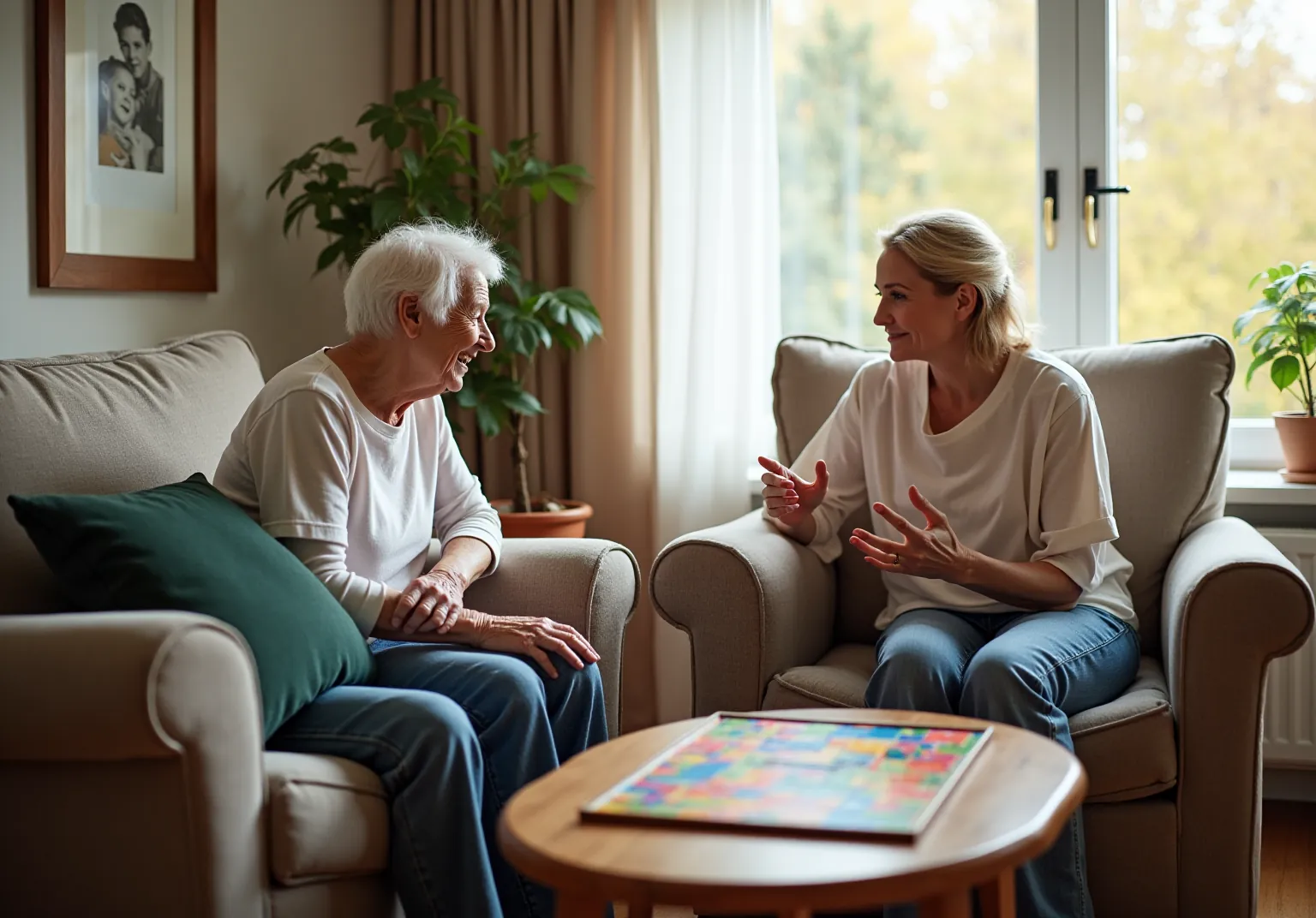
Essential Strategies for Managing Dementia and Hygiene Issues
For families in our service areas
For families in our service areas, this guide explains dementia care and how non-medical in-home caregiving can support care planning in East Idaho, Treasure Valley & Magic Valley, Northern Wasatch, North Central West Virginia & Southwestern Pennsylvania, and Northeast Ohio.
What You Need to Know About Essential Strategies for Managing
Navigating the complexities of dementia care often reveals a critical yet challenging aspect: maintaining personal hygiene. For caregivers, this issue is not just about cleanliness; it significantly impacts the well-being and dignity of those they care for. Establishing effective strategies can enhance the quality of life for individuals facing cognitive decline, fostering a sense of independence.
However, the path to achieving a smooth hygiene routine can be fraught with emotional hurdles and resistance. Caregivers may encounter anxiety and reluctance from those they assist, making these essential tasks even more challenging. How can caregivers create a supportive environment that alleviates anxiety and promotes cooperation during these tasks?
By understanding the emotional landscape and implementing practical solutions, caregivers can navigate these challenges more effectively.
Establish Routines for Personal Hygiene
Establishing a consistent schedule for personal hygiene activities is crucial for individuals with dementia. Without a regular routine, caregivers may face significant challenges, including increased anxiety and resistance from their loved ones. This unpredictability can lead to stress for both the caregiver and the person receiving care.
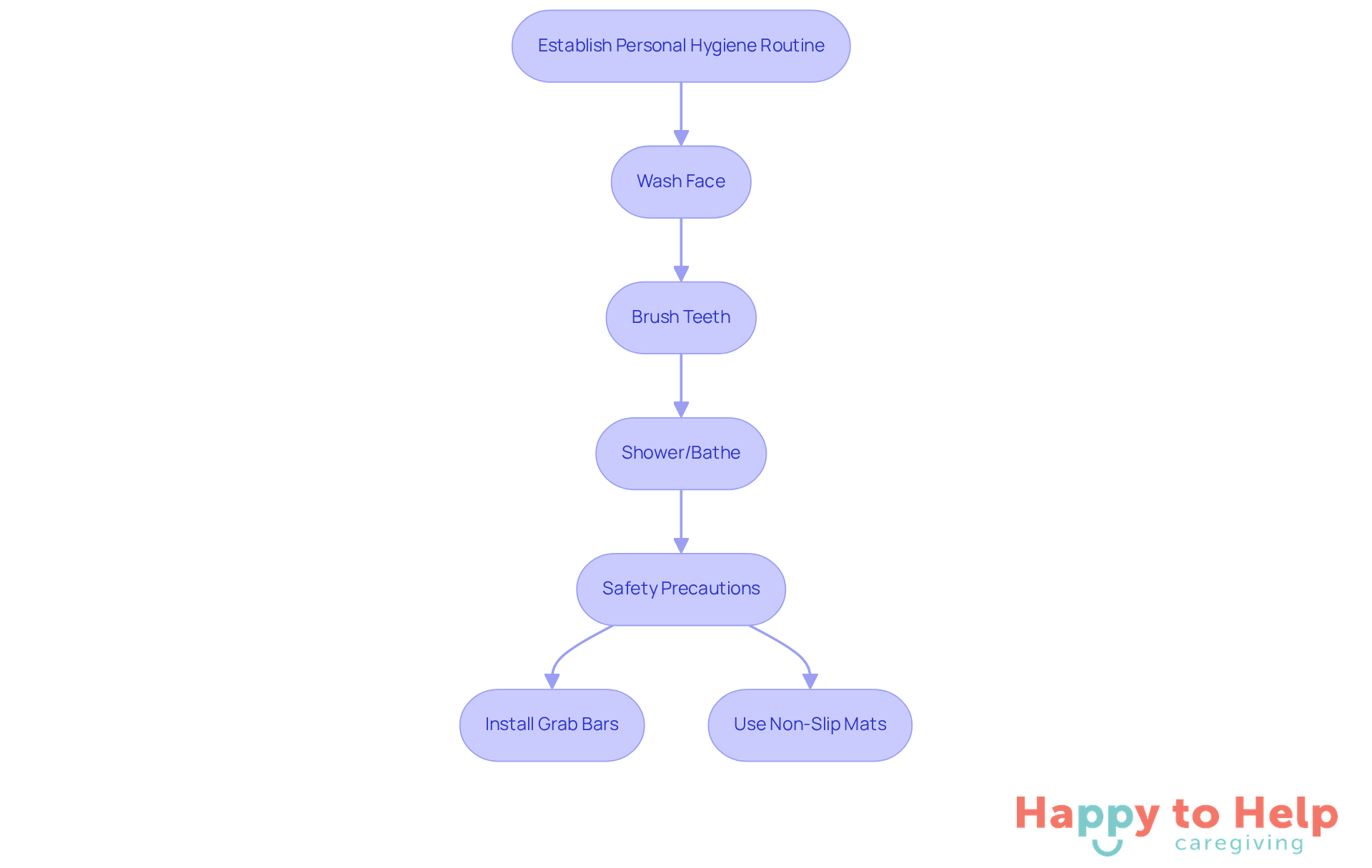
To address this issue, caregivers should implement a structured daily routine. For instance, a morning regimen might include:
- Washing the face
- Brushing teeth
- Showering or bathing at a designated time
Clearly communicating this routine and utilizing visual aids, such as charts or reminders, can reinforce the schedule and foster familiarity.
Safety is another critical aspect. Incorporating precautions during showering, like:
- Installing grab bars
- Using non-slip mats
is essential for preventing falls and accidents. This organized approach not only promotes hygiene but also enhances a person's sense of control and independence, contributing positively to their emotional well-being.
As one provider noted, "A familiar song might turn tension into calm," highlighting the emotional support that consistent routines can offer. By establishing these practices, caregivers can create a more predictable and supportive environment for individuals with dementia.
Improve the Bathing Environment
Bathing can be a challenging experience for individuals with dementia, often perceived as scary or embarrassing. This can lead to resistance from the person being cared for, making it crucial for caregivers to create a safe and inviting environment.
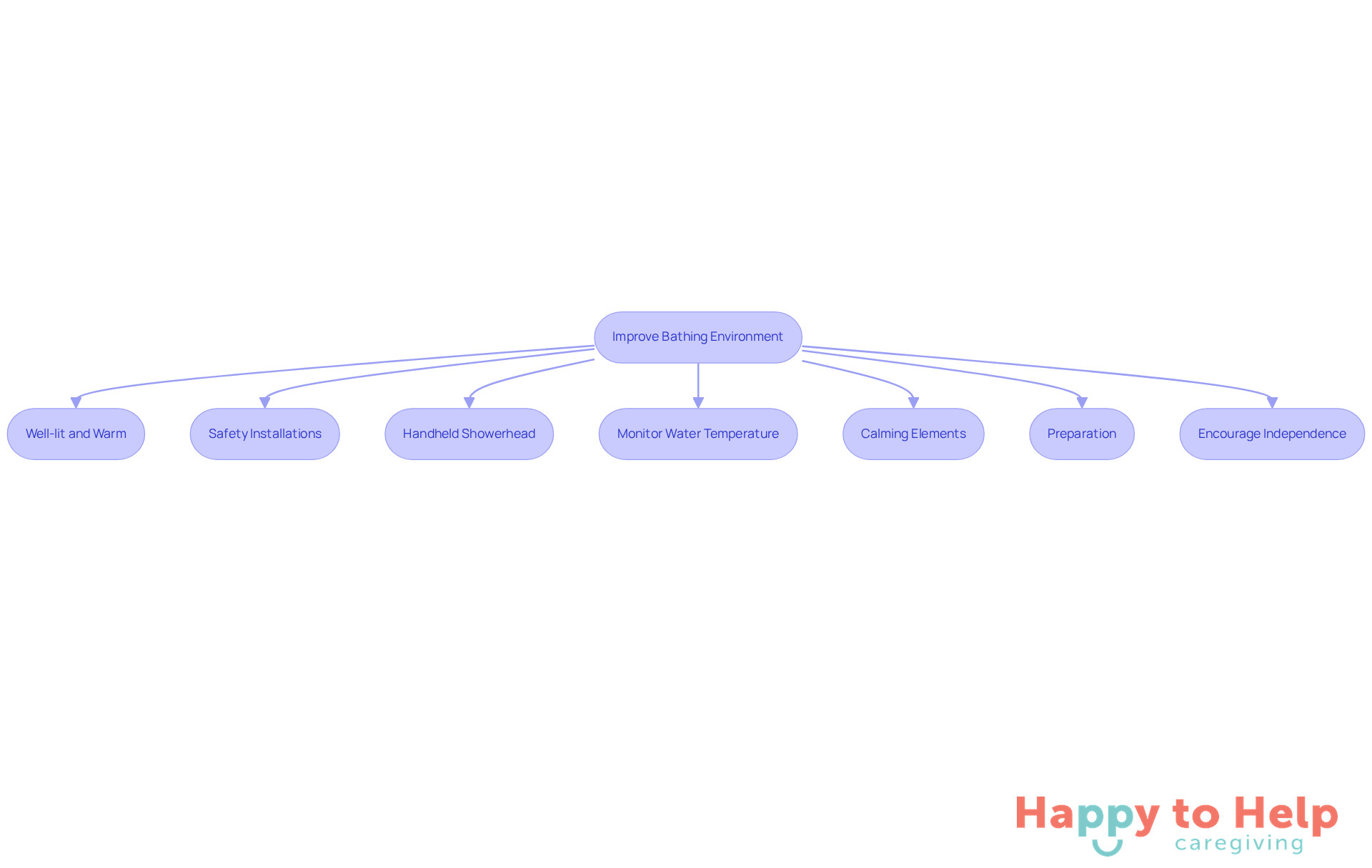
To address these challenges, caregivers should focus on several key modifications:
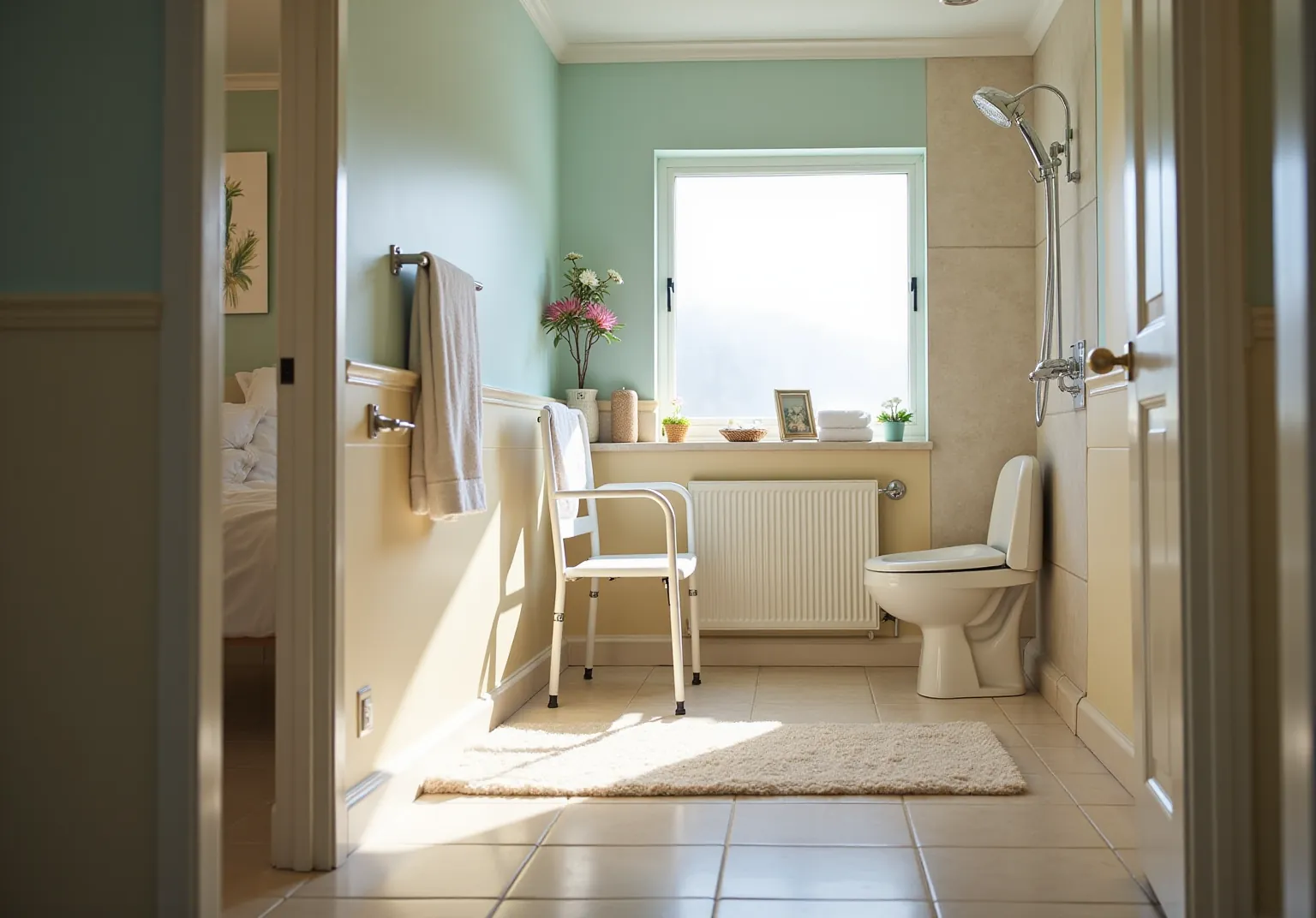
- Ensure the bathroom is well-lit, warm, and free of clutter to help reduce anxiety.
- Install grab bars, non-slip mats, and a shower chair to significantly enhance safety.
- Use a handheld showerhead for easier access and control during washing.
- Monitor water temperature, as dementia can impair the ability to sense if water is too hot or cold.
- Incorporate calming elements, such as soft music or soothing scents, to create a more relaxing atmosphere.
Preparation is key; getting the bathroom ready beforehand by collecting necessary items like towels, soap, and shampoo can further reduce stress and distractions. This makes the washing experience easier and more pleasant for both the caregiver and the individual.
Encouraging individuals to clean areas they can manage promotes a sense of control and autonomy, which is essential for preserving dignity during the bathing process.
Assist with Bathing and Grooming Techniques
When assisting with bathing, caregivers often encounter challenges such as resistance and discomfort from the individual. Dementia and hygiene issues can lead to stress for both the caregiver and the person receiving care, making the bathing experience less pleasant and potentially compromising hygiene.
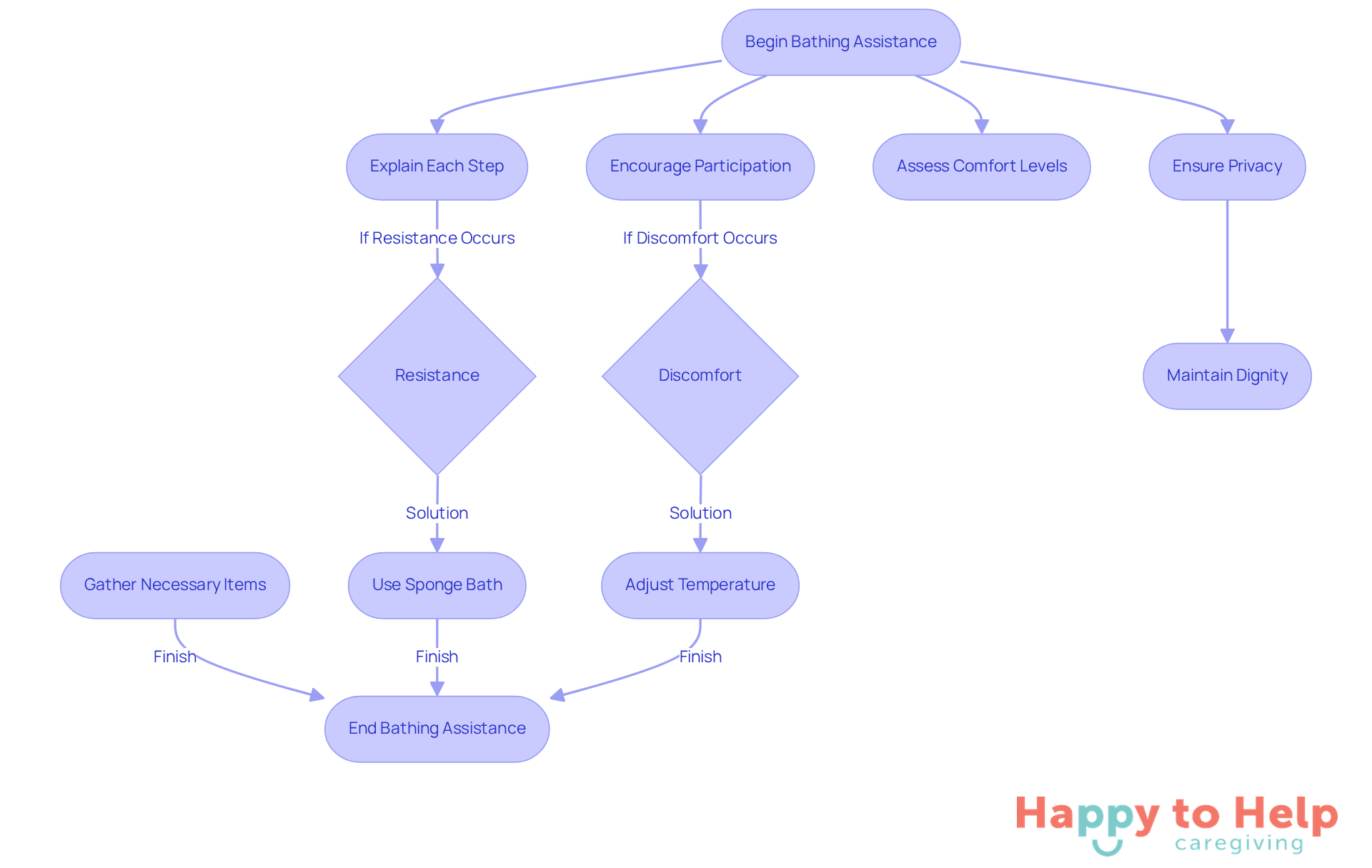
To address these challenges, caregivers should prioritize patience and empathy. Begin by clearly explaining each step using simple language, such as, 'Let's wash your arms now.' Encourage participation by allowing the person to hold the washcloth or select their soap, fostering a sense of control and independence. If resistance occurs, consider alternatives like a sponge bath or moist wipes to maintain hygiene while addressing dementia and hygiene issues without causing distress.
Ensuring privacy is crucial; use towels strategically to cover the person and maintain a comfortable bathroom temperature. Gather all necessary items before starting to avoid leaving the person unattended. Regularly check in to assess comfort levels and be prepared to adjust your approach as needed.
Creating a schedule for washing can also assist in decreasing stress and provide a more consistent experience. This respectful and engaging method not only enhances the bathing experience but also supports the individual's dignity and emotional well-being.
Address Fears and Anxieties Related to Hygiene
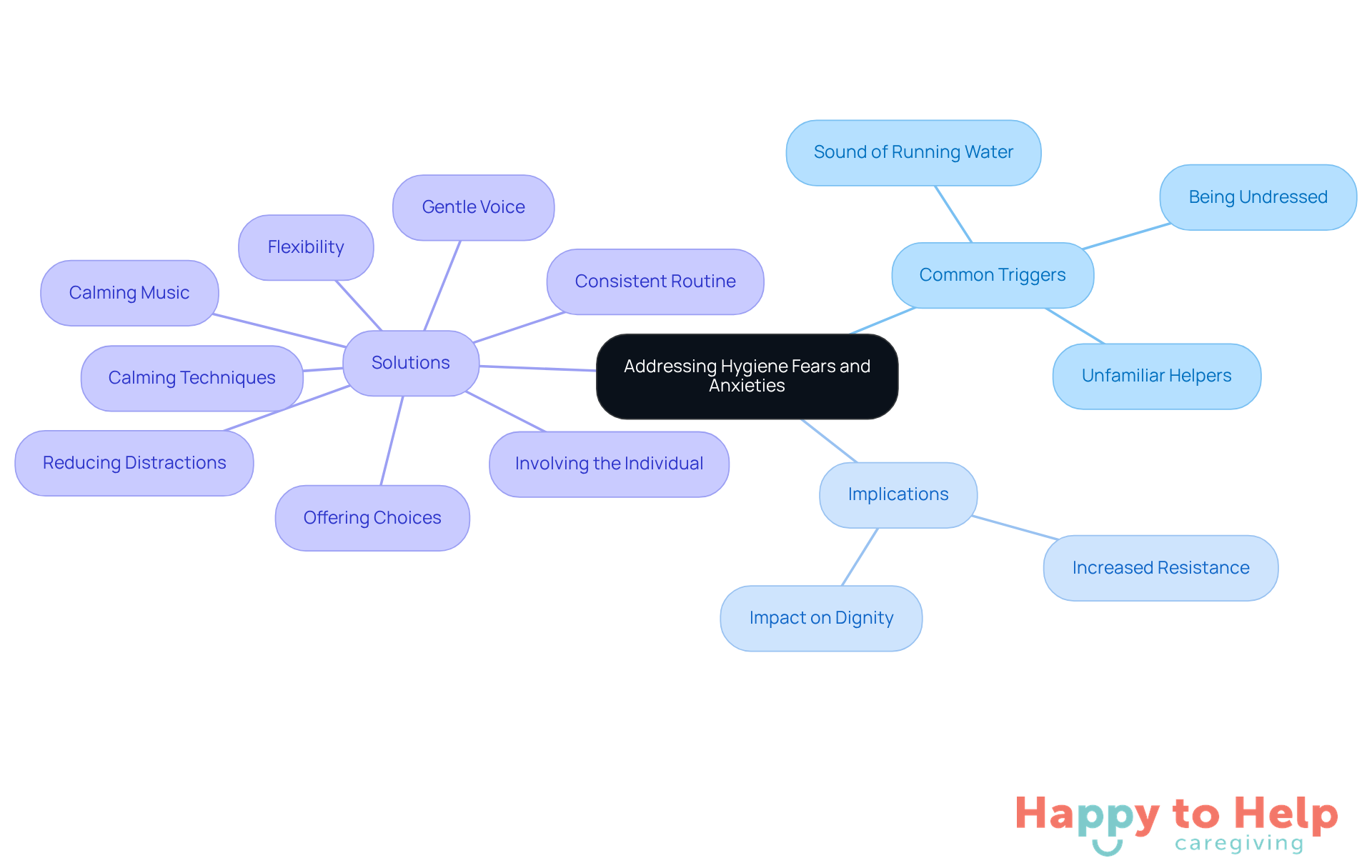
Many caregivers face significant challenges when addressing fears and anxieties during hygiene routines related to dementia and hygiene issues. Common triggers, such as the sound of running water, the sensation of being undressed, or unfamiliar helpers, can lead to distress. This resistance often stems from discomfort with the provider, especially if the individual does not recognize them or has trust issues.
Agitate: The implications of these triggers can be profound. When caregivers are unaware of specific fears, they may inadvertently escalate anxiety, making personal care a daunting experience. This can lead to increased resistance, further complicating the caregiving process and affecting the dignity of the individual, especially in situations involving dementia and hygiene issues.
Solution: To effectively minimize these triggers, caregivers can take several proactive steps:
- Use a gentle voice: Reassuring the person can create a calming atmosphere.
- Play calming music: This can help soothe nerves during bathing.
- Involve the individual: Discussing preferences and past experiences builds trust and reduces apprehension.
Additionally, caregivers should remain flexible and ready to adapt their approach based on the individual's mood and comfort level. Offering choices, such as selecting between a bath or shower, empowers seniors and helps them feel more in control of their personal care. Research indicates that employing calming techniques, such as soft lighting or familiar scents, can further enhance the experience, making hygiene routines less daunting.
Moreover, reducing distractions, like turning off the TV or radio, can lessen stress during personal care. Establishing a consistent routine can also help reduce confusion and anxiety for patients dealing with dementia and hygiene issues. By prioritizing these strategies, caregivers can create a supportive atmosphere that promotes dignity and comfort during personal care activities.
Making the Right Choice
Managing hygiene issues in individuals with dementia presents significant challenges for caregivers, impacting both the well-being of those in their care and the peace of mind of the caregivers themselves. Anxiety and resistance during personal care can lead to distressing experiences, making it crucial to address these issues effectively.
To alleviate these concerns, caregivers can implement structured routines and modify the bathing environment. By focusing on safety, comfort, and emotional support, caregivers can create a more pleasant experience for individuals with dementia. Key practices include:
- Implementing consistent schedules to provide predictability.
- Enhancing the bathing environment to reduce anxiety.
- Using empathetic communication techniques to foster trust and cooperation.
These strategies not only improve the individual's experience but also empower them, fostering a sense of control and dignity. Caregivers are encouraged to adapt their methods to meet the unique needs of each person, ensuring that hygiene routines are both effective and compassionate.
Ultimately, prioritizing hygiene in dementia care transcends mere physical cleanliness; it is about preserving dignity and emotional well-being. By employing these best practices, caregivers can cultivate a supportive atmosphere that respects individual needs and enhances quality of life. Embracing these strategies leads to a more harmonious caregiving experience, transforming personal care into a less daunting task for everyone involved.
https://iframe.tely.ai/cta/eyJhcnRpY2xlX2lkIjogIjY5NDBhMjBjOTc5ZjhiMGM0MmQzYjU1YyIsICJjb21wYW55X2lkIjogIjY4ZWU1ZGNhNzMxNzYyNTU3ZjNjOTVjMSIsICJpbmRleCI6IG51bGwsICJ0eXBlIjogImFydGljbGUifQ==Frequently Asked Questions
Why is establishing a routine for personal hygiene important for individuals with dementia?
A consistent schedule for personal hygiene activities is crucial as it helps reduce anxiety and resistance from individuals with dementia, making caregiving more manageable.
What are some examples of a morning hygiene routine for individuals with dementia?
A morning regimen may include washing the face, brushing teeth, and showering or bathing at a designated time.
How can caregivers effectively communicate the hygiene routine to individuals with dementia?
Caregivers can clearly communicate the routine and utilize visual aids, such as charts or reminders, to reinforce the schedule and promote familiarity.
What safety precautions should be taken during showering for individuals with dementia?
Important safety measures include installing grab bars and using non-slip mats to prevent falls and accidents.
How does a structured routine benefit the emotional well-being of individuals with dementia?
An organized approach not only promotes hygiene but also enhances a person's sense of control and independence, contributing positively to their emotional well-being.
What role can music play in establishing routines for individuals with dementia?
Familiar songs can help turn tension into calm, providing emotional support and enhancing the effectiveness of consistent routines.
List of Sources
- Establish Routines for Personal Hygiene
- The Importance of Establishing Routine for Individuals with Memory Loss in San Francisco: Understanding Dementia – Front Porch (https://frontporch.net/community/san-francisco-towers/blog/the-importance-of-establishing-routine-for-individuals-with-memory-loss-in-san-francisco-understanding-dementia)
- Caregiver Tips for Managing Personal Hygiene and Showering for Dementia Patients - Protea Memory Clinic (https://proteamemoryclinic.com/caregiver-tips-for-managing-personal-hygiene-and-showering-for-dementia-patients)
- alzheimer's caregiver tips on routines (https://agingarkansas.org/alzheimers-caregiver-tips-on-routines)
- The Importance of Routine in Dementia Caregiving - VHA Home HealthCare (https://vha.ca/blog/the-importance-of-routine-in-dementia-caregiving)
- Importance of Routine | Livonia, MI | Visiting Angels (https://visitingangels.com/plymouth-canton/articles/importance-of-routine-dementia-patients-plymouth-michigan/26963)
- Improve the Bathing Environment
- Safety-Proofing Bathrooms For Seniors: The Steps You Need To Consider (https://homeinstead.com/home-care/usa/az/glendale/882/news-and-media/safety-proofing-bathrooms-for-seniors-all-the-steps-you-need-to-consider)
- Bathing a Senior living with Dementia: A Gentle Approach - NursePartners, Inc (https://nursepartners.org/bathing-a-senior-living-with-dementia-a-gentle-approach)
- Alzheimer's Caregiving: Bathing, Dressing, and Grooming (https://nia.nih.gov/health/alzheimers-caregiving/alzheimers-caregiving-bathing-dressing-and-grooming)
- Dementia And Bathing: Tips For Caregivers - NCCDP (https://nccdp.org/dementia-and-bathing-tips-for-caregivers)
- Assist with Bathing and Grooming Techniques
- Caregiver Tips for Managing Personal Hygiene and Showering for Dementia Patients - Protea Memory Clinic (https://proteamemoryclinic.com/caregiver-tips-for-managing-personal-hygiene-and-showering-for-dementia-patients)
- 6 Bathing, Dressing, & Grooming Tips for Family Caregivers - Care Options for Kids (https://careoptionsforkids.com/blog/bathing-dressing-grooming-tips-for-family-caregivers)
- Easy Tips for Assisting Seniors with Bathing, Dressing, and Grooming (https://seniorhelpers.com/ca/lincoln-yuba-city/resources/blogs/2024-08-09)
- Alzheimer's Caregiving: Bathing, Dressing, and Grooming (https://nia.nih.gov/health/alzheimers-caregiving/alzheimers-caregiving-bathing-dressing-and-grooming)
- Grooming Tips for Caregivers: Elderly Care & Senior Hygiene Guide (https://caregiveraction.org/grooming-tips-caregivers)
- Address Fears and Anxieties Related to Hygiene
- Handling Resistance to Personal Care and Hygiene Tasks - Memory Connect (https://memoryconnect.com/handling-resistance-to-personal-care-and-hygiene-tasks)
- Caregiver Tips for Managing Personal Hygiene and Showering for Dementia Patients - Protea Memory Clinic (https://proteamemoryclinic.com/caregiver-tips-for-managing-personal-hygiene-and-showering-for-dementia-patients)
- How does dementia affect washing and dressing? (https://alzheimers.org.uk/get-support/living-with-dementia/washing-dressing)
- Best Practices for Personal Hygiene in Dementia Care (https://alignhomecareservices.com/helping-an-aging-adult-with-dementia-maintain-hygiene)