
Understanding Explore 10 Personal Homecare Services
Caring for loved ones can be both rewarding and overwhelming, particularly for family caregivers who often juggle numerous responsibilities. As caregiving demands increase, families frequently struggle to find effective solutions that ensure their loved ones receive the necessary support while also maintaining their own well-being. This article explores ten personal homecare services designed to alleviate the strain on caregivers and enhance the quality of life for seniors.
What challenges do families face in finding the right care? The search for suitable support can be daunting, leading to stress and uncertainty. However, these services can transform the caregiving journey, providing practical solutions that make a significant difference.
Happy to Help Caregiving: Comprehensive In-Home Care Services
Caring for seniors and individuals with unique needs can be a daunting challenge for families. Many caregivers struggle to provide the level of support required, often feeling overwhelmed by the demands of their loved ones' care. This situation can lead to stress and burnout, impacting both the caregiver and the individual receiving care.
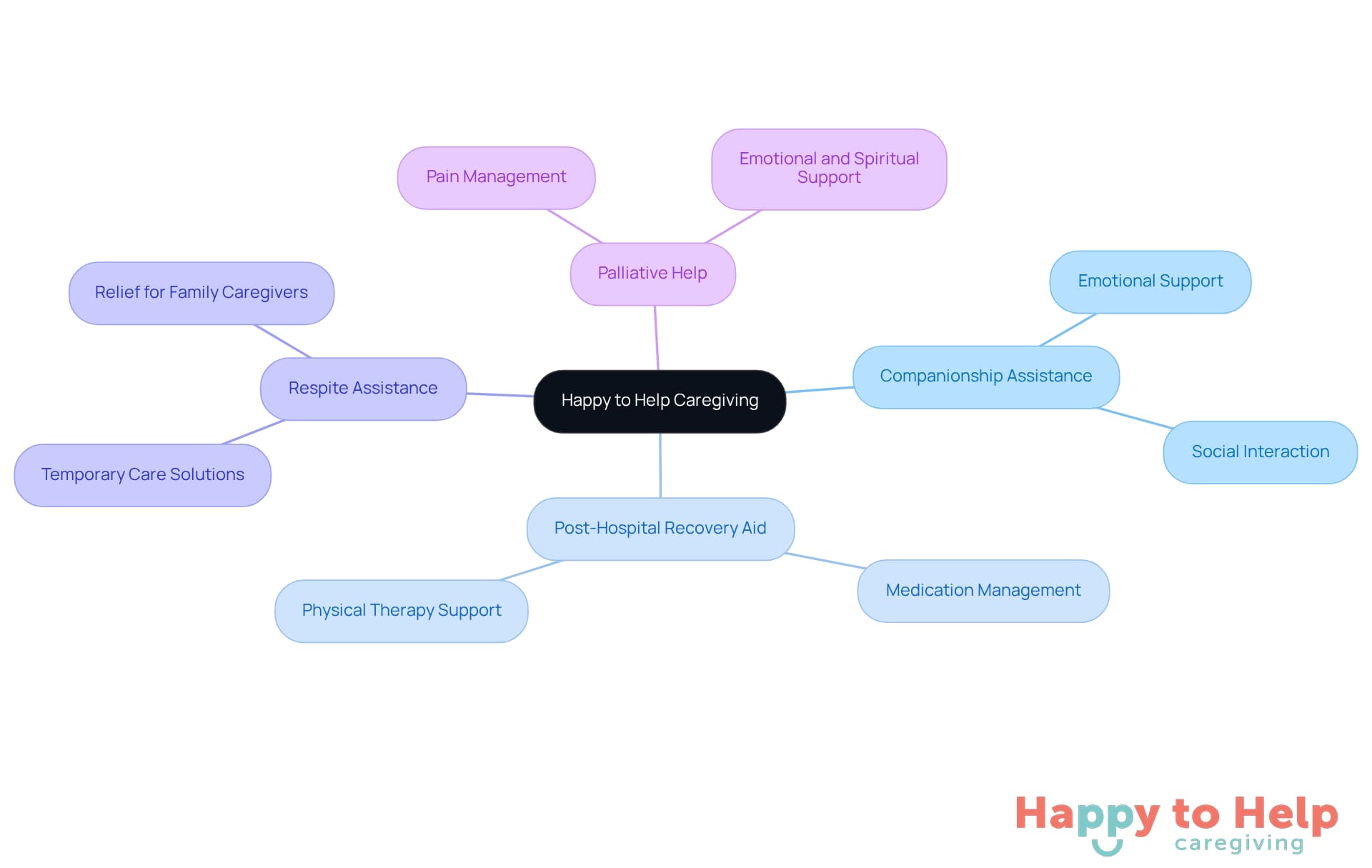
Happy to Help Caregiving addresses these challenges by providing personal homecare services that are designed to enhance the quality of life for seniors. Their services include:
- Companionship assistance
- Post-hospital recovery aid
- Respite assistance
- Palliative help
Each service is tailored to meet the specific needs of clients, ensuring they receive compassionate and individualized support through personal homecare services in the comfort of their own homes.
By focusing on maintaining independence and well-being, Happy to Help Caregiving provides a reliable solution for families navigating caregiving challenges. Their commitment to personalized care not only alleviates the burden on caregivers but also fosters a supportive environment for seniors, allowing them to thrive.
Companionship Care: Emotional Support for Seniors
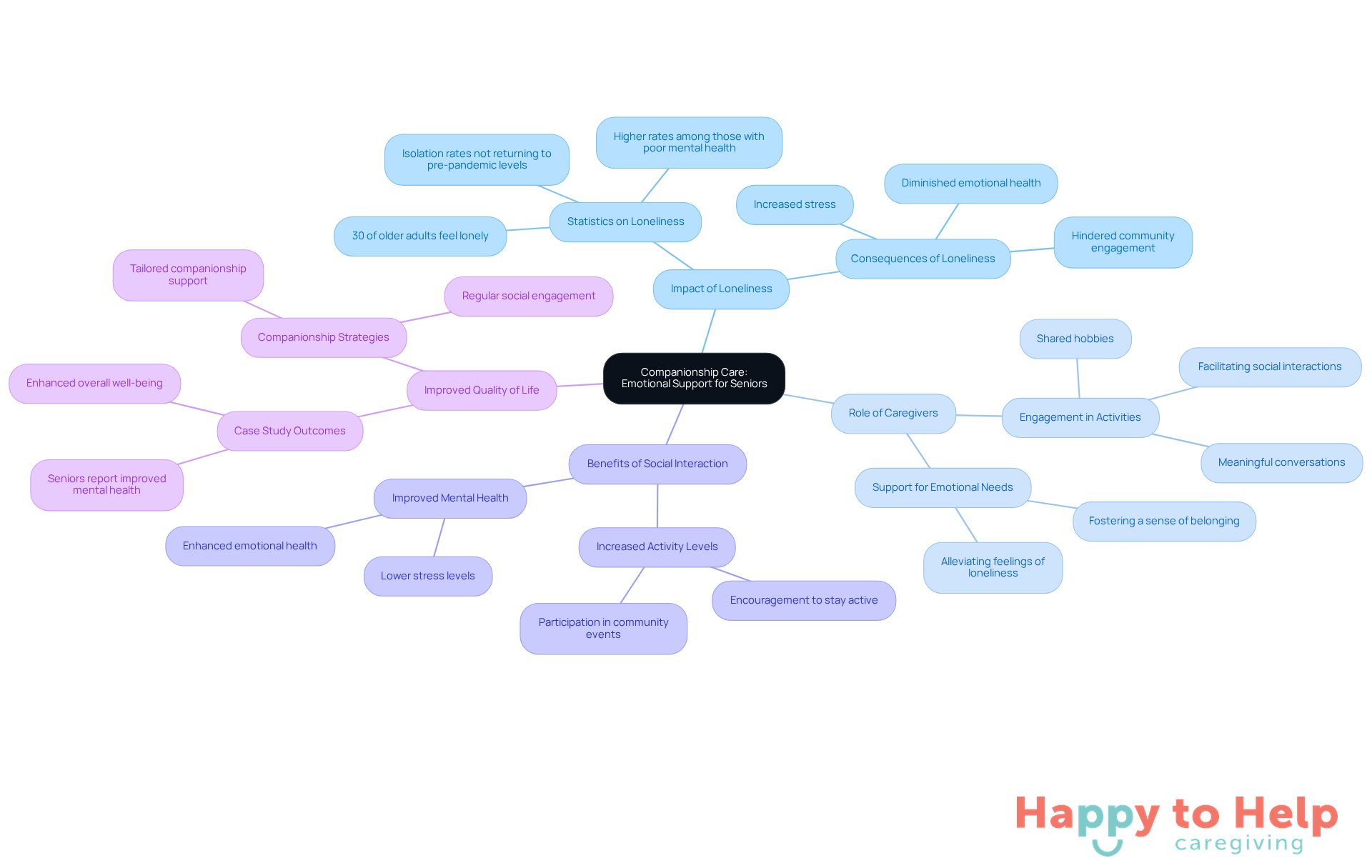
Loneliness is a significant issue for many seniors, affecting their mental well-being and overall quality of life. Nearly 30% of older adults experience feelings of isolation, which can lead to increased stress and diminished emotional health. This problem not only impacts their mental state but also hinders their ability to stay active and engaged within their communities.
Companionship, offered through personal homecare services, provides a vital solution to this challenge. Caregivers can play a crucial role by actively engaging seniors in meaningful conversations, activities, and hobbies. This interaction not only alleviates feelings of loneliness but also fosters a sense of belonging. Research indicates that consistent social interaction can lower stress levels and enhance emotional health, making personal homecare services essential for providing companionship assistance to the elderly.
By addressing the emotional needs of seniors, caregivers can significantly enhance their quality of life. Case studies show that seniors receiving personal homecare services, particularly companionship support, report improved mental health outcomes, underscoring the transformative impact of these services. Implementing companionship strategies can help combat loneliness and promote a healthier, more connected lifestyle for older adults.
Post-Hospital Recovery Assistance: Smooth Transition to Home
Transitioning from hospital care to home can be challenging for individuals recovering from illness or surgery. Without adequate support, patients may face complications that hinder their recovery. Caregivers play a vital role in this process by providing essential personal homecare services that can make all the difference.
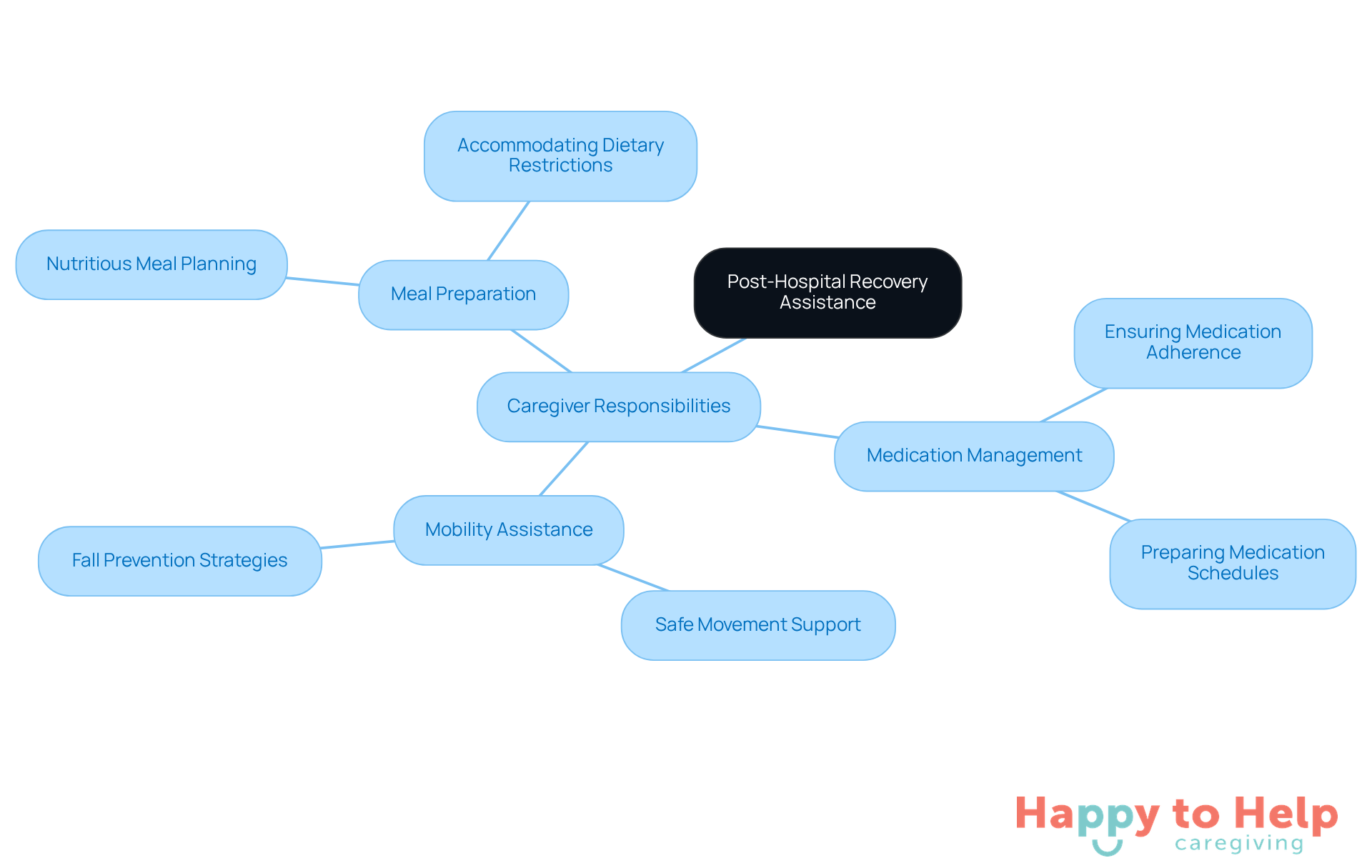
Caregivers are responsible for several critical tasks, including:
- Medication management: Ensuring that patients take their medications as prescribed.
- Mobility assistance: Helping patients move safely around their home.
- Meal preparation: Preparing nutritious meals tailored to the patient's recovery needs.
Caregivers providing personal homecare services can significantly reduce the risk of complications by following discharge instructions and monitoring health conditions. This proactive approach not only supports the patient's recovery but also fosters a smoother transition back to daily life.
Respite Care: Support for Family Caregivers
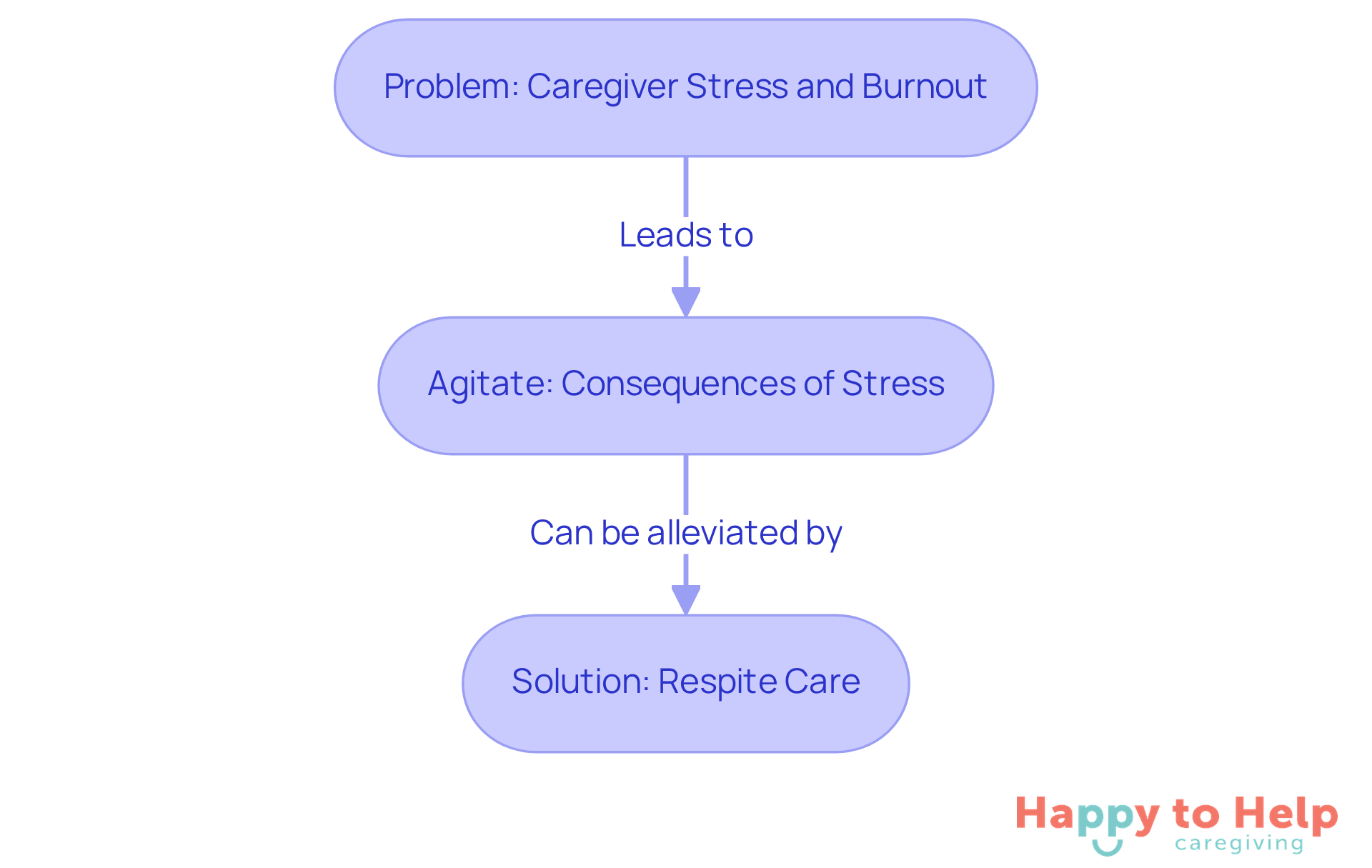
Problem: Caregivers often face overwhelming stress and burnout due to their demanding roles. Without adequate support, their ability to provide quality care diminishes, impacting both their well-being and that of their loved ones.
Agitate: This constant pressure can lead to physical and emotional exhaustion, making it difficult for caregivers to focus on their own needs. The lack of respite not only affects their health but also the quality of care they can offer, creating a cycle of stress that is hard to break.
Solution: Respite support offers family caregivers a much-needed break, allowing them to rejuvenate and prioritize their own well-being. This personal homecare services can be arranged for a few hours or several days, providing peace of mind knowing that their loved ones are in capable hands. By reducing stress and preventing burnout, respite support ultimately enhances the quality of assistance that caregivers can provide.
Palliative Support Care: Enhancing Quality of Life
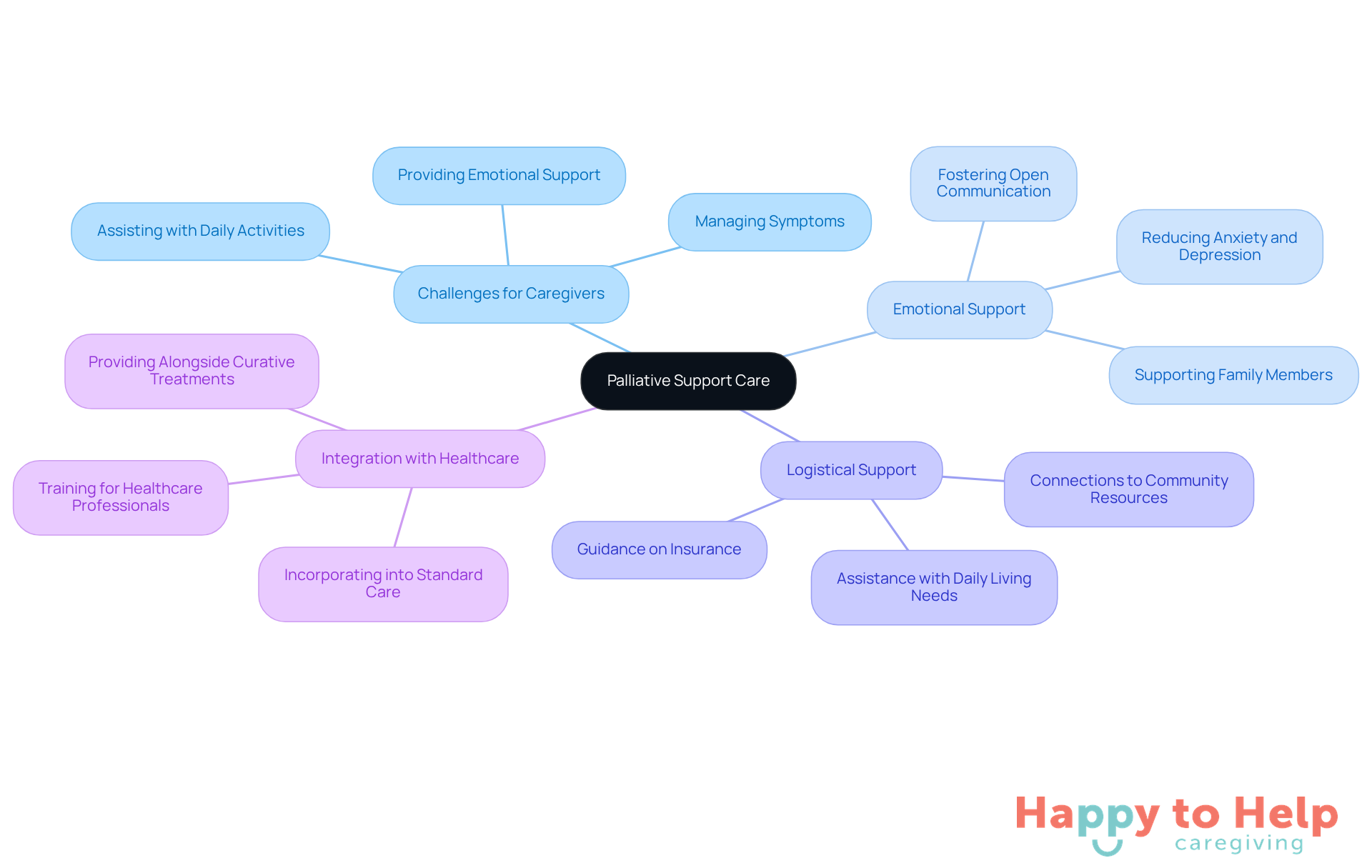
Palliative assistance addresses a significant problem: the need for improved quality of life for individuals with serious illnesses. Caregivers often face challenges in managing symptoms, providing emotional support, and assisting with daily activities. Without adequate support, patients may struggle with dignity and comfort, leading to increased anxiety and depression.
Research shows that patients receiving palliative treatment report fewer symptoms and experience less emotional distress. This highlights the critical role of emotional assistance in their treatment journey. Experts like Dr. Dio Kavalieratos emphasize that integrating palliative support into standard healthcare practices is essential. It allows caregivers to respond compassionately and effectively to the complex needs of patients.
Palliative assistance also offers logistical support, such as guidance on insurance and connections to community resources. These elements are vital for comprehensive treatment. Importantly, palliative support can be provided alongside curative treatments, distinguishing it from hospice services, which are typically reserved for end-of-life situations.
By fostering open communication and understanding, caregivers can help clients navigate their health challenges. This approach promotes a sense of security and comfort in their daily lives, ultimately enhancing their overall well-being.
In-Home Care Assistance: Daily Living Support
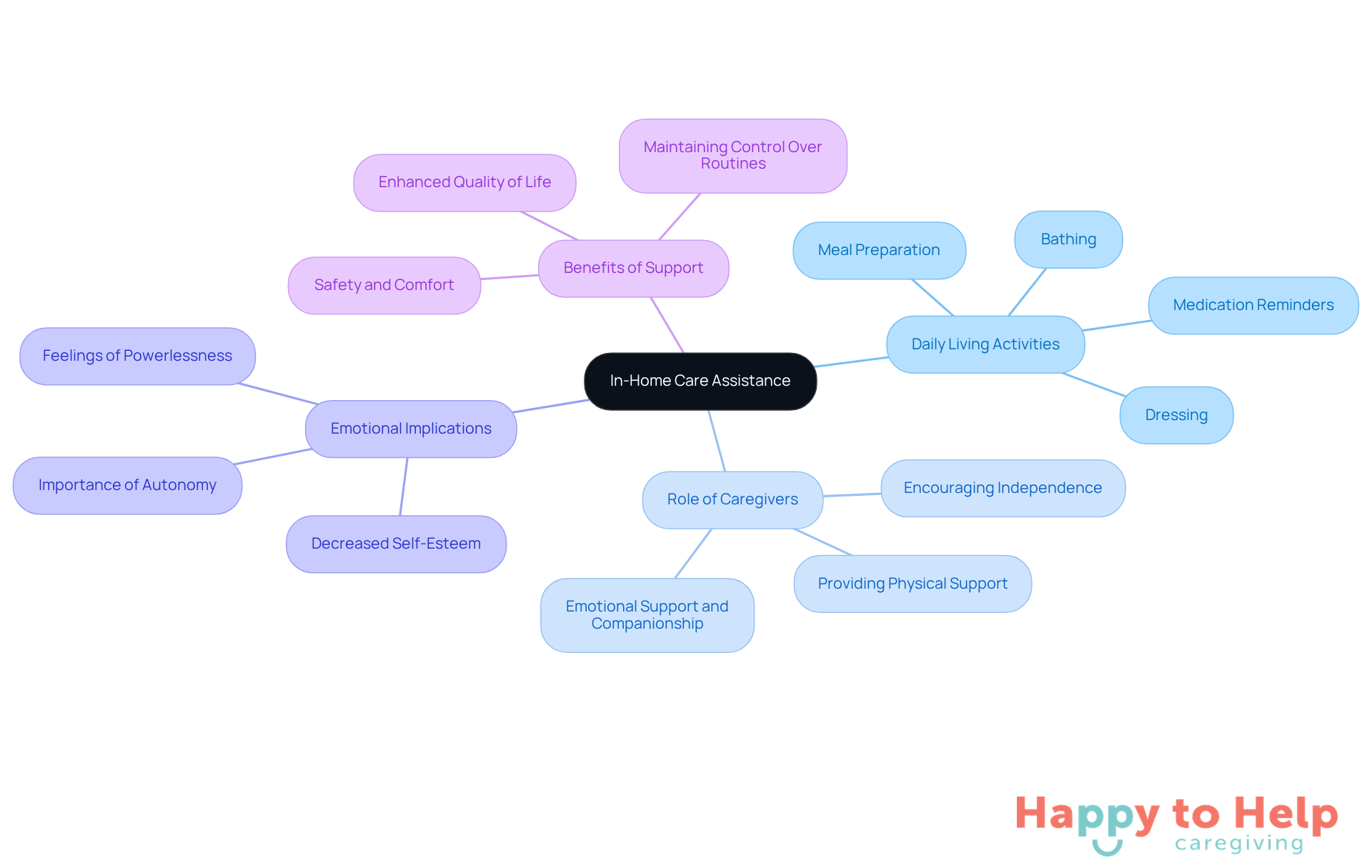
In-home support assistance, also known as personal homecare services, addresses a significant challenge faced by elderly individuals: the need for help with daily living activities. These activities are crucial for maintaining independence, yet many seniors struggle to manage them alone. Caregivers play a vital role in this scenario, providing essential support with tasks such as:
- Bathing
- Dressing
- Meal preparation
- Medication reminders
The implications of inadequate support can be profound. Without assistance, seniors may experience decreased self-esteem and increased feelings of powerlessness. Studies show that the ability to perform everyday tasks independently significantly boosts self-esteem. In fact, 84% of family supporters value their loved one's autonomy, underscoring its importance in at-home support.
So, how can caregivers effectively provide this support? In-home assistance through personal homecare services not only ensures safety and comfort in familiar surroundings but also empowers clients to maintain control over their daily routines. By fostering a sense of independence and offering emotional support through companionship and social interaction, caregivers can significantly enhance the quality of life for seniors. As one caregiver aptly noted, "Encouraging autonomy involves more than merely assisting them with physical activities; it’s about enabling them to make decisions regarding their support."
In summary, personal homecare services are crucial for helping seniors thrive in their own homes while receiving the necessary support. By focusing on both physical and emotional needs, caregivers can create an environment where independence flourishes.
End-of-Life Care: Compassionate Support During Transitions
End-of-life assistance presents a significant challenge for caregivers who strive to provide compassionate support to individuals nearing their final days. This situation can be emotionally taxing, as caregivers must navigate the complexities of physical comfort, emotional reassurance, and decision-making guidance. The implications of this challenge are profound, affecting not only the clients but also their families, who seek respect and care during this difficult journey.
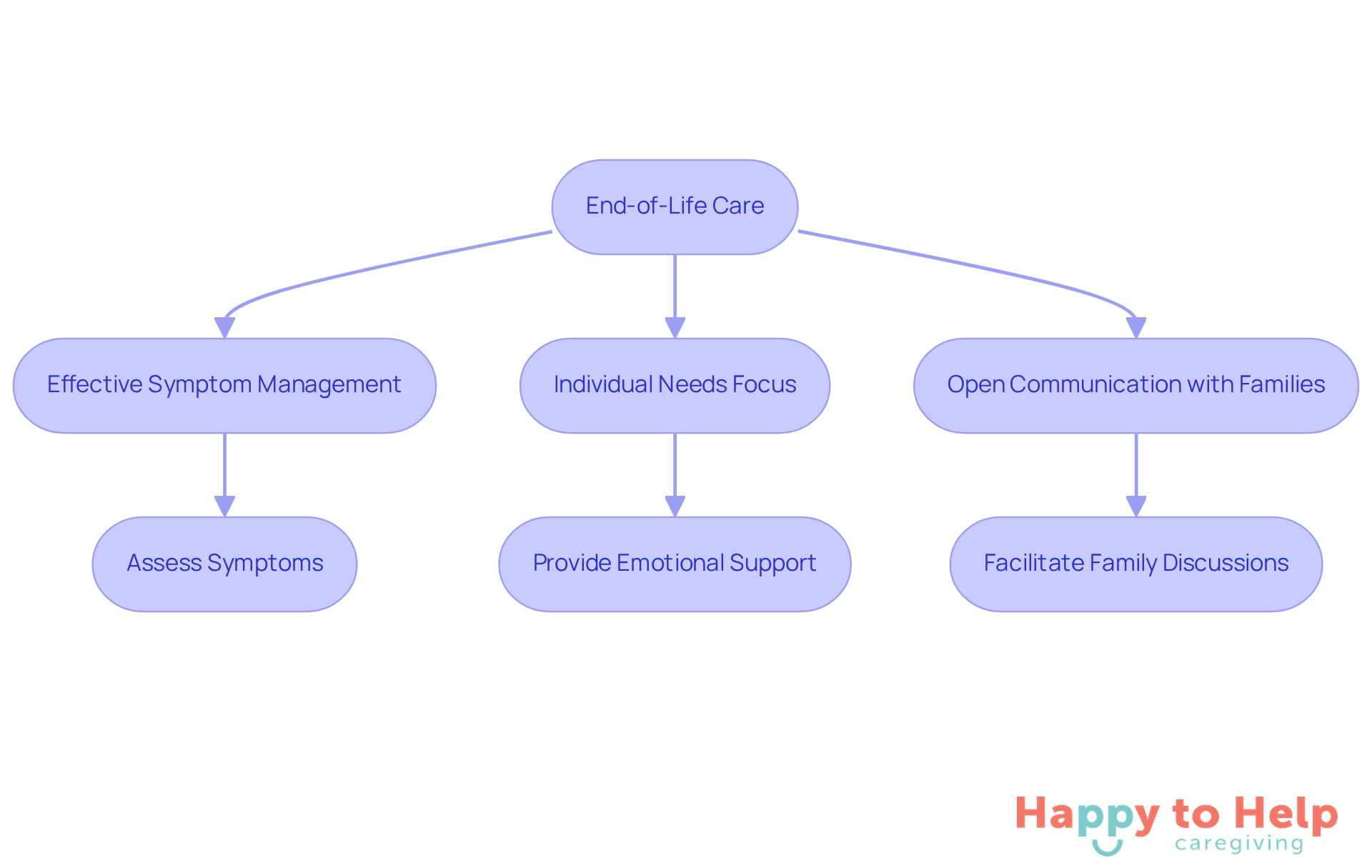
To address these challenges, caregivers can prioritize dignity and quality of life, enabling clients to experience their last moments in peace and comfort. Efficient symptom management is essential; it reduces discomfort and enhances the overall quality of treatment. By focusing on the distinct needs of each individual, including their spiritual requirements, caregivers can create a supportive environment that honors the desires and principles of those approaching the end of life.
As one hospice support expert noted, "By offering thoughtful, empathetic assistance, healthcare professionals can profoundly influence the lives of patients and families, leaving a legacy of comfort and support during life’s most vulnerable moments." This highlights the importance of compassionate support during these transitions, fostering an environment where families can navigate their grief while cherishing the time spent together.
In summary, caregivers can implement the following actionable solutions:
- Prioritize effective symptom management to enhance comfort.
- Focus on the individual needs of clients, including emotional and spiritual support.
- Foster open communication with families to navigate the emotional landscape of end-of-life care.
Hiring Caregivers: Finding the Right Fit for Your Family
Recruiting support staff can be challenging for families seeking the best match for their loved ones. The problem lies in ensuring that caregivers meet specific needs while also being trustworthy and dependable. Almost 50% of support providers report financial impacts due to their roles, highlighting the importance of trust in this relationship.
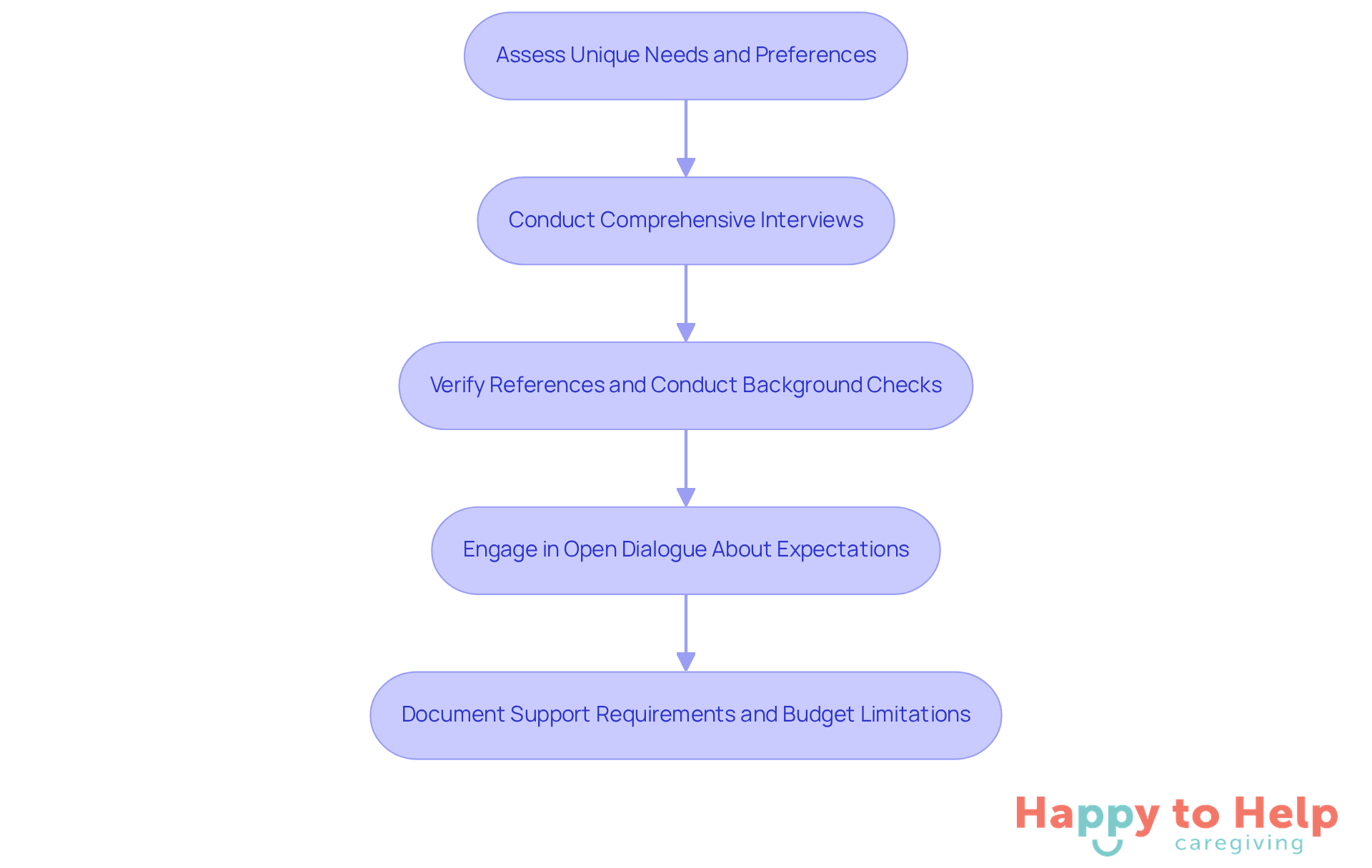
To address these challenges, families should begin by thoroughly assessing their loved one's unique needs and preferences. This foundational step is crucial for effective care. Engaging in comprehensive interviews allows families to evaluate the provider's experience and compatibility. It's also essential to verify references and conduct background checks to ensure safety.
Open dialogue about expectations and support plans fosters a cooperative atmosphere, which is vital for a successful caregiving experience. Families should document support requirements and budget limitations to stay focused during the hiring process. This ensures that caregivers can meet both the specific demands of their loved ones and the family's financial constraints.
By following these best practices, families can navigate the hiring process with confidence, ultimately enhancing the quality of care provided.
Managing Complex Care Needs: Tailored Solutions for Families
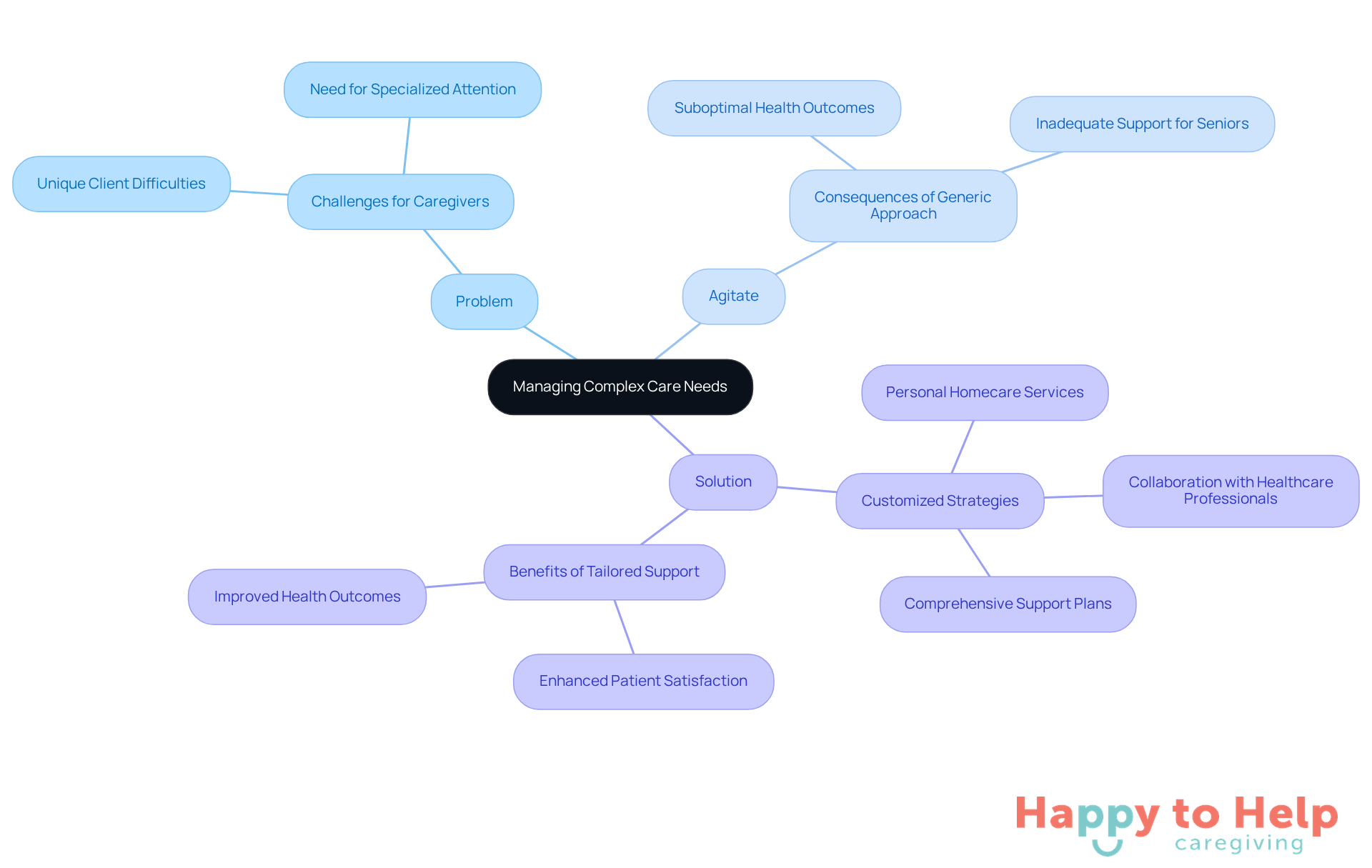
Problem: Successfully handling complex support requirements can be a significant challenge for caregivers. Clients often face unique difficulties that demand specialized attention.
Agitate: Without a tailored approach, caregivers may struggle to meet the specific needs of their clients, which can lead to suboptimal health outcomes. This is particularly true for seniors and individuals with special requirements, where a generic support plan simply won't suffice.
Solution: To address these challenges, caregivers should develop customized strategies that focus on the individual needs of their clients, particularly through personal homecare services. This involves close collaboration with healthcare professionals and creating comprehensive support plans that encompass all aspects of care. By prioritizing the specific requirements of clients, caregivers can enhance health outcomes significantly. For instance, tailored support plans not only cater to the unique situations of seniors but also adapt to the needs of those with special requirements, ensuring that every element of their assistance is thoughtfully considered.
Effective coordination models demonstrate that when personal homecare services are tailored to individual needs, patient satisfaction improves, leading to better overall health management. As healthcare providers emphasize, a one-size-fits-all approach is inadequate; instead, personal homecare services that provide customized support solutions are essential for fostering independence and well-being among clients.
Technology Integration: Enhancing Caregiver Communication and Management
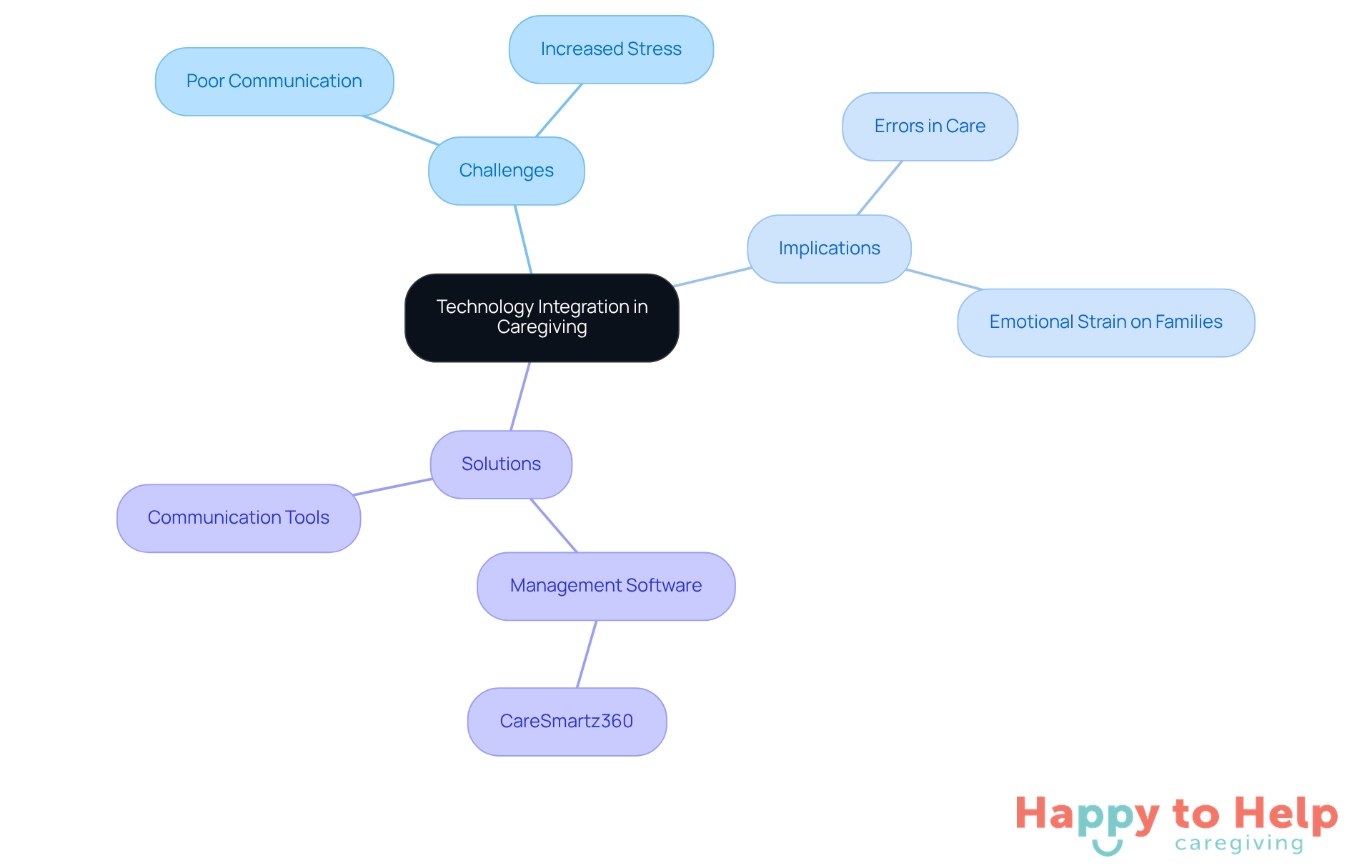
Caregivers face significant challenges in communication and management, which can lead to increased stress and decreased service quality. A recent report reveals that 20% of caregivers rate their health as 'fair' or 'poor', highlighting the urgent need for effective solutions.
The implications of these challenges are profound. Poor communication can result in errors and misunderstandings, ultimately affecting the quality of care provided to clients. Families often feel left out of the loop, which can exacerbate the emotional strain on both caregivers and those receiving care.
Fortunately, technology offers practical solutions to these pressing issues. Management software, such as CareSmartz360, and mobile applications for medication reminders simplify processes and enable real-time updates. These tools enhance provider efficiency and reduce errors, allowing caregivers to focus on delivering compassionate support.
Moreover, effective communication tools empower caregivers to share essential information swiftly, ensuring families remain informed and involved in their loved ones' care. As Mike Johnson, chief researcher of home assistance innovation at Bayada Home Health Care, notes, innovation in caregiving can greatly enhance service quality. By leveraging technology, caregivers in personal homecare services can manage their responsibilities more effectively, fostering stronger connections with families and improving overall care delivery.
Your Path Forward
Personal homecare services address a significant problem faced by families: the complexities of caregiving. Caregivers often experience overwhelming burdens, which can lead to stress and burnout. This situation not only affects their well-being but also impacts the quality of care provided to their loved ones.
The implications of inadequate support are profound. Caregivers may struggle with feelings of isolation and frustration, which can hinder their ability to provide effective care. This is where personal homecare services come into play, offering tailored assistance that enhances the quality of life for seniors while alleviating the pressures on family caregivers.
Various types of personal homecare services can help meet these challenges. Services such as:
- Companionship care
- Post-hospital recovery assistance
- Respite care
- Palliative support
- In-home assistance with daily living activities
These services address specific needs. For instance, companionship care combats loneliness, while post-hospital recovery assistance ensures a smooth transition after hospital stays. Each service provides essential emotional and physical support during critical times.
Moreover, the integration of technology in homecare services enhances communication and management, allowing caregivers to deliver high-quality care efficiently. This not only promotes independence and dignity for seniors but also fosters a supportive environment for caregivers.
Families are encouraged to explore these options, recognizing that investing in homecare benefits their loved ones and empowers caregivers to maintain their health and resilience. Embracing personal homecare services is a vital step toward creating a nurturing and effective caregiving experience for everyone involved.
https://iframe.tely.ai/cta/eyJhcnRpY2xlX2lkIjogIjY5MjY0MzYyM2U1ODU0NTE1NmI5MjVlMSIsICJjb21wYW55X2lkIjogIjY4ZWU1ZGNhNzMxNzYyNTU3ZjNjOTVjMSIsICJpbmRleCI6IG51bGwsICJ0eXBlIjogImFydGljbGUifQ==Frequently Asked Questions
What services does Happy to Help Caregiving provide?
Happy to Help Caregiving offers personal homecare services including companionship assistance, post-hospital recovery aid, respite assistance, and palliative help, all tailored to meet the specific needs of clients.
How does Happy to Help Caregiving support caregivers?
Happy to Help Caregiving alleviates the burden on caregivers by providing personalized care services, allowing caregivers to manage their responsibilities more effectively and reducing their stress and burnout.
Why is companionship care important for seniors?
Companionship care is important for seniors as it helps combat loneliness, which affects nearly 30% of older adults. Engaging seniors in meaningful conversations and activities enhances their emotional health and overall quality of life.
What role do caregivers play in post-hospital recovery?
Caregivers assist with medication management, mobility assistance, and meal preparation, which are critical for ensuring a smooth transition from hospital to home and reducing the risk of complications during recovery.
How does companionship care improve mental health for seniors?
Companionship care provides consistent social interaction, which can lower stress levels and enhance emotional health, leading to improved mental health outcomes for seniors receiving personal homecare services.
What is the focus of Happy to Help Caregiving's services?
Happy to Help Caregiving focuses on maintaining the independence and well-being of seniors, providing a supportive environment that allows them to thrive in the comfort of their own homes.
List of Sources
- Happy to Help Caregiving: Comprehensive In-Home Care Services
- State of home care in 2025 (https://mcknightshomecare.com/state-of-home-care-in-2025)
- Home Care Industry Trends to Watch in 2025 (https://firstlighthomecare.com/blog/home-care-industry-trends)
- Home is the Next Frontier in Medical Care (https://news.humana.com/news/articles/home-is-the-next-frontier-in-medical-care)
- Demand for Home Care Expected to Surge 22% by 2034 (https://respiratory-therapy.com/public-health/healthcare-policy/home-care/demand-home-care-expected-surge-22-2034)
- Home (https://homehealthcarenews.com)
- Companionship Care: Emotional Support for Seniors
- 10 Benefits of Professional Companion Services for Family Caregivers - Happy To Help (https://happytohelpcaregiving.com/10-benefits-of-professional-companion-services-for-family-caregivers)
- Loneliness and isolation: Back to pre-pandemic levels, but still high, for older adults (https://ihpi.umich.edu/news-events/news/loneliness-and-isolation-back-pre-pandemic-levels-still-high-older-adults)
- New APA Poll: One in Three Americans Feels Lonely Every Week (https://psychiatry.org/news-room/news-releases/new-apa-poll-one-in-three-americans-feels-lonely-e)
- Humana Foundation Expands National Efforts to Improve Seniors’ Emotional Health (https://humanafoundation.org/news-humana-foundation/press-releases/humana-foundation-expands-national-efforts-to-improve-seniors-emotional-health)
- Post-Hospital Recovery Assistance: Smooth Transition to Home
- Why After-Hospital Care & Post-Hospital Home Care Are Essential for Recovery (https://comfortkeepers.com/offices/colorado/grand-junction/resources/resources/posthospital-home-care-are-essential-for-recovery)
- How Healing at Home Helps Unclog the Hospital Bed Logjam (https://usnews.com/news/health-news/articles/2025-03-03/how-healing-at-home-helps-unclog-the-hospital-bed-logjam)
- Home Care Impact on Recovery of Patient (A Statistics Report) (https://lovinghomecareinc.com/home-care-recovery-statistics)
- Post-discharge: A critical moment for health plans to support caregivers - Becker's Payer Issues | Payer News (https://beckerspayer.com/payer/post-discharge-a-critical-moment-for-health-plans-to-support-caregivers)
- Respite Care: Support for Family Caregivers
- Caregiver Burnout: The Importance of Respite Care - CRT Care Services (https://crtcare.co.uk/2025/09/12/caregiver-burnout-the-importance-of-respite-care)
- How Respite Care Can Improve Mental Health of Caregivers (https://bucknercalderwoods.org/news-blog/how-respite-care-can-improve-mental-health-of-caregivers)
- Caregivers and the Importance of Respite Care (https://benedictineliving.org/resources/news/caregivers-and-the-importance-of-respite-care)
- Improving Support for Family Caregivers (https://nationalacademies.org/news/2025/07/improving-support-for-family-caregivers)
- Palliative Support Care: Enhancing Quality of Life
- Palliative Care Improves Quality of Life (https://newsinhealth.nih.gov/2017/01/palliative-care-improves-quality-life)
- Palliative care (https://who.int/news-room/fact-sheets/detail/palliative-care)
- Palliative Care For Chronic Illness | Carolina Caring (https://carolinacaring.org/news/palliative-care-for-chronic-illnesses-improving-quality-of-life)
- Palliative Care Statistics (https://rosewood-nursing.com/post/palliative-care-statistics)
- ‘A good death’: How compassionate care helps people navigate the end of life (https://news.yale.edu/2025/10/13/good-death-how-compassionate-care-helps-people-navigate-end-life)
- In-Home Care Assistance: Daily Living Support
- The Benefits of In-Home Care for Seniors - Consumer Directed Choices (https://cdchoices.org/2023/11/27/the-benefits-of-in-home-care-for-seniors)
- Empowering Elderly Independence: The Importance of Home Care Services - MD Home Health (https://mdhomehealth.com/2023/07/20/empowering-elderly-independence-the-importance-of-home-care-services)
- Families Prefer In-Home Care To Senior Living – Yet Struggle To Identify Needed Support (https://homehealthcarenews.com/2025/11/families-prefer-in-home-care-to-senior-living-yet-struggle-to-identify-needed-support)
- Promoting Independence through In-Home Care (https://visitingangels.com/npr/news-info/promoting-independence-through-in-home-care/24383)
- Aging in Place with Connection: How In-Home Senior Care Supports Independence and Mental Wellbeing - Arlington & Alexandria (https://aplaceathome.com/arlington-alexandria/2025/06/04/aging-in-place-with-connection-how-in-home-senior-care-supports-independence-and-mental-wellbeing)
- End-of-Life Care: Compassionate Support During Transitions
- ‘A good death’: How compassionate care helps people navigate the end of life (https://news.yale.edu/2025/10/13/good-death-how-compassionate-care-helps-people-navigate-end-life)
- Care and Comfort Near the End of Life - National Coalition for Hospice and Palliative Care (https://nationalcoalitionhpc.org/care-and-comfort-near-the-end-of-life)
- Providing Care and Comfort at the End of Life (https://nia.nih.gov/health/end-life/providing-care-and-comfort-end-life)
- End-Of-Life Care Statistics (https://rosewood-nursing.com/post/end-of-life-care-statistics)
- End-of-Life Care - StatPearls - NCBI Bookshelf (https://ncbi.nlm.nih.gov/books/NBK544276)
- Hiring Caregivers: Finding the Right Fit for Your Family
- Op-ed: Finding a good caregiver can be daunting. Here are steps to hire the right one (https://cnbc.com/2024/02/12/op-ed-finding-a-caregiver-can-be-daunting-heres-how-to-hire-the-right-one.html)
- Caregiving Statistics US 2025: Insights for Family Caregivers (https://zencaregiving.org/caregiving-statistics-us-2025)
- 5 Metrics Your Home Care Agency Needs to Track to Hire More Caregivers (https://activatedinsights.com/articles/5-metrics-your-home-care-agency-needs-to-start-tracking-to-streamline-your-hiring-process)
- Caregiver Statistics: Work and Caregiving (https://caregiver.org/resource/caregiver-statistics-work-and-caregiving)
- How to Hire In-Home Caregivers: 5 Essential Steps for Families - Happy To Help (https://happytohelpcaregiving.com/how-to-hire-in-home-caregivers-5-essential-steps-for-families)
- Managing Complex Care Needs: Tailored Solutions for Families
- Family Caregiver Support, Education Needs Growing (https://hospicenews.com/2025/11/11/family-caregiver-support-education-needs-growing)
- Home Health Care News: ‘It’s Going To Be The Expectation’: Alternative Care Models Reshape Home-Based Care – Contessa Health (https://contessahealth.com/home-health-care-news-its-going-to-be-the-expectation-alternative-care-models-reshape-home-based-care)
- The Caregiving Landscape: Data & Insights on the Caregiver Experience in the U.S. (https://caregiveraction.org/caregiver-statistics)
- The Rise of Hospital Level In-Home Healthcare: Trends, Benefits and the Future (https://achc.org/the-rise-of-hospital-level-in-home-healthcare-trends-benefits-and-the-future)
- Caregiver Statistics: Demographics (https://caregiver.org/resource/caregiver-statistics-demographics)
- Technology Integration: Enhancing Caregiver Communication and Management
- From ‘Simple Things’ To AI: What Innovation Means For 3 At-Home Care Providers (https://homehealthcarenews.com/2025/08/from-simple-things-to-ai-what-innovation-means-for-3-at-home-care-providers)
- National Family Caregiver Month 2025: How Tech Supports Care (https://caresmartz360.com/blog/home-care/empowering-family-caregivers-with-technology-this-caregivers-month)
- CAN Tech (https://caregiveraction.org/can-tech)
- Technology improves caregiver experience for families dealing with dementia (https://news-medical.net/news/20250203/Technology-improves-caregiver-experience-for-families-dealing-with-dementia.aspx)
- Caregiving Statistics US 2025: Insights for Family Caregivers (https://zencaregiving.org/caregiving-statistics-us-2025)