
Quick Guide to Find Adult In-Home Care Near Me: A
Finding the right adult in-home care services can be an emotional journey for families. It’s essential to understand the available options, evaluate different providers, and assess caregiver compatibility. This process can feel overwhelming, especially when you’re concerned about your loved one’s well-being.
Consider the various types of care that can provide support, such as:
- Companionship
- Assistance during post-hospital recovery
Each type of care plays a vital role in enhancing quality of life. As you navigate this path, it’s crucial to evaluate key factors like:
- Qualifications
- Services offered
- Cost considerations
These elements will help ensure you select the best support for your loved ones.
Remember, you’re not alone in this. Many families face similar challenges, and there are compassionate caregivers ready to provide the assistance needed. Take your time to explore your options, and trust that with careful consideration, you will find the support that brings peace of mind.
Why Find Adult In-Home Care Near Me: A Matters
Navigating the world of adult in-home care can feel overwhelming, especially when it comes to the emotional and physical well-being of our loved ones. These services are not just about assistance with daily tasks; they embody a crucial support system that nurtures independence and enhances quality of life. As families embark on this important journey, they may find themselves asking: how can they ensure that their choice meets the unique needs of their loved ones while also fulfilling their expectations for compassionate, reliable support?
This guide explores the essential steps and considerations for finding the best adult in-home care services. It aims to empower families to make informed decisions that prioritize both care and connection. Together, we can navigate this path with understanding and compassion.
Understand Adult In-Home Care Services
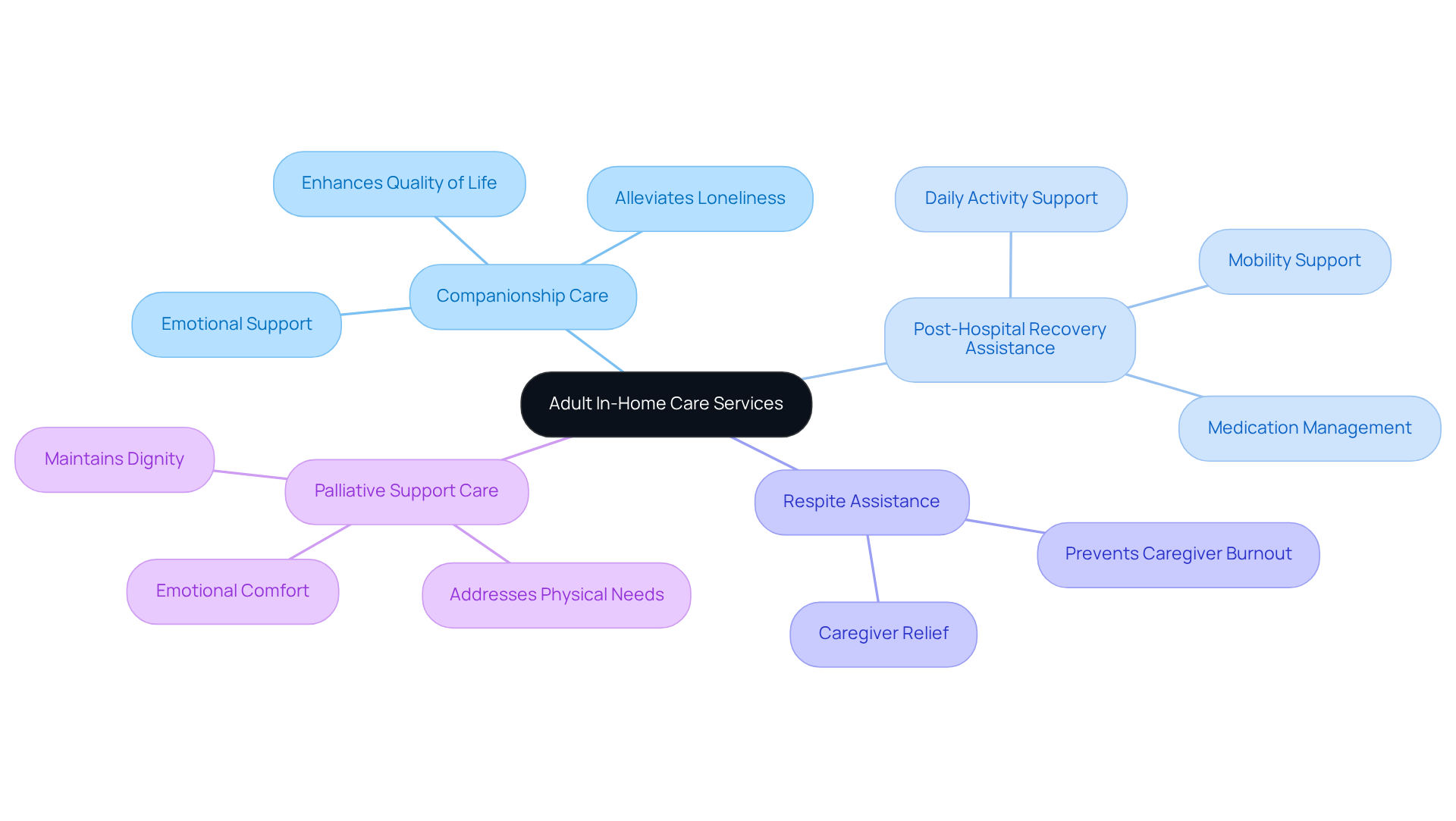
Adult in home care near me provides a compassionate range of assistance services designed to help individuals navigate their daily lives while promoting independence and well-being. These services are not just practical; they are lifelines that foster emotional connections and enhance quality of life. The primary types of services include:
-
Companionship Care: This service is vital for providing emotional support and companionship to seniors. It significantly alleviates feelings of loneliness and isolation. Research indicates that consistent social engagement can uplift seniors' moods and overall outlook on life. With nearly one-fourth of adults aged 65 and older considered socially isolated, the importance of companionship support cannot be overstated.
-
Post-Hospital Recovery Assistance: After a hospital stay, individuals often require help with daily activities, medication management, and mobility support to ensure a smooth recovery at home. This service empowers seniors to regain their strength and independence in a familiar environment, surrounded by the comforts of home.
-
Respite Assistance: Designed to provide short-term relief for primary caregivers, respite assistance allows them to take essential breaks while ensuring their loved ones continue to receive excellent care. This service is crucial in preventing caregiver burnout, ultimately safeguarding the health of both the caregiver and the recipient.
-
Palliative Support Care: Tailored for individuals facing serious illnesses, this service addresses both physical and emotional needs, offering comfort and support during challenging times. It underscores the importance of dignity and quality of life for seniors navigating health challenges.
Understanding these services is the first step in determining the right support for your loved one. With more than one-third of adults aged 45 and older experiencing loneliness, the significance of companionship support grows increasingly vital. It not only enhances emotional well-being but also helps prevent cognitive decline. Moreover, seniors who have regular visitors are more likely to adopt healthier habits, amplifying the positive impact of companionship on their overall well-being. By selecting the appropriate adult in home care near me, families can ensure their relatives receive the nurturing support they need to thrive.
Identify Key Factors for Choosing a Provider
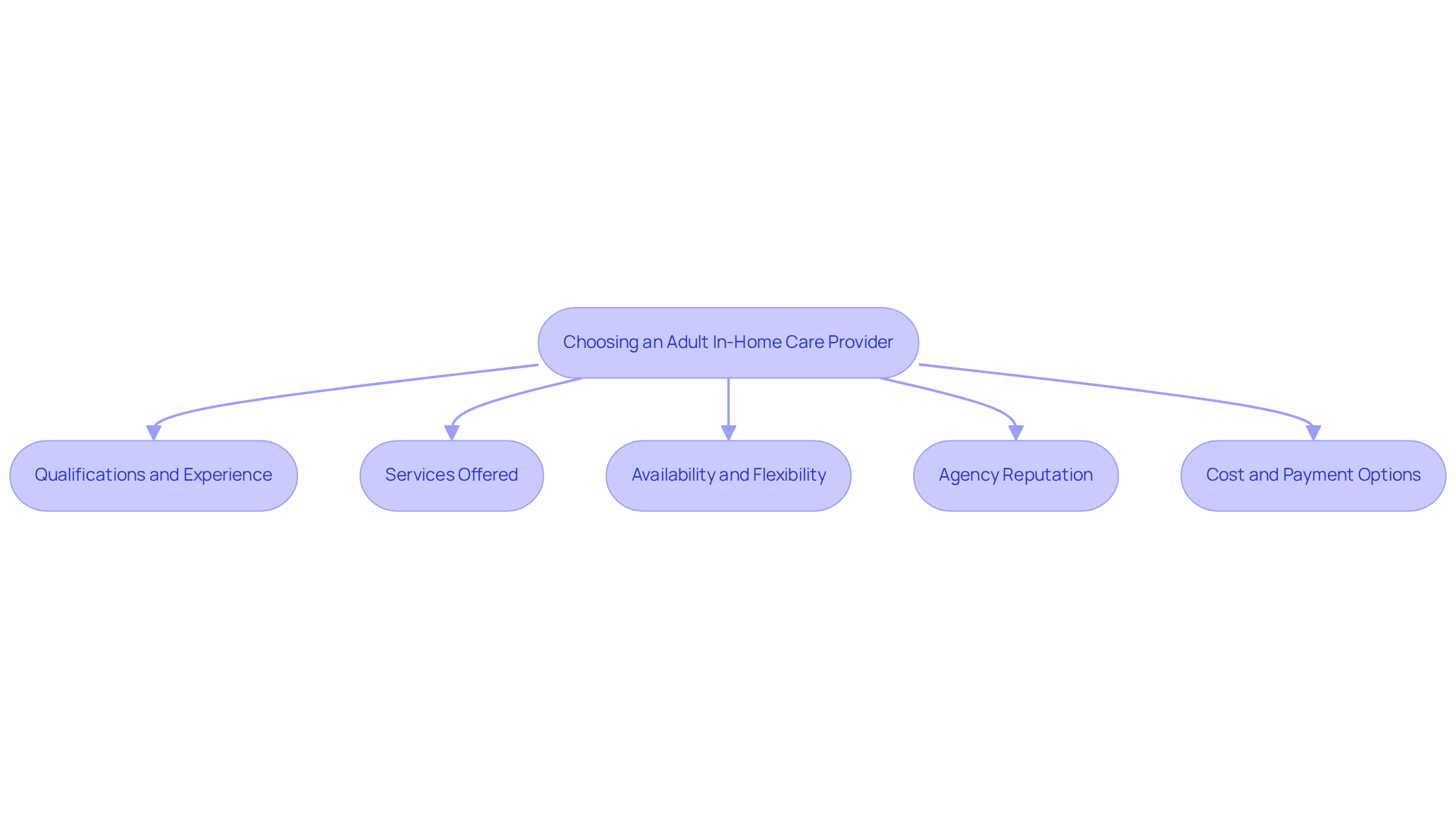
When selecting an adult in-home care provider, it’s important to consider several key factors with care and compassion:
-
Qualifications and Experience: Ensuring that caregivers have the necessary training and relevant experience tailored to your loved one’s specific needs is essential. Agencies vary in their requirements; while some states mandate extensive training, others may have minimal standards. This variance can significantly impact the quality of service provided. Families should also inquire about background check procedures for caregivers in adult in home care near me, ensuring safety and reliability.
-
Services Offered: Different agencies provide a range of services, from companionship to specialized medical assistance. It’s crucial to verify that the provider of adult in home care near me can meet all the distinct requirements of your loved one. A diverse service offering can greatly enhance their quality of life. A customized support plan is vital, as highlighted in case studies that emphasize the importance of individualized assistance.
-
Availability and Flexibility: Assess whether the agency can accommodate your scheduling needs, including 24/7 availability if necessary. Flexibility in support options is key, as it allows for adjustments based on changing health conditions or personal preferences. Clear communication pathways among families, supporters, and organizations are essential for enhancing support in finding adult in home care near me.
Investigating the agency’s reputation through online reviews and testimonials from other families can provide valuable insights into adult in home care near me. Constructive feedback regarding caregiver consistency and quality of service offers important perspectives on the agency’s dependability. As noted by Right at Home, consistency in caregiving is crucial for effective assistance.
- Cost and Payment Options: Understanding the pricing structure is vital for budgeting. The median monthly expense of hiring a home health aide is about $4,385, while in Washington State, the median cost of in-home health services is roughly $5,815. Ask about payment options, including whether the agency accepts long-term assistance insurance or offers financial aid programs. Clarity on costs is essential to avoid any unexpected burdens.
By thoroughly assessing these factors, families can make informed choices that ensure their loved ones receive the compassionate and effective support they truly deserve.
Evaluate and Compare Home Care Options
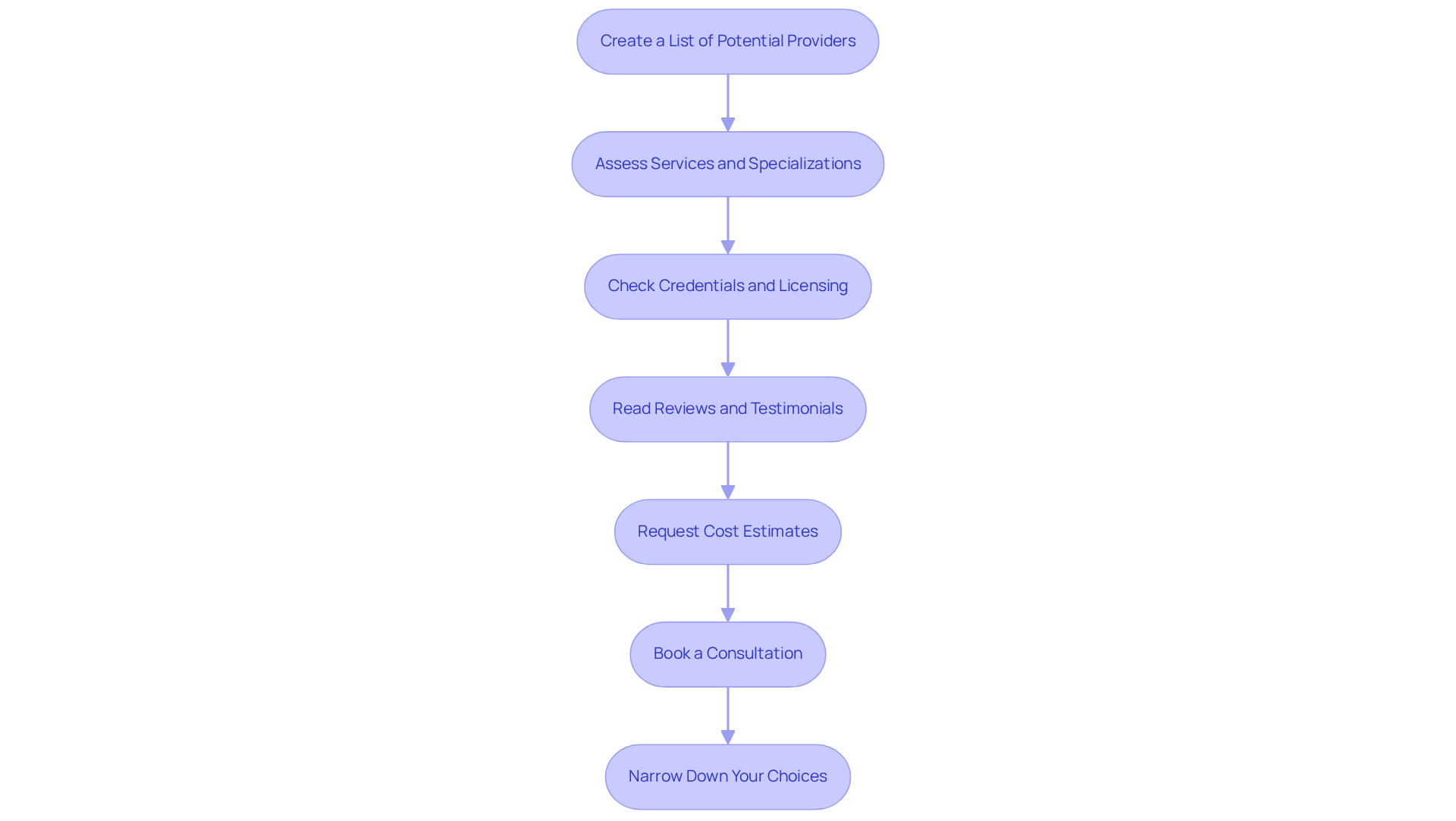
To effectively evaluate and compare home care options, it’s important to approach this process with care and understanding. Here are some steps to guide you:
-
Create a List of Potential Providers: Start by gathering a list of home assistance agencies in your area. Use online resources, community referrals, and local directories to ensure you have a comprehensive view of your options.
-
Assess Services and Specializations: Take a moment to review the services offered by each agency. Check if they specialize in the type of support your loved one needs. Some agencies may also provide supplementary services like private nursing and facility staffing, which can ensure uninterrupted support without the need for multiple providers.
-
Check Credentials and Licensing: It’s crucial to verify that the agencies are licensed and accredited by the relevant authorities. This step helps ensure they meet industry standards and can provide the care your loved one deserves.
-
Read Reviews and Testimonials: Look for feedback from other families who have used these services. Pay attention to both positive and negative reviews to gain a balanced perspective. Hearing from others can provide valuable insights into the quality of care.
-
Request Cost Estimates: Reach out to each agency to obtain detailed cost estimates, including any hidden fees or additional charges. Understanding the financial aspects is essential for making informed decisions, especially since home support expenses can vary significantly depending on the level of assistance required.
-
Book a Consultation: Schedule a consultation or in-home assessment with the agencies you are considering. This step is vital for assessing the agency's approach to support and ensuring compatibility between caregivers and your family member.
-
Narrow Down Your Choices: Based on your evaluations, narrow down your options to a few providers that best align with your criteria for support, budget, and compatibility. This focused approach will simplify the decision-making process and help ensure that your cherished one receives the best possible care.
By following this structured method, families can empower themselves to make well-informed choices, ensuring their loved ones receive the compassionate and personalized care they truly deserve.
Conduct Interviews and Assess Caregiver Compatibility
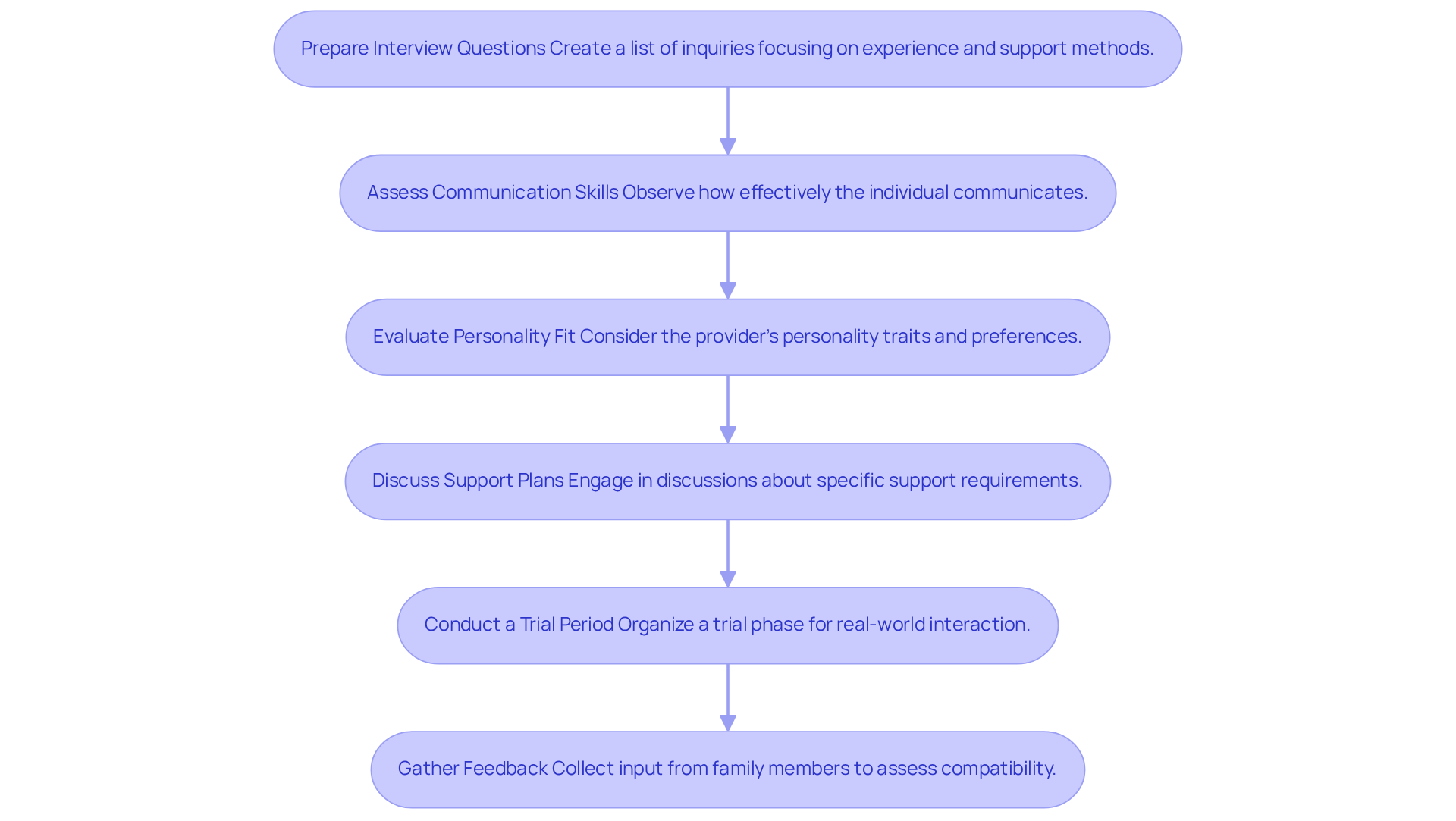
Once you have narrowed down your options, it’s time to conduct interviews and assess caregiver compatibility:
-
Prepare Interview Questions: Create a thorough list of inquiries to pose to prospective assistants. Concentrate on their experience, method of support, and how they manage particular situations, ensuring they align with your loved one’s requirements.
-
Assess Communication Skills: During the interview, observe how effectively the individual communicates. Strong communication is essential for fostering a successful caregiver-client relationship, enhancing understanding and trust. As Kristina Wong, a Care Manager, highlights, "Pairing seniors with companions they connect with will enhance the quality of their life and guarantee they obtain the support necessary to keep them flourishing."
-
Evaluate Personality Fit: Consider the provider’s personality traits and whether they align with your family member’s preferences. Research indicates that compatibility can significantly improve the caregiving experience, making it easier for seniors to accept help and engage positively. Wong also observes, "Finding someone who is suitable for you or your relative and their specific personality traits can assist them in adapting to receiving support."
-
Discuss Support Plans: Engage in a thorough discussion regarding your family member’s particular support requirements and how the attendant plans to manage them. Ask about personalized care plans to ensure the provider can meet the unique needs of your family member, which is essential for improving the caregiving experience.
-
Conduct a Trial Period: If possible, organize a trial phase where the helper can interact with your family member. This real-world interaction allows both parties to assess compatibility and comfort levels in a practical setting.
-
Gather Feedback: After the trial period, collect input from your family member and other relatives to assess whether the provider is a suitable match. Consistent feedback is essential for adjusting support to changing requirements, emphasizing the significance of ongoing communication between the provider and family members.
By following these steps, families can ensure they choose an adult in home care near me who not only meets the necessary qualifications but also aligns well with their loved one’s personality and care needs. This thoughtful approach can lead to a more harmonious caregiving experience, ultimately enhancing the quality of life for seniors who may require an adult in home care near me. Additionally, families should be aware that the national median cost of an in-home caregiver is around $30 per hour, which can influence their decision-making process.
Taking the Next Steps
Finding the right adult in-home care services is a crucial step in ensuring that your loved ones receive the compassionate support they need to maintain their independence and quality of life. Understanding the various types of services available—such as companionship care, post-hospital recovery assistance, and palliative support—empowers families to make informed decisions tailored to their specific needs.
In choosing a provider, it’s essential to:
- Evaluate qualifications
- Assess the range of services offered
- Understand costs
Conducting thorough research and engaging in interviews helps ensure compatibility between caregivers and recipients, fostering a positive caregiving relationship. By following a structured approach to evaluate and compare options, families can feel confident in selecting the best care for their loved ones.
Ultimately, the significance of adult in-home care cannot be overstated. It not only meets the practical needs of seniors but also significantly enhances their emotional well-being. Families are encouraged to take proactive steps in this process, ensuring that their loved ones receive the nurturing support necessary for a fulfilling and dignified life at home.
https://iframe.tely.ai/cta/eyJhcnRpY2xlX2lkIjogIjY4ZmViYWY1NjhiZjY1YmIzMzhlOTNlZCIsICJjb21wYW55X2lkIjogIjY4ZWU1ZGNhNzMxNzYyNTU3ZjNjOTVjMSIsICJpbmRleCI6IG51bGwsICJ0eXBlIjogImFydGljbGUifQ==Frequently Asked Questions
What are adult in-home care services?
Adult in-home care services provide a range of assistance designed to help individuals navigate daily life while promoting independence and well-being. These services include companionship, post-hospital recovery assistance, respite assistance, and palliative support care.
What is companionship care and why is it important?
Companionship care offers emotional support and companionship to seniors, alleviating feelings of loneliness and isolation. It is important because consistent social engagement can uplift seniors' moods and overall outlook on life, especially since nearly one-fourth of adults aged 65 and older are considered socially isolated.
How does post-hospital recovery assistance help seniors?
Post-hospital recovery assistance helps seniors with daily activities, medication management, and mobility support after a hospital stay. This service empowers them to regain strength and independence in a familiar home environment.
What is respite assistance and who is it for?
Respite assistance provides short-term relief for primary caregivers, allowing them to take breaks while ensuring their loved ones continue to receive quality care. This service is crucial for preventing caregiver burnout.
What is palliative support care and who needs it?
Palliative support care is tailored for individuals facing serious illnesses and addresses both physical and emotional needs. It offers comfort and support during challenging times, emphasizing dignity and quality of life.
Why is companionship support significant for seniors?
Companionship support is significant for seniors because it enhances emotional well-being, helps prevent cognitive decline, and encourages healthier habits. Regular visitors can amplify the positive impact of companionship on their overall well-being.
How can families choose the right adult in-home care services?
Families can choose the right adult in-home care services by understanding the specific needs of their loved ones and selecting services that provide the necessary support to help them thrive.