
For families in our service areas
For families in our service areas, this guide explains alzheimer's care and how non-medical in-home caregiving can support care planning in East Idaho, Treasure Valley & Magic Valley, Northern Wasatch, North Central West Virginia, and Northeast Ohio.
Understanding Find Alzheimer Care Facilities Near Me:
Navigating the complex landscape of Alzheimer care facilities presents a significant challenge for caregivers. With the rising demand for specialized support options, understanding the various types of facilities available is essential. This complexity can lead to confusion and stress, making it difficult for families to ensure their loved ones receive the best possible care.
As the need for memory care units has surged dramatically, caregivers must assess their options carefully. This task can feel overwhelming, especially when prioritizing safety, comfort, and financial feasibility. How can caregivers effectively navigate this landscape and make informed decisions?
This guide offers a step-by-step approach to finding the right Alzheimer care facility. By empowering families with the knowledge they need, we aim to help them secure the support their loved ones deserve. Here, we will outline the key considerations and actionable solutions to simplify the decision-making process.
Understand Alzheimer Care Facility Types
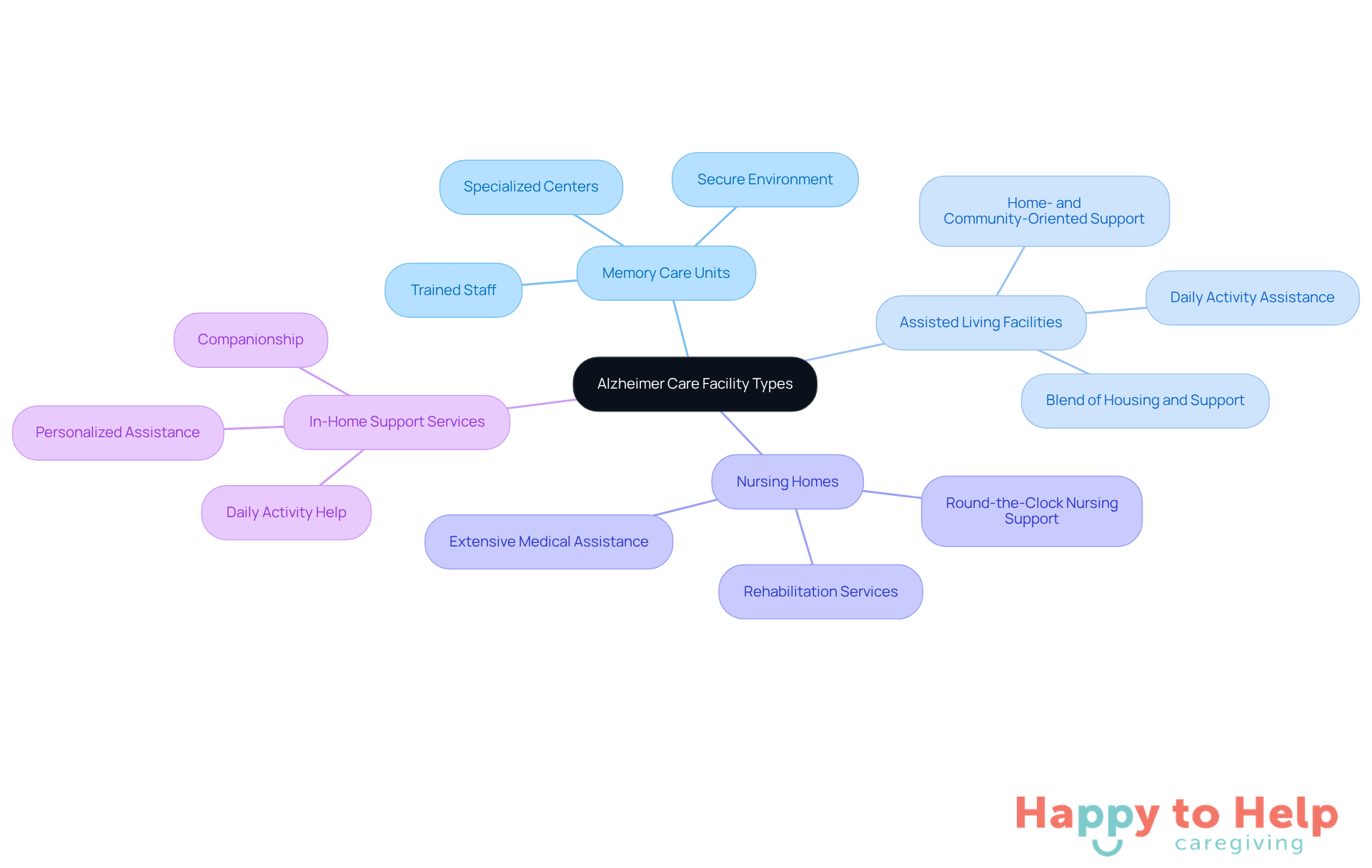
When searching for alzheimer care facilities near me, caregivers face a significant challenge: understanding the various types available. This can be overwhelming, especially given the increasing demand for specialized care options. In fact, the need for memory support units has surged, with a 62% increase in the past decade, highlighting the urgency for tailored assistance.
-
Memory Care Units are specialized centers designed specifically for individuals with Alzheimer's and other forms of dementia. They provide a secure environment with trained staff who understand the unique needs of residents, ensuring safety and personalized support.
-
Assisted Living Facilities offer a blend of housing, personal support options, and health assistance. These establishments cater to seniors who need help with daily activities but do not require the extensive support found in memory care units. Notably, about 61% of non-profit life plan communities currently provide home- and community-oriented support, reflecting a growing trend towards specialized assistance that helps seniors maintain their preferred living arrangements.
-
Nursing Homes, also known as skilled nursing facilities, deliver extensive medical assistance for individuals with severe health issues, including advanced dementia. They offer round-the-clock nursing support and rehabilitation services, making them suitable for those with complex medical needs. Families should be aware of potential misinformation regarding memory support offerings, as emphasized by industry specialists.
-
For families who wish to keep their loved ones at home, In-Home Support Services can provide personalized assistance, including companionship and help with daily activities. This option allows seniors to maintain their independence while receiving essential support.
Understanding these options is crucial for determining which type of facility, such as alzheimer care facilities near me, best meets your loved one's needs and preferences. Experts like Kim Butrum and Michele Holleran stress the importance of continuous training for staff in memory support facilities to ensure quality care and adapt to the evolving landscape of dementia assistance.
Evaluate Individual Care Needs
To effectively evaluate the care needs of your loved one, it’s crucial to understand the challenges involved. Caregivers often face the daunting task of determining the right level of support for individuals with Alzheimer's at alzheimer care facilities near me, which can be overwhelming.
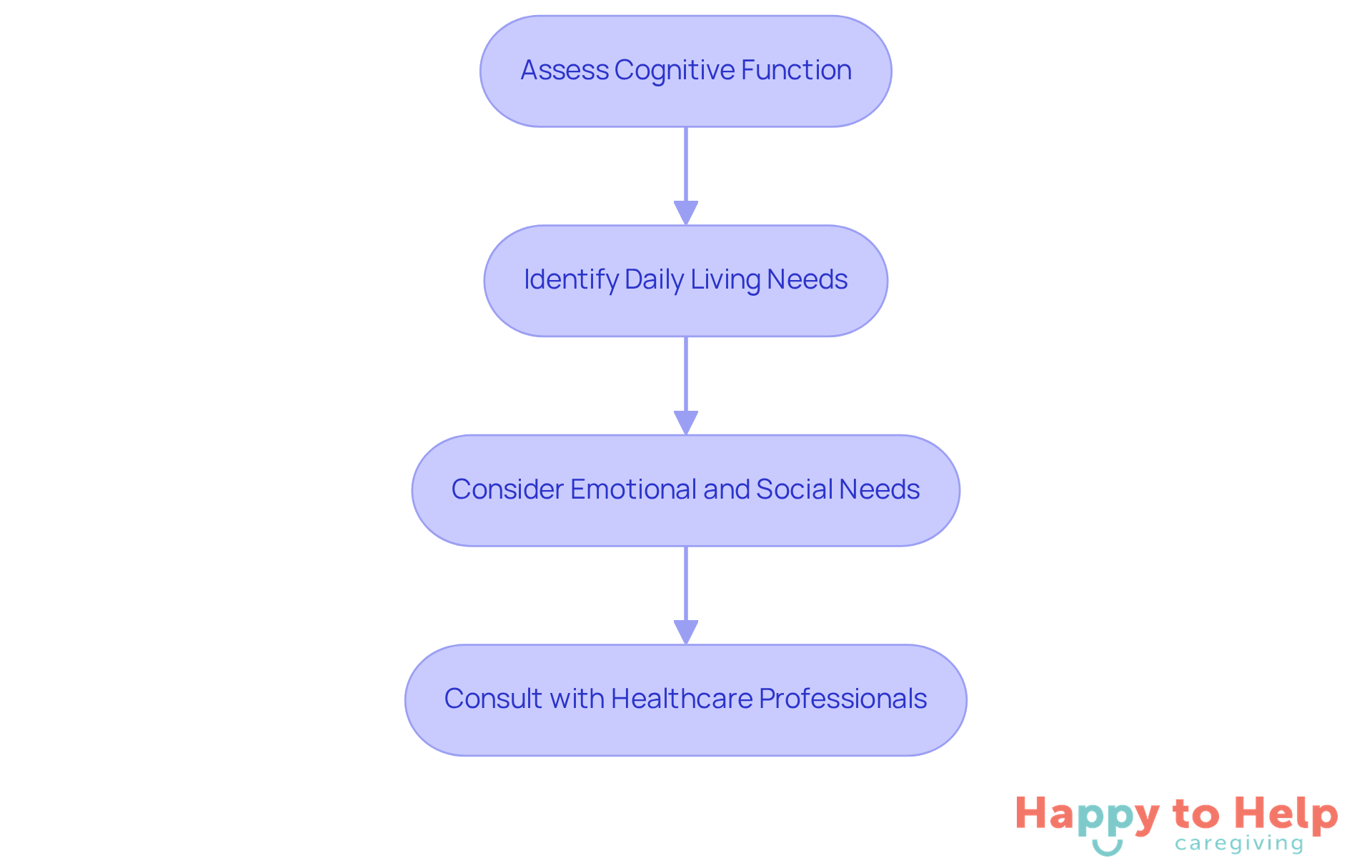
- Assess Cognitive Function: Start by determining the stage of Alzheimer's your loved one is experiencing. Consult healthcare professionals who can provide cognitive assessments to gain insights into their condition.
- Identify Daily Living Needs: Next, evaluate how much assistance your loved one requires with daily activities such as bathing, dressing, eating, and medication management. Understanding these needs will help you grasp the level of attention required.
- Consider Emotional and Social Needs: Reflect on your loved one's emotional well-being and social preferences. Do they thrive in social settings, or do they prefer solitude? Recognizing this will aid in choosing a venue that offers the right environment.
- Consult with Healthcare Professionals: Engage with doctors or geriatric management specialists who can provide insights into your loved one's health status and recommend suitable support options.
By thoroughly assessing these aspects, you can develop a clear understanding of the support requirements that must be addressed in the alzheimer care facilities near me.
Research Local Alzheimer Care Facilities
Finding suitable alzheimer care facilities near me can be a daunting task for caregivers. With so many options available, it’s crucial to navigate this process effectively to ensure your loved one receives the best care possible. Here are some practical steps to help you in your search:
-
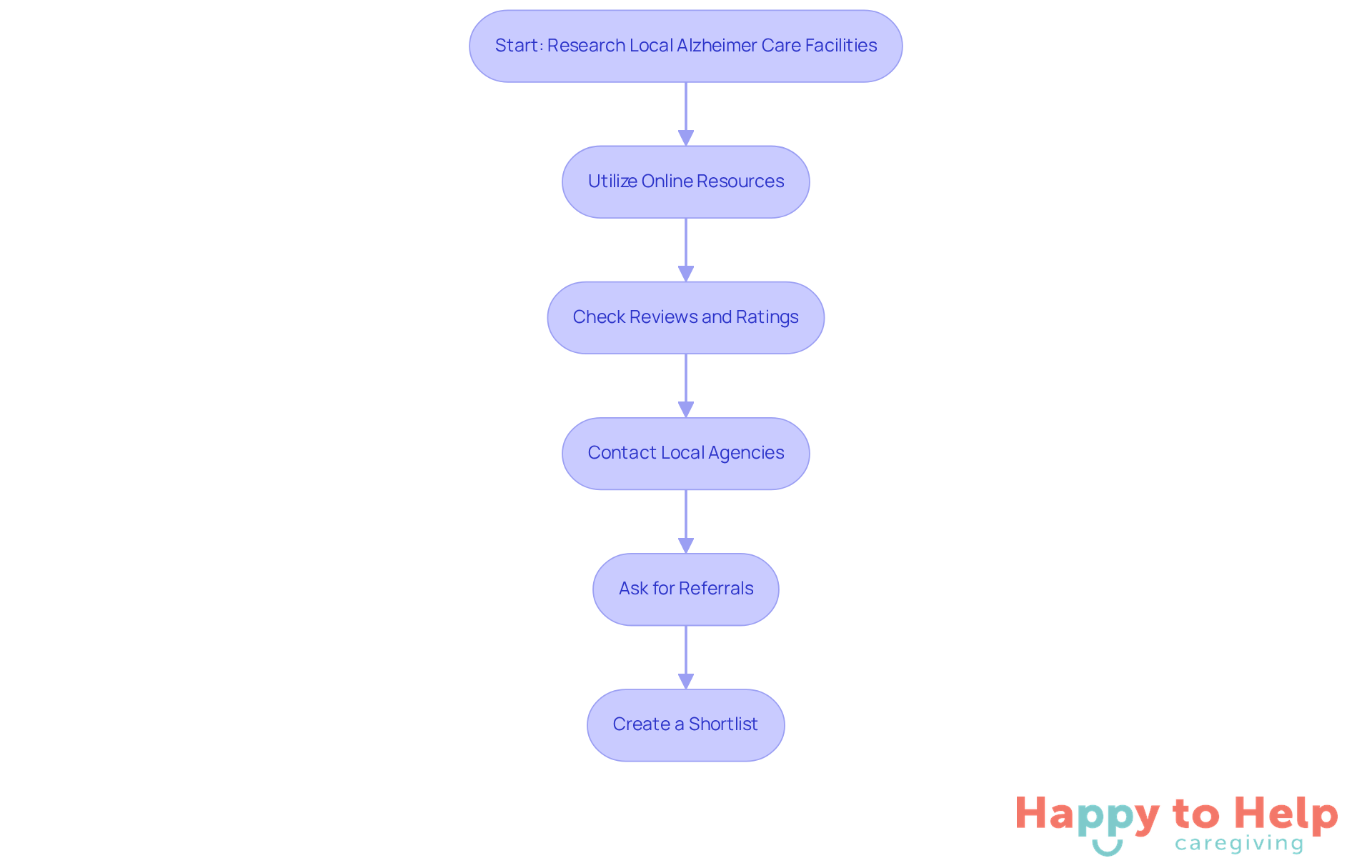
Utilize Online Resources: Websites like the Eldercare Locator and the Alzheimer's Association's Community Resource Finder can help you search for local services based on your zip code or city. These platforms provide a starting point for your research.
-
Check Reviews and Ratings: Look for reviews on platforms such as A Place for Mom or Caring.com. These sites offer insights from families who have experience with specific facilities, helping you assess the quality of service.
-
Contact Local Agencies: Reach out to local aging agencies or Alzheimer’s support organizations. They often have lists of recommended facilities and can provide valuable information about available services.
-
Ask for Referrals: Speak with healthcare providers, social workers, or friends who have experience with Alzheimer care. Personal recommendations can lead you to trustworthy establishments that may not be as visible online.
-
Create a Shortlist: Based on your research, compile a list of potential locations that meet your loved one's needs. Include key details such as location, amenities, and contact information for follow-up inquiries.
By following these steps, you can make a more informed decision and find the right alzheimer care facilities near me for your loved one.
Visit and Assess Potential Facilities
When evaluating potential Alzheimer care facilities near me, caregivers face a significant challenge: finding a place that ensures the comfort and safety of their loved ones. With approximately 42% of residents in assisted living communities having Alzheimer's disease or another form of dementia, this decision is crucial.
To navigate this process effectively, consider these essential tips:
-
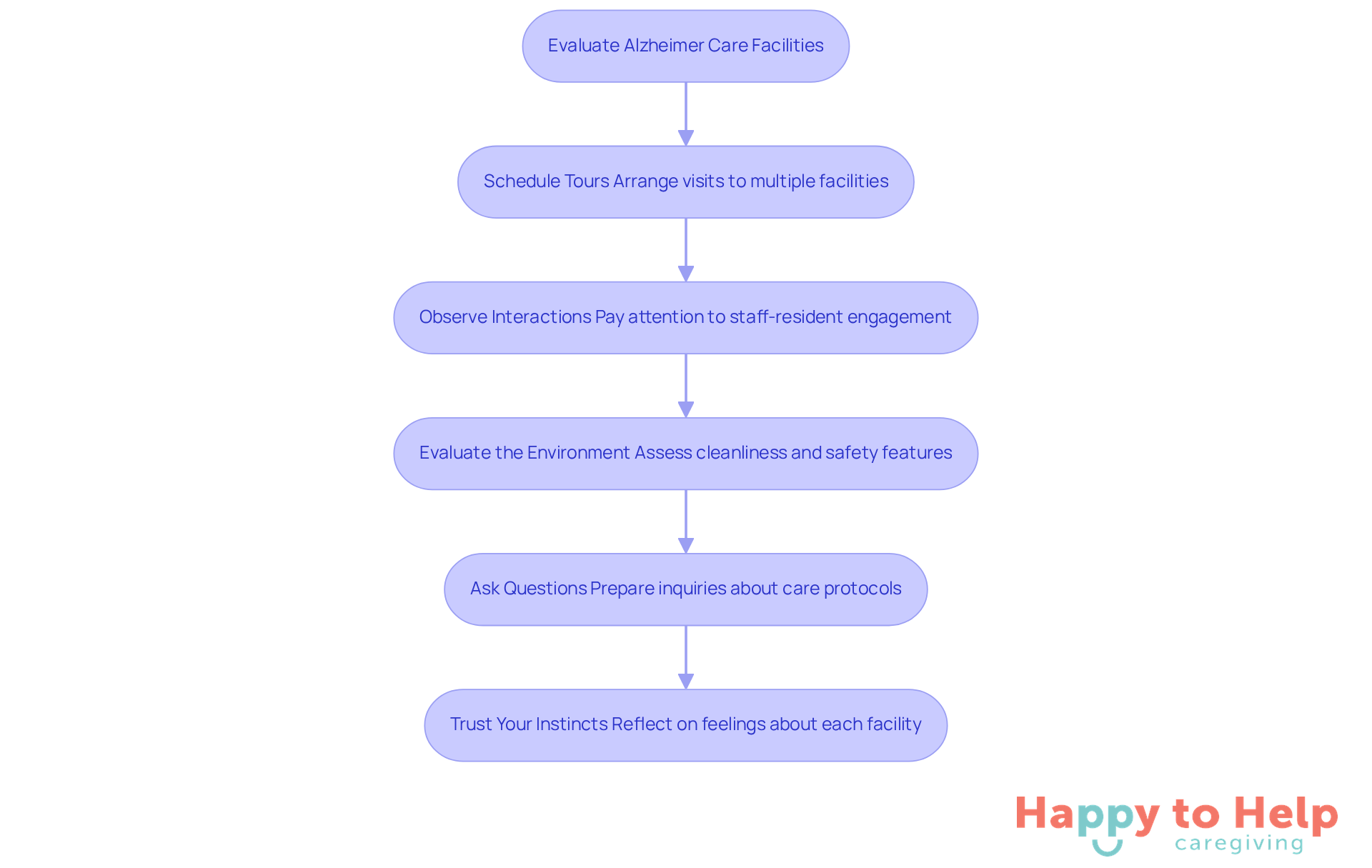
Schedule Tours: Arrange visits to multiple facilities to compare environments and services. Aim to visit at different times of the day to gain a comprehensive understanding of daily operations.
-
Observe Interactions: Pay close attention to how staff engage with residents. Compassionate, patient, and attentive interactions are strong indicators of quality service. For instance, nearly one million residents in assisted living communities undergo daily support interactions, making these observations essential. As Anju Paudel, Ph.D., R.N., states, "Staff-resident interaction is a vital indicator of high quality, person-centered dementia support."
-
Evaluate the Environment: Assess the premises' cleanliness, safety features, and overall atmosphere. In Alzheimer care facilities near me, a welcoming and secure environment is vital for residents with Alzheimer’s, as it directly impacts their comfort and well-being.
-
Ask Questions: Prepare a list of inquiries to guide your visit, such as:
- What is the staff-to-resident ratio?
- What types of activities are offered to residents?
- How is medication managed?
- What training do staff members receive in dementia support? Studies show that effective training is vital, with numerous centers offering an average of 40 hours of specialized instruction in dementia support, which is critical for ensuring quality assistance.
-
Trust Your Instincts: After your visits, reflect on your feelings about each establishment. Trust your instincts regarding the comfort and safety of your loved one in that environment. Positive feedback from caregivers often highlights the importance of feeling secure and supported in these settings.
Compare Costs and Services Offered
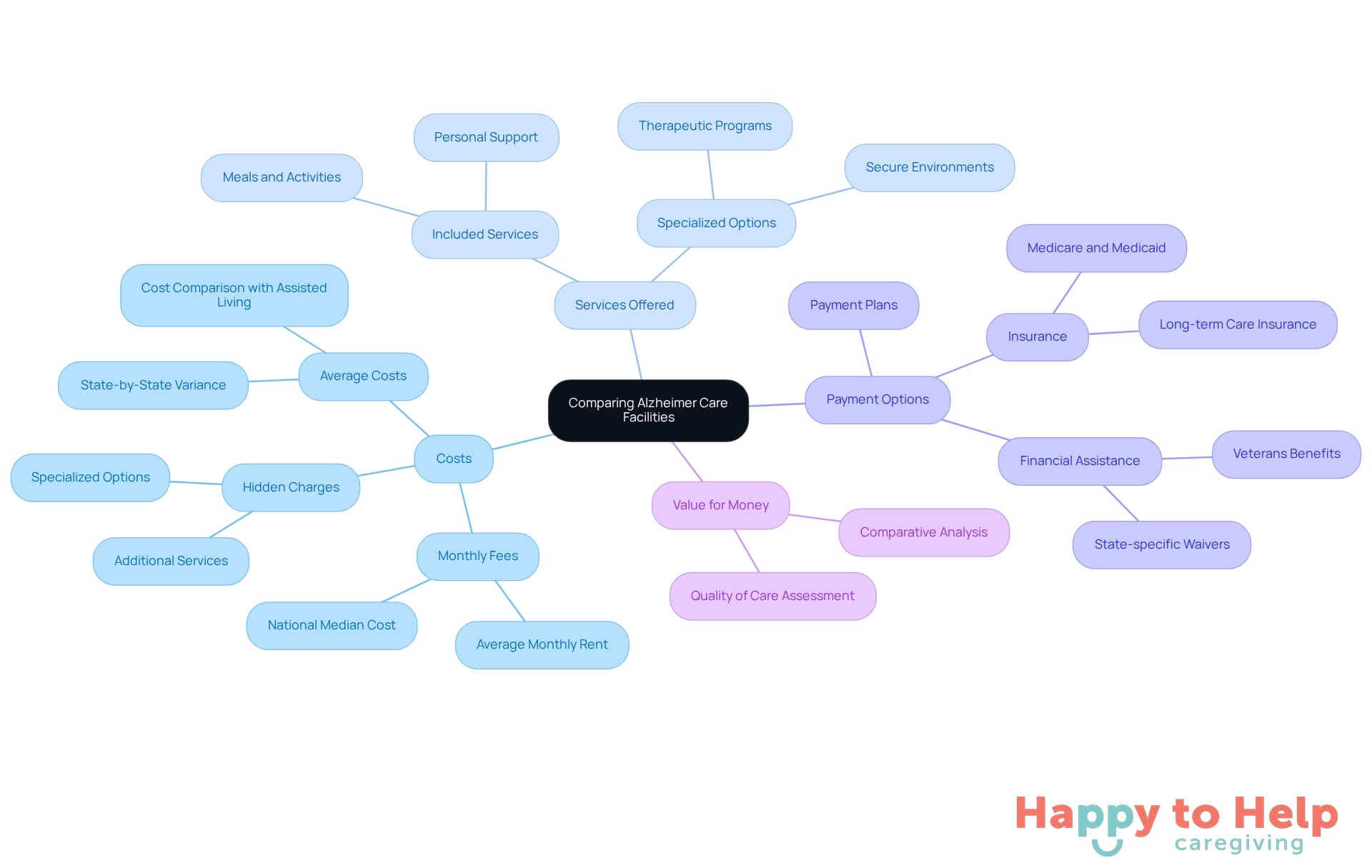
Caregivers face a significant challenge in effectively comparing costs and services among Alzheimer care facilities near me. Understanding the financial implications of memory care is crucial, especially when the national median expense is approximately $7,785 per month. With the average monthly rent for memory assistance in the U.S. at $8,399, it’s essential to set realistic expectations.
-
Request Detailed Pricing Information: Start by asking each facility for a comprehensive breakdown of costs. This should include monthly fees, additional services, and any potential hidden charges. Knowing the average costs helps in making informed comparisons.
-
Understand What’s Included: Clarify what offerings are included in the base price. Does it cover meals, activities, personal support, and medical assistance? While many establishments impose a comprehensive fee, some may have additional costs for specialized options. Be cautious of potential hidden costs that could arise.
-
Consider Payment Options: Inquire about payment plans, insurance acceptance, and any financial assistance programs available. Exploring various funding options for memory support can significantly alleviate financial burdens. Consulting with a financial advisor can provide insights into navigating these options effectively.
-
Evaluate Value for Money: Compare the services offered against the costs. A higher price does not always guarantee superior attention, so assess the overall value based on your loved one's requirements. Memory support generally costs 15 to 25 percent more than assisted living, reflecting the amount of assistance needed and geographic location.
Make an informed decision by weighing the pros and cons of each Alzheimer care facility near me after gathering all necessary information. Consider both the financial aspects and the quality of assistance to make the best choice for your loved one. Remember, the average monthly rent for memory care in the U.S. is $8,399, which is higher than assisted living but lower than nursing home costs. This emphasizes the importance of thorough research.
Making the Right Choice
Finding the right Alzheimer care facility is a significant challenge for caregivers. The implications of this task can weigh heavily, as the well-being of loved ones depends on the quality of care they receive. Without proper guidance, caregivers may feel overwhelmed and uncertain about their choices.
To navigate this complex landscape, it’s essential to evaluate individual care needs thoroughly. Researching local facilities and conducting in-person visits can provide valuable insights. Key factors to consider include:
- Cognitive function
- Daily living assistance
- Emotional well-being
By assessing these elements, caregivers can identify the most suitable care environment for their loved ones.
Practical steps for researching and comparing facilities are crucial. Caregivers should gather information from multiple sources, including:
- Online reviews
- Expert recommendations
- Community resources
This approach empowers them to make informed decisions with confidence.
Ultimately, the journey to finding the best Alzheimer care facilities requires a blend of research, personal insights, and community support. Engaging actively in this process is vital, as the right care can significantly enhance the quality of life for both patients and their families. By taking the time to understand available options and assess specific needs, caregivers can ensure their loved ones receive the compassionate and effective support they deserve.
https://iframe.tely.ai/cta/eyJhcnRpY2xlX2lkIjogIjY5NDBhMjEwMjI1ZjA3N2M1ZmMwYmYyZSIsICJjb21wYW55X2lkIjogIjY4ZWU1ZGNhNzMxNzYyNTU3ZjNjOTVjMSIsICJpbmRleCI6IG51bGwsICJ0eXBlIjogImFydGljbGUifQ==Frequently Asked Questions
What types of Alzheimer care facilities are available?
The main types of Alzheimer care facilities include Memory Care Units, Assisted Living Facilities, Nursing Homes, and In-Home Support Services. Each type offers different levels of support tailored to the needs of individuals with Alzheimer's and other forms of dementia.
What are Memory Care Units?
Memory Care Units are specialized centers designed specifically for individuals with Alzheimer's and dementia. They provide a secure environment with trained staff who understand the unique needs of residents, ensuring safety and personalized support.
How do Assisted Living Facilities differ from Memory Care Units?
Assisted Living Facilities offer a blend of housing, personal support, and health assistance for seniors who need help with daily activities but do not require the extensive support found in Memory Care Units. They cater to individuals who can still maintain some level of independence.
What services do Nursing Homes provide?
Nursing Homes, or skilled nursing facilities, deliver extensive medical assistance for individuals with severe health issues, including advanced dementia. They offer round-the-clock nursing support and rehabilitation services, making them suitable for those with complex medical needs.
What options are available for families who want to keep their loved ones at home?
In-Home Support Services provide personalized assistance, including companionship and help with daily activities, allowing seniors to maintain their independence while receiving essential support.
How can caregivers evaluate the care needs of their loved ones?
Caregivers can evaluate care needs by assessing cognitive function, identifying daily living needs, considering emotional and social preferences, and consulting with healthcare professionals for insights into the individual’s health status.
Why is it important to understand the different types of Alzheimer care facilities?
Understanding the different types of facilities is crucial for determining which option best meets the needs and preferences of your loved one, ensuring they receive the appropriate level of care and support.
What should families be aware of regarding memory support offerings?
Families should be aware of potential misinformation regarding memory support offerings, as emphasized by industry specialists. Continuous training for staff in memory support facilities is essential to ensure quality care.
List of Sources
- Understand Alzheimer Care Facility Types
- Alzheimer's advocates want "truth-in-advertising" for memory care (https://fox6now.com/news/alzheimers-advocates-want-truth-in-advertising-memory-care)
- Seven trends in senior living that will define 2025 and beyond (https://mcknightsseniorliving.com/home/columns/guest-columns/seven-trends-in-senior-living-that-will-define-2025-and-beyond)
- Dementia housing without locked wards? It's a small but growing movement (https://npr.org/sections/shots-health-news/2025/11/17/nx-s1-5600877/dementia-alzheimers-care-housing-senior-living-inclusion-segregation)
- Move over AL: Nursing homes are pursuing larger share of the memory care market (https://mcknights.com/news/move-over-al-nursing-homes-are-pursuing-larger-share-of-the-memory-care-market)
- How Memory Care Will Change by 2025 | Alzheimers.net (https://alzheimers.net/how-memory-care-will-change-by-2025)
- Visit and Assess Potential Facilities
- Alzheimer’s Association Dementia Care Provider Roundtable Funds Research Aimed at Improving Care Interactions in Assisted Living Communities (https://alz.org/news/2024/alzheimer-s-association-dementia-care-provider-roundtable-funds-research-aimed-at-improving-care-int)
- 30 Inspirational Quotes for Caregivers (https://agingcare.com/articles/caregivers-quotes-inspiration-141133.htm)
- Staff-to-Resident Ratios in Assisted Living (https://aplaceformom.com/caregiver-resources/articles/staff-ratio-assisted-living)
- Compare Costs and Services Offered
- How Much Does Memory Care Cost in 2025? (https://aplaceformom.com/caregiver-resources/articles/cost-of-memory-care)
- 2025 Cost of Memory Care and What’s Included (https://westmontliving.com/blog/westmont-of-cypress/2025-cost-of-memory-care)
- 2025 Average Memory Care Costs by State (https://seniorliving.org/memory-care/costs)
- What Caregivers Should Know About Memory Care (https://aarp.org/caregiving/basics/memory-care-alzheimers-dementia)