
The Importance of Find At Home Nurses Near Me: A
Navigating the complex world of at-home nursing services can feel overwhelming for families seeking the best care for their loved ones. With a variety of options available, understanding the distinctions between skilled nursing, personal care, companionship, and specialized assistance is crucial for making informed decisions.
Families often struggle to assess their unique needs, which can lead to confusion and anxiety when trying to find the right at-home nurses nearby. This challenge not only affects the quality of care but also the emotional support that loved ones receive.
To address these concerns, this guide provides a comprehensive step-by-step approach to simplify the process. By empowering families with clear definitions and actionable tips, we aim to help them make confident choices in their healthcare journey.
Identify Types of At-Home Nursing Services
For families, navigating the landscape of at-home healthcare options, including at home nurses near me, can be challenging. With various categories available, understanding these options is crucial for making informed decisions about care for loved ones.
-
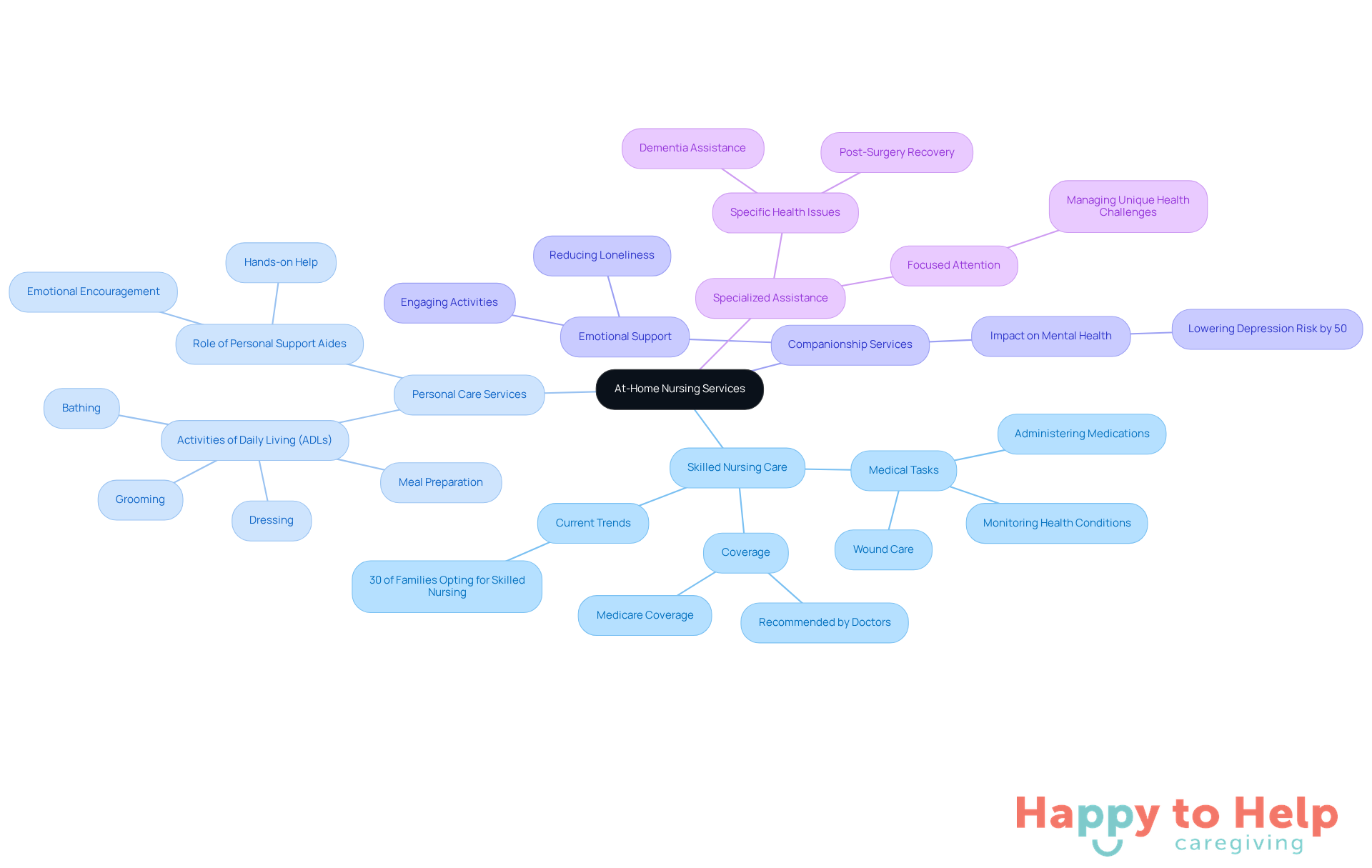
Skilled Nursing Care is one of the primary services available. Delivered by registered nurses, it includes essential medical tasks like administering medications, providing wound care, and monitoring health conditions. Often recommended by doctors and covered by Medicare, skilled nursing is vital for those needing clinical assistance at home. Recent statistics show that around 30% of families are now opting for skilled nursing options, highlighting a significant shift towards home-based support solutions.
-
Another important category is Personal Care Services. These services assist with Activities of Daily Living (ADLs), such as bathing, dressing, grooming, and meal preparation. Personal support aides provide hands-on help and emotional encouragement, allowing seniors to maintain their dignity and independence. As industry experts note, "Personal care aides play a crucial role in enhancing the quality of life for seniors, allowing them to remain in their homes longer."
-
Companionship Services also play a vital role in senior care. Caregivers in this category offer emotional support and companionship, which can significantly reduce feelings of loneliness and isolation. Engaging in friendly conversation and enjoyable activities are key components of this service. A recent study found that companionship options can lower the likelihood of depression among seniors by nearly 50%.
-
For those with specific health issues, Specialized Assistance is available. This support includes options like dementia assistance or help for individuals recovering from surgery. Specialized care ensures that clients receive the focused attention they need to manage their unique health challenges.
Current trends indicate a growing reliance on at home nurses near me for specialized nursing support. Many households are choosing at home nurses near me to ensure their loved ones receive excellent medical attention without needing facility-based care. This shift towards home-based support solutions prioritizes comfort and familiarity.
Understanding these categories empowers families to make informed choices about the type of assistance that best fits their loved one's needs, fostering a supportive and nurturing environment at home.
Assess Your Personal Care Needs
Assessing personal care needs can be a daunting task for caregivers. It's crucial to understand the specific challenges your loved one faces to provide the best support possible.
-
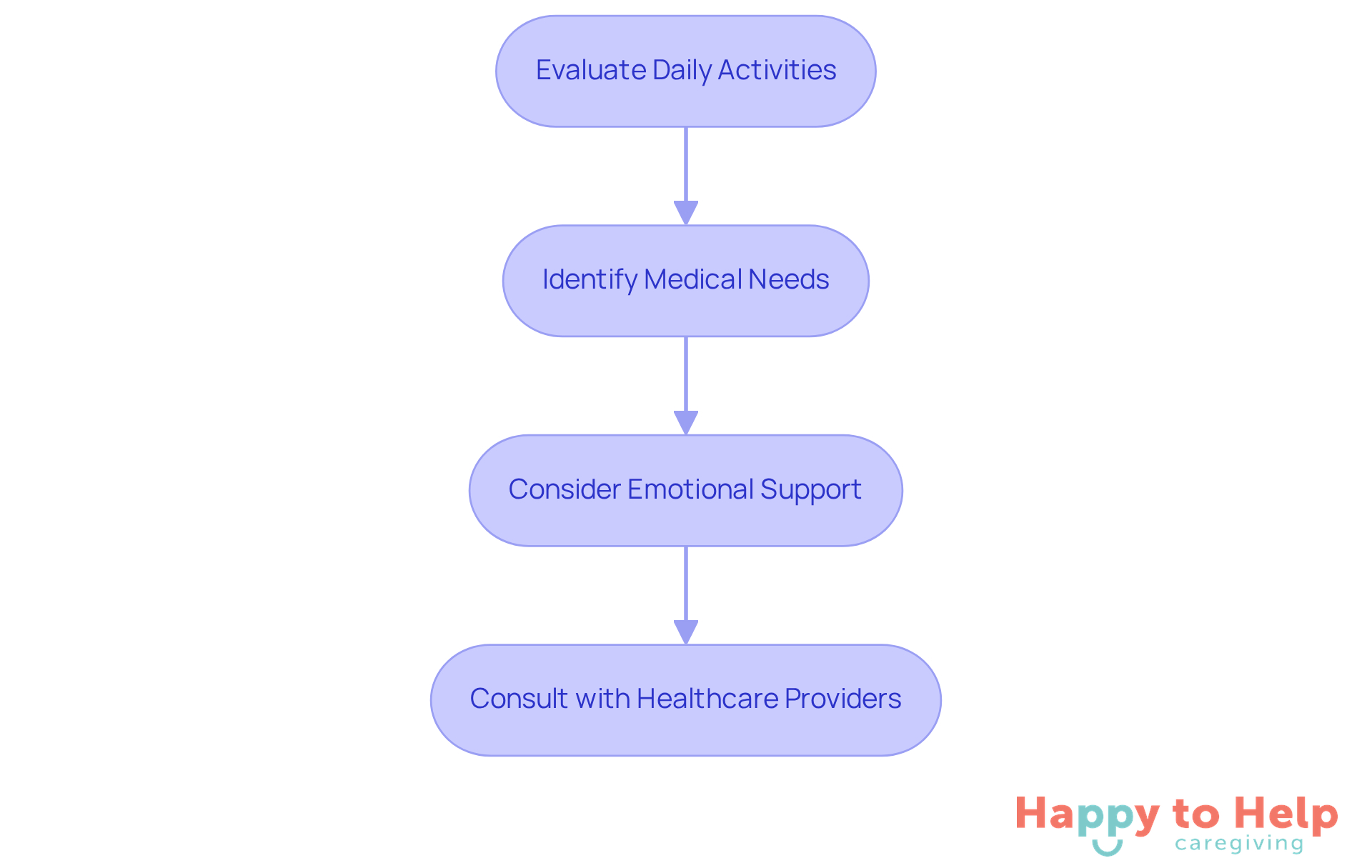
Evaluate Daily Activities: Start by listing the daily activities your loved one struggles with, such as bathing, dressing, or meal preparation. Recognizing these difficulties is the first step in addressing their needs.
-
Identify Medical Needs: Next, take note of any medical conditions that require skilled nursing support. This could include diabetes management or physical therapy, which are essential for maintaining health and well-being.
-
Consider Emotional Support: Don’t overlook the importance of companionship. Determine if your loved one needs emotional support to combat loneliness or to foster social interaction, as this can significantly impact their quality of life.
-
Consult with Healthcare Providers: Finally, engage with doctors or specialists. Their insights can help you understand the level of assistance required, ensuring that you make informed decisions.
By following these steps, you can choose the most appropriate at home nurses near me, which will ultimately enhance the care and support your loved one receives.
Research Local At-Home Nursing Services
For families, finding reliable at home nurses near me can be a daunting task. With so many options available, it’s crucial to navigate this landscape effectively to ensure your loved ones receive the best care possible from at home nurses near me. Here are some essential steps to help you in your search:
-
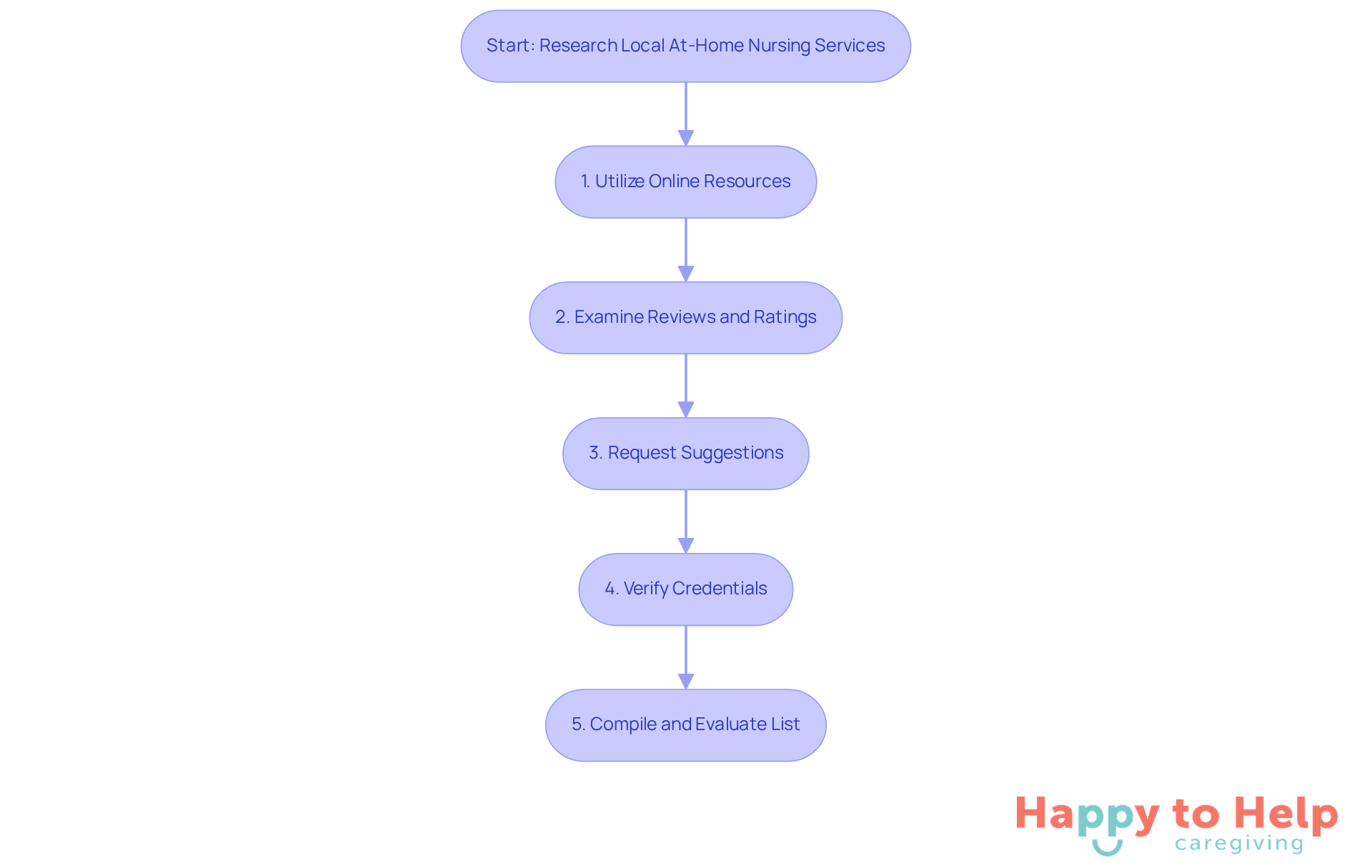
Utilize Online Resources: Start by leveraging platforms like Yelp, Medicare.gov, and local health department directories. These resources can help you compile a comprehensive list of at home nurses near me. As the industry shifts towards telehealth, these online platforms are becoming increasingly relevant, making it easier to access a wide range of options tailored to your needs.
-
Examine Reviews and Ratings: Investigate feedback from other families to assess the quality of service provided by various agencies. Ratings of domestic assistance agencies across the U.S. often reflect their reliability and quality, which can aid you in making informed choices. Studies show that agencies with higher ratings tend to achieve better patient outcomes, a critical factor in ensuring quality service.
-
Request Suggestions: Don’t hesitate to reach out to healthcare experts, friends, or relatives who have experience with home support services. Personal recommendations can guide you to trustworthy agencies that provide at home nurses near me who prioritize empathetic support. As healthcare leaders often highlight, personal connections can guide families to the best options available.
-
Verify Credentials: It’s essential to confirm that the agencies you consider are licensed and accredited by relevant health authorities. This step ensures you select a trustworthy provider committed to maintaining high service standards. The Centers for Medicare and Medicaid Services stress the importance of accreditation in ensuring quality home assistance.
By compiling a list of potential services, you can confidently evaluate and interview caregivers, ensuring you find the right fit for your loved one’s needs. Keep in mind that navigating online resources can be challenging for some elderly patients, so consider seeking assistance if needed.
Evaluate and Interview Potential Caregivers
Finding the right caregiver for your loved one can be a daunting task. Many families struggle with the challenge of ensuring their loved ones receive the best care possible. In fact, a survey revealed that 88% of families feel overwhelmed when navigating senior support options. This highlights the critical need for a systematic approach to evaluating potential caregivers.
To tackle this issue, consider these key steps:
-
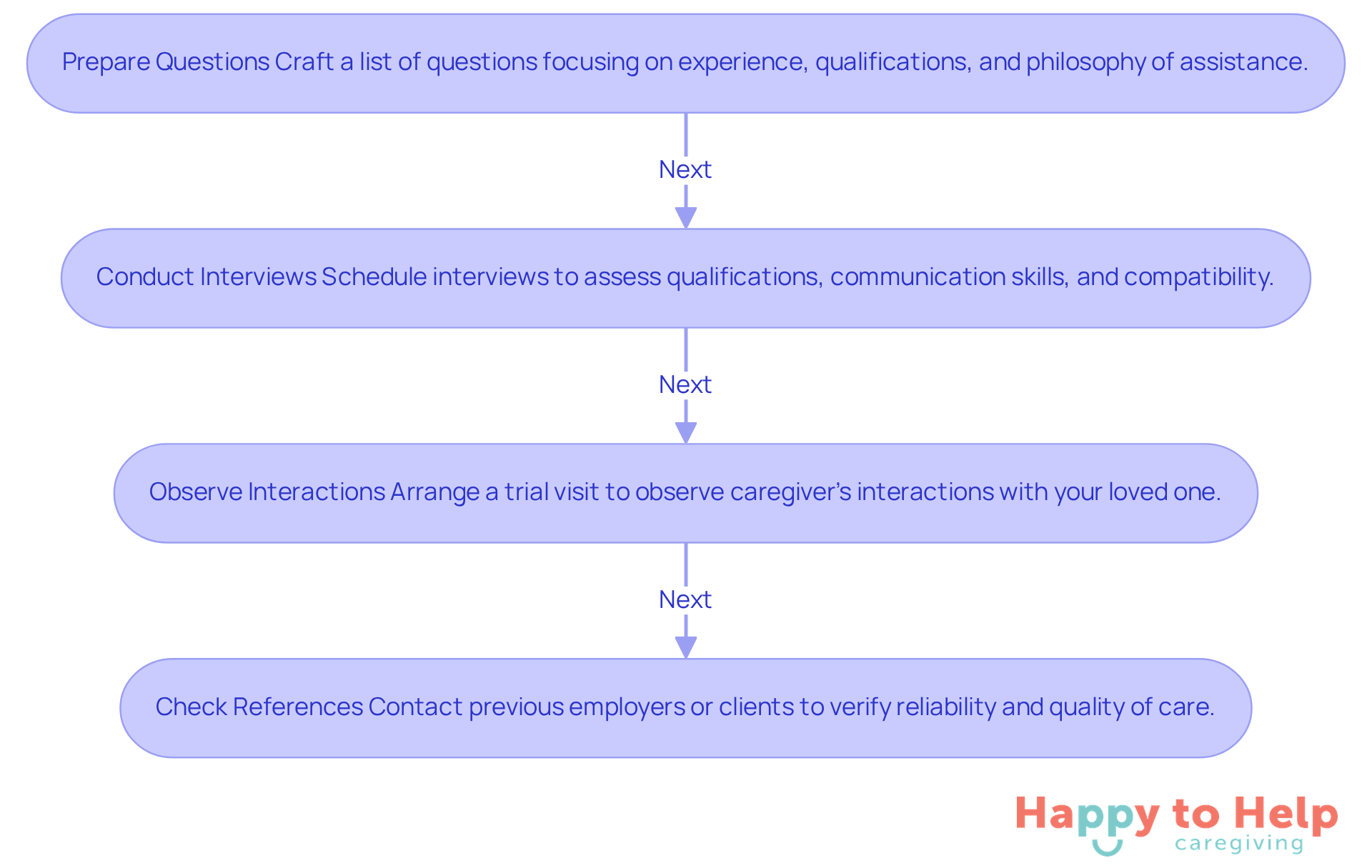
Prepare Questions: Start by crafting a comprehensive list of questions that focus on the caregiver's experience, qualifications, and philosophy of assistance. Essential inquiries include:
- What specific experience do you have with my loved one's needs?
- How do you manage emergencies or unexpected situations?
- Are you CPR certified or willing to obtain certification?
- Can you provide references from previous clients or employers?
-
Conduct Interviews: Schedule face-to-face or virtual interviews to assess not only qualifications but also communication skills and personality compatibility. Effective communication is vital in caregiving, as it fosters trust and understanding between the caregiver and the client.
-
Observe Interactions: If possible, arrange for a trial visit where you can observe the caregiver's interactions with your loved one. This firsthand observation can provide valuable insights into their demeanor and attitude toward assistance.
-
Check References: Always contact previous employers or clients to verify the caregiver's reliability and quality of care. This step is crucial, as caregiver absenteeism costs the U.S. economy an estimated $25.2 billion in lost productivity.
By following this structured evaluation process, families can ensure they select a caregiver who is not only qualified but also aligns well with the unique needs and preferences of their loved one.
Understand Costs and Payment Options
Understanding costs and payment options can be a challenge for caregivers, leading to confusion and stress when making decisions about care for their loved ones. Without clear information, families may struggle to find the right financial solutions for care from at home nurses near me, which can impact the quality of care provided.
To tackle this issue, consider the following actionable steps:
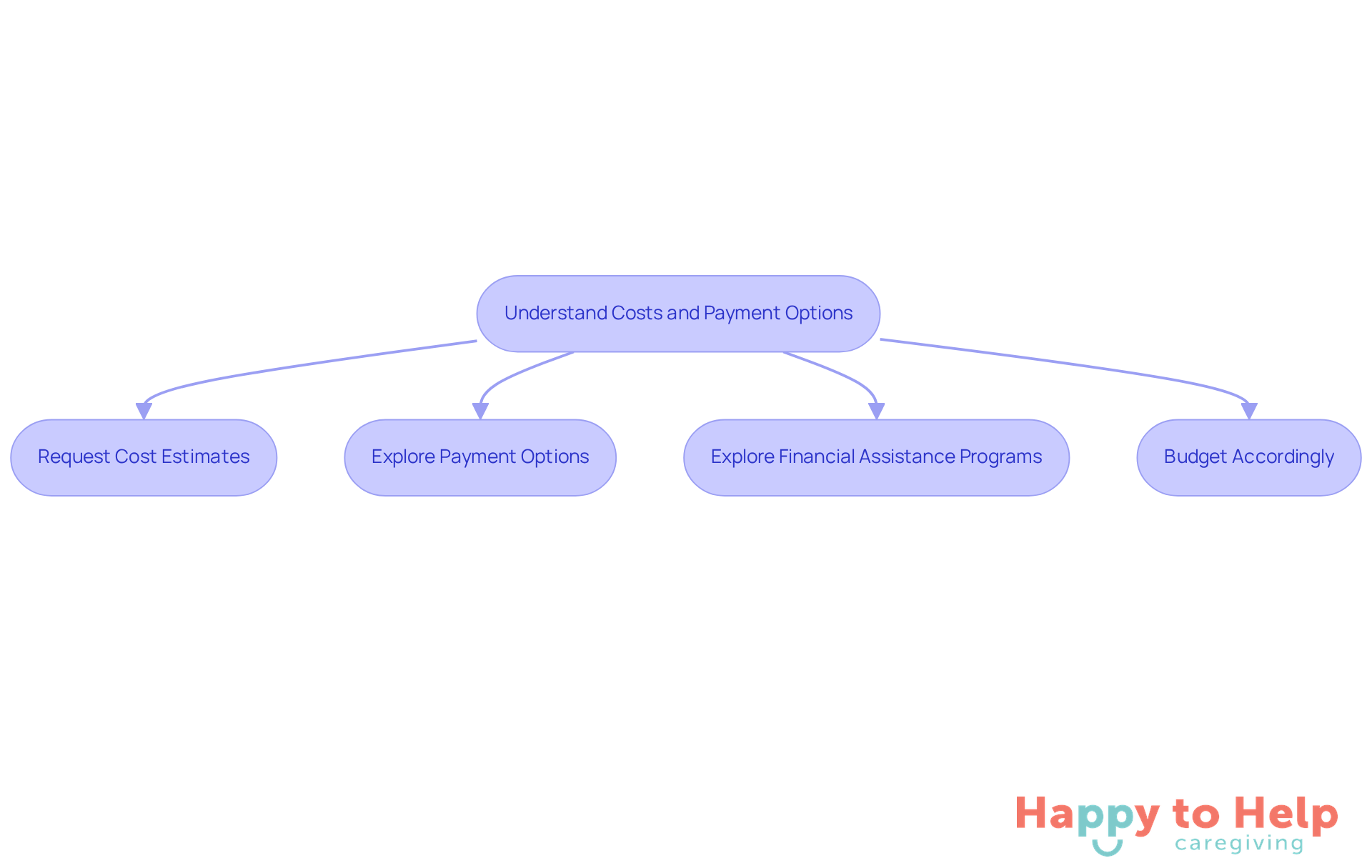
- Request Cost Estimates: Reach out to various agencies to acquire comprehensive estimates of their offerings, including hourly rates and any extra charges.
- Explore Payment Options: Investigate various payment methods, such as:
- Private Pay: Direct payment from personal funds.
- Insurance Coverage: Verify if your health insurance includes any in-home assistance.
- Medicare/Medicaid: Determine eligibility for government programs that may assist with costs.
- Explore Financial Assistance Programs: Investigate local or state initiatives that offer financial support for home assistance.
- Budget Accordingly: Create a budget that includes potential expenses for the type of assistance required, factoring in the frequency and duration of services.
By understanding these financial implications, families can make informed decisions about the care their loved ones will receive.
Your Path Forward
Finding at-home nursing services can be a daunting task for families. The complexity of this journey often leads to stress and uncertainty, especially when trying to ensure the best care for loved ones. Families face the challenge of understanding the various types of services available, which can significantly impact the comfort and quality of life for seniors.
To navigate this process effectively, families must assess their loved ones' personal care needs. Researching local services and evaluating potential caregivers is crucial. Additionally, understanding costs and payment options can alleviate financial concerns. Each of these steps is vital in securing capable and compassionate caregivers while ensuring that financial arrangements fit within the family’s budget.
The ultimate goal of seeking at-home nursing services is to enhance the quality of life for loved ones. This involves not only providing necessary medical support but also emotional care. Families are encouraged to take actionable steps, such as engaging with healthcare providers, to ensure that the care received at home is comprehensive and nurturing. By adopting this proactive approach, families can create a more fulfilling and supportive environment for those in need of care.
https://iframe.tely.ai/cta/eyJhcnRpY2xlX2lkIjogIjY5MjRmMWZiZWM0Y2FiOGU3NGVjMDBmYiIsICJjb21wYW55X2lkIjogIjY4ZWU1ZGNhNzMxNzYyNTU3ZjNjOTVjMSIsICJpbmRleCI6IG51bGwsICJ0eXBlIjogImFydGljbGUifQ==Frequently Asked Questions
What types of at-home nursing services are available?
The main types of at-home nursing services include Skilled Nursing Care, Personal Care Services, Companionship Services, and Specialized Assistance.
What does Skilled Nursing Care involve?
Skilled Nursing Care is delivered by registered nurses and includes essential medical tasks such as administering medications, providing wound care, and monitoring health conditions. It is often recommended by doctors and covered by Medicare.
What are Personal Care Services?
Personal Care Services assist with Activities of Daily Living (ADLs) like bathing, dressing, grooming, and meal preparation. Personal support aides provide hands-on help and emotional encouragement to help seniors maintain their dignity and independence.
How do Companionship Services benefit seniors?
Companionship Services offer emotional support and companionship, which can significantly reduce feelings of loneliness and isolation. Engaging in friendly conversation and enjoyable activities can lower the likelihood of depression among seniors by nearly 50%.
What is Specialized Assistance in at-home nursing?
Specialized Assistance includes support for specific health issues, such as dementia assistance or help for individuals recovering from surgery, ensuring clients receive focused attention for their unique health challenges.
Why are families increasingly choosing at-home nursing services?
Many families are opting for at-home nursing services to provide excellent medical attention in a comfortable and familiar environment, avoiding the need for facility-based care.
How can caregivers assess personal care needs for their loved ones?
Caregivers can assess personal care needs by evaluating daily activities their loved one struggles with, identifying medical needs, considering the need for emotional support, and consulting with healthcare providers for insights.
What should caregivers consider when choosing at-home nursing services?
Caregivers should consider the specific challenges their loved one faces, including daily activities, medical conditions, emotional support needs, and advice from healthcare providers to make informed decisions.
List of Sources
- Identify Types of At-Home Nursing Services
- Types of Home Care Services in 2025 (https://websterhc.com/breaking-down-the-different-types-of-home-care-services-in-2025)
- Home Health Care Trends for 2025 (https://carevoyant.com/home-health-blog/home-health-care-trends-2025)
- Top 5 Home Care Trends of 2025 - Family & Nursing Care (https://familynursingcare.com/top-5-home-care-trends-of-2025)
- The Future of Private Home Care: What to Expect in 2025 (https://anodyne-services.com/2024/08/14/the-future-of-private-home-care-what-to-expect-in-2025)
- What’s Next For Home Health As The Industry Faces Its Biggest Test Yet (https://homehealthcarenews.com/2025/10/whats-next-for-home-health-as-the-industry-faces-its-biggest-test-yet)
- Assess Your Personal Care Needs
- Caregiving Crisis: 45% Increase in Americans Providing Care (https://aarp.org/caregiving/basics/caregiving-in-us-survey-2025)
- DiNapoli: Amid Federal Funding Uncertainty, State Must Focus on Programs To Aid Seniors (https://osc.ny.gov/press/releases/2025/08/dinapoli-amid-federal-funding-uncertainty-state-must-focus-programs-aid-seniors)
- Long Term Care 2025 Trends and Outlook (https://providermagazine.com/Articles/Pages/Long Term Care 2025 Trends and Outlook.aspx)
- Most Americans expect to experience a long-term care event, and nearly 3 in 4 want in-home care if it happens to them - according to Northwestern Mutual Planning & Progress Study (https://news.northwesternmutual.com/2025-10-07-Most-Americans-expect-to-experience-a-long-term-care-event,-and-nearly-3-in-4-want-in-home-care-if-it-happens-to-them-according-to-Northwestern-Mutual-Planning-Progress-Study)
- Research Local At-Home Nursing Services
- What’s Next For Home Health As The Industry Faces Its Biggest Test Yet (https://homehealthcarenews.com/2025/10/whats-next-for-home-health-as-the-industry-faces-its-biggest-test-yet)
- Patients set to lose hospital care at home if government funding isn’t extended (https://statnews.com/2025/09/26/government-shutdown-impacts-medicare-hospital-at-home-program)
- The Future of Private Home Care: What to Expect in 2025 (https://anodyne-services.com/2024/08/14/the-future-of-private-home-care-what-to-expect-in-2025)
- 140 organizations urge Congress to extend the hospital-at-home program (https://healthcareitnews.com/news/140-organizations-urge-congress-extend-hospital-home-program)
- The Top Growth Opportunities for Home Health Care in 2025 (https://axiscare.com/blog/growth-opportunities-for-home-health-care-2025)
- Evaluate and Interview Potential Caregivers
- Caregiving Crisis: 45% Increase in Americans Providing Care (https://aarp.org/caregiving/basics/caregiving-in-us-survey-2025)
- Families Prefer In-Home Care To Senior Living – Yet Struggle To Identify Needed Support (https://homehealthcarenews.com/2025/11/families-prefer-in-home-care-to-senior-living-yet-struggle-to-identify-needed-support)
- 76 Best Caregiver Interview Questions for Agency Owners | CareAcademy (https://careacademy.com/blog/caregiver-interview-questions)
- 75 Caregiver Interview Questions for Hiring the Right Applicants (https://activatedinsights.com/articles/75-caregiver-interview-questions-for-hiring-the-right-applicants)
- Caregiver Statistics: Work and Caregiving (https://caregiver.org/resource/caregiver-statistics-work-and-caregiving)
- Understand Costs and Payment Options
- How to Pay for Home Care (https://aplaceformom.com/caregiver-resources/articles/pay-for-home-care)
- Home Care Costs in 2025: A State-by-State Guide (https://aplaceformom.com/caregiver-resources/articles/in-home-care-costs)
- Paying for In-Home Care (https://rightathome.net/san-mateo-palo-alto/resources/cost-of-home-care)
- CMS Announces Medicare Home Health Proposed Payment Rates and Policies for 2025 (https://asha.org/news/2024/cms-announces-medicare-home-health-proposed-payment-rates-and-policies-for-2025?srsltid=AfmBOoqRyXiAYR\_\_QCRSeML4a1vyFDLgB9wyJI4HxU3vg7nCLGmC3v5n)
- The Cost of In-Home Caregivers May Surprise You (https://health.usnews.com/senior-care/caregiving/articles/how-much-do-in-home-caregivers-cost)