
The Importance of Find Home Care Nurses Near Me: Steps
Navigating the complex world of home care can feel overwhelming for family caregivers. When the well-being of a loved one is at stake, the pressure can be immense. It’s crucial to find qualified home care nurses nearby, as this not only ensures that those in need receive the right support but also helps alleviate the stress that often accompanies such decisions.
So, what steps can caregivers take to assess their loved ones' needs and preferences effectively? How can they identify the best local services? This guide offers a roadmap to simplify the process, empowering families to make informed choices in securing compassionate care. Remember, you’re not alone in this journey; there are resources and support available to help you every step of the way.
Assess Care Needs and Preferences
-
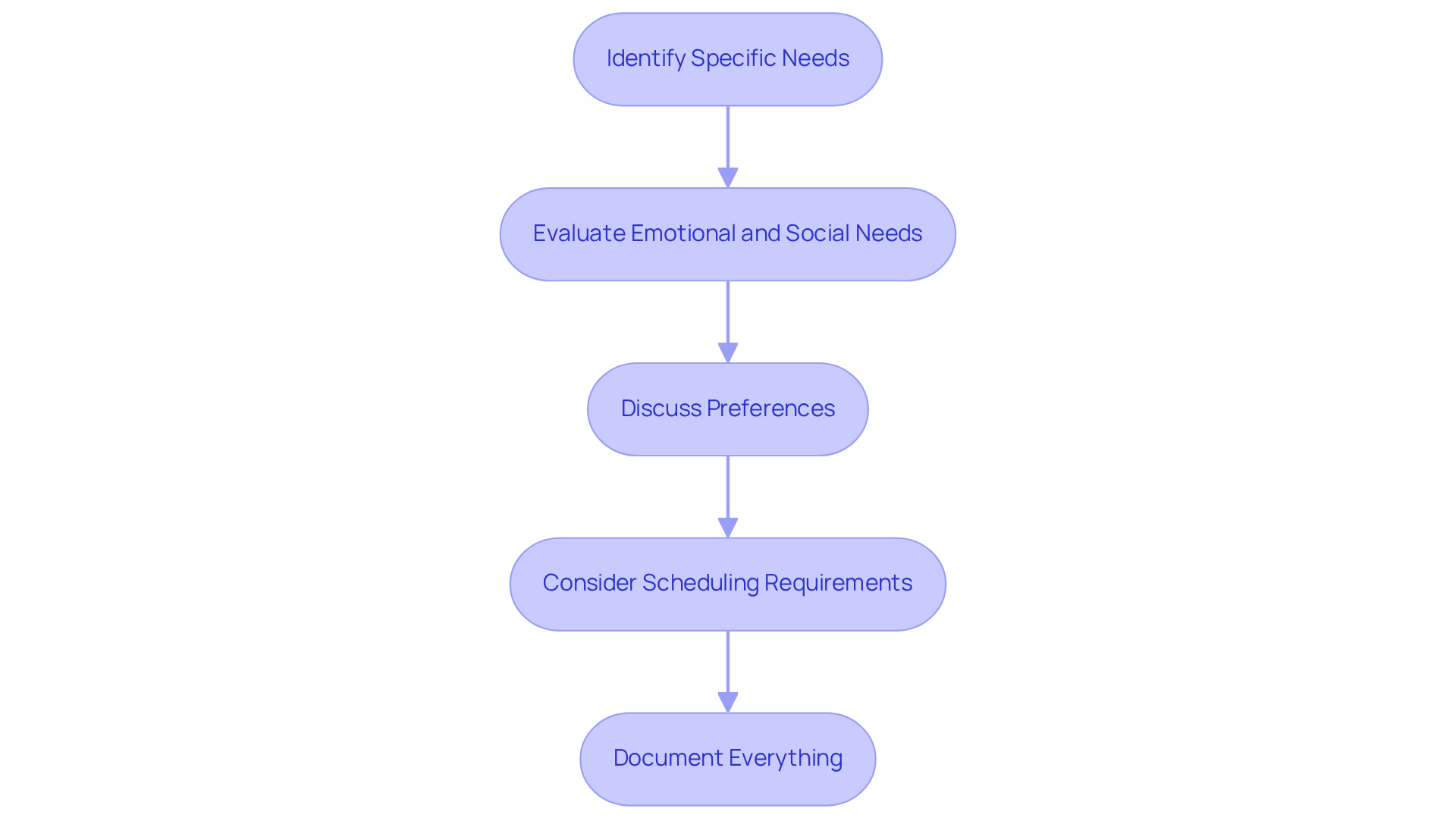
Identify Specific Needs: Begin by recognizing the daily activities your loved one finds challenging, like bathing, dressing, meal preparation, or managing medications. It’s also important to consider any medical conditions that may require specialized care, such as diabetes or dementia.
-
Evaluate Emotional and Social Needs: Take a moment to assess how much companionship your dear one truly needs. Do they thrive on social interactions, or do they find comfort in solitude? Understanding their emotional requirements is vital in choosing a provider who can offer the right level of support.
-
Discuss Preferences: Have an open conversation with your loved one about their preferences for caregivers. This includes aspects like gender, age, and personality traits. Involving them in this process not only respects their wishes but also helps them feel more comfortable.
-
Consider Scheduling Requirements: Think about how often and when assistance is needed. Is full-time support necessary, or would part-time help suffice? Perhaps just a few hours each week would do. Clarifying this will help narrow down your options when searching for services.
-
Document Everything: Create a detailed document that outlines all the needs and preferences you've identified. This will serve as a helpful reference when discussing options with potential caregivers or organizations.
Research Home Care Services in Your Area
-
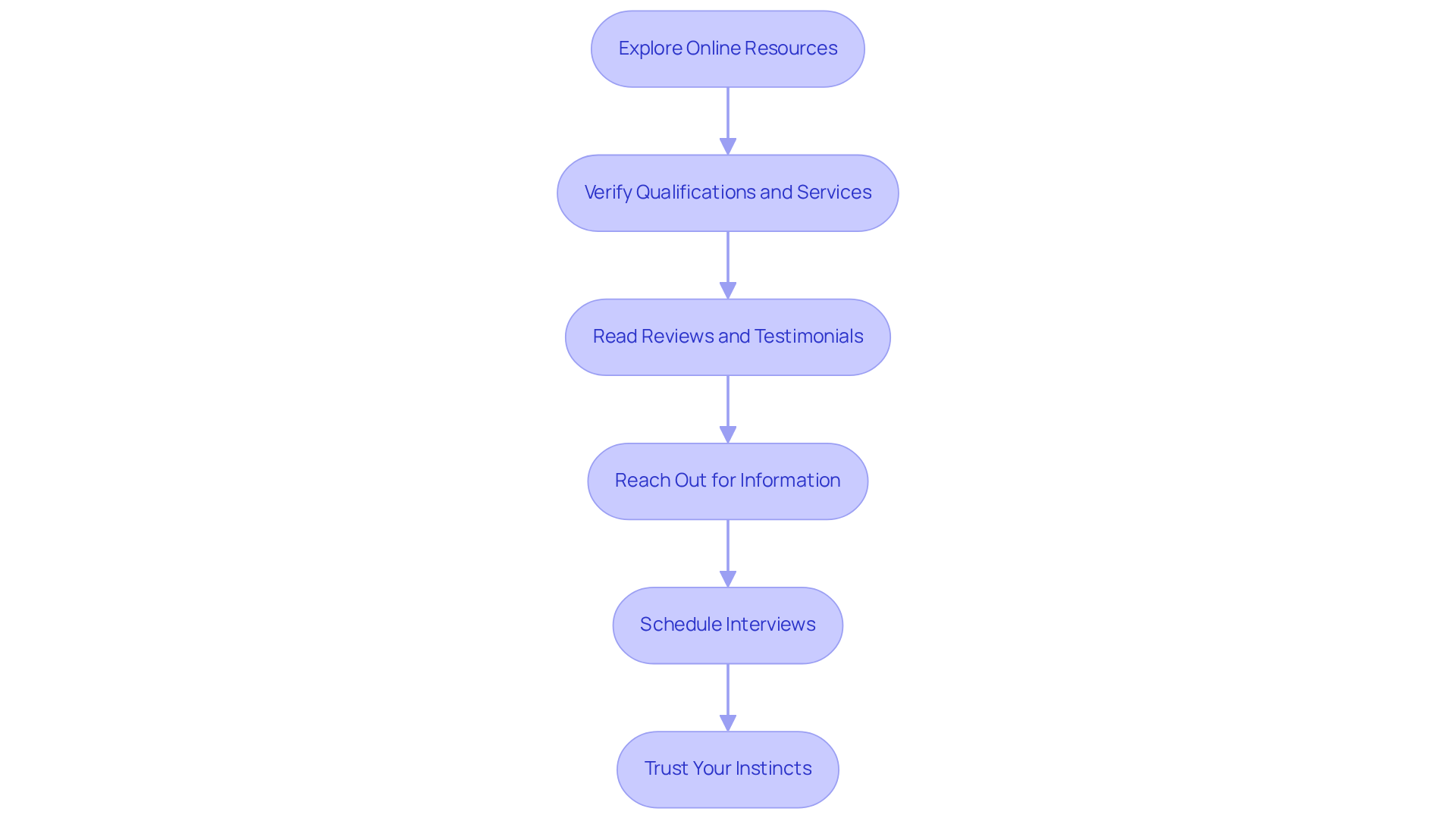
Explore Online Resources: Begin your journey by searching through online directories and review sites like Yelp, Care.com, or A Place for Mom. These platforms can be a lifeline, offering lists of home care nurses near me, complete with heartfelt reviews and ratings from other families. With around 12,000 Medicare-registered home assistance organizations in the U.S., taking the time to research is essential to find home care nurses near me who truly understand your needs.
-
Verify Qualifications and Services: It’s vital to find home care nurses near me that offer the specific services your loved one needs. Take a moment to check their credentials - licenses, certifications, and insurance are all important. Ensure they have trained staff who can provide the level of assistance required. Remember, 91% of home care clients express satisfaction with their caregivers, underscoring the importance of having qualified home care nurses near me who can deliver compassionate care.
-
Read Reviews and Testimonials: Listen to the voices of other families. Look for organizations that have received positive feedback, particularly those that highlight their reliability, quality of service, and promptness. In fact, 89% of patients were satisfied with home care nurses near me in 2022, reinforcing the value of reading testimonials to guide your decision.
-
Reach Out for Information: Don’t hesitate to contact potential firms to ask about their services, availability, and pricing. Inquire about their caregiver screening process and training programs to ensure they uphold high standards. It’s worth noting that 83.5% of home care nurses near me operate as for-profit businesses, which can influence their practices.
-
Schedule Interviews: Once you’ve narrowed down your options, arrange interviews with the firms on your shortlist. Prepare thoughtful questions based on your loved one’s needs and preferences. This is also a chance to gauge how responsive and accommodating the organization is to your requirements.
-
Trust Your Instincts: After gathering all the information, trust your gut feeling when making a decision. Choose an agency that feels right for your loved one, ensuring they receive the compassionate and individualized support provided by home care nurses near me that they truly deserve. The home healthcare sector is projected to grow at a compound annual growth rate (CAGR) of 7.96% from 2024 to 2030, highlighting the increasing demand for quality support solutions.
Interview Potential Caregivers
-
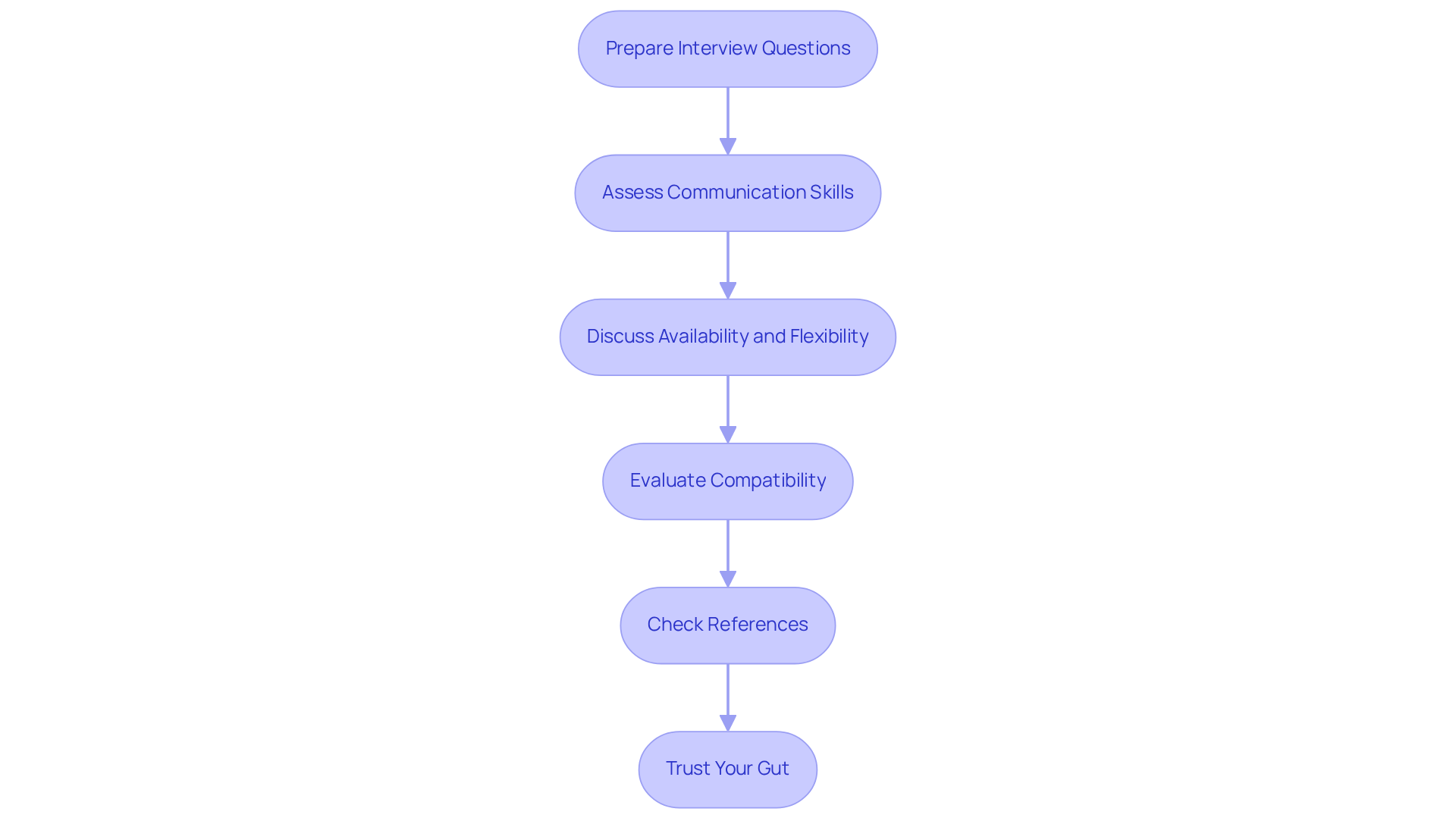
Prepare Interview Questions: Start by crafting a thoughtful list of questions that delve into the caregiver's experience, training, and approach to support. You might ask: What experience do you have with specific conditions? How do you handle emergencies? What activities do you engage clients in? These inquiries can help you gauge their suitability for your loved one.
-
Assess Communication Skills: Pay close attention to how the provider communicates. Are they clear, compassionate, and attentive? Effective communication is vital for building trust and ensuring quality support. Research shows that caregivers with strong communication skills significantly enhance the quality of care, fostering deeper connections with clients.
-
Discuss Availability and Flexibility: It's important to confirm the caregiver's availability and their willingness to adapt to your family member's schedule. Flexibility can make a world of difference in providing consistent and reliable support.
-
Evaluate Compatibility: During the interview, observe how well the provider interacts with your loved one. Do they seem to connect? Compatibility can greatly impact the quality of service and the comfort level of the client, making it essential to find someone who resonates well with them.
-
Check References: After the interview, don’t hesitate to ask for references from previous clients or employers. Reaching out to these references can provide valuable insights into the caregiver's reliability and the quality of care they offer.
-
Trust Your Gut: Finally, trust your instincts. Choose a caregiver who not only meets the qualifications but also feels like a good fit for your loved one. Your intuition is a powerful guide in this important decision.
Taking the Next Steps
Finding the right home care nurses is a vital step for family caregivers who want to provide the best support for their loved ones. It’s not just about hiring someone; it’s about ensuring that the person you choose truly understands and resonates with your family’s needs. This guide highlights the importance of thorough assessment, research, and personal connection in the hiring process. By grasping specific care needs, preferences, and the emotional aspects of caregiving, families can select caregivers who meet both the technical requirements and the emotional ones.
The article outlines a structured approach to finding home care nurses, starting with a detailed assessment of care needs and preferences. Caregivers are encouraged to utilize online resources for research, verify qualifications, read reviews, and conduct interviews. Each step is designed to empower families to make informed decisions, ensuring that the chosen caregivers can deliver compassionate, personalized care. Trusting one’s instincts during this process is crucial for achieving a successful match.
Ultimately, the journey to find home care support is about more than just filling a role; it’s about creating a nurturing environment that enhances the quality of life for both the caregiver and the care recipient. Families are urged to take these steps seriously, as the right home care nurse can profoundly impact their loved one’s daily experience. Engaging in this process thoughtfully will not only lead to better care but also contribute to the overall well-being of the family dynamic.
https://iframe.tely.ai/cta/eyJhcnRpY2xlX2lkIjogIjY5MTdjMjg2YmE4YzYwY2YzMzY2OGE1MiIsICJjb21wYW55X2lkIjogIjY4ZWU1ZGNhNzMxNzYyNTU3ZjNjOTVjMSIsICJpbmRleCI6IG51bGwsICJ0eXBlIjogImFydGljbGUifQ==Frequently Asked Questions
What should I identify when assessing care needs for my loved one?
You should recognize specific daily activities that your loved one finds challenging, such as bathing, dressing, meal preparation, or managing medications, as well as any medical conditions that may require specialized care, like diabetes or dementia.
How can I evaluate my loved one's emotional and social needs?
Assess how much companionship your loved one needs by observing if they thrive on social interactions or prefer solitude. Understanding their emotional requirements is crucial for selecting the right level of support.
Why is it important to discuss caregiver preferences with my loved one?
Discussing caregiver preferences, including aspects like gender, age, and personality traits, respects your loved one’s wishes and helps them feel more comfortable with the care they will receive.
What should I consider regarding scheduling requirements for care?
Consider how often and when assistance is needed. Determine if full-time support is necessary, if part-time help suffices, or if only a few hours each week are required. This clarification will help narrow down service options.
Why is it important to document care needs and preferences?
Documenting all identified needs and preferences creates a detailed reference that can be helpful when discussing options with potential caregivers or organizations.