
For families in our service areas
For families in our service areas, this guide explains dementia care and how non-medical in-home caregiving can support care planning in East Idaho, Treasure Valley & Magic Valley, Northern Wasatch, North Central West Virginia, and Northeast Ohio.
Understanding Find Local Dementia Care Near Me: A
Finding appropriate dementia care can feel like navigating a labyrinth. With over 55 million individuals worldwide facing cognitive decline, the stakes are high. This challenge is not just emotional; it’s also financial, as the costs associated with dementia care are projected to soar into the trillions.
Families often grapple with the pressing question: how can they ensure their loved ones receive the best support without breaking the bank? Balancing quality care with affordability is crucial. This article serves as a vital guide, illuminating the various types of dementia care services available and offering practical strategies for locating local providers. By understanding the landscape of dementia care, families can make informed decisions that prioritize both quality and cost-effectiveness.
Identify Types of Dementia Care Services Available
Finding the right dementia care near me can be a daunting task for caregivers. With over 55 million individuals affected by cognitive decline worldwide, and a new case emerging every 3 seconds, the urgency for effective support solutions is clear. The financial implications are staggering, with costs related to cognitive decline exceeding US$ 1.3 trillion annually, projected to rise to US$ 2.8 trillion by 2030. This highlights the pressing need for tailored care options that can alleviate the burden on families.
To help navigate this complex landscape, here are several types of dementia care services available:
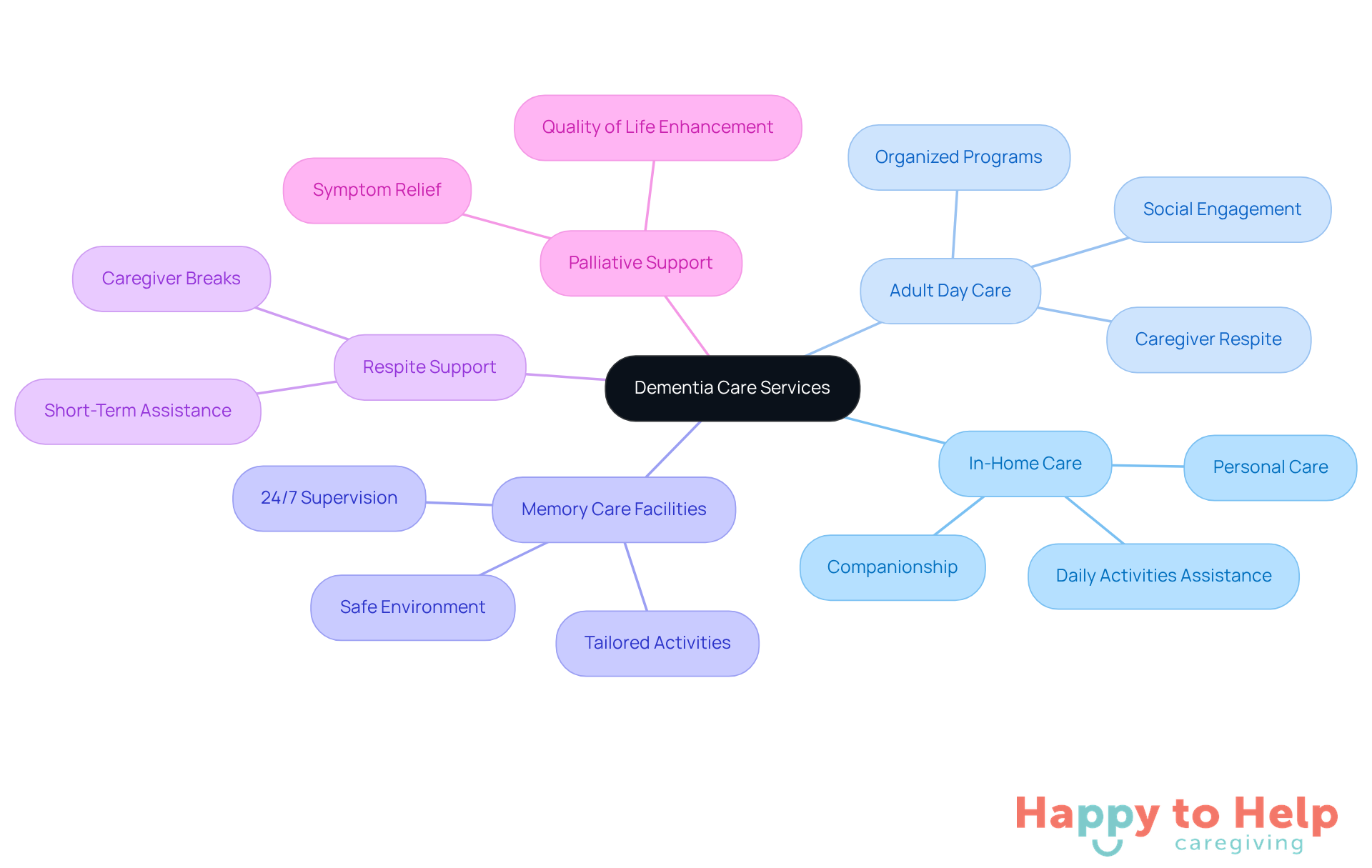
- In-Home Care: Caregivers provide assistance in the comfort of the patient's home, offering personal care, companionship, and help with daily activities. This service enables seniors to maintain their independence while receiving necessary support.
- Adult Day Care: These centers offer organized programs throughout the day, providing social engagement and activities for individuals with cognitive impairments. They also give primary caregivers a much-needed respite, enriching the lives of participants.
- Memory Care Facilities: Specialized residential facilities designed to create a safe environment for individuals with dementia. They offer tailored activities and 24/7 supervision to ensure safety and engagement.
- Respite Support: Short-term assistance options that allow primary caregivers to take a break, ensuring their family members are well cared for during their absence. This is vital for the well-being of caregivers.
- Palliative Support: Focused on relieving symptoms and stress associated with serious illness, this type of assistance can be integrated with other services to enhance quality of life.
Understanding these options will help you determine which type of support, including dementia care near me, aligns best with your loved one's needs and preferences. As Robert Young, General Manager, states, "The beauty of this program is that families don’t need a formal cognitive impairment diagnosis to qualify," emphasizing the accessibility of these support services.
Locate Local Dementia Care Providers
Finding dementia care near me can be a daunting task for caregivers. The challenge lies in navigating various options to ensure that loved ones receive the best possible assistance. However, with the right resources for dementia care near me, this process can become much more manageable.
Effective Methods to Find Care Providers:
-
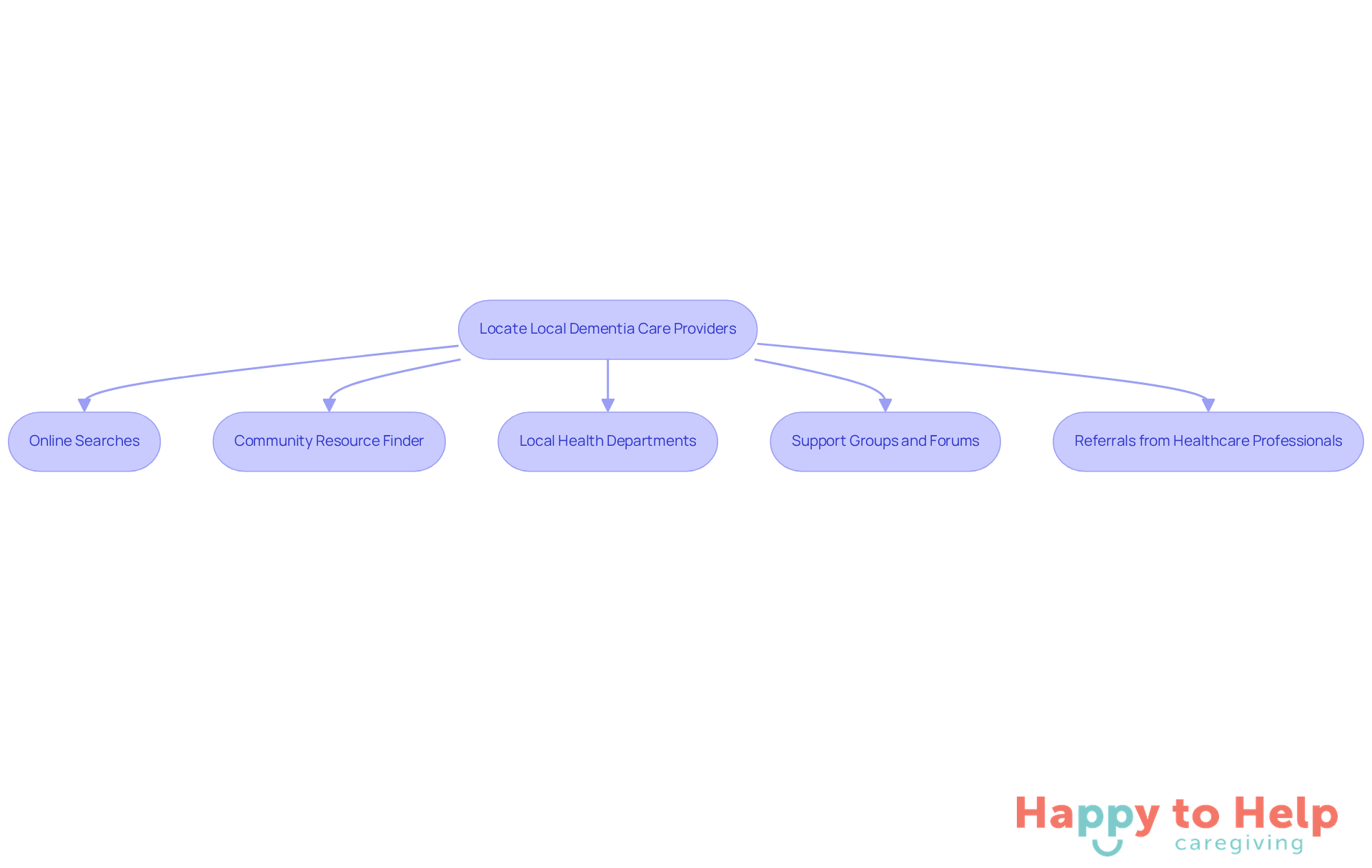
Online Searches: Start by utilizing search engines with keywords like "dementia assistance near me" or "memory support facilities in [your city]." This approach can yield a variety of results tailored to your location, helping you discover dementia care near me.
-
Community Resource Finder: Websites such as the Community Resource Finder allow you to search for licensed senior service providers based on your area. This tool compiles information about different service options, making it easier to identify suitable facilities.
-
Local Health Departments: Many local health departments maintain lists of approved care providers. Contacting them can offer valuable suggestions and insights into trustworthy options in your community.
-
Support groups and forums: Engaging in nearby caregiver support groups can provide personal suggestions and insights into the best options for dementia care near me. These groups often share experiences and can guide you toward trusted providers.
-
Referrals from Healthcare Professionals: Consult with your family member's physician or healthcare provider for recommendations on reliable dementia support options. Healthcare professionals can provide insights based on their experience with local facilities.
By utilizing these resources, you can compile an extensive list of potential providers to assess further. This ensures that your loved one receives the best possible care. Additionally, consider that there are 144 memory support communities in Houston, TX, with an average monthly cost of $5,306 for memory support services. Personal experiences, such as a resident stating, "I would strongly recommend Sugar Land Brookdale," can also guide your decision-making process.
Understand Costs and Payment Options for Care
When considering dementia care near me, understanding the associated costs and available payment options is crucial.
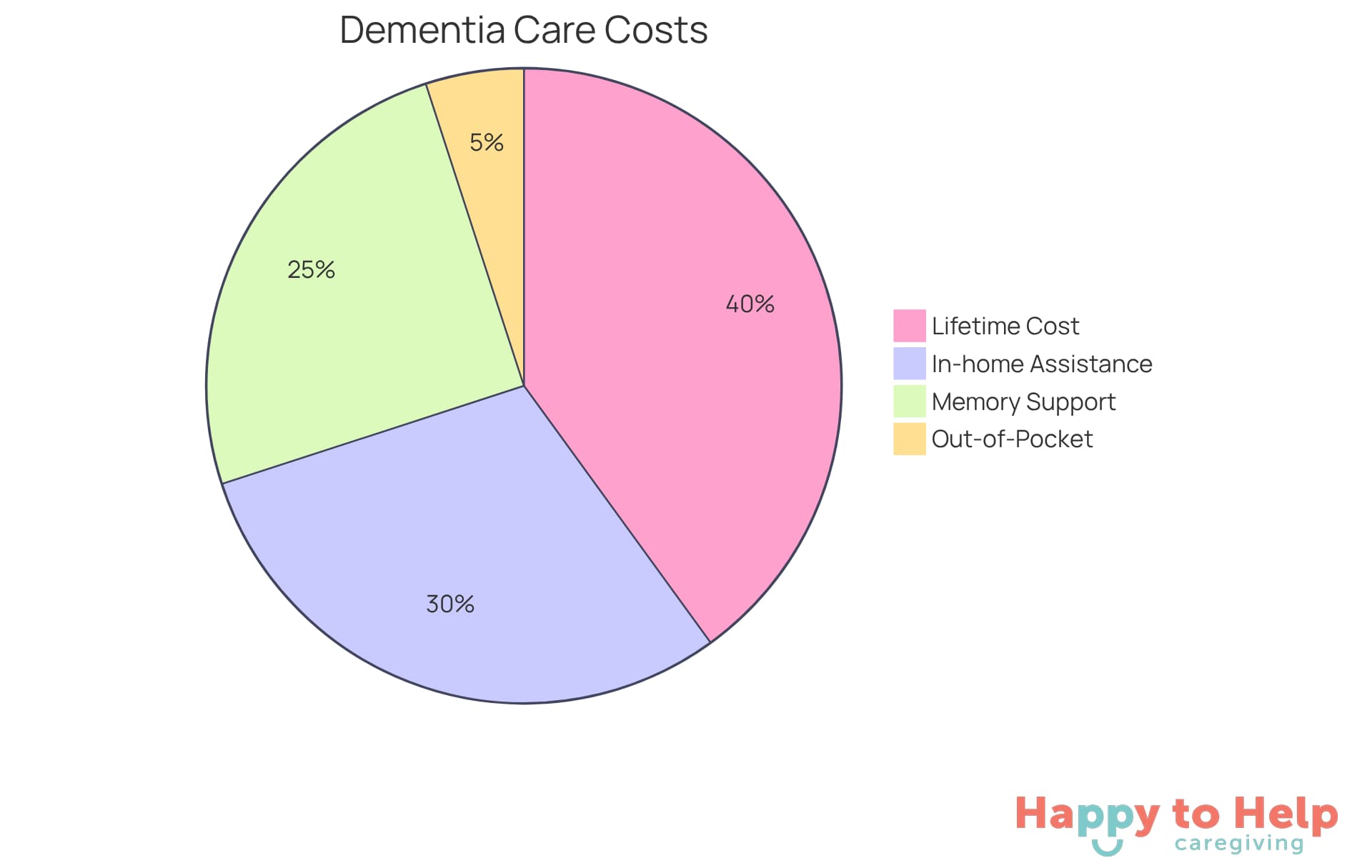
The financial burden of dementia care near me can be overwhelming. In-home assistance typically ranges from $20 to $40 per hour, while memory support facilities may charge between $4,000 and $8,000 monthly, depending on the level of support required. The lifetime cost of caring for someone with cognitive decline is estimated at $405,262 in 2024 currency, with 70% of these expenses often paid out of pocket by families.
The Agitation: Many caregivers express regret for not seeking help sooner, highlighting the emotional strain and financial stress that can arise from a lack of understanding about available benefits. It's essential to verify if your loved one’s health insurance covers any portion of dementia treatment expenses. For instance, Medicare may include certain home health care options if specific conditions are met, such as nursing home stays for up to 100 days after hospitalization.
The Solution: Fortunately, there are several options to alleviate these costs. For those who qualify, Medicaid can significantly assist with expenses for long-term support, including in-home assistance and nursing facilities. However, proposed cuts to Medicaid could threaten access to these vital services, making it imperative to stay informed about potential changes.
Additionally, Veterans Benefits may be available for veterans and their spouses, helping to reduce the costs of dementia treatment. These benefits can cover in-home assistance and long-term residential support tailored to their unique needs.
Lastly, many non-profit organizations and local government initiatives offer financial assistance programs for families struggling to afford services. Community resources for dementia care near me can greatly ease the financial burden and provide essential support for families affected by dementia.
Understanding these financial aspects will empower you to make informed decisions and effectively plan for your family member's care.
Plan for Future Care Needs and Preferences
Effective planning for future care needs involves several key steps:
-
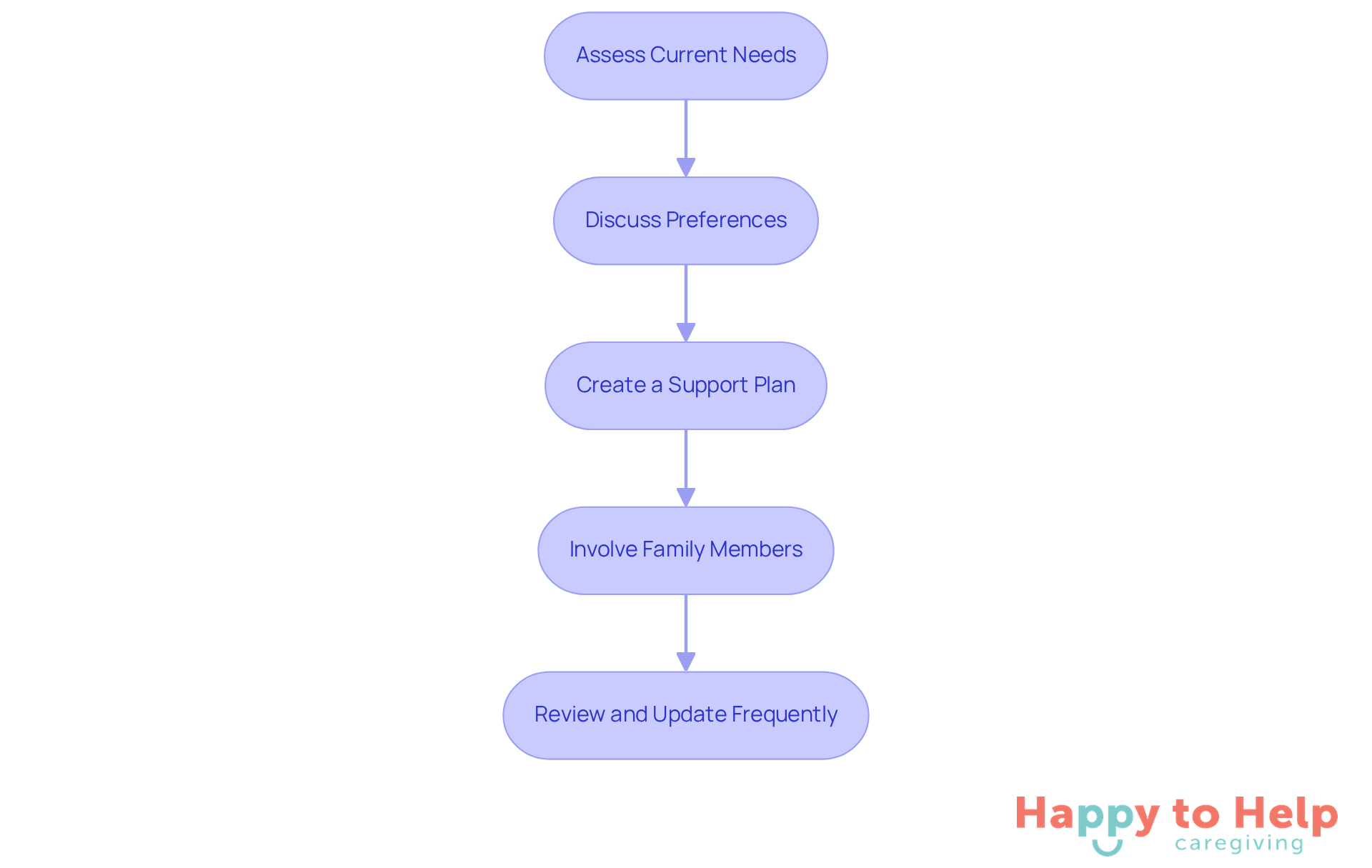
Problem: Assess Current Needs
Regularly evaluating your family member's health status and support requirements is crucial. Almost 7 million Americans aged 65 and above are experiencing dementia, and this figure is expected to double by 2060. This emphasizes the increasing necessity for efficient planning. -
Agitate: Discuss Preferences
Engaging in open conversations with your loved one about their treatment preferences can significantly enhance their quality of life. Understanding where they wish to receive assistance and what activities they enjoy is vital. Research shows that engaging patients in discussions about their treatment leads to improved outcomes and satisfaction. Statistics indicate that family participation in planning can result in more customized and effective solutions. -
Solution: Create a Support Plan
Develop a comprehensive support plan that outlines necessary services, preferred providers, and specific wishes regarding assistance. A well-organized strategy for dementia care near me can assist families in managing the intricacies of dementia support, ensuring that all facets of the individual's requirements are met. Recent advancements, such as the approval of blood tests for Alzheimer's in 2025, can assist in more precise evaluations of support requirements. -
Involve Family Members
Engage family members in discussions about support preferences and responsibilities. Joint planning promotes a supportive atmosphere and ensures that everyone is synchronized in their approach to support. -
Review and Update Frequently
As dementia advances, consistently reviewing and revising the support plan is vital to reflect evolving needs and preferences. This adaptability is essential for preserving the quality of support and ensuring that it remains aligned with the individual's changing situation.
By planning ahead, families can ensure that their loved ones receive the most appropriate and compassionate dementia care near me as their needs evolve, ultimately enhancing their overall well-being.
Moving Forward with Find Local Dementia Care Near Me: A
Finding the right dementia care services is a significant challenge that can greatly affect the well-being of individuals with cognitive decline and their caregivers. This issue can lead to stress and uncertainty for families, as they navigate the complexities of care options available.
To address this, understanding the various types of dementia care - ranging from in-home assistance to specialized memory care facilities - is essential. Families can make informed decisions that cater to their loved ones' unique needs by exploring these options.
This guide outlines effective strategies for locating local dementia care providers. Families can leverage online resources, engage with community support groups, and consult healthcare professionals to find suitable services. Additionally, a thorough understanding of the financial aspects associated with dementia care, including costs and available payment options, empowers families to navigate potential challenges effectively.
Planning for future care needs is equally vital. It ensures that preferences are respected and that appropriate support is in place as circumstances evolve.
Ultimately, the journey to finding local dementia care services requires a proactive approach, but the rewards are immeasurable. Families are encouraged to take the necessary steps to secure compassionate care for their loved ones, ensuring they receive the support needed to maintain their dignity and quality of life. By utilizing the resources and insights provided in this guide, caregivers can forge a path toward effective and personalized dementia care, fostering a more supportive environment for all involved.
https://iframe.tely.ai/cta/eyJhcnRpY2xlX2lkIjogIjY5NDFmMzViNDBkMmQ3ZTg4Njk3YTE2NiIsICJjb21wYW55X2lkIjogIjY4ZWU1ZGNhNzMxNzYyNTU3ZjNjOTVjMSIsICJpbmRleCI6IG51bGwsICJ0eXBlIjogImFydGljbGUifQ==Frequently Asked Questions
What is the current global situation regarding dementia?
Over 55 million individuals are affected by cognitive decline worldwide, with a new case emerging every 3 seconds.
What are the financial implications of dementia care?
The costs related to cognitive decline exceed US$ 1.3 trillion annually and are projected to rise to US$ 2.8 trillion by 2030.
What types of dementia care services are available?
Several types of dementia care services include in-home care, adult day care, memory care facilities, respite support, and palliative support.
What is in-home care for dementia patients?
In-home care involves caregivers providing assistance in the patient's home, offering personal care, companionship, and help with daily activities, allowing seniors to maintain their independence.
What does adult day care provide for individuals with dementia?
Adult day care centers offer organized programs that include social engagement and activities for individuals with cognitive impairments, while also giving primary caregivers a much-needed respite.
What are memory care facilities?
Memory care facilities are specialized residential environments designed to ensure safety and engagement for individuals with dementia, offering tailored activities and 24/7 supervision.
What is respite support in dementia care?
Respite support provides short-term assistance options that allow primary caregivers to take a break, ensuring their family members are well cared for during their absence.
What is the focus of palliative support in dementia care?
Palliative support focuses on relieving symptoms and stress associated with serious illness, and can be integrated with other services to enhance quality of life.
Do families need a formal diagnosis to access dementia care services?
No, families do not need a formal cognitive impairment diagnosis to qualify for these support services, making them more accessible.
List of Sources
- Identify Types of Dementia Care Services Available
- HomeAide Home Care Announced Partnership to Bring Medicare Dementia Care (https://marshfieldnewsherald.com/press-release/story/285693/homeaide-home-care-announced-partnership-to-bring-medicare-dementia-care)
- ADI - Dementia statistics (https://alzint.org/about/dementia-facts-figures/dementia-statistics)
- In Home Caregiver News • At Home Caregivers (https://athomecaregivers.com/news)
- Caresify Home Care Addresses Growing Dementia Care Crisis With Enhanced Training and Certified Practitioner Teams (https://nbc4i.com/business/press-releases/ein-presswire/872520918/caresify-home-care-addresses-growing-dementia-care-crisis-with-enhanced-training-and-certified-practitioner-teams)
- New Medicare program offers much-needed relief for caregivers of dementia patients (https://finance.yahoo.com/news/new-medicare-program-offers-much-needed-relief-for-caregivers-of-dementia-patients-203450020.html)
- Locate Local Dementia Care Providers
- The Best Memory & Dementia Care Facilities in Richmond, Texas | US News (https://health.usnews.com/best-senior-living/memory-care/texas/richmond)
- Memory Care | Alzheimer's and Dementia Home Care Services in Richmond, TX (https://homeinstead.com/home-care/usa/tx/houston/252/service-area/richmond-tx/alzheimers-dementia-care)
- Houston & Southeast Texas Chapter (https://alz.org/texas)
- Finding Dementia Care and Local Services | Alzheimers.gov (https://alzheimers.gov/life-with-dementia/find-local-services)
- Best Memory Care Facilities Facilities in Houston, TX for 2025 (https://caring.com/senior-living/memory-care-facilities/texas/houston)
- Understand Costs and Payment Options for Care
- Medicare offering dementia caregiver benefit: It's a start, advocates say (https://naplesnews.com/story/news/local/2025/08/20/medicare-now-offers-2500-dementia-caregiving-stipend-how-it-helps/84334583007)
- Paying for Dementia Care | Alzheimer's Association (https://alz.org/help-support/caregiving/financial-legal-planning/paying-for-care)
- Cuts to Medicaid will set the U.S. back 35 years in dementia care (https://statnews.com/2025/03/25/alzheimers-demetia-medicaid-services-support-pace-budget-cuts-caregivers)
- Medicare covers at-home nursing care for dementia patients for the first time this year (https://tampabay.com/news/health/2025/08/14/medicare-covers-at-home-nursing-care-dementia-patients-first-time-this-year)
- Plan for Future Care Needs and Preferences
- Memory Care Executive Forecast 2025: Memory Care Sector ‘Poised for Evolution’ (https://seniorhousingnews.com/2025/02/17/memory-care-executive-forecast-2025-memory-care-sector-poised-for-evolution)
- Five Reasons to Feel Hopeful About Dementia in 2025 - Alden Town Manor (https://aldentownmanor.com/five-reasons-to-feel-hopeful-about-dementia-in-2025)
- National Plan to Address Alzheimer's Disease (https://aspe.hhs.gov/collaborations-committees-advisory-groups/napa/napa-documents/napa-national-plan)
- 5 Advances in Alzheimer’s Care and Treatment in 2025 (https://thecutoffnews.com/online\_features/health\_and\_wellness/5-advances-in-alzheimer-s-care-and-treatment-in-2025/article\_a8a50cb4-5b85-59e9-a48e-8453f6833914.html)
- 2025 NIH Alzheimer’s Disease and Related Dementias Research Progress Report: Advances and Achievements (https://nia.nih.gov/about/2025-nih-dementia-research-progress-report)