
For families in our service areas
For families in our service areas, this guide explains dementia care and how non-medical in-home caregiving can support care planning in East Idaho, Treasure Valley & Magic Valley, Northern Wasatch, North Central West Virginia, and Northeast Ohio.
Understanding Find Local Dementia Care Services Near
Navigating the complexities of dementia care can feel overwhelming for families seeking the best support for their loved ones. With over 55 million individuals affected by cognitive decline globally, understanding the specific needs associated with different types of dementia is crucial for effective caregiving.
The implications of this challenge are significant. Families often struggle to find tailored support options that enhance the quality of life for those affected while also providing peace of mind. So, how can caregivers ensure that the chosen care solution genuinely meets the unique challenges posed by dementia?
This guide offers a step-by-step approach to finding local dementia care services. By empowering caregivers with practical solutions, we aim to alleviate some of the stress associated with caregiving and improve the overall experience for both caregivers and their loved ones.
Understand Dementia and Its Care Needs
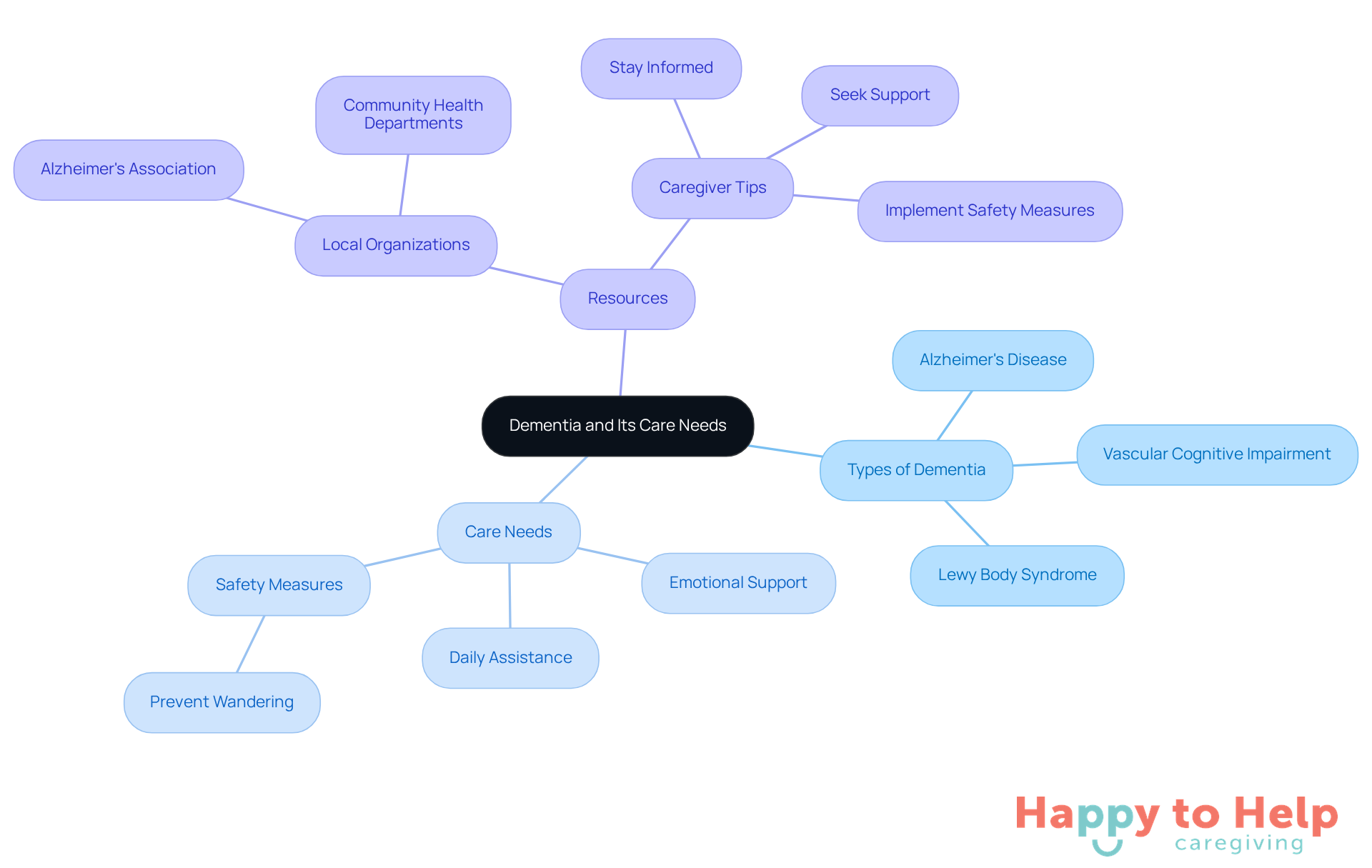
Dementia encompasses a range of brain disorders that disrupt memory, thinking, and social abilities, significantly impacting daily life. Understanding the specific type of cognitive decline - such as Alzheimer's disease, vascular cognitive impairment, or Lewy body syndrome - is essential. Each variation presents unique challenges that caregivers must navigate.
The implications of these disorders can be profound. Care needs may include assistance with daily activities, emotional support, and safety measures to prevent wandering. Familiarizing yourself with common symptoms like memory loss, confusion, and behavioral changes is crucial for preparing for the caregiving journey.
To support caregivers, resources such as the Alzheimer's Association and community health departments offer valuable insights into dementia near me. Here are some actionable tips:
- Stay informed about the specific type of dementia affecting your loved one.
- Seek support from local organizations and caregiver groups focused on dementia near me.
- Implement safety measures at home to reduce the risk of wandering.
By understanding the challenges and utilizing available resources, caregivers can better manage the complexities of dementia care.
Identify Specific Care Requirements
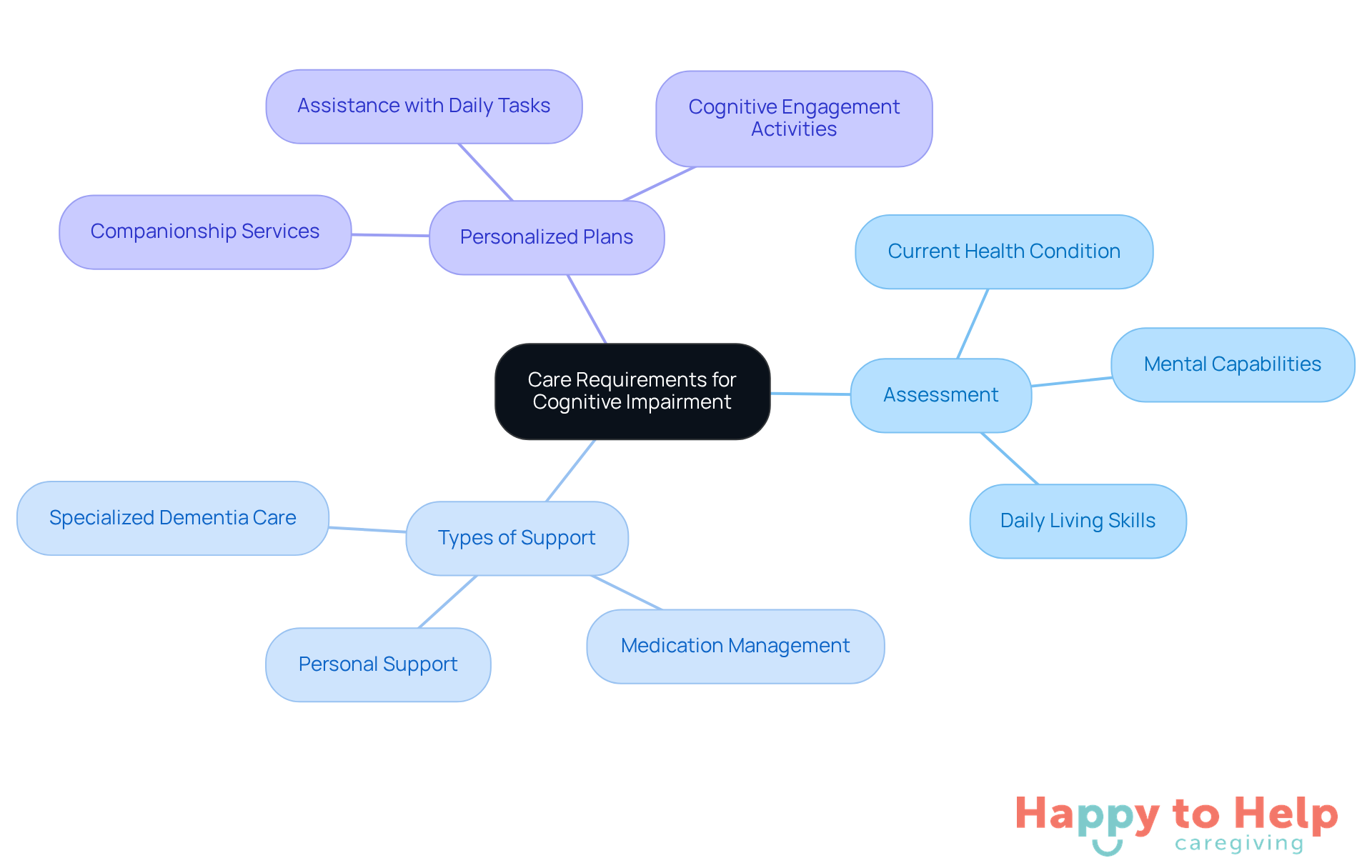
To efficiently determine particular support needs for individuals with cognitive impairment, it’s crucial to start by assessing their current health condition, mental capabilities, and daily living skills. The problem is clear: many individuals express a strong desire to remain in their own homes rather than transition to facility-based support. Research shows that nearly 80% of seniors prefer in-home assistance, as it fosters a sense of security and comfort in familiar surroundings. With cognitive decline affecting over 55 million people worldwide and nearly 10 million new cases reported each year, the need for customized support solutions is more pressing than ever.
Engaging in open conversations with healthcare providers is essential to determine the level of assistance required. This may include:
- Personal support
- Medication management
- Specialized dementia care
Utilizing evaluation tools available through community health organizations or reputable online sources can help create a comprehensive profile of needs. These tools clarify the specific types of support necessary, ensuring that plans are tailored to individual circumstances.
For instance, personalized support plans might encompass:
- Companionship services
- Assistance with daily tasks
- Structured cognitive engagement activities aimed at enhancing mental function
Such tailored approaches not only improve the quality of support but also significantly boost the overall well-being of individuals with dementia near me. As one healthcare provider noted, "Developing a tailored treatment plan is crucial; it enables us to meet the distinct needs of each patient, guaranteeing they receive the assistance that genuinely connects with them." This comprehensive information will be vital when exploring and selecting appropriate support options.
Research Local Dementia Care Services
Finding the right memory support options can be a daunting task for caregivers. With nearly 12 million Americans providing unpaid assistance to individuals with cognitive decline, the emotional and physical challenges they face are significant. It’s crucial to locate appropriate support to ease these difficulties.
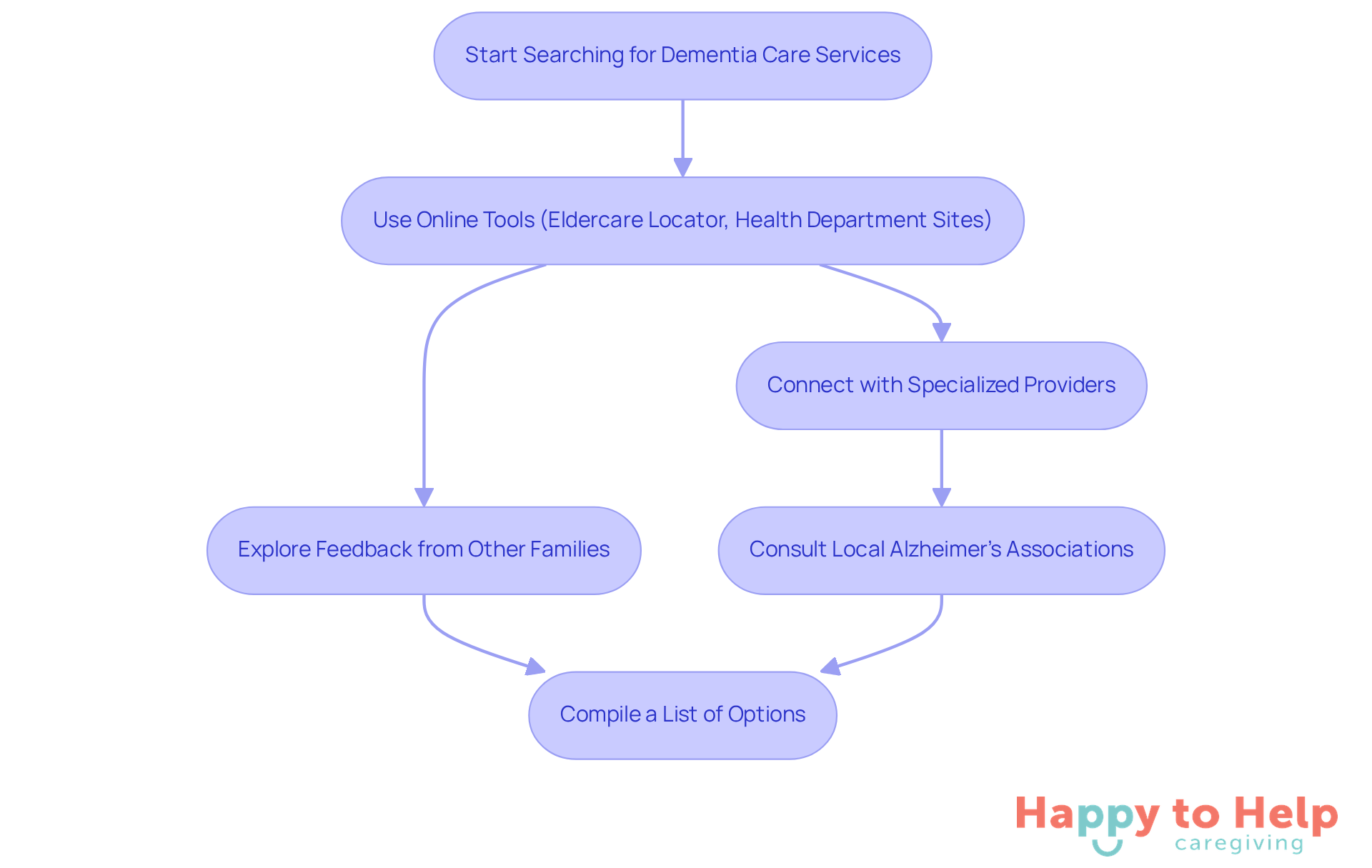
Start your search by utilizing online tools like the Eldercare Locator and regional health department sites. These platforms can connect you with specialized providers, including:
- in-home support agencies
- adult day centers
- memory support facilities for individuals with dementia near me, tailored to their unique needs.
Exploring feedback and accounts from other families is essential. This offers valuable perspective on the quality of assistance and the experiences of those who have used these resources. Additionally, local Alzheimer’s associations and support groups can provide recommendations for reputable providers.
As you compile a list of potential options, be sure to note their specific offerings, availability, and any unique characteristics that could enhance the experience for your loved one. By taking these steps, you can find the right support that meets both your needs and those of your loved one.
Evaluate and Compare Care Providers
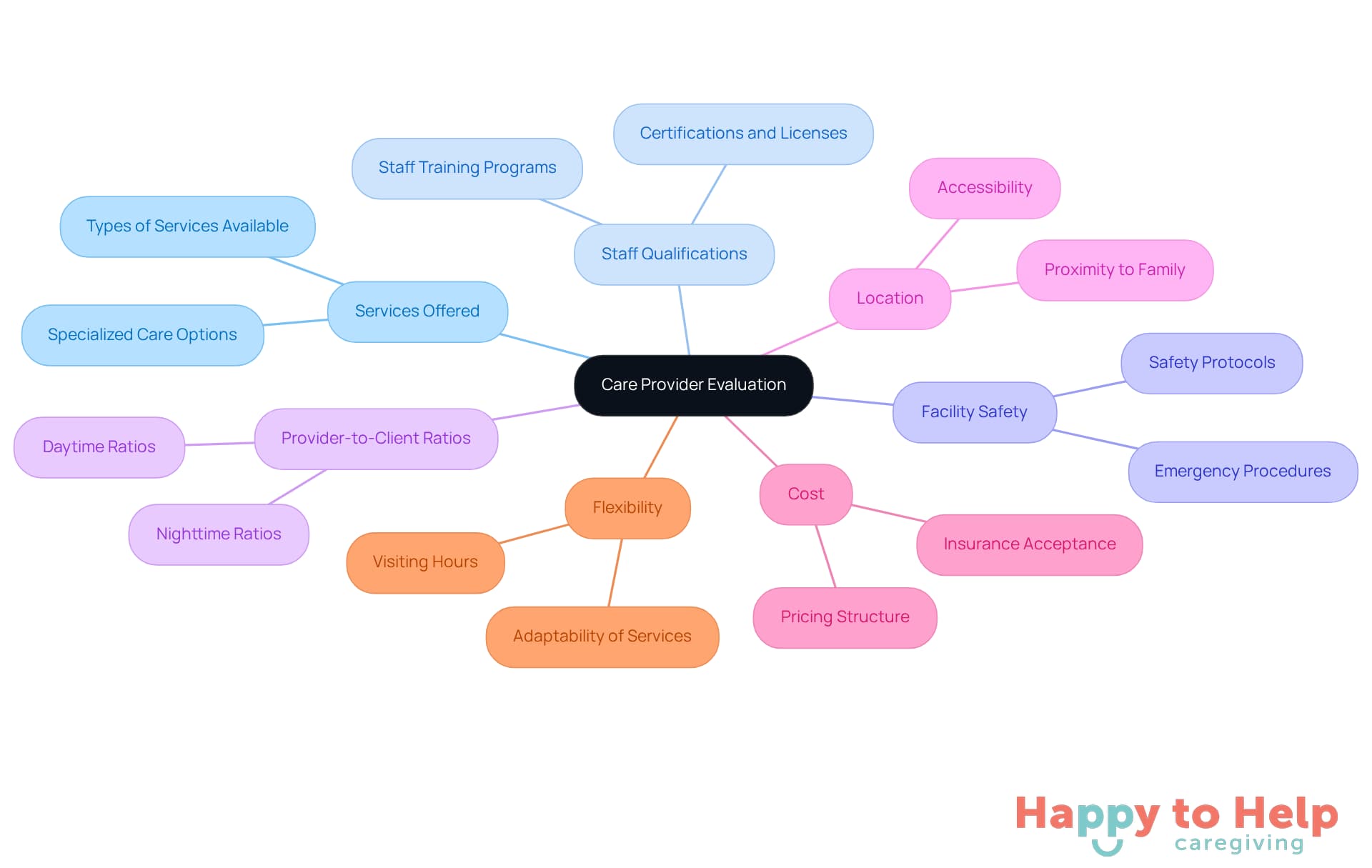
Choosing the right care provider can be a daunting task for caregivers. With numerous options available, it’s essential to assess each provider based on key criteria. This includes:
- Services offered
- Staff qualifications
- Facility safety
- Provider-to-client ratios
To make an informed decision, create a comparison chart that highlights these factors. Arrange visits to facilities or meetings with in-home care providers. This allows you to observe the environment and ask about their methods for managing cognitive decline. Inquire about:
- Staff training
- Emergency procedures
- How they handle behavioral challenges associated with dementia near me
Additionally, consider the location, cost, and flexibility of services. These factors should align with your family's specific needs. By taking these steps, you can ensure that you choose a provider that meets your expectations and supports your loved one effectively.
Visit Facilities or Meet Caregivers
Finding the right care facility or in-home caregiver can be a daunting task for families. The challenge lies in ensuring that the chosen environment meets the needs of individuals with dementia near me, requiring careful consideration and observation.
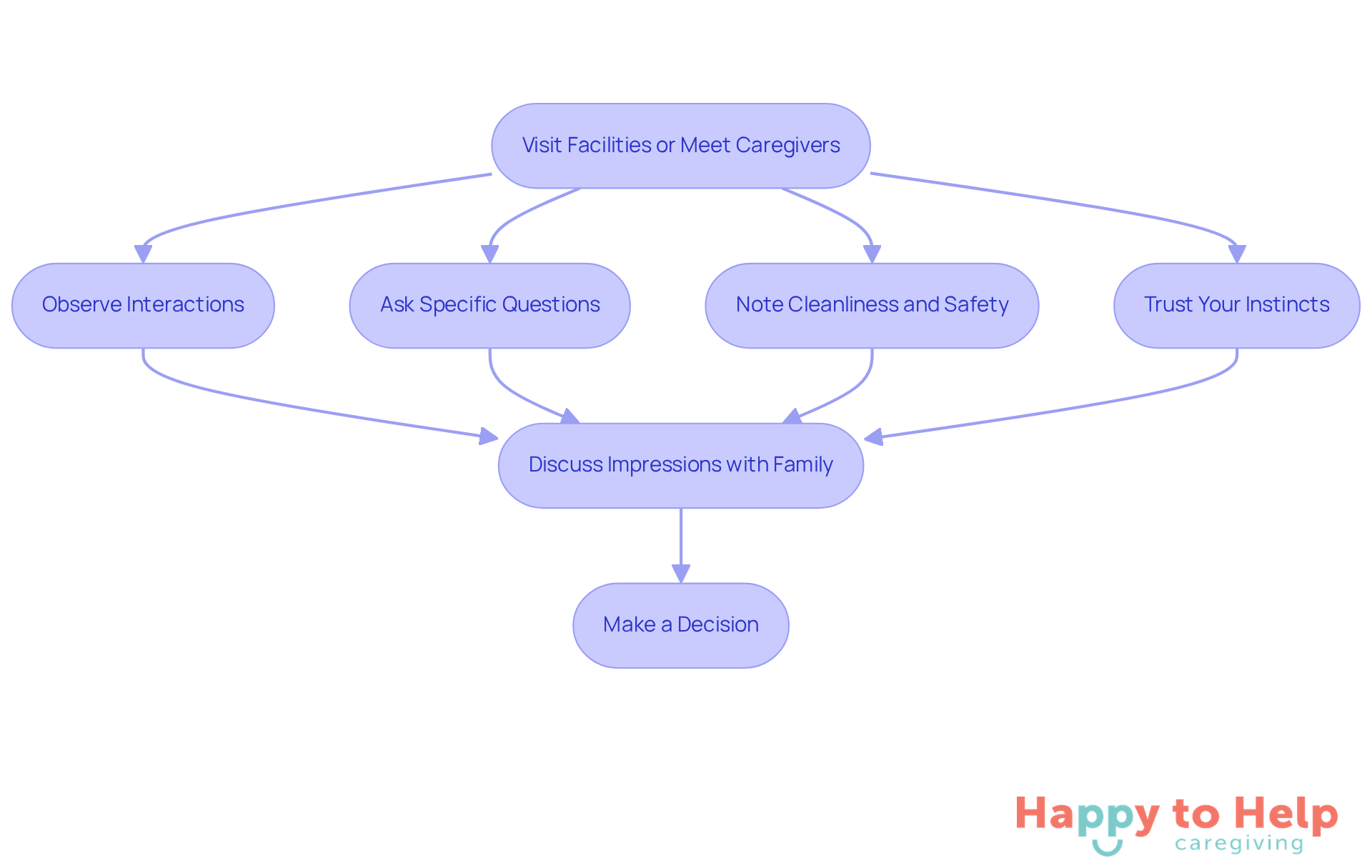
During visits to potential care facilities or meetings with in-home caregivers, it’s crucial to observe the interactions between staff and residents or clients. Take note of the level of engagement and compassion displayed. Ask specific questions about daily routines, activities, and how they cater to the unique needs of individuals with dementia near me. This will help you gauge whether the facility or caregiver is truly equipped to provide the necessary support.
Additionally, pay attention to the cleanliness and safety of the environment, as well as the overall atmosphere. Trust your instincts - if a facility or caregiver feels right, it’s likely a good fit for your loved one. After your visits, discuss your impressions with family members to make a collaborative decision. This approach not only ensures that everyone is on the same page but also helps in making a well-informed choice.
Your Path Forward
Navigating the complexities of dementia care can be overwhelming for caregivers. The emotional and logistical challenges they face often lead to stress and uncertainty. Understanding the essential steps to find local services can significantly ease this burden.
Key insights include:
- Assessing individual care requirements
- Utilizing local resources to identify suitable providers
- Evaluating potential care facilities or caregivers through direct observation and inquiry
By following these structured steps, caregivers can better manage the challenges associated with dementia care, ultimately enhancing the quality of life for both themselves and their loved ones.
Finding appropriate dementia care services is not just about meeting immediate needs; it’s about fostering a supportive environment that prioritizes comfort, safety, and dignity. Engaging with local organizations, conducting thorough research, and maintaining open communication with healthcare professionals empower families to navigate this challenging landscape. Taking these proactive measures ensures that individuals with dementia receive the compassionate care they deserve, highlighting the importance of community support in the caregiving process.
https://iframe.tely.ai/cta/eyJhcnRpY2xlX2lkIjogIjY5MjNhMGFmMjcyNDliYTNkMmMzZTYxMCIsICJjb21wYW55X2lkIjogIjY4ZWU1ZGNhNzMxNzYyNTU3ZjNjOTVjMSIsICJpbmRleCI6IG51bGwsICJ0eXBlIjogImFydGljbGUifQ==Frequently Asked Questions
What is dementia and how does it affect daily life?
Dementia encompasses a range of brain disorders that disrupt memory, thinking, and social abilities, significantly impacting daily life.
What are some common types of dementia?
Common types of dementia include Alzheimer's disease, vascular cognitive impairment, and Lewy body syndrome, each presenting unique challenges for caregivers.
What are the typical care needs for individuals with dementia?
Care needs may include assistance with daily activities, emotional support, and safety measures to prevent wandering.
What symptoms should caregivers be aware of in individuals with dementia?
Caregivers should familiarize themselves with common symptoms such as memory loss, confusion, and behavioral changes.
What resources are available to support caregivers of individuals with dementia?
Resources such as the Alzheimer's Association and community health departments offer valuable insights and support for caregivers.
How can caregivers stay informed about the specific type of dementia affecting their loved one?
Caregivers can stay informed by researching the specific type of dementia and seeking support from local organizations and caregiver groups.
Why do many seniors prefer in-home assistance over facility-based support?
Nearly 80% of seniors prefer in-home assistance because it fosters a sense of security and comfort in familiar surroundings.
How can caregivers assess the specific care requirements for individuals with cognitive impairment?
Caregivers should assess the individual's current health condition, mental capabilities, and daily living skills, and engage in open conversations with healthcare providers.
What types of support might be included in a personalized support plan for someone with dementia?
A personalized support plan might include companionship services, assistance with daily tasks, and structured cognitive engagement activities aimed at enhancing mental function.
Why is developing a tailored treatment plan important for individuals with dementia?
Developing a tailored treatment plan is crucial as it enables caregivers to meet the distinct needs of each patient, ensuring they receive the assistance that genuinely connects with them.
List of Sources
- Understand Dementia and Its Care Needs
- New NIA grant advances tools for dementia caregiving (https://news-medical.net/news/20251015/New-NIA-grant-advances-tools-for-dementia-caregiving.aspx)
- Bridging Gaps in Dementia Care: PAs as Champions of Early Detection and Support Bridging Gaps in Dementia Care: PAs as Champions of Early Detection and Support (https://aapa.org/news-central/2025/11/bridging-gaps-in-dementia-care-pas-as-champions-of-early-detection-and-support)
- Telemedicine shows promise in improving dementia care, WHO study finds (https://who.int/europe/news/item/06-11-2025-telemedicine-shows-promise-in-improving-dementia-care--who-study-finds)
- 2025 NIH Alzheimer’s Disease and Related Dementias Research Progress Report: Advances and Achievements (https://nia.nih.gov/about/2025-nih-dementia-research-progress-report)
- One in Five People with Dementia Receive No Care, Global Study Finds (https://ysph.yale.edu/news-article/one-in-five-people-with-dementia-receive-no-care-global-study-finds)
- Identify Specific Care Requirements
- Mayo Clinic's AI tool identifies 9 dementia types, including Alzheimer's, with one scan - Mayo Clinic News Network (https://newsnetwork.mayoclinic.org/discussion/mayo-clinics-ai-tool-identifies-9-dementia-types-including-alzheimers-with-one-scan)
- Bridging Gaps in Dementia Care: PAs as Champions of Early Detection and Support Bridging Gaps in Dementia Care: PAs as Champions of Early Detection and Support (https://aapa.org/news-central/2025/11/bridging-gaps-in-dementia-care-pas-as-champions-of-early-detection-and-support)
- New Clinical Practice Guideline on the Process for Diagnosing Alzheimer’s Disease or a Related Form of Cognitive Impairment or Dementia (https://alz.org/news/2024/clinical-practice-guideline-evaluation-alzheimers)
- New clinical assessment tool improves dementia care actions in primary care patients (https://nih.gov/news-events/news-releases/new-clinical-assessment-tool-improves-dementia-care-actions-primary-care-patients)
- Research Local Dementia Care Services
- In Home Caregiver News • At Home Caregivers (https://athomecaregivers.com/news)
- Finding Dementia Care and Local Services | Alzheimers.gov (https://alzheimers.gov/life-with-dementia/find-local-services)
- The National Dementia Workforce Study: Overview - PMC (https://pmc.ncbi.nlm.nih.gov/articles/PMC12404676)
- ADI - Dementia statistics (https://alzint.org/about/dementia-facts-figures/dementia-statistics)
- Alzheimer's Disease Facts and Figures (https://alz.org/alzheimers-dementia/facts-figures)
- Evaluate and Compare Care Providers
- Staff-to-Resident Ratios in Assisted Living (https://aplaceformom.com/caregiver-resources/articles/staff-ratio-assisted-living)
- The D-CARE Trial Finds No Differences Between Dementia Care Approaches on Patient Behavioral Symptoms or Caregiver Strain, But Comprehensive Care Improved Caregiver Self-Efficacy (https://newsroom.wakehealth.edu/news-releases/2025/01/trial-finds-no-differences-between-dementia-care-approaches-or-caregiver-strain)
- Alzheimer’s Association Dementia Care Provider Roundtable Funds Research Aimed at Improving Care Interactions in Assisted Living Communities (https://alz.org/news/2024/alzheimer-s-association-dementia-care-provider-roundtable-funds-research-aimed-at-improving-care-int)
- New study compares dementia care approaches and the impact on caregivers (https://news-medical.net/news/20250129/New-study-compares-dementia-care-approaches-and-the-impact-on-caregivers.aspx)
- How Many Caregivers per Resident in Memory Care? (https://peregrinecolonie.com/how-many-caregivers-per-resident-in-memory-care)