
Why Find Local Dementia Respite Care Near Matters
Caregivers of individuals with dementia face a significant challenge: the emotional and physical toll of constant care. This burden can lead to burnout, which not only affects the caregiver's well-being but also diminishes the quality of care provided to their loved ones.
The implications of caregiver burnout are profound. When caregivers are overwhelmed, they may struggle to provide the compassionate support their family members need. This can create a cycle of stress and frustration, impacting both the caregiver and the individual with dementia.
Local dementia respite care offers a vital solution. It provides caregivers with the opportunity to recharge, ensuring that their loved ones receive the necessary support in a compassionate environment. However, with numerous options available, caregivers may wonder: how can they find the right respite care services that cater to their unique needs and those of their family members?
In this article, we will explore practical strategies for identifying suitable respite care services, empowering caregivers to make informed decisions that enhance their quality of life and that of their loved ones.
Understand Respite Care for Dementia
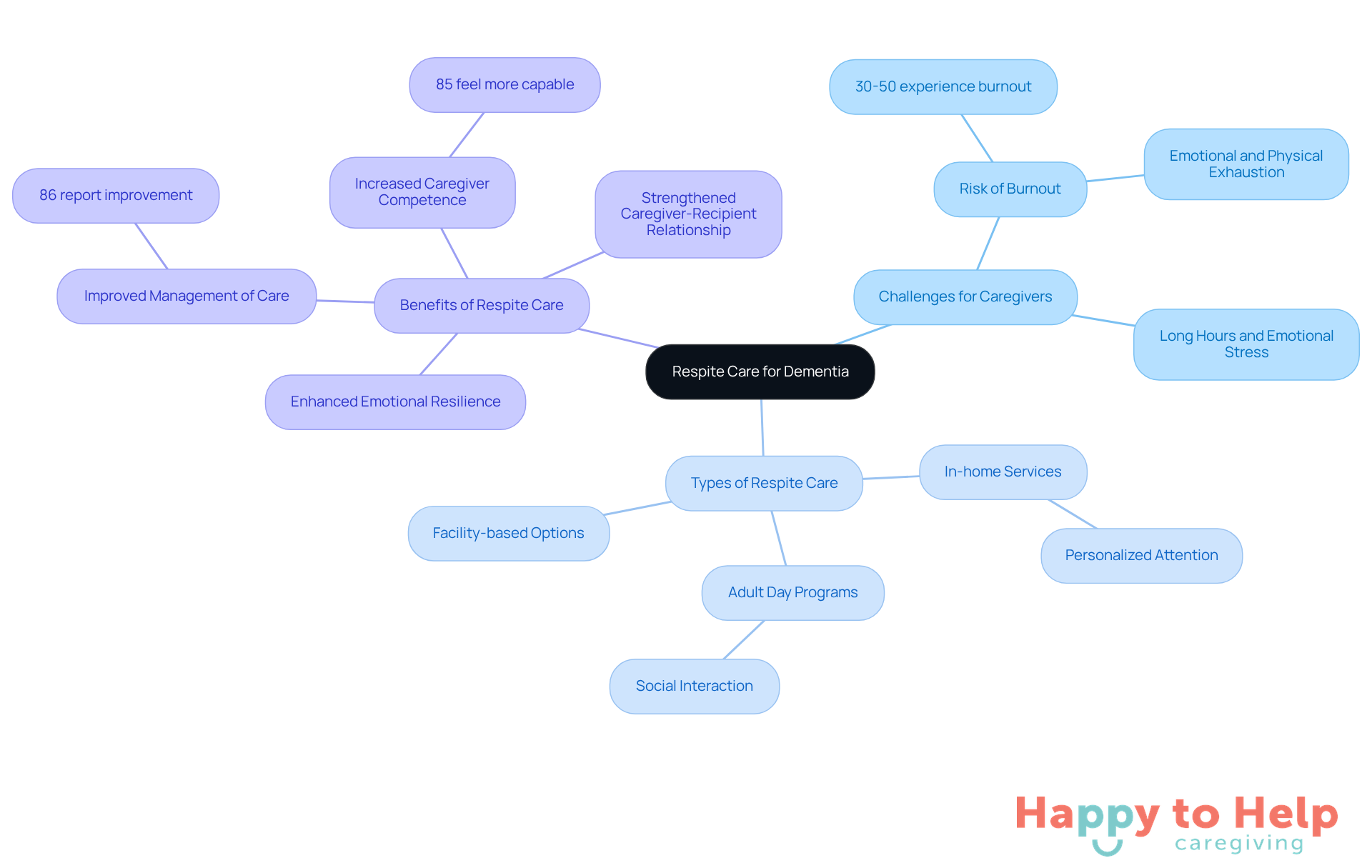
Caregivers of individuals with dementia face a significant challenge: the risk of burnout. This condition affects up to 30-50% of those providing care, leading to emotional and physical exhaustion. The implications are serious, not only for the caregivers but also for the well-being of the individuals they support. Without adequate relief, caregivers may struggle to maintain the level of care their loved ones need.
Fortunately, dementia respite care near me provides a vital solution. This support network provides temporary relief, allowing caregivers to recharge while ensuring their loved ones receive ongoing, compassionate care. Various forms of dementia respite care near me are available, including:
- In-home services
- Adult day programs
- Facility-based options
Each of these offers unique benefits: in-home assistance delivers personalized attention in a familiar environment, while adult day programs foster social interaction, enhancing the quality of life for individuals with dementia.
Statistics reveal the effectiveness of respite services. For instance, 86% of family supporters report improved management of care after utilizing these services, and 85% feel more capable in their roles. These figures highlight the importance of dementia respite care near me as temporary support, which is crucial not only for caregivers' well-being but also for the overall health of dementia patients.
Healthcare experts emphasize that dementia respite care near me is essential for preserving the emotional and physical health of caregivers. It allows them to reconnect with friends and family, boosting their emotional resilience and patience. As Sam Fazio, Ph.D., vice president of Care and Support Programs and Research at the Alzheimer’s Association, notes, "Caring for someone living with dementia is often a 24/7 responsibility."
Effective support programs are designed to provide high-quality assistance in a secure setting, enabling caregivers to take necessary breaks without worry. By prioritizing their own well-being through respite support, caregivers can ultimately enhance the quality of care they provide, fostering a stronger relationship with their loved ones.
Research Local Respite Care Services
Finding nearby temporary support options can be a challenge for caregivers. The problem lies in the overwhelming number of resources available, which can make it difficult to identify the most suitable options. This can lead to stress and uncertainty when seeking care for loved ones.
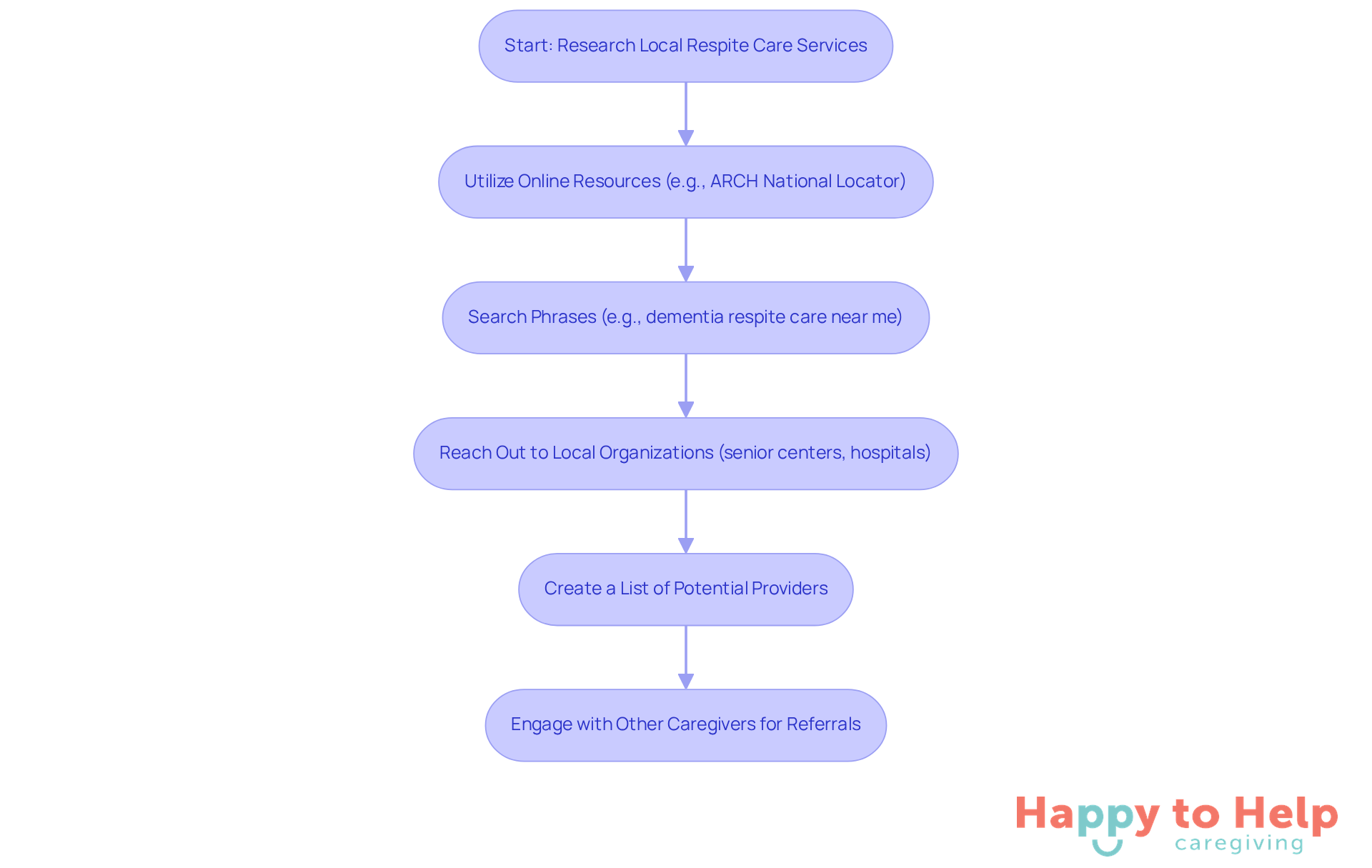
To address this issue, start by utilizing online resources like the ARCH National Locator and local aging directories. Use search phrases like 'dementia respite care near me' or 'in-home respite care options' combined with your location to find suitable options. Additionally, reach out to local senior centers, hospitals, and community organizations, as they often have valuable recommendations.
Create a list of potential providers, considering their offerings, availability, and any specific requirements they may have. Engaging with other caregivers or healthcare professionals for referrals can also provide insights into reputable services in your area.
In-home support services are projected to command a 42.1% market share by 2025, highlighting the importance of exploring these resources. Investigating these options can significantly enhance your ability to find dementia respite care near me that is specifically tailored to the needs of individuals with dementia.
As noted by the National Alliance for Caregiving and AARP, the growing preference for aging-in-place support and advancements in home assistance technology are key factors driving the expansion of the global temporary support market. Integrating these insights can further assist your search for effective relief options.
Evaluate Costs and Payment Options
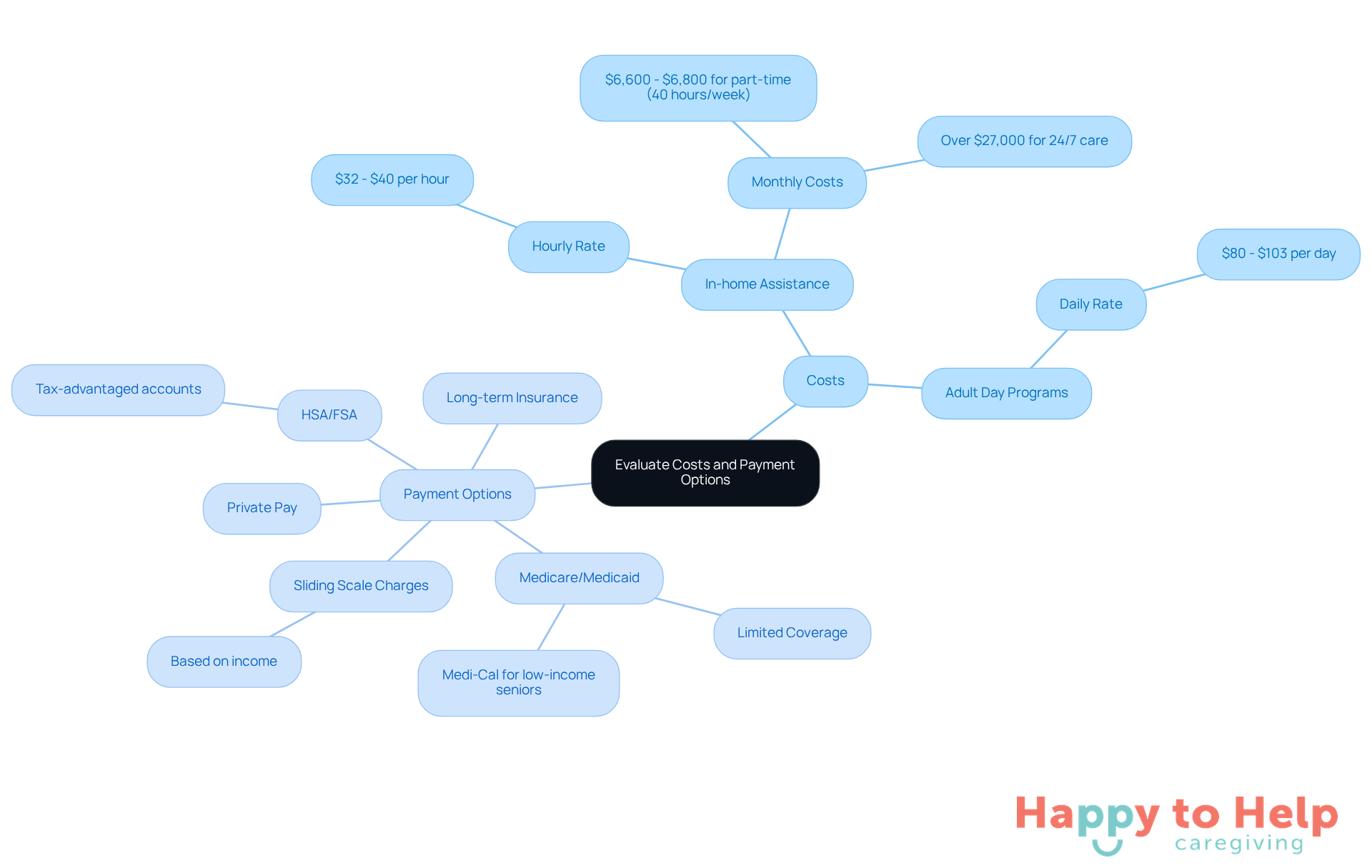
Assessing the expenses of temporary assistance can be daunting for caregivers. With in-home assistance typically costing between $32 and $40 per hour - among the highest rates in the nation, especially in California - families face significant financial challenges. Adult day programs add to this burden, ranging from $80 to $103 per day, depending on location and services. It’s essential to inquire about any additional fees, as these can further impact overall expenses.
To tackle these financial hurdles, families should explore various payment alternatives. Options include:
- Private pay
- Long-term insurance
- Potential coverage through Medicare or Medicaid
Health Savings Accounts (HSA) and Flexible Spending Accounts (FSA) can also be utilized for qualified in-home support expenses, providing additional financial relief. Many organizations offer sliding scale charges based on income, making services more accessible.
Moreover, local and state initiatives, including resources from the Area Agency on Aging, can provide crucial financial support for caregivers. By researching these options, caregivers can create a more manageable budget and ensure they receive the necessary support.
Select the Right Respite Care Provider
Choosing the appropriate dementia respite care near me for someone with dementia can be a daunting task. Caregivers often face the challenge of ensuring their loved ones receive the best possible care. This requires a thoughtful evaluation of several important factors.
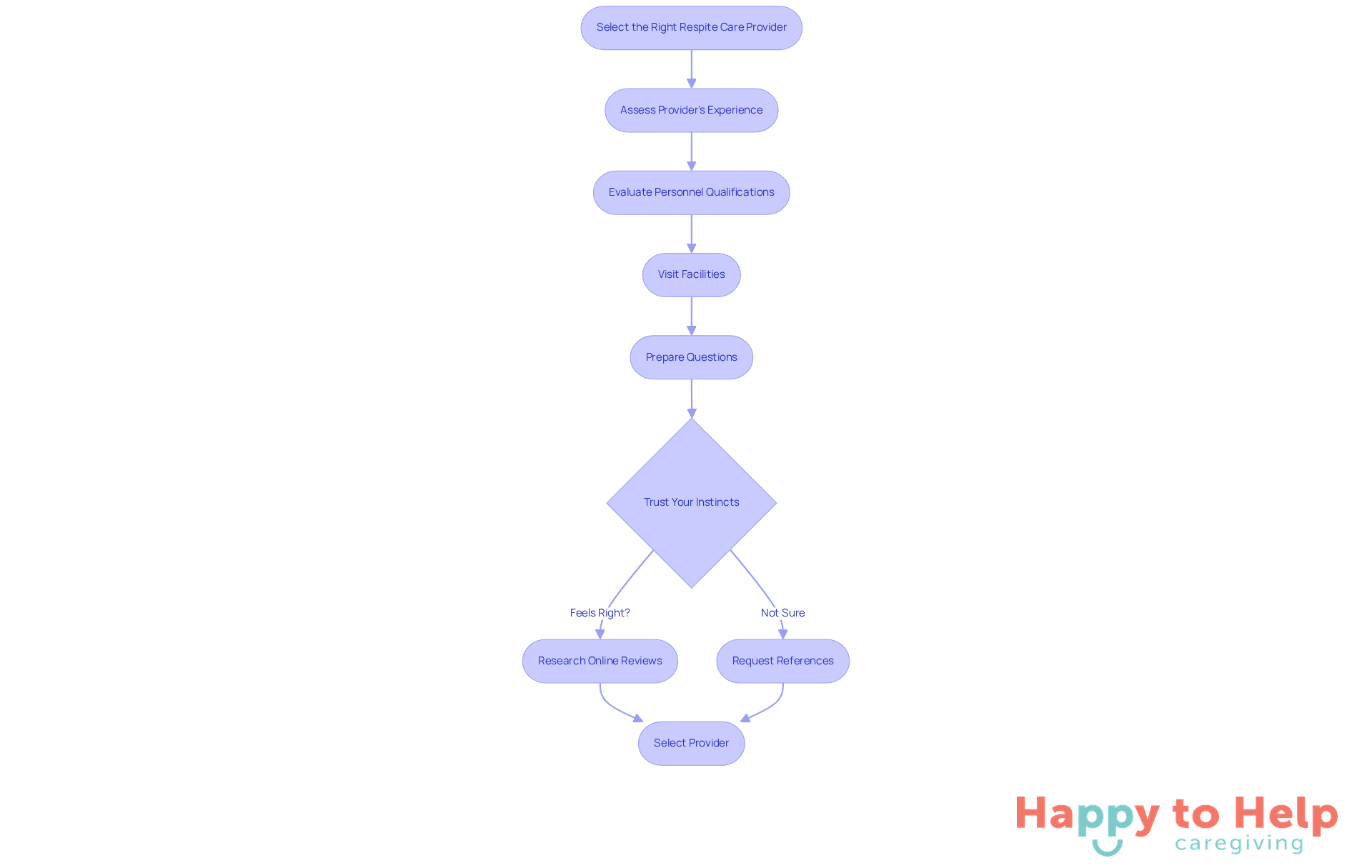
Start by assessing the provider's experience specifically in dementia support. This expertise is crucial for delivering suitable assistance. Additionally, evaluate the qualifications of the personnel. Ensure they have relevant training in managing dementia-related behaviors and providing compassionate support.
Visiting potential facilities or in-home assistance agencies is essential. Observe the environment and interactions between staff and clients to gauge the quality of service. Prepare a list of pertinent questions to ask during your visits, such as:
- What specific training do staff members receive in dementia care?
- What emergency procedures are in place to ensure client safety?
- What daily activities are available to engage clients and promote their well-being?
Trust your instincts when selecting a provider; it should feel right for both you and your loved one. Researching online reviews and requesting references can also provide valuable insights into the experiences of other families. By prioritizing these factors, you can discover dementia respite care near me that meets the unique needs of your loved one and supports your caregiving journey.
Moving Forward with Find Local Dementia Respite Care Near
Finding local dementia respite care presents a significant challenge for caregivers striving to balance their responsibilities while ensuring the well-being of their loved ones. This issue not only affects caregivers but also impacts the quality of life for individuals with dementia. Without adequate support, caregivers may experience burnout, which can hinder their ability to provide the best care possible.
To address this problem, it’s essential to explore the various types of respite services available. Options such as in-home assistance and adult day programs cater to different needs, offering flexibility and support. Additionally, evaluating costs and exploring payment options is crucial, as financial considerations can pose a significant barrier for many families. Selecting the right provider is equally important; focusing on experience, qualifications, and the overall environment can ensure quality care.
In conclusion, the journey to finding local dementia respite care requires thorough research and thoughtful consideration. By utilizing available resources and engaging with local services, caregivers can discover options that best meet their needs. Prioritizing respite care is vital for the well-being of both caregivers and individuals with dementia, as it alleviates the burden of caregiving and enhances the quality of life for everyone involved.
https://iframe.tely.ai/cta/eyJhcnRpY2xlX2lkIjogIjY5Mjc5NGY4MWE3YzlhYWNlNmI1NGZiOSIsICJjb21wYW55X2lkIjogIjY4ZWU1ZGNhNzMxNzYyNTU3ZjNjOTVjMSIsICJpbmRleCI6IG51bGwsICJ0eXBlIjogImFydGljbGUifQ==Frequently Asked Questions
What is respite care for dementia?
Respite care for dementia is a support service that provides temporary relief for caregivers, allowing them to recharge while ensuring their loved ones receive ongoing, compassionate care.
Why is respite care important for caregivers of individuals with dementia?
Respite care is important because caregivers face a high risk of burnout, affecting their emotional and physical health. It helps them maintain their well-being, which is crucial for the quality of care they provide to individuals with dementia.
What are the different types of dementia respite care available?
The different types of dementia respite care include in-home services, adult day programs, and facility-based options. Each offers unique benefits tailored to the needs of both caregivers and individuals with dementia.
What benefits do in-home services provide?
In-home services provide personalized attention in a familiar environment, allowing individuals with dementia to receive care in the comfort of their own home.
How do adult day programs benefit individuals with dementia?
Adult day programs foster social interaction, which can enhance the quality of life for individuals with dementia by providing opportunities for engagement and connection with others.
What statistics highlight the effectiveness of respite services?
Statistics show that 86% of family supporters report improved management of care after using respite services, and 85% feel more capable in their caregiving roles.
How does respite care affect the emotional health of caregivers?
Respite care allows caregivers to reconnect with friends and family, boosting their emotional resilience and patience, which is essential for sustaining their caregiving responsibilities.
What should caregivers consider when seeking respite care?
Caregivers should consider effective support programs that provide high-quality assistance in a secure setting, enabling them to take necessary breaks without worry.
List of Sources
- Understand Respite Care for Dementia
- News & Success Stories | Live Well San Diego (https://livewellsd.org/Home/Components/News/News/513/153)
- Caregivers and the Importance of Respite Care (https://benedictineliving.org/resources/news/caregivers-and-the-importance-of-respite-care)
- Alzheimer’s Association Center for Dementia Respite Innovation Awards More Than $4 Million in New Round of Grants to Improve Respite Care for People Living With Dementia and Their Caregivers (https://alz.org/news/2025/alzheimers-association-center-for-dementia-respite-innovation-grants-4-million-in-second-year)
- New Medicare program offers much-needed relief for caregivers of dementia patients (https://finance.yahoo.com/news/new-medicare-program-offers-much-needed-relief-for-caregivers-of-dementia-patients-203450020.html)
- Research Local Respite Care Services
- Caregiver Statistics: Demographics (https://caregiver.org/resource/caregiver-statistics-demographics)
- CaringBridge (https://caringbridge.org/resources/inspirational-quotes-on-caregiving)
- Respite Care for the Elderly Market Size & Opportunities, 2025-2032 (https://coherentmarketinsights.com/industry-reports/respite-care-for-the-elderly-market)
- New Alzheimer’s Association Report Reveals Top Stressors for Caregivers and Lack of Care Navigation Support and Resources (https://alz.org/news/2024/new-alzheimers-association-report-reveals-top-stressors-caregivers)
- Evaluate Costs and Payment Options
- Respite Care Costs | How Much Does it Cost for Respite Care in 2025? (https://seniorliving.org/respite/costs)
- Cost of In-Home Care in California (2025) + 11 Ways to Pay (https://lovinghomecareinc.com/blog/cost-of-in-home-care-california)
- New Medicare program offers much-needed relief for caregivers of dementia patients (https://finance.yahoo.com/news/new-medicare-program-offers-much-needed-relief-for-caregivers-of-dementia-patients-203450020.html)
- Paying for Dementia Care | Alzheimer's Association (https://alz.org/help-support/caregiving/financial-legal-planning/paying-for-care)
- Select the Right Respite Care Provider
- Caregiver Statistics: Demographics (https://caregiver.org/resource/caregiver-statistics-demographics)
- The Caregiving Landscape: Data & Insights on the Caregiver Experience in the U.S. (https://caregiveraction.org/caregiver-statistics)
- New Alzheimer’s Association Report Reveals Top Stressors for Caregivers and Lack of Care Navigation Support and Resources (https://alz.org/news/2024/new-alzheimers-association-report-reveals-top-stressors-caregivers)
- Questions to Ask Respite Care Providers | Visiting Angels® Egg Harbor (https://visitingangels.com/eggharbortwp/articles/questions-to-ask-respite-care-providers/25836)
- How to Find the Right Respite Care Home for Your Loved One (https://beechgrovecarehome.com/news-events/how-to-find-the-right-respite-care-for-your-loved-one)