
What to Expect
Caring for a loved one can be incredibly rewarding, but it often comes with its own set of challenges. Caregivers frequently experience stress and burnout, feeling overwhelmed by their responsibilities. It’s essential to recognize these emotional struggles and seek support.
Local respite care services can provide the relief caregivers need. Options like in-home assistance, adult day programs, and short-term residential support are available to help lighten the load. These services not only offer practical help but also allow caregivers to take a much-needed break, recharge, and focus on their own well-being.
Understanding caregiver stress is crucial. Many caregivers feel guilty about needing help, but it’s important to remember that taking care of oneself is vital for providing the best care to others. Financial options are also available to assist with the costs of respite care, making it more accessible for those in need.
Imagine having a few hours to yourself, knowing your loved one is in compassionate hands. Personal stories from caregivers highlight how these services have made a difference in their lives, allowing them to return to their caregiving roles with renewed energy and perspective.
You’re not alone in this journey. There are resources and support systems in place to help you navigate the challenges of caregiving. Embrace the opportunity to seek assistance, and remember that taking care of yourself is just as important as caring for your loved one.
What You Need to Know About Find Local Respite Care
Navigating the complex world of caregiving can often leave individuals feeling overwhelmed and isolated. Many caregivers, nearly 60%, report signs of fatigue, highlighting just how crucial respite care is. This article serves as a comprehensive guide to finding local respite care services, equipping caregivers with the essential tools they need to reclaim their well-being while ensuring their loved ones receive the support they deserve. But how can caregivers effectively identify and access these vital resources in their community, especially when the stakes are so high?
It's important to recognize the emotional toll caregiving can take. The stress and burnout can feel insurmountable at times, but there is hope. By exploring respite care options, caregivers can find the relief they need, allowing them to recharge and return to their loved ones with renewed strength. Remember, seeking help is not a sign of weakness; it's a vital step toward maintaining both your health and the quality of care you provide.
Understand Respite Care: Definition and Importance
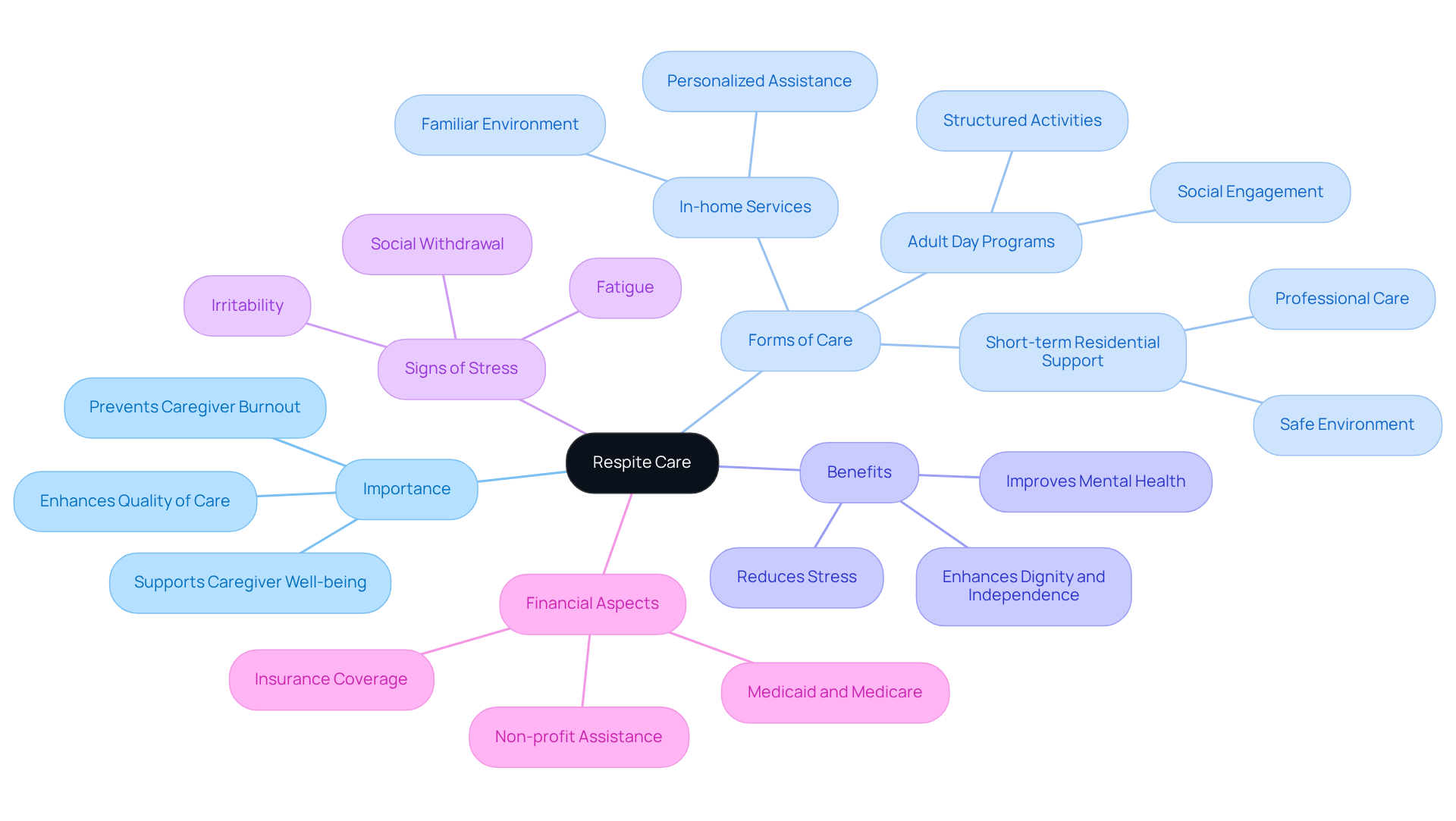
Respite care for caregivers near me is a vital resource that provides temporary relief to primary caregivers, allowing them to step back from their responsibilities and recharge. This kind of support is crucial in preventing caregiver burnout, a reality that affects many, leading to both physical and emotional exhaustion. In fact, data from 2025 indicates that nearly 60% of those providing care report experiencing signs of fatigue, highlighting the urgent need for options like temporary relief.
Understanding temporary assistance means recognizing its various forms, including:
- in-home services
- adult day programs
- short-term residential support
Each option is designed to cater to the unique needs of caregivers and their families, ensuring that high-quality care continues in a safe environment. For instance, in-home support allows individuals to remain in familiar surroundings while receiving personalized assistance, which can significantly reduce anxiety and enhance comfort, as experts in the field have noted.
The benefits of respite support extend beyond just giving caregivers a break. It also enriches the overall experience for their loved ones, fostering dignity and independence. Engaging in social activities and receiving help from trained professionals can uplift the emotional well-being of recipients, nurturing a sense of community and belonging.
It's essential to recognize the signs of stress in caregivers—like fatigue, irritability, and social withdrawal—to maintain the well-being of both the provider and the recipient. Key indicators of caregiver burnout include ongoing exhaustion, anxiety, and feelings of isolation, all of which can significantly impact the quality of care provided. By actively seeking respite care for caregivers near me, caregivers can alleviate stress, enhance their mental health, and ultimately provide better support to their loved ones. This proactive approach not only benefits those providing care but also strengthens family bonds, allowing everyone to thrive.
Moreover, it's important to note that the costs of relief services can often be covered by private insurance, Medicaid, or Medicare, making it a more accessible option for many families. By understanding these financial aspects, caregivers can make informed decisions about utilizing respite support.
Explore Types of Respite Care Services
Caring for a loved one can be incredibly rewarding, but it often comes with its own set of emotional challenges. Caregivers frequently face stress and burnout, and it’s essential to recognize that taking a break is not just okay—it’s necessary. Thankfully, there are various options for respite care for caregivers near me, each designed to meet the unique needs of caregivers and their families.
-
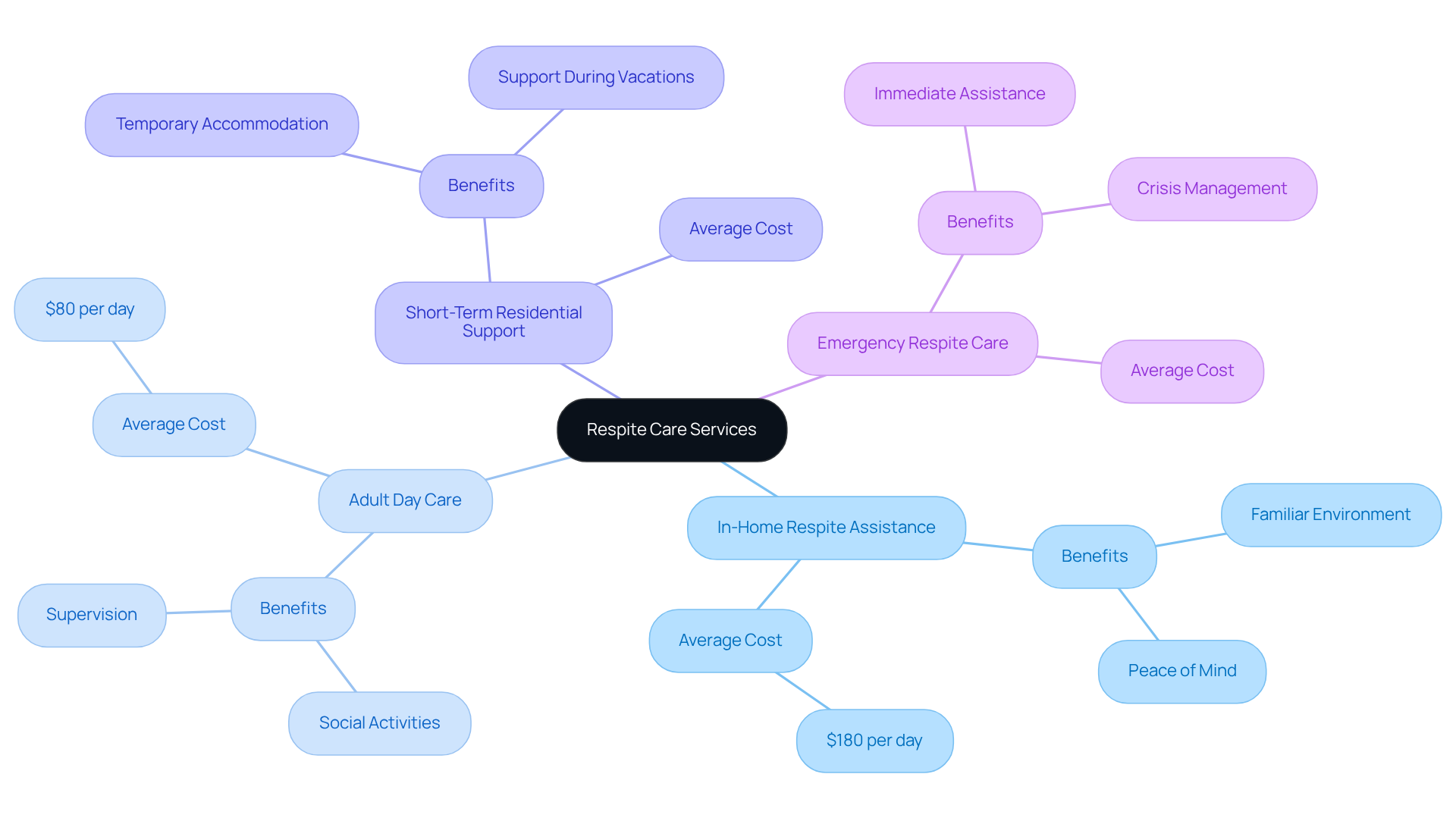
In-Home Respite Assistance: Imagine having a specialist come to your home, allowing you to take a much-needed break while your loved one stays in a familiar and comfortable environment. This service not only provides peace of mind but also ensures that your loved one is well cared for. Research shows that in-home assistance typically costs around $180 per day, making it a viable option for many families.
-
Adult Day Care: These facilities offer daytime care filled with social activities and supervision for seniors or individuals with special needs. This option allows caregivers to attend to work or personal matters, knowing their loved ones are safe and engaged in meaningful activities. With an average cost of about $80 daily, adult daycare can be a budget-friendly choice for those providing care.
-
Short-Term Residential Support: If you’re looking for a longer break, short-term residential facilities provide temporary accommodation for individuals needing assistance. This option is particularly helpful for vacations or extended periods away from home, ensuring that care recipients receive the support they need.
-
Emergency Respite Care: Life can be unpredictable, and sometimes caregivers face unexpected situations like illness or crises. Emergency respite care is crucial in these moments. Many organizations offer on-call services to provide immediate assistance, allowing caregivers to manage unforeseen circumstances without added stress.
By exploring these options, caregivers can find respite care for caregivers near me, which provides the relief they need to recharge and continue delivering high-quality support for their loved ones. As Sandy Markwood, CEO of USAging, beautifully puts it, "Respite means just ensuring that their loved one is safe and secure so they can go off and do things that are important in their lives, but not worrying the whole time about the support their loved one is receiving."
Success stories from families who have utilized these resources highlight the positive impact on both caregivers and those receiving assistance, underscoring the importance of temporary relief. Resources like the ARCH National Respite Network and the National Adult Day Services Association can assist caregivers in locating respite care for caregivers near me, ensuring they find suitable temporary support services within their communities. Remember, seeking help is a sign of strength, and you deserve to take care of yourself too.
Identify Your Respite Care Needs
Finding the right respite care for caregivers near me can feel overwhelming, but taking a moment to evaluate your specific needs can make a world of difference. Here are some steps to guide you:
-
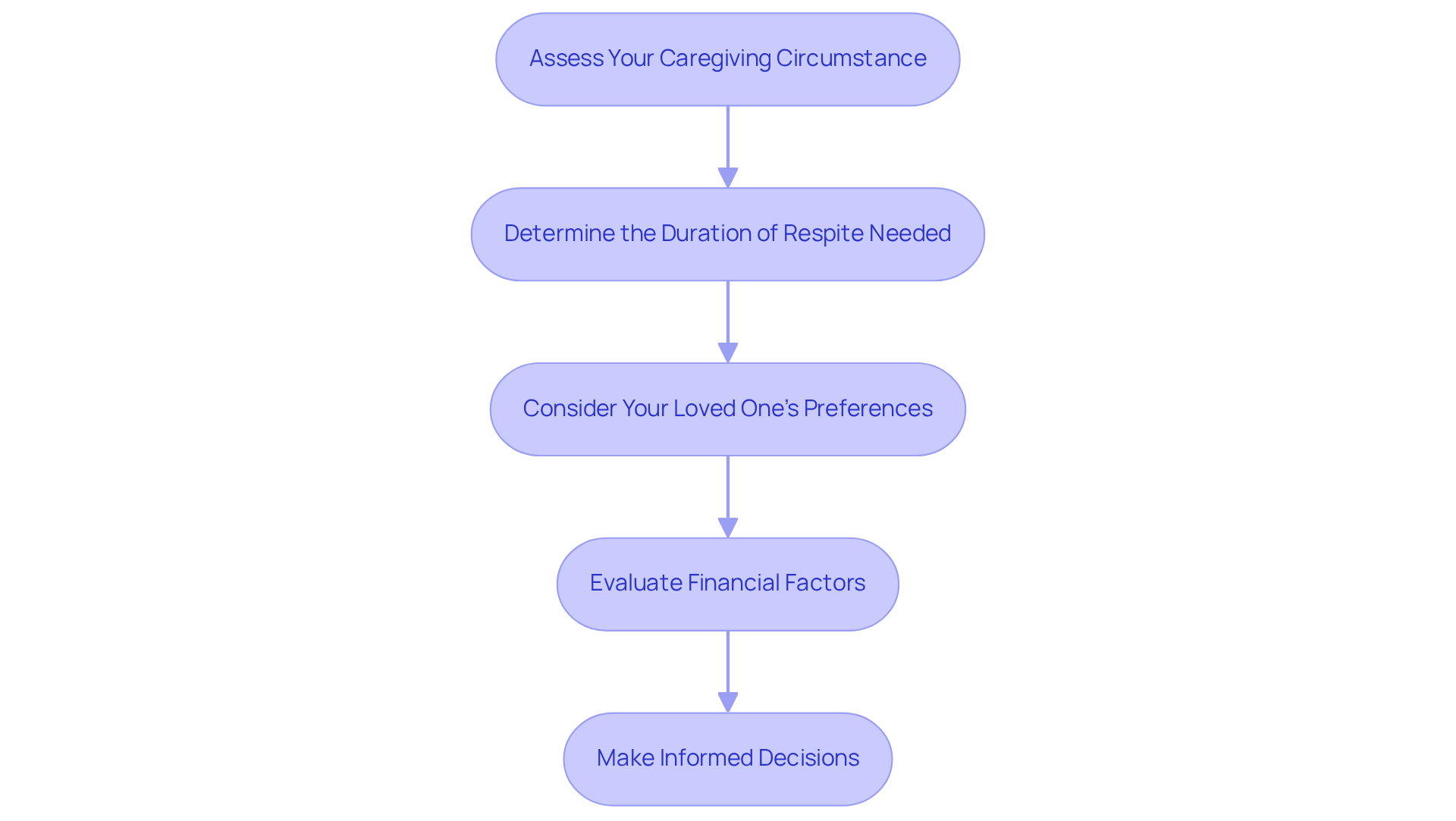
Assess Your Caregiving Circumstance: Reflect on your daily responsibilities and the level of support your loved one requires. Identify which tasks are particularly challenging or time-consuming. It’s worth noting that nearly 60% of caregivers report making significant adjustments to their work due to their caregiving roles. Additionally, over half of informal supporters provide fewer than ten hours of assistance each month, highlighting the varying levels of support available.
-
Determine the Duration of Respite Needed: Think about how long you’ll need respite assistance. Whether it’s just a few hours, a day, or longer, this decision will help you narrow down your options and find services that fit your needs.
-
Consider Your Loved One's Preferences: Keep your loved one’s comfort in mind. Do they prefer to stay at home, or would they enjoy the social interaction of a day program? Understanding their preferences can greatly enhance their experience during this temporary support.
-
Evaluate Financial Factors: Take a close look at your budget for respite assistance. The median cost for home health aide services is around $20 per hour. Knowing your financial limits can help guide your choices. Many families investing in temporary support often spend over $1,300 each year, which underscores the importance of aligning your options with your financial strategy.
By taking the time to understand these needs, caregivers can make informed decisions that ensure both they and their loved ones receive the best possible respite care for caregivers near me during their breaks. Remember, you’re not alone in this journey, and there are compassionate resources available to help you along the way.
Research Local Respite Care Options
Recognizing your needs is just the beginning. The next step is to explore services for respite care for caregivers near me that can provide the support you deserve. Here’s how to navigate this journey:
-
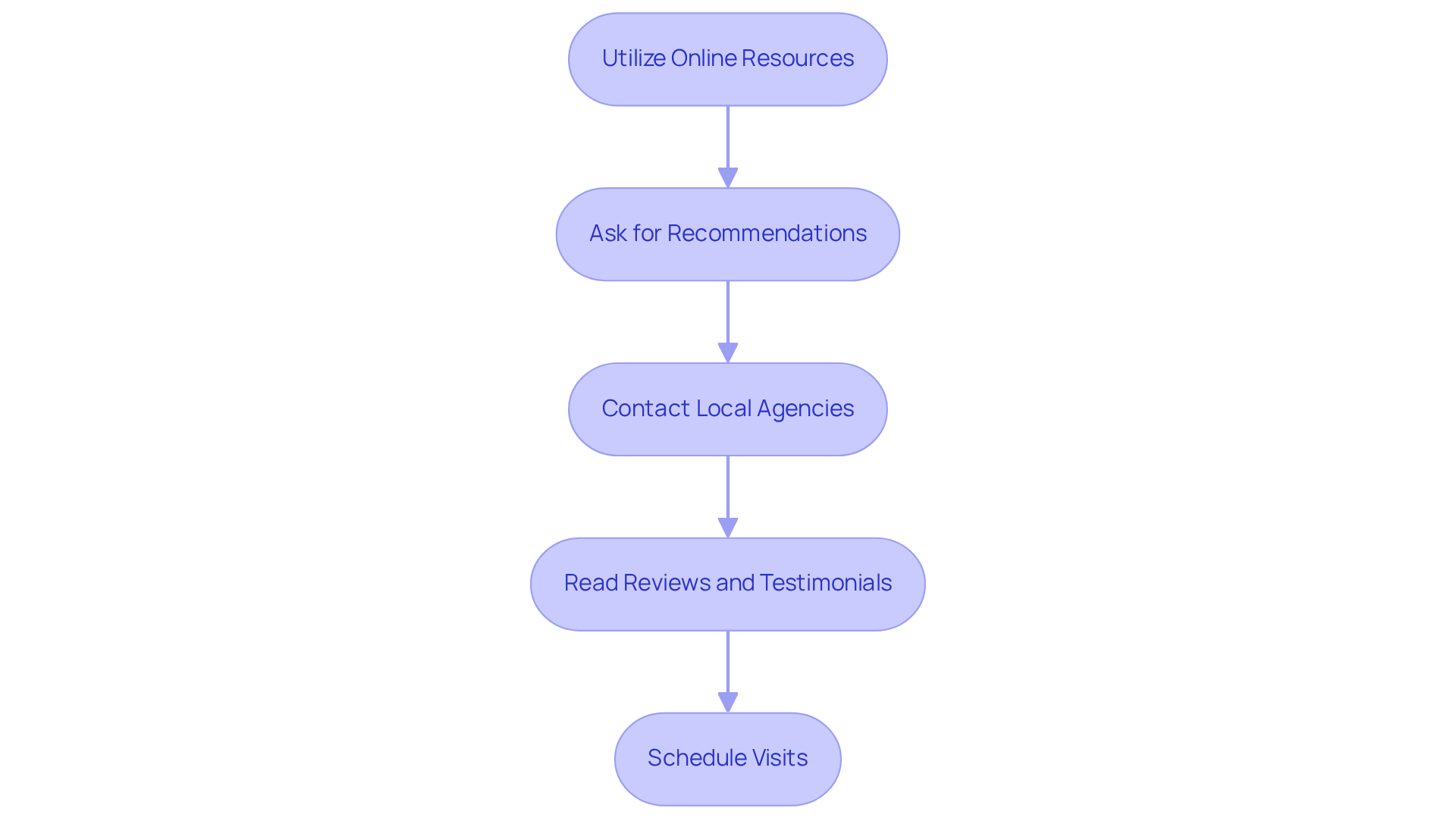
Utilize Online Resources: Websites like Care.com, AARP, and local aging organizations can be invaluable. They provide listings of respite care for caregivers near me. Use search filters to find options that truly meet your specific needs.
-
Ask for Recommendations: Don’t hesitate to reach out to friends, family, or healthcare professionals. Their personal experiences can shed light on the quality of service provided by various providers, helping you make informed choices.
-
Contact Local Agencies: Many communities have organizations dedicated to assisting seniors. Connecting with them can reveal available support options and additional resources that might be beneficial.
-
Read Reviews and Testimonials: Take the time to look for online evaluations and testimonials from other families who have used respite services. This insight can help you assess the reliability and quality of services offered by different agencies.
-
Schedule Visits: Once you’ve narrowed down your options, arrange visits to meet the staff and see the facilities. This firsthand experience will give you a clearer picture of the environment and the providers' approach to care.
It’s important to remember that nearly 40% of family caregivers identify temporary relief as their most pressing need. This highlights the critical importance of finding suitable alternatives. Additionally, Taylor Shuman points out that unpaid caregiving has an economic impact exceeding $600 billion, underscoring the financial strain faced by those providing care. By conducting thorough research, caregivers can discover respite care for caregivers near me that meet their needs and preferences, ensuring a positive experience for both themselves and their loved ones.
Taking the Next Steps
Finding local respite care for caregivers is a crucial step in nurturing the well-being of both caregivers and their loved ones. It’s important to recognize how respite care can alleviate stress and prevent burnout, offering various forms such as in-home services, adult day programs, and short-term residential support. By understanding these resources, caregivers can take meaningful steps to ensure they receive the necessary breaks to recharge and continue providing high-quality care.
This guide explores the different types of respite care services available, showing how options like in-home assistance and adult day care can meet specific needs. It’s vital to assess individual circumstances, preferences, and financial factors when choosing the right respite care. By utilizing online resources, seeking recommendations, and conducting thorough research, caregivers can discover suitable options that not only support them but also enhance the quality of care for their loved ones.
Ultimately, the journey to finding respite care is a valuable investment in the health and happiness of caregivers and their families. Recognizing the signs of stress and actively seeking help is a powerful step toward fostering a healthier caregiving environment. Embracing respite care not only benefits the caregiver's well-being but also strengthens family bonds, ensuring that everyone can thrive.
https://iframe.tely.ai/cta/eyJhcnRpY2xlX2lkIjogIjY5MDU0ZGIwMTdlZDRkODRiODFjNTFiOSIsICJjb21wYW55X2lkIjogIjY4ZWU1ZGNhNzMxNzYyNTU3ZjNjOTVjMSIsICJpbmRleCI6IG51bGwsICJ0eXBlIjogImFydGljbGUifQ==Frequently Asked Questions
What is respite care?
Respite care is a vital resource that provides temporary relief to primary caregivers, allowing them to step back from their responsibilities and recharge.
Why is respite care important for caregivers?
Respite care is crucial in preventing caregiver burnout, which affects many caregivers and leads to physical and emotional exhaustion.
What percentage of caregivers report experiencing signs of fatigue?
Data from 2025 indicates that nearly 60% of caregivers report experiencing signs of fatigue.
What are the different forms of respite care available?
The various forms of respite care include in-home services, adult day programs, and short-term residential support.
How does in-home respite care benefit caregivers and care recipients?
In-home support allows individuals to remain in familiar surroundings while receiving personalized assistance, which can significantly reduce anxiety and enhance comfort.
What additional benefits does respite care provide to care recipients?
Respite care enriches the overall experience for loved ones by fostering dignity and independence, engaging them in social activities, and uplifting their emotional well-being.
What are the signs of stress and burnout in caregivers?
Signs of stress in caregivers include fatigue, irritability, social withdrawal, ongoing exhaustion, anxiety, and feelings of isolation.
How can respite care improve the quality of care provided by caregivers?
By alleviating stress and enhancing their mental health, caregivers can provide better support to their loved ones, strengthening family bonds and allowing everyone to thrive.
Are there financial options available to cover the costs of respite care services?
Yes, the costs of relief services can often be covered by private insurance, Medicaid, or Medicare, making it a more accessible option for many families.