
Understanding Find the Right Care Agency Near Me: A
Finding the right care agency can feel overwhelming, especially when a loved one's well-being is at stake. Caregivers often face the daunting task of navigating countless options, which can lead to confusion and uncertainty. Understanding personal care needs and preferences is crucial; it helps caregivers identify the right support that prioritizes comfort and quality.
However, with so many choices available, how can one sift through the noise to find a trustworthy agency? This guide provides a structured approach to not only locate a nearby care agency but also to evaluate and monitor the quality of care provided. By following these actionable steps, caregivers can empower themselves to make informed decisions that truly meet their loved ones' needs.
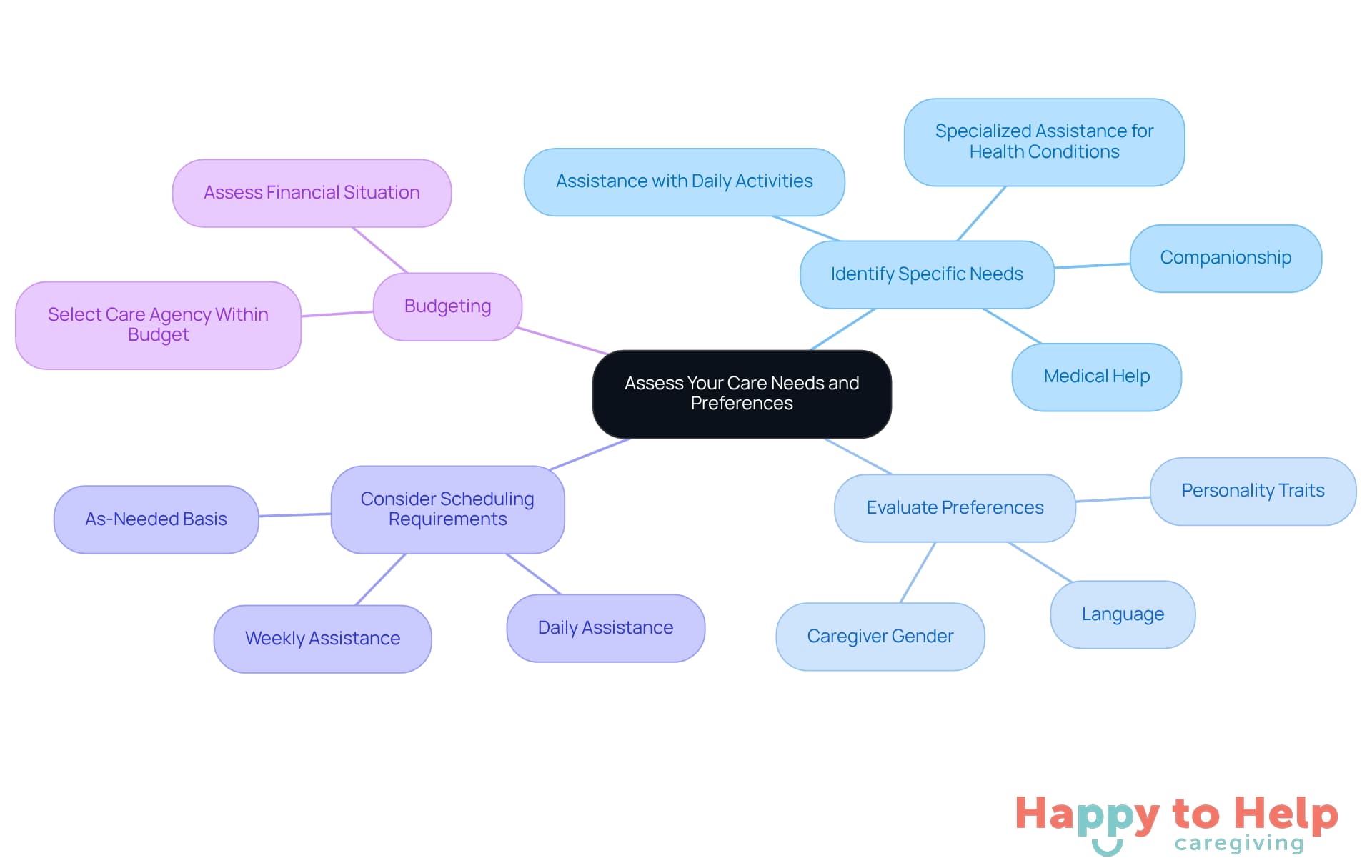
Assess Your Care Needs and Preferences
Identify Specific Needs: Caregivers often face the challenge of determining the specific types of support required. This may include companionship, assistance with daily activities, or medical help. It's crucial to consider any health conditions that might necessitate specialized assistance.
Evaluate Preferences: Personal preferences play a significant role in the caregiving relationship. Reflecting on aspects such as caregiver gender, language, and personality traits can enhance comfort and trust, making the experience more positive for everyone involved.
Consider Scheduling Requirements: Understanding how frequently assistance is needed - whether daily, weekly, or on an as-needed basis - is essential. This clarity will assist in finding a care agency near me that can accommodate your specific schedule.
Budgeting: Financial considerations are vital when seeking support. Assessing your financial situation will help you understand what you can afford, allowing you to select a care agency near me that aligns with your budget while still meeting your support needs.
Research and Compare Local Care Agencies
-
Finding Reliable Home Care Providers: Searching for home care providers can be overwhelming. With so many options available, it’s crucial to identify those that are reputable and trustworthy. Start by exploring online directories like Yelp or Care.com to find a care agency near me. Look for organizations that boast high ratings and positive feedback from clients.
-
Importance of Accreditation: Once you have a list of potential agencies, it’s essential to check their accreditation. Ensure that the care agency near me you consider is licensed and accredited by relevant state or national organizations. This accreditation serves as a key indicator of their commitment to excellence and adherence to industry standards.
-
Gathering Feedback: To make an informed decision, read reviews and testimonials from other families who have utilized these services. Pay close attention to comments regarding caregiver quality, reliability, and overall satisfaction. This feedback can provide valuable insights into what you can expect.
-
Comparison for Clarity: To streamline your decision-making process, create a comparison chart. List the organizations you’re interested in and compare their services, pricing, and availability. This visual aid will help you weigh your options and make a more informed choice.

Interview Care Agencies and Evaluate Their Services
Prepare Your Questions: Caregivers often struggle with finding qualified support providers. Understanding their qualifications is crucial, as it directly impacts the quality of assistance your loved one will receive. Research by Jarmin Yeh, PhD, MPH, MSSW, shows that organized training programs significantly enhance caregivers' skills, which is essential for ensuring quality support. Compile a list of targeted questions to ask the agency, focusing on their qualifications, training programs, and experience in the field.
Ask About Services Available: Another challenge is ensuring that the organization can meet your specific support needs. It's vital to inquire about the services they offer and assess their flexibility in adapting support plans over time. The recent house bill aimed at updating Medicaid's in-home skilled nursing services reflects the evolving landscape of home assistance, underscoring the importance of choosing a provider that stays informed about these changes.
Discuss Care Provider Matching: Matching support workers with clients can be a daunting task. A reliable organization will consider personality traits, preferences, and specific support requirements to ensure a suitable match. This personalized approach can greatly enhance the caregiving experience. Involving family supporters in this process is essential for effective home assistance, as highlighted by specialists in the field.
Assess Communication Practices: Effective communication is another critical aspect that caregivers must consider. Ask about the organization's strategies for communicating with families and caregivers. Understanding how they keep families informed can provide peace of mind and foster a collaborative support environment. Moreover, support providers must prioritize their own well-being to maintain their ability to assist those they care for, emphasizing the need for open communication.

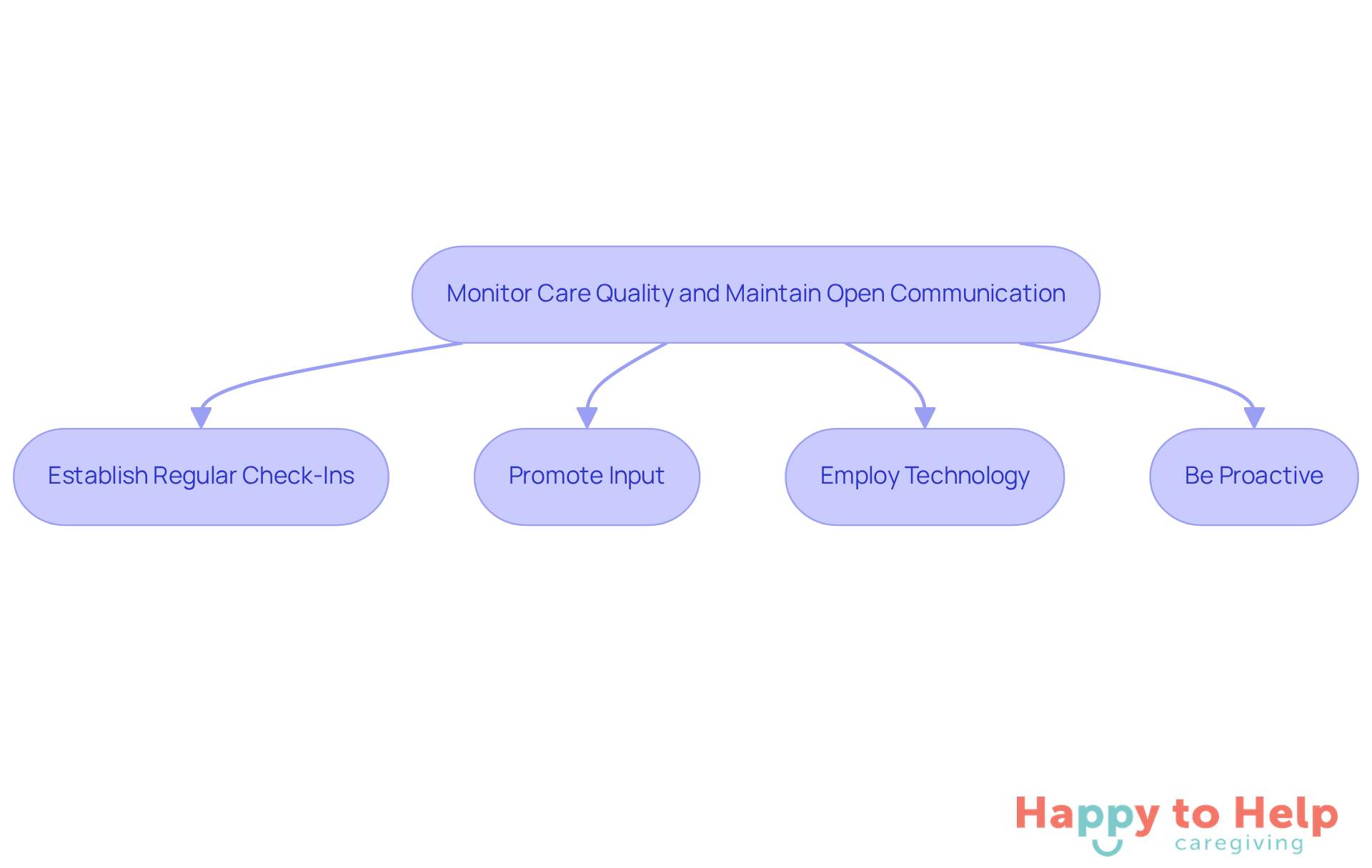
Monitor Care Quality and Maintain Open Communication
Caregivers often struggle to stay informed about their loved one's well-being and the quality of care they receive from a care agency near me. This can lead to misunderstandings and unmet needs.
Agitate: Without regular communication, caregivers may miss important changes in their loved one's condition or the services provided. This lack of awareness can result in frustration and anxiety, as caregivers feel unprepared to advocate for necessary adjustments in care when working with a care agency near me.
Solution:
- Establish Regular Check-Ins: Arrange consistent meetings or calls with the organization to discuss your loved one's well-being. This helps ensure that any changes in needs are addressed promptly.
- Promote Input: Foster a setting where caregivers feel at ease sharing their thoughts regarding the support situation. This can help identify areas for improvement.
- Employ Technology: If accessible, use any online resources offered by the organization to track notes and updates. This can enhance transparency and keep family members informed.
- Be Proactive: If you observe any problems with service quality, address them promptly with the agency. Open communication is key to resolving concerns and ensuring the best possible care from a care agency near me.
Taking the Next Steps
Finding the right care agency is a significant challenge for caregivers, as it directly impacts the support loved ones receive. This guide outlines a clear approach to selecting a care agency that meets specific needs and preferences, ultimately ensuring a positive caregiving experience.
Caregivers often face the problem of navigating numerous options without clear guidance. This can lead to confusion and anxiety about making the right choice. To address this, it’s essential to thoroughly assess care needs and research local options. Open communication with potential agencies can also alleviate concerns and foster informed decision-making.
Key insights include:
- Evaluating personal care needs
- Understanding available services
- Engaging actively with potential care agencies
Engaging actively with potential care agencies allows caregivers to compare qualifications, gather feedback from other families, and assess adaptability to changing needs. This process empowers caregivers to confidently select a provider that aligns with their situation.
Additionally, establishing regular communication and monitoring care quality are vital for maintaining a supportive environment. Caregivers should prioritize ongoing dialogue with agencies to ensure that care remains aligned with evolving needs.
Ultimately, finding a care agency requires diligence and thoughtful consideration. It’s not merely about addressing immediate needs; it’s about building a long-term relationship based on trust, transparency, and quality support. By following these steps, caregivers can create a rewarding caregiving experience, ensuring that loved ones receive the compassionate care they truly deserve.
https://iframe.tely.ai/cta/eyJhcnRpY2xlX2lkIjogIjY5NDBhMjFkMjI1ZjA3N2M1ZmMwYmYzMiIsICJjb21wYW55X2lkIjogIjY4ZWU1ZGNhNzMxNzYyNTU3ZjNjOTVjMSIsICJpbmRleCI6IG51bGwsICJ0eXBlIjogImFydGljbGUifQ==Frequently Asked Questions
What should I identify when assessing my care needs?
You should identify specific needs such as companionship, assistance with daily activities, or medical help, and consider any health conditions that may require specialized assistance.
Why are personal preferences important in caregiving?
Personal preferences, including caregiver gender, language, and personality traits, are important as they enhance comfort and trust, making the caregiving experience more positive for everyone involved.
How can I determine my scheduling requirements for care?
Understanding how frequently assistance is needed-whether daily, weekly, or on an as-needed basis-is essential for finding a care agency that can accommodate your specific schedule.
What financial considerations should I keep in mind when seeking care support?
Assessing your financial situation is vital as it helps you understand what you can afford, allowing you to select a care agency that aligns with your budget while still meeting your support needs.
List of Sources
- Assess Your Care Needs and Preferences
- Home Care Industry Trends to Watch in 2025 (https://firstlighthomecare.com/blog/home-care-industry-trends)
- Understanding the Major Trends Influencing Home Care in 2025 (https://learn2care.us/blog/predictions-for-caregiving-trends-in-2025)
- The senior population is booming. Caregiving is struggling to keep up (https://cnbc.com/2025/11/21/senior-caregiving-labor.html)
- The Top 10 Home Health Care News Stories Of 2025 (https://homehealthcarenews.com/2025/12/the-top-10-home-health-care-news-stories-of-2025)
- National Alliance for Caregiving: Caregiving in the US 2025 Report (https://johnahartford.org/resources/view/national-alliance-for-caregiving-caregiving-in-the-us-2025-report)
- Research and Compare Local Care Agencies
- ACHC Launches New Distinctions for Home Care Services (https://respiratory-therapy.com/public-health/healthcare-policy/home-care/achc-distinctions-home-care)
- 7 Top Rated Home Care Agencies Near Me: A 2025 Guide (https://companionsplus.com/top-rated-home-care-agencies-near-me-3)
- Home Care Accreditation Program | Joint Commission (https://jointcommission.org/en-us/accreditation/home-care)
- Evaluate Home Care Providers: Step-by-Step Guide (https://proactivehealthcarestaffing.co/how-to-assess-experience-and-qualification-home-care-providers)
- How to Evaluate Home Care Agencies for Quality Services (https://ultimatecareny.com/resources/how-to-evaluate-home-care-agencies-for-quality-services)
- Interview Care Agencies and Evaluate Their Services
- Home caregivers receive training through local center to help fill IHSS gap (https://spectrumlocalnews.com/product-pages/nyc/health/2025/11/27/home-caregivers-receive-training-through-local-center-to-help-fill-ihss-gap)
- US News & World Report Highlights CCA's Caregiver Training (https://advancecaregivers.org/report-us-news-world-report-highlights-ccas-caregiver-training)
- 2025 home care trends include tightened EVV oversight, investments in caregiver training (https://mcknightshomecare.com/2025-home-care-trends-include-tightened-evv-oversight-investments-in-caregiver-training)
- Home-Based Care Companies Improve Outcomes By Training Family Caregivers (https://homehealthcarenews.com/2025/10/home-based-care-companies-improve-outcomes-by-training-family-caregivers)
- Monitor Care Quality and Maintain Open Communication
- Communication Breakdowns Are a Major Hurdle for Caregivers (https://asha.org/news/2025/communication-breakdowns-are-a-major-hurdle-for-caregivers?srsltid=AfmBOorXJ6mEuOu-qFHEUy1ucGaqhvam5V67U-EWLN7TRxG3anrCIb1N)
- The Importance of Effective Communication in Caregiving (https://familycaregiversonline.net/the-importance-of-effective-communication-in-caregiving)
- Speaking Up as a Family Caregiver (https://caregiveraction.org/importance-of-speaking-up)
- Patient and Family Caregiver Engagement: The Key to Enhancing Teamwork and Communication | AHA (https://aha.org/education-events/patient-and-family-caregiver-engagement-key-enhancing-teamwork-and-communication)
- New Research Brief: Quality of Communication Between Family Caregivers and Direct Care Professionals | The LeadingAge LTSS Center @UMass Boston (https://ltsscenter.org/new-research-brief-quality-of-communication-between-family-caregivers-and-direct-care-professionals)