
The Importance of Find the Right Respite Care Facility
Navigating the world of respite care presents a significant challenge for caregivers seeking temporary relief. Nearly 4 in 10 family supporters prioritize respite assistance, highlighting the urgency of understanding how to find the right facility. This situation not only adds stress to caregivers but also impacts the quality of care their loved ones receive.
The implications of inadequate respite care can be profound. Caregivers may experience burnout, leading to decreased effectiveness in their roles. Therefore, it’s crucial to identify facilities that cater to individual needs. To ensure that families find the best support for their loved ones, they should consider essential criteria when selecting a respite care option.
What challenges might arise during this search? Families often struggle with limited information and varying quality of care across facilities. To navigate these obstacles, caregivers can take proactive steps to research and evaluate potential options, ensuring their loved ones receive the best support possible.
Understand Respite Care and Its Importance
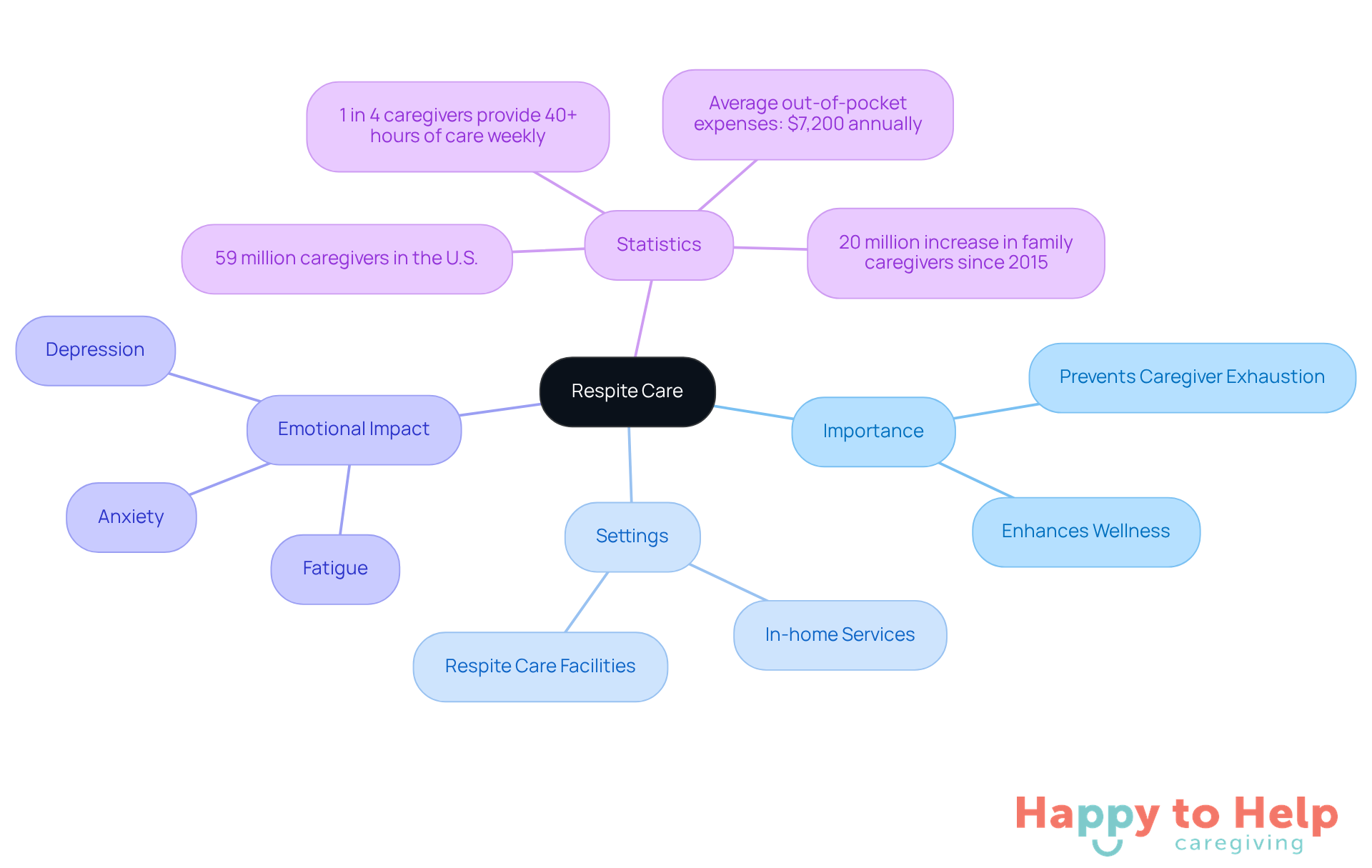
Respite support serves as a crucial temporary relief option for primary caregivers, allowing them to take necessary breaks while ensuring their loved ones receive ongoing, compassionate assistance. This service can be delivered in various settings, including in-home services or a respite care facility near me, tailored to meet individual needs. The importance of relief support is profound; it plays a vital role in preventing caregiver exhaustion, impacting nearly 1 in 4 individuals who report providing over 40 hours of assistance each week. By enabling caregivers to rejuvenate, relief services alleviate pressure and enhance overall wellness for both caregivers and those receiving assistance.
Caregivers often face overwhelming emotional and physical demands, leading to increased fatigue, anxiety, and depression. Emotional stress among caregivers has notably risen since 2020, underscoring the urgent need for support. For instance, the Lifespan Respite Assistance Program has been recognized for its essential role in safeguarding caregivers' well-being, which in turn improves the quality of assistance offered to those they help. Case studies emphasize the positive outcomes of short breaks, including enhanced emotional well-being and strengthened connections between caregivers and their loved ones.
Moreover, relief services enable caregivers to address personal needs, reconnect with friends and family, and engage in self-care activities, ultimately boosting their emotional resilience. With the number of family caregivers increasing by 20 million since 2015, recognizing the benefits of temporary relief becomes increasingly significant for families navigating the challenges of caregiving. By prioritizing a respite care facility near me, families can ensure that both caregivers and recipients thrive in a nurturing environment. As Jason Resendez, President and CEO of the National Alliance for Caregiving, states, "When almost 1 in 4 adults are delivering intricate support with virtually no training, we cannot keep regarding family assistance as unnoticed work." This highlights the essential need for relief support services.
Identify Key Criteria for Selecting a Respite Care Facility
When selecting a respite care facility near me, caregivers often face the challenge of ensuring their loved ones receive the best possible support. This decision can significantly impact the quality of care and overall well-being of those in need.
-
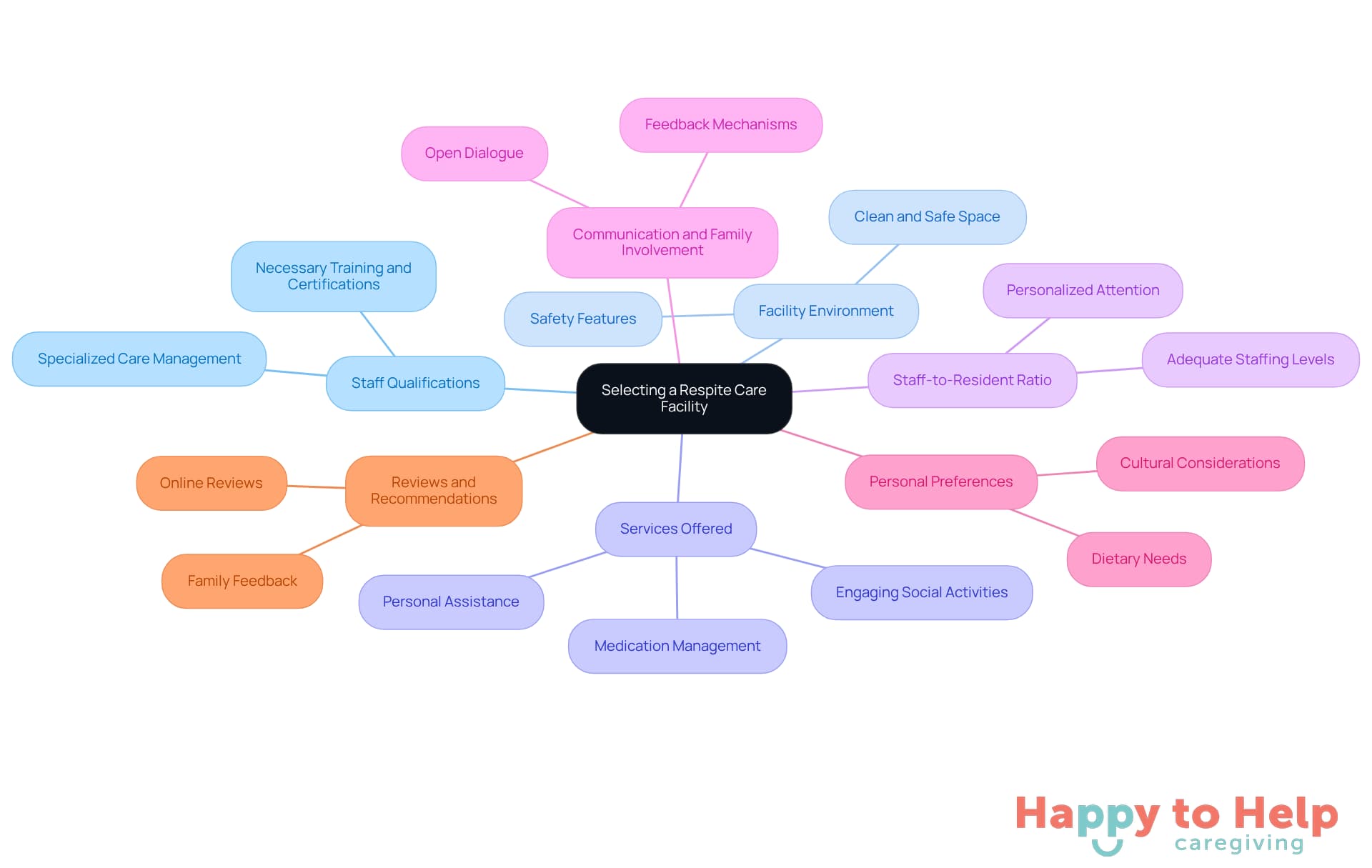
Staff Qualifications: One major concern is the qualifications of caregivers. It’s crucial to ensure that they possess the necessary training and certifications, including CPR and first aid. Facilities should also have staff qualified to manage specialized care needs, such as medication management and conditions like Alzheimer’s and Parkinson’s.
-
Facility Environment: Another important factor is the facility's environment. A clean, safe, and welcoming space promotes comfort and security. Look for locations that prioritize hygiene and include safety features like grab bars and non-slip floors to enhance resident safety.
-
Services Offered: Verify that the facility provides the specific services your loved one requires. This may encompass personal assistance, medication management, and engaging social activities tailored to residents' interests and abilities. Respite assistance should also support daily living activities, helping maintain independence and dignity.
-
Staff-to-Resident Ratio: A reduced staff-to-resident ratio often signifies a greater degree of personalized attention. Facilities should maintain adequate staffing levels to ensure that each resident receives the attention they need, which is vital for their well-being.
-
Communication and Family Involvement: Open and consistent dialogue with families is essential for establishing trust and ensuring quality support. Facilities should keep families informed of any changes in support and be open to feedback.
-
Personal Preferences: Don’t forget to consider the dietary, cultural, and comfort preferences of your loved one. Meeting these needs can significantly improve the quality of the respite support experience.
-
Reviews and Recommendations: Finally, seek feedback from other families to assess the quality of service and overall satisfaction with the establishment. Online reviews and testimonials can offer valuable insights into the experiences of current and former residents, aiding you in evaluating the establishment's reputation.
By considering these criteria, families can make informed choices to select a respite care facility near me that ensures their loved ones receive the compassionate and effective support they deserve.
Research Local Respite Care Facilities
Finding a respite care facility near me can be a challenge for caregivers, often leaving them feeling overwhelmed and unsupported. Nearly 4 in 10 family supporters identify respite assistance as their highest requirement, underscoring the urgency of this issue. Without proper resources, caregivers may struggle to balance their responsibilities, leading to increased stress and burnout.
To tackle this problem, consider these actionable steps:
-
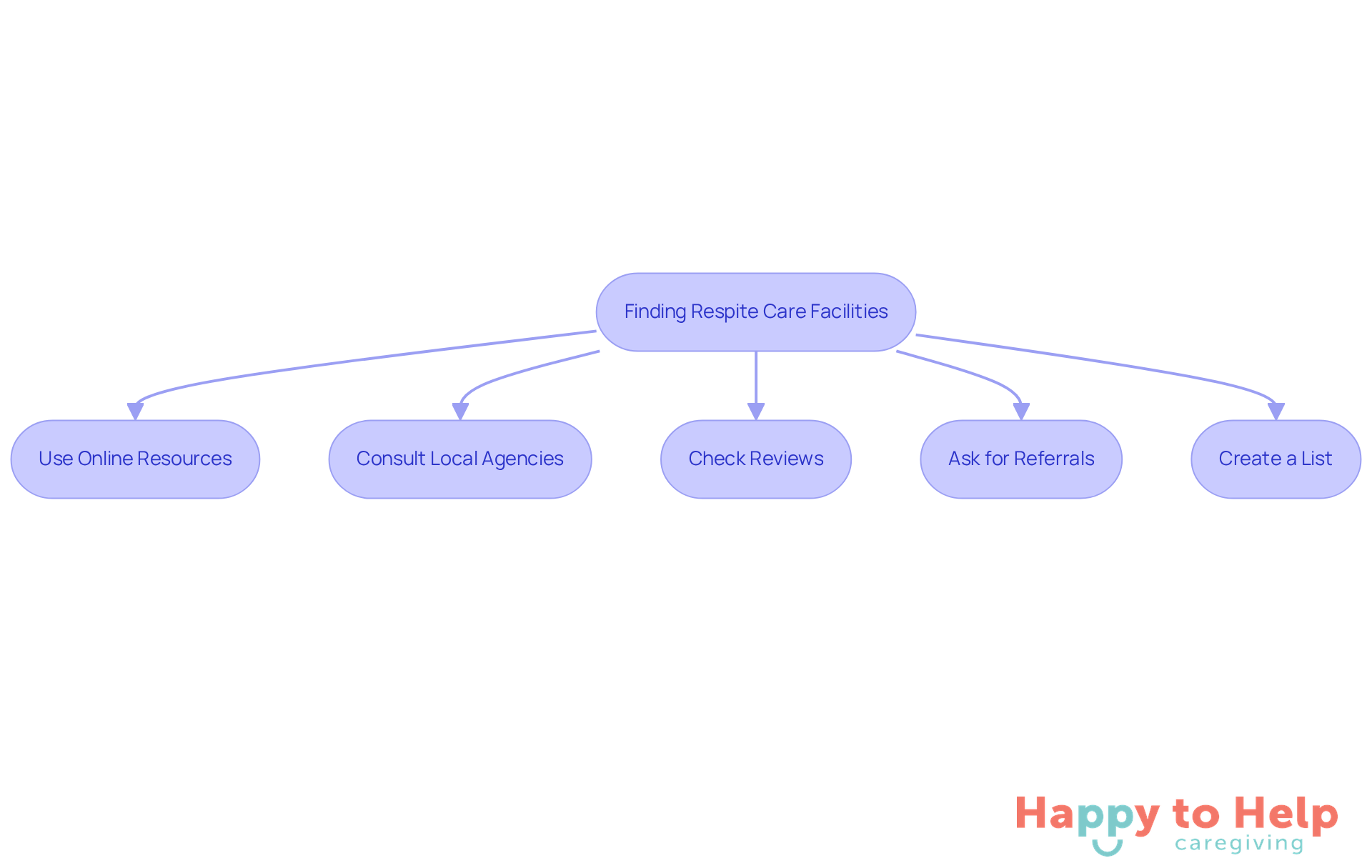
Use Online Resources: Websites like the ARCH National Respite Locator Service are essential for finding temporary support providers in your area. These platforms frequently showcase extensive databases that can link you with solutions customized to your requirements.
-
Consult Local Agencies: Reach out to local health departments or senior services organizations. These agencies can offer suggestions tailored to your particular needs and may possess knowledge about a respite care facility near me that excels in delivering quality support.
-
Check Reviews: Platforms like Yelp or Google Reviews enable you to read firsthand accounts from other families regarding their experiences with particular establishments. This feedback can be crucial in assessing the quality of care offered.
-
Ask for Referrals: Engage with healthcare providers, social workers, or fellow caregivers. Their professional insights can guide you toward trustworthy establishments that have a proven track record of supporting families. A recent study highlighted that nearly 76% of caregivers in the critical-needs group indicated that relief options assisted them greatly with personal time and household management.
-
Create a List: Assemble a collection of possible venues, mentioning their offerings, contact details, and any initial thoughts. This organized approach will help you compare options and make an informed decision.
By utilizing these resources, you can discover support services that not only fulfill your requirements but also improve the well-being of your loved ones.
Visit and Evaluate Potential Facilities
When searching for the right respite care facility, caregivers often face the challenge of ensuring their loved ones receive the best possible care. This can be a daunting task, as the quality of care can significantly impact the well-being of residents.
To address this issue, consider the following actionable solutions:
-
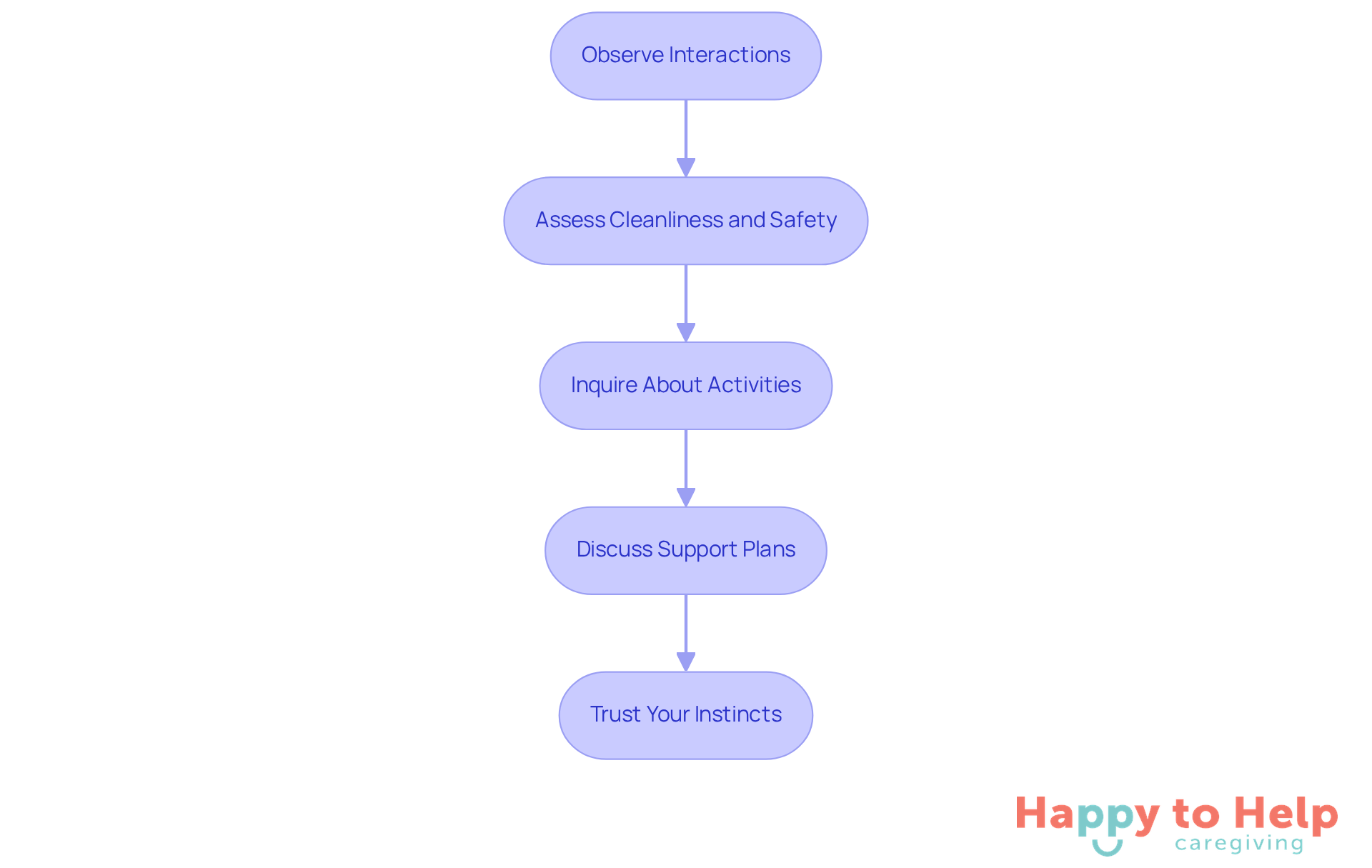
Observe Interactions: Pay attention to how staff interact with residents. Are they respectful, attentive, and kind? Positive interactions are crucial for a supportive environment.
-
Assess Cleanliness and Safety: Evaluate the overall tidiness of the premises and check for safety features like grab bars and non-slip flooring. A clean and safe environment is essential for residents' health and comfort.
-
Inquire About Activities: Ask about the types of activities offered to residents, as engagement is crucial for their well-being. A variety of activities can enhance quality of life and promote social interaction.
-
Discuss Support Plans: Speak with staff about how they create personalized support strategies and how they accommodate individual needs. Tailored care plans ensure that each resident receives the attention they require.
-
Trust Your Instincts: Consider how comfortable you feel in the environment and whether it seems like a good fit for your loved one. Your intuition can be a valuable guide in this decision-making process.
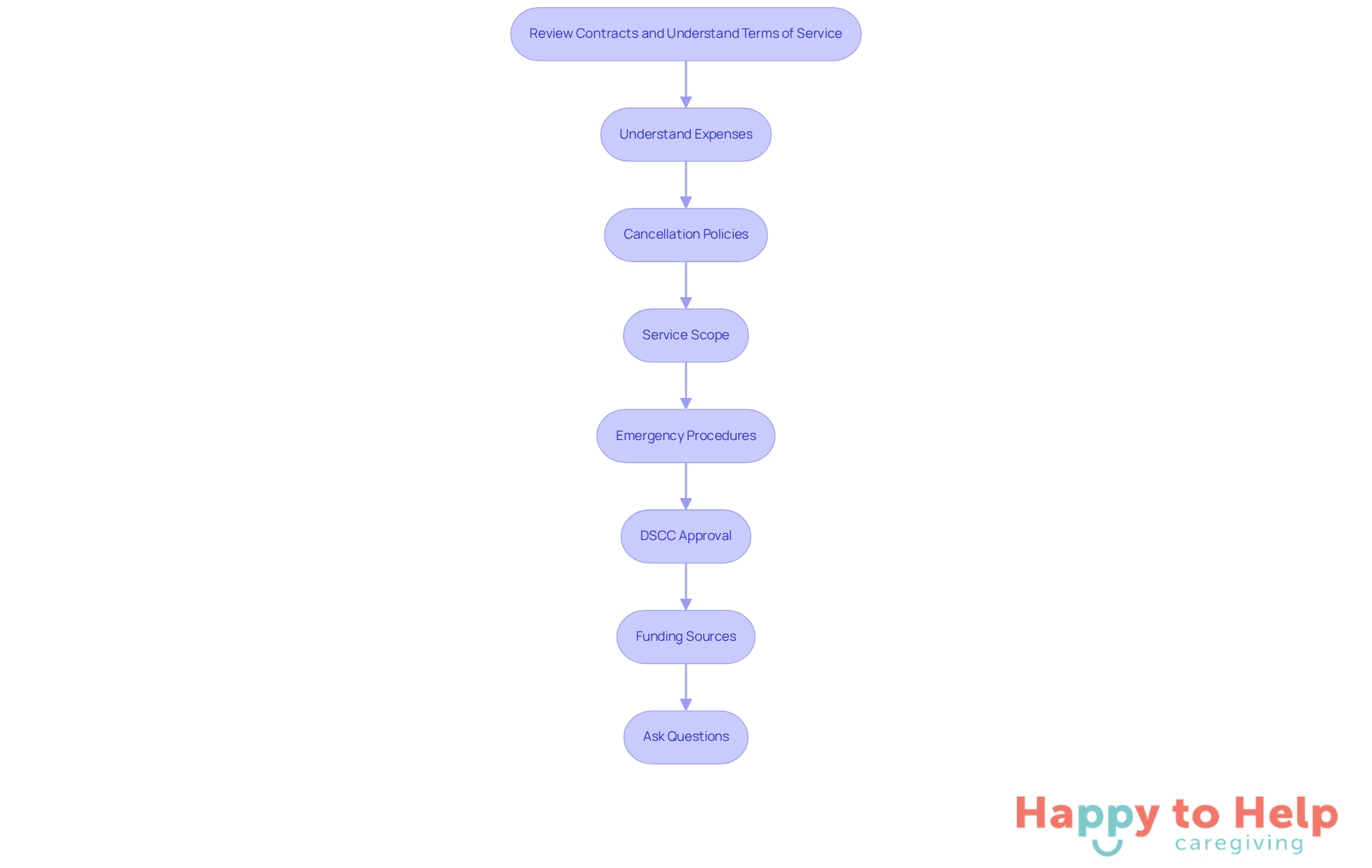
Review Contracts and Understand Terms of Service
Before finalizing your choice of a respite care facility near me, it’s essential to review the contract and terms of service carefully. This ensures clarity and alignment with your needs.
-
Understand Expenses: One of the primary concerns is understanding all fees related to assistance, including any extra charges for provisions. Respite service expenses can vary significantly. For instance, adult day services average around $103 daily, while in-home assistance from a health aide typically costs about $35 per hour. As Matthew Clem, a registered nurse, points out, "When you consider the alternatives, including assisted living and nursing home care, in-home services may be a more financially accessible option." Knowing these costs upfront can help you budget effectively.
-
Cancellation Policies: It’s also crucial to be aware of the facility's cancellation and refund policies. Plans can change, and understanding these guidelines can impact your financial commitments.
-
Service Scope: Ensure the contract clearly outlines the services provided and any limitations. Knowing what is included in your care plan helps prevent misunderstandings and ensures that your loved one receives the necessary support.
-
Emergency Procedures: Review the establishment's protocols for emergencies and how they communicate with families. Understanding how the facility handles emergencies can provide peace of mind.
-
DSCC Approval: Remember that nursing agencies need to complete a form and secure DSCC approval before initiating temporary support. This step is essential for families to understand to ensure a smooth process.
-
Funding Sources: Consider possible funding options for short-term relief, such as long-term insurance and veterans' benefits, which can help ease financial burdens.
-
Ask Questions: Don’t hesitate to ask staff for clarification on any unclear terms or conditions. Engaging with the facility's personnel can help you gain a better understanding of the support environment and the services provided.
By following these steps, you can make a more informed choice regarding a respite care facility near me, ensuring it meets both your needs and those of your loved one. Additionally, families in the MFTD waiver receive 336 hours of respite care each year, providing valuable support.
Moving Forward with Find the Right Respite Care Facility
Finding the right respite care facility is a significant challenge for caregivers, impacting their well-being and that of their loved ones. Without proper support, caregivers may experience burnout, leading to decreased quality of care for those they support. This guide highlights the importance of respite care in alleviating these pressures, ensuring that caregivers can prioritize their health while their loved ones receive the necessary care in a nurturing environment.
To address this issue, it’s crucial to evaluate key criteria when selecting a respite care facility. Consider the following factors:
- Staff qualifications
- The facility's environment
- Services offered
- The level of family involvement
Researching local options, visiting potential facilities, and reviewing contracts are practical steps that can lead to informed decisions. Each of these elements is vital for securing a supportive and effective respite care experience.
Ultimately, prioritizing respite care goes beyond temporary relief; it fosters a healthier dynamic for both caregivers and their loved ones. By investing time in research and selecting the right facility, caregivers can meet their own needs while ensuring the best possible care for those they support. Embracing the benefits of respite care encourages caregivers to recharge, reconnect, and continue their invaluable role with renewed strength and compassion.
https://iframe.tely.ai/cta/eyJhcnRpY2xlX2lkIjogIjY5MjRmMWNjZWM0Y2FiOGU3NGVjMDBiNCIsICJjb21wYW55X2lkIjogIjY4ZWU1ZGNhNzMxNzYyNTU3ZjNjOTVjMSIsICJpbmRleCI6IG51bGwsICJ0eXBlIjogImFydGljbGUifQ==Frequently Asked Questions
What is respite care and why is it important?
Respite care provides temporary relief for primary caregivers, allowing them to take necessary breaks while ensuring their loved ones receive ongoing assistance. It is essential for preventing caregiver exhaustion, which affects nearly 1 in 4 caregivers who provide over 40 hours of assistance each week.
How does respite care benefit caregivers?
Respite care alleviates emotional and physical demands on caregivers, helping to reduce fatigue, anxiety, and depression. It allows caregivers to rejuvenate, address personal needs, reconnect with friends and family, and engage in self-care activities, ultimately enhancing their emotional resilience.
What are some signs that a caregiver might need respite care?
Caregivers may experience overwhelming emotional and physical demands, leading to increased fatigue, anxiety, and depression. The rise in emotional stress among caregivers since 2020 highlights the urgent need for support.
What should I consider when selecting a respite care facility?
Key criteria include staff qualifications (training and certifications), facility environment (cleanliness and safety features), services offered (personal assistance and medication management), staff-to-resident ratio (personalized attention), communication with families, personal preferences (dietary and cultural), and reviews from other families.
Why is staff qualification important in a respite care facility?
Qualified staff with necessary training and certifications, including CPR and first aid, are essential to ensure the safety and well-being of residents. Specialized care for conditions like Alzheimer’s and Parkinson’s is also crucial.
How does the facility environment impact care quality?
A clean, safe, and welcoming environment promotes comfort and security for residents. Safety features like grab bars and non-slip floors are important for enhancing resident safety.
What types of services should a respite care facility provide?
Facilities should offer personal assistance, medication management, and engaging social activities tailored to residents' interests and abilities, as well as support for daily living activities to maintain independence and dignity.
How does the staff-to-resident ratio affect care?
A reduced staff-to-resident ratio typically indicates more personalized attention for residents, ensuring that each individual receives the necessary care and support for their well-being.
Why is communication and family involvement important in respite care?
Open and consistent communication with families helps establish trust and ensures quality support. Facilities should keep families informed of any changes in care and be receptive to feedback.
How can reviews and recommendations assist in selecting a respite care facility?
Seeking feedback from other families through online reviews and testimonials provides valuable insights into the quality of service and overall satisfaction, helping families evaluate the reputation of the facility.
List of Sources
- Understand Respite Care and Its Importance
- Caregivers and the Importance of Respite Care (https://benedictineliving.org/resources/news/caregivers-and-the-importance-of-respite-care)
- New Report Reveals Crisis Point for America’s 63 million Family Caregivers (https://press.aarp.org/2025-07-24-New-Report-Reveals-Crisis-Point-for-Americas-63-million-Family-Caregivers)
- Congressman Nick Langworthy Introduces Bill to Support the Wellbeing of Family Caregivers (https://langworthy.house.gov/media/press-releases/congressman-nick-langworthy-introduces-bill-support-wellbeing-family)
- Identify Key Criteria for Selecting a Respite Care Facility
- Respite Care: 7 Factors to Consider When Choosing a Respite Care Community (https://bethesdaseniorliving.com/senior-resources/respite-care-7-factors-to-consider-when-choosing-a-respite-care-community)
- Respite Care Guide: Helping Hands' Selection Tips for 2025 (https://helpinghandsrch.com/2025/09/12/essential-factors-to-evaluate-when-selecting-respite-care-services-for-your-loved-one)
- How to Choose the Best Respite Care Program for Your Loved One (https://rosewood-nursing.com/post/how-to-choose-the-best-respite-care-program-for-your-loved-one)
- How to Choose the Right Respite Care Provider (https://bucknervillas.org/news-blog/how-to-choose-the-right-respite-care-provider)
- Research Local Respite Care Facilities
- Respite Facts and Talking Points | ARCH National Respite Network & Resource Center (https://archrespite.org/policy/respite-facts-and-talking-points)
- FastStats (https://cdc.gov/nchs/fastats/nursing-home-care.htm)
- New Resources Available for Improving Respite Care Services for Caregivers | ACL Administration for Community Living (https://acl.gov/news-and-events/announcements/new-resources-available-improving-respite-care-services-caregivers)
- Facts & Figures (https://ahcancal.org/Assisted-Living/Facts-and-Figures/Pages/default.aspx)
- Abide Respite Ministry seeks volunteers as demand for dementia support grows in Chattanooga (https://local3news.com/local-news/abide-respite-ministry-seeks-volunteers-as-demand-for-dementia-support-grows-in-chattanooga/article\_02b9c4a6-4393-482e-afde-fad70bebdd78.html)
- Visit and Evaluate Potential Facilities
- How to Choose the Right Respite Care Provider (https://bucknervillas.org/news-blog/how-to-choose-the-right-respite-care-provider)
- A Description of Staff-resident Interactions in Assisted Living - PMC (https://pmc.ncbi.nlm.nih.gov/articles/PMC10495040)
- Respite Care: Short-Term Stay to Assess Assisted Living Fit (https://sundaleseniorliving.com/news-and-articles/how-a-short-term-respite-care-stay-can-determine-if-assisted-living-is-the-right-fit)
- Respite care provides minimal benefits, study finds (https://mcknights.com/news/respite-care-provides-minimal-benefits-study-finds)
- How Respite Care Can Be a Trial Stay for Long-Term Care (https://rosewood-nursing.com/post/how-respite-care-can-be-a-trial-stay-for-long-term-care)
- Review Contracts and Understand Terms of Service
- New Approval Process for Respite Nursing Services - UIC Division of Specialized Care for Children (https://dscc.uic.edu/new-approval-process-for-respite-nursing-services)
- Respite Care Costs | How Much Does it Cost for Respite Care in 2025? (https://seniorliving.org/respite/costs)
- ACL Awards $5M to Increase Availability of Dementia-Specific Respite Care | ACL Administration for Community Living (https://acl.gov/news-and-events/announcements/acl-awards-5m-increase-availability-dementia-specific-respite-care)
- Average Cost Of Respite Care (https://rosewood-nursing.com/post/average-cost-of-respite-care)
- POLITICO Pro: Medical respite expansion could ease looming funding crunch, providers say (https://subscriber.politicopro.com/article/2025/10/medical-respite-expansion-could-ease-looming-funding-crunch-providers-say-00592366)