

For families in our service areas
For families in our service areas, this guide explains caregiving and how non-medical in-home caregiving can support care planning in East Idaho, Treasure Valley & Magic Valley, Northern Wasatch, North Central West Virginia, and Northeast Ohio.
Why Help Your Elderly Loved One Not Eating Matters
Understanding the complexities of appetite loss and excessive sleep in the elderly is crucial for caregivers and family members alike. It’s a challenging journey, filled with emotional ups and downs. With a myriad of factors - from medical conditions to psychological challenges - recognizing these underlying issues can truly pave the way for effective support and intervention.
But how can we encourage healthier eating habits and better sleep patterns in our seniors? It’s a daunting reality, especially when we see their well-being declining. Caregivers often feel overwhelmed, and it’s important to acknowledge that stress and burnout are common in these situations.
Yet, there is hope. By fostering understanding and compassion, we can create an environment that nurtures our loved ones. Together, we can explore practical solutions that not only address these challenges but also reassure caregivers that they are not alone in this journey.
Identify Common Causes of Appetite Loss and Excessive Sleep in the Elderly
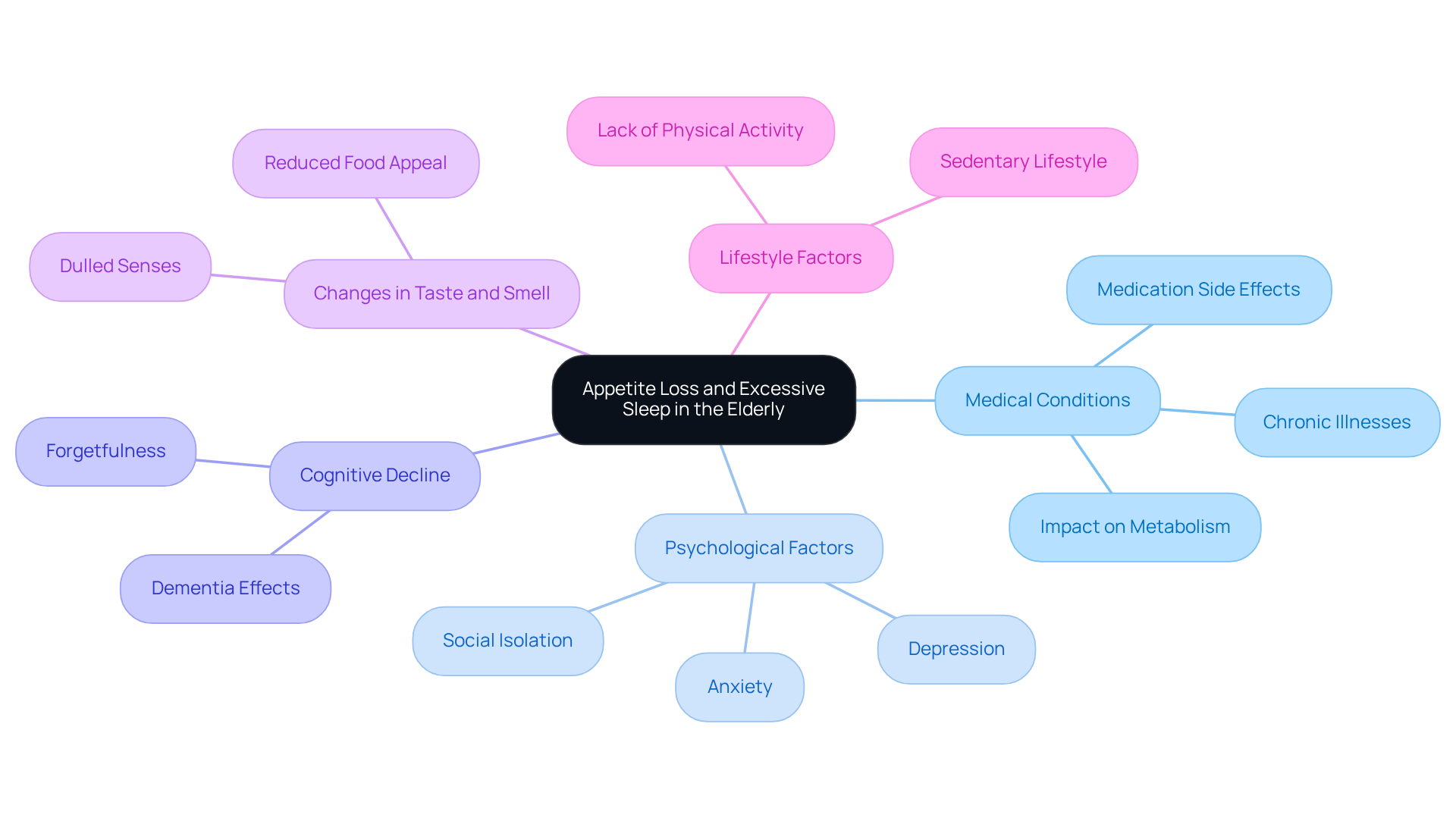
The elderly person not eating and sleeping all the time can experience a loss of appetite and excessive sleep due to various factors, making it important to understand these to provide the right support.
-
Medical Conditions: Chronic illnesses like diabetes, heart disease, and cancer can lead to decreased appetite and fatigue. The medications prescribed for these conditions might also have side effects that disrupt normal eating and sleeping patterns. Research shows that ongoing health issues can significantly impact hunger, metabolism, and overall dietary habits, often resulting in unintentional weight loss.
-
Psychological Factors: Depression and anxiety are prevalent among older adults, deeply affecting their hunger and energy levels. Social isolation plays a major role, intensifying feelings of loneliness and withdrawal from both food and physical activity. Studies indicate that nearly one in four older adults experience a diminished desire for food before malnutrition sets in, highlighting the need for mental health support in this group. As Perri Halperin wisely notes, 'A major contributing factor to weight loss in older adults is social isolation.'
-
Cognitive Decline: Conditions such as dementia can drastically change eating habits and sleep patterns. An elderly person not eating and sleeping all the time may forget to eat or lose interest in food altogether, leading to significant nutritional deficiencies and weight loss.
-
Changes in Taste and Smell: Aging often dulls the senses of taste and smell, making food less appealing. This sensory decline can further reduce the desire to eat, complicating nutritional intake.
-
Lifestyle Factors: Sedentary lifestyles can lead to both weight loss and increased sleepiness. A lack of physical activity may lead to an elderly person not eating and sleeping all the time, creating a challenging cycle. Regular physical activity is essential for maintaining appetite and overall well-being in older adults.
Understanding these factors is crucial for caregivers and family members. By recognizing these challenges, they can provide the necessary support and interventions for their elderly loved ones. Healthcare providers should also pay close attention to any significant changes in weight, as these may signal underlying health issues.
Implement Effective Strategies to Encourage Eating and Manage Sleep Patterns
To encourage better eating and manage sleep patterns in seniors, consider these nurturing strategies:
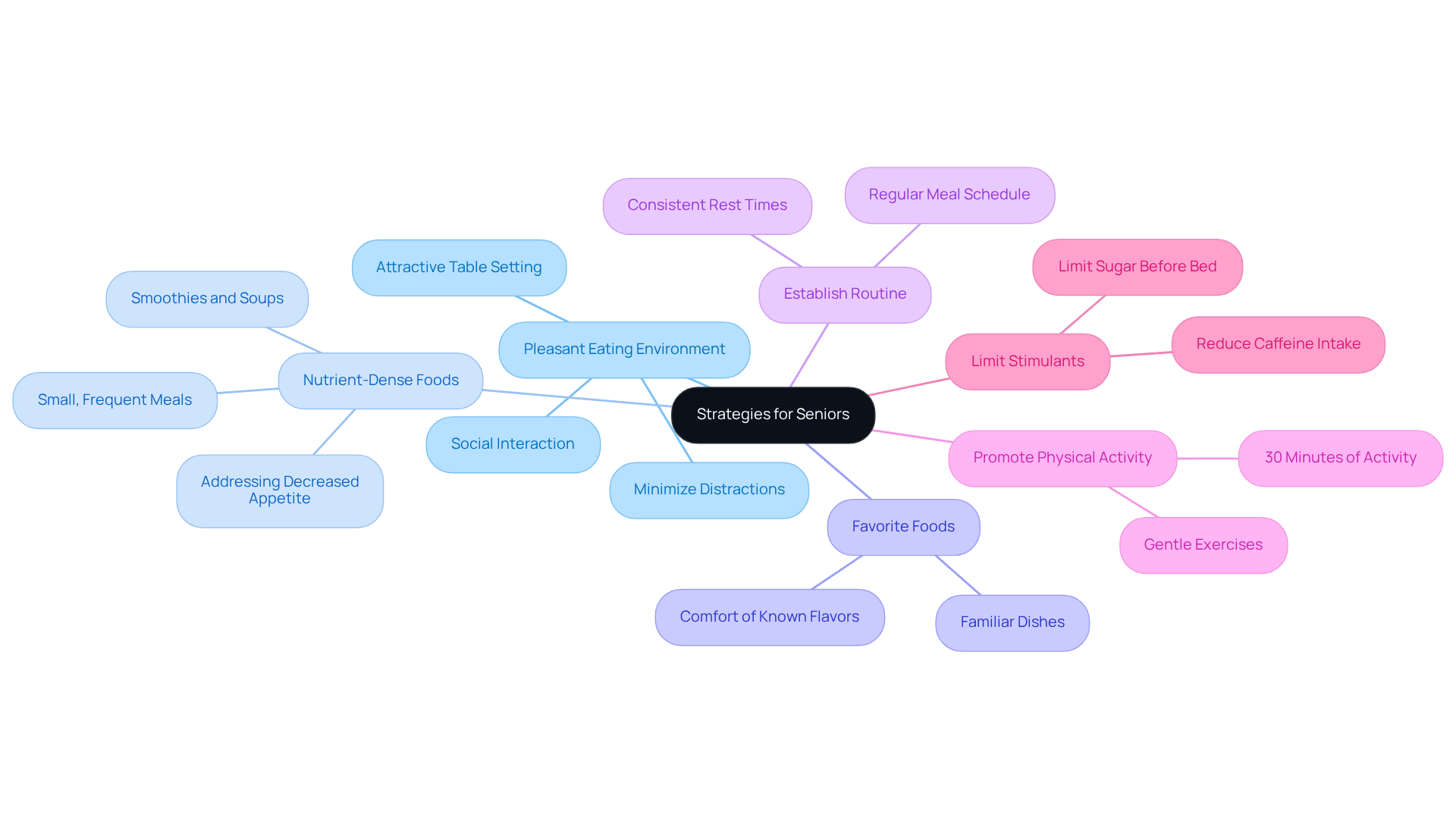
- Create a Pleasant Eating Environment: Transform mealtimes into enjoyable experiences. Set the table attractively and minimize distractions. Sharing meals can enhance social interaction, which is so important for stimulating the desire for food.
- Offer Nutrient-Dense Foods: Focus on small, frequent meals that are rich in nutrients. Smoothies, yogurt, and soups are excellent choices, as they’re easier to consume and digest. This is especially helpful for seniors who may struggle with solid foods. Studies show that 15 to 30% of older adults, such as an elderly person not eating and sleeping all the time, may experience a decreased desire to eat, making nutrient density crucial.
- Include Favorite Foods: Encourage a desire for food by providing familiar and preferred dishes. The comfort of known flavors can inspire seniors to eat more.
- Establish a Routine: Implementing regular meal and rest schedules helps regulate the body's internal clock. This makes it easier for seniors to eat and rest at appropriate times.
- Promote Physical Activity: Gentle exercises, like walking or stretching, can significantly enhance appetite and improve rest quality. Aim for at least 30 minutes of activity most days to promote overall well-being.
- Limit Stimulants Before Bed: Reducing caffeine and sugar consumption in the hours leading up to bedtime can encourage better rest, helping seniors recover more effectively.
By incorporating these strategies, caregivers can create a nurturing atmosphere that fosters healthy dietary practices and enhances sleep patterns, particularly for an elderly person not eating and sleeping all the time. As nutritionists often remind us, maintaining hydration and including favorite foods can play a significant role in enhancing overall well-being.
Recognize When to Seek Professional Help for Eating and Sleeping Issues
Recognizing when to seek expert help for dietary and sleep issues in elderly loved ones is vital for their health and overall well-being. Here are some key signs that deserve immediate attention:
-
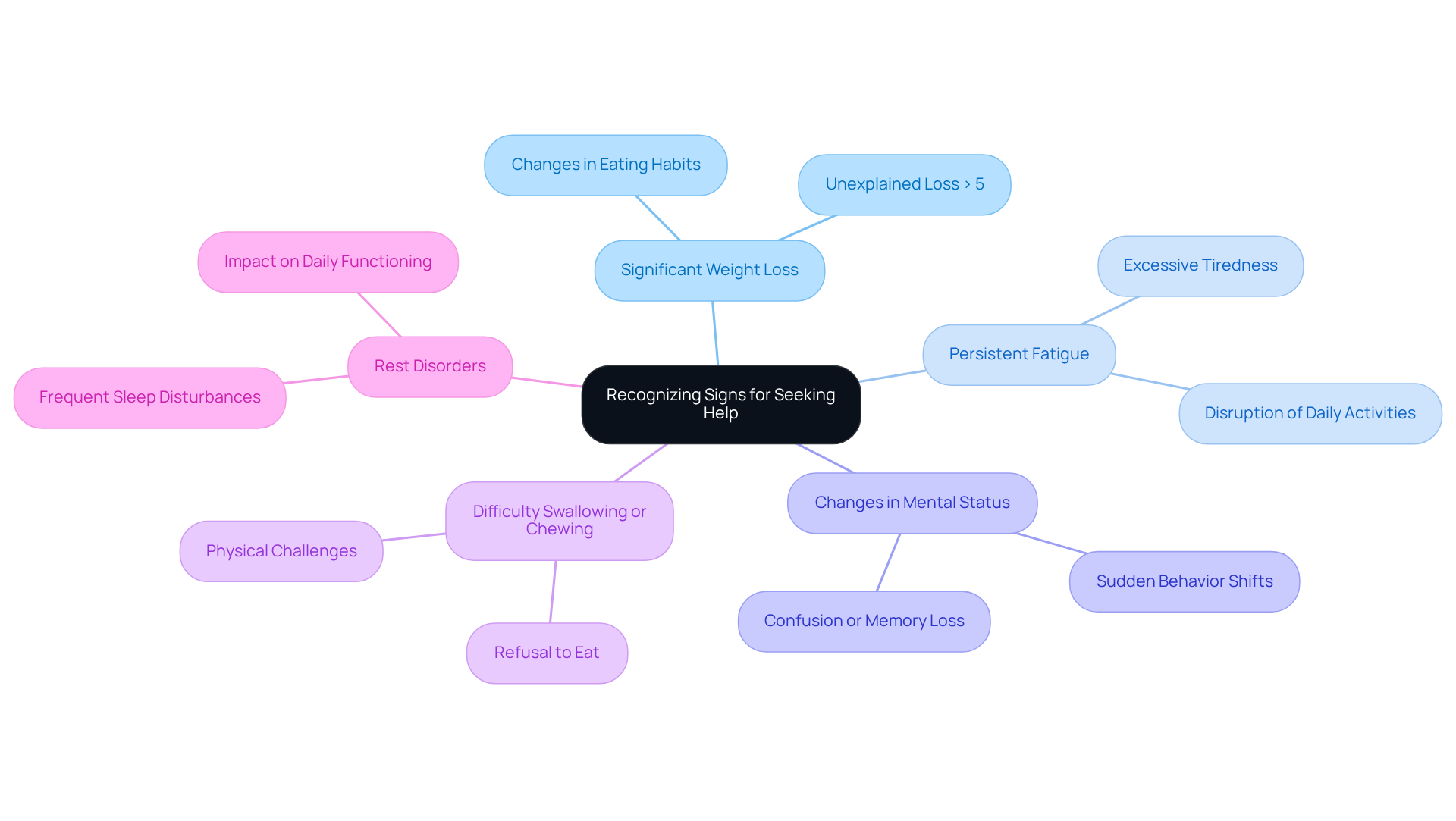
Significant Weight Loss: If your cherished individual experiences unexplained weight loss of more than 5 percent of their body weight over six months, it’s concerning. Changes in eating habits or noticeable weight loss should prompt you to consult a medical professional to rule out serious health issues. As Christine Goukasian, MS, RDN, wisely points out, 'If you are an elderly person not eating and sleeping all the time, you are going to lose weight.'
-
Persistent Fatigue: Excessive tiredness that disrupts daily activities may signal underlying health problems. If your loved one is an elderly person not eating and sleeping all the time, and seems frequently lethargic or sleeps excessively, it’s essential to look into this further.
-
Changes in Mental Status: Sudden shifts in behavior, confusion, or memory loss can indicate serious medical concerns. It’s crucial to seek immediate medical evaluation to address potential cognitive decline or other neurological issues.
-
Difficulty Swallowing or Chewing: If your loved one struggles with eating due to physical challenges, such as swallowing or chewing, consulting a speech therapist or dietitian can provide the necessary assessment and interventions. A consistent refusal to eat or a noticeable disinterest in food in an elderly person not eating and sleeping all the time may signal depression or other medical issues. Reaching out to a doctor can help uncover underlying problems and facilitate the support needed.
-
Rest Disorders: Frequent disturbances during sleep that affect daily functioning should not be ignored. A sleep expert can offer valuable insights and treatment options to improve sleep quality and overall well-being.
By staying vigilant and proactive, caregivers can profoundly influence the health and quality of life for seniors facing these challenges. The case study on "Identifying Eating Disorders in Seniors" underscores the importance of recognizing both physical and behavioral changes, leading to earlier detection and intervention.
Your Path Forward
Understanding why elderly loved ones may experience appetite loss and excessive sleeping is vital for effective caregiving. It’s essential to recognize the medical, psychological, cognitive, and lifestyle factors that contribute to these challenges. By doing so, caregivers can offer the targeted support that meets the unique needs of seniors.
This article highlights several critical aspects, such as:
- The impact of chronic illnesses
- The role of mental health
- The effects of cognitive decline
- The importance of maintaining a stimulating environment
It also emphasizes practical strategies like:
- Creating enjoyable mealtimes
- Promoting physical activity
- Knowing when to seek professional help
These insights are crucial for fostering a healthier lifestyle and enhancing the overall well-being of elderly individuals who may be facing these difficulties.
Ultimately, the well-being of elderly loved ones depends on proactive engagement and support. Caregivers are encouraged to implement nurturing strategies that not only improve eating and sleeping patterns but also strengthen emotional connections. By remaining vigilant and responsive to changes in behavior and health, caregivers can significantly enhance the quality of life for seniors, ensuring they receive the care and attention they truly deserve.
https://iframe.tely.ai/cta/eyJhcnRpY2xlX2lkIjogIjY5MTkxNDE1OGE0Yjk1ZjJlYTIzMmQ2OSIsICJjb21wYW55X2lkIjogIjY4ZWU1ZGNhNzMxNzYyNTU3ZjNjOTVjMSIsICJpbmRleCI6IG51bGwsICJ0eXBlIjogImFydGljbGUifQ==Frequently Asked Questions
What are common medical conditions that can lead to appetite loss and excessive sleep in the elderly?
Common medical conditions include chronic illnesses such as diabetes, heart disease, and cancer. These conditions can lead to decreased appetite and fatigue, and medications for these illnesses may also disrupt normal eating and sleeping patterns.
How do psychological factors affect appetite and sleep in older adults?
Psychological factors such as depression and anxiety can significantly impact hunger and energy levels in older adults. Social isolation can exacerbate these issues, leading to feelings of loneliness and withdrawal from food and physical activity.
What role does cognitive decline play in appetite loss and excessive sleep?
Cognitive decline, particularly from conditions like dementia, can drastically change an elderly person's eating habits and sleep patterns. They may forget to eat or lose interest in food, resulting in nutritional deficiencies and weight loss.
How do changes in taste and smell affect the eating habits of the elderly?
Aging often dulls the senses of taste and smell, making food less appealing. This sensory decline can further reduce the desire to eat, complicating nutritional intake for older adults.
What lifestyle factors contribute to appetite loss and increased sleepiness in the elderly?
Sedentary lifestyles can lead to both weight loss and increased sleepiness. A lack of physical activity may result in an elderly person not eating and sleeping excessively, creating a challenging cycle.
Why is it important for caregivers and family members to understand these factors?
Understanding these factors is crucial for caregivers and family members as it allows them to recognize challenges faced by elderly loved ones and provide the necessary support and interventions.
What should healthcare providers monitor regarding appetite and weight changes in older adults?
Healthcare providers should pay close attention to any significant changes in weight, as these may signal underlying health issues that need to be addressed.