Home Assistance Care vs. Traditional Care: Key Comparisons

For families in our service areas
For families in our service areas, this guide explains caregiving and how non-medical in-home caregiving can support care planning in East Idaho, Treasure Valley & Magic Valley, Northern Wasatch, North Central West Virginia & Southwestern Pennsylvania, and Northeast Ohio.
Why Home Assistance Care vs. Traditional Matters
The landscape of care options for individuals needing assistance is evolving. Families are increasingly seeking solutions that prioritize comfort and personalization. However, traditional care models often feel impersonal and inadequate in meeting unique needs. This shift presents a significant problem for families navigating the emotional and financial implications of their choices.
As the demand for tailored support grows, families face the challenge of ensuring their loved ones receive the compassionate and individualized care they deserve. The implications of this challenge can be profound, affecting not only the well-being of the individual in need but also the emotional health of the family.
To address these concerns, families can explore home assistance care as a viable alternative. This option allows for a more personalized approach, ensuring that care is delivered in a familiar and comfortable environment. By prioritizing home assistance, families can alleviate some of the emotional burdens associated with traditional care models.
Define Home Assistance Care and Traditional Care
Problem: Many individuals require assistance at home but often face challenges in receiving adequate support.
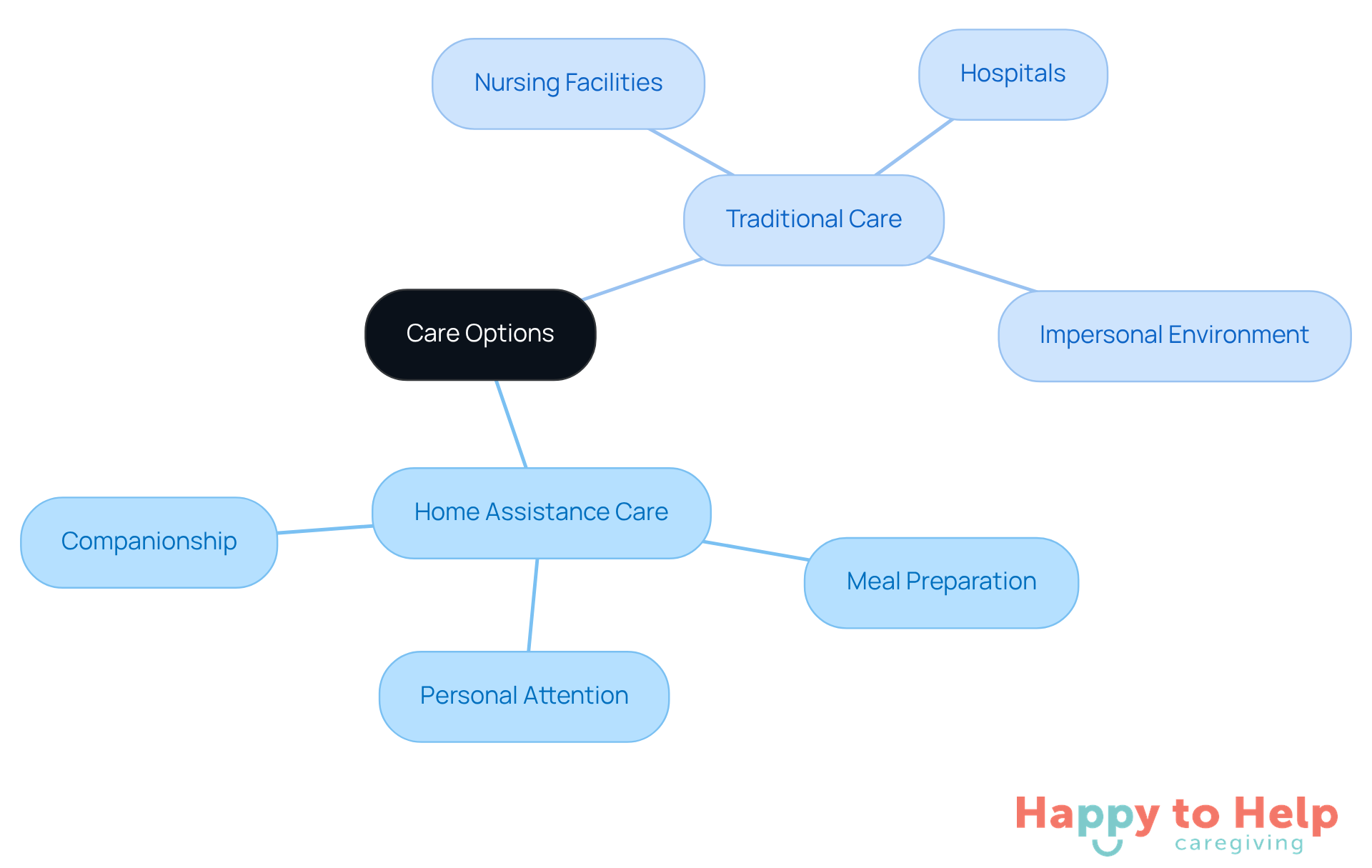
Agitate: Traditional assistance models, such as nursing facilities or hospitals, can feel impersonal and may not cater to the unique needs of each individual. This can lead to feelings of isolation and discomfort, as these environments often lack the familiarity and independence that many desire.
Home assistance care provides a valuable alternative. This non-medical support focuses on daily living tasks like companionship, meal preparation, and personal attention, all within the comfort of one’s own home. By prioritizing independence and comfort, home assistance care allows individuals to thrive in familiar surroundings, making it a more personalized and fulfilling option compared to traditional assistance.
Compare Services Offered by Home Assistance Care and Traditional Care
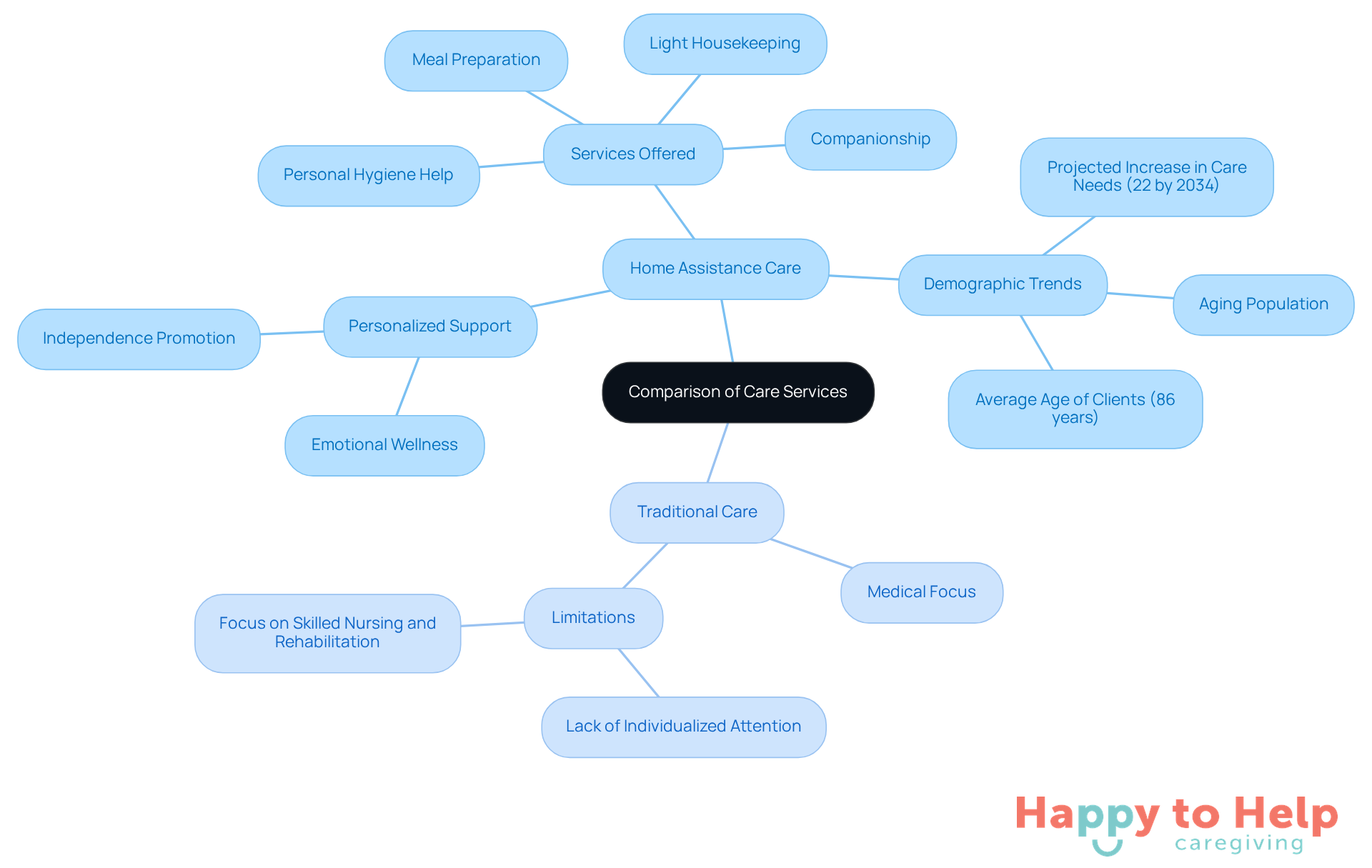
Home assistance care addresses a significant problem: the lack of personalized care in traditional assistance settings. As the population ages, the demand for tailored support is on the rise, with projections indicating a 22% increase in domestic care needs by 2034. This growing need highlights the limitations of Traditional Assistance, which often focuses on medical offerings like skilled nursing and rehabilitation, but may not provide the individualized attention that many clients require.
The implications of this issue are profound. By 2034, seniors will outnumber individuals under 18 in the U.S., highlighting the urgent demand for home assistance care that prioritizes both health and emotional wellness. Currently, the average age of clients receiving domestic care is 86 years, indicating a demographic that greatly benefits from personalized support. Furthermore, nearly one-third of Americans have cared for an elderly, ill, or disabled relative, illustrating the commonality of caregiving experiences and the increasing need for home care solutions.
So, what can caregivers do? Home assistance care offers a range of options designed to enhance the quality of life for clients in their own homes. Services include:
- Companionship
- Help with personal hygiene
- Meal preparation
- Light housekeeping
All aimed at promoting independence and comfort in a familiar setting. This adaptability allows caregivers to respond to the evolving needs of clients, ensuring that care is effective and aligned with individual preferences.
As families recognize the importance of tailored support, the rising demand for long-term care insurance reflects a growing awareness of the financial aspects of caregiving. By embracing home assistance care, caregivers can provide the personalized attention that clients deserve, ultimately improving their overall well-being.
Evaluate Key Factors: Cost, Flexibility, and Caregiver Availability
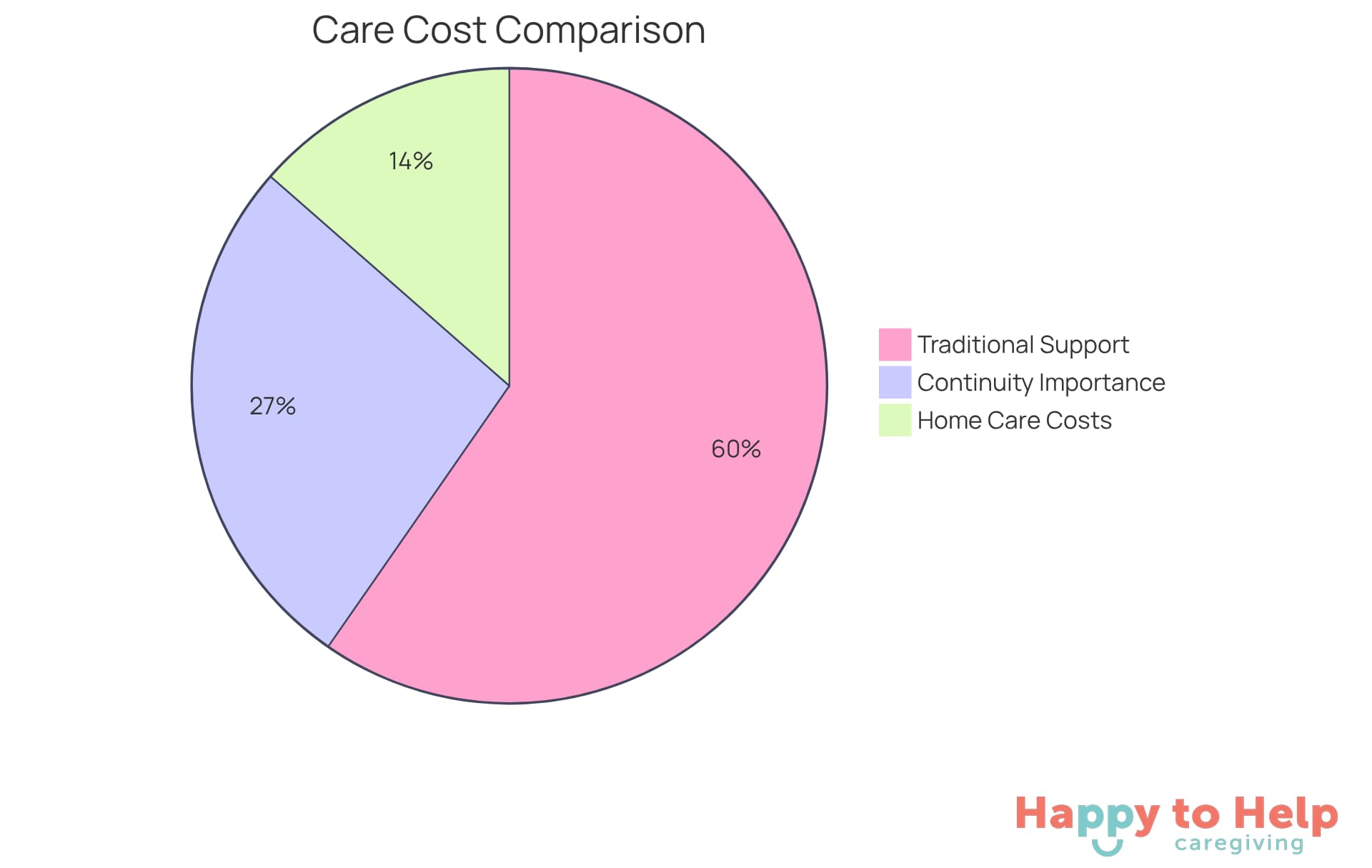
Home assistance care presents a cost-effective alternative to traditional support, which often comes with high monthly fees. Families face a significant problem: the national median expense for full-time personal care is around $6,292 monthly, while Traditional Support averages approximately $9,277 for a semi-private room and $10,646 for a private room in nursing facilities. This disparity can strain household budgets and complicate financial planning.
The implications of these costs are profound. Families may struggle to afford necessary care, leading to potential gaps in support. Moreover, Traditional Support often involves multiple providers due to staff rotations, disrupting the continuity of care that many individuals need. In fact, a study found that 36.6% of participants noted that home care visits ensured treatment continuity, underscoring the importance of consistent caregiver relationships.
Fortunately, home assistance care offers a solution. With hourly rates ranging from $25 to $40, families can tailor their assistance based on specific needs, whether it’s just a few hours a week or full-time support. This flexibility allows for better financial management and fosters trust and familiarity, as families often have the same caregiver consistently.
Additionally, households should consider potential extra expenses related to Traditional Care, such as personal aides and premium therapies, which can further impact their financial planning. By opting for home assistance care, families can not only save money but also guarantee a more stable and personalized caregiving experience.
Assess Emotional and Practical Implications for Families
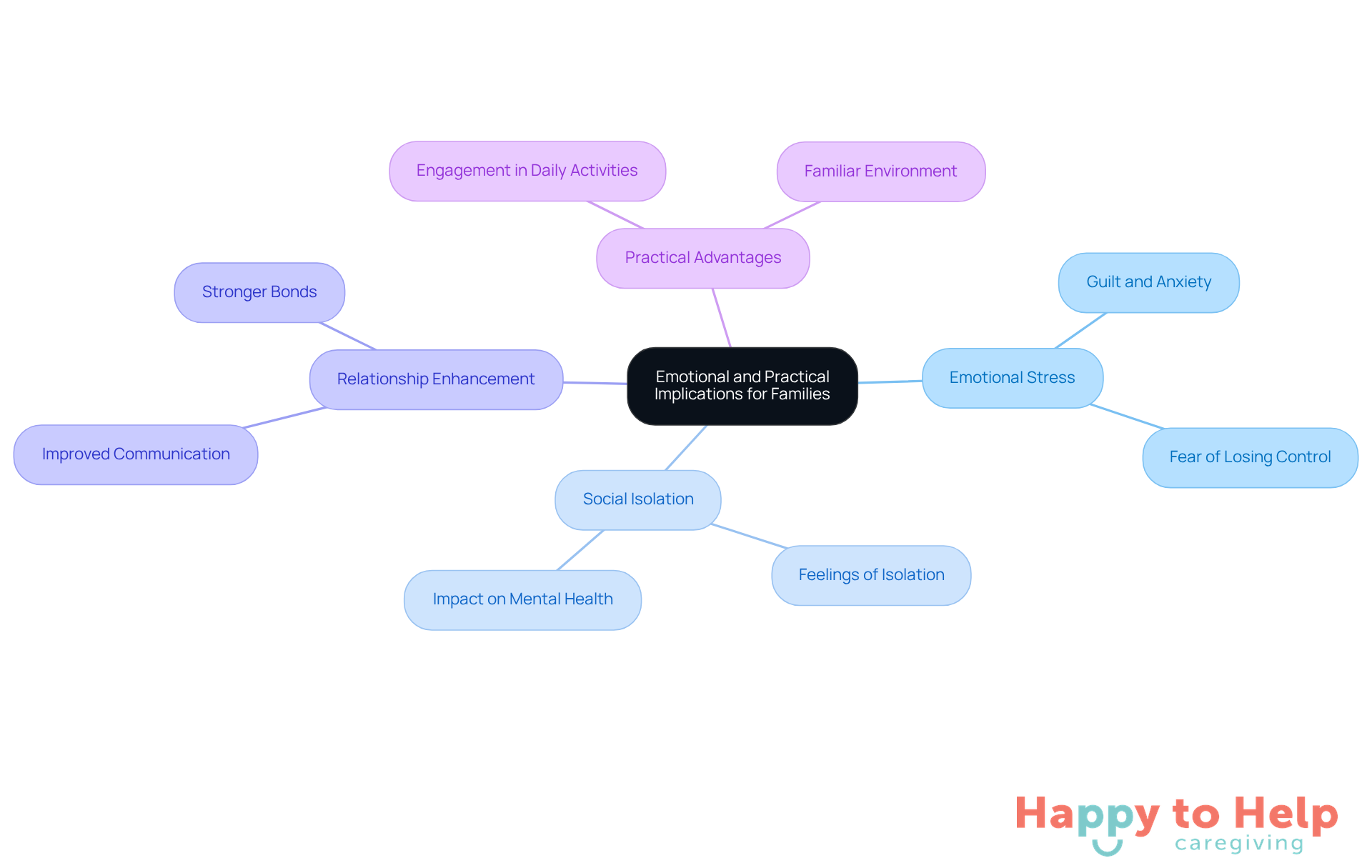
Home assistance care tackles a significant issue: the emotional stress experienced by caregivers. Many families struggle with the guilt and anxiety that come from placing a loved one in an institutional setting, often feeling they are relinquishing control over their care. This emotional burden can lead to feelings of social isolation, with nearly one in four caregivers reporting such experiences.
The implications of traditional care are profound. It can create emotional distance, complicating interactions between relatives and their loved ones. In contrast, a supportive environment is fostered by home assistance care, allowing caregivers and family members to work together, which enhances relationships and communication. Families involved in this model often report a greater sense of security and comfort, as their loved ones remain in familiar surroundings.
To alleviate these emotional challenges, families should consider the advantages of home assistance care. Engaging actively in daily activities with their loved ones not only strengthens bonds but also promotes a nurturing atmosphere. Understanding these emotional and practical implications is crucial for families to select a care model that aligns with their values and emotional needs, ensuring a supportive environment for all involved.
Moving Forward with Home Assistance Care vs. Traditional
Home assistance care presents a significant problem for families relying on traditional care models, which often fail to provide the personalized support and comfort that individuals need. This lack of tailored caregiving can lead to emotional distress and a decline in physical well-being, particularly for the aging population. As the demand for individualized support grows, it becomes crucial to consider care options that truly reflect the values and preferences of those receiving care.
The implications of choosing traditional care are profound. Families may face financial burdens and emotional strain, as these facilities often overlook the unique needs of their clients. The emotional benefits of home assistance care, such as fostering stronger relationships and continuity of care, cannot be understated. By opting for a model that prioritizes independence and personalized attention, families can significantly enhance the quality of life for their loved ones.
To address these challenges, families should consider the advantages of home assistance care. This model not only alleviates financial pressures but also cultivates a nurturing environment where individuals can thrive. Here are some actionable tips for families:
- Evaluate the specific needs of your loved ones to find a suitable care model.
- Consider the emotional and physical benefits of home assistance care.
- Engage with caregivers who prioritize personalized support.
In conclusion, embracing home assistance care is a proactive solution that addresses the shortcomings of traditional care. Families are encouraged to reflect on these factors carefully, ensuring that the care chosen aligns with the needs and desires of their loved ones.
https://iframe.tely.ai/cta/eyJhcnRpY2xlX2lkIjogIjY5NDBhMjMyOTc5ZjhiMGM0MmQzYjU3ZCIsICJjb21wYW55X2lkIjogIjY4ZWU1ZGNhNzMxNzYyNTU3ZjNjOTVjMSIsICJpbmRleCI6IG51bGwsICJ0eXBlIjogImFydGljbGUifQ==Frequently Asked Questions
What is home assistance care?
Home assistance care is a form of non-medical support that focuses on helping individuals with daily living tasks such as companionship, meal preparation, and personal attention, all within the comfort of their own home.
How does home assistance care differ from traditional care?
Unlike traditional care, which often takes place in nursing facilities or hospitals and can feel impersonal, home assistance care prioritizes independence and comfort, allowing individuals to thrive in familiar surroundings.
What challenges do individuals face with traditional assistance models?
Individuals often face feelings of isolation and discomfort in traditional care settings, as these environments may not cater to their unique needs and can lack the familiarity and independence they desire.
What are the benefits of home assistance care?
The benefits of home assistance care include personalized support tailored to individual needs, the ability to remain in a familiar environment, and enhanced comfort and independence compared to traditional care settings.
List of Sources
- Define Home Assistance Care and Traditional Care
- Place-Agnostic Models Signal New Era For Home-Based Care, Senior Living (https://homehealthcarenews.com/2025/11/place-agnostic-models-signal-new-era-for-home-based-care-senior-living)
- The business of caring for older Americans is in a deepening crisis (https://washingtonpost.com/business/2025/12/04/elder-care-home-health-shortage)
- Aging at home: How families and care teams are meeting the rising demand for in-home support (https://aol.com/articles/aging-home-families-care-teams-190007085.html)
- New Law Supports Home Care, Caregivers for Military Veterans (https://elderlawrillc.com/new-law-supports-home-care-caregivers-for-military-veterans)
- The Future of Aging: Is In-Home Care the New Standard? - WorldHealth.net (https://worldhealth.net/news/future-of-aging-is-in-home-care-new-standard)
- Compare Services Offered by Home Assistance Care and Traditional Care
- Top 5 Home Care Trends of 2025 - Family & Nursing Care (https://familynursingcare.com/top-5-home-care-trends-of-2025)
- Types of Home Care Services in 2025 (https://websterhc.com/breaking-down-the-different-types-of-home-care-services-in-2025)
- Home Care Industry Trends to Watch in 2025 (https://firstlighthomecare.com/blog/home-care-industry-trends)
- 2025 Home Care Statistics: Trends & Insights To Know (https://premierhcinc.com/blog/home-care-statistics)
- Evaluate Key Factors: Cost, Flexibility, and Caregiver Availability
- New Florida Law Expands Access to Home Health Care (https://members.homecarefla.org/news/Details/new-florida-law-expands-access-to-home-health-care-285127)
- How Flexible Scheduling Improves The Home Care Experience For Families – CCN – Columbus County News (https://columbuscountynews.com/2025/12/how-flexible-scheduling-improves-the-home-care-experience-for-families)
- Nursing Home Costs: What Families Should Know in 2025 (https://caily.com/blog/nursing-home-costs-explained-what-families-should-know-before-choosing-care)
- A Better Solution Home Care (https://abs.care/Home-Care-Staffing-Shortages-How-They-Impact-Home-Care-Services)
- Cost of Home Care vs. Nursing Homes (https://aplaceformom.com/caregiver-resources/articles/home-care-vs-nursing-home-costs)
- Assess Emotional and Practical Implications for Families
- These people know how to fix the caregiving crisis. Is it doable? (https://usatoday.com/story/life/health-wellness/2025/12/03/caregivers-need-respite-care-mental-health-counseling-paid-family-program-resources/87234207007)
- New Report Reveals Crisis Point for America’s 63 million Family Caregivers (https://press.aarp.org/2025-07-24-New-Report-Reveals-Crisis-Point-for-Americas-63-million-Family-Caregivers)