
For families in our service areas
For families in our service areas, this guide explains home care and how non-medical in-home caregiving can support care planning in East Idaho, Treasure Valley & Magic Valley, Northern Wasatch, North Central West Virginia, and Northeast Ohio.
What You Need to Know About Home Care FAQs: Key Insights
Navigating in-home care can be a daunting challenge for family caregivers. With a myriad of options available, from medical assistance to companionship, it’s easy to feel overwhelmed. This complexity can lead to confusion and uncertainty about the best choices for loved ones.
As the demand for personalized support grows, caregivers must consider not only practical needs but also emotional well-being. How can they ensure they are selecting the right services? Addressing these critical questions is essential for finding effective and compassionate care solutions.
To empower families, it’s important to explore the types of care available and understand their implications. By focusing on informed decision-making, caregivers can enhance the quality of life for their loved ones while navigating the complexities of in-home care.
Understanding In-Home Care Services
Caregivers often face the challenge of finding the right support options for their loved ones. With a broad spectrum of assistance available, it can be overwhelming to navigate through the choices. Understanding the distinction between medical and non-medical assistance is crucial for making informed decisions.
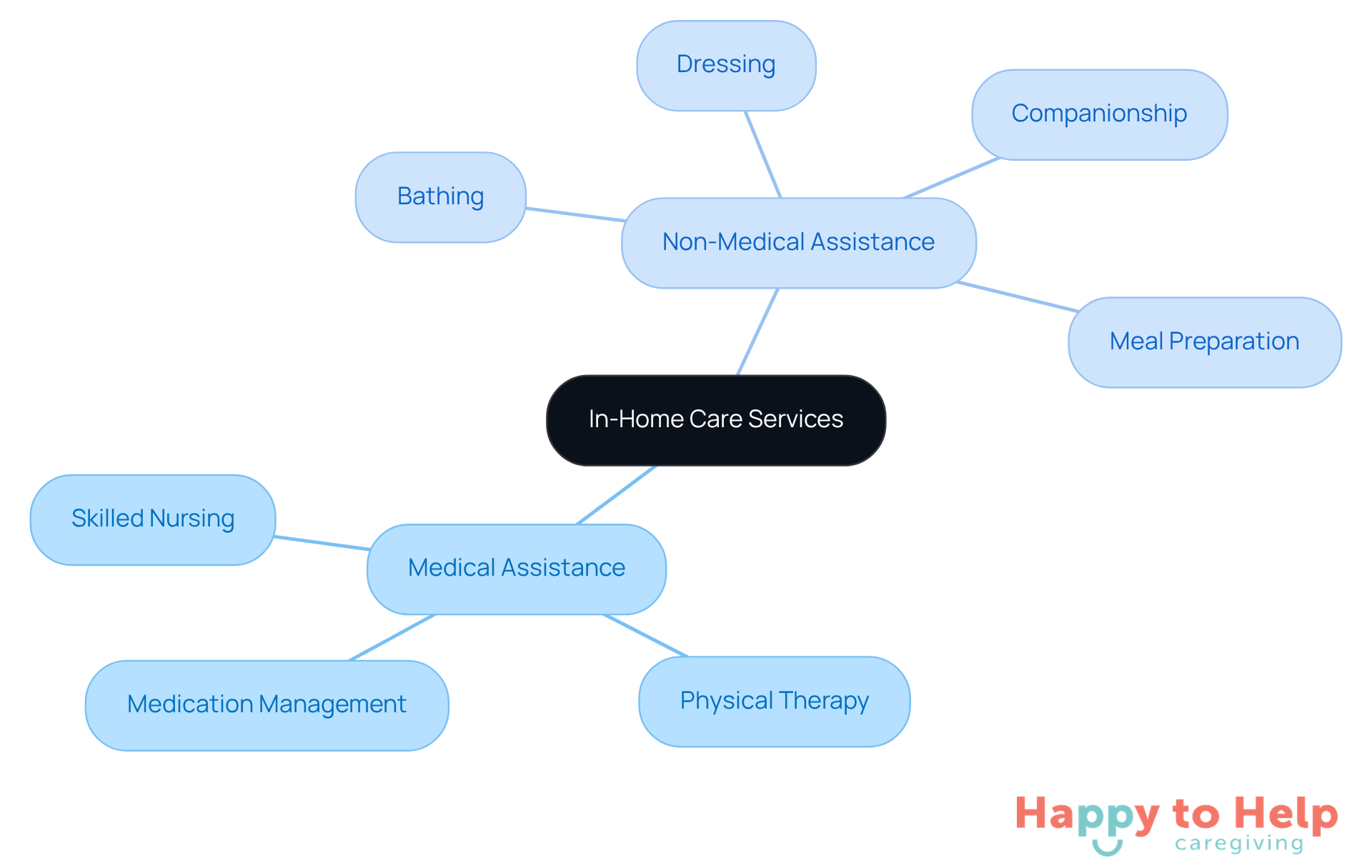
Medical support typically includes:
- Skilled nursing
- Physical therapy
- Medication management
On the other hand, non-medical assistance focuses on daily living activities such as:
- Bathing
- Dressing
- Meal preparation
- Companionship
Recognizing these differences helps families identify which services align with their specific needs and preferences.
For instance, some families may prioritize companionship and emotional support, while others might require more intensive medical care after a hospital stay. This foundational knowledge not only clarifies the options available but also sets the stage for exploring specific providers like Happy to Help Caregiving and their unique offerings.
Common Questions About In-Home Care
When households consider in-home care for their loved ones, they often consult home care FAQs to address several critical questions.
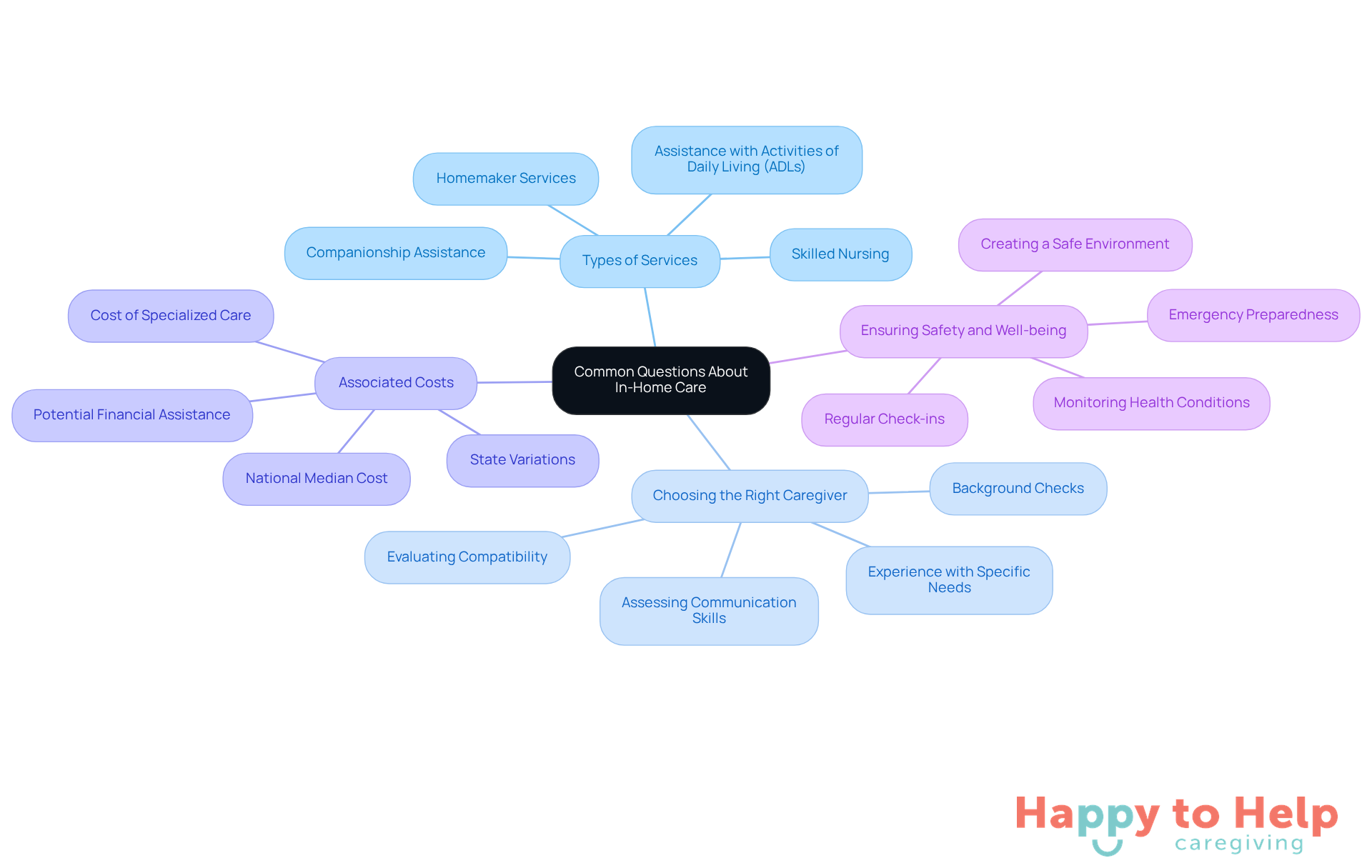
- What kinds of services are available?
- How do I choose the right caregiver?
- What are the associated costs?
- How can I ensure my loved one's safety and well-being?
Addressing home care FAQs is essential for families to make informed decisions.
Differentiating between companionship assistance and skilled nursing is crucial for selecting the appropriate level of support. Moreover, discussing costs upfront can help avoid misunderstandings later. Statistics show that 66% of supporters oversee their recipient’s situation and adjust assistance as needed, highlighting the importance of choosing a caregiver who can effectively communicate and adapt to changing requirements.
Resources like the National Institute on Aging and the Family Caregiver Alliance offer valuable home care FAQs, equipping families with the tools necessary to navigate this process confidently. Families should evaluate the alignment between the caregiver's character and their loved one’s preferences, as this can significantly influence the quality of support.
Engaging in open conversations about support needs and expectations can further facilitate a smoother transition into in-home assistance.
Distinctive Features of Happy to Help Caregiving
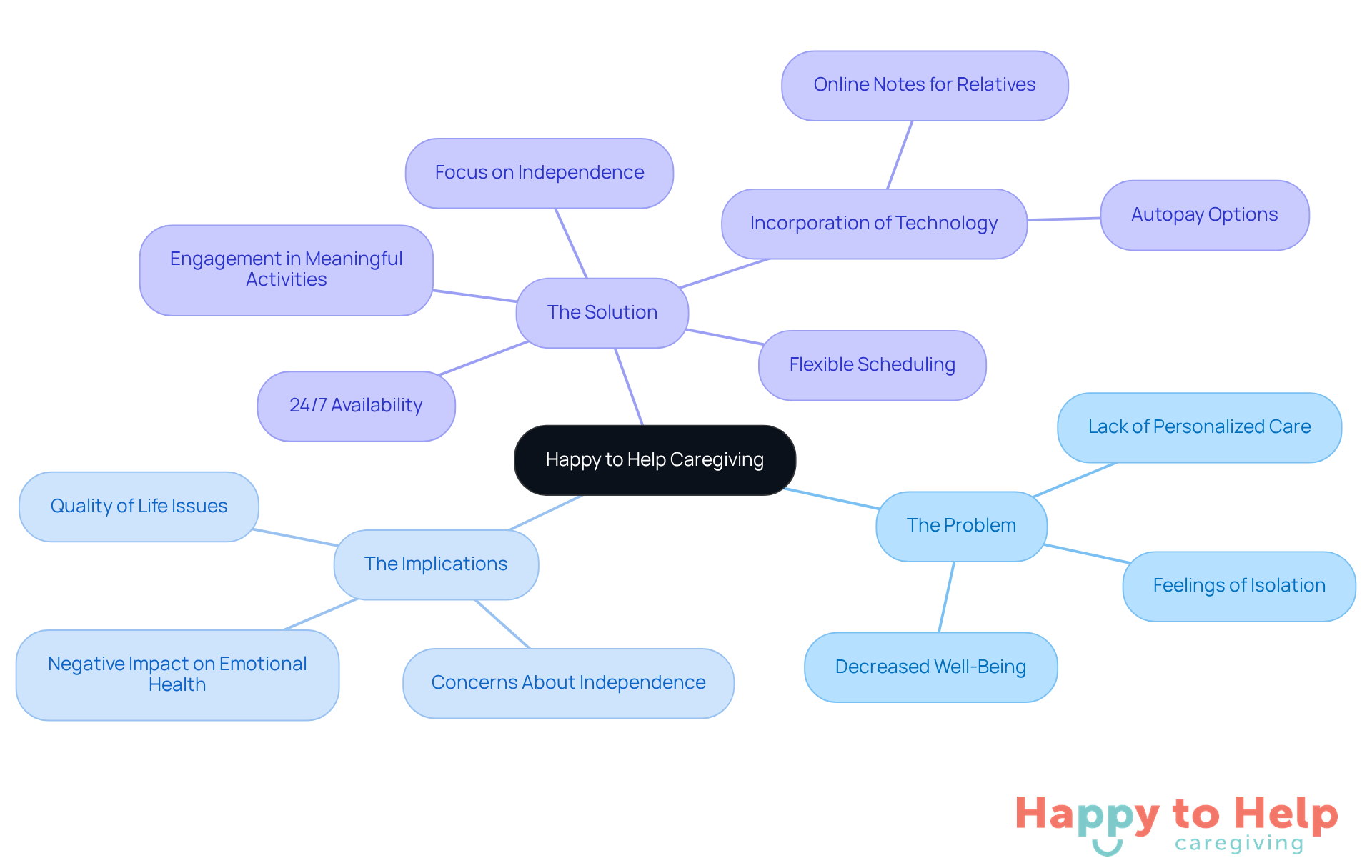
The Problem: Many families struggle to find caregiving services that offer personalized care and emotional support for their loved ones. This lack of tailored assistance can lead to feelings of isolation and decreased well-being for clients.
The Implications: When caregivers fail to engage clients in meaningful activities, it can negatively impact their emotional health. Families often worry about their loved ones' independence and quality of life, making the search for the right caregiving service even more critical.
The Solution: Happy to Help Caregiving addresses these challenges with a commitment to personalized care and a compassionate approach. Key features include:
- 24/7 Availability: Caregivers are always on hand to assist clients whenever needed.
- Flexible Scheduling: Services can be tailored to fit the unique needs of each client.
- Focus on Independence: Caregivers are trained to promote client independence while providing necessary support.
Additionally, caregivers engage clients in meaningful activities that enhance emotional well-being. The incorporation of technology, such as online notes for relatives and autopay options, improves communication and convenience for households. This level of personalized attention and innovative support fosters a sense of security and comfort for clients, making Happy to Help Caregiving a preferred choice for many families seeking in-home care, as highlighted in the home care faqs.
Challenges Faced by Family Caregivers
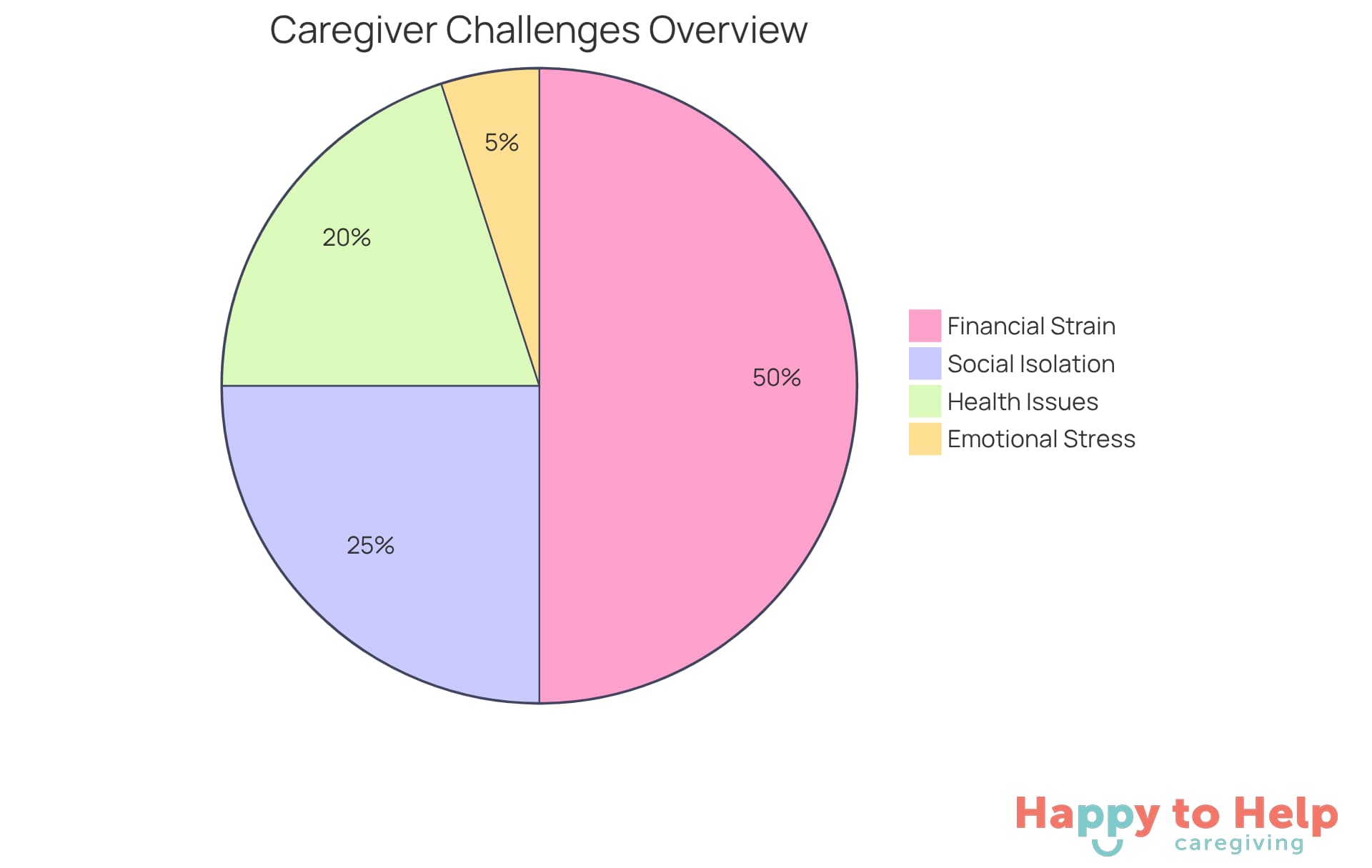
Family supporters often face a myriad of challenges, including emotional stress, physical strain, and financial pressures. The demands of caregiving can lead to burnout, anxiety, and feelings of isolation. In fact, nearly 1 in 4 individuals providing care report feeling socially isolated, a number that’s increasing, and this figure rises to 47% among those under 50.
Many caregivers struggle to balance their own needs with those of their loved ones, often overlooking their health and well-being. The financial burden can be significant, especially when families must pay for additional services or equipment. Almost half of those providing care have faced considerable financial consequences, such as incurring debt or being unable to buy food. Furthermore, 1 in 5 caregivers report being in fair or poor health due to caregiving responsibilities.
Identifying these challenges is crucial for households referring to home care FAQs when contemplating in-home care. It underscores the significance of pursuing professional assistance to ease some of these burdens. By understanding the complexities of caregiving, families can better appreciate the value of services offered by agencies like Happy to Help Caregiving, which aim to provide relief and support to both clients and their families.
Taking the Next Steps
Navigating in-home care services presents a significant challenge for family caregivers. The complexity of options can lead to confusion, making it difficult to ensure the well-being of loved ones. This problem is compounded by the emotional weight of caregiving, which can leave families feeling overwhelmed and uncertain about the best course of action.
Understanding the distinction between medical and non-medical assistance is crucial. Families need to recognize that their specific needs may vary, whether they seek companionship or require more intensive care. Addressing these common questions about in-home care can help alleviate some of the stress associated with decision-making.
To tackle these challenges, open communication and tailored support are essential. Engaging with professional services like Happy to Help Caregiving can provide families with the guidance they need. By leveraging insights from home care FAQs, caregivers can find practical solutions that enhance the quality of care and emotional well-being for both clients and their families.
Ultimately, caregiving requires compassion, understanding, and the right resources. Embracing available support not only fosters better care for loved ones but also promotes the health and happiness of caregivers. By taking these steps, families can create a more balanced and fulfilling caregiving experience.
https://iframe.tely.ai/cta/eyJhcnRpY2xlX2lkIjogIjY5MjRmMWQzZWM0Y2FiOGU3NGVjMDBjNiIsICJjb21wYW55X2lkIjogIjY4ZWU1ZGNhNzMxNzYyNTU3ZjNjOTVjMSIsICJpbmRleCI6IG51bGwsICJ0eXBlIjogImFydGljbGUifQ==Frequently Asked Questions
What are in-home care services?
In-home care services provide support for individuals who need assistance with daily living activities or medical care in the comfort of their own homes.
What is the difference between medical and non-medical assistance in in-home care?
Medical assistance includes services such as skilled nursing, physical therapy, and medication management, while non-medical assistance focuses on daily living activities like bathing, dressing, meal preparation, and companionship.
Why is it important to understand the distinction between medical and non-medical assistance?
Understanding the distinction helps families identify which services align with their specific needs and preferences, allowing for informed decisions regarding care options.
What types of non-medical assistance are typically offered?
Non-medical assistance typically includes help with bathing, dressing, meal preparation, and providing companionship.
How can families determine their specific care needs?
Families can assess whether they prioritize companionship and emotional support or require more intensive medical care, especially after events like a hospital stay, to determine their specific care needs.
What is an example of a provider that offers in-home care services?
An example of a provider that offers in-home care services is Happy to Help Caregiving, which provides a range of care options tailored to individual needs.
List of Sources
- Understanding In-Home Care Services
- Mid-Year Check-In: 7 Key Trends Shaping Non-Medical Home Care for the Rest of 2025 | Aaniie, formerly Smartcare Software (https://aaniie.com/news/key-trends-shaping-non-medical-home-care-for-the-rest-of-2025)
- Home Health Care Trends for 2025 (https://carevoyant.com/home-health-blog/home-health-care-trends-2025)
- Home Care Industry Trends to Watch in 2025 (https://firstlighthomecare.com/blog/home-care-industry-trends)
- 52 Eye-Opening Home Health Statistics: Insights for 2025 (https://boosthomehealth.com/home-health-statistics)
- How 3 Top Trends Have Shaped Home-Based Care This Year (https://homehealthcarenews.com/2025/08/how-3-top-trends-have-shaped-home-based-care-this-year)
- Common Questions About In-Home Care
- The Top Questions Families Ask Before Starting Home Care (FAQ) (https://trustedlikefamilyhomecare.com/f/the-top-questions-families-ask-before-starting-home-care-faq)
- Tips for Choosing the Right In-Home Caregiver (https://visitingangels.com/npr/news-info/tips-for-choosing-the-right-in-home-caregiver/24676)
- Caregiver Statistics: Demographics (https://caregiver.org/resource/caregiver-statistics-demographics)
- In-Home Care for Seniors - Caregiving News and Tips (https://aarp.org/caregiving/home-care)
- Home Care Costs in 2025: A State-by-State Guide (https://aplaceformom.com/caregiver-resources/articles/in-home-care-costs)
- Distinctive Features of Happy to Help Caregiving
- The Changing Landscape of Elder Care Solutions (https://homeinstead.com/home-care/usa/co/denver/148/news-and-media/introduction-to-the-changing-landscape-of-elder-care-solutions)
- The role of technology in enhancing in-home care services (https://humancareny.com/blog/the-role-of-technology-in-enhancing-in-home-care-services)
- Caregiver Statistics: Work and Caregiving (https://caregiver.org/resource/caregiver-statistics-work-and-caregiving)
- How Personalized Health Care Is Changing The Role Of Home Care Providers (https://homehealthcarenews.com/2024/03/how-personalized-health-care-is-changing-the-role-of-home-care-providers)
- From ‘Simple Things’ To AI: What Innovation Means For 3 At-Home Care Providers (https://homehealthcarenews.com/2025/08/from-simple-things-to-ai-what-innovation-means-for-3-at-home-care-providers)
- Challenges Faced by Family Caregivers
- Family Caregiver Support, Education Needs Growing (https://hospicenews.com/2025/11/11/family-caregiver-support-education-needs-growing)
- As Family Caregiving Grows, So Does the Need for Reform - Medicare Rights Center (https://medicarerights.org/medicare-watch/2025/08/14/as-family-caregiving-grows-so-does-the-need-for-reform)
- New Report Reveals Crisis Point for America’s 63 million Family Caregivers - Massachusetts Healthy Aging Collaborative (https://mahealthyagingcollaborative.org/new-report-reveals-crisis-point-for-americas-63-million-family-caregivers)
- Caregiving in the US 2025: Caring Across States (https://aarp.org/pri/topics/ltss/family-caregiving/caregiving-in-the-us-2025-caring-across-states)